
Biodegradable Hemostat Market Report 2026
Global Outlook – By Product Type (Natural Polymer-Based Hemostats, Synthetic Polymer-Based Hemostats, Composite Hemostats, Cellulose-Based Hemostats, Gelatin-Based Hemostats), By Formulation (Powdered Hemostats, Granular Hemostats, Liquid Hemostats, Foam Hemostats, Film Or Sheet Hemostats), By Application (Surgical Procedures, Trauma Procedures, Dental Procedures, Laparoscopic Procedures, Other Applications), By Distribution Channel (Direct Sales, Distributors, E-Commerce Platforms, Pharmaceutical Retailers, Healthcare Supply Companies), By End-User (Hospitals, Ambulatory Surgical Centers, Clinics, Research Laboratories, Other End Users) – Market Size, Trends, Strategies, and Forecast to 2030
Biodegradable Hemostat Market Overview
• Biodegradable Hemostat market size has reached to $0.97 billion in 2025 • Expected to grow to $1.63 billion in 2030 at a compound annual growth rate (CAGR) of 10.8% • Growth Driver: Increase In Surgical Procedures Fueling The Growth Of The Market Due To Rising Chronic Disease Burden • Market Trend: Plant-Based Hemostats Revolutionizing Wound Management • North America was the largest region in 2025.What Is Covered Under Biodegradable Hemostat Market?
A biodegradable hemostat is a medical device designed to promote blood clotting and control bleeding by initiating or accelerating the natural coagulation process. It is engineered to be safely absorbed and broken down by the body over time, eliminating the need for surgical removal. These hemostats are developed with biocompatibility in mind, minimizing the risk of adverse reactions while supporting wound healing. The main product types of biodegradable hemostats include natural polymer-based hemostats, synthetic polymer-based hemostats, composite hemostats, cellulose-based hemostats, and gelatin-based hemostats. Natural polymer-based hemostats are materials made from naturally sourced polymers that help stop bleeding by aiding in blood clot formation during medical procedures. It is available in various formulations, such as powdered hemostats, granular hemostats, liquid hemostats, foam hemostats, and film or sheet hemostats, and is applied for surgical procedures, trauma procedures, dental procedures, laparoscopic procedures, and others. It is distributed through direct sales, distributors, e-commerce platforms, pharmaceutical retailers, and healthcare supply companies and is used by several end-users, including hospitals, ambulatory surgical centers, clinics, research laboratories, and others.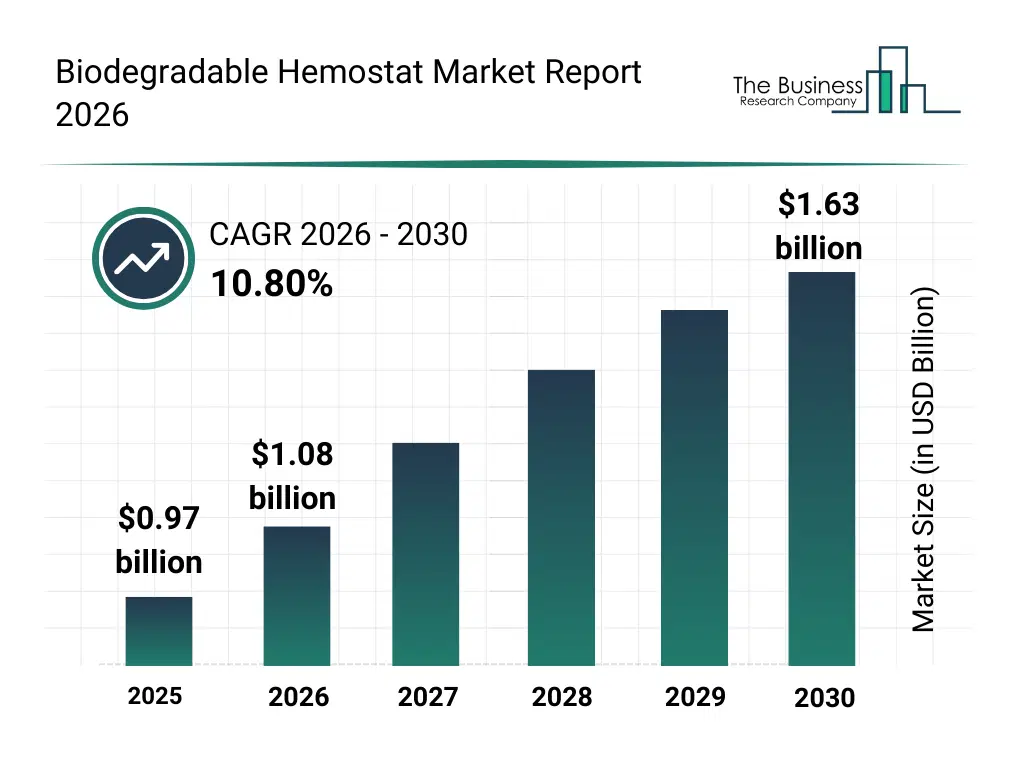
What Is The Biodegradable Hemostat Market Size and Share 2026?
The biodegradable hemostat market size has grown rapidly in recent years. It will grow from $0.97 billion in 2025 to $1.08 billion in 2026 at a compound annual growth rate (CAGR) of 11.3%. The growth in the historic period can be attributed to reliance on conventional non-absorbable hemostats, growing surgical procedure volumes, increasing hospital infrastructure, rising awareness of blood loss management, adoption of basic wound care technologies.What Is The Biodegradable Hemostat Market Growth Forecast?
The biodegradable hemostat market size is expected to see rapid growth in the next few years. It will grow to $1.63 billion in 2030 at a compound annual growth rate (CAGR) of 10.8%. The growth in the forecast period can be attributed to advancements in polymer and biomaterial science, growth in minimally invasive surgical procedures, rising trauma and emergency cases, increasing regulatory approvals for biodegradable devices, expansion of ambulatory surgical centers. Major trends in the forecast period include rising adoption of absorbable hemostatic products, growing preference for biocompatible and bioabsorbable materials, increasing use in minimally invasive and laparoscopic surgeries, expansion of advanced hemostats in trauma and emergency care, higher demand for ready-to-use and easy-to-apply hemostats.
Global Biodegradable Hemostat Market Segmentation
1) By Product Type: Natural Polymer-Based Hemostats, Synthetic Polymer-Based Hemostats, Composite Hemostats, Cellulose-Based Hemostats, Gelatin-Based Hemostats 2) By Formulation: Powdered Hemostats, Granular Hemostats, Liquid Hemostats, Foam Hemostats, Film Or Sheet Hemostats 3) By Application: Surgical Procedures, Trauma Procedures, Dental Procedures, Laparoscopic Procedures, Other Applications 4) By Distribution Channel: Direct Sales, Distributors, E-Commerce Platforms, Pharmaceutical Retailers, Healthcare Supply Companies 5) By End-User: Hospitals, Ambulatory Surgical Centers, Clinics, Research Laboratories, Other End Users Subsegments: 1) By Natural Polymer-Based Hemostats: Collagen-Based, Chitosan-Based, Alginate-Based, Fibrin-Based, Dextran-Based 2) By Synthetic Polymer-Based Hemostats: Polyethylene Glycol (PEG)-Based, Polyurethane-Based, Polylactic Acid (PLA)-Based, Polyglycolic Acid (PGA)-Based, Polycaprolactone (PCL)-Based 3) By Composite Hemostats: Natural-Synthetic Polymer Blends, Polymer-Cellulose Composites, Polymer-Gelatin Composites, Multi-Layer Composites, Nano-Composite Hemostats 4) By Cellulose-Based Hemostats: Oxidized Regenerated Cellulose (ORC), Microcrystalline Cellulose (MCC), Carboxymethyl Cellulose (CMC), Nanocellulose-Based, Hydroxypropyl Cellulose (HPC) 5) By Gelatin-Based Hemostats: Porcine Gelatin-Based, Bovine Gelatin-Based, Fish Gelatin-Based, Cross-Linked Gelatin, Modified Gelatin FormulationsWhat Is The Driver Of The Biodegradable Hemostat Market?
The increasing number of surgical procedures is expected to propel the growth of the biodegradable hemostat market going forward. Surgical procedures are medical operations performed by healthcare professionals using specialized instruments to address, repair, or remove parts of the body for health-related purposes. The rise in surgical procedures is largely attributed to the increasing number of chronic conditions, which often demand surgical intervention to manage health issues and improve patient outcomes. Biodegradable hemostats offer an advantage in surgeries, as they break down within the body after use, avoiding the need for removal and lowering the chances of post-surgical issues. For instance, in January 2025, according to the Intuitive Surgical Inc., a US-based medical device company, OUS general surgery procedures increased by roughly 35% in 2024, following growth of about 42% in 2023. Colorectal procedures accounted for the largest share of incremental volume in both years. Therefore, the increasing number of surgical procedures is driving the growth of the biodegradable hemostat industry.Key Players In The Global Biodegradable Hemostat Market
Major companies operating in the biodegradable hemostat market are Johnson And Johnson Services Inc, Medtronic Plc, Stryker Corporation, Baxter International Inc, Meril Life Sciences Pvt Ltd, Samyang Holdings Corp, Molnlycke Health Care AB, GELITA Medical GmbH, B Braun Melsungen AG, Tricol Biomedical Inc, Hemostasis LLC, Cura Medical, RevMedx Inc, Speed Care Mineral GmbH, Regenity, C R Bard Inc, Integra LifeSciences Corporation, Advanced Medical Solutions Group plc, Anika Therapeutics Inc, Marine Polymer Technologies Inc, Axio Biosolutions Pvt Ltd, Biom Up Inc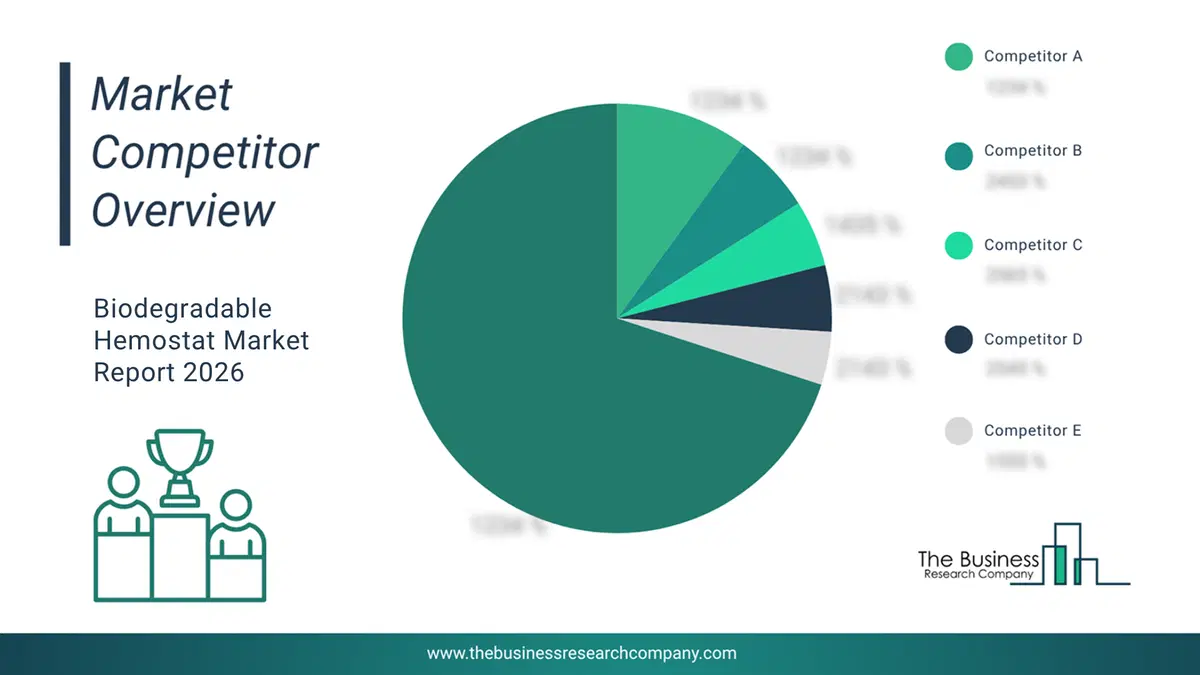
This chart is for illustrative purposes; the full report includes a detailed competitor analysis and comprehensive overview of the top 10 companies in the market.
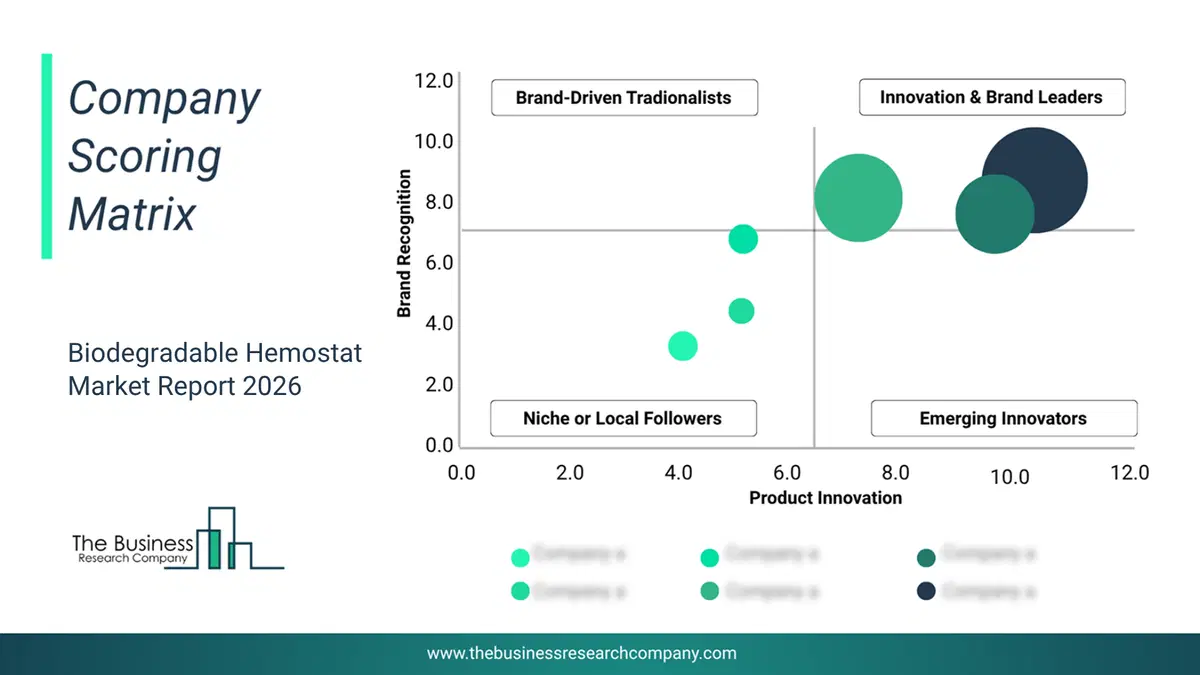
This chart maps companies by product innovation and brand strength, with bubble size indicating relative revenue, helping identify market leaders, challengers, and niche players. This is an illustrative chart; the full report provides a complete and accurate competitive analysis.
Global Biodegradable Hemostat Market Trends and Insights
Major companies operating in the biodegradable hemostat market are focusing on developing advanced solutions, such as plant-based cellulose matrix, to quickly control bleeding and minimize blood loss. A plant-based cellulose matrix is a naturally derived material made from plant fibers that serves as a biodegradable support structure, commonly used in medical settings for its ability to be safely absorbed by the body. For instance, in April 2024, LifeScience PLUS, a US-based medical device company, launched DonorSeal, a unique hemostatic dressing composed entirely of cellulose sourced from plants. DonorSeal forms a gel that adheres on contact with blood, effectively controlling bleeding while being completely biodegradable, absorbable, non-toxic, and pH neutral—safe for use even in patients taking blood thinners. It helps maintain a moist and soothing environment that supports natural tissue repair. The dressing can be removed easily without causing the wound to reopen or stick, offering improved comfort and faster recovery for donor site wounds.What Are Latest Mergers And Acquisitions In The Biodegradable Hemostat Market?
In March 2023, Medtrade Products Ltd, a UK-based biotechnology company specialising in haemostasis, wound care and trauma solutions, partnered with Laubscher and Co AG to introduce the CELOX PPH uterine haemostatic tamponade solution across Switzerland to address postpartum haemorrhage. Through this collaboration, Medtrade aims to expand access to its advanced haemostat technologies, strengthen its presence in the Swiss market, and support improved maternal outcomes through rapid and effective bleeding control. Laubscher and Co AG is a Switzerland-based medical device company that specializes in surgical and women’s health solutions.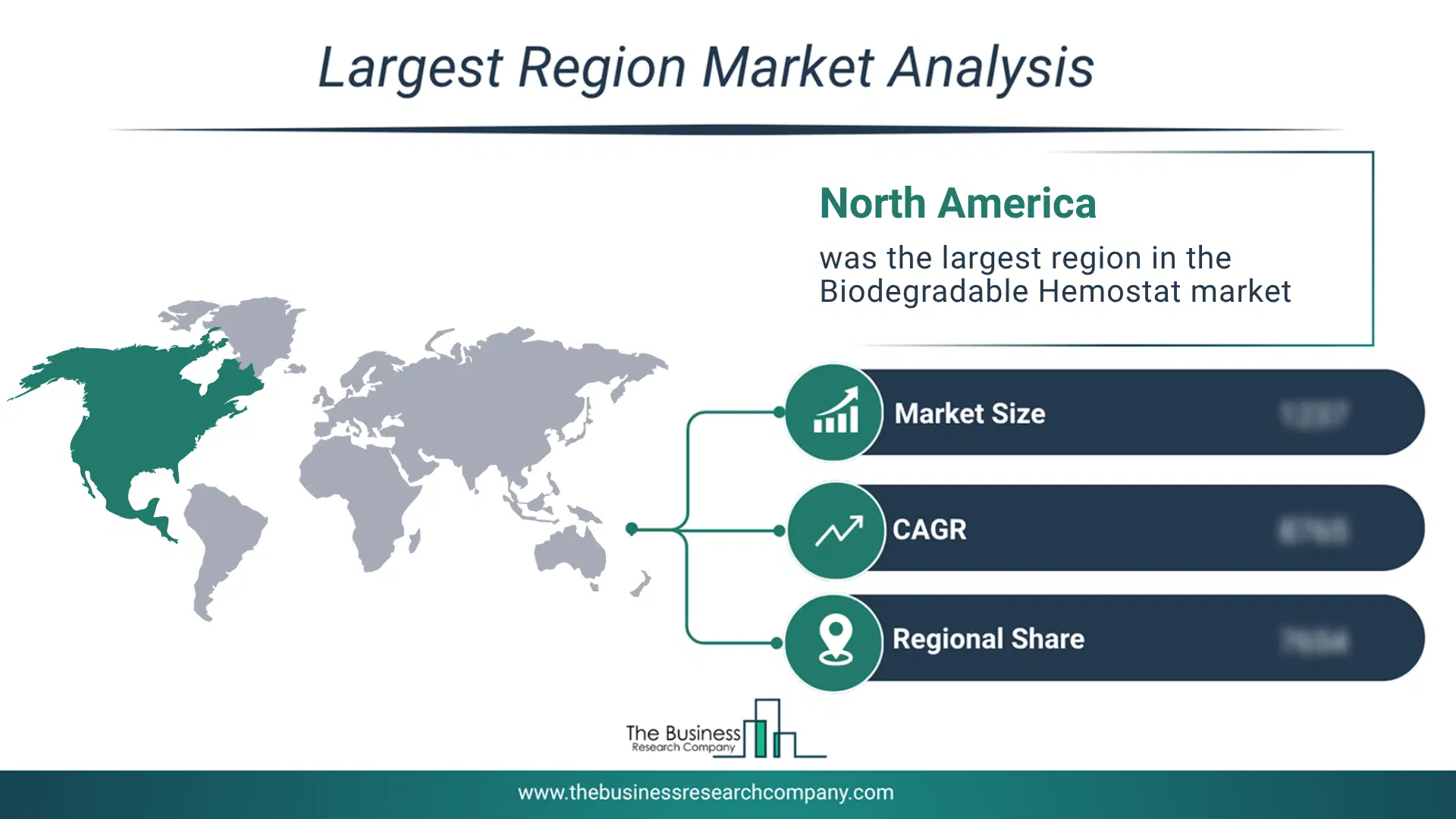
Regional Outlook
North America was the largest region in the biodegradable hemostat market in 2025. The regions covered in this market report are Asia-Pacific, South East Asia, Western Europe, Eastern Europe, North America, South America, Middle East, Africa. The countries covered in this market report are Australia, Brazil, China, France, Germany, India, Indonesia, Japan, Taiwan, Russia, South Korea, UK, USA, Canada, Italy, SpainWhat Defines the Biodegradable Hemostat Market?
The biodegradable hemostat market consists of sales of polysaccharide hemostatic powders, flowable hemostatic agents, plant-based absorbable hemostats, and hydrogel-based hemostatic patches. Values in this market are ‘factory gate’ values, that is the value of goods sold by the manufacturers or creators of the goods, whether to other entities (including downstream manufacturers, wholesalers, distributors and retailers) or directly to end customers. The value of goods in this market includes related services sold by the creators of the goods.How is Market Value Defined and Measured?
The market value is defined as the revenues that enterprises gain from the sale of goods and/or services within the specified market and geography through sales, grants, or donations in terms of the currency (in USD unless otherwise specified). The revenues for a specified geography are consumption values that are revenues generated by organizations in the specified geography within the market, irrespective of where they are produced. It does not include revenues from resales along the supply chain, either further along the supply chain or as part of other products.
This chart presents market attractiveness based on a quantitative evaluation of growth, competition, strategic alignment, and risk, offering a clear view of opportunity areas for decision-making. This chart is for illustrative purposes; the full report contains the complete analysis.

This chart highlights the Total Addressable Market (TAM) by estimating the maximum revenue opportunity using an assumption-driven approach, supporting strategic planning and opportunity sizing across markets. The chart is illustrative; the full report provides a more comprehensive analysis.
What Key Data and Analysis Are Included in the Biodegradable Hemostat Market Report 2026?
The biodegradable hemostat market research report is one of a series of new reports from The Business Research Company that provides market statistics, including industry global market size, regional shares, competitors with the market share, detailed market segments, market trends and opportunities, and any further data you may need to thrive in the biodegradable hemostat industry. The market research report delivers a complete perspective of everything you need, with an in-depth analysis of the current and future state of the industry.Biodegradable Hemostat Market Report Forecast Analysis
| Report Attribute | Details |
|---|---|
| Market Size Value In 2026 | $1.08 billion |
| Revenue Forecast In 2030 | $1.63 billion |
| Growth Rate | CAGR of 10.8% from 2026 to 2030 |
| Base Year For Estimation | 2025 |
| Actual Estimates/Historical Data | 2020-2025 |
| Forecast Period | 2026 - 2030 |
| Market Representation | Revenue in USD Billion and CAGR from 2026 to 2030 |
| Segments Covered | Product Type, Formulation, Application, Distribution Channel, End-User |
| Regional Scope | Asia-Pacific, Western Europe, Eastern Europe, North America, South America, Middle East, Africa |
| Country Scope | The countries covered in the report are Australia, Brazil, China, France, Germany, India, Indonesia, Japan, Taiwan, Russia, South Korea, UK, USA, Canada, Italy, Spain. |
| Key Companies Profiled | Johnson And Johnson Services Inc, Medtronic Plc, Stryker Corporation, Baxter International Inc, Meril Life Sciences Pvt Ltd, Samyang Holdings Corp, Molnlycke Health Care AB, GELITA Medical GmbH, B Braun Melsungen AG, Tricol Biomedical Inc, Hemostasis LLC, Cura Medical, RevMedx Inc, Speed Care Mineral GmbH, Regenity, C R Bard Inc, Integra LifeSciences Corporation, Advanced Medical Solutions Group plc, Anika Therapeutics Inc, Marine Polymer Technologies Inc, Axio Biosolutions Pvt Ltd, Biom Up Inc |
| Customization Scope | Request for Customization |
| Pricing And Purchase Options | Explore Purchase Options |