
Bioengineered Food Market Report 2026
Global Outlook – By Product Type (Vegetables, Fruits, Crops, Other Product Types), By Type Of Modification (Cellular Agriculture, Genetic Modification), By Technology (Clustered Regularly Interspaced Short Palindromic Repeats (CRISPR), Tissue Culture), By Trait (Disease Resistance, Herbicide Tolerance, Insect Resistance, Nutritional Enhancement), By Application (Food And Beverage, Animal Feed, Pharmaceuticals, Other Applications) – Market Size, Trends, Strategies, and Forecast to 2030
Bioengineered Food Market Overview
• Bioengineered Food market size has reached to $38.03 billion in 2025 • Expected to grow to $62.69 billion in 2030 at a compound annual growth rate (CAGR) of 10.5% • Growth Driver: The Impact Of Sustainable Agricultural Practices On The Bioengineered Food Market • Market Trend: Advancements In Insect-Resistant Bioengineered Crops For Sustainable Agriculture • North America was the largest region in 2025 and Asia-Pacific is the fastest growing region.What Is Covered Under Bioengineered Food Market?
Bioengineered food refers to food products that have been genetically altered using biotechnology to introduce specific traits or characteristics that do not occur naturally through conventional breeding. This genetic modification involves directly manipulating the DNA of plants, animals, or microorganisms to enhance certain desirable traits, such as resistance to pests, improved nutritional content, or greater resilience to environmental conditions. The main product types of bioengineered food are vegetables, fruits, crops, and others. Bioengineered vegetables are genetically altered to enhance traits like pest resistance, faster growth, and improved nutritional value, making them more sustainable by reducing the need for pesticides and fertilizers. They are modified through cellular agriculture and genetic modification by using technologies such as clustered regularly interspaced short palindromic repeats (CRISPR) and tissue culture. The traits include disease resistance, herbicide tolerance, insect resistance, and nutritional enhancement for various applications, including food and beverage, animal feed, pharmaceuticals, and others.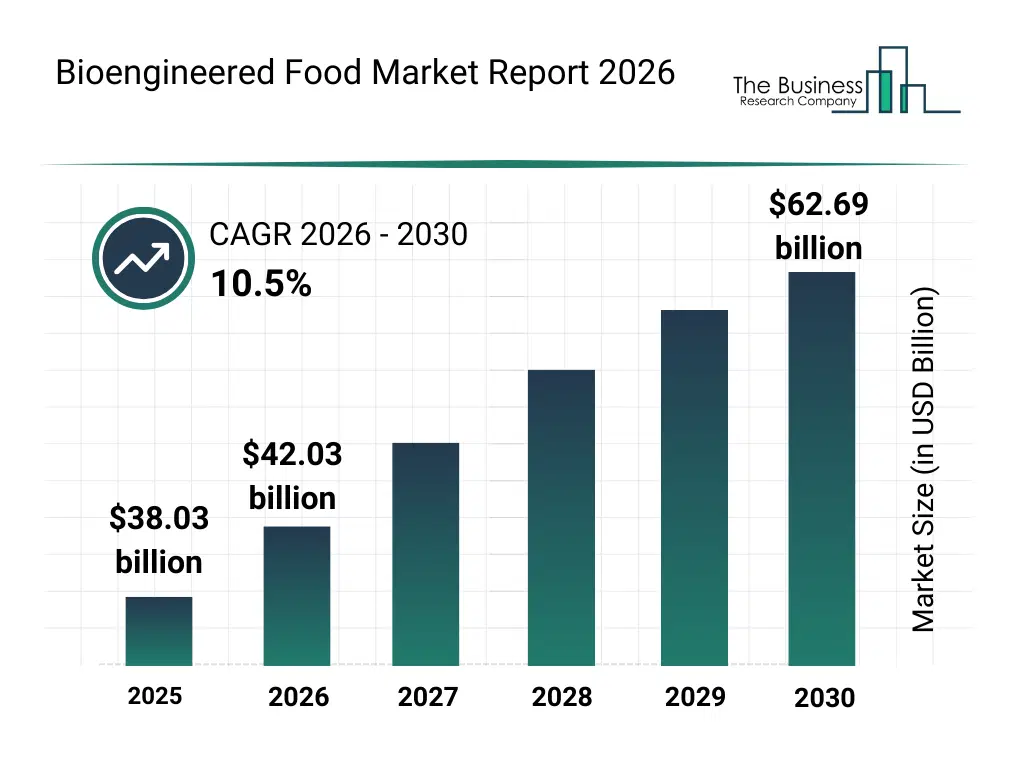
What Is The Bioengineered Food Market Size and Share 2026?
The bioengineered food market size has grown rapidly in recent years. It will grow from $38.03 billion in 2025 to $42.03 billion in 2026 at a compound annual growth rate (CAGR) of 10.5%. The growth in the historic period can be attributed to increasing global food demand, expansion of gm crop cultivation, early adoption of biotechnology in agriculture, rising investment in agricultural r&d, regulatory approvals for bioengineered crops.What Is The Bioengineered Food Market Growth Forecast?
The bioengineered food market size is expected to see rapid growth in the next few years. It will grow to $62.69 billion in 2030 at a compound annual growth rate (CAGR) of 10.5%. The growth in the forecast period can be attributed to growing demand for climate-resilient crops, rising focus on food security, expansion of precision breeding technologies, increasing investments in alternative protein development, broader acceptance of bioengineered food products. Major trends in the forecast period include increasing adoption of crispr-based crop development, rising focus on nutritional trait enhancement, growing deployment of cellular agriculture techniques, expansion of bioengineered food commercialization, enhanced emphasis on yield stability.
Global Bioengineered Food Market Segmentation
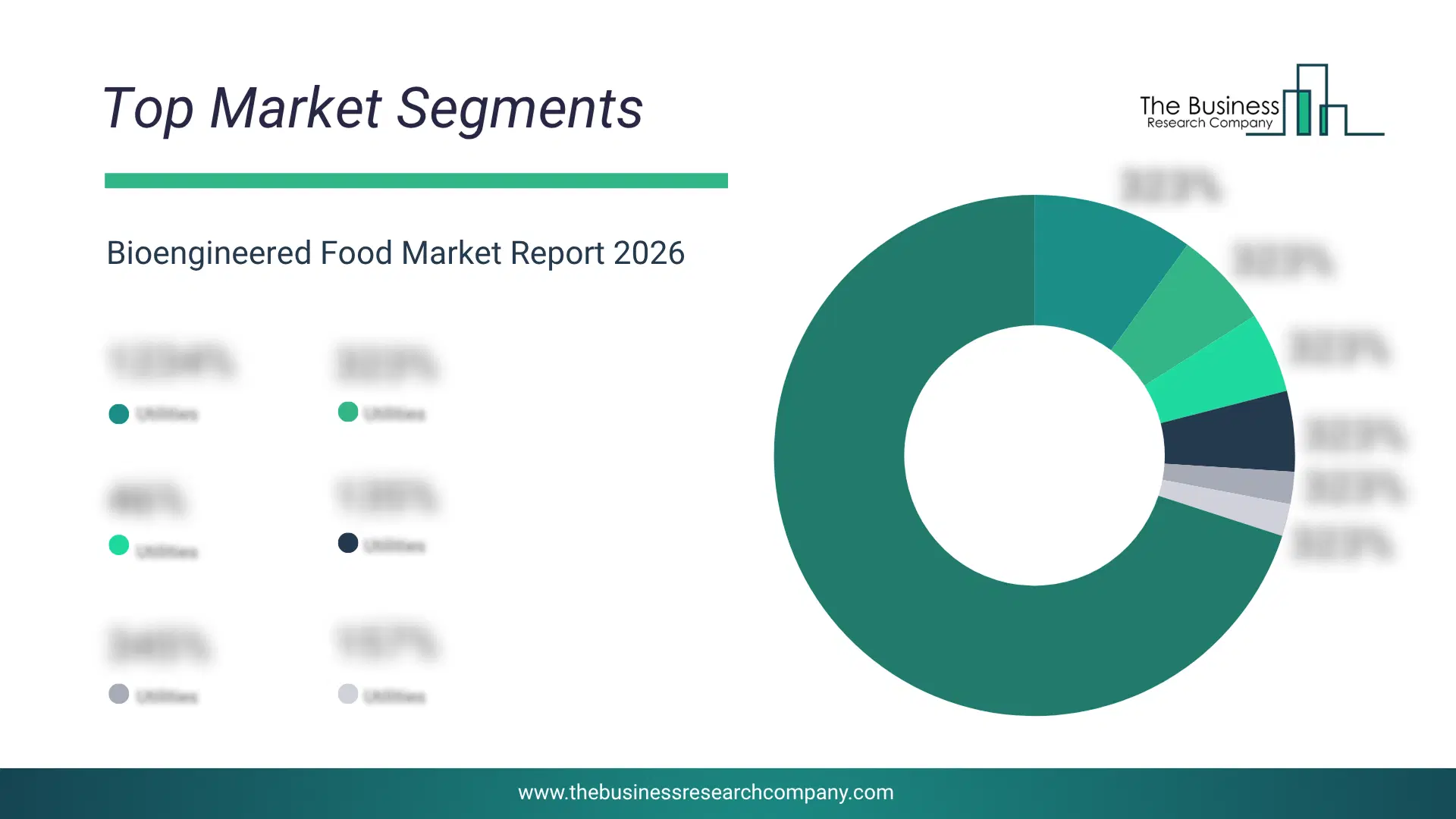
1) By Product Type: Vegetables, Fruits, Crops, Other Product Types 2) By Type Of Modification: Cellular Agriculture, Genetic Modification 3) By Technology: Clustered Regularly Interspaced Short Palindromic Repeats (CRISPR), Tissue Culture 4) By Trait: Disease Resistance, Herbicide Tolerance, Insect Resistance, Nutritional Enhancement 5) By Application: Food And Beverage, Animal Feed, Pharmaceuticals, Other Applications Subsegments: 1) By Vegetables: Genetically Modified (GM) Tomatoes, GM Eggplant, GM Potatoes, GM Peppers 2) By Fruits: GM Apples, GM Bananas, GM Strawberries 3) By Crops: GM Soybeans, GM Cotton, GM Rice, GM Canola 4) By Other Product Types: Bioengineered Meat, Bioengineered Dairy Products, Bioengineered GrainsWhat Is The Driver Of The Bioengineered Food Market?
The growing demand for sustainable agricultural practices is expected to propel the growth of the bioengineered food market going forward. Sustainable agricultural practices involve farming techniques that fulfill present food and fiber requirements while ensuring future generations. The demand for sustainable agricultural practices is due to increasing concerns about environmental degradation, the need to preserve biodiversity, and the push for food security amid climate change challenges. Sustainable agricultural practices help support and enhance the use of bioengineered food by promoting environmentally friendly, efficient, and resource-conscious food production methods. For instance, in May 2023, according to the Organic Trade Association, a US based advocacy group, U.S. sales of certified organic products reached US$ 69.7 billion, up 3.4% vs 2022. Therefore, the growing demand for sustainable agricultural practices is driving the growth of the bioengineered food industry.Key Players In The Global Bioengineered Food Market
Major companies operating in the bioengineered food market are BASF SE, Bayer AG, Syngenta AG, Corteva Agriscience, DuPont de Nemours Inc., J.R. Simplot Corp., Sakata Seed Corporation, International Rice Research Institute, Rothamsted Research, Okanagan Specialty Fruits Inc., GreenVenus LLC, AquaBounty Technologies Inc., Calyxt Inc., Nuseed Global, Norfolk Healthy Produce, Monsanto (Bayer Crop Science), KWS SAAT SE, Dow AgroSciences, Pairwise, Arcadia Biosciences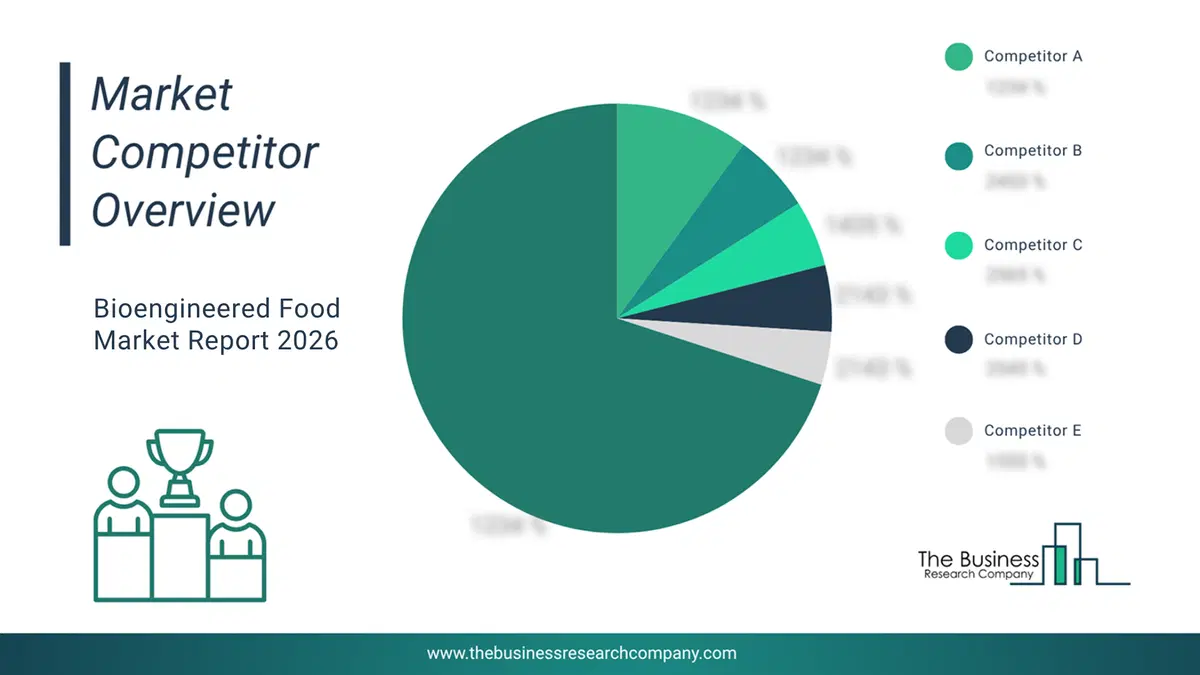
This chart is for illustrative purposes; the full report includes a detailed competitor analysis and comprehensive overview of the top 10 companies in the market.
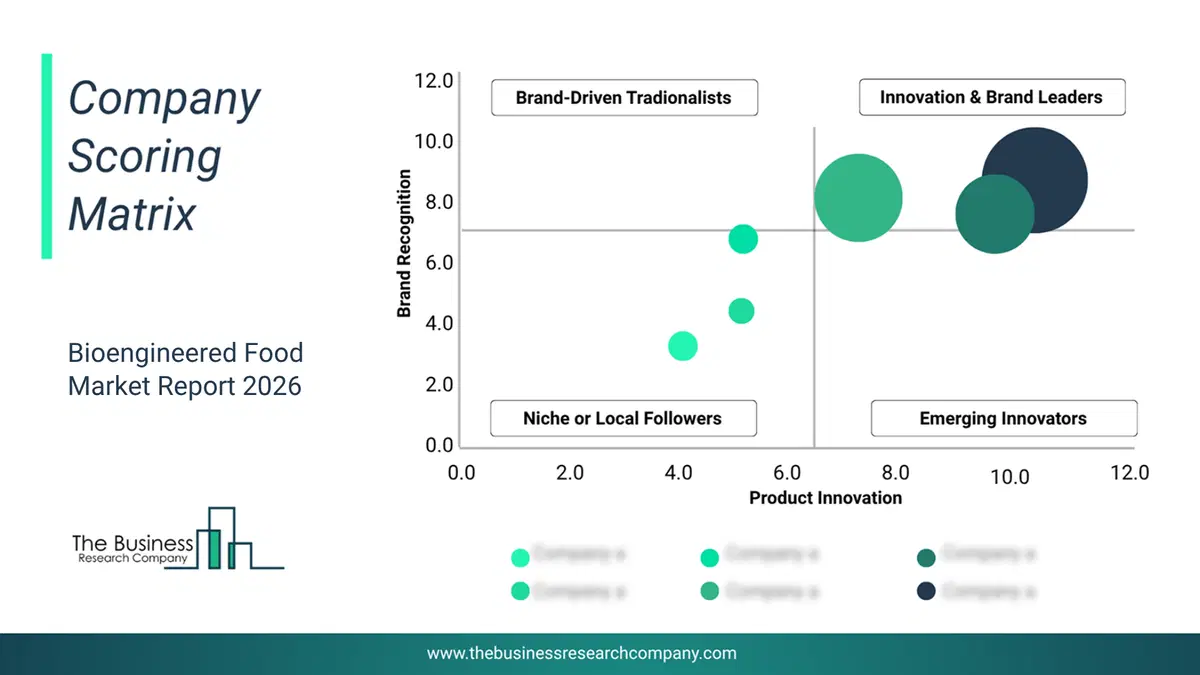
This chart maps companies by product innovation and brand strength, with bubble size indicating relative revenue, helping identify market leaders, challengers, and niche players. This is an illustrative chart; the full report provides a complete and accurate competitive analysis.
Global Bioengineered Food Market Trends and Insights
Major companies operating in the bioengineered food market are focused on developing advanced products, such as transgenic insect-resistant food, to improve crop yields while promoting sustainable agricultural practices. Transgenic insect-resistant food consists of crops that have been genetically modified to incorporate genes granting resistance to insect pests. This innovation aims to decrease the dependence on chemical insecticides, boost crop protection, and enhance yields by increasing plants' resilience to pests. For instance, in January 2024, the Federal Government of Nigeria authorized the commercial launch of TELA maize varieties. This maize variety, including SAMMAZ 72T, SAMMAZ 73T, SAMMAZ 74T, and SAMMAZ 75T, is engineered to resist major pests such as stemborer and fall armyworm. These varieties are drought-tolerant, making them ideal for regions with fluctuating rainfall. They can yield up to 10 tons per hectare under optimal conditions, surpassing the national average of 6 tons for similar hybrids. It is adaptable to rain forests, guinea, and Sudan savannas, and they aim to mitigate maize production losses due to pests. This innovation has the potential to save millions of metric tons of maize, supporting food security across Africa.What Are Latest Mergers And Acquisitions In The Bioengineered Food Market?
In August 2023, Cora Seeds, an Italy-based seed company, acquired the onion and pumpkin programs of the KWS SAAT SE & Co. KGaA for an undisclosed amount. This acquisition supports Cora Seeds' strategy to enhance its portfolio and bolster its position in the agricultural sector, especially in vegetable seeds. This deal aligns with the company's goal of expanding its market presence and improving its breeding capabilities for high-quality vegetable seeds. KWS SAAT SE & Co. KGaA is a Germany-based agricultural company that provides new breeding methods (NBM), such as genome editing for bioengineered food.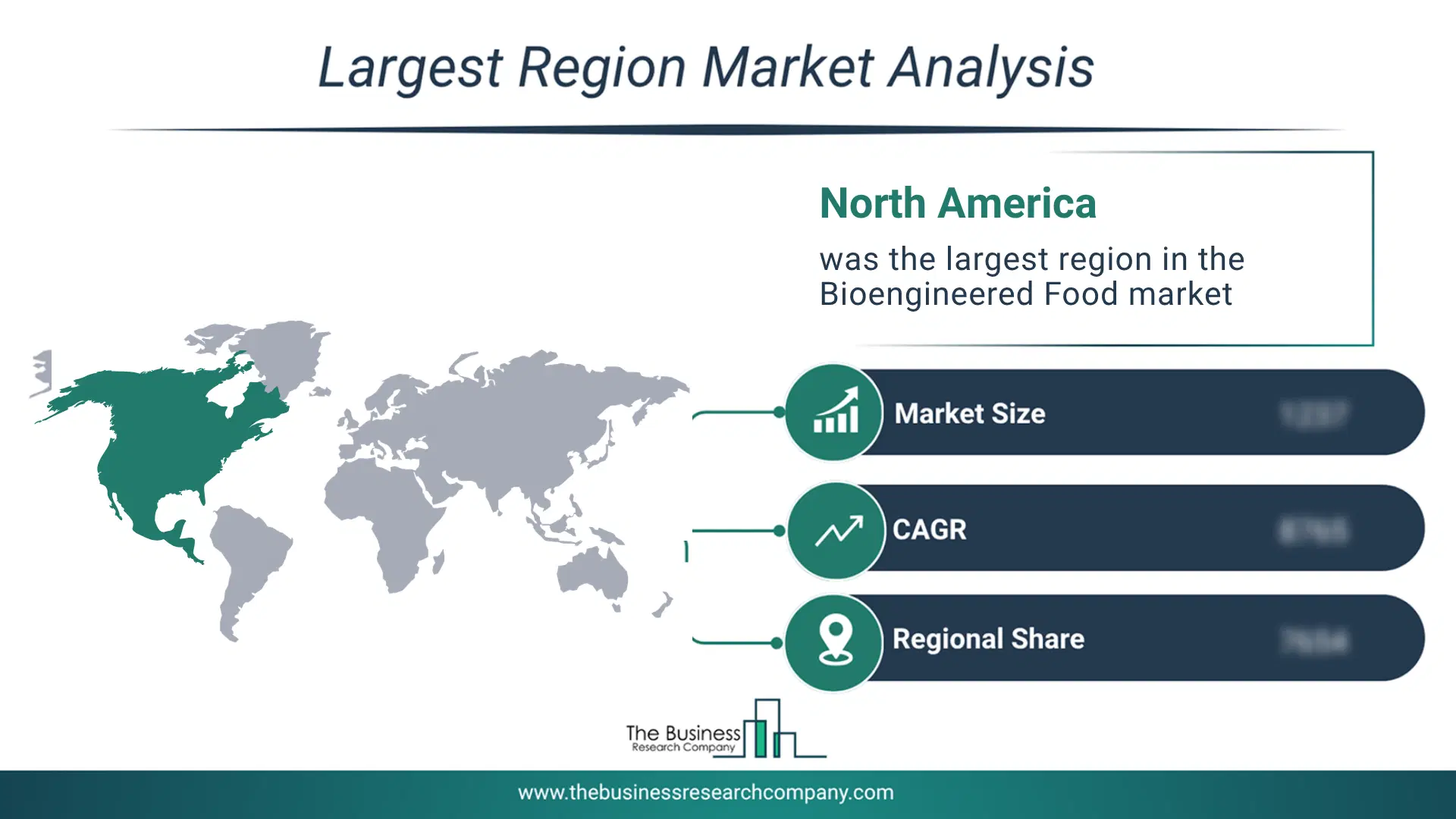
Regional Outlook
North America was the largest region in the bioengineered food market in 2025. Asia-Pacific is expected to be the fastest-growing region in the forecast period. The regions covered in this market report are Asia-Pacific, South East Asia, Western Europe, Eastern Europe, North America, South America, Middle East and Africa. The countries covered in this market report are Australia, Brazil, China, France, Germany, India, Indonesia, Japan, Taiwan, Russia, South Korea, UK, USA, Italy, Spain, CanadaWhat Defines the Bioengineered Food Market?
The bioengineered food market consists of revenues earned by entities by providing services such as sustainable farming, food security, agricultural productivity, and pest and disease resistance. The market value includes the value of related goods sold by the service provider or included within the service offering. The bioengineered food market also includes sales of grains, legumes, and dairy products. Values in this market are ‘factory gate’ values, that is, the value of goods sold by the manufacturers or creators of the goods, whether to other entities (including downstream manufacturers, wholesalers, distributors, and retailers) or directly to end customers. The value of goods in this market includes related services sold by the creators of the goods.How is Market Value Defined and Measured?
The market value is defined as the revenues that enterprises gain from the sale of goods and/or services within the specified market and geography through sales, grants, or donations in terms of the currency (in USD unless otherwise specified). The revenues for a specified geography are consumption values that are revenues generated by organizations in the specified geography within the market, irrespective of where they are produced. It does not include revenues from resales along the supply chain, either further along the supply chain or as part of other products.
This chart presents market attractiveness based on a quantitative evaluation of growth, competition, strategic alignment, and risk, offering a clear view of opportunity areas for decision-making. This chart is for illustrative purposes; the full report contains the complete analysis.

This chart highlights the Total Addressable Market (TAM) by estimating the maximum revenue opportunity using an assumption-driven approach, supporting strategic planning and opportunity sizing across markets. The chart is illustrative; the full report provides a more comprehensive analysis.
What Key Data and Analysis Are Included in the Bioengineered Food Market Report 2026?
The bioengineered food market research report is one of a series of new reports from The Business Research Company that provides market statistics, including industry global market size, regional shares, competitors with the market share, detailed market segments, market trends and opportunities, and any further data you may need to thrive in the bioengineered food industry. The market research report delivers a complete perspective of everything you need, with an in-depth analysis of the current and future state of the industry.Bioengineered Food Market Report Forecast Analysis
| Report Attribute | Details |
|---|---|
| Market Size Value In 2026 | $42.03 billion |
| Revenue Forecast In 2030 | $62.69 billion |
| Growth Rate | CAGR of 10.5% from 2026 to 2030 |
| Base Year For Estimation | 2025 |
| Actual Estimates/Historical Data | 2020-2025 |
| Forecast Period | 2026 - 2030 |
| Market Representation | Revenue in USD Billion and CAGR from 2026 to 2030 |
| Segments Covered | Product Type, Type Of Modification, Technology, Trait, Application |
| Regional Scope | Asia-Pacific, Western Europe, Eastern Europe, North America, South America, Middle East, Africa |
| Country Scope | The countries covered in the report are Australia, Brazil, China, France, Germany, India, Indonesia, Japan, Taiwan, Russia, South Korea, UK, USA, Canada, Italy, Spain. |
| Key Companies Profiled | BASF SE, Bayer AG, Syngenta AG, Corteva Agriscience, DuPont de Nemours Inc., J.R. Simplot Corp., Sakata Seed Corporation, International Rice Research Institute, Rothamsted Research, Okanagan Specialty Fruits Inc., GreenVenus LLC, AquaBounty Technologies Inc., Calyxt Inc., Nuseed Global, Norfolk Healthy Produce, Monsanto (Bayer Crop Science), KWS SAAT SE, Dow AgroSciences, Pairwise, Arcadia Biosciences |
| Customization Scope | Request for Customization |
| Pricing And Purchase Options | Explore Purchase Options |