
Bioengineered Protein Drugs Market Report 2026
Global Outlook – By Drug Type (Recombinant Protein, Vaccine, Peptide Antibiotics, Therapeutic Enzymes, Other Drug Type), By Technology (Bioreactors, Fractionation, Genetically Modified Organisms, Genetic Engineering, Pharming, Cell Culture, Microbial Cell Fermentation, Other Technology), By Application (Autoimmune, Heart, Congenital, Infectious Diseases, Cancer, Diabetes, Arthritis, Other Application), By End User (Pharmaceutical, Contract Research Organizations, Research Institutes, Biotechnology Companies) – Market Size, Trends, Strategies, and Forecast to 2030
Bioengineered Protein Drugs Market Overview
• Bioengineered Protein Drugs market size has reached to $435.17 billion in 2025 • Expected to grow to $646.93 billion in 2030 at a compound annual growth rate (CAGR) of 8.4% • Growth Driver: Rising Chronic Disease Prevalence Propels Expansion Of Bioengineered Protein Drug Market • Market Trend: Strategic Partnership Drive Progress In The Bioengineered Protein Drug Market • North America was the largest region in 2025.What Is Covered Under Bioengineered Protein Drugs Market?
Bioengineered protein drugs are defined as drugs that are manufactured through certain laboratory techniques using living cells, which include applications of biological processes and protein molecules. The use of bioengineered proteins allows for the tuning of mechanical and stimuli-sensitive qualities, together with high purity and uniform molecular weight, avoiding adverse results. The main types of bioengineered protein drugs are recombinant proteins, vaccines, peptide antibiotics, therapeutic enzymes, and others. Recombinant proteins refer to proteins that are produced through genetic engineering techniques that involve inserting a gene or genes encoding a desired protein into an organism, such as bacteria or yeast. They are produced with various technologies, including bioreactors, microbial cell fermentation, fractionation, genetically modified organisms, genetic engineering, pharmacology, cell culture, microbial cell fermentation, and others, used by pharmaceutical companies, contract research organizations, research institutes, and biotechnology companies. It is used to treat various diseases, including autoimmune, heart, congenital, infectious, cancer, diabetes, arthritis, and others.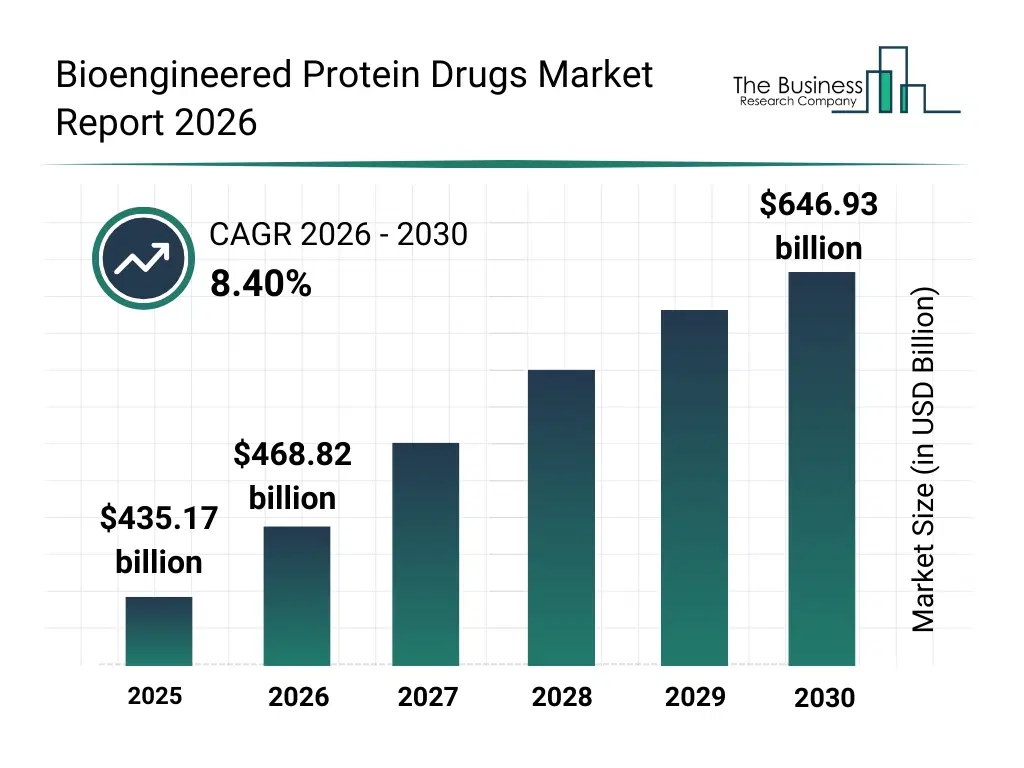
What Is The Bioengineered Protein Drugs Market Size and Share 2026?
The bioengineered protein drugs market size has grown strongly in recent years. It will grow from $435.17 billion in 2025 to $468.82 billion in 2026 at a compound annual growth rate (CAGR) of 7.7%. The growth in the historic period can be attributed to adoption of recombinant dna technology, increased demand for monoclonal antibodies, advancements in cell culture techniques, growth of biotechnology R&D, emergence of biosimilars.What Is The Bioengineered Protein Drugs Market Growth Forecast?
The bioengineered protein drugs market size is expected to see strong growth in the next few years. It will grow to $646.93 billion in 2030 at a compound annual growth rate (CAGR) of 8.4%. The growth in the forecast period can be attributed to rising prevalence of autoimmune and rare diseases, increased investment in precision medicine, expansion of biologics manufacturing infrastructure, integration of ai in drug development, growing demand for personalized therapies. Major trends in the forecast period include personalized protein therapeutics, advanced protein engineering techniques, expansion of contract manufacturing services, enhanced protein purification technologies, growth in rare disease treatments.
Global Bioengineered Protein Drugs Market Segmentation
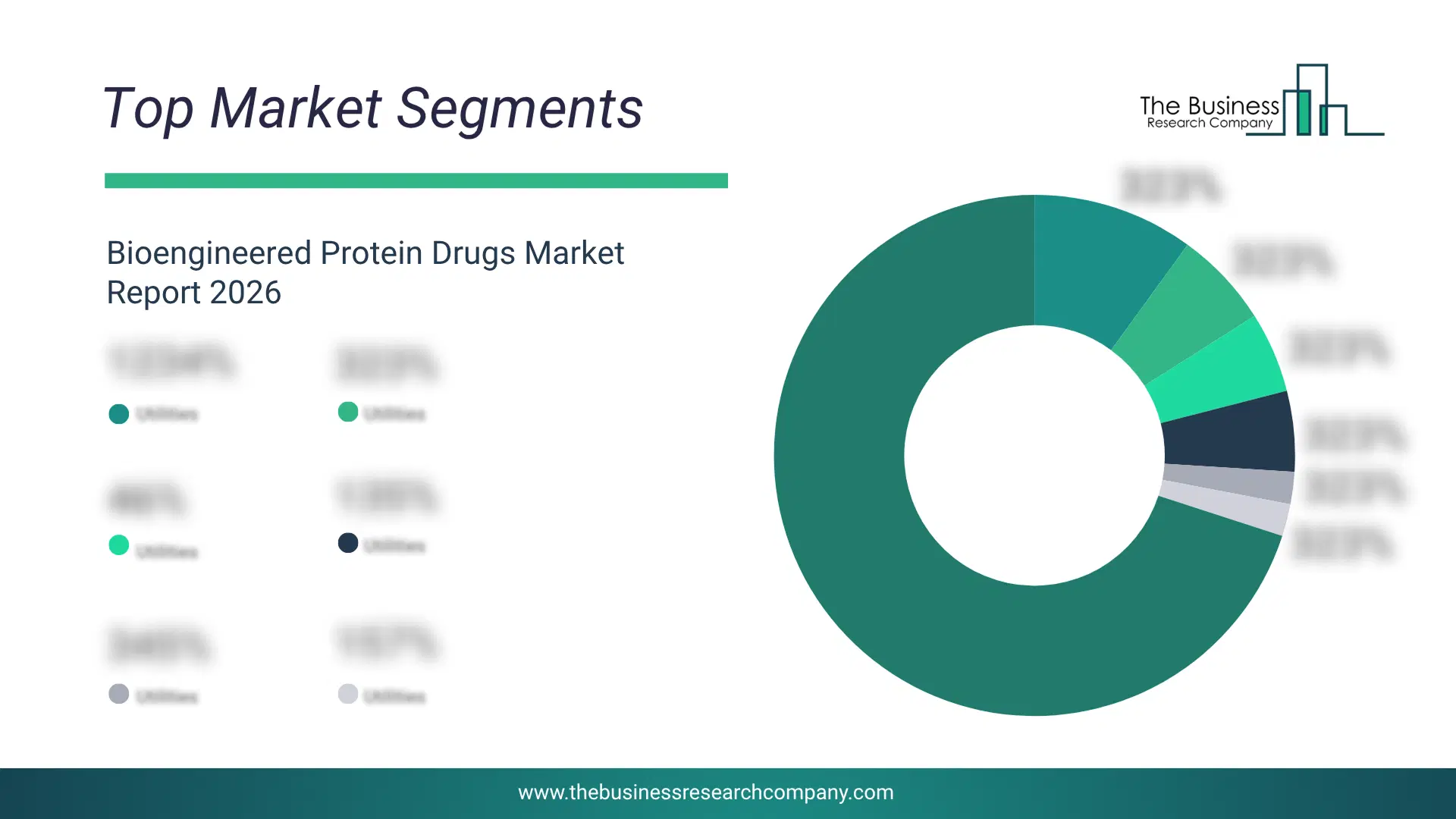
1) By Drug Type: Recombinant Protein, Vaccine, Peptide Antibiotics, Therapeutic Enzymes, Other Drug Type 2) By Technology: Bioreactors, Fractionation, Genetically Modified Organisms, Genetic Engineering, Pharming, Cell Culture, Microbial Cell Fermentation, Other Technology 3) By Application: Autoimmune, Heart, Congenital, Infectious Diseases, Cancer, Diabetes, Arthritis, Other Application 4) By End User: Pharmaceutical, Contract Research Organizations, Research Institutes, Biotechnology Companies Subsegments: 1) By Recombinant Protein: Monoclonal Antibodies, Hormones, Cytokines 2) By Vaccine: Recombinant Vaccines, DNA Vaccines 3) By Peptide Antibiotics: Lipopeptide Antibiotics, Glycopeptide Antibiotics 4) By Therapeutic Enzymes: Enzyme Replacement Therapies, Biosimilar Enzymes 5) By Other Drug Type: Fusion Proteins, Antibody-Drug Conjugates (ADCs)What Is The Driver Of The Bioengineered Protein Drugs Market?
The increasing prevalence of chronic disease is expected to propel the growth of the bioengineered protein drug market going forward. Chronic diseases refer to those diseases from which people suffer for a year or longer, require continuous medical care, and restrict everyday physical activities. Bioengineered protein drugs are used for the treatment of chronic diseases with designer protein therapies for use in oncology and regenerative medicine using combinatorial and logical methodologies. For instance, in February 2024, according to the World Health Organization, a Switzerland-based intergovernmental organization, by 2050, over 35 million new cancer cases were projected, representing a 77% increase compared to the estimated 20 million cases in 2022. Therefore, the increasing chronic diseases are driving the growth of bioengineered protein drugs industry.Key Players In The Global Bioengineered Protein Drugs Market
Major companies operating in the bioengineered protein drugs market are Abbvie Inc., Amgen Inc., Astrazeneca PLC, Bayer HealthCare Pharmaceuticals LLC, Eli Lilly and Company, F. Hoffmann-La Roche AG, GlaxoSmithKline plc, Johnson & Johnson, Novartis AG, Novo Nordisk A/S, Sanofi S.A., Grifols S.A., Adma Biologics Inc., CSL Limited, Abbott Laboratories, Baxter International Inc., Fresenius Kabi AG, Merck & Co. Inc., Pfizer Inc., Biogen Inc., Bristol-Myers Squibb Company, Genentech Inc., Lonza Group AG, MedImmune LLC, Regeneron Pharmaceuticals Inc., Shire plc., Takeda Pharmaceutical Company Limited, Teva Pharmaceutical Industries Ltd., Shanghai United Cell Biotechnology Co. Ltd., Panacea Biotec Ltd.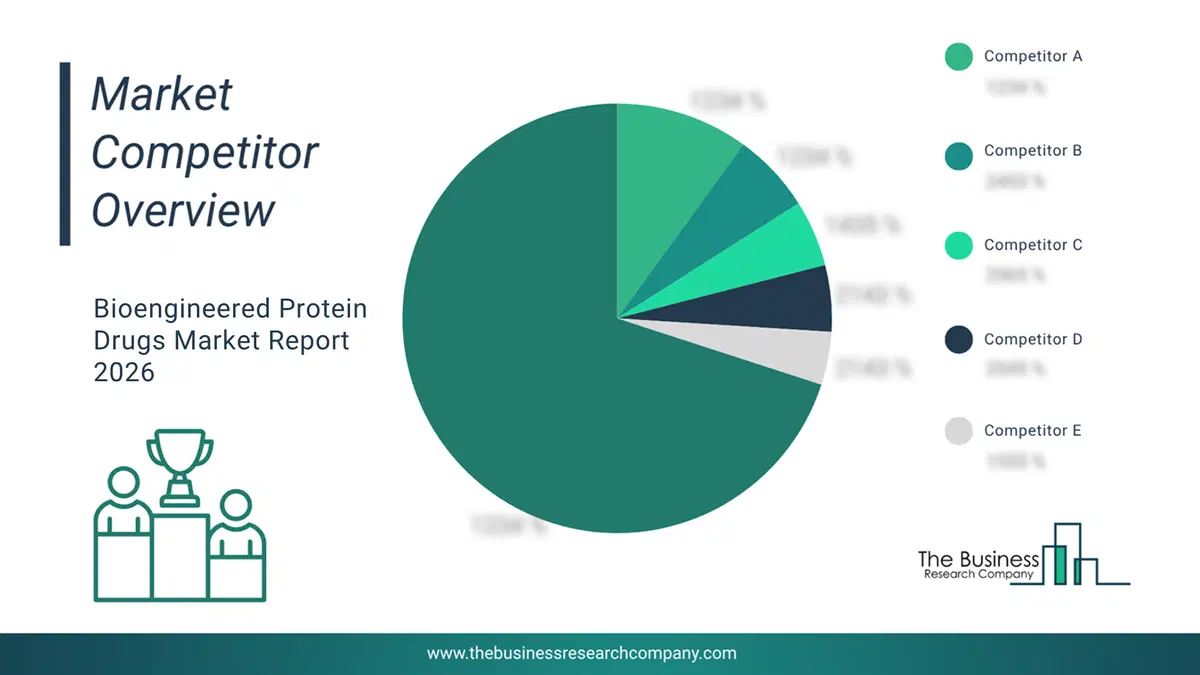
This chart is for illustrative purposes; the full report includes a detailed competitor analysis and comprehensive overview of the top 10 companies in the market.
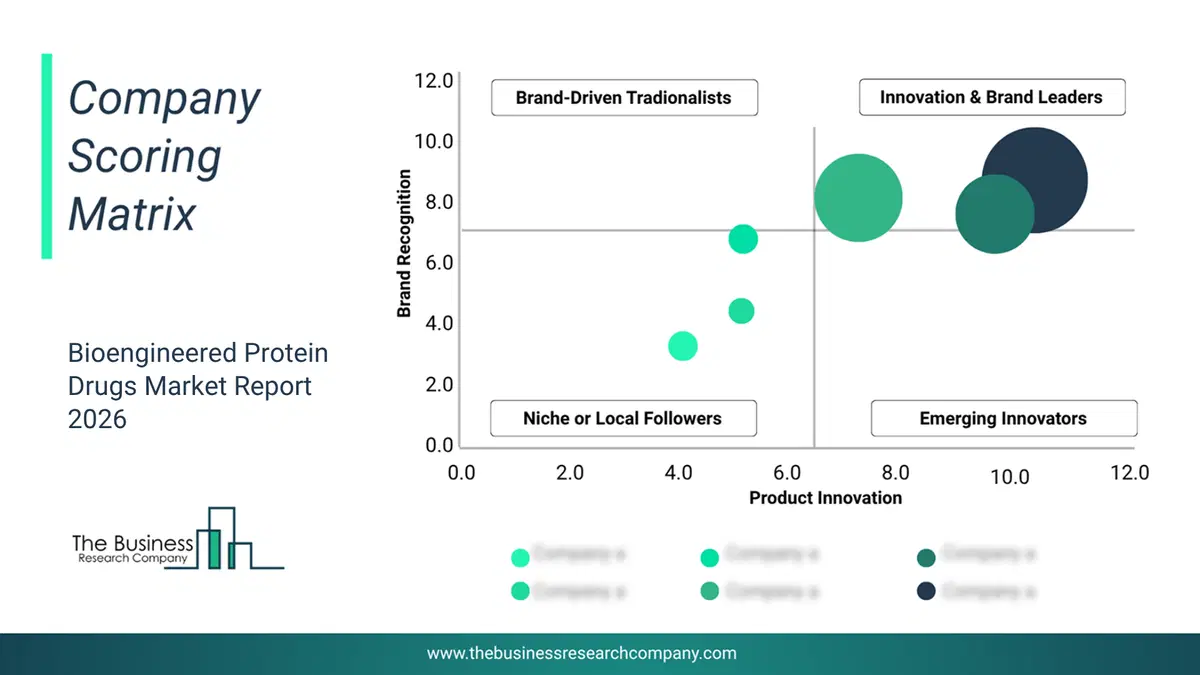
This chart maps companies by product innovation and brand strength, with bubble size indicating relative revenue, helping identify market leaders, challengers, and niche players. This is an illustrative chart; the full report provides a complete and accurate competitive analysis.
Global Bioengineered Protein Drugs Market Trends and Insights
Major companies operating in the bioengineered protein drug market are adopting strategic partnerships approach to provide essential bioengineered protein drug to businesses, and governments. Strategic partnerships refer to a process in which companies leverage each other's strengths and resources to achieve mutual benefits and success. For instance, in June 2023, Future Fields, a Canada-based biotechnology company partnered with Jenthera Therapeutics, a Canada-based biotechnology company that focuses on developing innovative therapies for rare and complex diseases. With this partnership, they aim to develop a novel cancer-fighting protein using Future Fields' EntoEngine platform for cost-effective and sustainable mass production.What Are Latest Mergers And Acquisitions In The Bioengineered Protein Drugs Market?
In September 2024, Ligand Pharmaceuticals Inc, a US-based biopharmaceutical company, acquired Apeiron Biologics for $100 million. With this acquisition, Apeiron Biologics aims to enhance Ligand's portfolio by granting it royalty rights to Qarziba (dinutuximab beta), the only approved immunotherapy for high-risk neuroblastoma, which is currently marketed in over 35 countries. Apeiron Biologics AG is a Austria-based biotechnology company focused on developing innovative immunotherapies for the treatment of cancer and other diseases.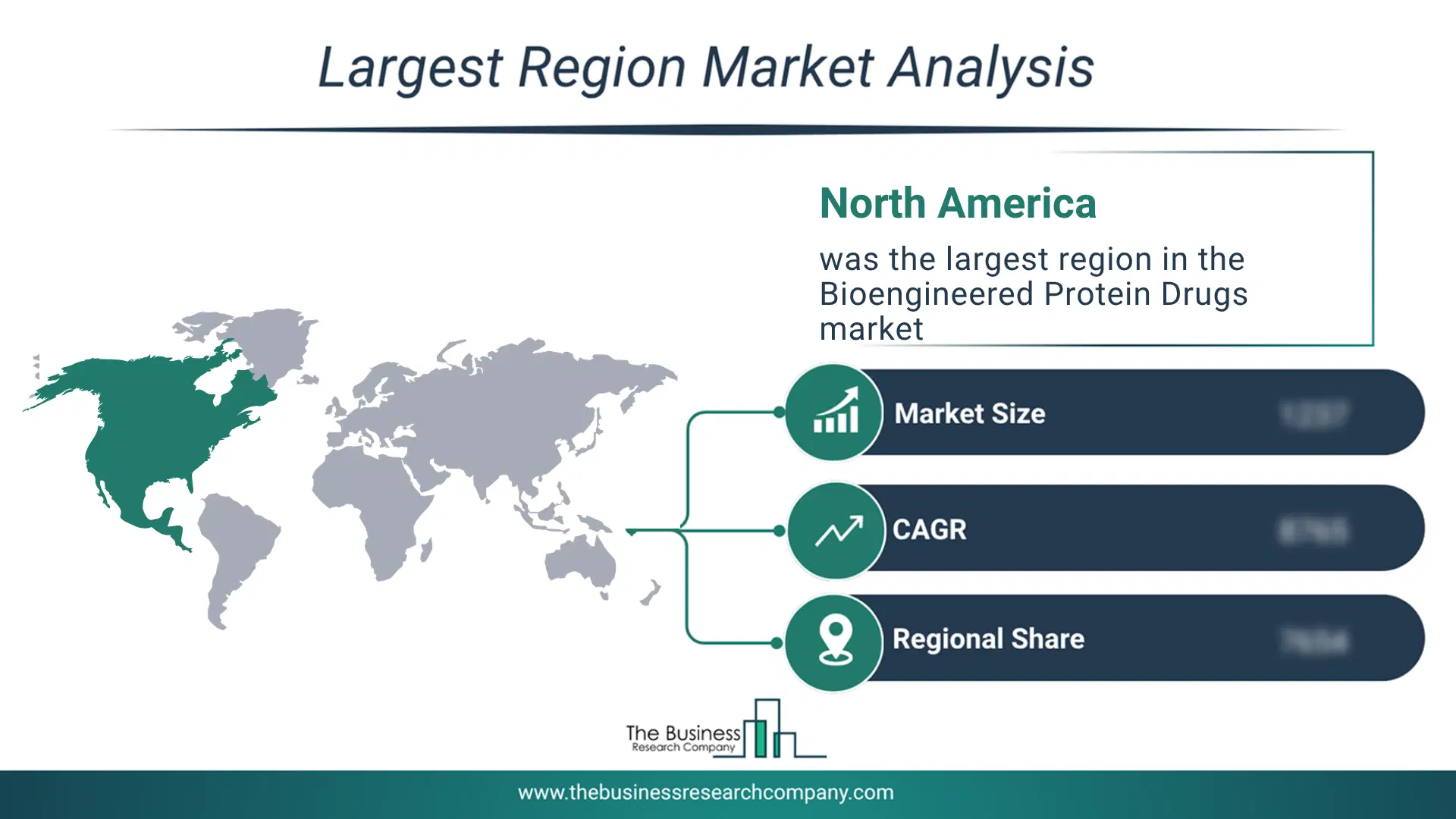
Regional Insights
North America was the largest region in the bioengineered protein drugs market in 2025. The regions covered in this market report are Asia-Pacific, South East Asia, Western Europe, Eastern Europe, North America, South America, Middle East, Africa. The countries covered in this market report are Australia, Brazil, China, France, Germany, India, Indonesia, Japan, Taiwan, Russia, South Korea, UK, USA, Canada, Italy, Spain.What Defines the Bioengineered Protein Drugs Market?
The bioengineered protein drugs market consists of sales of cytokines, peptide antibiotics, monoclonal antibodies, replacement proteins, and blood products. Values in this market are ‘factory gate’ values, that is the value of goods sold by the manufacturers or creators of the goods, whether to other entities (including downstream manufacturers, wholesalers, distributors, and retailers) or directly to end customers. The value of goods in this market includes related services sold by the creators of the goods.How is Market Value Defined and Measured?
The market value is defined as the revenues that enterprises gain from the sale of goods and/or services within the specified market and geography through sales, grants, or donations in terms of the currency (in USD unless otherwise specified). The revenues for a specified geography are consumption values that are revenues generated by organizations in the specified geography within the market, irrespective of where they are produced. It does not include revenues from resales along the supply chain, either further along the supply chain or as part of other products.
This chart presents market attractiveness based on a quantitative evaluation of growth, competition, strategic alignment, and risk, offering a clear view of opportunity areas for decision-making. This chart is for illustrative purposes; the full report contains the complete analysis.

This chart highlights the Total Addressable Market (TAM) by estimating the maximum revenue opportunity using an assumption-driven approach, supporting strategic planning and opportunity sizing across markets. The chart is illustrative; the full report provides a more comprehensive analysis.
What Key Data and Analysis Are Included in the Bioengineered Protein Drugs Market Report 2026?
The bioengineered protein drugs market research report is one of a series of new reports from The Business Research Company that provides market statistics, including industry global market size, regional shares, competitors with the market share, detailed market segments, market trends and opportunities, and any further data you may need to thrive in the bioengineered protein drugs industry. The market research report delivers a complete perspective of everything you need, with an in-depth analysis of the current and future state of the industry.Bioengineered Protein Drugs Market Report Forecast Analysis
| Report Attribute | Details |
|---|---|
| Market Size Value In 2026 | $468.82 billion |
| Revenue Forecast In 2030 | $646.93 billion |
| Growth Rate | CAGR of 7.7% from 2026 to 2030 |
| Base Year For Estimation | 2025 |
| Actual Estimates/Historical Data | 2020-2025 |
| Forecast Period | 2026 - 2030 |
| Market Representation | Revenue in USD Billion and CAGR from 2026 to 2030 |
| Segments Covered | Drug Type, Technology, Application, End User |
| Regional Scope | Asia-Pacific, Western Europe, Eastern Europe, North America, South America, Middle East, Africa |
| Country Scope | The countries covered in the report are Australia, Brazil, China, France, Germany, India, Indonesia, Japan, Taiwan, Russia, South Korea, UK, USA, Canada, Italy, Spain. |
| Key Companies Profiled | Abbvie Inc., Amgen Inc., Astrazeneca PLC, Bayer HealthCare Pharmaceuticals LLC, Eli Lilly and Company, F. Hoffmann-La Roche AG, GlaxoSmithKline plc, Johnson & Johnson, Novartis AG, Novo Nordisk A/S, Sanofi S.A., Grifols S.A., Adma Biologics Inc., CSL Limited, Abbott Laboratories, Baxter International Inc., Fresenius Kabi AG, Merck & Co. Inc., Pfizer Inc., Biogen Inc., Bristol-Myers Squibb Company, Genentech Inc., Lonza Group AG, MedImmune LLC, Regeneron Pharmaceuticals Inc., Shire plc., Takeda Pharmaceutical Company Limited, Teva Pharmaceutical Industries Ltd., Shanghai United Cell Biotechnology Co. Ltd., Panacea Biotec Ltd. |
| Customization Scope | Request for Customization |
| Pricing And Purchase Options | Explore Purchase Options |