
Bioengineering Technology Market Report 2026
Global Outlook – By Product (Biomedical Engineering, Genetic Engineering, Biotechnology, Tissue Engineering, Biomechanics Engineering, Biomaterial, Biomechanical Engineering, Nano-Biotechnology, Bioinformatics, Other Products ), By Technology (Nanobiotechnology, Tissue Engineering And Regeneration, DNA Sequencing, Cell-Based Assays, Fermentation), By Application (Health, Food And Agriculture, Natural Resources And Environment) – Market Size, Trends, Strategies, and Forecast to 2030
Bioengineering Technology Market Overview
• Bioengineering Technology market size has reached to $360.09 billion in 2025 • Expected to grow to $629.29 billion in 2030 at a compound annual growth rate (CAGR) of 11.7% • Growth Driver: Rising Prevalence Of Chronic Diseases Propels Bioengineering Technology Market Growth • Market Trend: Technological Advancements Driving Innovation In Genetic Therapies • North America was the largest region in 2025.Market Gains By 2030 – Top Opportunities By Segment
Market Gain identifies the most promising market opportunities by highlighting the segments or products expected to generate the highest incremental revenue growth over the next five years.
What Is Covered Under Bioengineering Technology Market?
Bioengineering technology refers to the application of principles and techniques from engineering and the natural sciences to develop technologies and solutions for understanding, manipulating, and utilizing biological systems. It is used to solve problems and improve processes in the fields of medicine, biology, and healthcare. The main types of products in bioengineering technology are biomedical engineering, genetic engineering, biotechnology, tissue engineering, biomechanics engineering, biomaterials, biomechanical engineering, nano-biotechnology, bioinformatics, and others. Biomedical engineering is the application of engineering principles and design concepts to medicine and biology for healthcare purposes. It involves various technologies, such as nanobiotechnology, tissue engineering and regeneration, DNA sequencing, cell-based assays, and fermentation, and is used in different applications such as health, food and agriculture, natural resources, and environment.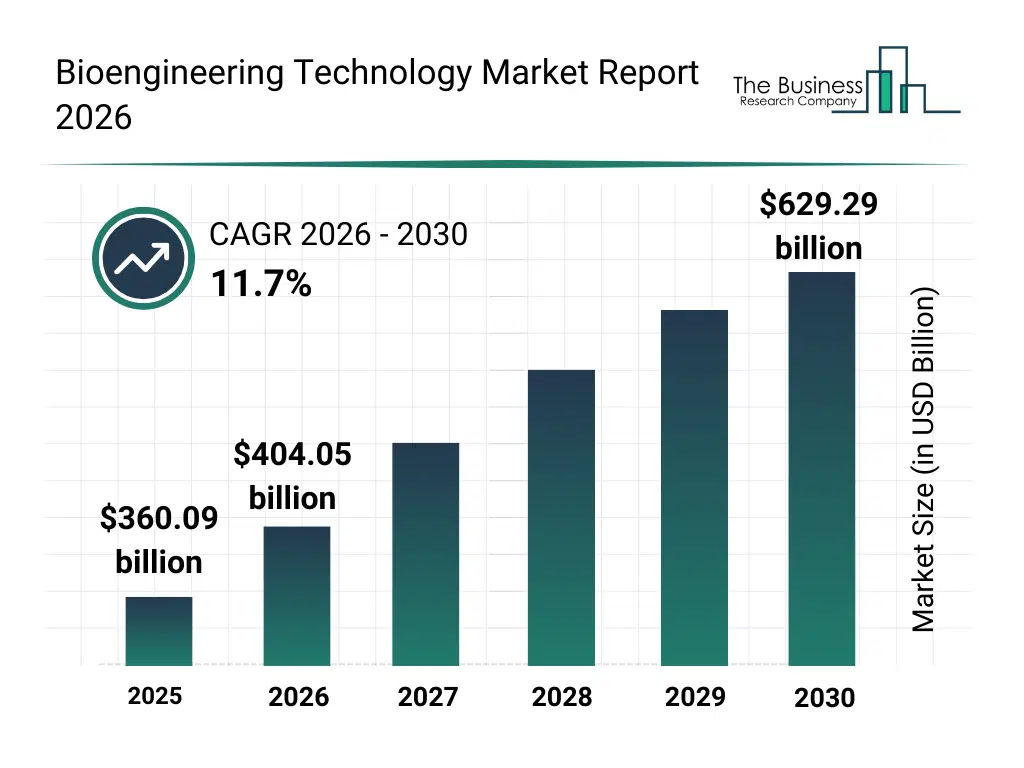
What Is The Bioengineering Technology Market Size and Share 2026?
The bioengineering technology market size has grown rapidly in recent years. It will grow from $360.09 billion in 2025 to $404.05 billion in 2026 at a compound annual growth rate (CAGR) of 12.2%. The growth in the historic period can be attributed to early advancements in genetic engineering, rise of biomedical device innovation, increased demand for diagnostic precision, initial adoption of dna sequencing technologies, growth in bioprocessing research.What Is The Bioengineering Technology Market Growth Forecast?
The bioengineering technology market size is expected to see rapid growth in the next few years. It will grow to $629.29 billion in 2030 at a compound annual growth rate (CAGR) of 11.7%. The growth in the forecast period can be attributed to expansion of regenerative medicine, rising investment in nanobiotechnology, increasing demand for personalized healthcare, accelerated integration of bioinformatics analytics, growth of sustainable bioengineering solutions. Major trends in the forecast period include expansion of advanced gene manipulation techniques, increasing development of regenerative tissues and biomaterials, rising adoption of nanotechnology for biomedical applications, growth in biomechanical engineering solutions, accelerated innovation in bioinformatics platforms.
Global Bioengineering Technology Market Segmentation
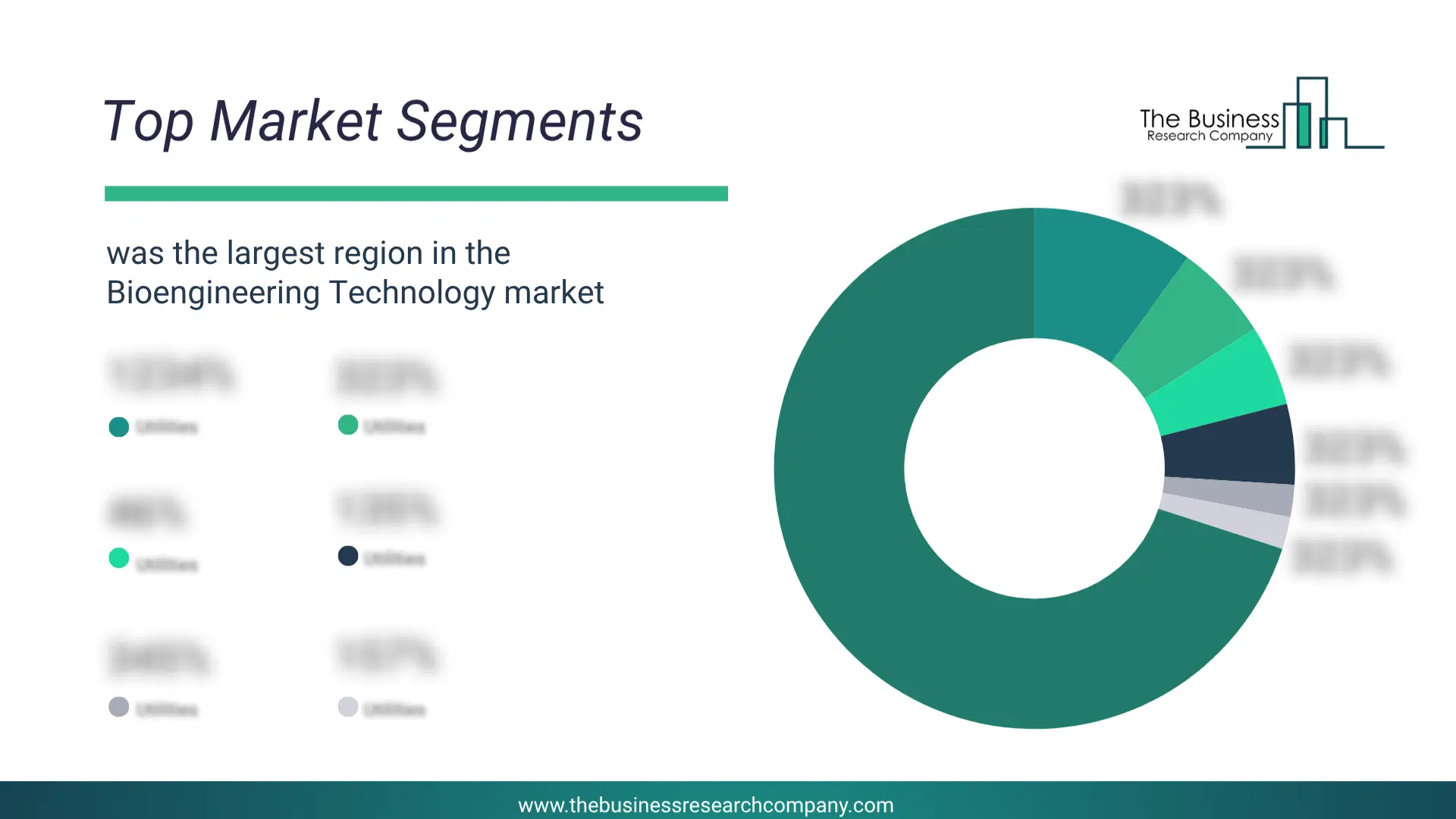
1) By Product: Biomedical Engineering, Genetic Engineering, Biotechnology, Tissue Engineering, Biomechanics Engineering, Biomaterial, Biomechanical Engineering, Nano-Biotechnology, Bioinformatics, Other Products 2) By Technology: Nanobiotechnology, Tissue Engineering And Regeneration, DNA Sequencing, Cell-Based Assays, Fermentation 3) By Application: Health, Food And Agriculture, Natural Resources And Environment Subsegments: 1) By Biomedical Engineering: Medical Devices, Diagnostic Equipment, Prosthetics And Implants 2) By Genetic Engineering: Gene Editing Tools (CRISPR), Recombinant DNA Technology, Gene Therapy Products 3) By Biotechnology: Biopharmaceuticals, Industrial Biotechnology Products, Agricultural Biotechnology 4) By Tissue Engineering: Scaffolds, Stem Cell Technology, Regenerative Medicine Products 5) By Biomechanics Engineering: Motion Analysis Systems, Orthopedic Biomechanics, Sports Biomechanics Products 6) By Biomaterials: Natural Biomaterials, Synthetic Biomaterials, Biodegradable Polymers 7) By Biomechanical Engineering: Prosthetic Devices, Orthotic Devices, Rehabilitation Equipment 8) By Nano-Biotechnology: Nanoparticles For Drug Delivery, Nanosensors, Nanomaterials For Biomedical Applications 9) By Bioinformatics: Genomic Data Analysis Tools, Protein Structure Analysis Software, Biological Databases 10) By Other Products: Environmental Bioengineering Solutions, Bioremediation Technologies, Bioprocessing Equipment The top segments in the bioengineering technology market will be: • Health will reach $188979.83 Million by 2025. • Biomedical Engineering will reach $104964.63 Million by 2025. • Other technologies will reach $76177.37 Million by 2025. • Genetic Engineering will reach $75928.22 Million by 2025. • Tissue Engineering And Regeneration will reach $69859.65 Million by 2025.What Is Driver Of The Bioengineering Technology Market?
The increasing prevalence of chronic diseases is expected to propel the growth of the bioengineering technology market going forward. Chronic diseases are referred to as long-term health conditions characterized by their prolonged and persistent nature. Bioengineering technology is used in the management and treatment of chronic diseases due to its potential to provide innovative solutions, improve outcomes, and enhance the quality of life for patients. For instance, in April 2025, according to the NHS Confederation, a UK-based national association, in 2035, it is estimated that 17% of the UK population could be living with four or more chronic conditions. Therefore, the increasing prevalence of chronic diseases is driving the growth of the bioengineering technology industry.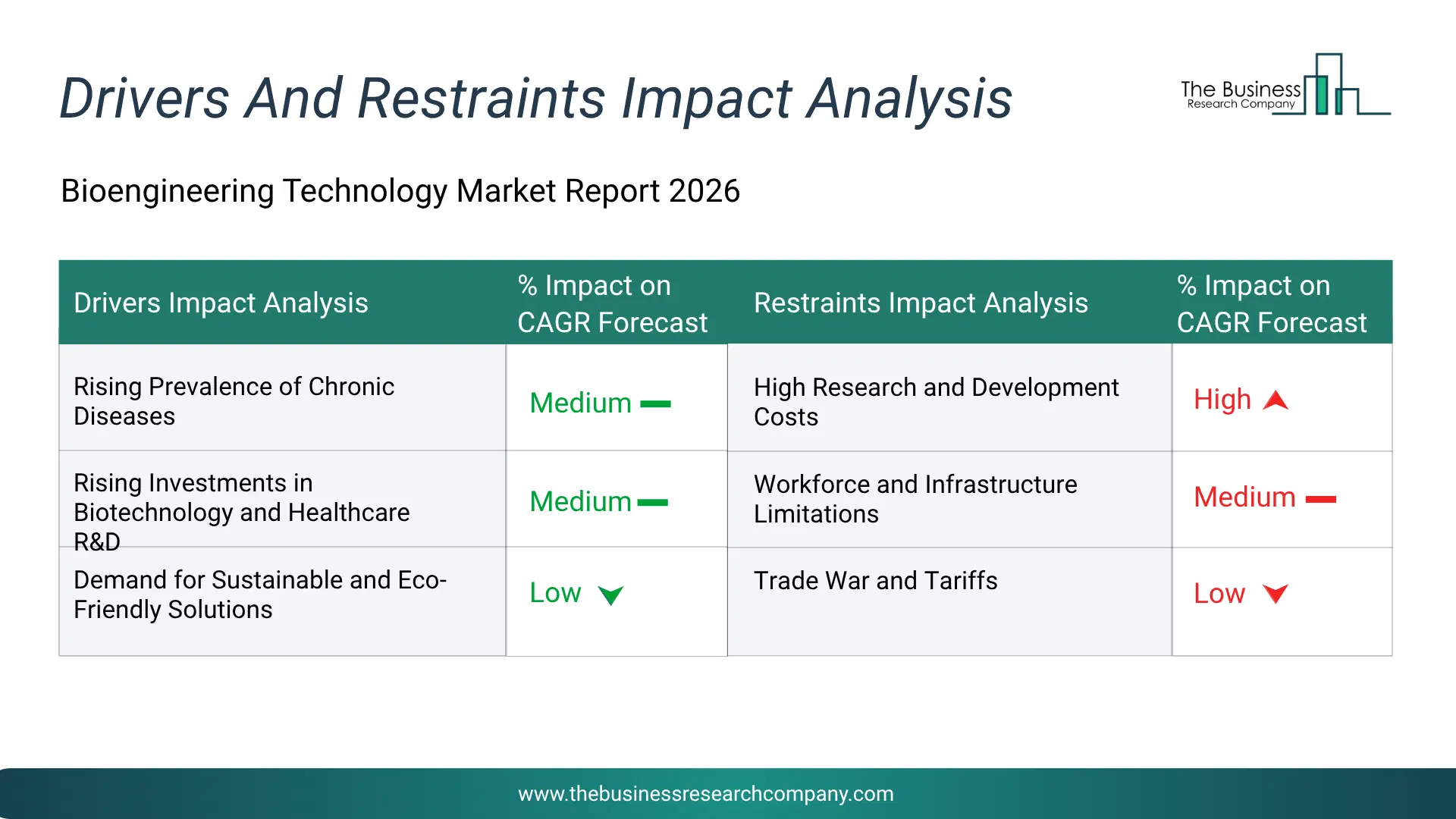
Infographic Chart Showing Key Market Drivers Analysis And Restraints For Bioengineering Technology Market
The chart presents an impact analysis of key drivers and restraints, quantifying their relative influence on the market's growth rate and helping assess the balance between growth enablers and limiting factors. This chart offers a high-level perspective; the full report contains more detailed insights.
How Will The Drivers Impact Growth In The Global Bioengineering Technology Market?
• Rising Prevalence of Chronic Diseases (Medium) – The rising prevalence of chronic diseases will become a key driver of growth in the bioengineering technology global market by 2030. Bioengineering technologies, including gene therapies, regenerative medicine and personalized treatments, offer targeted and effective interventions for these conditions. As healthcare systems seek more efficient and precise treatments, adoption of bioengineering solutions grows. This drives market expansion by creating opportunities for innovation, clinical applications and commercial development in biotechnology. As a result, the rising prevalence of chronic diseases is anticipated to contributing to a 1.3% annual growth in the market. • Rising Investments in Biotechnology and Healthcare R&D (Medium) – The rising investments in biotechnology and healthcare research and development (R&D) will emerge as a major factor driving the expansion of the market by 2030. As gene therapies, personalized medicine and regenerative treatments. Increased funding allows companies to expand laboratories, improve equipment and hire skilled professionals, which shortens development cycles. It also supports clinical trials and regulatory approvals, making it easier to bring new products to market. Consequently, the rising investments in biotechnology and healthcare R&D is projected to contributing to a 1.0% annual growth in the market. • Demand for Sustainable and Eco-Friendly Solutions (Low) – The demand for sustainable and eco-friendly solutions will serve as a key growth catalyst for the market by 2030. The growing global emphasis on sustainability and environmental responsibility has increased demand for eco-friendly solutions across industries. Bioengineering technologies can develop biodegradable materials, renewable biofuels and low waste manufacturing processes, aligning with these green initiatives. Companies and consumers are increasingly prioritizing products that reduce carbon footprints and environmental impact. Therefore, this Demand for sustainable and eco-friendly solutions is projected to supporting to a 0.8% annual growth in the market. • Rising Awareness and Adoption of Bio-Based Materials and Products (Low) – The rising awareness and adoption of bio-based materials and products will become a significant driver contributing to the growth of the market by 2030. As demand for eco-friendly and renewable products grows, companies are investing in bioengineering technologies to develop such solutions efficiently. Bio-based products often offer benefits like biodegradability, lower carbon footprint and reduced reliance on fossil fuels, which align with regulatory and consumer expectations. This rising adoption encourages innovation in bioengineering processes, including enzyme engineering, microbial fermentation and plant-based bioproducts. Consequently, the rising awareness and adoption of bio-based materials and products is projected to contributing to a 0.5% annual growth in the market.How Will The Restraints Impact Growth In The Global Bioengineering Technology Market?
• High Research and Development Costs (Medium) – High Research and Development Costs will restrict the growth of the Bioengineering Technology market during the forecast period. Bioengineering research requires substantial investment in laboratory facilities, specialized equipment, and skilled researchers. The lengthy and expensive clinical trial process for bioengineered products adds to development costs. These high R&D expenditures create significant barriers to entry for smaller companies and limit the pace of innovation in the bioengineering sector. • Workforce and Infrastructure Limitations (Medium) – Workforce and Infrastructure Limitations will restrict the growth of the Bioengineering Technology market during the forecast period. The bioengineering sector faces shortages of skilled professionals in molecular biology, genetic engineering, and bioprocessing. Additionally, many regions lack the specialized laboratory and manufacturing infrastructure needed for bioengineering research and production. These workforce and infrastructure gaps limit the scale of bioengineering activities and slow market expansion. • Trade War and Tariffs (Low) – Trade War and Tariffs will restrict the growth of the Bioengineering Technology market during the forecast period. Trade disputes affect the import and export of bioengineering equipment, reagents, and materials essential for research and production. Tariffs increase costs for research institutions and biotechnology companies, potentially limiting investment in bioengineering R&D. Trade barriers may also restrict international collaboration in bioengineering research, slowing scientific advancement.Key Players In The Global Bioengineering Technology Market
Major companies operating in the bioengineering technology market are Pfizer Inc., Johnson & Johnson, Roche Holding AG, Novartis AG, Bristol-Myers Squibb Company, Thermo Fisher Scientific, Abbott Laboratories, AstraZeneca plc, Medtronic plc, Gilead Sciences Inc., Amgen Inc., Novo Nordisk A/S, Moderna Inc., Becton Dickinson (BD), Regeneron Pharmaceuticals, Inc., Biogen Inc., Vertex Pharmaceuticals Inc., Agilent Technologies, Lonza Group Ltd., Intuitive Surgical, Illumina, Inc, Bio-Rad Laboratories, Ginkgo Bioworks, Verve Therapeutics, Inc., CRISPR Therapeutics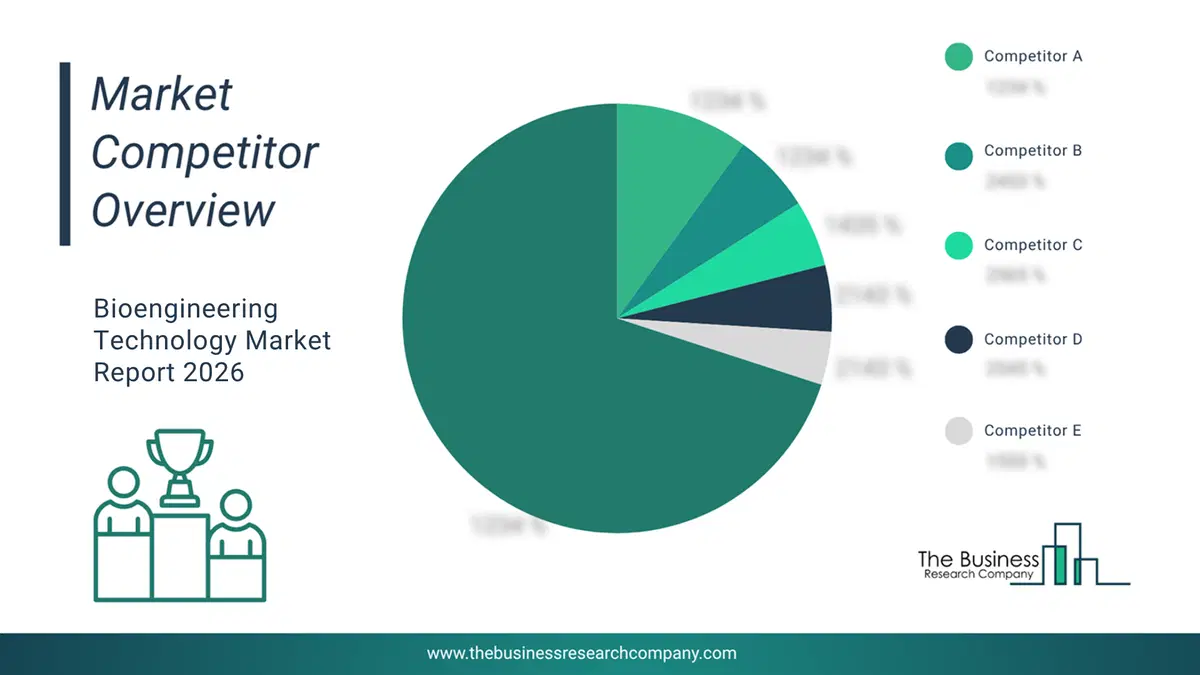
This chart is for illustrative purposes; the full report includes a detailed competitor analysis and comprehensive overview of the top 10 companies in the market.
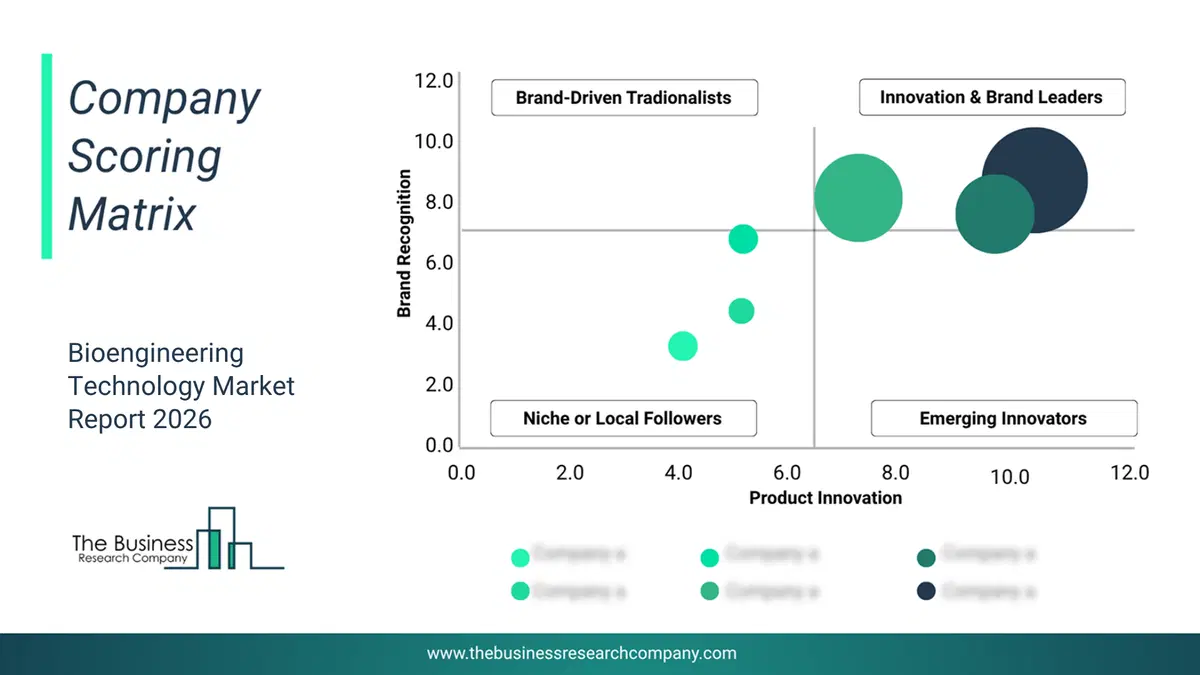
This chart maps companies by product innovation and brand strength, with bubble size indicating relative revenue, helping identify market leaders, challengers, and niche players. This is an illustrative chart; the full report provides a complete and accurate competitive analysis.
Global Bioengineering Technology Market Trends and Insights
Major companies operating in the bioengineering technology market are focusing on developing technological advancements such as viral vector manufacturing to enhance the efficiency, scalability, and precision of gene and cell therapy production. Viral vector manufacturing refers to the large-scale production of modified viruses that serve as delivery systems for transferring therapeutic genes into target cells in gene and cell therapy applications. For instance, in March 2025, Bharat Biotech, an India-based biotechnology company, launched India's only vertically integrated cell and gene therapy (CGT) facility to accelerate the development and manufacturing of advanced genetic therapies. It enables full oversight of the manufacturing process, ensuring high standards and lowering costs, making advanced treatments more accessible. The facility aims to drive innovation in personalized therapies for conditions like cancer and genetic disorders, addressing unmet clinical needs and strengthening India’s presence in global healthcare. Its purpose is to facilitate the development and commercial launch of affordable, breakthrough cell and gene therapies, ultimately improving patient outcomes and advancing India’s biotech industry.What Are Latest Mergers And Acquisitions In The Bioengineering Technology Market? Ginkgo Bioworks Strengthens Bioengineering Leadership With Acquisition Of FGen AG
In March 2023, Ginkgo Bioworks, a US-based horizontal platform for cell programming, acquired FGen AG for an undisclosed amount. The acquisition solidifies Ginkgo’s position as a leader in the bioengineering field, providing it with a powerful tool for strain development and optimization across various industries. FGen AG is a Switzerland-based bioengineering company.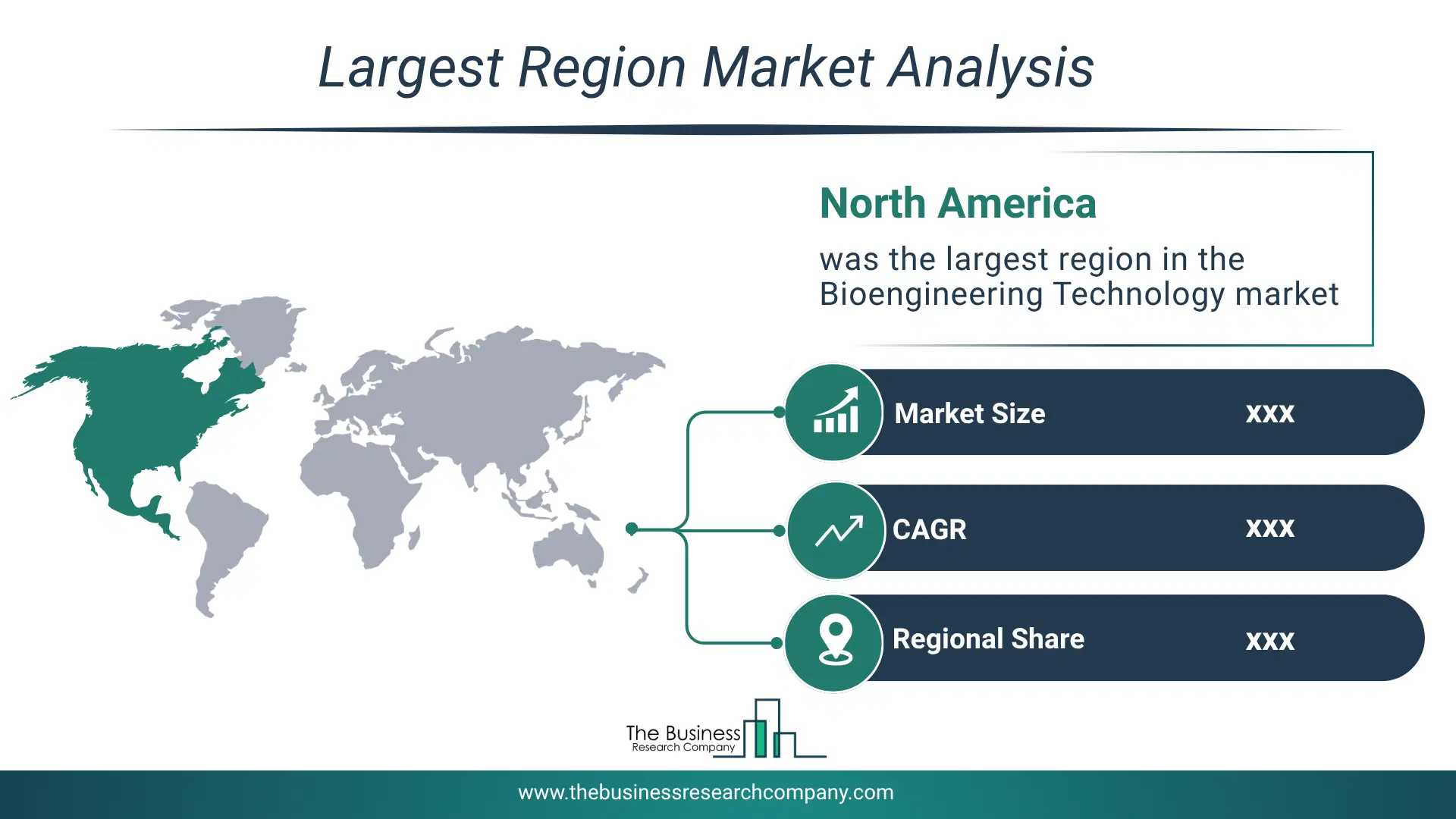
Regional Outlook
North America was the largest region in the bioengineering technology market in 2025. The regions covered in this market report are Asia-Pacific, South East Asia, Western Europe, Eastern Europe, North America, South America, Middle East, Africa. The countries covered in this market report are Australia, Brazil, China, France, Germany, India, Indonesia, Japan, Taiwan, Russia, South Korea, UK, USA, Canada, Italy, SpainWhat Defines the Bioengineering Technology Market?
The bioengineering technology market includes revenues earned by entities service such as medical diagnostic services, pharmaceutical services, personalized medicine services, engineering, and nanotechnology in medicine services, biological data analysis services, regenerative medicine services, and health information technology. The market value includes the value of related goods sold by the service provider or included within the service offering. Only goods and services traded between entities or sold to end consumers are included. The bioengineering technology market consists of sales of implantable medical devices, wearable health monitoring devices, biomedical imaging equipment, and diagnostic devices. Values in this market are ‘factory gate’ values, that is, the value of goods sold by the manufacturers or creators of the goods, whether to other entities (including downstream manufacturers, wholesalers, distributors, and retailers) directly to end customers. The value of goods in this market includes related services sold by the creators of the goods.How is Market Value Defined and Measured?
The market value is defined as the revenues that enterprises gain from the sale of goods and/or services within the specified market and geography through sales, grants, or donations in terms of the currency (in USD unless otherwise specified). The revenues for a specified geography are consumption values that are revenues generated by organizations in the specified geography within the market, irrespective of where they are produced. It does not include revenues from resales along the supply chain, either further along the supply chain or as part of other products.
This chart presents market attractiveness based on a quantitative evaluation of growth, competition, strategic alignment, and risk, offering a clear view of opportunity areas for decision-making. This chart is for illustrative purposes; the full report contains the complete analysis.

This chart highlights the Total Addressable Market (TAM) by estimating the maximum revenue opportunity using an assumption-driven approach, supporting strategic planning and opportunity sizing across markets. The chart is illustrative; the full report provides a more comprehensive analysis.
What Key Data and Analysis Are Included in the Bioengineering Technology Market Report 2026?
The bioengineering technology market research report is one of a series of new reports from The Business Research Company that provides market statistics, including industry global market size, regional shares, competitors with the market share, detailed market segments, market trends and opportunities, and any further data you may need to thrive in the bioengineering technology industry. The market research report delivers a complete perspective of everything you need, with an in-depth analysis of the current and future state of the industry.Bioengineering Technology Market Report Forecast Analysis
| Report Attribute | Details |
|---|---|
| Market Size Value In 2026 | $404.05 billion |
| Revenue Forecast In 2030 | $5.72 billion |
| Growth Rate | CAGR of 12.2% from 2026 to 2030 |
| Base Year For Estimation | 2025 |
| Actual Estimates/Historical Data | 2020-2025 |
| Forecast Period | 2026 - 2030 |
| Market Representation | Revenue in USD Billion and CAGR from 2026 to 2030 |
| Segments Covered | Product, Technology, Application |
| Regional Scope | Asia-Pacific, Western Europe, Eastern Europe, North America, South America, Middle East, Africa |
| Country Scope | The countries covered in the report are Australia, Brazil, China, France, Germany, India, Indonesia, Japan, Taiwan, Russia, South Korea, UK, USA, Canada, Italy, Spain. |
| Key Companies Profiled | Pfizer Inc., Johnson & Johnson, Roche Holding AG, Novartis AG, Bristol-Myers Squibb Company, Thermo Fisher Scientific, Abbott Laboratories, AstraZeneca plc, Medtronic plc, Gilead Sciences Inc., Amgen Inc., Novo Nordisk A/S, Moderna Inc., Becton Dickinson (BD), Regeneron Pharmaceuticals, Inc., Biogen Inc., Vertex Pharmaceuticals Inc., Agilent Technologies, Lonza Group Ltd., Intuitive Surgical, Illumina, Inc, Bio-Rad Laboratories, Ginkgo Bioworks, Verve Therapeutics, Inc., CRISPR Therapeutics |
| Customization Scope | Request for Customization |
| Pricing And Purchase Options | Explore Purchase Options |