
Biological Age Diagnostics Market Report 2026
Global Outlook – By Biomarker Technology ( Epigenetic Deoxyribonucleic Acid Methylation Clocks, Proteomics Based Aging Panels, Telomere Length Analysis, Metabolomics Aging Markers, Artificial Intelligence Multi Omic Age Scoring), By Sample Type ( Blood Based Testing, Saliva Based Testing, Tissue Based Testing, Urine Based Testing, Cell Free Deoxyribonucleic Acid Based Testing), By Deployment Mode ( Laboratory Based Testing, At Home Testing, Cloud Based Bioinformatics Platforms, Hybrid Testing Models, Point Of Care Testing), By Application ( Clinical Longevity Assessment, Drug Clinical Trial Endpoints, Direct To Consumer Wellness Testing, Insurance Risk Underwriting), By End User ( Longevity Clinics, Pharmaceutical Companies, Research Institutions, Individual Consumers) – Market Size, Trends, Strategies, and Forecast to 2030
Biological Age Diagnostics Market Report 2026 Market Overview
• Biological Age Diagnostics Market Report 2026 market size has reached to $0.5 billion in 2025 • Expected to grow to $0.99 billion in 2030 at a compound annual growth rate (CAGR) of 14.2% • Growth Driver: Surge In Age-Related Chronic Diseases Fueling The Growth Of The Market Due To Increasing Demand For Early Detection And Personalized Preventive Healthcare • Market Trend: Organ-Specific Epigenetic Aging Analysis Advances Biological Age Diagnostics • North America was the largest region in 2025 and Asia-Pacific is the fastest growing region.What Is Covered Under Biological Age Diagnostics Market?
The biological age diagnostics refer to the assessment of an individual's biological aging process by analyzing physiological, molecular, and cellular indicators rather than chronological age. It evaluates how well the body's systems are functioning and identifies age-related changes in health and performance. The biological age diagnostics support the measurement of aging rates and overall biological condition. The main biomarker technologies of biological age diagnostics include epigenetic deoxyribonucleic acid methylation clocks, proteomics based aging panels, telomere length analysis, metabolomics aging markers, and artificial intelligence multi omic age scoring. Epigenetic deoxyribonucleic acid methylation clocks refer to advanced molecular tools that estimate biological age by analyzing methylation patterns across the genome. These diagnostics are based on sample types including blood based testing, saliva based testing, tissue based testing, urine based testing, and cell free deoxyribonucleic acid based testing and are deployed through laboratory based testing, at home testing, cloud based bioinformatics platforms, hybrid testing models, and point of care testing. The various applications involved are clinical longevity assessment, drug clinical trial endpoints, direct to consumer wellness testing, and insurance risk underwriting, and they are used by several end users such as longevity clinics, pharmaceutical companies, research institutions, and individual consumers.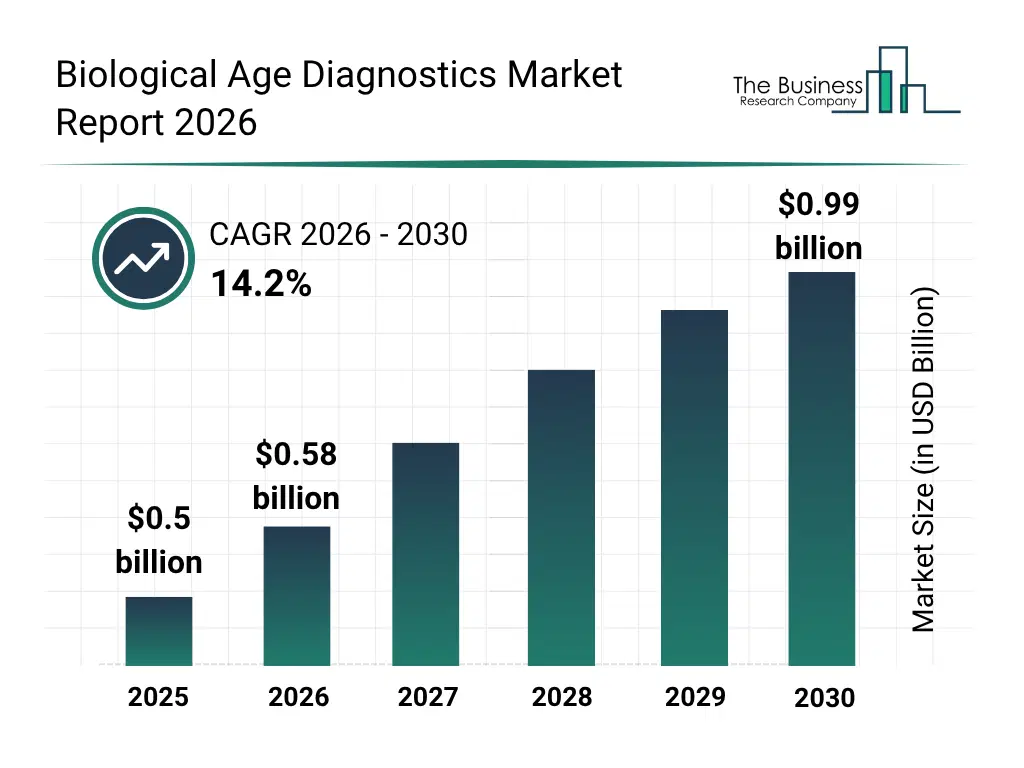
What Is The Biological Age Diagnostics Market Size and Share 2026?
The biological age diagnostics market size has grown rapidly in recent years. It will grow from $0.5 billion in 2025 to $0.58 billion in 2026 at a compound annual growth rate (CAGR) of 14.7%. The growth in the historic period can be attributed to rising focus on preventive healthcare and wellness monitoring, increasing research in genomics and molecular biology, growing awareness of lifestyle related aging factors, expansion of clinical laboratory testing infrastructure, early adoption of biomarker based diagnostic techniques.What Is The Biological Age Diagnostics Market Growth Forecast?
The biological age diagnostics market size is expected to see rapid growth in the next few years. It will grow to $0.99 billion in 2030 at a compound annual growth rate (CAGR) of 14.2%. The growth in the forecast period can be attributed to increasing adoption of ai powered precision medicine solutions, rising demand for personalized longevity and healthspan optimization, expansion of direct to consumer health testing markets, growing integration of multi omics data in diagnostics, increasing investment in aging research and biotechnology innovation. Major trends in the forecast period include ai driven biological age prediction algorithms, multi omics integrated longevity assessment platforms, direct to consumer biological age testing kits, epigenetic based aging clock commercialization, personalized healthspan optimization programs.
Global Biological Age Diagnostics Market Segmentation
1) By Biomarker Technology: Epigenetic Deoxyribonucleic Acid Methylation Clocks, Proteomics Based Aging Panels, Telomere Length Analysis, Metabolomics Aging Markers, Artificial Intelligence Multi Omic Age Scoring 2) By Sample Type: Blood Based Testing, Saliva Based Testing, Tissue Based Testing, Urine Based Testing, Cell Free Deoxyribonucleic Acid Based Testing 3) By Deployment Mode: Laboratory Based Testing, At Home Testing, Cloud Based Bioinformatics Platforms, Hybrid Testing Models, Point Of Care Testing 4) By Application: Clinical Longevity Assessment, Drug Clinical Trial Endpoints, Direct To Consumer Wellness Testing, Insurance Risk Underwriting 5) By End User: Longevity Clinics, Pharmaceutical Companies, Research Institutions, Individual Consumers Subsegments: 1) By Epigenetic Deoxyribonucleic Acid Methylation Clocks: CpG Site Based Methylation Age Clocks, Genome Wide Methylation Array Based Clocks, Targeted Gene Region Methylation Clocks, Tissue Specific Methylation Age Estimation Clocks, Cell Type Deconvoluted Methylation Clocks 2) By Proteomics Based Aging Panels: Plasma Protein Biomarker Panels, Inflammatory Protein Signature Panels, Organ Specific Protein Expression Panels, Circulating Proteome Age Prediction Panels, Mass Spectrometry Based Protein Aging Profiles 3) By Telomere Length Analysis: Quantitative Polymerase Chain Reaction Based Telomere Length Assays, Terminal Restriction Fragment Length Analysis Methods, Single Cell Telomere Length Measurement Methods, High Throughput Telomere Sequencing Based Approaches, Flow Cytometry Based Telomere Length Estimation Methods 4) By Metabolomics Aging Markers: Small Molecule Metabolic Fingerprint Panels, Lipid Based Age Associated Metabolite Panels, Amino Acid Metabolism Signature Panels, Energy Pathway Metabolite Profiling Panels, Biofluid Based Metabolic Age Testing Panels 5) By Artificial Intelligence Multi Omic Age Scoring: Machine Learning Based Age Prediction Models, Deep Learning Multi Omic Integration Systems, Multi Layer Biological Data Fusion Models, Predictive Healthspan Scoring Algorithms, Personalized Aging Trajectory Modeling SystemsWhat Is The Driver Of The Biological Age Diagnostics Market?
The increasing prevalence of age-related chronic diseases is expected to propel the growth of the biological age diagnostics market going forward. Age-related chronic diseases refer to long-duration health conditions that become increasingly prevalent with advancing age, including cardiovascular disorders, neurodegenerative diseases, metabolic dysfunctions, musculoskeletal degeneration, and certain cancers. Age-related chronic diseases are increasing due to the growing elderly population worldwide, as rising life expectancy results in more individuals living into older age, leading to a higher prevalence of conditions such as cardiovascular diseases, diabetes, and neurodegenerative disorders. Biological age diagnostics help address age-related chronic diseases by identifying accelerated aging patterns and physiological changes before clinical symptoms become severe, enabling early intervention, personalized treatment strategies, and improved long-term health outcomes. For instance, in October 2024, according to the Centers for Disease Control and Prevention (CDC), a US-based public health agency, heart disease continues to be the leading cause of death in the United States, accounting for about 1 in every 3 deaths, with nearly 919,032 cardiovascular-related deaths recorded in 2023 and one person dying approximately every 34 seconds from cardiovascular disease. Therefore, the rising prevalence of age-related chronic diseases is driving the growth of the biological age diagnostics industry.Key Players In The Global Biological Age Diagnostics Market
Major companies operating in the biological age diagnostics market report are Function Health Inc., SpectraCell Laboratories Inc., Zymo Research Corporation, TruDiagnostic Inc., SiPhox Health Inc., GlycanAge Ltd., InsideTracker Inc., myDNAge Ltd., Chronomics Limited, TruMe Labs LLC, NOVOS Labs Inc., AgeLabs Inc., Deep Longevity Limited, Gero PTE. Ltd., Genetic Direction LLC, EpiAgingUSA LLC, Elysium Health, Muhdo Health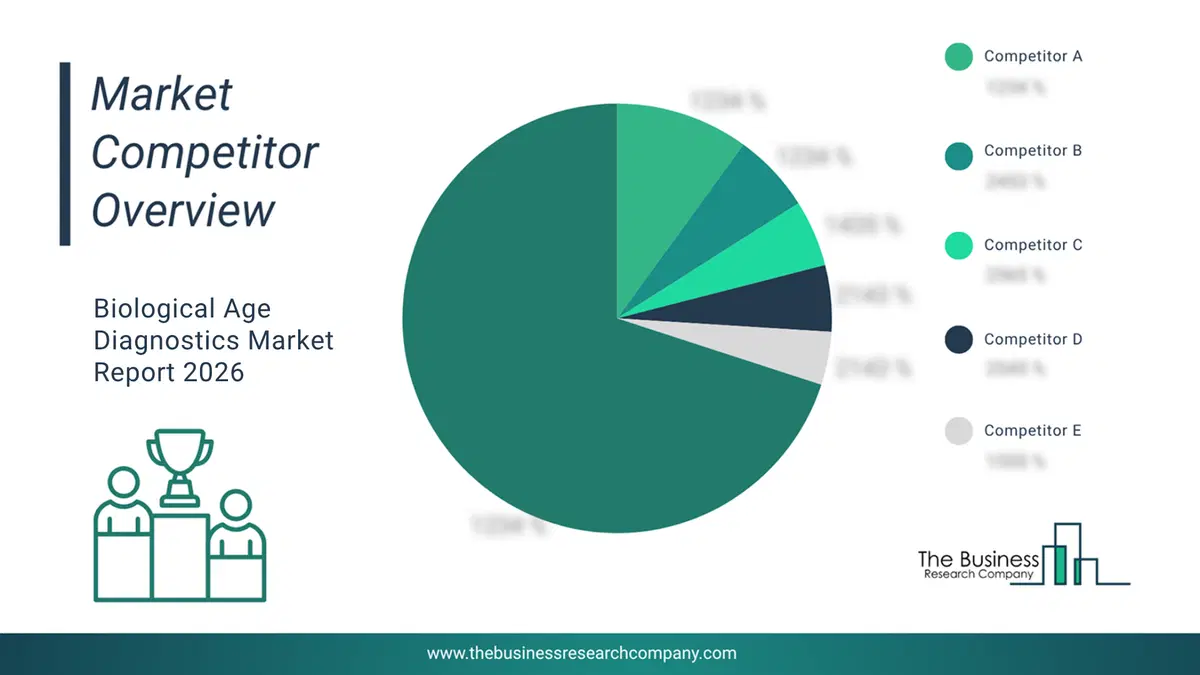
This chart is for illustrative purposes; the full report includes a detailed competitor analysis and comprehensive overview of the top 10 companies in the market.
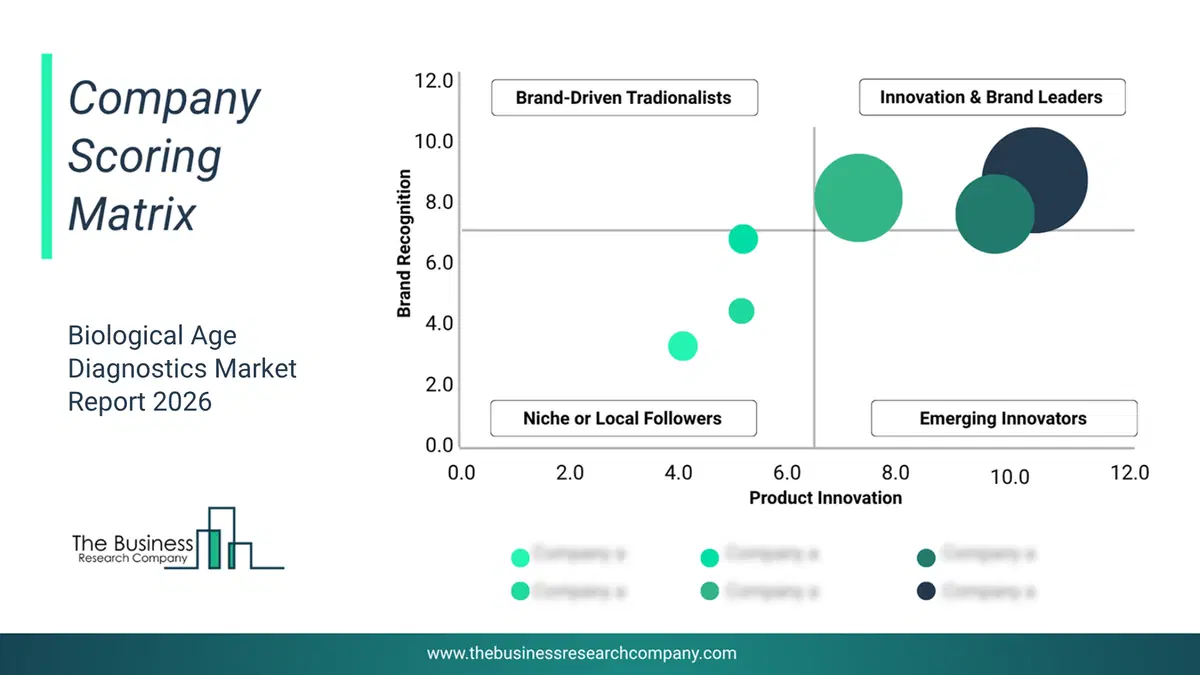
This chart maps companies by product innovation and brand strength, with bubble size indicating relative revenue, helping identify market leaders, challengers, and niche players. This is an illustrative chart; the full report provides a complete and accurate competitive analysis.
Global Biological Age Diagnostics Market Trends and Insights
Major companies operating in the biological age diagnostics market are focusing on developing advanced epigenetic aging assessment solutions, such as organ-specific biological age analysis, to improve the accuracy of aging measurements, identify system-level health risks, and support personalized longevity interventions. Organ-specific aging analysis refers to a diagnostic approach that evaluates the biological age of individual organs and physiological systems rather than providing only a whole-body aging score. For instance, in June 2024, TruDiagnostic, a US-based epigenetic testing laboratory, launched SYMPHONYAge, the first organ-specific epigenetic aging analysis developed using Yale University–created algorithms. The solution assesses the biological age of 11 organ systems, including the heart, brain, lungs, liver, kidneys, and immune system, using DNA methylation-based biomarkers and validated system-specific clocks. The technology enables deeper insights into age-related disease risks and physiological decline, enhancing the precision and clinical utility of biological age diagnostics.What Are Latest Mergers And Acquisitions In The Biological Age Diagnostics Market?
In April 2026, Infinite Epigenetics, a US-based epigenetic science and biological age diagnostics company, acquired Tally Health for an undisclosed amount. Through this acquisition, Infinite Epigenetics aims to strengthen its consumer-facing longevity ecosystem by integrating advanced DNA methylation-based biological age testing with scalable at-home health solutions and personalized aging insights. Tally Health is a US-based biotechnology company that offers the TallyAge Test, an at-home biological age diagnostic test that measures epigenetic age using DNA methylation analysis from a cheek swab sample.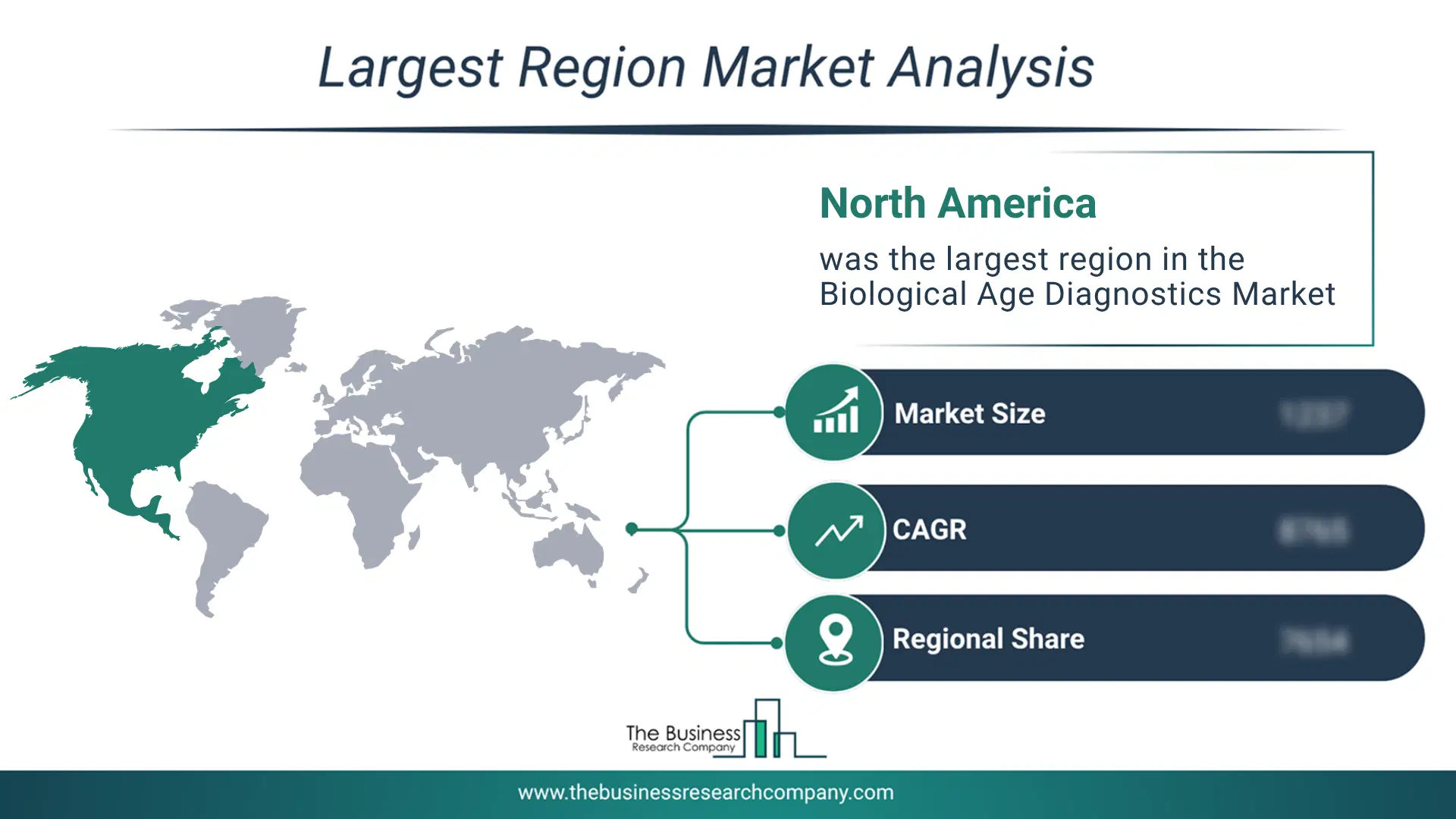
Regional Outlook
North America was the largest region in the biological age diagnostics market in 2025. Asia-Pacific is expected to be the fastest-growing region in the forecast period. The regions covered in this market report are Asia-Pacific, South East Asia, Western Europe, Eastern Europe, North America, South America, Middle East, Africa. The countries covered in this market report are Australia, Brazil, China, France, Germany, India, Indonesia, Japan, Taiwan, Russia, South Korea, UK, USA, Canada, Italy, Spain.What Defines the Biological Age Diagnostics Market?
The biological age diagnostics market consists of revenues earned by entities by providing services such as longevity and biological age assessment consultations, preventive health risk evaluation services, and clinical research support services for aging studies. The market value includes the value of related goods sold by the service provider or included within the service offering. The biological age diagnostics market also includes sales of deoxyribonucleic acid methylation age testing kits, telomere length analysis kits, multi-omics biomarker panels, and wearable-based physiological age tracking devices. Values in this market are ‘factory gate’ values, that is, the value of goods sold by the manufacturers or creators of the goods, whether to other entities (including downstream manufacturers, wholesalers, distributors, and retailers) or directly to end customers. The value of goods in this market includes related services sold by the creators of the goods.How is Market Value Defined and Measured?
The market value is defined as the revenues that enterprises gain from the sale of goods and/or services within the specified market and geography through sales, grants, or donations in terms of the currency (in USD unless otherwise specified). The revenues for a specified geography are consumption values that are revenues generated by organizations in the specified geography within the market, irrespective of where they are produced. It does not include revenues from resales along the supply chain, either further along the supply chain or as part of other products.
This chart presents market attractiveness based on a quantitative evaluation of growth, competition, strategic alignment, and risk, offering a clear view of opportunity areas for decision-making. This chart is for illustrative purposes; the full report contains the complete analysis.

This chart highlights the Total Addressable Market (TAM) by estimating the maximum revenue opportunity using an assumption-driven approach, supporting strategic planning and opportunity sizing across markets. The chart is illustrative; the full report provides a more comprehensive analysis.
What Key Data and Analysis Are Included in the Biological Age Diagnostics Market Report 2026?
The biological age diagnostics market research report is one of a series of new reports from The Business Research Company that provides market statistics, including industry global market size, regional shares, competitors with the market share, detailed market segments, market trends and opportunities, and any further data you may need to thrive in the biological age diagnostics industry. The market research report delivers a complete perspective of everything you need, with an in-depth analysis of the current and future state of the industry.Biological Age Diagnostics Market Report Forecast Analysis
| Report Attribute | Details |
|---|---|
| Market Size Value In 2026 | $0.58 billion |
| Revenue Forecast In 2030 | $0.99 billion |
| Growth Rate | CAGR of 14.2% from 2026 to 2030 |
| Base Year For Estimation | 2025 |
| Actual Estimates/Historical Data | 2020-2025 |
| Forecast Period | 2026 - 2030 |
| Market Representation | Revenue in USD Billion and CAGR from 2026 to 2030 |
| Segments Covered | Biomarker Technology, Sample Type, Deployment Mode, Application, End User |
| Regional Scope | Asia-Pacific, Western Europe, Eastern Europe, North America, South America, Middle East, Africa |
| Country Scope | The countries covered in the report are Australia, Brazil, China, France, Germany, India, Indonesia, Japan, Taiwan, Russia, South Korea, UK, USA, Canada, Italy, Spain. |
| Key Companies Profiled | Function Health Inc., SpectraCell Laboratories Inc., Zymo Research Corporation, TruDiagnostic Inc., SiPhox Health Inc., GlycanAge Ltd., InsideTracker Inc., myDNAge Ltd., Chronomics Limited, TruMe Labs LLC, NOVOS Labs Inc., AgeLabs Inc., Deep Longevity Limited, Gero PTE. Ltd., Genetic Direction LLC, EpiAgingUSA LLC, Elysium Health, Muhdo Health |
| Customization Scope | Request for Customization |
| Pricing And Purchase Options | Explore Purchase Options |