
Biological Molluscicides Market Report 2026
Global Outlook – By Type (Ferrous Phosphate–Based Molluscicides, Plant-Based Molluscicides, Microbial Molluscicides, Biological Control Agents, Other Biological Molluscicides), By Form (Pellet, Liquids, Gels), By Application (Field Crops, Horticultural Crops, Turf And Ornamentals, Other Applications) – Market Size, Trends, Strategies, and Forecast to 2030
Biological Molluscicides Market Overview
• Biological Molluscicides market size has reached to $6.91 billion in 2025 • Expected to grow to $10.83 billion in 2030 at a compound annual growth rate (CAGR) of 9.5% • Growth Driver: Expansion In The Agriculture Sector • Market Trend: Advancing Pest Control Through Rapid Behavioural Suppression • North America was the largest region in 2025 and Asia-Pacific is the fastest growing region.What Is Covered Under Biological Molluscicides Market?
Biological molluscicides are substances of natural or biological origin designed to manage or eradicate mollusks like slugs and snails in agriculture or gardening. These agents are typically eco-friendly, using microorganisms or plant-based extracts to specifically target mollusks while minimizing harm to other organisms. The main types of biological molluscicides are metaldehyde, methiocarb, ferrous phosphate, and others. Methiocarb refers to a synthetic carbamate ester, aryl sulfide substance, acetylcholinesterase inhibitor, and neurotoxic that is used to manage snails, slugs, spider mites, and insects on lawns, and in ginseng gardens. The various forms include pellets, liquids, and gels. These are used in various applications such as field crops, horticultural crops, turf, and ornamentals, industrial, others.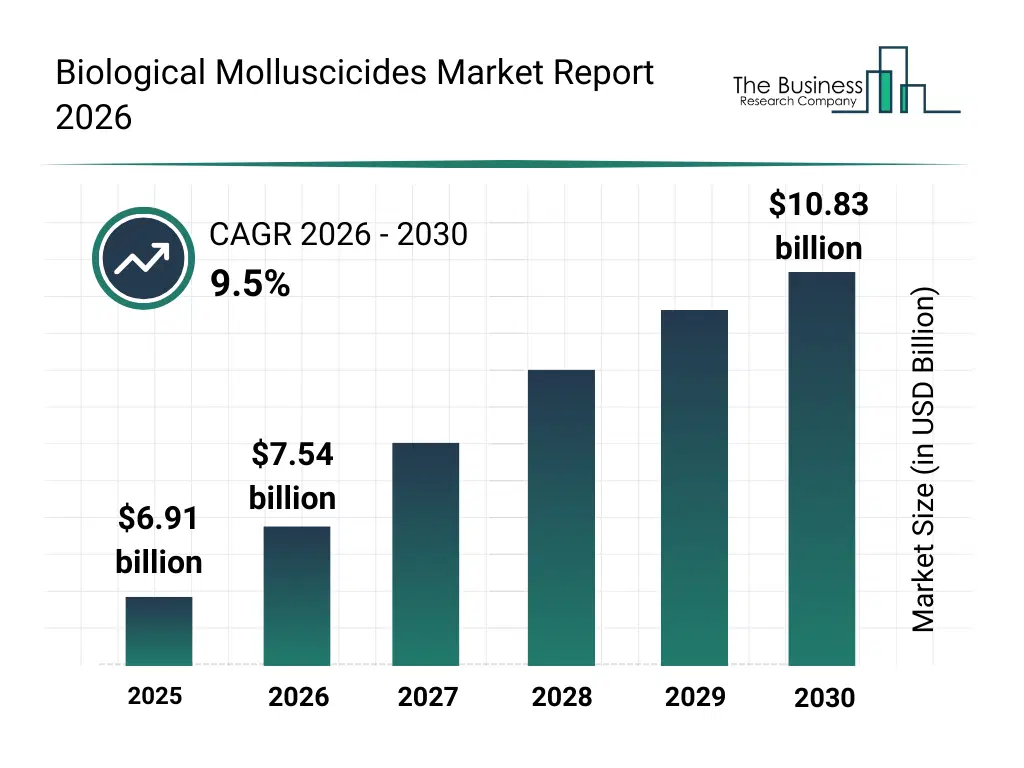
What Is The Biological Molluscicides Market Size and Share 2026?
The biological molluscicides market size has grown strongly in recent years. It will grow from $6.91 billion in 2025 to $7.54 billion in 2026 at a compound annual growth rate (CAGR) of 9.2%. The growth in the historic period can be attributed to increasing damage from slugs and snails, growth of horticultural crop cultivation, rising restrictions on chemical molluscicides, expansion of sustainable agriculture practices, availability of biological control agents.What Is The Biological Molluscicides Market Growth Forecast?
The biological molluscicides market size is expected to see strong growth in the next few years. It will grow to $10.83 billion in 2030 at a compound annual growth rate (CAGR) of 9.5%. The growth in the forecast period can be attributed to expansion of organic and sustainable farming, increasing adoption of plant-based pest control, rising investments in eco-friendly crop protection, growing demand for residue-free produce, increasing focus on biodiversity-safe solutions. Major trends in the forecast period include increasing adoption of eco-friendly mollusk control solutions, rising use of ferrous phosphate-based products, growing demand for crop-specific molluscicides, expansion of organic farming-compatible solutions, enhanced focus on targeted pest control.
Global Biological Molluscicides Market Segmentation
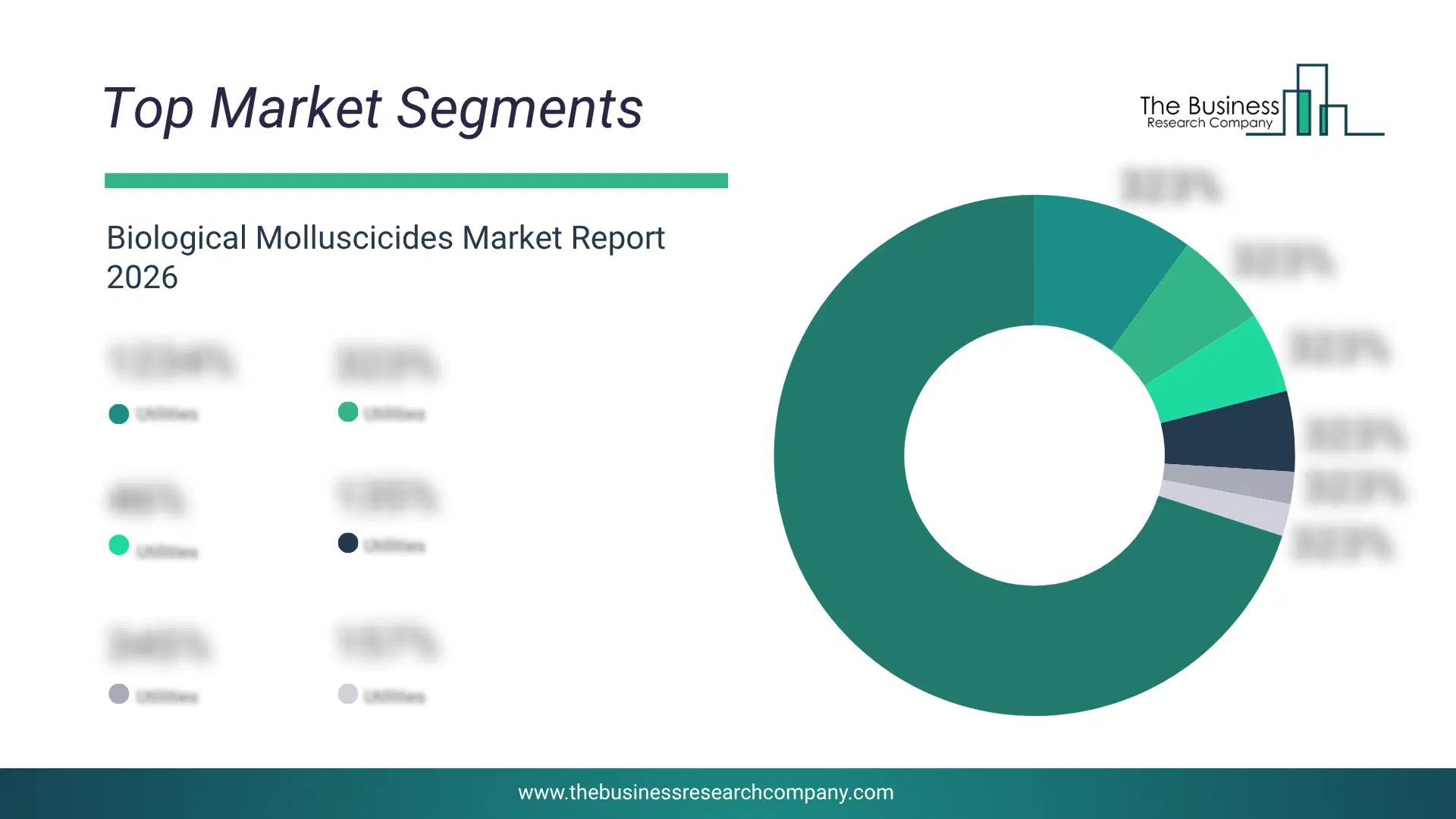
1) By Type: Ferrous Phosphate–Based Molluscicides, Plant-Based Molluscicides, Microbial Molluscicides, Biological Control Agents, Other Biological Molluscicides 2) By Form: Pellet, Liquids, Gels 3) By Application: Field Crops, Horticultural Crops, Turf And Ornamentals, Other Applications Subsegments: 1) By Ferrous Phosphate–Based Molluscicides: Ferrous Phosphate Pellets, Ferrous Phosphate Granules, Iron-Chelated Ferrous Phosphate Formulations 2) By Plant-Based Molluscicides: Neem-Based Molluscicides, Botanical Extract-Based Molluscicides, Saponin-Based Molluscicides 3) By Microbial Molluscicides: Bacteria-Based Molluscicides, Fungi-Based Molluscicides, Microbial Metabolite-Based Products 4) By Biological Control Agents: Predatory Nematodes, Natural Mollusk Predators 5) By Other Biological Molluscicides: Essential Oil-Based Molluscicides, Bio-Derived Repellents, Integrated Biological FormulationsWhat Are The Drivers Of The Biological Molluscicides Market?
The expansion of the agriculture sector is expected to boost the growth of the biological molluscicides market going forward. The agriculture sector refers to businesses that include cultivating crops, breeding animals, and gathering fish and other wildlife from a farm, ranch, or their natural habitats. Biological molluscicides play a crucial role in preventing snails and slugs and eliminating weeds, insects, and fungal pests; as a result, the expansion of the agriculture sector is expected to boost the biological molluscicides market. For instance, in December 2024, according to the Food and Agriculture Organization, an Italy-based specialized agency of the United Nations (UN) for the support of sustainable agriculture worldwide, the platform brand reported that in 2023, total global production of primary crops reached about 9.9 billion tonnes, up roughly 3% compared to 2022. Therefore, the expansion of the agriculture sector is driving the growth of the biological molluscicides industry. The increased demand for agrochemicals is expected to propel the growth of the biological molluscicides market going forward. Agrochemicals are chemical substances that include growth regulators, pesticides, and fertilizers, commonly used to boost growth, control crop loss, and supply nutrients to the soil. The rising use of agrochemicals for slug and snail control, especially in high-value horticultural crops. The demand for molluscicides is also influenced by the infestation of golden apple snails in rice fields in Asia and the growing demand for horticulture crops. For instance, in 2025, according to the Agriculture and Horticulture Development Board (AHDB), a UK-based statutory levy board, nitrogen consumption across key product lines rose by 4% in 2023 compared to the previous year. Therefore, the increasing demand for agrochemicals will support the growth of the biological molluscicides industry.Key Players In The Global Biological Molluscicides Market
Major companies operating in the biological molluscicides market are Certis Biologicals, Neudorff, Marrone Bio Innovations, Andermatt Biocontrol, Seipasa, De Sangosse, Koppert Biological Systems, Biobest Group, Novozymes, Lallemand Plant Care, IPL Biologicals, T. Stanes & Company, Valent BioSciences, BioWorks Inc., CBC (America) Corporation, Sumitomo Chemical, Syngenta Biologicals, UPL Ltd., Corteva Agriscience, Bayer CropScience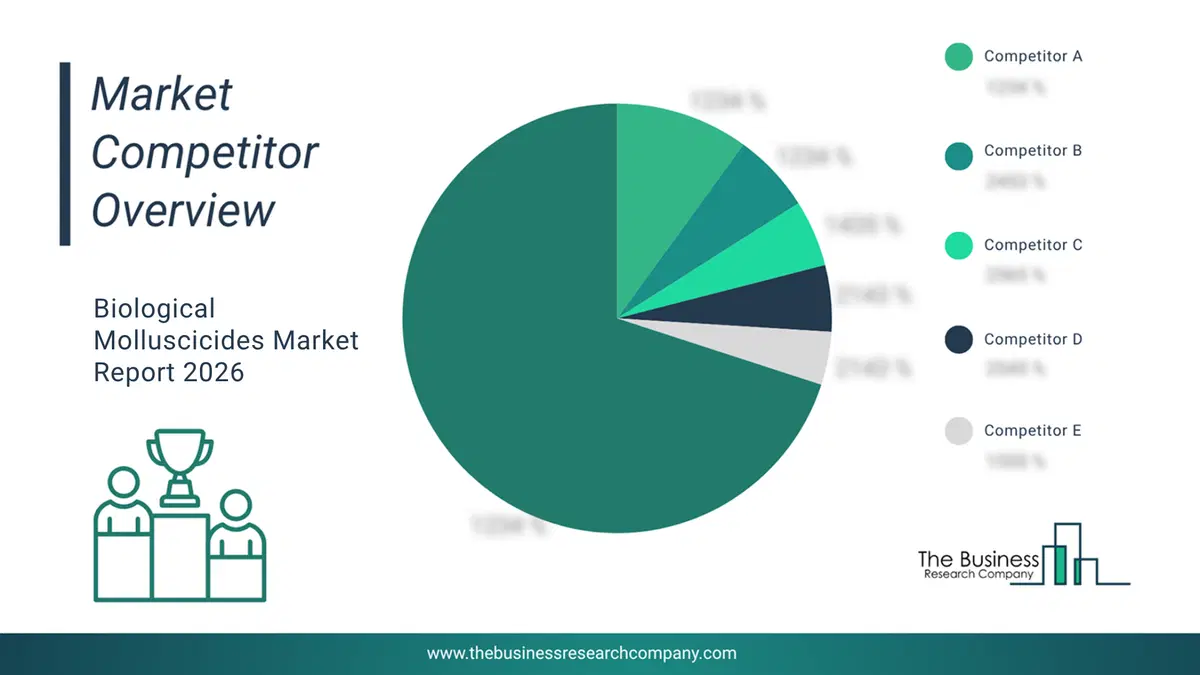
This chart is for illustrative purposes; the full report includes a detailed competitor analysis and comprehensive overview of the top 10 companies in the market.
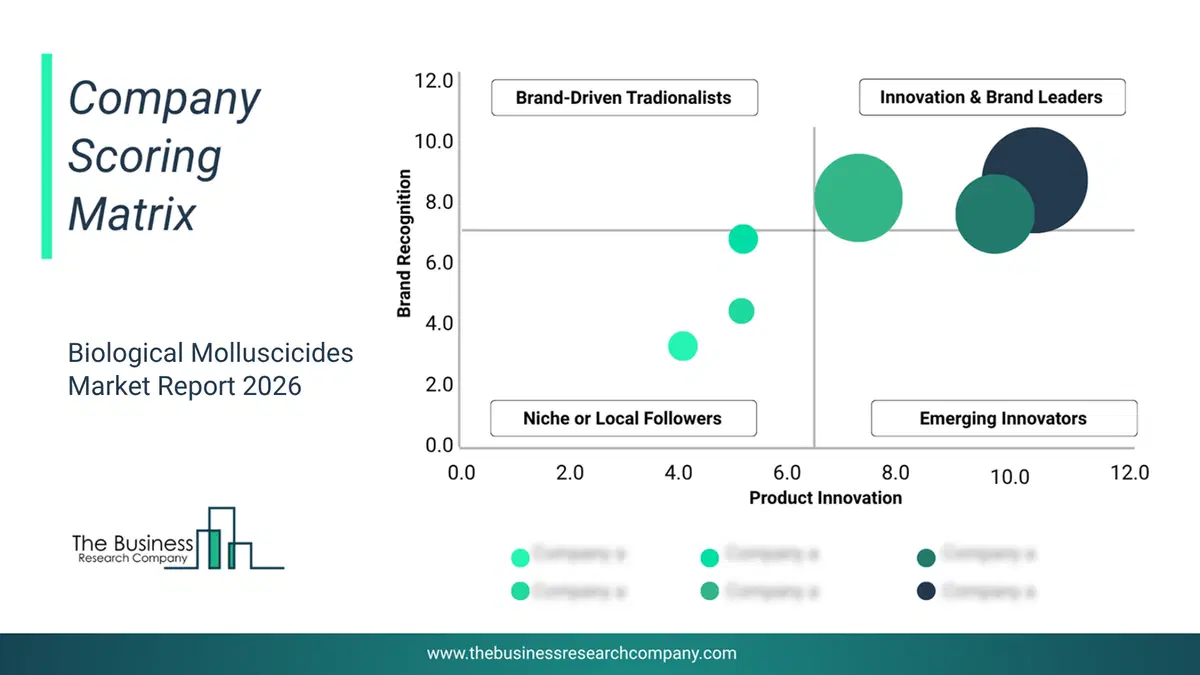
This chart maps companies by product innovation and brand strength, with bubble size indicating relative revenue, helping identify market leaders, challengers, and niche players. This is an illustrative chart; the full report provides a complete and accurate competitive analysis.
Global Biological Molluscicides Market Trends and Insights
Major companies operating in the biological molluscicides market are innovating new products, such as rapid stop-feeding, which allows immediate behavioral suppression of herbivory and population-level control of molluscan pests. Rapid stop-feeding refers to the immediate cessation of feeding behavior in molluscs after ingesting a molluscicidal bait during the onset of toxic or inhibitory effects. For instance, in February 2025, ADAMA Ltd., an Israel-based crop protection company, announced the introduction of Feralla, an in-licensed mineral-based molluscicide active ingredient, designed to provide European farmers with rapid and effective control of slugs and snails while supporting sustainable agriculture goals. Additionally, this innovation offers rapid stop-feeding and enhanced pellet durability, delivering crop protection without relying on high-risk chemical molluscicides.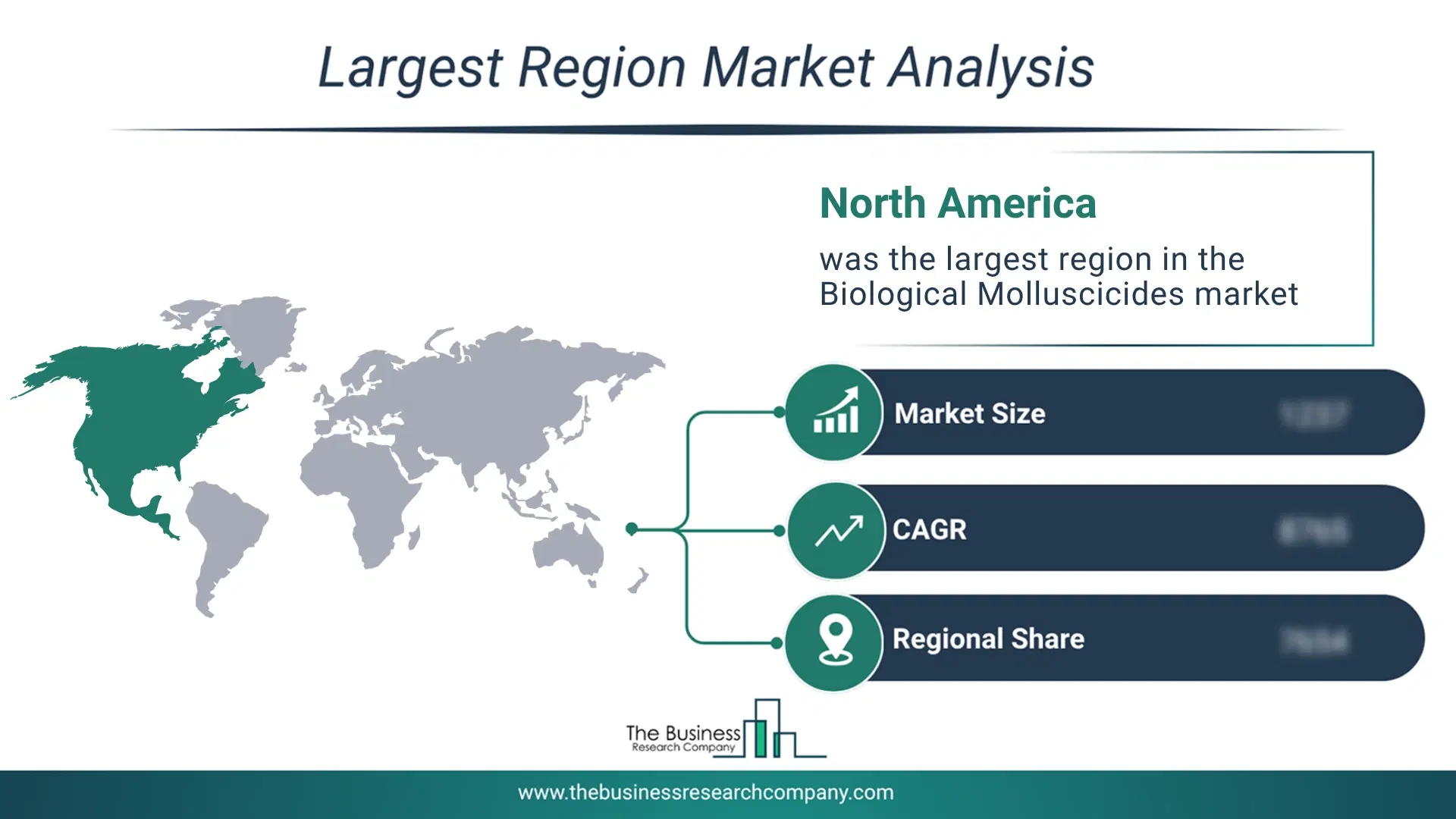
Regional Insights
North America was the largest region in the biological molluscicides market in 2025. The regions covered in this market report are Asia-Pacific, South East Asia, Western Europe, Eastern Europe, North America, South America, Middle East, Africa The countries covered in this market report are Australia, Brazil, China, France, Germany, India, Indonesia, Japan, Taiwan, Russia, South Korea, UK, USA, Canada, Italy, SpainWhat Defines the Biological Molluscicides Market?
The biological molluscicides market consists of sales of insecticides, herbicides, and fungicides. Values in this market are ‘factory gate’ values, that is the value of goods sold by the manufacturers or creators of the goods, whether to other entities (including downstream manufacturers, wholesalers, distributors, and retailers) or directly to end customers. The value of goods in this market includes related services sold by the creators of the goods.How is Market Value Defined and Measured?
The market value is defined as the revenues that enterprises gain from the sale of goods and/or services within the specified market and geography through sales, grants, or donations in terms of the currency (in USD unless otherwise specified). The revenues for a specified geography are consumption values that are revenues generated by organizations in the specified geography within the market, irrespective of where they are produced. It does not include revenues from resales along the supply chain, either further along the supply chain or as part of other products.
This chart presents market attractiveness based on a quantitative evaluation of growth, competition, strategic alignment, and risk, offering a clear view of opportunity areas for decision-making. This chart is for illustrative purposes; the full report contains the complete analysis.

This chart highlights the Total Addressable Market (TAM) by estimating the maximum revenue opportunity using an assumption-driven approach, supporting strategic planning and opportunity sizing across markets. The chart is illustrative; the full report provides a more comprehensive analysis.
What Key Data and Analysis Are Included in the Biological Molluscicides Market Report 2026?
The biological molluscicides market research report is one of a series of new reports from The Business Research Company that provides market statistics, including industry global market size, regional shares, competitors with the market share, detailed market segments, market trends and opportunities, and any further data you may need to thrive in the biological molluscicides industry. The market research report delivers a complete perspective of everything you need, with an in-depth analysis of the current and future state of the industry.Biological Molluscicides Market Report Forecast Analysis
| Report Attribute | Details |
|---|---|
| Market Size Value In 2026 | $7.54 billion |
| Revenue Forecast In 2030 | $10.83 billion |
| Growth Rate | CAGR of 9.2% from 2026 to 2030 |
| Base Year For Estimation | 2025 |
| Actual Estimates/Historical Data | 2020-2025 |
| Forecast Period | 2026 - 2030 |
| Market Representation | Revenue in USD Billion and CAGR from 2026 to 2030 |
| Segments Covered | Type, Form, Application |
| Regional Scope | Asia-Pacific, Western Europe, Eastern Europe, North America, South America, Middle East, Africa |
| Country Scope | The countries covered in this market report are Australia, Brazil, China, France, Germany, India, Indonesia, Japan, Taiwan, Russia, South Korea, UK, USA, Canada, Italy, Spain |
| Key Companies Profiled | Certis Biologicals, Neudorff, Marrone Bio Innovations, Andermatt Biocontrol, Seipasa, De Sangosse, Koppert Biological Systems, Biobest Group, Novozymes, Lallemand Plant Care, IPL Biologicals, T. Stanes & Company, Valent BioSciences, BioWorks Inc., CBC (America) Corporation, Sumitomo Chemical, Syngenta Biologicals, UPL Ltd., Corteva Agriscience, Bayer CropScience |
| Customization Scope | Request for Customization |
| Pricing And Purchase Options | Explore Purchase Options |