
Biomass Gasification Market Report 2026
Global Outlook – By Gasifier Type (Moving Or Fixed Bed, Fluidized Bed, Entrained, Other Gasifier Types), By Source (Solid Biomass, Biogas, Municipal Waste, Liquid Biomass ), By Application (Chemicals, Liquid Fuels, Power, Gas Fuels ) – Market Size, Trends, Strategies, and Forecast to 2030
Biomass Gasification Market Overview
• Biomass Gasification market size has reached to $125.47 billion in 2025 • Expected to grow to $181.57 billion in 2030 at a compound annual growth rate (CAGR) of 7.7% • Growth Driver: Impact Of Clean Energy Demand On Biomass Gasification Growth • Market Trend: Advancements In AI-Driven Computational Modeling Accelerate Efficiency And Commercialization Of Biomass Gasification Systems • Western Europe was the largest region and fastest growing region.What Is Covered Under Biomass Gasification Market?
Biomass gasification refers to the proven technology pathway that converts biomass to hydrogen and other products without burning through a controlled process including heat, steam, and oxygen. It is a process that will turn carbonaceous materials derived from biomass or fossil fuels into gases, primarily nitrogen, carbon monoxide, hydrogen, and carbon dioxide. Biomass gasification is used to reduce pollution in the soil and water is environmentally beneficial and produces organic fertilizer. The main types of biomass gasification market are moving/fixed beds, fluidized beds, entrained, and others. A fluidized bed refers to a bed of small solid particles (as in a coal-burning furnace) suspended and kept in motion by an upward flow of a fluid (such as a gas). The sources used in biomass gasification include solid biomass, biogas, municipal waste, liquid biomass, and other sources. The various applications of biomass gasification include chemicals, liquid fuels, and power and gas fuels.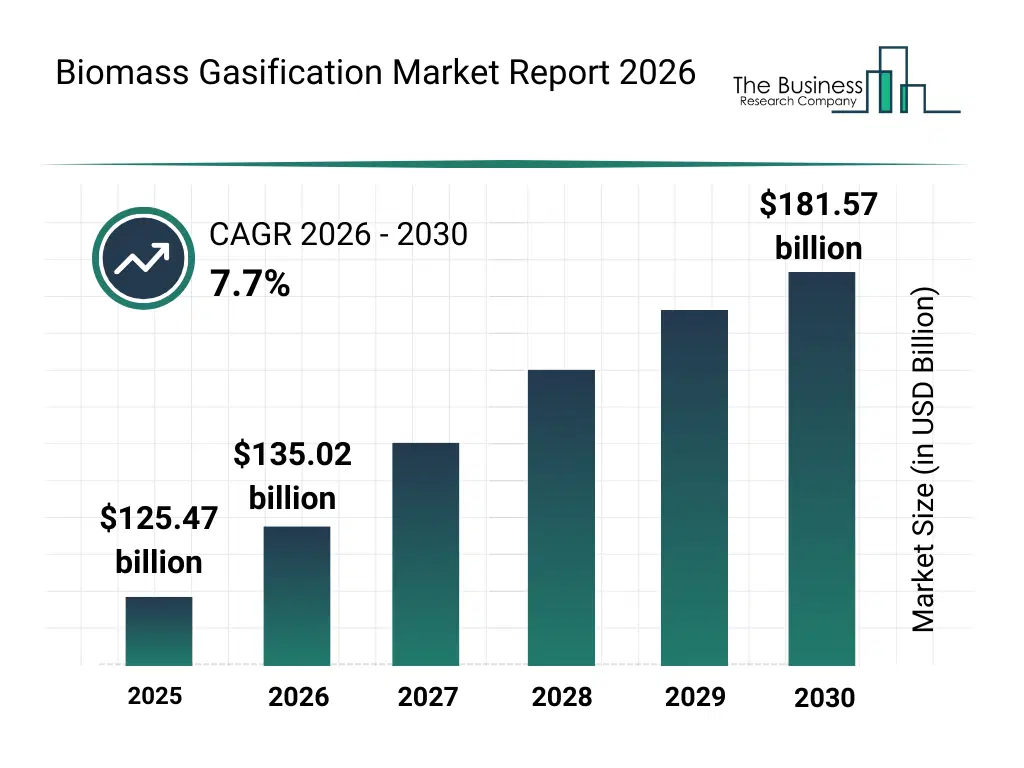
What Is The Biomass Gasification Market Size and Share 2026?
The biomass gasification market size has grown strongly in recent years. It will grow from $125.47 billion in 2025 to $135.02 billion in 2026 at a compound annual growth rate (CAGR) of 7.6%. The growth in the historic period can be attributed to government support for renewable energy projects, increasing utilization of agricultural residues, rising need for cleaner fuel alternatives, development of decentralized power generation, adoption of biomass-based chemical production.What Is The Biomass Gasification Market Growth Forecast?
The biomass gasification market size is expected to see strong growth in the next few years. It will grow to $181.57 billion in 2030 at a compound annual growth rate (CAGR) of 7.7%. The growth in the forecast period can be attributed to expansion of hydrogen production initiatives, increasing investments in circular economy projects, rising demand for low-carbon fuels, scaling of municipal waste-to-energy facilities, technological improvements in gasifier efficiency. Major trends in the forecast period include expansion of waste-to-energy infrastructure, rising adoption of advanced gasification reactors, growing integration of process control and monitoring systems, increasing focus on syngas quality optimization, deployment of modular biomass gasification plants.Tariff Impact On Biomass Gasification Market
Tariffs are impacting the biomass gasification market by increasing the cost of imported reactors, refractory materials, pressure vessels, gas cleaning units, and control systems used across fixed bed, fluidized bed, and entrained flow gasifiers. Power generation and chemical production facilities in North America and Europe are most affected due to reliance on specialized imported equipment, while Asia-Pacific faces pricing pressure on exported gasification systems. These tariffs are elevating capital project costs and lengthening project commissioning timelines. However, they are also encouraging local manufacturing of gasifiers, regional engineering partnerships, and innovation in cost-optimized and modular gasification plant designs.
Global Biomass Gasification Market Segmentation
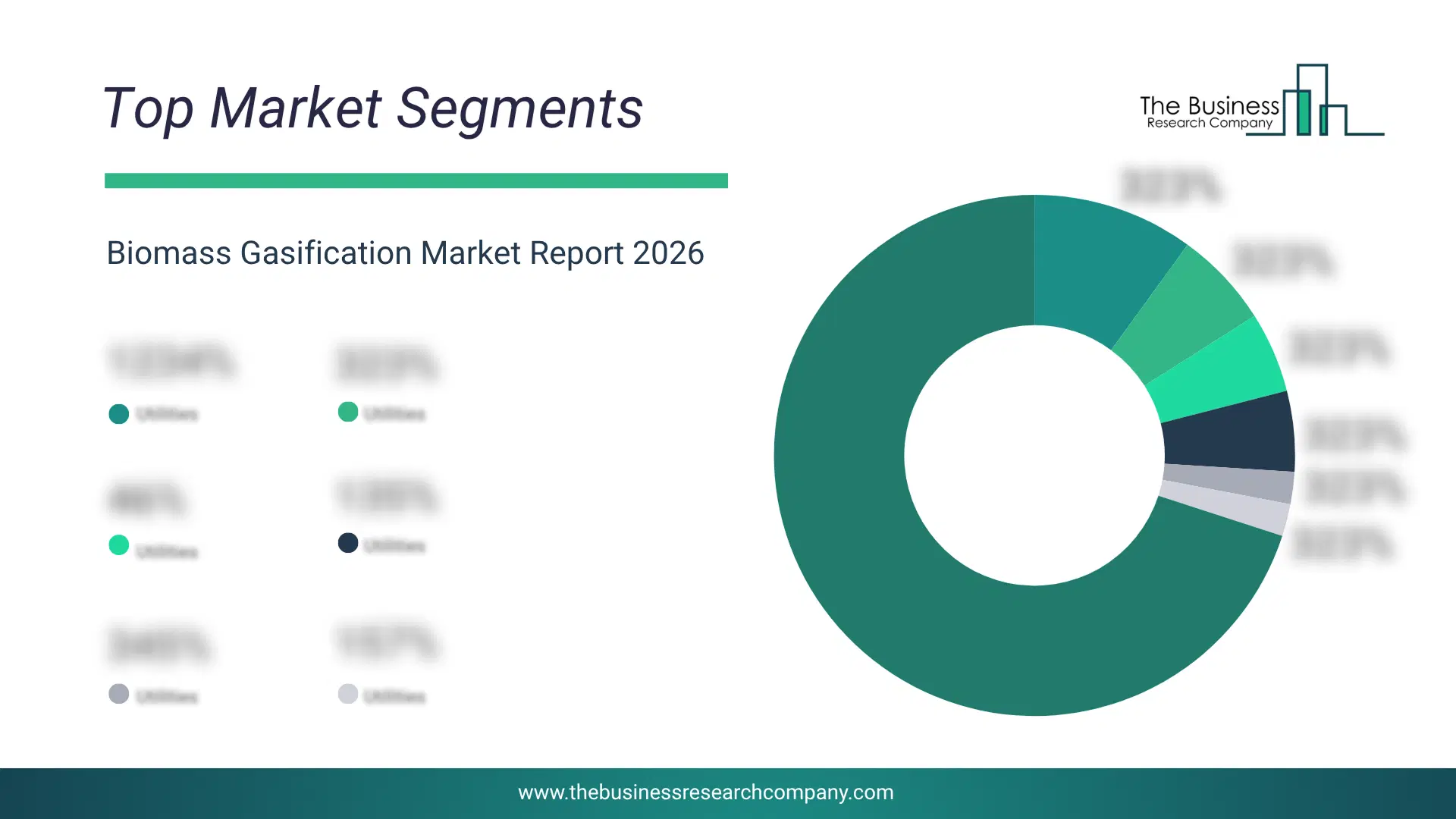
1) By Gasifier Type: Moving Or Fixed Bed, Fluidized Bed, Entrained, Other Gasifier Types 2) By Source: Solid Biomass, Biogas, Municipal Waste, Liquid Biomass 3) By Application: Chemicals, Liquid Fuels, Power, Gas Fuels Subsegments: 1) By Moving Or Fixed Bed Gasifiers: Updraft Gasifiers, Downdraft Gasifiers, Cross-Draft Gasifiers 2) By Fluidized Bed Gasifiers: Bubbling Fluidized Bed Gasifiers, Circulating Fluidized Bed Gasifiers 3) By Entrained Flow Gasifiers: High-Temperature Entrained Flow Gasifiers, Low-Temperature Entrained Flow Gasifiers 4) By Other Gasifier Types: Plasma Gasifiers, Rotary Kiln Gasifiers, Pyrolysis GasifiersWhat Is The Driver Of The Biomass Gasification Market?
The growing focus on clean energy sources is expected to propel the growth of the biomass gasification market going forward. Clean energy refers to energy derived from renewable, sustainable sources that have minimal environmental impact and produce low or no greenhouse gas emissions during generation. The primary drive behind the shift to clean energy sources is the urgent need to mitigate climate change, as they produce electricity with minimal or no greenhouse gas emissions, making them essential for reducing the carbon footprint of the energy sector. Biomass gasification is increasingly utilized to meet clean energy demand by converting organic materials into renewable syngas, which can be used for electricity generation and fuel production. For instance, in January 2024, according to the U.S. Energy Information Administration, a US-based federal agency responsible for collecting and analyzing energy information, planned solar initiatives are expected to boost the electric power sector's solar capacity by 38%, rising from 95 gigawatts (GW) at the close of 2023 to 131 GW by the end of 2024. Therefore, growing focus on clean energy sources will drive the biomass gasification industry.Key Players In The Global Biomass Gasification Market
Major companies operating in the biomass gasification market are Siemens Energy AG, Engie SA, Andritz AG, Air Products and Chemicals, Inc., Air Liquide S.A., Mitsubishi Heavy Industries, Ltd., Thyssenkrupp AG, Lahti Energia Oy, Babcock & Wilcox Enterprises, Inc., Shangqiu Haiqi Machinery Equipment Co., Ltd., Sedin Engineering Co., Ltd., Chanderpur Group, Case Group, GGE Power Pvt. Ltd., EnviTec Biogas AG, First Biogas International AG, Shenzhen Puxin Science & Technology Co., Ltd., Mingshuo Environment Technology Group Co., Ltd., Clarke Energy Ltd., Seko Industries Srl, HC Energy, Agraferm Technologies AG, Sunpower Group Ltd., Outotec Oyj (now part of Metso Outotec), Valmet Oyj, Drax Power Limited, Hitachi Zosen Inova AG, EcoTerra BioGas, CEZ Group, Romelectro SA, ZiO-Podolsk (Machine-Building Plant named after Ordzhonikidze), Notus Energy, Polish Energy Group (PGE Polska Grupa Energetyczna S.A.), H3-CHP Clean Energy Systems, Emispec, Inc., PyroGenesis Canada Inc., Lambion Energy Solutions GmbH, Triple Green Energy, Klean Industries Inc., Wright Tech Systems Inc., V&F Analyse- und Messtechnik GmbH, Western Research Institute, CleanTech Biofuels, Inc.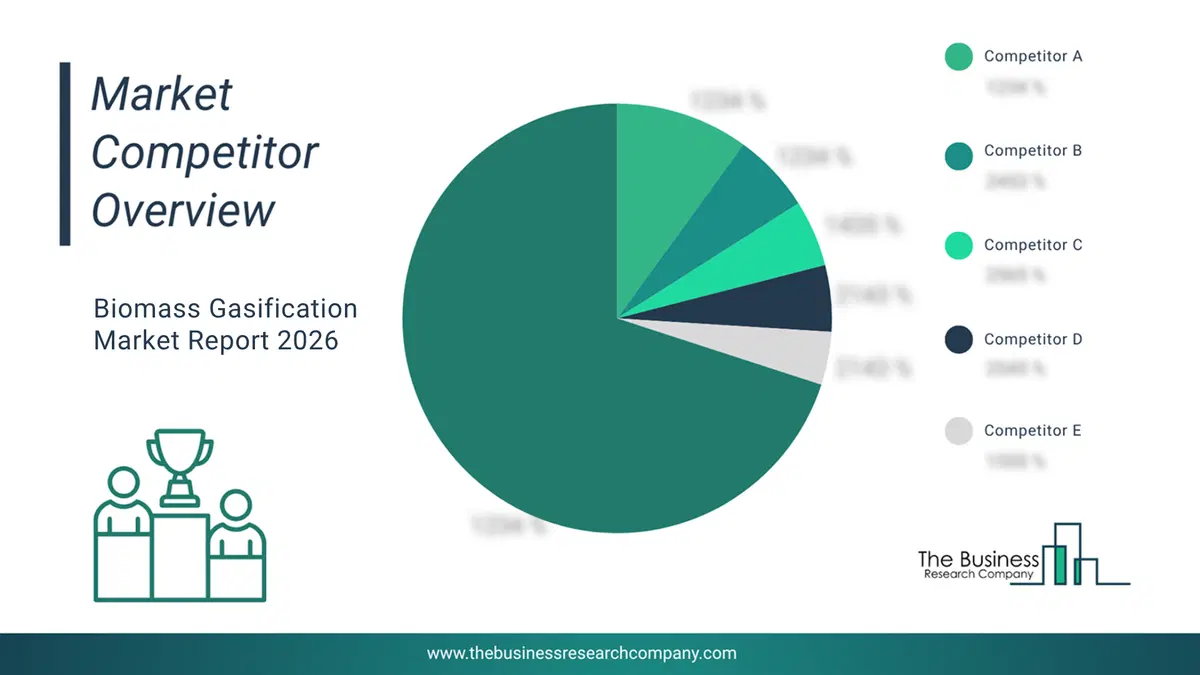
This chart is for illustrative purposes; the full report includes a detailed competitor analysis and comprehensive overview of the top 10 companies in the market.
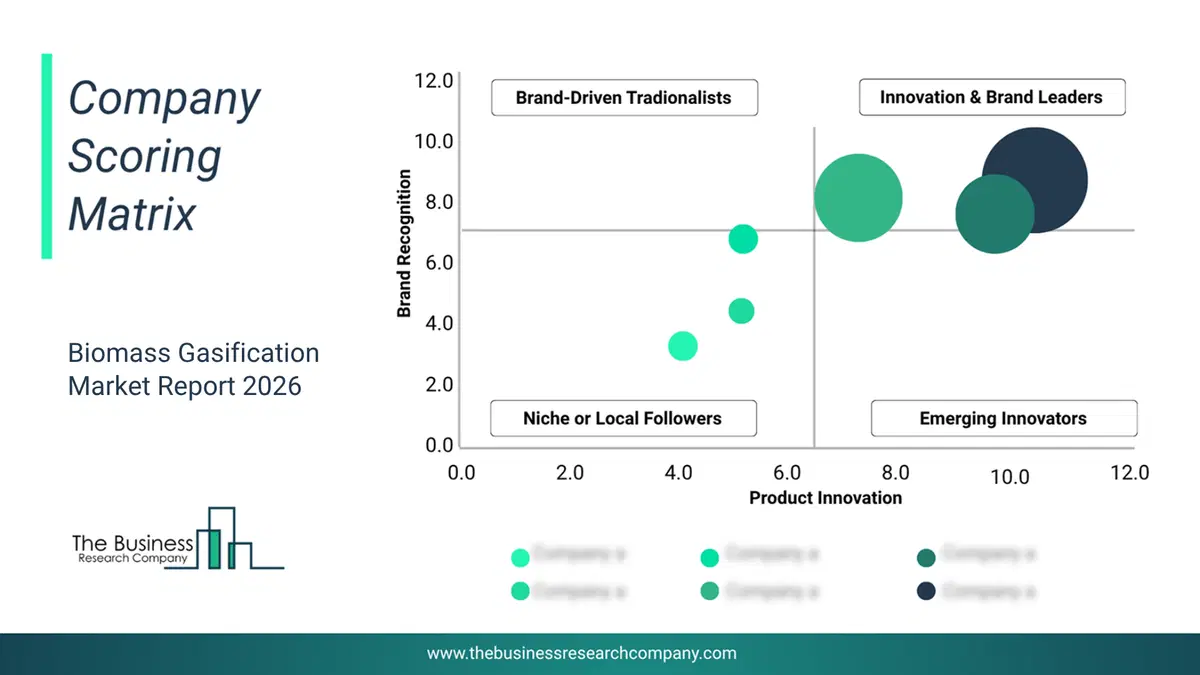
This chart maps companies by product innovation and brand strength, with bubble size indicating relative revenue, helping identify market leaders, challengers, and niche players. This is an illustrative chart; the full report provides a complete and accurate competitive analysis.
Global Biomass Gasification Market Trends and Insights
Major companies and research institutions operating in the biomass gasification market are increasingly adopting advanced computational modeling techniques particularly AI-enabled hybrid models to enhance prediction accuracy, optimize reactor performance, and accelerate large-scale deployment. These next-generation modeling approaches integrate traditional simulation tools with machine-learning methods such as neural networks, enabling more precise estimation of syngas composition, improved process optimization, and significantly lower computational requirements compared to conventional thermodynamic equilibrium or CFD models. For instance, in July 2025, the Royal Society of Chemistry (RSC), a UK-based scientific publisher, released a study titled “Recent advances and computational approaches in biomass gasifier modeling: from thermodynamics to AI-driven techniques,” conducted by a team of renewable-energy researchers. The study demonstrated that AI-driven and hybrid models can reliably simulate the generation of hydrogen-enriched syngas from a wide variety of biomass feedstocks, offering superior accuracy, enhanced computational efficiency, and improved scalability over classical methods.What Are Latest Mergers And Acquisitions In The Biomass Gasification Market?
In January 2023, Kejuruteraan Asastera Bhd (KAB), a Malaysia-based engineering company, acquired Future Biomass Gasification Sdn Bhd (FBG) for $3.2 million. With this acquisition, KAB aims to enhance its sustainable energy solutions (SES) portfolio by adding its first biogas power plant, thereby diversifying its renewable energy assets and generating additional revenue through the existing power purchase agreement with Tenaga Nasional Bhd. Future Biomass Gasification Sdn Bhd (FBG) is a Malaysia-based energy company focused on renewable energy solutions, particularly in the biomass sector.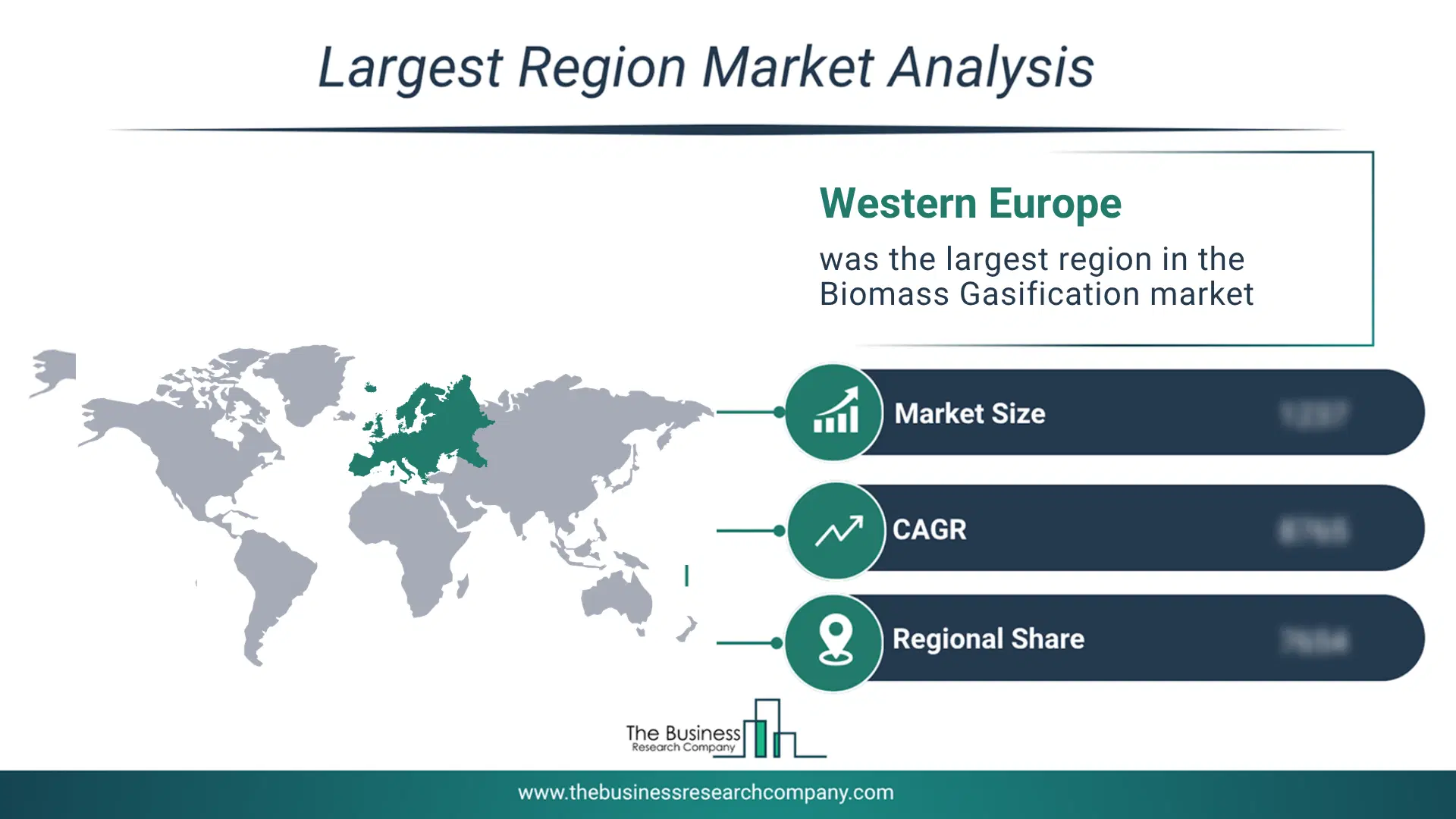
Regional Outlook
Western Europe was the largest region in the biomass gasification market in 2025, and it is also expected to be the fastest-growing region in the forecast period. The regions covered in this market report are Asia-Pacific, South East Asia, Western Europe, Eastern Europe, North America, South America, Middle East, Africa The countries covered in this market report are Australia, Brazil, China, France, Germany, India, Indonesia, Japan, Taiwan, Russia, South Korea, UK, USA, Canada, Italy, Spain.What Defines the Biomass Gasification Market?
The biomass gasification market includes revenues earned by entities by provide services such as biomass-derived liquid reforming, natural gas reforming, thermochemical water splitting, and photoelectrochemical water splitting services. The market value includes the value of related goods sold by the service provider or included within the service offering. Only goods and services traded between entities or sold to end consumers are included.How is Market Value Defined and Measured?
The market value is defined as the revenues that enterprises gain from the sale of goods and/or services within the specified market and geography through sales, grants, or donations in terms of the currency (in USD unless otherwise specified). The revenues for a specified geography are consumption values that are revenues generated by organizations in the specified geography within the market, irrespective of where they are produced. It does not include revenues from resales along the supply chain, either further along the supply chain or as part of other products.
This chart presents market attractiveness based on a quantitative evaluation of growth, competition, strategic alignment, and risk, offering a clear view of opportunity areas for decision-making. This chart is for illustrative purposes; the full report contains the complete analysis.

This chart highlights the Total Addressable Market (TAM) by estimating the maximum revenue opportunity using an assumption-driven approach, supporting strategic planning and opportunity sizing across markets. The chart is illustrative; the full report provides a more comprehensive analysis.
What Key Data and Analysis Are Included in the Biomass Gasification Market Report 2026?
The biomass gasification market research report is one of a series of new reports from The Business Research Company that provides market statistics, including industry global market size, regional shares, competitors with the market share, detailed market segments, market trends and opportunities, and any further data you may need to thrive in the biomass gasification industry. The market research report delivers a complete perspective of everything you need, with an in-depth analysis of the current and future state of the industry.Biomass Gasification Market Report Forecast Analysis
| Report Attribute | Details |
|---|---|
| Market Size Value In 2026 | $135.02 billion |
| Revenue Forecast In 2030 | $181.57 billion |
| Growth Rate | CAGR of 7.7% from 2026 to 2030 |
| Base Year For Estimation | 2025 |
| Actual Estimates/Historical Data | 2020-2025 |
| Forecast Period | 2026 - 2030 |
| Market Representation | Revenue in USD Billion and CAGR from 2026 to 2030 |
| Segments Covered | Gasifier Type, Source, Application |
| Regional Scope | Asia-Pacific, Western Europe, Eastern Europe, North America, South America, Middle East, Africa |
| Key Companies Profiled | Siemens Energy AG, Engie SA, Andritz AG, Air Products and Chemicals, Inc., Air Liquide S.A., Mitsubishi Heavy Industries, Ltd., Thyssenkrupp AG, Lahti Energia Oy, Babcock & Wilcox Enterprises, Inc., Shangqiu Haiqi Machinery Equipment Co., Ltd., Sedin Engineering Co., Ltd., Chanderpur Group, Case Group, GGE Power Pvt. Ltd., EnviTec Biogas AG, First Biogas International AG, Shenzhen Puxin Science & Technology Co., Ltd., Mingshuo Environment Technology Group Co., Ltd., Clarke Energy Ltd., Seko Industries Srl, HC Energy, Agraferm Technologies AG, Sunpower Group Ltd., Outotec Oyj (now part of Metso Outotec), Valmet Oyj, Drax Power Limited, Hitachi Zosen Inova AG, EcoTerra BioGas, CEZ Group, Romelectro SA, ZiO-Podolsk (Machine-Building Plant named after Ordzhonikidze), Notus Energy, Polish Energy Group (PGE Polska Grupa Energetyczna S.A.), H3-CHP Clean Energy Systems, Emispec, Inc., PyroGenesis Canada Inc., Lambion Energy Solutions GmbH, Triple Green Energy, Klean Industries Inc., Wright Tech Systems Inc., V&F Analyse- und Messtechnik GmbH, Western Research Institute, CleanTech Biofuels, Inc. |
| Customization Scope | Request for Customization |
| Pricing And Purchase Options | Explore Purchase Options |