

Bioplastics And Biodegradable Plastics Market Report 2026
Global Outlook – By Product Type (Starch Blends, Polylactic Acid, Polybutylene Succinate, Polyhydroxyalkanoates, Other Product Types), By Source (Corn Starch, Sugarcane, Cassava, Cellulose, Vegetable Oils, Algae), By Application (Packaging, Agriculture, Consumer Goods, Automotive, Other Applications), By End User (Food And Beverage, Healthcare, Retail, Other End Users) – Market Size, Trends, Strategies, and Forecast to 2030
Bioplastics And Biodegradable Plastics Market Overview
• Bioplastics And Biodegradable Plastics market size has reached to $10.16 billion in 2025 • Expected to grow to $20.71 billion in 2030 at a compound annual growth rate (CAGR) of 15.2% • Growth Driver: Rising Demand For Sustainable Packaging Driving The Growth Of The Market Due To Reduce Material Usage And Lower Plastic Waste • Market Trend: Food Waste Upcycling Enables Next-Generation Biodegradable Plastic Innovation • Europe was the largest region in 2025 and Asia-Pacific is the fastest growing region.What Is Covered Under Bioplastics And Biodegradable Plastics Market?
Bioplastics and biodegradable plastics are plastic materials designed to reduce environmental impact by being derived from renewable biological sources, biodegradable, or both. Bioplastics are made wholly or partly from biomass such as corn starch, sugarcane, or cellulose, while biodegradable plastics are engineered to break down into natural substances such as water, carbon dioxide, and biomass under specific environmental conditions. The main product types of bioplastics and biodegradable plastics include starch blends, polylactic acid, polybutylene succinate, polyhydroxyalkanoates, and other product types. Starch blends refer to biodegradable plastic materials produced by combining starch with biodegradable polymers to provide improved flexibility, processability, and environmental sustainability for a wide range of applications. These products are derived from sources such as corn starch, sugarcane, cassava, cellulose, vegetable oils, and algae. They find application in packaging, agriculture, consumer goods, automotive, and others, serving end users including food and beverage, healthcare, retail, and others.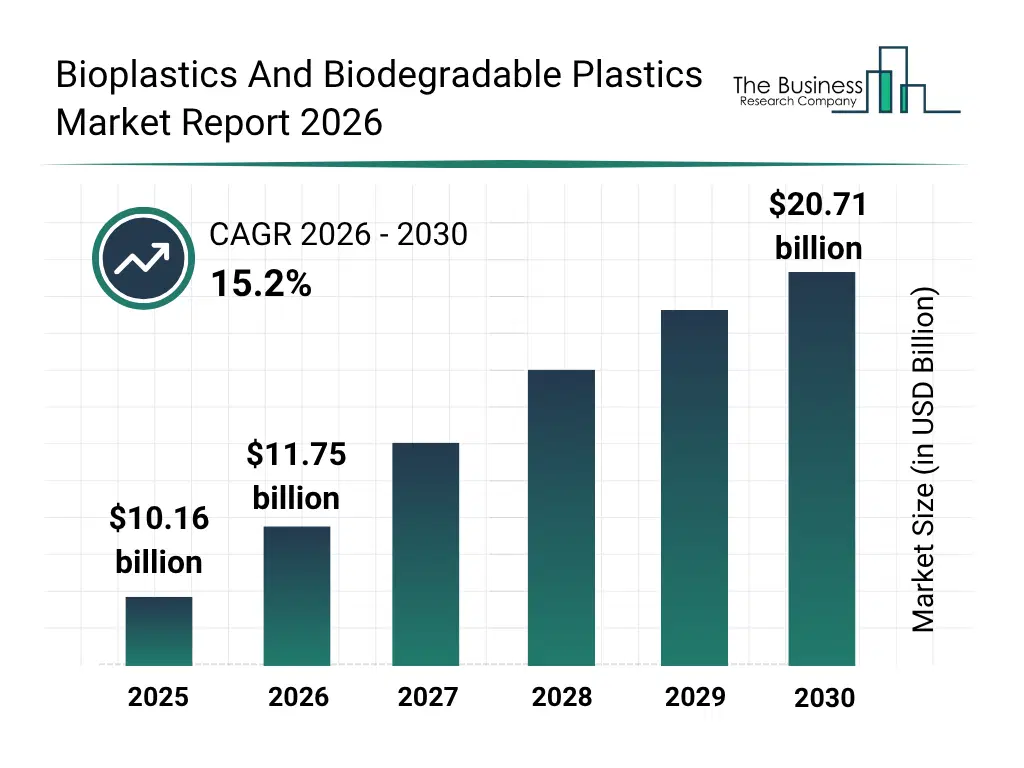
What Is The Bioplastics And Biodegradable Plastics Market Size and Share 2026?
The bioplastics and biodegradable plastics market size has grown rapidly in recent years. It will grow from $10.16 billion in 2025 to $11.75 billion in 2026 at a compound annual growth rate (CAGR) of 15.6%. The growth in the historic period can be attributed to increasing environmental awareness among consumers, rising demand for sustainable packaging solutions, growing adoption of renewable raw materials, expansion of regulatory initiatives supporting plastic waste reduction, increasing preference for eco-friendly material alternatives.What Is The Bioplastics And Biodegradable Plastics Market Growth Forecast?
The bioplastics and biodegradable plastics market size is expected to see rapid growth in the next few years. It will grow to $20.71 billion in 2030 at a compound annual growth rate (CAGR) of 15.2%. The growth in the forecast period can be attributed to rising demand for compostable plastic solutions, growing adoption of circular economy practices, increasing investments in bio-based polymer development, expansion of biodegradable plastics across industrial applications, rising demand for sustainable alternatives to conventional plastics. Major trends in the forecast period include increasing development of bio based plastic materials from renewable feedstocks, growing adoption of compostable and biodegradable packaging solutions, rising demand for plastics with reduced environmental impact and improved sustainability performance, expansion of biodegradable plastic applications across diverse industries, increasing focus on improving material performance and cost competitiveness of bioplastics.
Global Bioplastics And Biodegradable Plastics Market Segmentation
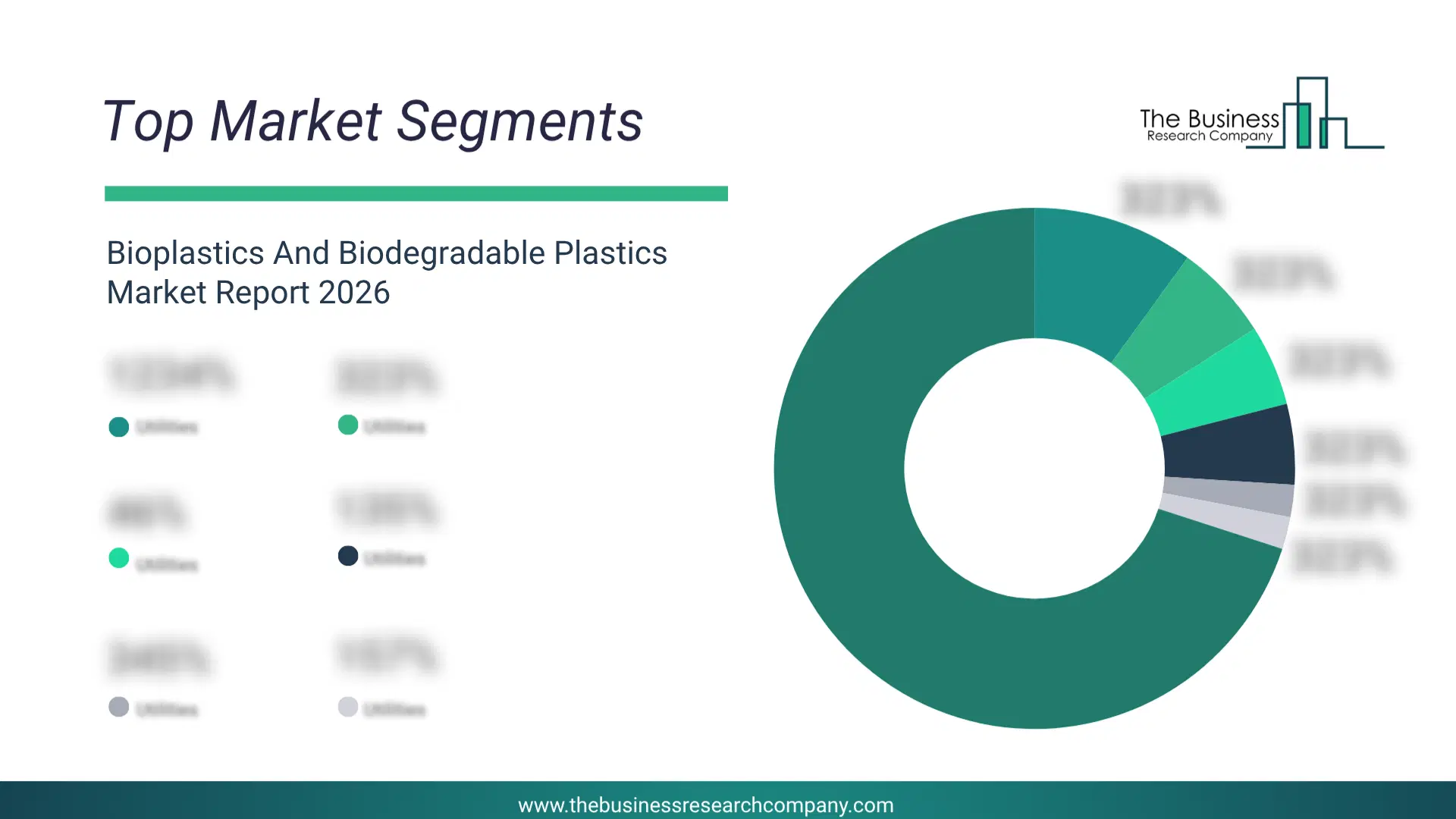
1) By Product Type: Starch Blends, Polylactic Acid, Polybutylene Succinate, Polyhydroxyalkanoates, Other Product Types 2) By Source: Corn Starch, Sugarcane, Cassava, Cellulose, Vegetable Oils, Algae 3) By Application: Packaging, Agriculture, Consumer Goods, Automotive, Other Applications 4) By End User: Food And Beverage, Healthcare, Retail, Other End Users Subsegments: 1) By Starch Blends: Thermoplastic Starch, Starch Polybutylene Adipate Terephthalate Blends, Starch Polylactic Acid Blends, Starch Polycaprolactone Blends, Starch Cellulose Blends 2) By Polylactic Acid: Amorphous Polylactic Acid, Crystalline Polylactic Acid, High Heat Resistant Polylactic Acid, Injection Molding Grade Polylactic Acid, Film Grade Polylactic Acid 3) By Polybutylene Succinate: Bio Based Polybutylene Succinate, Flexible Polybutylene Succinate, High Strength Polybutylene Succinate, Compostable Polybutylene Succinate 4) By Polyhydroxyalkanoates: Polyhydroxybutyrate, Polyhydroxybutyrate Co Hydroxyvalerate, Polyhydroxyoctanoate, Medium Chain Length Polyhydroxyalkanoates, Short Chain Length Polyhydroxyalkanoates 5) By Other Product Types: Bio Polyethylene, Bio Polyethylene Terephthalate, Cellulose Based Plastics, Polybutylene Adipate Terephthalate, PolycaprolactoneWhat Is The Driver Of The Bioplastics And Biodegradable Plastics Market?
The rising demand for sustainable packaging is expected to propel the growth of the bioplastics and biodegradable plastics market going forward. Sustainable packaging is the development and use of packaging solutions that minimize environmental impact through reduced material usage, recyclability, and efficient resource utilization. Sustainable packaging is increasing due to rising regulatory pressure on reducing plastic waste and promoting eco-friendly materials. Bioplastics and biodegradable plastics enable sustainable packaging by replacing conventional petroleum-based plastics with renewable, compostable, and lower-carbon materials that reduce environmental pollution and advance circular economy practices through improved end-of-life biodegradability. For instance, in April 2023, according to the 2023 Buying Green Report by Trivium Packaging, a Netherlands-based sustainable packaging company, 82% of consumers expressed willingness to pay more for sustainable packaging, reflecting a 4% increase from 2022. Therefore, the rising demand for sustainable packaging is driving the growth of the bioplastics and biodegradable plastics industry.Key Players In The Global Bioplastics And Biodegradable Plastics Market
Major companies operating in the bioplastics and biodegradable plastics market are Arkema S.A., BASF SE, Braskem S.A., Carbios SA, Eastman Chemical Company, Futerro SA, Green Dot Bioplastics Inc., Kaneka Corporation, Lactips SAS, Mango Materials Inc., Mitsubishi Chemical Group Corporation, NatureWorks LLC, Polymateria Limited, RWDC Industries Limited, Sulapac Oy, TerraVerdae Bioworks Inc., TIPA Corp Ltd., Toray Industries Inc., TotalEnergies Corbion b.v.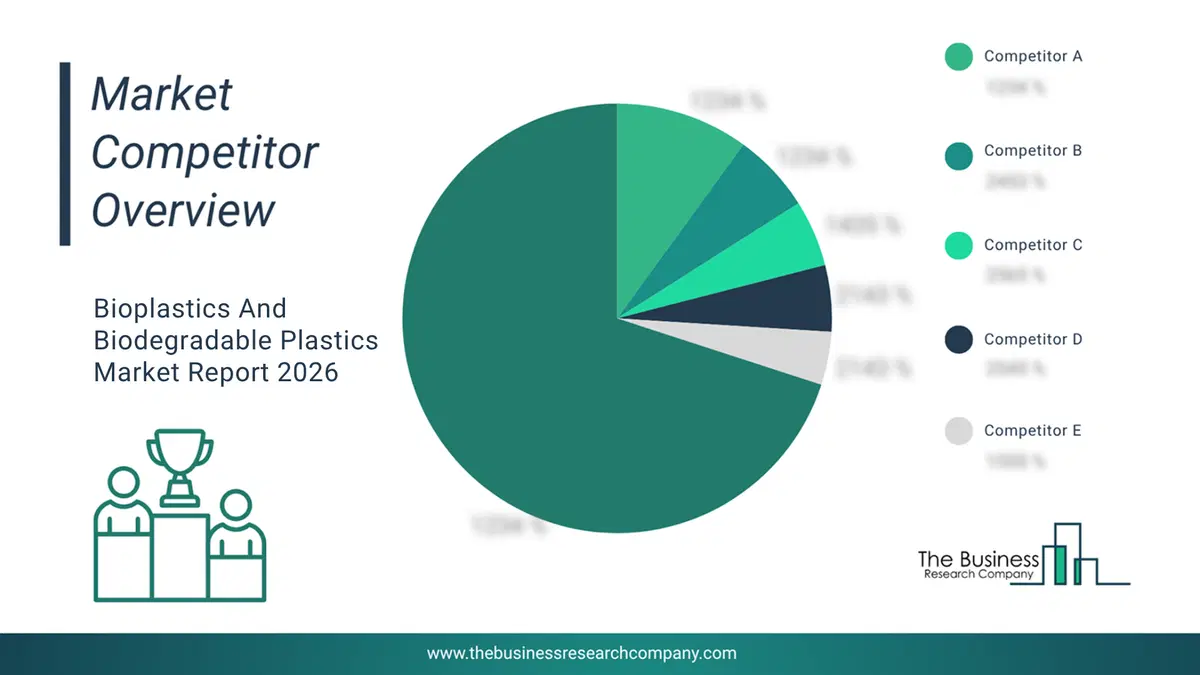
This chart is for illustrative purposes; the full report includes a detailed competitor analysis and comprehensive overview of the top 10 companies in the market.
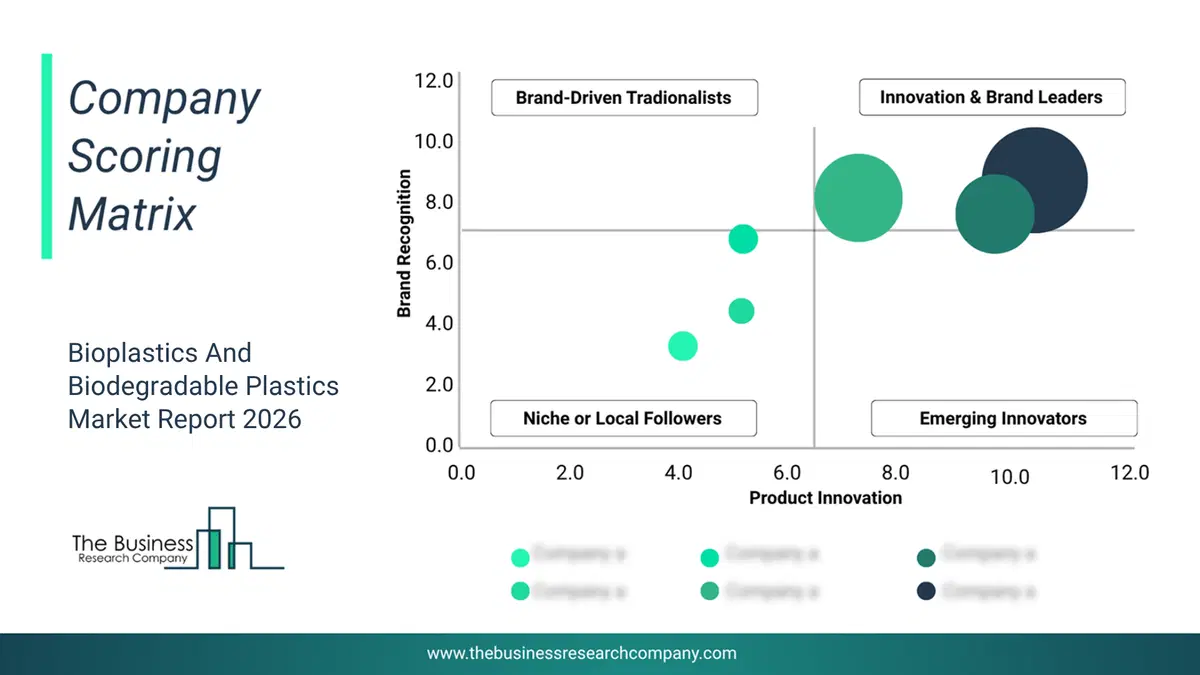
This chart maps companies by product innovation and brand strength, with bubble size indicating relative revenue, helping identify market leaders, challengers, and niche players. This is an illustrative chart; the full report provides a complete and accurate competitive analysis.
Global Bioplastics And Biodegradable Plastics Market Trends and Insights
Major companies operating in the bioplastics and biodegradable plastics market are focusing on developing innovative solutions, such as food waste-based polylactic acid, to enhance circular economy practices, reduce dependence on fossil fuels, and improve sustainable, low-carbon plastic production through waste valorisation and higher biodegradability. Food waste-based polylactic acid (PLA) is a biodegradable bioplastic made by converting organic food waste into lactic acid and then polymerising it into PLA, enabling sustainable plastic production with reduced reliance on fossil fuels. For instance, in June 2025, TripleW, an Israel-based biotechnology company, partnered with Sulzer AG, a Switzerland-based chemical engineering and process technology company, and launched the world’s first food waste-based PLA bioplastic. The product is produced by upcycling post-consumer food waste into high-purity lactic acid, which is then processed into PLA suitable for packaging and industrial applications. It offers improved environmental performance by reducing landfill waste, lowering carbon emissions, and enabling biodegradable end-of-life pathways compared to conventional plastics. The technology also supports scalable industrial production through advanced fermentation and separation systems, making it suitable for use in food packaging, disposable items, and sustainable material applications across multiple industries.What Are Latest Mergers And Acquisitions In The Bioplastics And Biodegradable Plastics Market?
In July 2025, Teknor Apex Company, a US-based plastics material science solutions company acquired Danimer Scientific Inc. for an undisclosed amount. Through this acquisition, Teknor Apex aims to enhance its sustainable materials portfolio by integrating Danimer Scientific’s biodegradable bioplastics technologies and expanding its offerings of environmentally responsible material solutions. Danimer Scientific Inc. is a US-based bioplastics company that provides biodegradable and compostable plastic materials, including polyhydroxyalkanoates and polylactic acid-based resins for packaging, consumer goods, and industrial applications.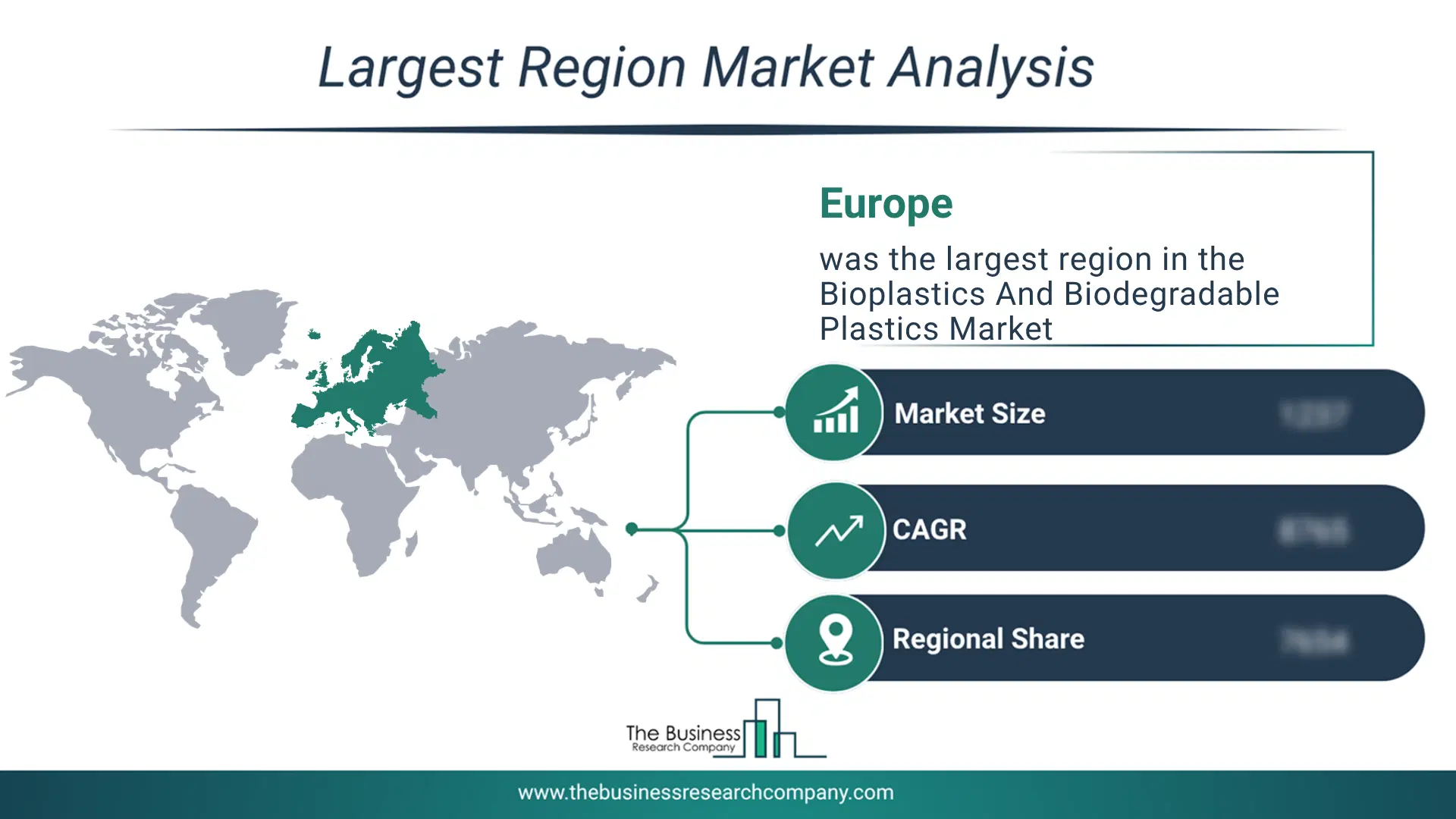
Regional Insights
Europe was the largest region in the bioplastics and biodegradable plastics market in 2025. Asia-Pacific is expected to be the fastest-growing region in the forecast period. The regions covered in this market report are Asia-Pacific, South East Asia, Western Europe, Eastern Europe, North America, South America, Middle East, Africa. The countries covered in this market report are Australia, Brazil, China, France, Germany, India, Indonesia, Japan, Taiwan, Russia, South Korea, UK, USA, Canada, Italy, Spain.What Defines the Bioplastics And Biodegradable Plastics Market?
The bioplastics and biodegradable plastics market consists of sales of biodegradable packaging films, compostable shopping bags, agricultural mulch films, and biodegradable foam packaging materials. Values in this market are ‘factory gate’ values, that is, the value of goods sold by the manufacturers or creators of the goods, whether to other entities (including downstream manufacturers, wholesalers, distributors, and retailers) or directly to end customers. The value of goods in this market includes related services sold by the creators of the goods.How is Market Value Defined and Measured?
The market value is defined as the revenues that enterprises gain from the sale of goods and/or services within the specified market and geography through sales, grants, or donations in terms of the currency (in USD unless otherwise specified). The revenues for a specified geography are consumption values that are revenues generated by organizations in the specified geography within the market, irrespective of where they are produced. It does not include revenues from resales along the supply chain, either further along the supply chain or as part of other products.
This chart presents market attractiveness based on a quantitative evaluation of growth, competition, strategic alignment, and risk, offering a clear view of opportunity areas for decision-making. This chart is for illustrative purposes; the full report contains the complete analysis.

This chart highlights the Total Addressable Market (TAM) by estimating the maximum revenue opportunity using an assumption-driven approach, supporting strategic planning and opportunity sizing across markets. The chart is illustrative; the full report provides a more comprehensive analysis.
What Key Data and Analysis Are Included in the Bioplastics And Biodegradable Plastics Market Report 2026?
The bioplastics and biodegradable plastics market research report is one of a series of new reports from The Business Research Company that provides market statistics, including industry global market size, regional shares, competitors with the market share, detailed market segments, market trends and opportunities, and any further data you may need to thrive in the bioplastics and biodegradable plastics industry. The market research report delivers a complete perspective of everything you need, with an in-depth analysis of the current and future state of the industry.Bioplastics And Biodegradable Plastics Market Report Forecast Analysis
| Report Attribute | Details |
|---|---|
| Market Size Value In 2026 | $11.75 billion |
| Revenue Forecast In 2030 | $20.71 billion |
| Growth Rate | CAGR of 15.2% from 2026 to 2030 |
| Base Year For Estimation | 2025 |
| Actual Estimates/Historical Data | 2020-2025 |
| Forecast Period | 2026 - 2030 |
| Market Representation | Revenue in USD Billion and CAGR from 2026 to 2030 |
| Segments Covered | Product Type, Source, Application, End User |
| Regional Scope | Asia-Pacific, Western Europe, Eastern Europe, North America, South America, Middle East, Africa |
| Country Scope | The countries covered in the report are Australia, Brazil, China, France, Germany, India, Indonesia, Japan, Taiwan, Russia, South Korea, UK, USA, Canada, Italy, Spain. |
| Key Companies Profiled | Arkema S.A., BASF SE, Braskem S.A., Carbios SA, Eastman Chemical Company, Futerro SA, Green Dot Bioplastics Inc., Kaneka Corporation, Lactips SAS, Mango Materials Inc., Mitsubishi Chemical Group Corporation, NatureWorks LLC, Polymateria Limited, RWDC Industries Limited, Sulapac Oy, TerraVerdae Bioworks Inc., TIPA Corp Ltd., Toray Industries Inc., TotalEnergies Corbion b.v. |
| Customization Scope | Request for Customization |
| Pricing And Purchase Options | Explore Purchase Options |