
Biopreservatives Market Report 2026
Global Outlook – By Type (Organic Acids, Enzymes, Antimicrobial Peptides, Essential Oils, Fermentation Products), By Form (Liquid, Powder, Granular, Solid, Other Forms), By Source (Plant-Derived, Animal-Derived, Microbial-Derived), By End-User (Food Processing Industry, Pharmaceutical Industry, Cosmetic Industry, Agricultural Industry) – Market Size, Trends, Strategies, and Forecast to 2030
Biopreservatives Market Overview
• Biopreservatives market size has reached to $3.33 billion in 2025 • Expected to grow to $4.73 billion in 2030 at a compound annual growth rate (CAGR) of 7.2% • Growth Driver: Rising Processed Food Production Is Driving The Market Growth Due To Increasing Manufacturing Output In The Food Sector • Market Trend: Technological Innovation in Natural Mold Inhibition • North America was the largest region in 2025 and Asia-Pacific is the fastest growing region.What Is Covered Under Biopreservatives Market?
The biopreservatives consists of products and solutions made from natural antimicrobial and antioxidant sources that help extend the shelf life of food and beverages. It includes naturally derived ingredients that inhibit spoilage, prevent contamination, and maintain product quality. The market also covers the development and commercialization of biological preservation methods that reduce the reliance on synthetic additives. The main types of biopreservatives include organic acids, enzymes, antimicrobial peptides, essential oils, and fermentation products. Organic acids are widely used due to their effectiveness in inhibiting microbial growth and extending product shelf life across diverse formulations. These biopreservatives are available in liquid, powder, granular, solid, and others and are derived from plant-based, animal-based, and microbial sources. Biopreservatives are primarily used by the food processing, pharmaceutical, cosmetic, and agricultural industries.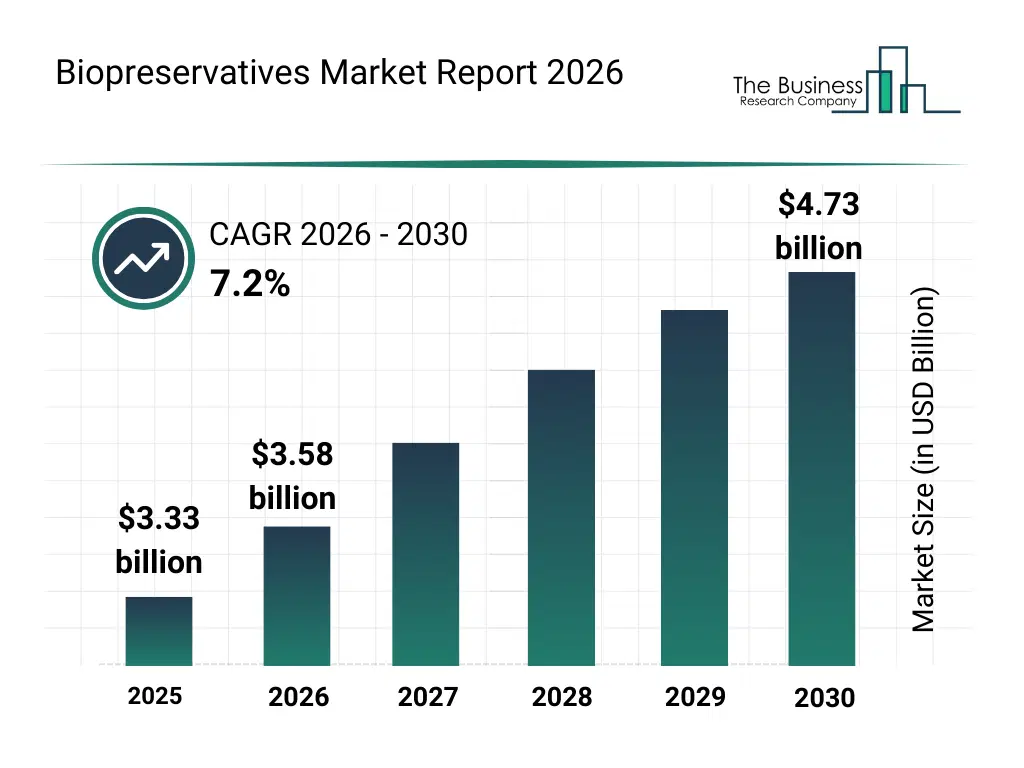
What Is The Biopreservatives Market Size and Share 2026?
The biopreservatives market size has grown strongly in recent years. It will grow from $3.33 billion in 2025 to $3.58 billion in 2026 at a compound annual growth rate (CAGR) of 7.5%. The growth in the historic period can be attributed to increasing demand for natural food preservation, growing consumer awareness about food safety, rising demand in processed and packaged foods, expansion of the beverage and dairy industry, increasing regulations for synthetic preservatives.What Is The Biopreservatives Market Growth Forecast?
The biopreservatives market size is expected to see strong growth in the next few years. It will grow to $4.73 billion in 2030 at a compound annual growth rate (CAGR) of 7.2%. The growth in the forecast period can be attributed to rising adoption of clean label products, growing investment in natural preservative solutions, increasing preference for minimally processed foods, expansion of global distribution channels, rising health-conscious consumer trends. Major trends in the forecast period include technology advancements in biopreservatives, innovations in microbial and plant-based preservatives, developments in shelf-life extension solutions, research and development in eco-friendly preservatives, and integration of smart packaging with biopreservatives.
Global Biopreservatives Market Segmentation
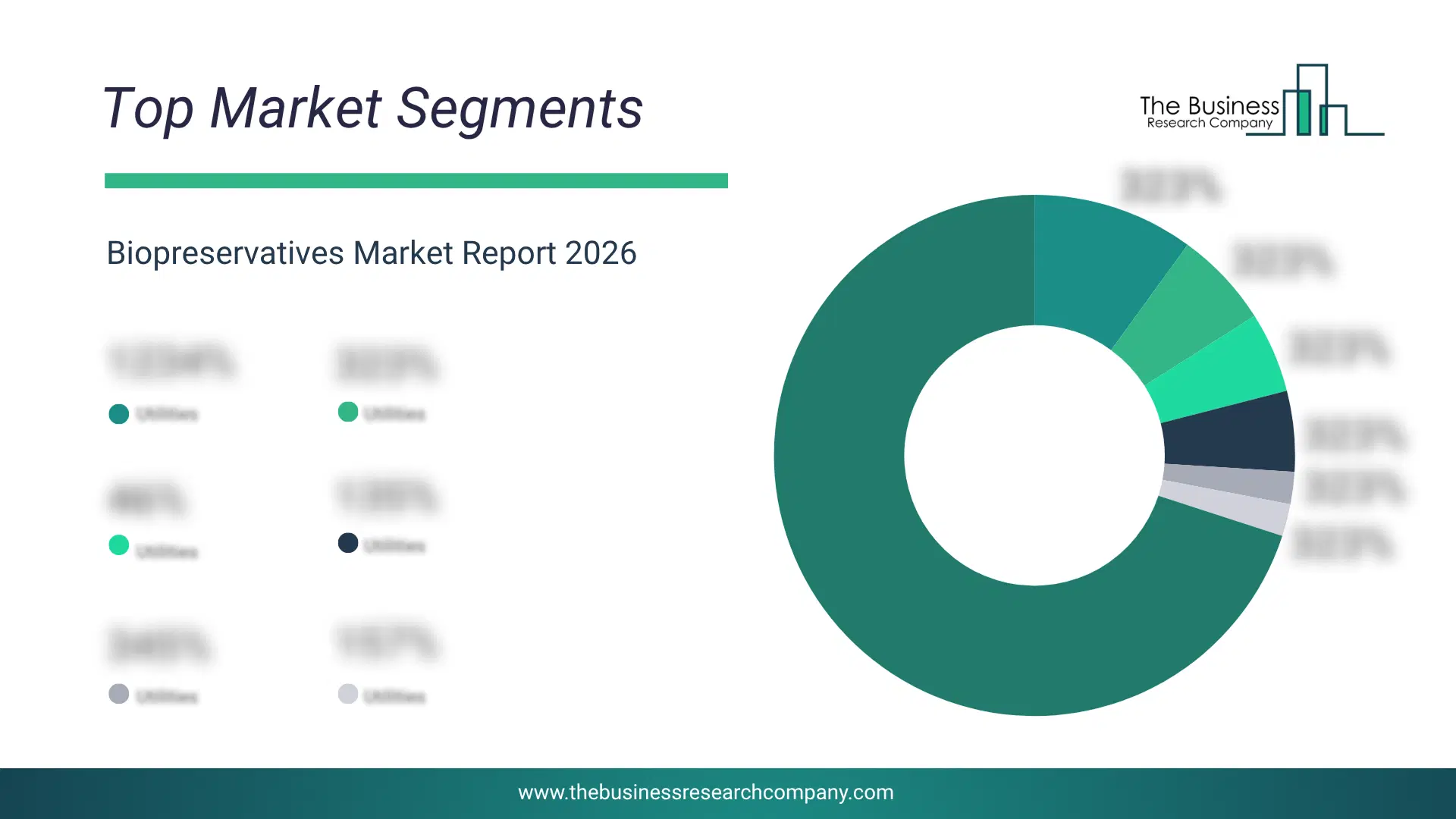
1) By Type: Organic Acids, Enzymes, Antimicrobial Peptides, Essential Oils, Fermentation Products 2) By Form: Liquid, Powder, Granular, Solid, Other Forms 3) By Source: Plant-Derived, Animal-Derived, Microbial-Derived 4) By End-User: Food Processing Industry, Pharmaceutical Industry, Cosmetic Industry, Agricultural Industry Subsegments: 1) By Organic Acids: Lactic Acid, Acetic Acid, Citric Acid, Propionic Acid, Benzoic Acid 2) By Enzymes: Lysozymes, Proteases, Lipases, Lactoperoxidase, Glucose Oxidase 3) By Antimicrobial Peptides: Nisin, Pediocin, Defensins, Natamycin, Bacteriocins 4) By Essential Oils: Thyme Oil, Oregano Oil, Clove Oil, Rosemary Oil, Cinnamon Oil 5) By Fermentation Products: Cultured Dextrose, Fermented Sugar Extracts, Fermented Whey, Probiotic-Based Fermentates, Microbial Culture ExtractsWhat Is The Driver Of The Biopreservatives Market?
The rising processed food production is expected to fuel the growth of the biopreservatives market during the forecast period. Processed food refers to food products that have been modified from their natural form through methods like cooking, packaging, or adding preservatives to improve shelf life and convenience. Processed food production is increasing as more people with busy, urban lifestyles prefer convenient ready-to-eat options over traditional home-cooked meals. Biopreservatives support processed food production by providing natural protection against spoilage and contamination, helping maintain freshness and safety while reducing the need for artificial preservatives. For instance, in July 2024, according to Eurostat, a Luxembourg-based statistical office of the European Union, the manufacturing value of food, beverages, and tobacco in the European Union rose from about US $ 1,089 billion (€1,006 billion) in 2022 to about US $ 1,143 billion (€1,056 billion) in 2023, marking a 5% year-on-year increase. Therefore, rising processed food production is fueling the biopreservatives industry.Key Players In The Global Biopreservatives Market
Major companies operating in the biopreservatives market are Cargill Incorporated, Archer-Daniels-Midland Company, BASF SE, Symrise AG, DSM-Firmenich AG, International Flavors & Fragrances Inc., Givaudan SA, Lonza Group AG, Lanxess AG, Kerry Group plc, Clariant AG, Ashland Global Holdings Inc., Lallemand Inc., Kemin Industries Inc., Corbion N.V., Chr. Hansen Holding A/S, Vantage Specialty Chemicals Inc., Microban International Ltd., Conagen Inc., Handary S.A, ProbioFerm LLC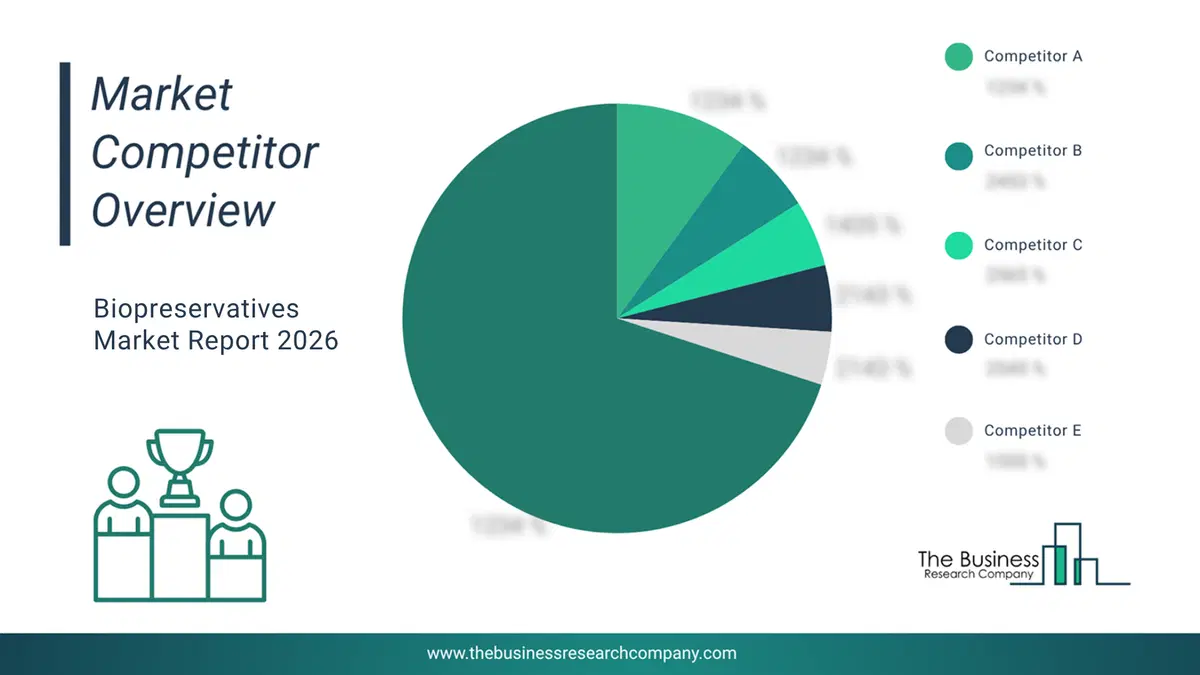
This chart is for illustrative purposes; the full report includes a detailed competitor analysis and comprehensive overview of the top 10 companies in the market.
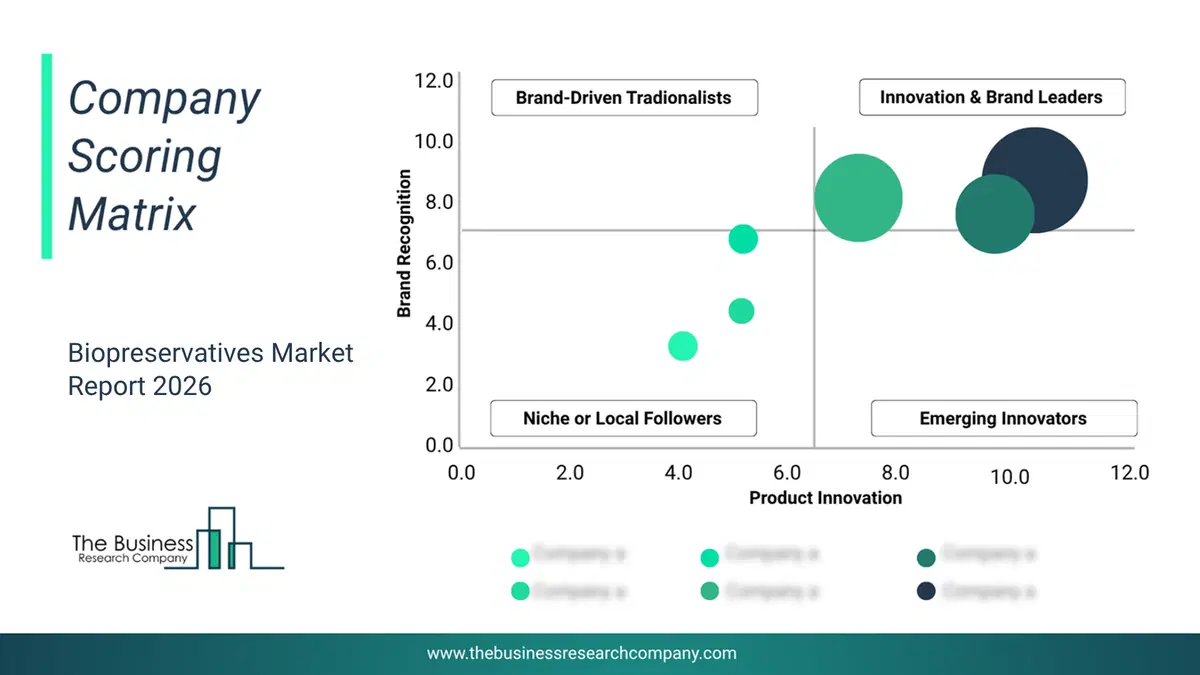
This chart maps companies by product innovation and brand strength, with bubble size indicating relative revenue, helping identify market leaders, challengers, and niche players. This is an illustrative chart; the full report provides a complete and accurate competitive analysis.
Global Biopreservatives Market Trends and Insights
Major companies operating in the biopreservatives market are focusing on new product launches and portfolio expansion in clean-label antimicrobial solutions, such as fermentation-derived bioprotective fermentates, to gain a competitive advantage. Fermentation-derived bioprotective fermentates are biotechnology-based microbial preparations that generate organic acids and antimicrobial metabolites to inhibit spoilage organisms and foodborne pathogens while extending shelf life in diverse food matrices. For instance, in October 2024, Amerex, a Spain-based food ingredients company, launched Biamex FP, a clean-label natural preservative added to its Biamex range. Biamex FP offers advanced protection against Listeria, prevents heterofermentations in products near their best-before date, and at higher dosage also targets enterobacteria and yeasts, supporting longer commercial life and reduced waste. These launches strengthen the value proposition of biopreservatives but require ongoing investment in regulatory compliance, robust challenge testing, and customer education to secure broad adoption across global food categories.What Are Latest Mergers And Acquisitions In The Biopreservatives Market?
In December 2023, Lallemand Inc., a Canada-based global leader within industrial biotechnology, acquired Evolva AG for an undisclosed amount. With this acquisition, Lallemand sought to expand its product offering mainly within health ingredients and flavor and fragrance aroma components by leveraging Evolva’s proprietary precision fermentation technology. Evolva AG is a Switzerland-based business focused on the research, development, and commercialization of natural ingredients derived from yeast, that offers biopreservatives.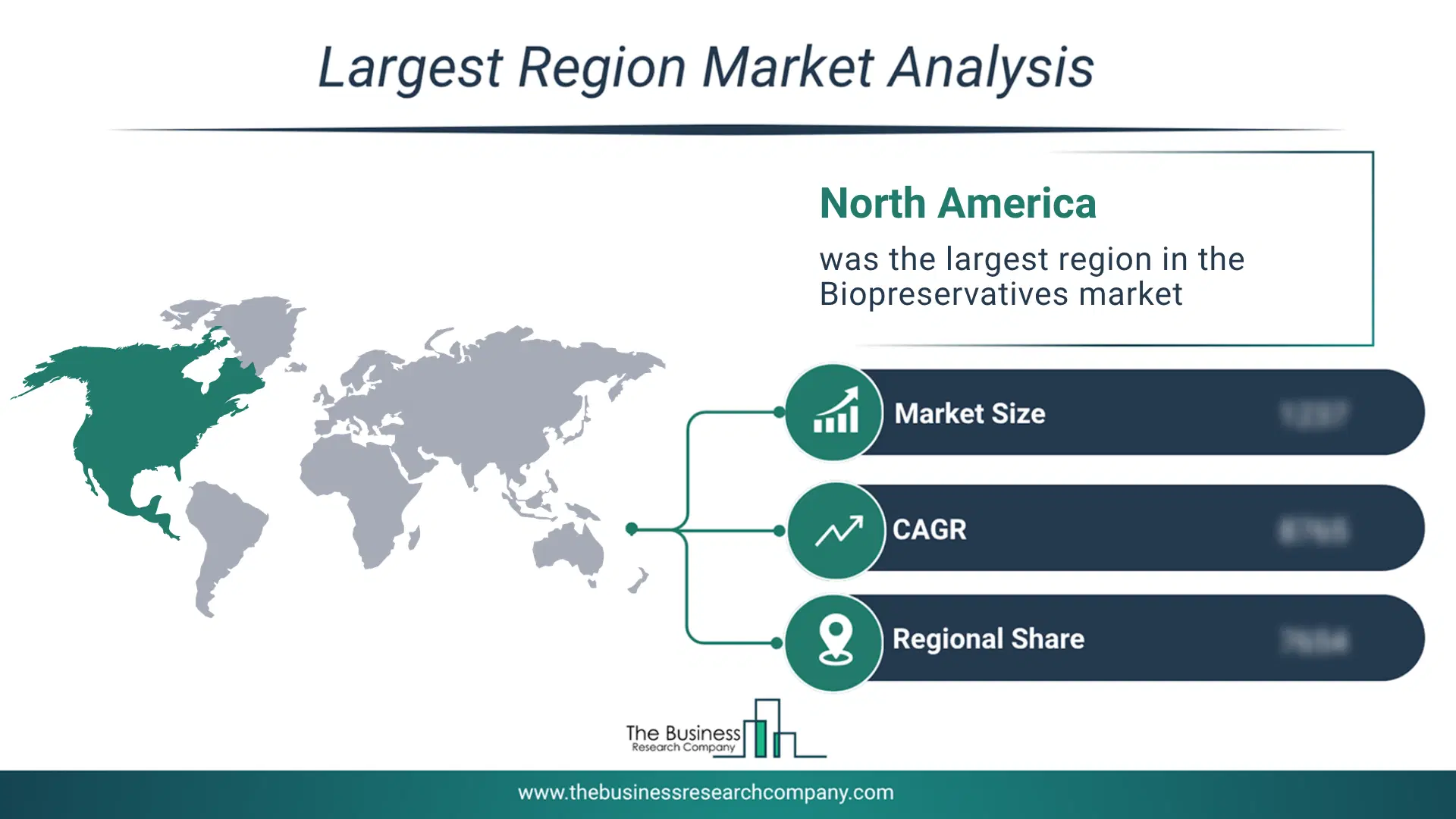
Regional Insights
North America was the largest region in the biopreservatives market in 2025. Asia-Pacific is expected to be the fastest-growing region in the forecast period. The regions covered in this market report are Asia-Pacific, South East Asia, Western Europe, Eastern Europe, North America, South America, Middle East, Africa. The countries covered in this market report are Australia, Brazil, China, France, Germany, India, Indonesia, Japan, Taiwan, Russia, South Korea, UK, USA, Canada, Italy, Spain.What Defines the Biopreservatives Market?
The biopreservatives market consists of sales of naturally derived antimicrobial, antioxidant, and enzyme-based ingredients that help prevent spoilage and enhance the safety of food and beverage products. Values in this market are ‘factory gate’ values, that is, the value of goods sold by the manufacturers or creators of the goods, whether to other entities (including downstream manufacturers, wholesalers, distributors, and retailers) or directly to end customers. The value of goods in this market includes related services sold by the creators of the goods.How is Market Value Defined and Measured?
The market value is defined as the revenues that enterprises gain from the sale of goods and/or services within the specified market and geography through sales, grants, or donations in terms of the currency (in USD unless otherwise specified). The revenues for a specified geography are consumption values that are revenues generated by organizations in the specified geography within the market, irrespective of where they are produced. It does not include revenues from resales along the supply chain, either further along the supply chain or as part of other products.
This chart presents market attractiveness based on a quantitative evaluation of growth, competition, strategic alignment, and risk, offering a clear view of opportunity areas for decision-making. This chart is for illustrative purposes; the full report contains the complete analysis.

This chart highlights the Total Addressable Market (TAM) by estimating the maximum revenue opportunity using an assumption-driven approach, supporting strategic planning and opportunity sizing across markets. The chart is illustrative; the full report provides a more comprehensive analysis.
What Key Data and Analysis Are Included in the Biopreservatives Market Report 2026?
The biopreservatives market research report is one of a series of new reports from The Business Research Company that provides market statistics, including industry global market size, regional shares, competitors with the market share, detailed market segments, market trends and opportunities, and any further data you may need to thrive in the biopreservatives industry. The market research report delivers a complete perspective of everything you need, with an in-depth analysis of the current and future state of the industry.Biopreservatives Market Report Forecast Analysis
| Report Attribute | Details |
|---|---|
| Market Size Value In 2026 | $3.58 billion |
| Revenue Forecast In 2030 | $4.73 billion |
| Growth Rate | CAGR of 7.5% from 2026 to 2030 |
| Base Year For Estimation | 2025 |
| Actual Estimates/Historical Data | 2020-2025 |
| Forecast Period | 2026 - 2030 |
| Market Representation | Revenue in USD Billion and CAGR from 2026 to 2030 |
| Segments Covered | Type, Form, Source, End-User |
| Regional Scope | Asia-Pacific, Western Europe, Eastern Europe, North America, South America, Middle East, Africa |
| Country Scope | The countries covered in the report are Australia, Brazil, China, France, Germany, India, Indonesia, Japan, Taiwan, Russia, South Korea, UK, USA, Canada, Italy, Spain. |
| Key Companies Profiled | Cargill Incorporated, Archer-Daniels-Midland Company, BASF SE, Symrise AG, DSM-Firmenich AG, International Flavors & Fragrances Inc., Givaudan SA, Lonza Group AG, Lanxess AG, Kerry Group plc, Clariant AG, Ashland Global Holdings Inc., Lallemand Inc., Kemin Industries Inc., Corbion N.V., Chr. Hansen Holding A/S, Vantage Specialty Chemicals Inc., Microban International Ltd., Conagen Inc., Handary S.A, ProbioFerm LLC |
| Customization Scope | Request for Customization |
| Pricing And Purchase Options | Explore Purchase Options |