
Bioprinting Market Report 2026
Global Outlook – By Product (3D Bioprinters, Bioinks, 3D Bioprinted Products And Services), By Material (Living Cells, Hydrogels, Extracellular Matrices, Biomaterials, Other Materials), By Technology (Inkjet Bioprinting, Extrusion Bioprinting, Laser-Assisted Bioprinting, Magnetic Levitation Bioprinting, Other Technologies), By Application (Tissue Engineering, Regenerative Medicine, Drug Development, Research, Other Applications), By End-User (Academic And Research Institutes, Pharmaceutical And Biotechnology Companies, Hospitals And Clinics, Other End-Users) – Market Size, Trends, Strategies, and Forecast to 2030
Bioprinting Market Overview
• Bioprinting market size has reached to $2.73 billion in 2025 • Expected to grow to $6.68 billion in 2030 at a compound annual growth rate (CAGR) of 19.5% • Growth Driver: Rising Demand For Personalized Medicine Fueling The Growth Of The Market Due To Advancements In Genomic Technologies And Data-Driven Women’s Healthcare • Market Trend: Developing Advanced Polyester-Based Bioinks For Volumetric Bioprinting To Enable Rapid, High-Resolution Tissue Fabrication And Support Regenerative Medicine Research • North America was the largest region in 2025 and Asia-Pacific is the fastest growing region.What Is Covered Under Bioprinting Market?
Bioprinting is an advanced process that uses 3D-printing techniques to create biological structures from living cells and biomaterials. It enables the formation of tissues or tissue-like constructs with controlled architecture. This technology aims to replicate biological functions for applications such as tissue modeling, regenerative research, and experimentation. The main products in the bioprinting include 3D bioprinters, bioinks, and 3D bioprinted products and services. 3D Bioprinters refer to specialized machines that use layer-by-layer printing techniques to fabricate biological structures using living cells and biomaterials. The materials such as living cells, hydrogels, extracellular matrices, biomaterials, and others. The technologies including inkjet bioprinting, extrusion bioprinting, laser-assisted bioprinting, magnetic levitation bioprinting, and others. There are applications including tissue engineering, regenerative medicine, drug development, research, and others and the key end users, including academic and research institutes, pharmaceutical and biotechnology companies, hospitals and clinics, and others.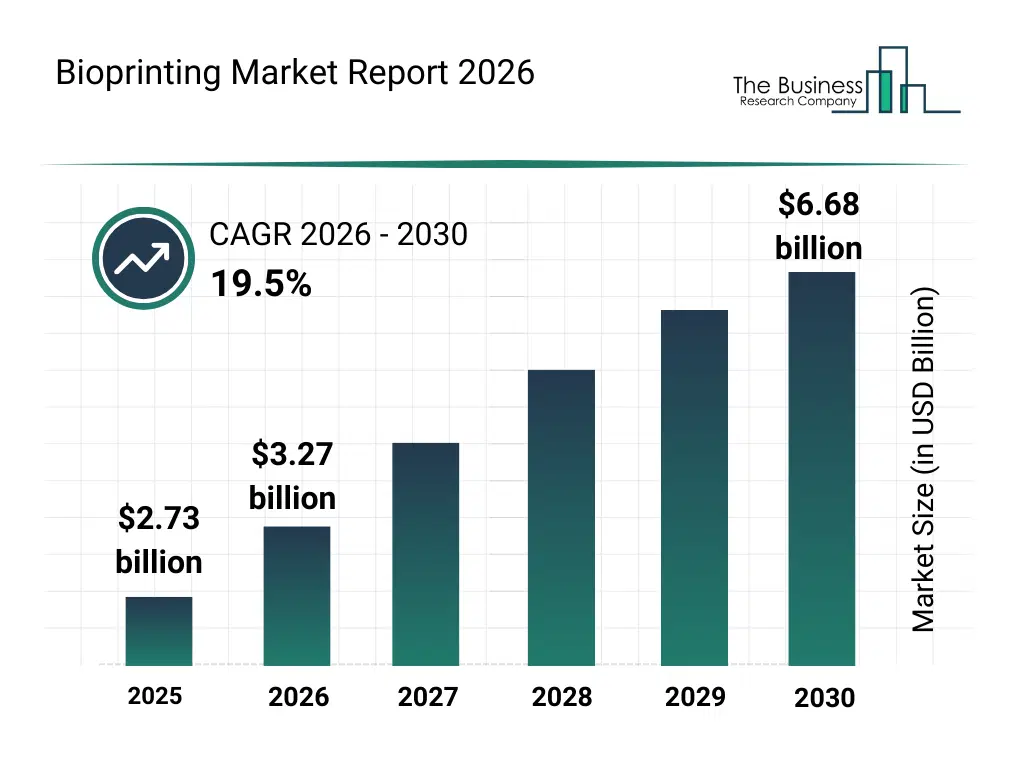
What Is The Bioprinting Market Size and Share 2026?
The bioprinting market size has grown rapidly in recent years. It will grow from $2.73 billion in 2025 to $3.27 billion in 2026 at a compound annual growth rate (CAGR) of 19.8%. The growth in the historic period can be attributed to rising demand for tissue reconstruction, increasing need for organ transplants, growing chronic disease burden, shortage of donor organs, and rising aging population.What Is The Bioprinting Market Growth Forecast?
The bioprinting market size is expected to see rapid growth in the next few years. It will grow to $6.68 billion in 2030 at a compound annual growth rate (CAGR) of 19.5%. The growth in the forecast period can be attributed to increasing demand for regenerative medicine, expanding applications in drug testing and development, growing R&D investments, rising prevalence of chronic diseases, and growing interest in personalized medicine. Major trends in the forecast period include technological advancements in bioprinting hardware, innovations in bioinks and biomaterials, development of customized 3D tissue and organ models, increased use in pharmaceutical drug development and testing, and growth of public-private research collaborations in biofabrication.
Global Bioprinting Market Segmentation
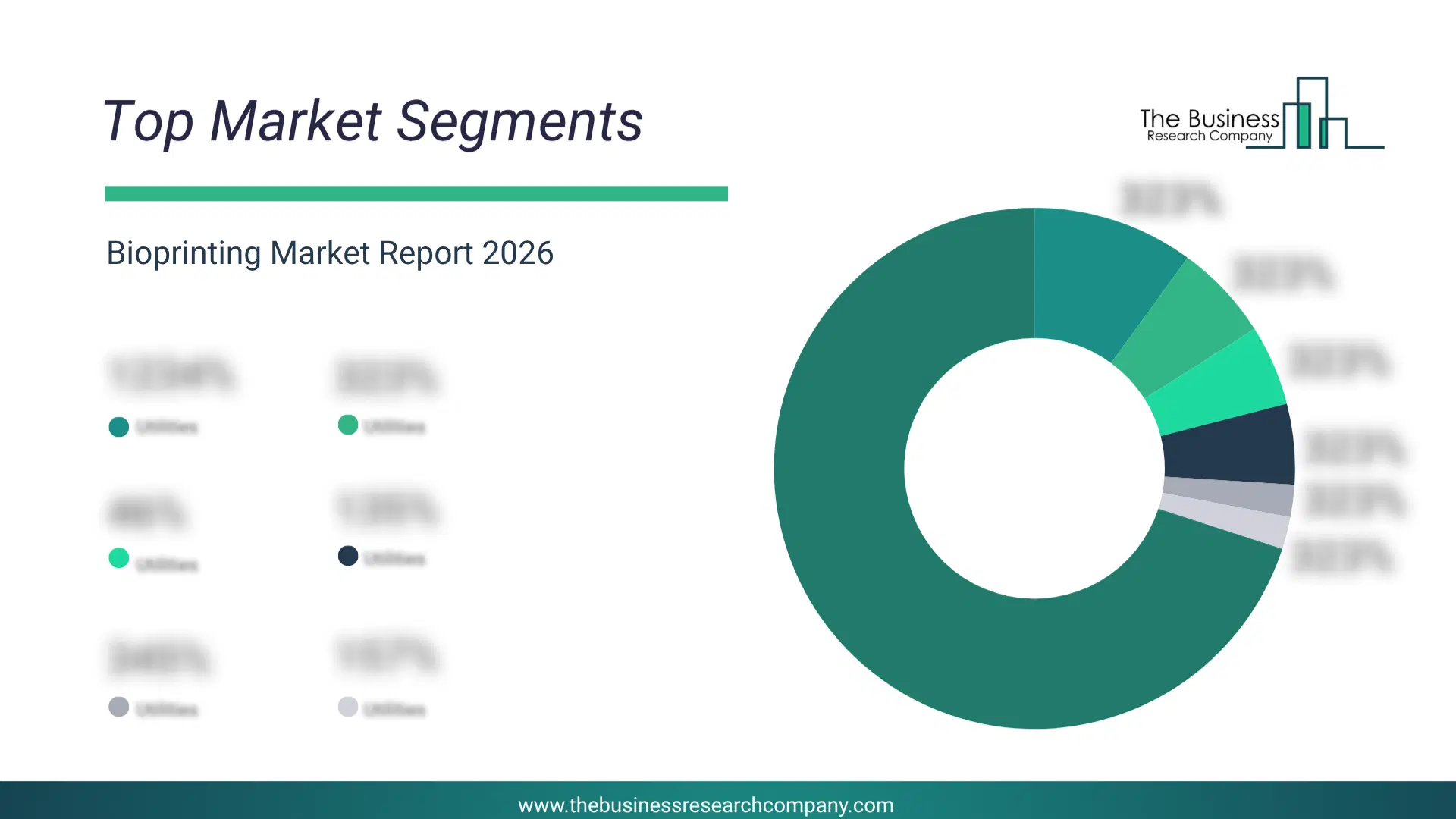
1) By Product: 3D Bioprinters, Bioinks, 3D Bioprinted Products And Services 2) By Material: Living Cells, Hydrogels, Extracellular Matrices, Biomaterials, Other Materials 3) By Technology: Inkjet Bioprinting, Extrusion Bioprinting, Laser-Assisted Bioprinting, Magnetic Levitation Bioprinting, Other Technologies 4) By Application: Tissue Engineering, Regenerative Medicine, Drug Development, Research, Other Applications 5) By End-User: Academic And Research Institutes, Pharmaceutical And Biotechnology Companies, Hospitals And Clinics, Other End-Users Subsegments: 1) By 3D Bioprinters: Inkjet Bioprinters, Extrusion Bioprinters, Laser Assisted Bioprinters, Magnetic Levitation Bioprinters, Microvalve Bioprinters 2) By Bioinks: Natural Polymer Bioinks, Synthetic Polymer Bioinks, Composite Bioinks, Cell Laden Bioinks, Extracellular Matrix Based Bioinks 3) By 3D Bioprinted Products And Services: Bioprinted Tissue Models, Bioprinted Organ Models, Custom Bioprinting Services, Disease Modeling Products, Regenerative Medicine ConstructsWhat Is The Driver Of The Bioprinting Market?
The rising demand for personalized medicine is expected to propel the growth of the bioprinting market going forward. Personalized medicine is a medical approach that involves tailoring treatments to individual patients based on their genetic, environmental, and lifestyle factors to optimize outcomes and improve care. The demand for personalized medicine is increasing due to advancements in genomic technologies, which enable the precise identification of genetic variations and tailored treatments for individuals. Bioprinting enhances personalized medicine by enabling the creation of patient-specific tissues and organ models tailored to individual biological profiles. It improves treatment precision by supporting customized drug testing, regenerative therapies, and better prediction of patient responses. For instance, in February 2024, according to the Personalized Medicine Coalition (PMC), a US-based nonprofit organization, the U.S. Food and Drug Administration (FDA) approved 26 new personalized medicines in 2023, a significant increase from the 12 approved in 2022. Therefore, the rising demand for personalized medicine is driving the growth of the bioprinting industry.Key Players In The Global Bioprinting Market
Major companies operating in the bioprinting market are GeSiM GmbH, Poietis SAS, Stratasys Ltd., BICO Group AB, Cyfuse Biomedical K.K., Inventia Life Science Pty Ltd., Aspect Biosystems Ltd., CollPlant Biotechnologies Ltd., Pandorum Technologies Pvt. Ltd., ROKIT Healthcare Inc., Prellis Biologics Inc., 3D Systems Corporation, RegenHU Ltd., REGEMAT 3D S.L., 3DBio Therapeutics Inc., Brinter Ltd., Allevi Inc., Next Big Innovation Labs, Precise Bio Inc., TissueLabs Inc., Fluicell AB, XLife Sciences, Organovo Holdings Inc.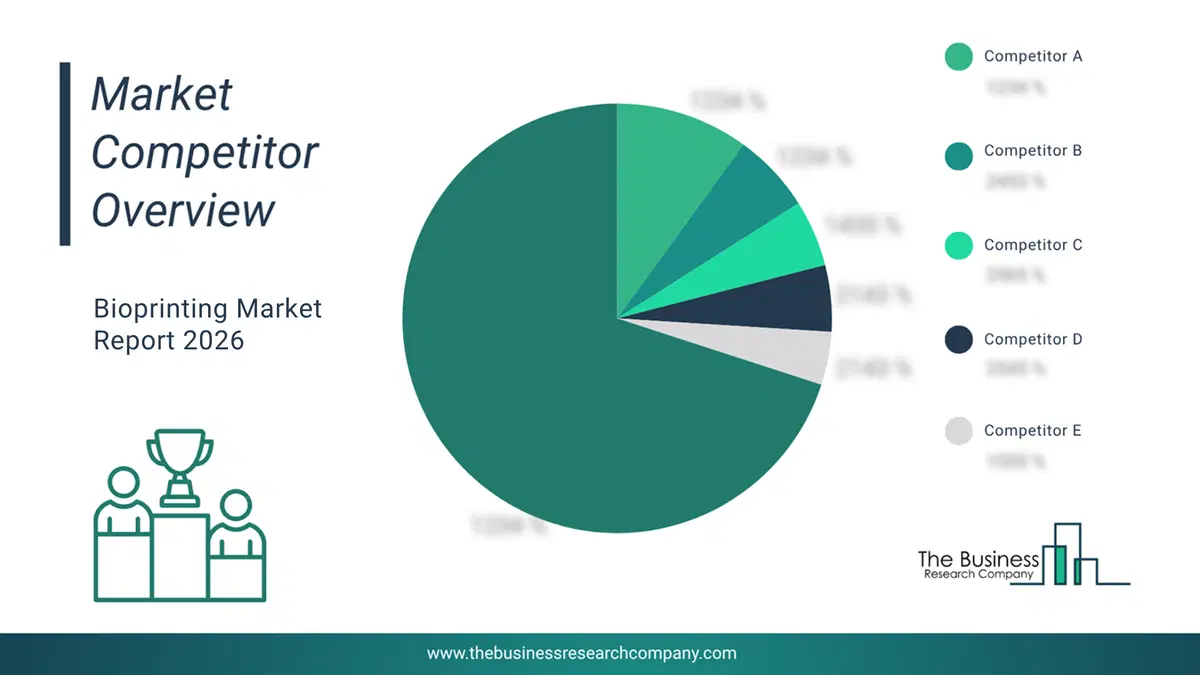
This chart is for illustrative purposes; the full report includes a detailed competitor analysis and comprehensive overview of the top 10 companies in the market.
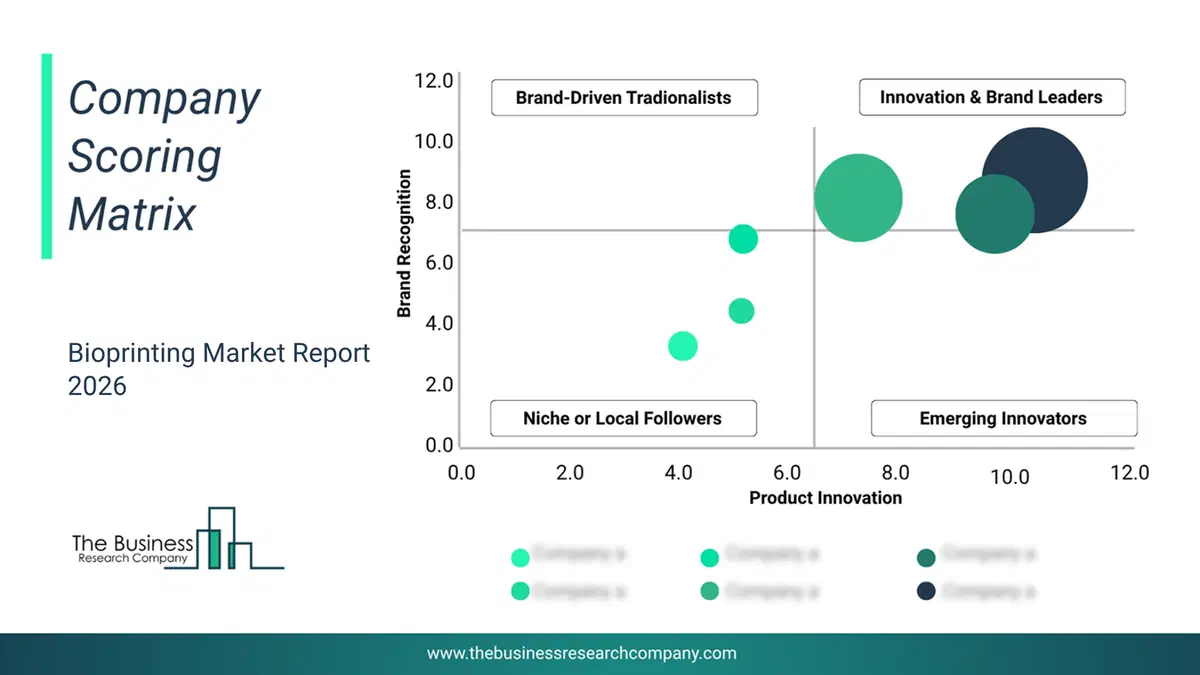
This chart maps companies by product innovation and brand strength, with bubble size indicating relative revenue, helping identify market leaders, challengers, and niche players. This is an illustrative chart; the full report provides a complete and accurate competitive analysis.
Global Bioprinting Market Trends and Insights
Major companies operating in the bioprinting market are focusing on developing advanced resin materials, such as polyester-based volumetric bioprinting resins, to enable rapid fabrication of complex tissue constructs with high resolution and biocompatibility. Polyester-based volumetric bioprinting resins are designed to form entire three-dimensional structures at once rather than layer-by-layer, supporting intricate tissue models for regenerative medicine and tissue engineering research. For instance, in May 2025, BIO INX, a Belgium-based bioink technology company, and Readily3D, a Switzerland-based bioprinter developer, launched READYPCL INX, a polyester-based resin that enables high-speed volumetric printing with resolutions as fine as 100 µm. The resin provides robust mechanical performance, full biodegradability, and ISO 10993‑5 biocompatibility, making it suitable for complex bone and cartilage applications. This launch represents a significant advancement in bioprinting technology by combining speed, precision, and biocompatibility to support next-generation tissue engineering and regenerative medicine research.What Are Latest Mergers And Acquisitions In The Bioprinting Market?
In November 2024, Bio‑INX GmbH, a Germany‑based biofabrication and 3D bioprinting technology company, partnered with Carl Roth GmbH + Co. KG to expand access to 3D bioprinting solutions for life‑science researchers. Through this collaboration, Bio‑INX GmbH and Carl Roth GmbH + Co. KG aim to integrate Bio‑INX’s advanced 3D bioprinting hardware and bioinks with Carl Roth’s extensive portfolio of cell culture reagents, biomaterials, and lab consumables to support scalable adoption of bioprinting workflows across academic, pharmaceutical, and biotech laboratories. Carl Roth GmbH + Co. KG is a Germany‑based provider of laboratory chemicals and bioprocessing solutions.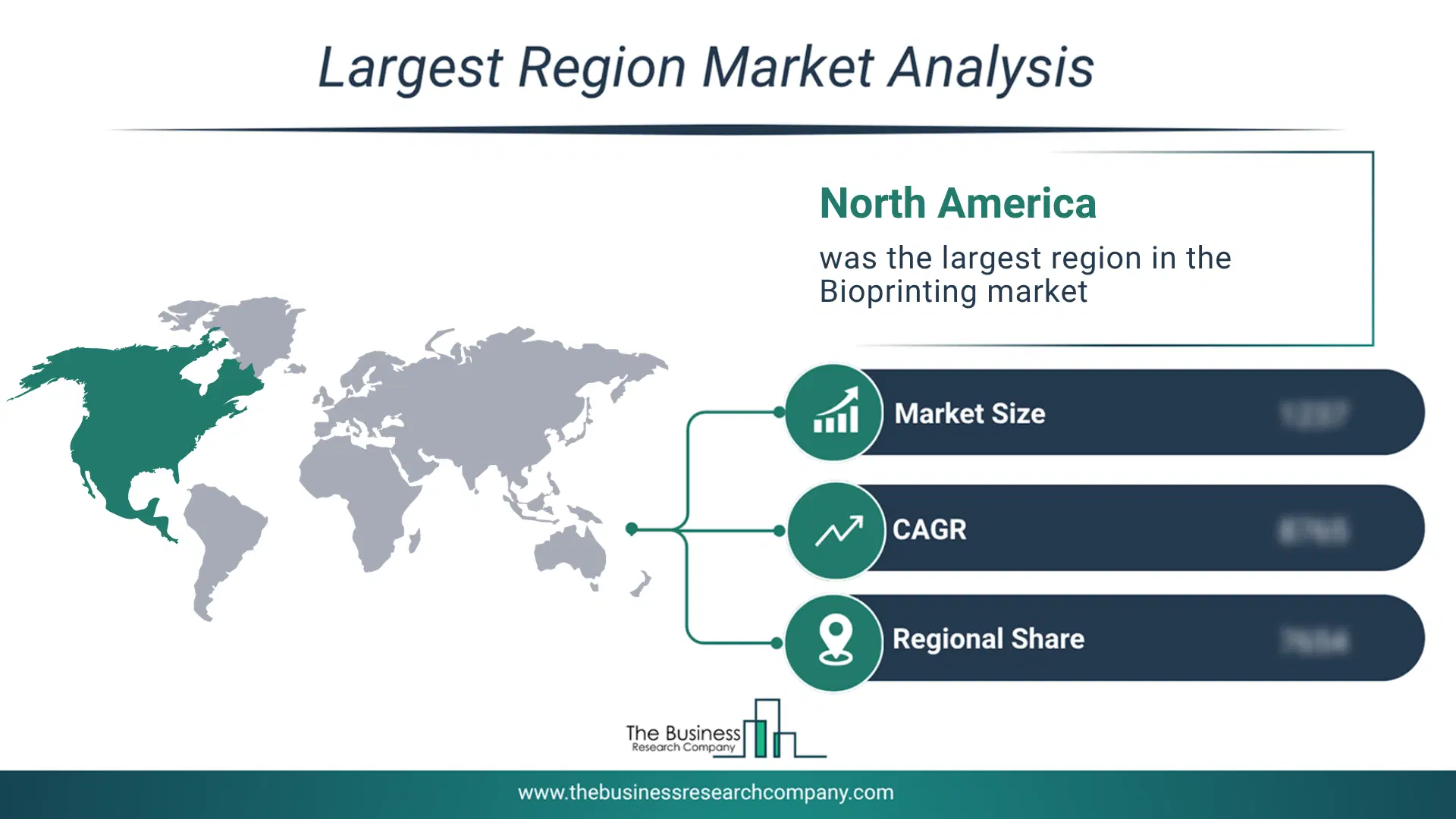
Regional Insights
North America was the largest region in the bioprinting market in 2025. Asia-Pacific is expected to be the fastest-growing region in the forecast period. The regions covered in this market report are Asia-Pacific, South East Asia, Western Europe, Eastern Europe, North America, South America, Middle East, Africa. The countries covered in this market report are Australia, Brazil, China, France, Germany, India, Indonesia, Japan, Taiwan, Russia, South Korea, UK, USA, Canada, Italy, Spain.What Defines the Bioprinting Market?
The bioprinting market consists of revenues earned by entities by providing services such as custom tissue fabrication, research and development support, bioprinting design and modeling, cell and bioink optimization services, and prototyping for regenerative medicine and drug testing. The market value includes the value of related goods sold by the service provider or included within the service offering. The bioprinting market also includes sales of bioprinters, bioinks, living cells and biomaterials, software platforms, and bioprinting accessories and consumables. Values in this market are ‘factory gate’ values, that is, the value of goods sold by the manufacturers or creators of the goods, whether to other entities (including downstream manufacturers, wholesalers, distributors, and retailers) or directly to end customers. The value of goods in this market includes related services sold by the creators of the goods.How is Market Value Defined and Measured?
The market value is defined as the revenues that enterprises gain from the sale of goods and/or services within the specified market and geography through sales, grants, or donations in terms of the currency (in USD unless otherwise specified). The revenues for a specified geography are consumption values that are revenues generated by organizations in the specified geography within the market, irrespective of where they are produced. It does not include revenues from resales along the supply chain, either further along the supply chain or as part of other products.
This chart presents market attractiveness based on a quantitative evaluation of growth, competition, strategic alignment, and risk, offering a clear view of opportunity areas for decision-making. This chart is for illustrative purposes; the full report contains the complete analysis.

This chart highlights the Total Addressable Market (TAM) by estimating the maximum revenue opportunity using an assumption-driven approach, supporting strategic planning and opportunity sizing across markets. The chart is illustrative; the full report provides a more comprehensive analysis.
What Key Data and Analysis Are Included in the Bioprinting Market Report 2026?
The bioprinting market research report is one of a series of new reports from The Business Research Company that provides market statistics, including industry global market size, regional shares, competitors with the market share, detailed market segments, market trends and opportunities, and any further data you may need to thrive in the bioprinting industry. The market research report delivers a complete perspective of everything you need, with an in-depth analysis of the current and future state of the industry.Bioprinting Market Report Forecast Analysis
| Report Attribute | Details |
|---|---|
| Market Size Value In 2026 | $3.27 billion |
| Revenue Forecast In 2030 | $6.68 billion |
| Growth Rate | CAGR of 19.5% from 2026 to 2030 |
| Base Year For Estimation | 2025 |
| Actual Estimates/Historical Data | 2020-2025 |
| Forecast Period | 2026 - 2030 |
| Market Representation | Revenue in USD Billion and CAGR from 2026 to 2030 |
| Segments Covered | Product, Material, Technology, Application, End-User |
| Regional Scope | Asia-Pacific, Western Europe, Eastern Europe, North America, South America, Middle East, Africa |
| Country Scope | The countries covered in the report are Australia, Brazil, China, France, Germany, India, Indonesia, Japan, Taiwan, Russia, South Korea, UK, USA, Canada, Italy, Spain. |
| Key Companies Profiled | GeSiM GmbH, Poietis SAS, Stratasys Ltd., BICO Group AB, Cyfuse Biomedical K.K., Inventia Life Science Pty Ltd., Aspect Biosystems Ltd., CollPlant Biotechnologies Ltd., Pandorum Technologies Pvt. Ltd., ROKIT Healthcare Inc., Prellis Biologics Inc., 3D Systems Corporation, RegenHU Ltd., REGEMAT 3D S.L., 3DBio Therapeutics Inc., Brinter Ltd., Allevi Inc., Next Big Innovation Labs, Precise Bio Inc., TissueLabs Inc., Fluicell AB, XLife Sciences, Organovo Holdings Inc. |
| Customization Scope | Request for Customization |
| Pricing And Purchase Options | Explore Purchase Options |