
Biorational Market Report 2026
Global Outlook – By Product Type (Botanicals, Semiochemicals, Other Product Types), By Formulation (Liquid, Dry), By Crop Type (Cereals and Grains, Fruits and Vegetables, Other Crop Types), By Application (Agriculture, Aquaculture, Structural Pest Control, Other Applications) – Market Size, Trends, Strategies, and Forecast to 2030
Biorational Market Overview
• Biorational market size has reached to $5.25 billion in 2025 • Expected to grow to $11.11 billion in 2030 at a compound annual growth rate (CAGR) of 16% • Growth Driver: Rising Aquaculture Demand Propels Growth Of The Biorational Market • Market Trend: Innovative Technological Advancements Drive Growth In The Biorational Market • North America was the largest region in 2025.What Is Covered Under Biorational Market?
Biorational refers to the idea that effective insect pest control can be achieved with synthetic or natural substances that are low in toxicity to nontarget creatures (such as humans, animals, and natural enemies) and the environment. Biorationals are products, such as biopesticides and non-pesticides, that can be used to manage crop stress, improve plant physiology, limit root growth, manage post-harvest, or act as an alternate control agent to conventional pesticides and antimicrobials. The main types of products in biorationals are botanicals, semiochemicals, and others. Plant-derived compounds such as pyrethrin, azadiractin, and neem oil, as well as garlic, capsaicin, and vegetable oil. Botanicals have a short life in the environment because they degrade in the presence of light and air. The different formulations include liquid, dry and are used in various crop types such as cereals and grains, fruits and vegetables, among others. The several applications include agriculture, aquaculture, structural pest control, and other applications.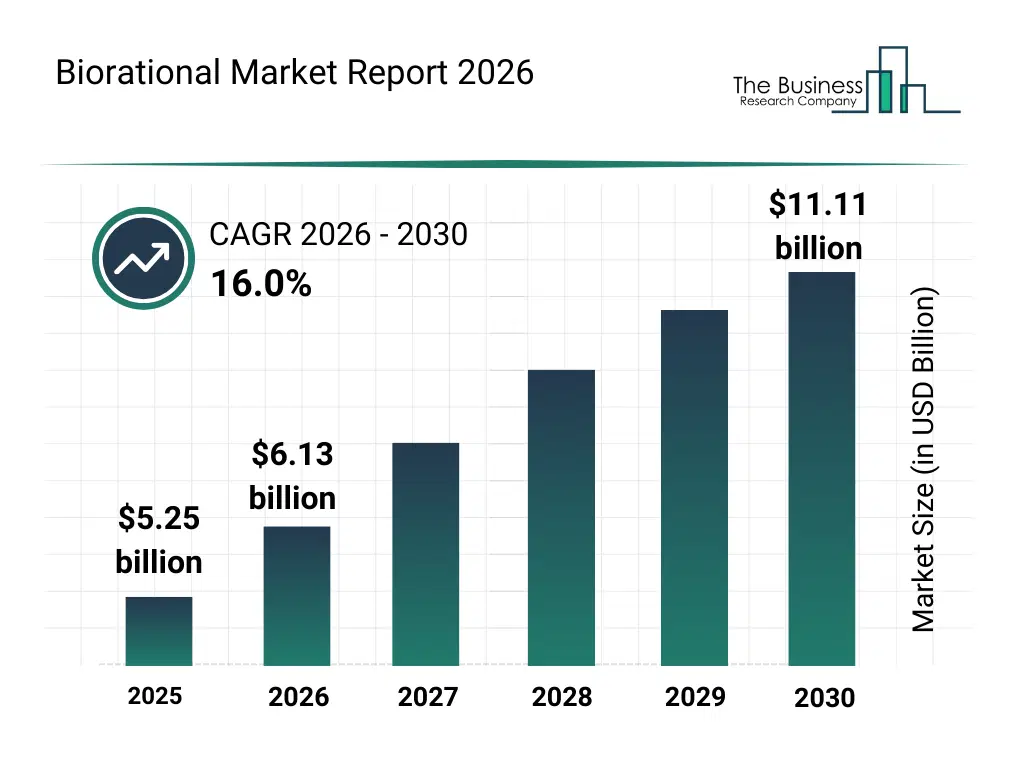
What Is The Biorational Market Size and Share 2026?
The biorational market size has grown rapidly in recent years. It will grow from $5.25 billion in 2025 to $6.13 billion in 2026 at a compound annual growth rate (CAGR) of 16.8%. The growth in the historic period can be attributed to growing concerns over chemical pesticide toxicity, early development of plant-extract-based pest control, rising adoption of integrated pest management, regulatory restrictions on synthetic pesticides, initial growth of biostimulant research.What Is The Biorational Market Growth Forecast?
The biorational market size is expected to see rapid growth in the next few years. It will grow to $11.11 billion in 2030 at a compound annual growth rate (CAGR) of 16.0%. The growth in the forecast period can be attributed to increasing demand for sustainable crop protection, expansion of residue-free agricultural practices, rising investment in biological formulation innovation, growing adoption of semiochemical technologies, technological improvements in essential oil extraction. Major trends in the forecast period include growing adoption of botanical-based biorational products, rising use of semiochemical pest management solutions, increasing demand for low-toxicity alternatives to synthetic pesticides, expansion of biostimulant and plant physiology-enhancing products, advancements in post-harvest biorational protection technologies.
Global Biorational Market Segmentation
1) By Product Type: Botanicals, Semiochemicals, Other Product Types 2) By Formulation: Liquid, Dry 3) By Crop Type: Cereals and Grains, Fruits and Vegetables, Other Crop Types 4) By Application: Agriculture, Aquaculture, Structural Pest Control, Other Applications Subsegments: 1) By Botanicals: Plant Extracts, Essential Oils, Neem-Based Products, Pyrethrins 2) By Semiochemicals: Pheromones, Allelochemicals, Kairomones 3) By Other Product Types: Microbial Products, Biopesticides, BiostimulantsWhat Is Driver Of The Biorational Market?
The increasing demand from aquaculture is expected to propel the growth of the biorational market going forward. Aquaculture is the practice of farming, breeding, and harvesting aquatic organisms in controlled or semi-controlled environments or open water bodies. Biorational products in aquaculture offer an environmentally responsible and sustainable approach to pest management, reduce the environmental impact, promote healthy aquatic ecosystems, and align with the principles of sustainable and responsible aquaculture, benefiting both the industry and the environment. For instance, in September 2023, according to the Sea Fish Industry Authority, a UK-based non-departmental public body (NDPB) that supports the seafood industry, the production of aquaculture is predicted to rise to 106 million tons by 2030, representing a 22% total growth or about 19 million tones. Therefore, the increasing demand from aquaculture is driving the growth of the biorational industry.Key Players In The Global Biorational Market
Major companies operating in the biorational market are Gowan Company LLC, BASF SE, Suterra LLC, McLaughlin Gormley King Company, Marrone Bio Innovations Inc., Biological Control Products LLC, Russell IPM Ltd., Valent BioSciences LLC, Sumitomo Chemical Company Limited, Certis USA LLC, BioWorks Inc., Koppert Biological Systems B. V., Vestaron Corporation, Andermatt Group AG, AgBiTech Pty Ltd., e-nema GmbH, Novozymes A/S, Nufarm Limited, OHP Inc., Sipcam Agro USA Inc., Verdera Oy, STK Bio-ag Technologies, Cedar Chemicals LLC, Pherobank BV, Exosect Ltd., Shin-Etsu Chemical Co. Ltd., AgriSense-BCS Ltd.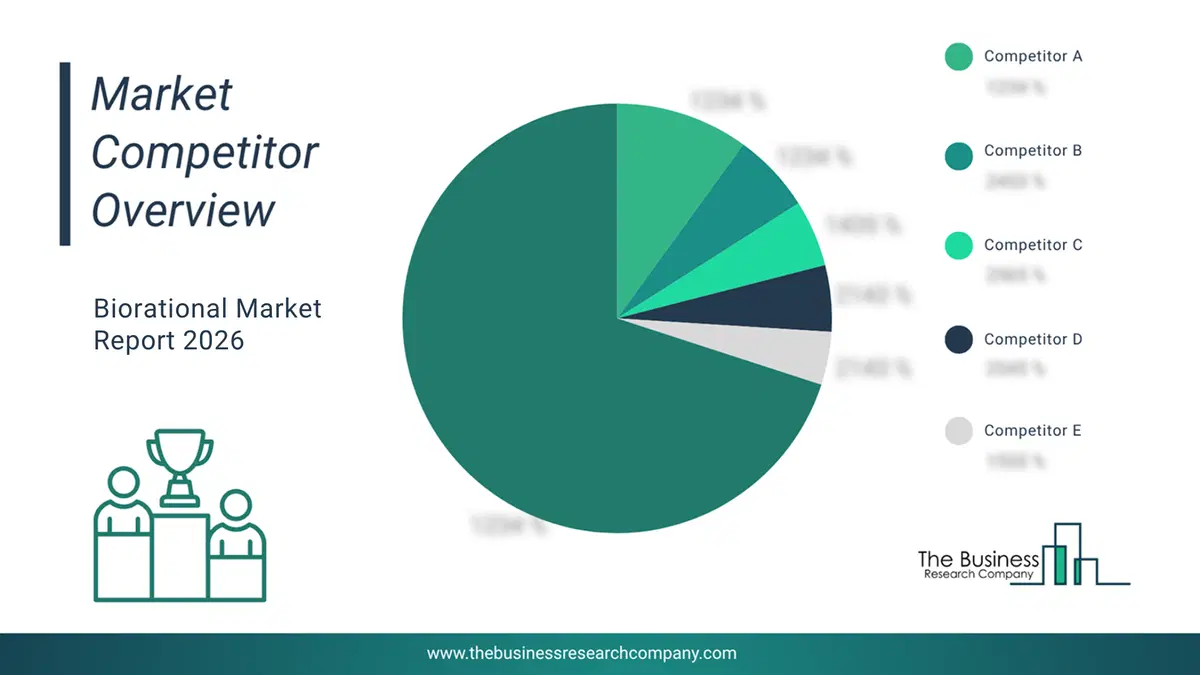
This chart is for illustrative purposes; the full report includes a detailed competitor analysis and comprehensive overview of the top 10 companies in the market.
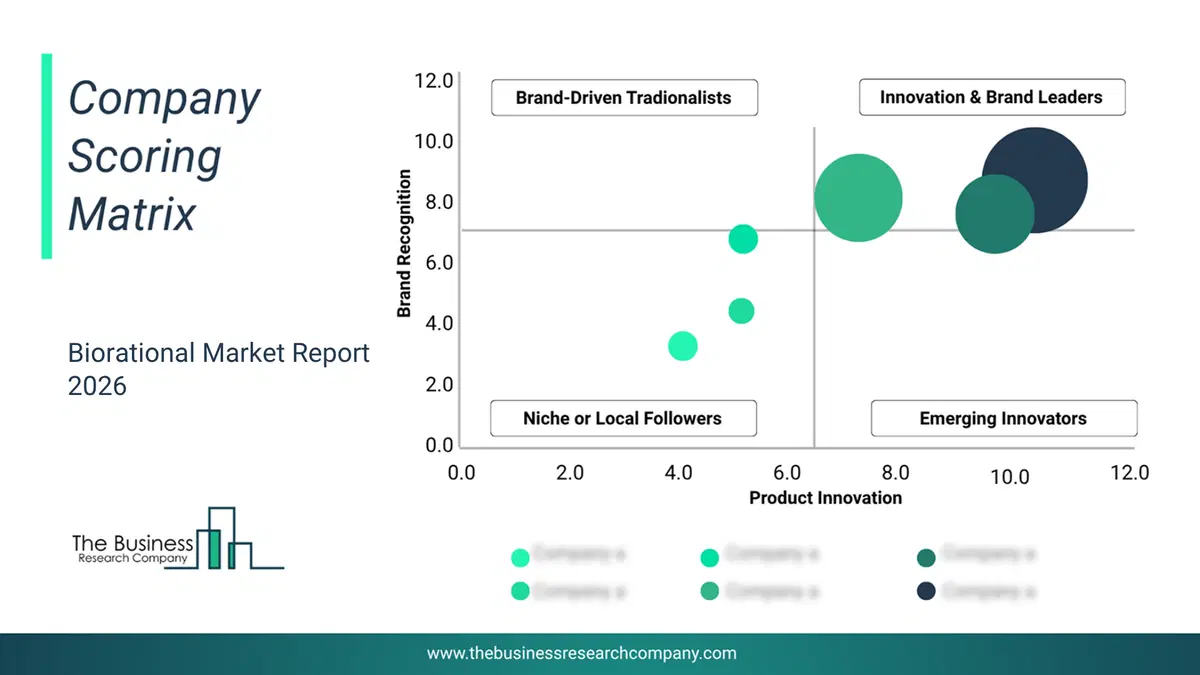
This chart maps companies by product innovation and brand strength, with bubble size indicating relative revenue, helping identify market leaders, challengers, and niche players. This is an illustrative chart; the full report provides a complete and accurate competitive analysis.
Global Biorational Market Trends and Insights
Technological advancements have emerged as a key trend gaining popularity in the biorational market. Major companies operating in the biorationals sector are focused on introducing innovative technologies for the development of biorationals. For instance, in April2024, Bayer AG, a German-based company pharmaceutical and biotechnology company, launched bioinsecticide specifically designed for arable crops. combining this bioinsecticide within a digitally supported integrated pest management system, aims to maximize cost efficiency and provide farmers with effective tools for sustainable agriculture. to combat specific pest threats, commitment to sustainability, market demand for innovative solutions, economic viability for arable farming, and aspirations for future growth in biological crop protections. to reduce the environmental impact of crop protection by 30% by 2030. The new product addresses increasing market demand for innovative agricultural solutions, particularly as farmers face challenges from climate change and regulatory pressures. By offering a cost-effective biological alternative to traditional pesticides, Bayer seeks to enhance competitiveness in the market.What Are Latest Mergers And Acquisitions In The Biorational Market? Sumitomo Chemical Acquired FBSciences Holdings Inc.
In January 2023, Sumitomo Chemical, a Japan -based fertilizer manufacturing company, acquired FBSciences Holdings Inc., for an undisclosed amount. the acquisition is seen as a pivotal step for Sumitomo Chemical in solidifying its presence in the biorational market, aligning with its long-term sustainability objectives while addressing the growing need for effective agricultural solutions. FBSciences Holdings Inc is a US-based company engaged in the business of biostimulants, a group of naturally-derived agricultural materials and a class of biorationals.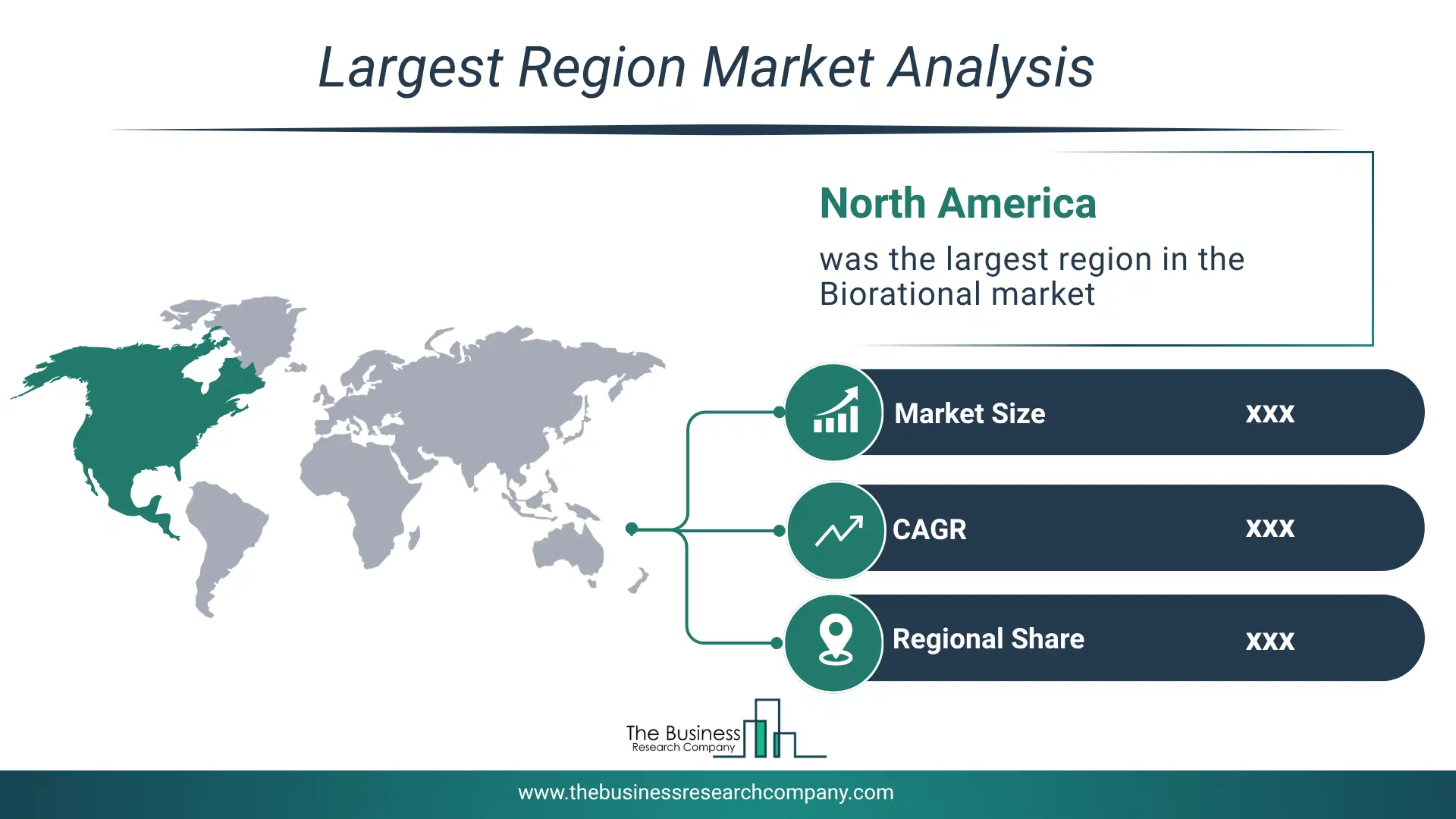
Regional Outlook
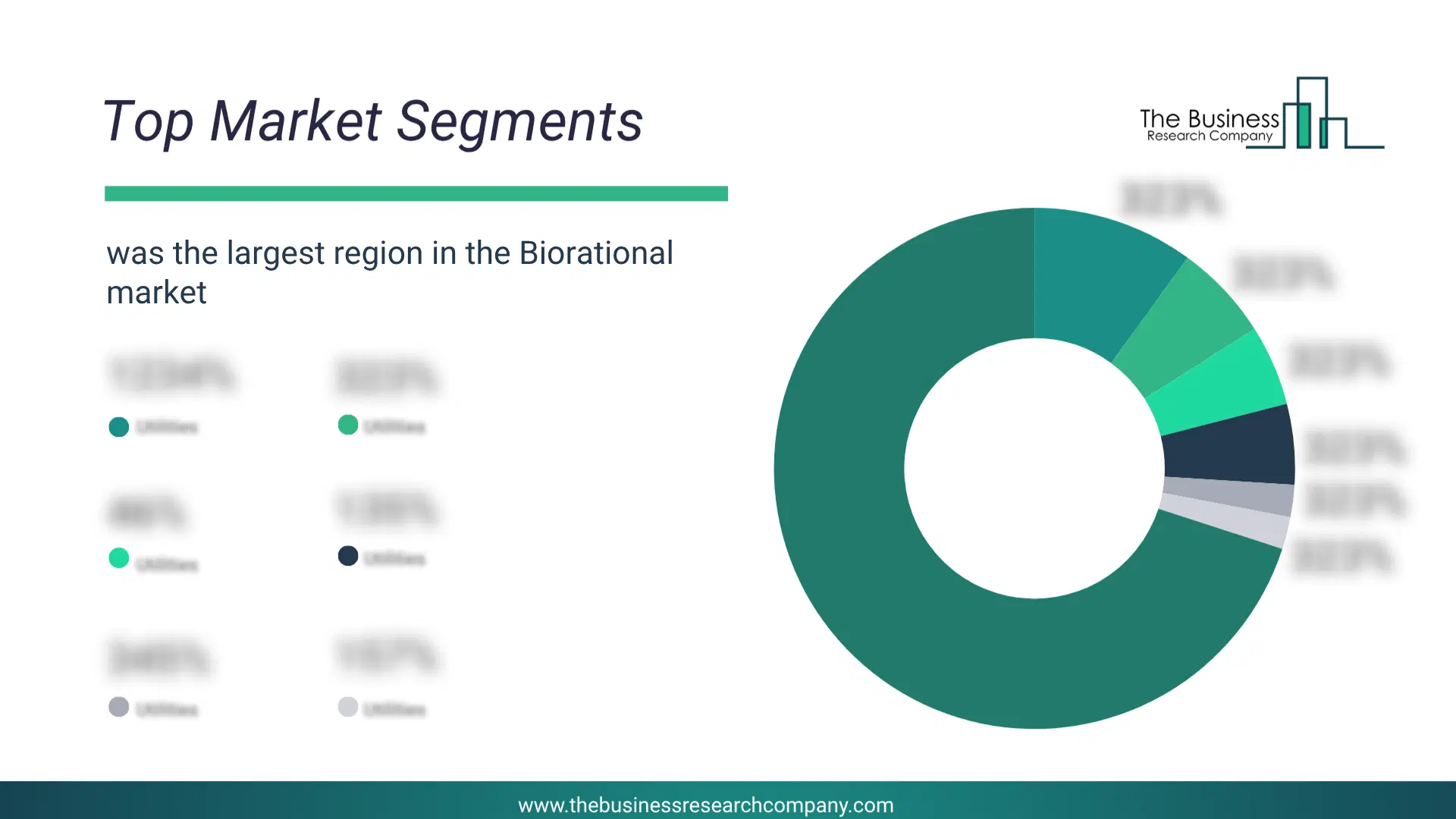
North America was the largest region in the biorational market in 2025. The regions covered in this market report are Asia-Pacific, South East Asia, Western Europe, Eastern Europe, North America, South America, Middle East, Africa. The countries covered in this market report are Australia, Brazil, China, France, Germany, India, Indonesia, Japan, Taiwan, Russia, South Korea, UK, USA, Canada, Italy, SpainWhat Defines the Biorational Market?
The biorational market consists of sales of microbial, synthetic, and minerals. Values in this market are ‘factory gate’ values, that is the value of goods sold by the manufacturers or creators of the goods, whether to other entities (including downstream manufacturers, wholesalers, distributors and retailers) or directly to end customers. The market value includes the value of related goods sold by the service provider or included within the service offering.How is Market Value Defined and Measured?
The market value is defined as the revenues that enterprises gain from the sale of goods and/or services within the specified market and geography through sales, grants, or donations in terms of the currency (in USD unless otherwise specified). The revenues for a specified geography are consumption values that are revenues generated by organizations in the specified geography within the market, irrespective of where they are produced. It does not include revenues from resales along the supply chain, either further along the supply chain or as part of other products.
This chart presents market attractiveness based on a quantitative evaluation of growth, competition, strategic alignment, and risk, offering a clear view of opportunity areas for decision-making. This chart is for illustrative purposes; the full report contains the complete analysis.

This chart highlights the Total Addressable Market (TAM) by estimating the maximum revenue opportunity using an assumption-driven approach, supporting strategic planning and opportunity sizing across markets. The chart is illustrative; the full report provides a more comprehensive analysis.
What Key Data and Analysis Are Included in the Biorational Market Report 2026?
The biorational market research report is one of a series of new reports from The Business Research Company that provides market statistics, including industry global market size, regional shares, competitors with the market share, detailed market segments, market trends and opportunities, and any further data you may need to thrive in the biorational industry. The market research report delivers a complete perspective of everything you need, with an in-depth analysis of the current and future state of the industry.Biorational Market Report Forecast Analysis
| Report Attribute | Details |
|---|---|
| Market Size Value In 2026 | $6.13 billion |
| Revenue Forecast In 2030 | $11.11 billion |
| Growth Rate | CAGR of 16% from 2026 to 2030 |
| Base Year For Estimation | 2025 |
| Actual Estimates/Historical Data | 2020-2025 |
| Forecast Period | 2026 - 2030 |
| Market Representation | Revenue in USD Billion and CAGR from 2026 to 2030 |
| Segments Covered | Product Type, Formulation, Crop Type, Application |
| Regional Scope | Asia-Pacific, Western Europe, Eastern Europe, North America, South America, Middle East, Africa |
| Country Scope | The countries covered in the report are Australia, Brazil, China, France, Germany, India, Indonesia, Japan, Taiwan, Russia, South Korea, UK, USA, Canada, Italy, Spain |
| Key Companies Profiled | Gowan Company LLC, BASF SE, Suterra LLC, McLaughlin Gormley King Company, Marrone Bio Innovations Inc., Biological Control Products LLC, Russell IPM Ltd., Valent BioSciences LLC, Sumitomo Chemical Company Limited, Certis USA LLC, BioWorks Inc., Koppert Biological Systems B. V., Vestaron Corporation, Andermatt Group AG, AgBiTech Pty Ltd., e-nema GmbH, Novozymes A/S, Nufarm Limited, OHP Inc., Sipcam Agro USA Inc., Verdera Oy, STK Bio-ag Technologies, Cedar Chemicals LLC, Pherobank BV, Exosect Ltd., Shin-Etsu Chemical Co. Ltd., AgriSense-BCS Ltd. |
| Customization Scope | Request for Customization |
| Pricing And Purchase Options | Explore Purchase Options |