
Biosensors Market Report 2026
Global Outlook – By Product ( Wearable Biosensors, Non-Wearable Biosensors), By Technology ( Electrochemical Biosensors, Optical Biosensors, Piezoelectric Biosensors, Nano Mechanical Biosensors, Thermal Biosensors, Other Technologies), By Application ( Medical, Food Toxicity, Bioreactor, Agriculture, Environment, Other Applications) – Market Size, Trends, Strategies, and Forecast to 2030
Biosensors Market Overview
• Biosensors market size has reached to $38.17 billion in 2025 • Expected to grow to $61.07 billion in 2030 at a compound annual growth rate (CAGR) of 9.6% • Growth Driver: Rising Prevalence Of Chronic Disorders Fuels The Biosensor Market. • Market Trend: Next-Generation Graphene Biosensor Chips For Rapid And Accurate Biomolecule Detection • North America was the largest region in 2025 and Asia-Pacific is the fastest growing region.What Is Covered Under Biosensors Market?
A biosensor is a compact analytical device capable of detecting and measuring biological substances or changes. It is often used in various applications, including healthcare, environmental monitoring, and food safety. The primary use of biosensors is for the rapid and sensitive detection of specific biological substances or processes, enabling applications in diverse fields such as healthcare diagnostics, environmental monitoring, food safety testing, and bioprocess control in industries. The main product types of biosensors are wearable biosensors and non-wearable biosensors. Wearable biosensors are portable devices worn on the body to monitor health parameters such as heart rate and activity levels, providing real-time data for individuals' health and fitness management. Technologies such as electrochemical biosensors, optical biosensors, piezoelectric biosensors, nanomechanical biosensors, thermal biosensors, and others are used in applications that include medical, food toxicity, bioreactors, agriculture, the environment, and others.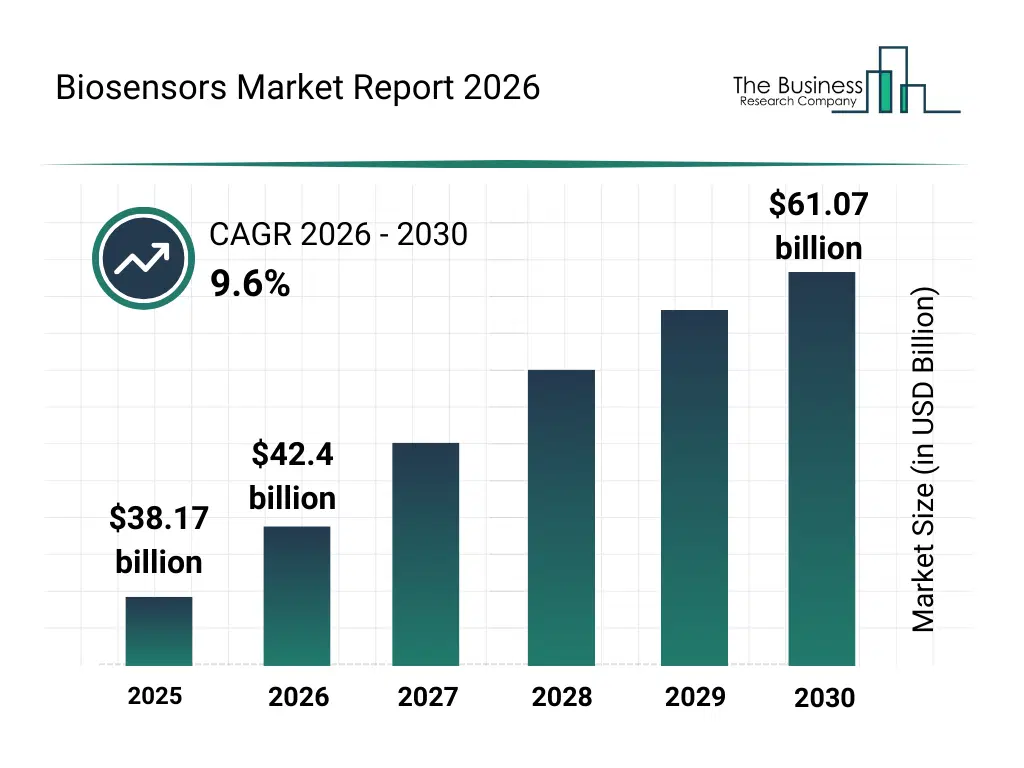
What Is The Biosensors Market Size 2026 And Growth Rate?
The biosensors market size has grown rapidly in recent years. It will grow from $38.17 billion in 2025 to $42.4 billion in 2026 at a compound annual growth rate (CAGR) of 11.1%. The growth in the historic period can be attributed to rising prevalence of chronic diseases, growth in clinical diagnostic testing, increasing adoption of glucose monitoring devices, expansion of biotechnology research activities, demand for rapid pathogen detection.What Is The Biosensors Market Growth Forecast?
The biosensors market size is expected to see strong growth in the next few years. It will grow to $61.07 billion in 2030 at a compound annual growth rate (CAGR) of 9.6%. The growth in the forecast period can be attributed to growth in personalized medicine adoption, increasing deployment of wearable health devices, rising demand for remote patient monitoring, expansion of biosensors in environmental monitoring, technological advancements in nanotechnology-based sensors. Major trends in the forecast period include wearable biosensor integration in personal health, point-of-care biosensing for rapid diagnostics, miniaturization of biosensor devices, multi-analyte detection platforms, enhanced sensitivity and selectivity in biosensors.
Global Biosensors Market Segmentation
1) By Product: Wearable Biosensors, Non-Wearable Biosensors 2) By Technology: Electrochemical Biosensors, Optical Biosensors, Piezoelectric Biosensors, Nano Mechanical Biosensors, Thermal Biosensors, Other Technologies 3) By Application: Medical, Food Toxicity, Bioreactor, Agriculture, Environment, Other Applications Subsegments: 1) By Wearable Biosensors: Glucose Monitoring Biosensors, Heart Rate Monitoring Biosensors, Fitness And Activity Monitoring Biosensors, Oxygen Saturation (Spo2) Monitoring Biosensors, Blood Pressure Monitoring Biosensors, Electrochemical Biosensors For Personal Health, Smartwatches With Biosensor Integration 2) By Non-Wearable Biosensors: Point-Of-Care (POC) Biosensors, Lab-On-A-Chip (LOC) Biosensors, Immunosensors, Optical Biosensors, Enzyme-Based Biosensors, Microbial Biosensors, DNA Biosensors, Electrochemical Biosensors For Medical DiagnosticsWhat Is The Driver Of The Biosensors Market?
The rising prevalence of chronic disorders is expected to propel the growth of the biosensors market going forward. Chronic disorders refer to long-term medical conditions that persist over an extended period, often requiring ongoing management and treatment to control symptoms and maintain quality of life. Chronic disorders are on the rise due to a combination of factors, including sedentary lifestyles, poor dietary habits, genetic predispositions, and environmental pollutants. Biosensors enable early detection and continuous monitoring of biomarkers, revolutionizing the management of chronic disorders. For instance, in July 2023, the Health Foundation, a UK-based nonprofit organization, reported that by 2040, it is projected that 9.1 million people in England will be living with major illnesses, representing an increase of 2.5 million compared to current levels. Therefore, the rising prevalence of chronic disorders is driving the growth of the biosensor industry.Key Players In The Global Biosensors Market
Major companies operating in the biosensors market are Johnson & Johnson, F. Hoffmann-La Roche Ltd, Thermo Fisher Scientific Inc., Abbott Laboratories, Medtronic plc, Danaher Corporation, Siemens Healthineers, Becton Dickinson and Company, Agilent Technologies, Illumina Inc., Sartorius AG, BioMérieux SA, Cytiva, PerkinElmer Inc., Sysmex Corporation, Dexcom Inc., Bio-Rad Laboratories, Bruker Corporation, HORIBA Ltd., Lifescan Inc., Nova Biomedical, Bio-Techne Corporation, Sensirion AG, Proteus Digital Health, Acon Laboratories Inc., 908 Devices Inc.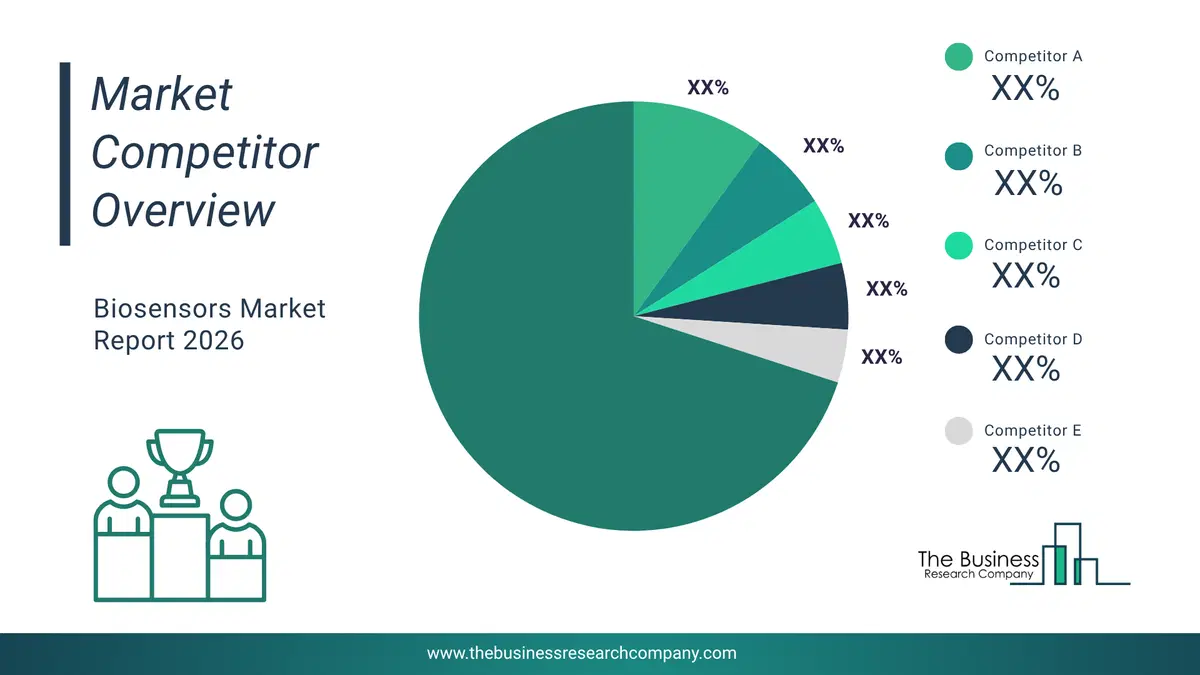
This chart is for illustrative purposes; the full report includes a detailed competitor analysis and comprehensive overview of the top 10 companies in the market.
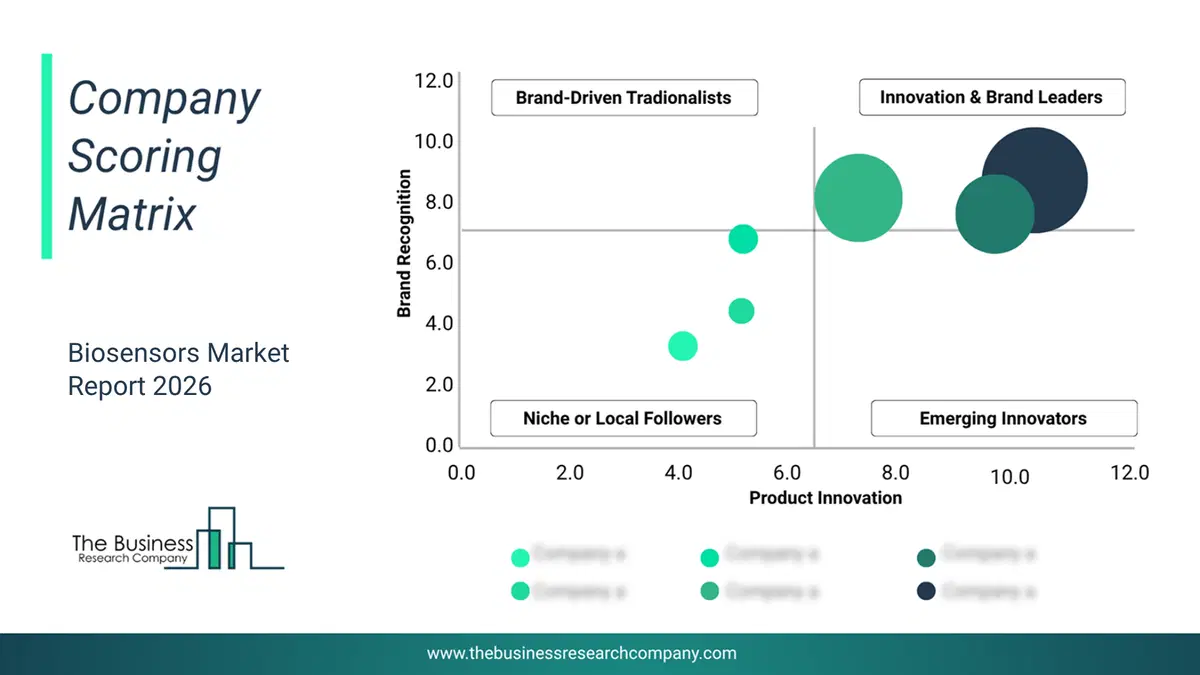
This chart maps companies by product innovation and brand strength, with bubble size indicating relative revenue, helping identify market leaders, challengers, and niche players. This is an illustrative chart; the full report provides a complete and accurate competitive analysis.
Global Biosensors Market Trends and Insights
Major players in the biosensors market are focusing on developing innovative technologies, such as graphene barristor sensors, to enhance detection sensitivity, improve signal amplification, and enable faster and more accurate biomolecule sensing for medical and environmental applications. A graphene barristor sensor is a graphene–silicon hybrid device that uses a Schottky barrier to detect electrical changes caused by biomolecular interactions, allowing highly sensitive and rapid biosensing. For example, in December 2024, Versarien plc, a UK-based advanced engineering materials company, launched a new graphene biosensor chip. The chip is built on a graphene barristor sensor platform a graphene-silicon Schottky-barrier triode device that amplifies current modulation over 10,000 times compared to conventional graphene field-effect transistors (GFETs). Its graphene surface is functionalized with either pyrenebutanoic acid succinimidyl ester (PBASE) or a customer-specified linker, enabling the attachment of bio-recognition elements for precise biosensing applications.What Are Latest Mergers And Acquisitions In The Biosensors Market?
In February 2023, Miltenyi Biotec, a Germany-based biotechnology company, acquired Lino Biotech AG for an undisclosed amount. With this acquisition, Miltenyi Biotec aims to leverage Lino's innovative biosensor platform to enhance cell-gene therapy approaches, lower costs, and establish a new standard for potency assays. Lino Biotech AG is a Switzerland-based biotechnology company specializing in innovative biosensor technologies for applications in the life sciences and healthcare sectors.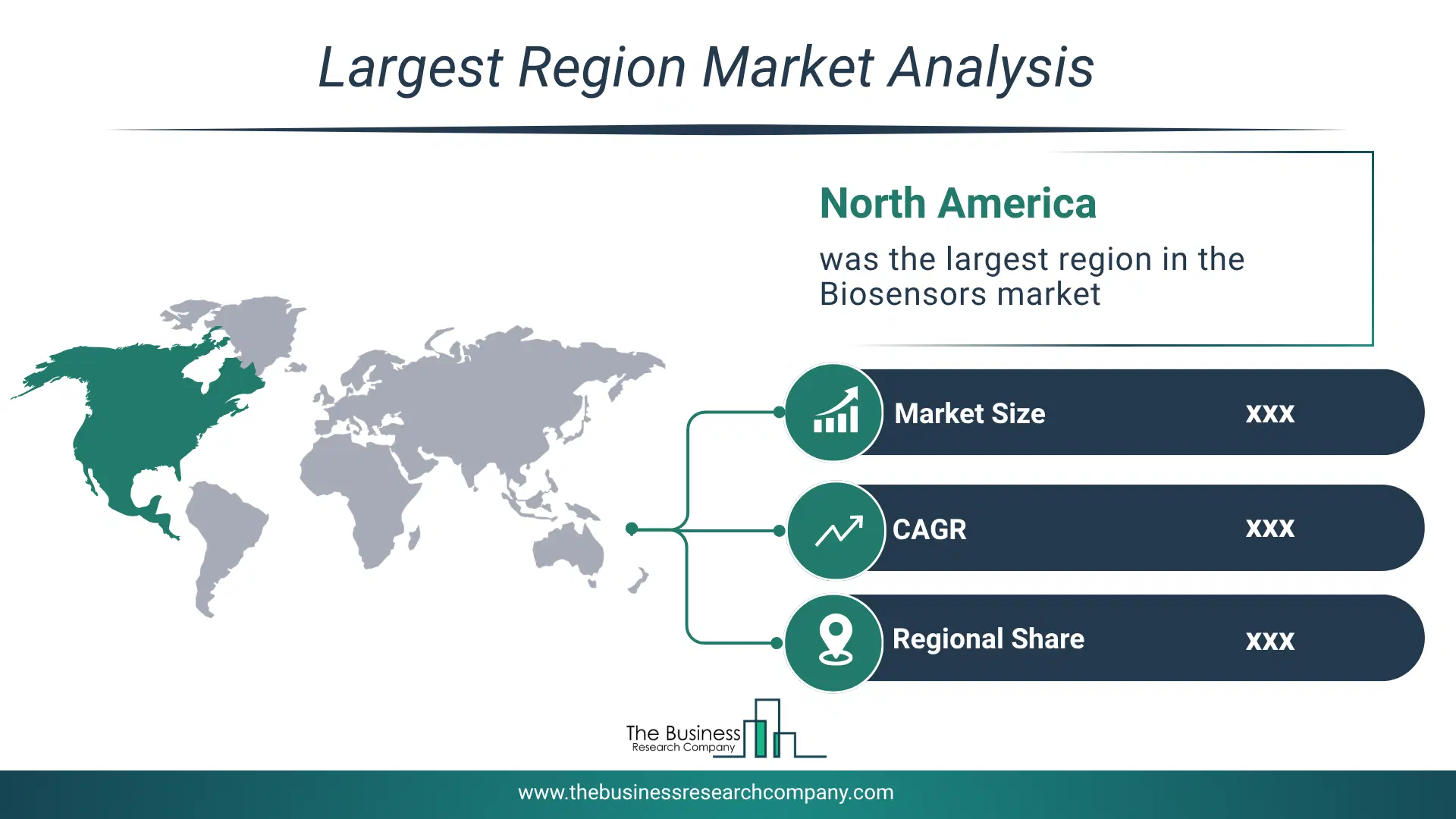
Regional Outlook
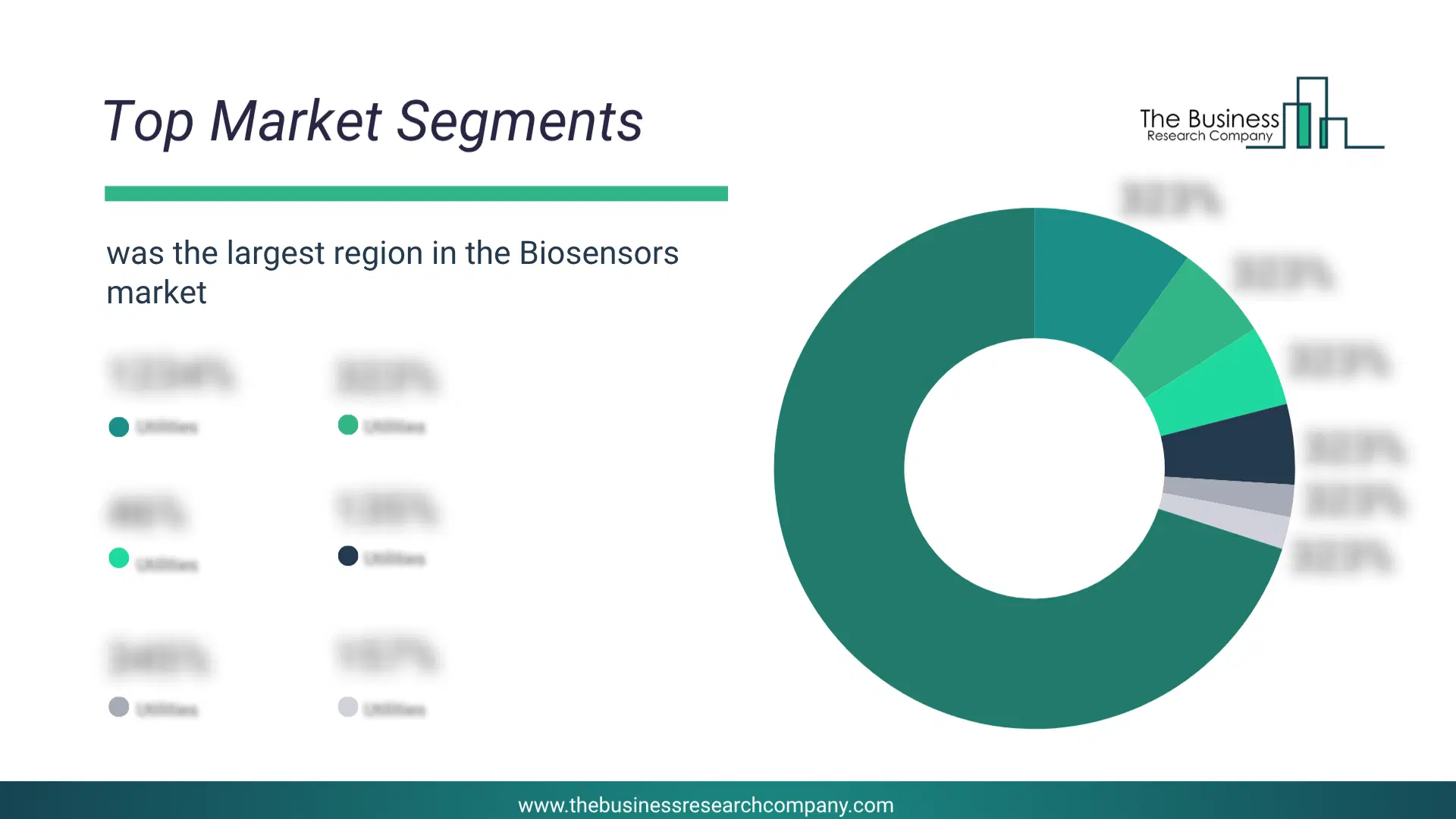
North America was the largest region in the biosensors market in 2025. Asia-Pacific is expected to be the fastest-growing region in the forecast period. The regions covered in this market report are Asia-Pacific, South East Asia, Western Europe, Eastern Europe, North America, South America, Middle East, Africa. The countries covered in this market report are Australia, Brazil, China, France, Germany, India, Indonesia, Japan, Taiwan, Russia, South Korea, UK, USA, Canada, Italy, Spain.What Defines the Biosensors Market?
The biosensors market consists of revenues earned by entities by providing biosensor technologies and related services, including installation, calibration, maintenance, and support for biosensor systems. The market value includes the value of related goods sold by the service provider or included within the service offering. The biosensors market also includes sales of various types of biosensor devices, such as gas biosensors, DNA biosensors, smartphone-based biosensors, and implantable biosensors. Values in this market are ‘factory gate’ values, that is, the value of goods sold by the manufacturers or creators of the goods, whether to other entities (including downstream manufacturers, wholesalers, distributors, and retailers) or directly to end customers. The value of goods in this market includes related services sold by the creators of the goods.How is Market Value Defined and Measured?
The market value is defined as the revenues that enterprises gain from the sale of goods and/or services within the specified market and geography through sales, grants, or donations in terms of the currency (in USD unless otherwise specified). The revenues for a specified geography are consumption values that are revenues generated by organizations in the specified geography within the market, irrespective of where they are produced. It does not include revenues from resales along the supply chain, either further along the supply chain or as part of other products.
This chart presents market attractiveness based on a quantitative evaluation of growth, competition, strategic alignment, and risk, offering a clear view of opportunity areas for decision-making. This chart is for illustrative purposes; the full report contains the complete analysis.

This chart highlights the Total Addressable Market (TAM) by estimating the maximum revenue opportunity using an assumption-driven approach, supporting strategic planning and opportunity sizing across markets. The chart is illustrative; the full report provides a more comprehensive analysis.
What Key Data and Analysis Are Included in the Biosensors Market Report 2026?
The biosensors market research report is one of a series of new reports from The Business Research Company that provides market statistics, including industry global market size, regional shares, competitors with the market share, detailed market segments, market trends and opportunities, and any further data you may need to thrive in the biosensors industry. The market research report delivers a complete perspective of everything you need, with an in-depth analysis of the current and future state of the industry.Biosensors Market Report Forecast Analysis
| Report Attribute | Details |
|---|---|
| Market Size Value In 2026 | $42.4 billion |
| Revenue Forecast In 2030 | $61.07 billion |
| Growth Rate | CAGR of 9.6% from 2026 to 2030 |
| Base Year For Estimation | 2025 |
| Actual Estimates/Historical Data | 2020-2025 |
| Forecast Period | 2026 - 2030 |
| Market Representation | Revenue in USD Billion and CAGR from 2026 to 2030 |
| Segments Covered | Product, Technology, Application |
| Regional Scope | Asia-Pacific, Western Europe, Eastern Europe, North America, South America, Middle East, Africa |
| Country Scope | The countries covered in the report are Australia, Brazil, China, France, Germany, India, Indonesia, Japan, Taiwan, Russia, South Korea, UK, USA, Canada, Italy, Spain. |
| Key Companies Profiled | Johnson & Johnson, F. Hoffmann-La Roche Ltd, Thermo Fisher Scientific Inc., Abbott Laboratories, Medtronic plc, Danaher Corporation, Siemens Healthineers, Becton Dickinson and Company, Agilent Technologies, Illumina Inc., Sartorius AG, BioMérieux SA, Cytiva, PerkinElmer Inc., Sysmex Corporation, Dexcom Inc., Bio-Rad Laboratories, Bruker Corporation, HORIBA Ltd., Lifescan Inc., Nova Biomedical, Bio-Techne Corporation, Sensirion AG, Proteus Digital Health, Acon Laboratories Inc., 908 Devices Inc. |
| Customization Scope | Request for Customization |
| Pricing And Purchase Options | Explore Purchase Options |