
Biosimilar Lymphocyte Modulator Market Report 2026
Global Outlook – By Drug (Campath-1H, Natalizumab Biosimilar, Efalizumab - A1089-Anti-CD11a Biosimilar, Anti-CD38 Daratumumab Biosimilar, Anti-CS1 Elotuzumab Biosimilar), By Disease (Arthritis, Diabetes, Multiple Myeloma, Enterocolitis, Multiple Sclerosis, Psoriasis, Other Diseases), By Distribution Channel (Online Pharmacies, Direct To Consumer) – Market Size, Trends, Strategies, and Forecast to 2030
Biosimilar Lymphocyte Modulator Market Overview
• Biosimilar Lymphocyte Modulator market size has reached to $2.1 billion in 2025 • Expected to grow to $3.53 billion in 2030 at a compound annual growth rate (CAGR) of 11.1% • Growth Driver: Rising Incidence Of Autoimmune Diseases Fuels Growth In The Biosimilar Lymphocyte Modulator Market • Market Trend: Fresenius Kabi Launches Idacio Biosimilar To Expand Lymphocyte Modulator Market Presence • North America was the largest region in 2025 and Middle East is the fastest growing region.What Is Covered Under Biosimilar Lymphocyte Modulator Market?
Immune-regulating lymphocyte modulators that produce biosimilars are referred to as biosimilar lymphocyte modulators. Lymphocyte modulator market is intended as an aid in the treatment for cancer and autoimmune diseases, and for regulating carotene intake in humans with a weak immune system. The main types of drugs in biosimilar lymphocyte modulator are Campath-1H, natalizumab biosimilar, efalizumab - A1089-anti-CD11A biosimilar), anti-CD38 daratumumab biosimilar, and anti-CS1 elotuzumab biosimilar. Campath is a prescription medication used to treat the symptoms of CLL. Campath can be taken on its own or in combination with other drugs. The different diseases include arthritis, diabetes, multiple myeloma, enterocolitis, multiple sclerosis, psoriasis, and others. By distribution channel, it is segmented into online pharmacies and direct to consumers.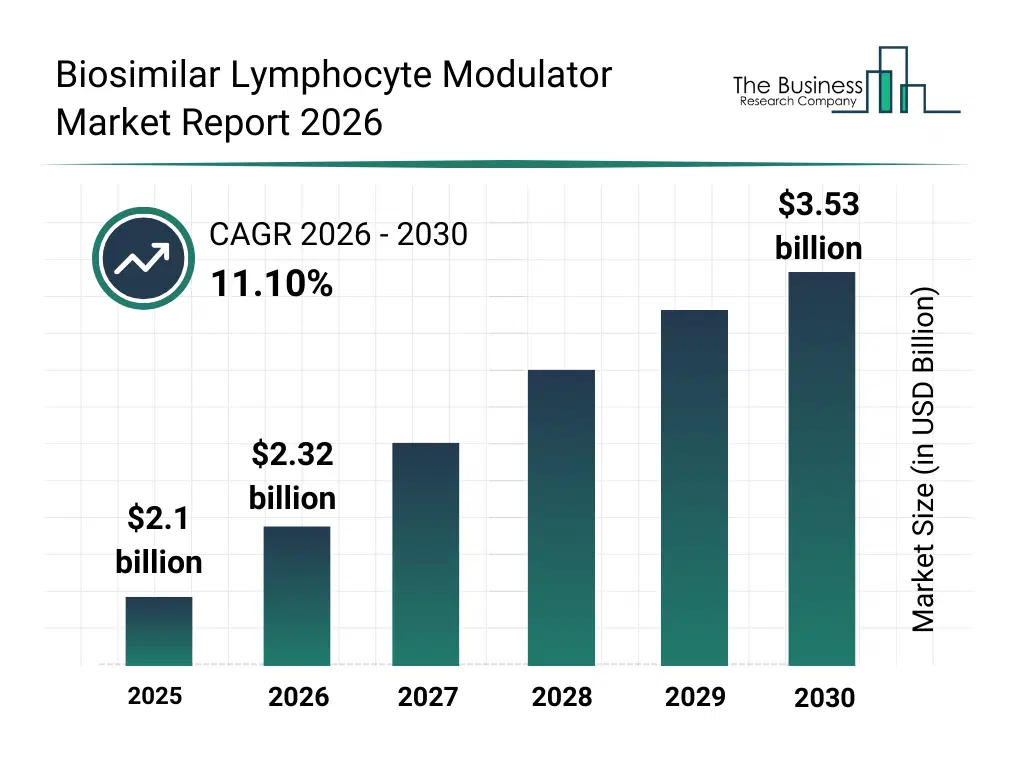
What Is The Biosimilar Lymphocyte Modulator Market Size and Share 2026?
The biosimilar lymphocyte modulator market size has grown rapidly in recent years. It will grow from $2.1 billion in 2025 to $2.32 billion in 2026 at a compound annual growth rate (CAGR) of 10.6%. The growth in the historic period can be attributed to high cost of branded biologics, rising prevalence of autoimmune diseases, growing incidence of cancer, limited access to innovative therapies, increasing healthcare expenditure.What Is The Biosimilar Lymphocyte Modulator Market Growth Forecast?
The biosimilar lymphocyte modulator market size is expected to see rapid growth in the next few years. It will grow to $3.53 billion in 2030 at a compound annual growth rate (CAGR) of 11.1%. The growth in the forecast period can be attributed to patent expiration of reference biologics, growing biosimilar development pipelines, increasing physician confidence in biosimilars, expansion of online pharmacy distribution, rising government support for biosimilar adoption. Major trends in the forecast period include rising adoption of biosimilar lymphocyte modulators for cost-effective therapy, growing demand for autoimmune and oncology treatments, increasing acceptance of biosimilars in clinical practice, expansion of treatment options for multiple sclerosis and multiple myeloma, improved regulatory pathways supporting biosimilar approvals.
Global Biosimilar Lymphocyte Modulator Market Segmentation
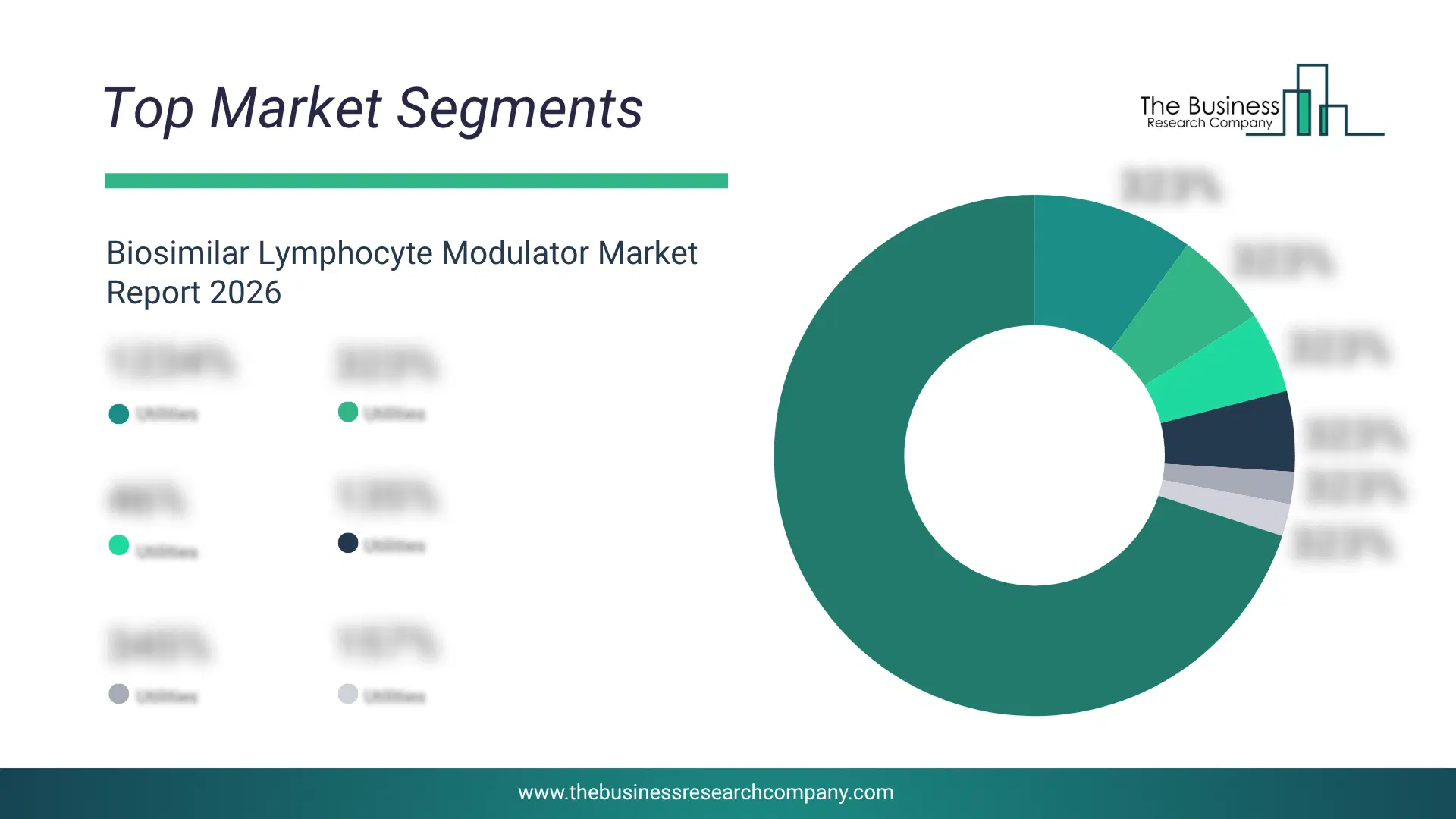
1) By Drug: Campath-1H, Natalizumab Biosimilar, Efalizumab - A1089-Anti-CD11a Biosimilar, Anti-CD38 Daratumumab Biosimilar, Anti-CS1 Elotuzumab Biosimilar 2) By Disease: Arthritis, Diabetes, Multiple Myeloma, Enterocolitis, Multiple Sclerosis, Psoriasis, Other Diseases 3) By Distribution Channel: Online Pharmacies, Direct To ConsumerWhat Is The Driver Of The Biosimilar Lymphocyte Modulator Market?
The rising incidence of autoimmune diseases is expected to propel the growth of the biosimilar lymphocyte modulator market going forward. Autoimmune diseases are a group of disorders in which the immune system mistakenly targets and attacks the body's tissues and organs. The rise in autoimmune diseases is primarily driven by increased environmental triggers, such as pollution and chemicals, which can disrupt immune system balance and promote abnormal immune responses. Biosimilar lymphocyte modulators help treat autoimmune diseases by modulating the immune system's activity, reducing inflammation, and alleviating symptoms. For instance, in February 2024 according to the Arthritis Australia is a Australia-based non-profit organization In 2025, an estimated 212,136 males and 362,137 females are projected to have rheumatoid arthritis (RA), with the numbers expected to rise by 2040 to approximately 280,040 males and 479,828 females. Therefore, the rising incidence of autoimmune diseases is driving the growth of the biosimilar lymphocyte modulator industry.Key Players In The Global Biosimilar Lymphocyte Modulator Market
Major companies operating in the biosimilar lymphocyte modulator market are Pfizer Inc., Celltrion Inc., Genentech Inc., Novartis AG, Sandoz International GmbH, Fresenius Kabi AG, Biocon Ltd., Dr. Reddy's Laboratories Ltd., Intas Pharmaceuticals Ltd., Lupin Limited, Stada Arzneimittel AG, Zydus Cadila, Hetero Drugs Limited, Torrent Pharmaceuticals Ltd., Glenmark Pharmaceuticals Ltd., Alvotech, Coherus BioSciences, Innovent Biologics, Shanghai Henlius Biotech, BioXpress Therapeutics SA, Mabion SA, Polpharma Biologics, Prestige BioPharma, Qilu Pharmaceutical, Shanghai Fosun Pharmaceutical Group Co. Ltd., Wockhardt Ltd., Amega Biotech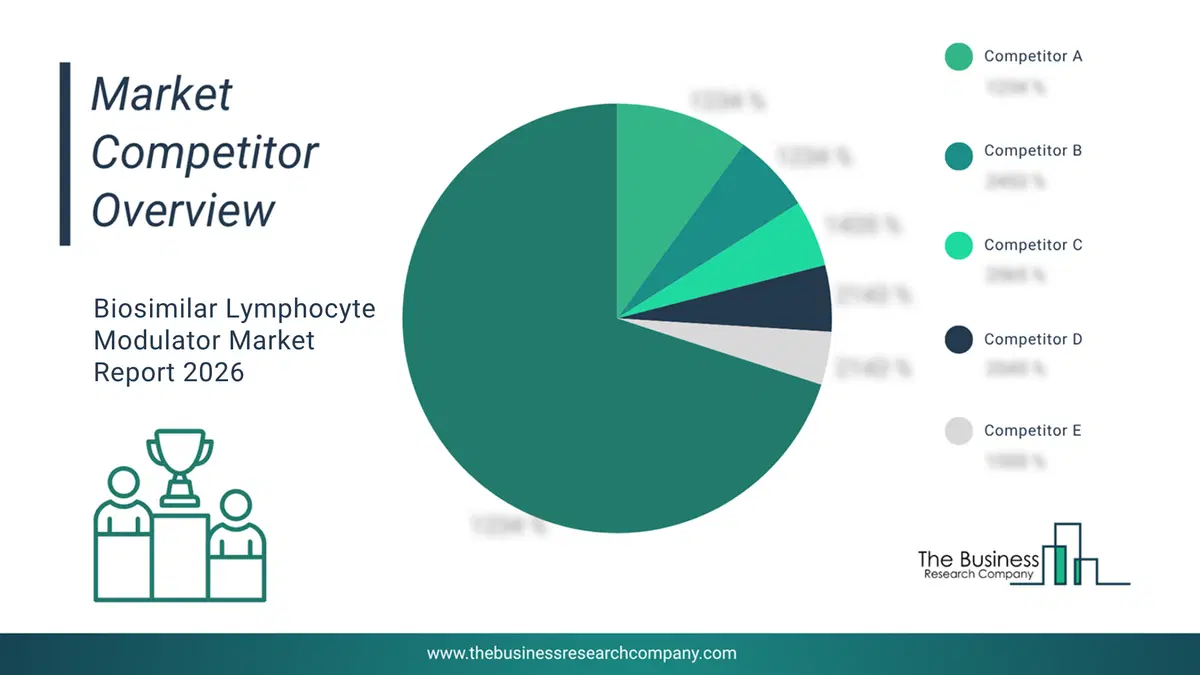
This chart is for illustrative purposes; the full report includes a detailed competitor analysis and comprehensive overview of the top 10 companies in the market.
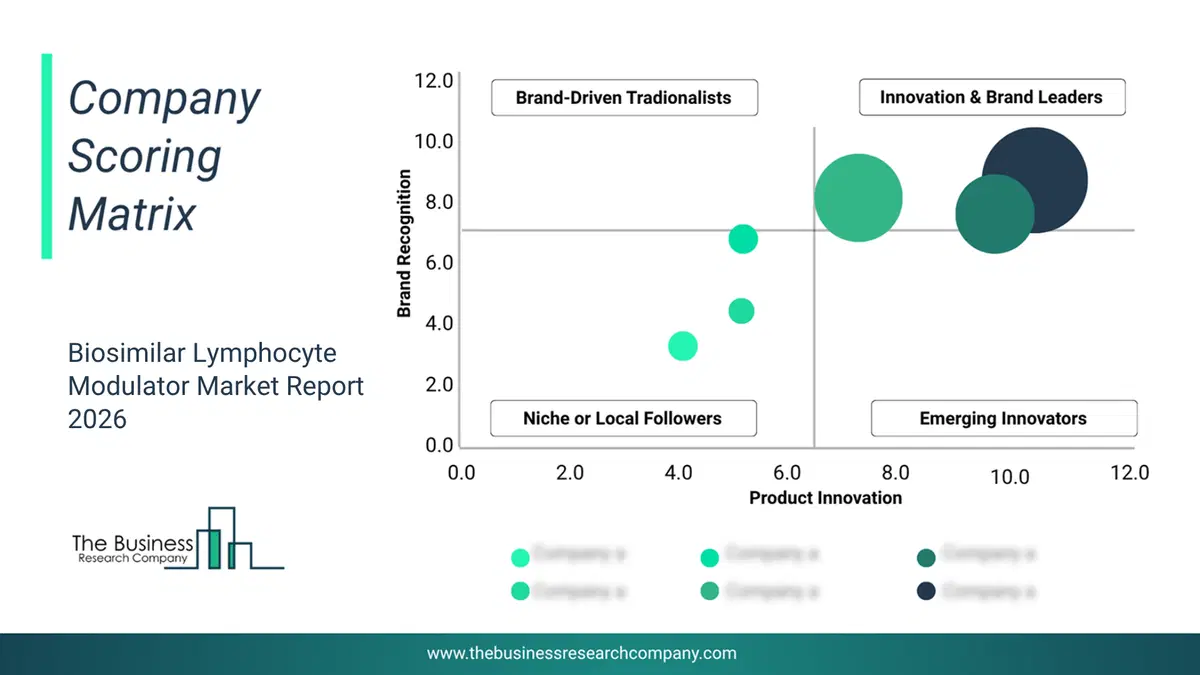
This chart maps companies by product innovation and brand strength, with bubble size indicating relative revenue, helping identify market leaders, challengers, and niche players. This is an illustrative chart; the full report provides a complete and accurate competitive analysis.
Global Biosimilar Lymphocyte Modulator Market Trends and Insights
Major companies in the biosimilar lymphocyte modulator market are developing biosimilar versions of key lymphocyte modulator drugs to gain a competitive edge in the industry. Idacio (adalimumab-aacf) is a tumor necrosis factor (TNF) blocker and a biosimilar to Humira (adalimumab). For instance, in July 2023, Fresenius Kabi AG, a Germany-based healthcare company, launched the citrate-free biosimilar Idacio (adalimumab-aacf) for use in the treatment of chronic autoimmune diseases in the US. It is available in the US in a self-administered prefilled syringe and a self-administered pre-filled pen (autoinjector) to support dosing for the approved indications.What Are Latest Mergers And Acquisitions In The Biosimilar Lymphocyte Modulator Market?
In July 2025, Evotec SE, a Germany-based drug discovery and development company, expanded its strategic partnership with Sandoz by agreeing on the potential sale of the Just – Evotec Biologics Toulouse site. The collaboration aims to strengthen Sandoz’s biologics manufacturing capabilities, enhance access to high-quality and cost-efficient biologic medicines, and support long-term growth in biosimilars and next-generation biologics production. Sandoz is a Switzerland-based global leader in generics and biosimilars.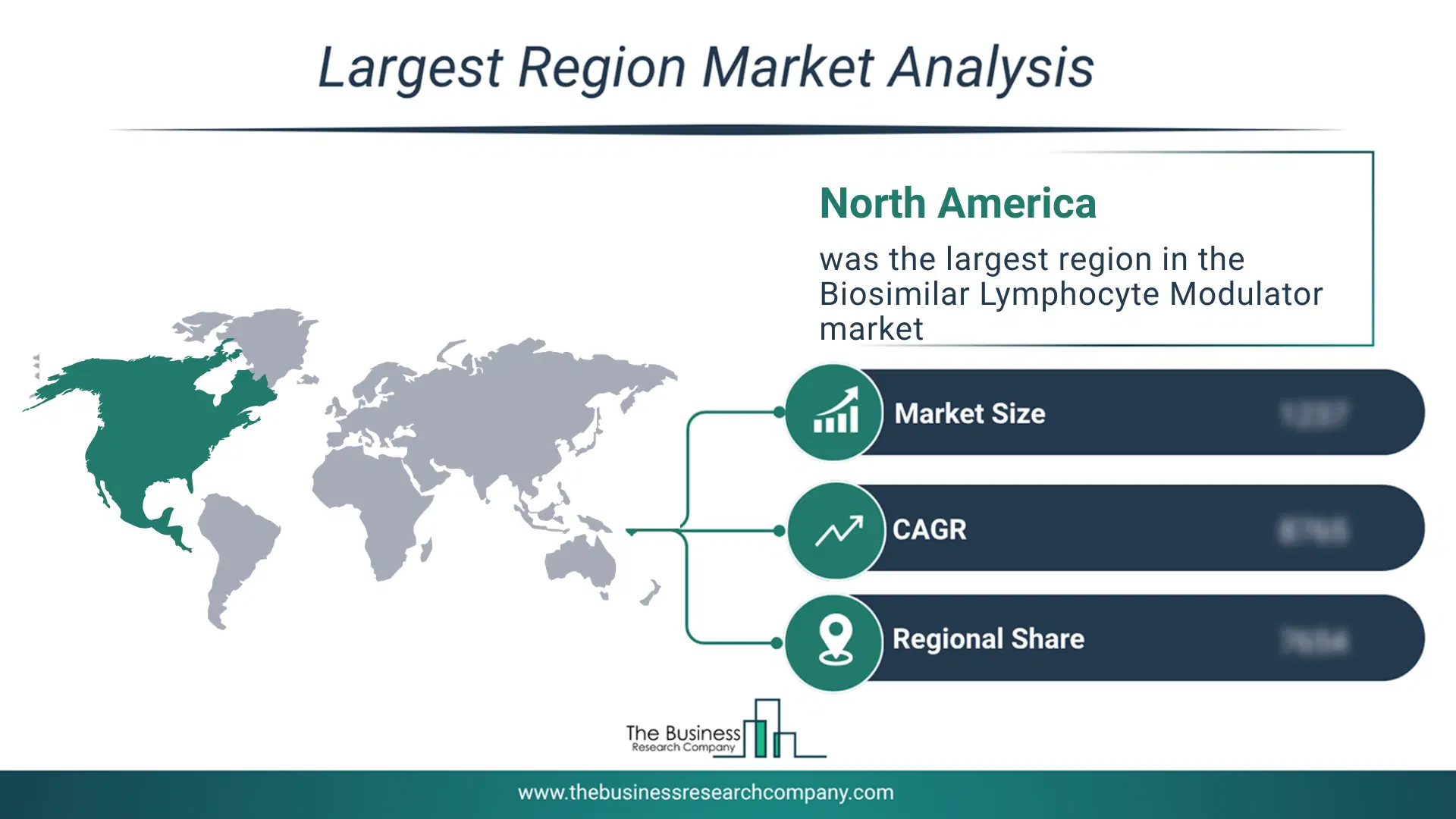
Regional Insights
North America was the largest region in the biosimilar lymphocyte modulator market in 2025. Middle East is expected to be the fastest-growing region in the biosimilar lymphocyte modulator market report during the forecast period. The regions covered in this market report are Asia-Pacific, South East Asia, Western Europe, Eastern Europe, North America, South America, Middle East, Africa. The countries covered in this market report are Australia, Brazil, China, France, Germany, India, Indonesia, Japan, Taiwan, Russia, South Korea, UK, USA, Canada, Italy, Spain.What Defines the Biosimilar Lymphocyte Modulator Market?
The biosimilar lymphocyte modulator market consists of sales of roasted coffee, coffee concentrates, coffee extracts, flavorings, and syrups. Values in this market are """"factory gate values,"""" that is, the value of goods sold by the manufacturers or creators of the goods, whether to other entities (including downstream manufacturers, wholesalers, distributors, and retailers) or directly to end customers. The value of goods in this market includes related services sold by the creators of the goods.How is Market Value Defined and Measured?
The market value is defined as the revenues that enterprises gain from the sale of goods and/or services within the specified market and geography through sales, grants, or donations in terms of the currency (in USD unless otherwise specified). The revenues for a specified geography are consumption values that are revenues generated by organizations in the specified geography within the market, irrespective of where they are produced. It does not include revenues from resales along the supply chain, either further along the supply chain or as part of other products.
This chart presents market attractiveness based on a quantitative evaluation of growth, competition, strategic alignment, and risk, offering a clear view of opportunity areas for decision-making. This chart is for illustrative purposes; the full report contains the complete analysis.

This chart highlights the Total Addressable Market (TAM) by estimating the maximum revenue opportunity using an assumption-driven approach, supporting strategic planning and opportunity sizing across markets. The chart is illustrative; the full report provides a more comprehensive analysis.
What Key Data and Analysis Are Included in the Biosimilar Lymphocyte Modulator Market Report 2026?
The biosimilar lymphocyte modulator market research report is one of a series of new reports from The Business Research Company that provides market statistics, including industry global market size, regional shares, competitors with the market share, detailed market segments, market trends and opportunities, and any further data you may need to thrive in the biosimilar lymphocyte modulator industry. The market research report delivers a complete perspective of everything you need, with an in-depth analysis of the current and future state of the industry.Biosimilar Lymphocyte Modulator Market Report Forecast Analysis
| Report Attribute | Details |
|---|---|
| Market Size Value In 2026 | $2.32 billion |
| Revenue Forecast In 2030 | $3.53 billion |
| Growth Rate | CAGR of 10.6% from 2026 to 2030 |
| Base Year For Estimation | 2025 |
| Actual Estimates/Historical Data | 2020-2025 |
| Forecast Period | 2026 - 2030 |
| Market Representation | Revenue in USD Billion and CAGR from 2026 to 2030 |
| Segments Covered | Drug, Disease, Distribution Channel |
| Regional Scope | Asia-Pacific, Western Europe, Eastern Europe, North America, South America, Middle East, Africa |
| Country Scope | The countries covered in the report are Australia, Brazil, China, France, Germany, India, Indonesia, Japan, Taiwan, Russia, South Korea, UK, USA, Canada, Italy, Spain. |
| Key Companies Profiled | Pfizer Inc., Celltrion Inc., Genentech Inc., Novartis AG, Sandoz International GmbH, Fresenius Kabi AG, Biocon Ltd., Dr. Reddy's Laboratories Ltd., Intas Pharmaceuticals Ltd., Lupin Limited, Stada Arzneimittel AG, Zydus Cadila, Hetero Drugs Limited, Torrent Pharmaceuticals Ltd., Glenmark Pharmaceuticals Ltd., Alvotech, Coherus BioSciences, Innovent Biologics, Shanghai Henlius Biotech, BioXpress Therapeutics SA, Mabion SA, Polpharma Biologics, Prestige BioPharma, Qilu Pharmaceutical, Shanghai Fosun Pharmaceutical Group Co. Ltd., Wockhardt Ltd., Amega Biotech |
| Customization Scope | Request for Customization |
| Pricing And Purchase Options | Explore Purchase Options |