
Bispecific T-Cell Engagers Market Report 2026
Global Outlook – By Product Type (Monoclonal Antibodies, Bispecific Antibodies, Other Product Types), By Application (Hematologic Malignancies, Solid Tumors, Other Applications), By End-User (Hospitals, Specialty Clinics, Research Institutes, Other End-Users) – Market Size, Trends, Strategies, and Forecast to 2030
Bispecific T-Cell Engagers Market Overview
• Bispecific T-Cell Engagers market size has reached to $1.6 billion in 2025 • Expected to grow to $4.18 billion in 2030 at a compound annual growth rate (CAGR) of 21.2% • Growth Driver: Rising Incidence Of Cancer Fueling The Growth Of The Market Due To Increasing Aging Population And Unhealthy Lifestyles • Market Trend: Advancement In Technologies To Improve Targeted T-Cell Mediated Cancer Therapy • North America was the largest region in 2025 and Asia-Pacific is the fastest growing region.Market Gains By 2030 – Top Opportunities By Segment
Market Gain identifies the most promising market opportunities by highlighting the segments or products expected to generate the highest incremental revenue growth over the next five years.
What Is Covered Under Bispecific T-Cell Engagers Market?
Bispecific T-cell engagers refer to a class of engineered antibodies designed to simultaneously bind to T cells and cancer cells. By connecting these two cell types, they redirect the body’s immune system to recognize and destroy tumor cells more effectively. This targeted mechanism of action makes them a promising form of immunotherapy, especially in the treatment of hematologic malignancies and certain solid tumors. The main product types of bispecific T-cell engagers are monoclonal antibodies, bispecific antibodies, and others. Monoclonal antibodies (mAbs) are laboratory-made proteins designed to bind specifically to a single target antigen, used to treat diseases like cancer, autoimmune disorders, and infections by blocking harmful molecules or marking them for immune destruction. The various applications involved are hematologic malignancies, solid tumors, and others, and they are used by several end-users such as hospitals, specialty clinics, research institutes, and others.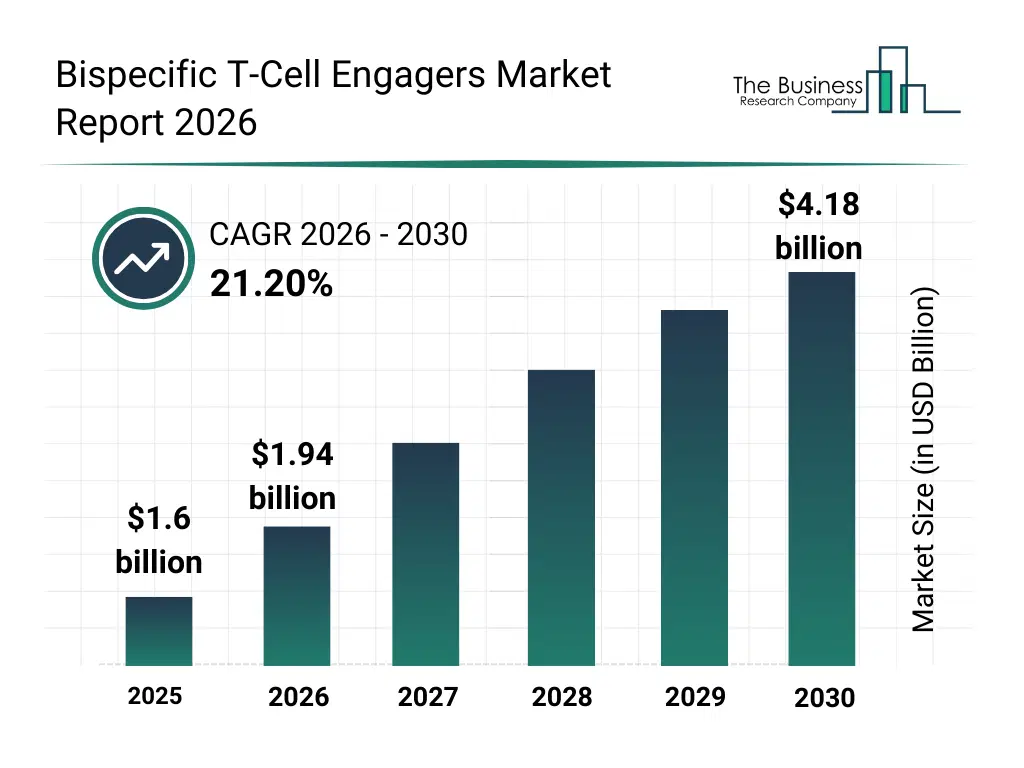
What Is The Bispecific T-Cell Engagers Market Size and Share 2026?
The bispecific t-cell engagers market size has grown exponentially in recent years. It will grow from $1.6 billion in 2025 to $1.94 billion in 2026 at a compound annual growth rate (CAGR) of 21.3%. The growth in the historic period can be attributed to limited efficacy of conventional cancer therapies, rising incidence of hematologic malignancies, growing understanding of immune-oncology mechanisms, early regulatory approvals for bispecific antibodies, increasing investment in oncology research.What Is The Bispecific T-Cell Engagers Market Growth Forecast?
The bispecific t-cell engagers market size is expected to see exponential growth in the next few years. It will grow to $4.18 billion in 2030 at a compound annual growth rate (CAGR) of 21.2%. The growth in the forecast period can be attributed to expansion of solid tumor indications, advancements in antibody engineering platforms, growing clinical success rates of t-cell engagers, increasing healthcare expenditure on cancer immunotherapy, rising strategic partnerships and licensing deals. Major trends in the forecast period include increasing adoption of bispecific t-cell engagers in hematologic malignancies, rising focus on targeted immunotherapy and precision oncology, expansion of clinical trials for solid tumor applications, growing investment in antibody engineering and novel formats, rising collaborations between biotech firms and research institutes.
Global Bispecific T-Cell Engagers Market Segmentation
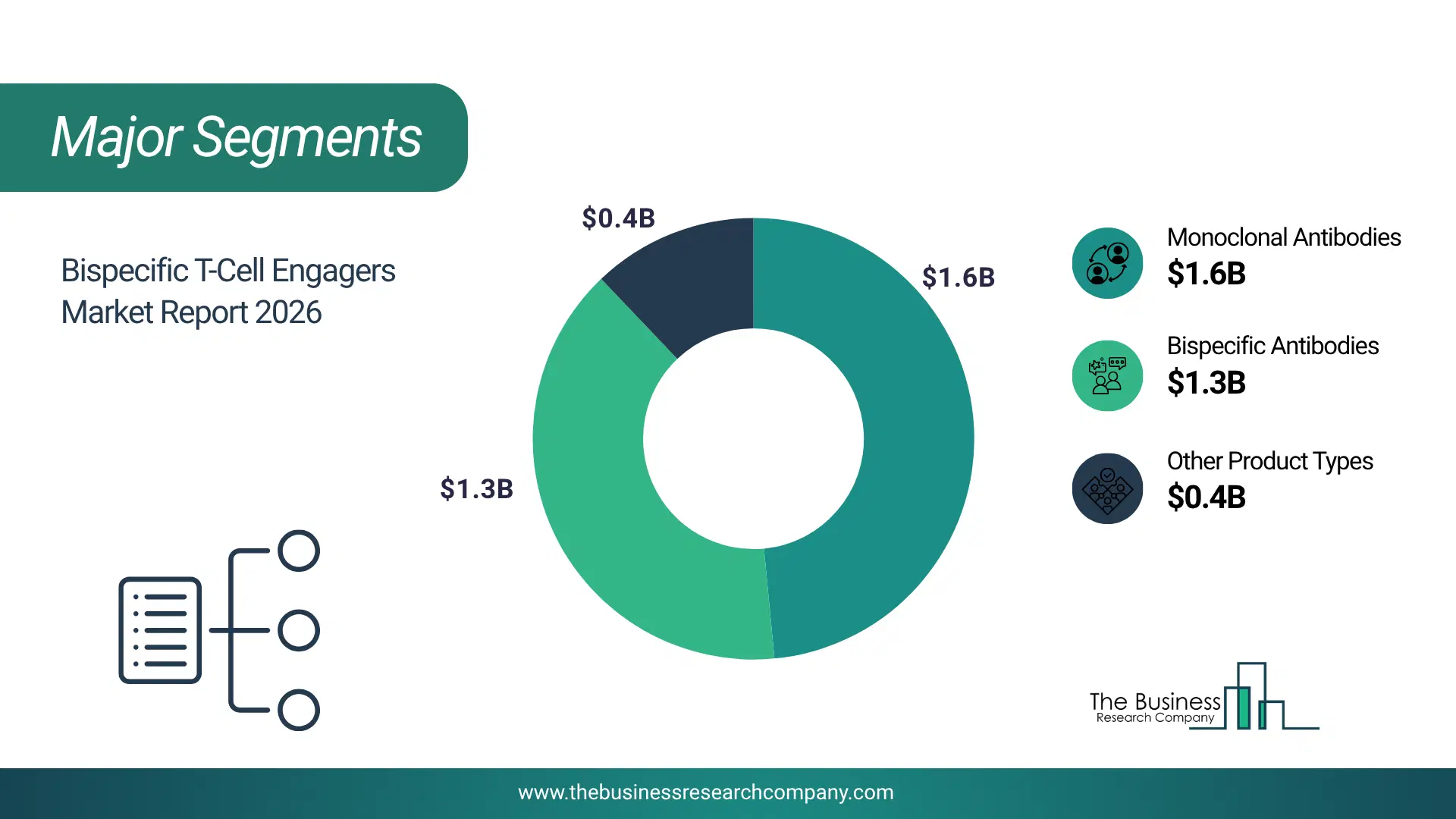
1) By Product Type: Monoclonal Antibodies, Bispecific Antibodies, Other Product Types 2) By Application: Hematologic Malignancies, Solid Tumors, Other Applications 3) By End-User: Hospitals, Specialty Clinics, Research Institutes, Other End-Users Subsegments: 1) By Monoclonal Antibodies: IgG1 Monoclonal Antibodies, IgG2 Monoclonal Antibodies, IgG4 Monoclonal Antibodies, Chimeric Monoclonal Antibodies, Humanized Monoclonal Antibodies 2) By Bispecific Antibodies: T Cell Engagers, Dual Specific Antibodies, Trispecific Antibodies, Bispecific IgG Antibodies, Tandem Single Chain Variable Fragment Antibodies 3) By Other Product Types: Fusion Proteins, Recombinant Proteins, Peptide Therapeutics The top segments in the bispecific t-cell engagers market will be: • Monoclonal Antibodies will reach $1.52 billion by 2030. • Bispecific Antibodies will reach $1.3 billion by 2030. • Other Product Types will reach $0.36 billion by 2030.What Is The Driver Of The Bispecific T-Cell Engagers Market?
The rising incidence of cancer is expected to propel the growth of the bispecific T-cell engagers market going forward. Cancer refers to a group of diseases characterized by the uncontrolled growth and spread of abnormal cells that can invade and damage body tissues. The rising incidence of cancer is due to factors such as aging populations and unhealthy lifestyles, as older age increases mutation accumulation over time and poor habits such as smoking, poor diet, and inactivity raise cancer risk. Bispecific T-cell engagers support treatment of cancer by simultaneously binding to T cells and cancer cells, effectively bridging the immune system with tumor targets, and this mechanism activates the patient’s own T cells to recognize, attack, and kill malignant cells with high specificity. For instance, in February 2024, according to the World Health Organization (WHO), a Switzerland-based intergovernmental organization, stated that the estimated 20 million new cases of cancer in 2022 and are expected to rise by 77% to over 35 million cases in 2050. Therefore, the rising incidence of cancer is driving growth of the bispecific T-cell engagers industry.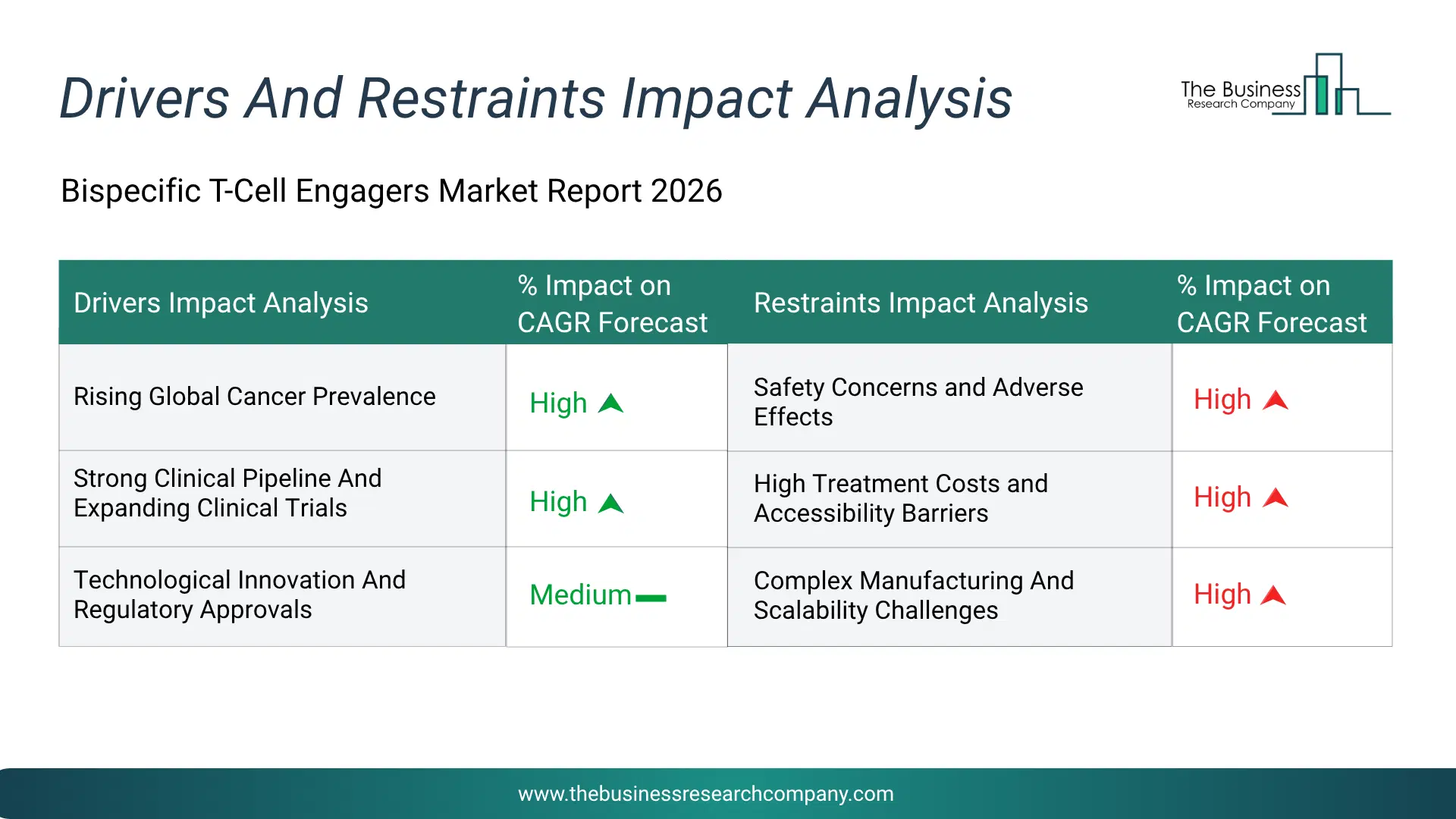
Infographic Chart Showing Key Market Drivers Analysis And Restraints For Bispecific T-Cell Engagers Market
The chart presents an impact analysis of key drivers and restraints, quantifying their relative influence on the market's growth rate and helping assess the balance between growth enablers and limiting factors. This chart offers a high-level perspective; the full report contains more detailed insights.
How Will The Drivers Impact Growth In The Global Bispecific T-Cell Engagers Market?
• Rising Global Cancer Prevalence (High) – During the forecast period, the rising global cancer prevalence is expected to become a key growth driver for the bispecific t -cell engagers market by 2030. The increasing incidence of both hematologic malignancies and solid tumors is driving demand for more effective and targeted treatment approaches. Bispecific t -cell engagers offer enhanced immune system activation by simultaneously binding cancer cells and t -cells, improving therapeutic outcomes. Healthcare systems are therefore prioritizing advanced immunotherapies to address unmet clinical needs. This growing disease burden is reinforcing steady market expansion. • Strong Clinical Pipeline And Expanding Clinical Trials (High) – During the forecast period, the strong clinical pipeline and expanding clinical trials are expected to emerge as major factors driving the expansion of the bispecific t-cell engagers market by 2030. Pharmaceutical and biotechnology companies are actively investing in the development of next-generation bispecific antibodies across multiple cancer indications. Increasing numbers of clinical trials are accelerating product approvals and expanding treatment options. Collaborations between industry players and research institutions are further strengthening innovation. • Technological Innovation And Regulatory Approvals (Medium) – During the forecast period, technological innovation and regulatory approvals are expected to act as key growth catalysts for the bispecific t-cell engagers market by 2030. Advances in antibody engineering, improved safety profiles, and enhanced targeting mechanisms are enabling the development of more effective therapies. Regulatory agencies are increasingly supporting breakthrough therapies through expedited approval pathways, improving time-to-market. These developments are boosting confidence among healthcare providers and patients.How Will The Restraints Impact Growth In The Global Bispecific T-Cell Engagers Market?
• Safety Concerns and Adverse Effects (High) – During the forecast period, the bispecific t-cell engagers can trigger strong immune responses, leading to side effects such as cytokine release syndrome and neurological complications. These risks require careful monitoring, dose management, and sometimes hospitalization. Physicians may be cautious in prescribing these therapies, especially for vulnerable patients. The need for specialized clinical settings can limit their use in smaller healthcare facilities. As a result, safety concerns act as a barrier to widespread adoption. • High Treatment Costs and Accessibility Barriers (High) – During the forecast period, the the development and manufacturing of bispecific antibodies are complex and resource-intensive, leading to high treatment costs. These therapies often require specialized administration and supportive care, further increasing overall expenses. In many regions, limited reimbursement coverage restricts patient access to these treatments. Healthcare systems with constrained budgets may prioritize more affordable alternatives. This cost burden slows down market penetration, particularly in emerging economies. • Complex Manufacturing And Scalability Challenges (High) – During the forecast period, the bispecific t-cell engagers are highly sophisticated biologic therapies that require advanced manufacturing technologies and stringent quality control processes. Producing these molecules at commercial scale while maintaining consistency and purity remains technically demanding. Manufacturing complexities can lead to higher production costs and supply limitations. These challenges may restrict widespread availability and slow market expansion.Key Players In The Global Bispecific T-Cell Engagers Market
Major companies operating in the bispecific t-cell engagers market are Pfizer Incorporated, Johnson & Johnson, F. Hoffmann-La Roche AG, AbbVie Incorporated, Sanofi S.A., Amgen Incorporated, Regeneron Pharmaceuticals Incorporated, Ipsen S.A., Genmab A/S, Evotec SE, Akeso Inc., Immunocore Holdings Public Limited Company, MacroGenics Incorporated, Zymeworks Inc., Zenas BioPharma Limited, Candid Therapeutics Inc., BPS Bioscience Inc., Alloy Therapeutics Inc., AP Biosciences Inc., Medigene AG.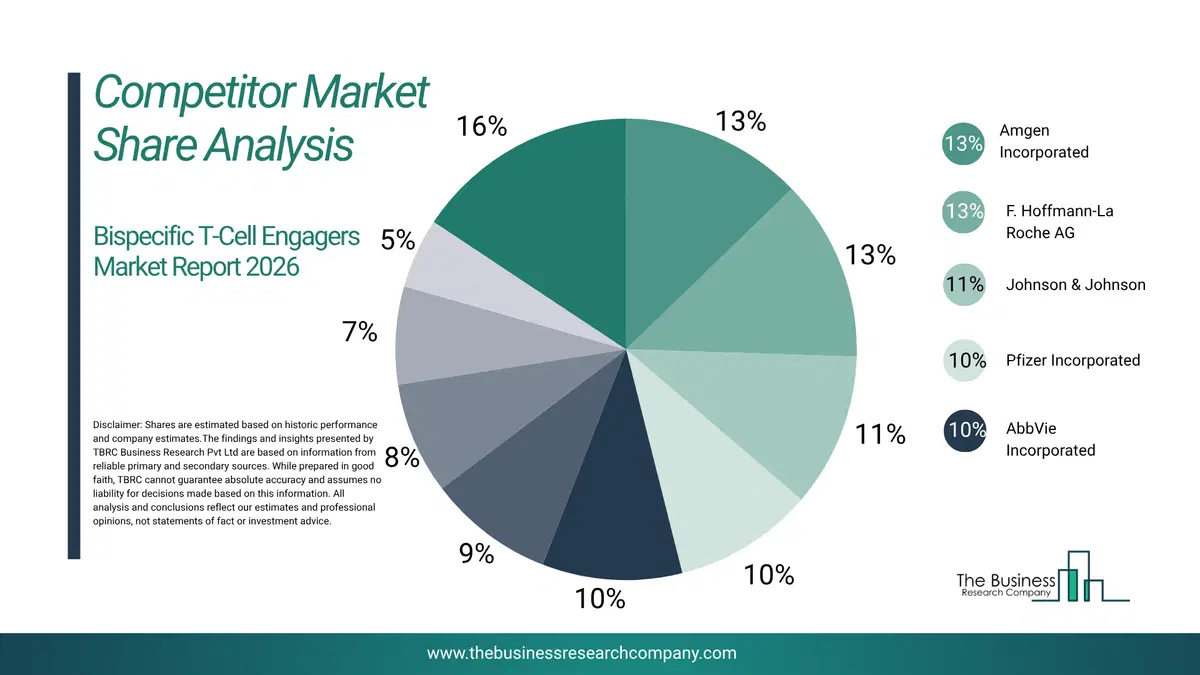
This chart is for illustrative purposes; the full report includes a detailed competitor analysis and comprehensive overview of the top 10 companies in the market.
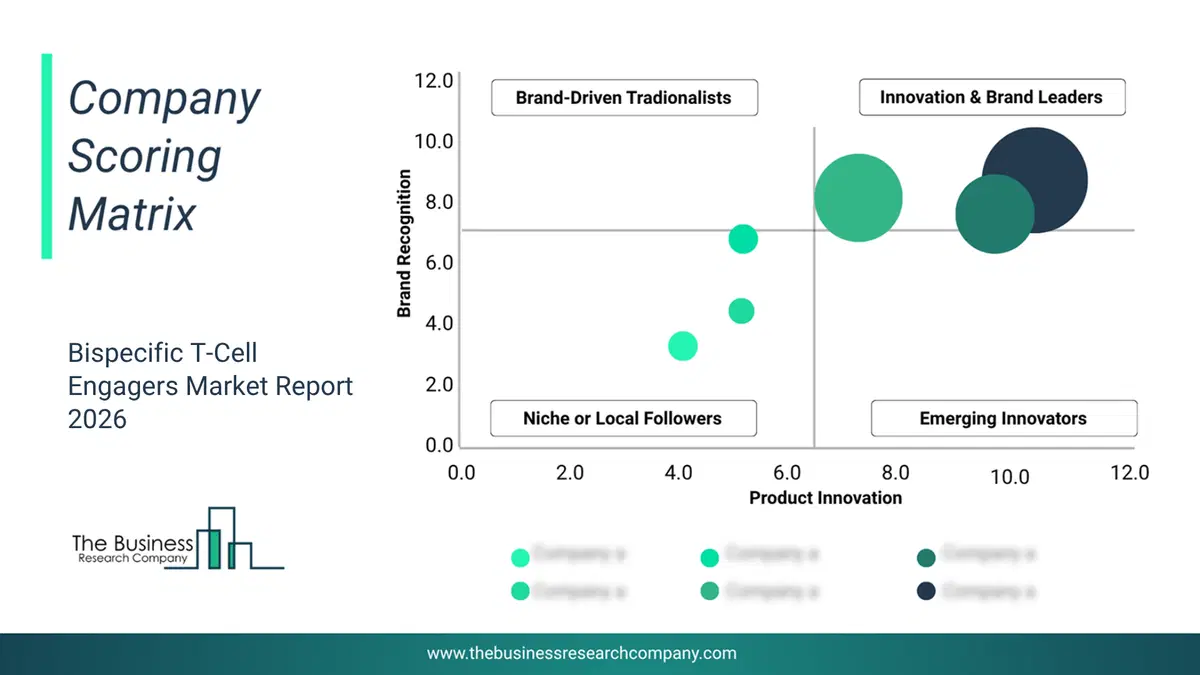
This chart maps companies by product innovation and brand strength, with bubble size indicating relative revenue, helping identify market leaders, challengers, and niche players. This is an illustrative chart; the full report provides a complete and accurate competitive analysis.
Global Bispecific T-Cell Engagers Market Trends and Insights
Major companies operating in the bispecific T-cell engagers market are focusing on developing advanced approaches, such as enhancing cytolytic synapse formation, to improve targeted cancer cell killing. Cytolytic synapse formation is the process by which a T cell forms a specialized contact point with a target tumor cell to deliver lethal signals that trigger the tumor cell’s destruction. For instance, in May 2024, Amgen Inc., a US-based biopharmaceutical company, launched IMDELLTRA (tarlatamab-dlle), the first and only Food and Drug Administration (FDA) a US-based government agency approved DLL3-targeting bispecific T-cell engager therapy for extensive-stage small cell lung cancer (ES-SCLC). The therapy activates the patient’s own T cells to attack DLL3-expressing tumor cells, offering a novel targeted immunotherapy option for patients with disease progression after platinum-based chemotherapy.What Are Latest Mergers And Acquisitions In The Bispecific T-Cell Engagers Market?
In March 2024, Merck & Co. Inc., a US-based pharmaceutical company, acquired Harpoon Therapeutics Inc. for an undisclosed amount. Through this acquisition, Merck aims to strengthen and diversify its oncology pipeline by advancing innovative bispecific T-cell engager therapies to improve treatment options for patients with advanced cancers. Harpoon Therapeutics Inc. is a US-based clinical-stage immuno-oncology company focused on developing bispecific gamma-delta T cell engagers for the treatment of cancer.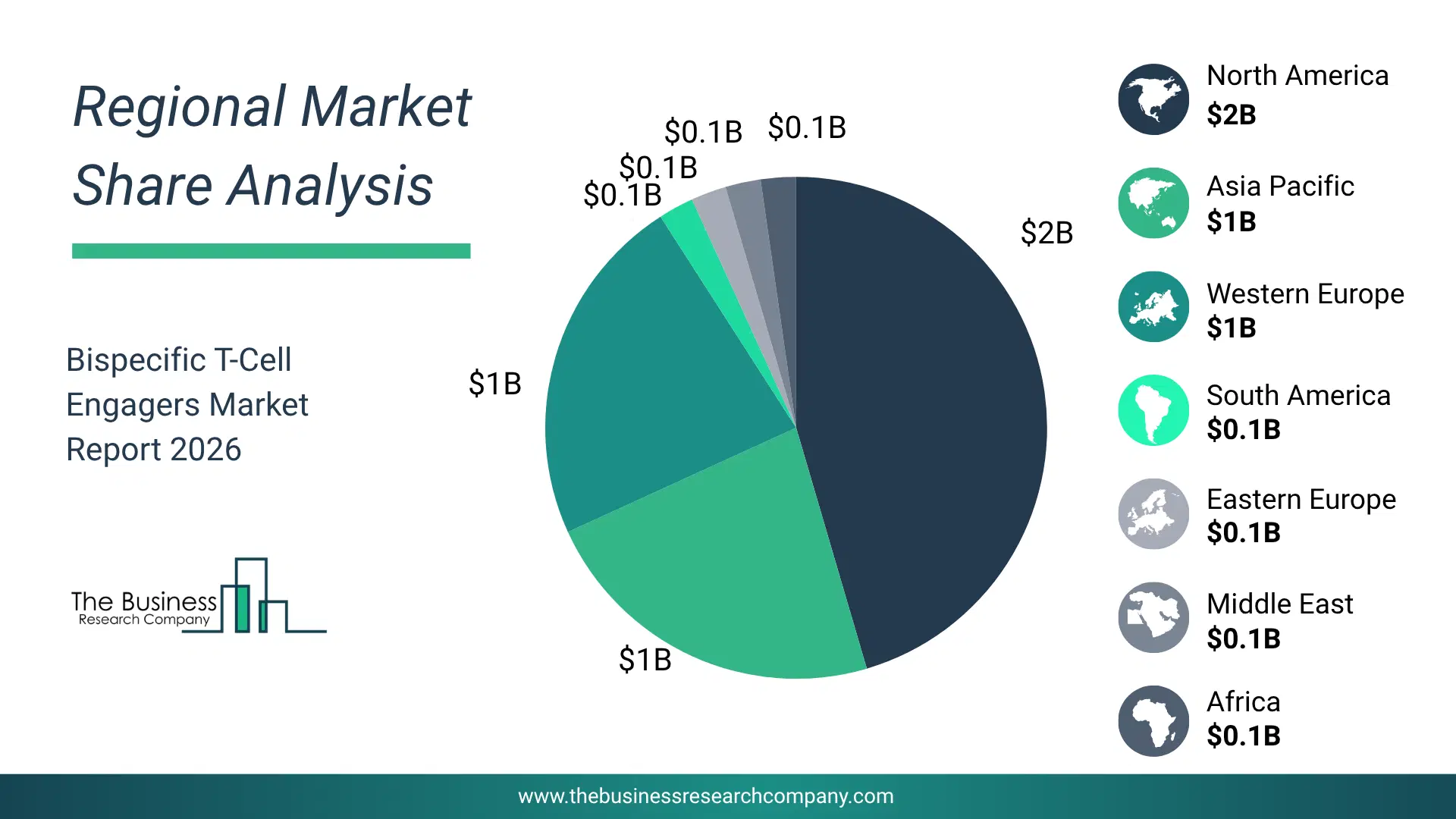
Regional Insights
North America was the largest region in the bispecific T-cell engagers market in 2025. Asia-Pacific is expected to be the fastest-growing region in the forecast period. The regions covered in this market report are Asia-Pacific, South East Asia, Western Europe, Eastern Europe, North America, South America, Middle East, Africa. The countries covered in this market report are Australia, Brazil, China, France, Germany, India, Indonesia, Japan, Taiwan, Russia, South Korea, UK, USA, Canada, Italy, Spain.What Defines the Bispecific T-Cell Engagers Market?
The bispecific T-cell engagers market consists of sales of solitomab, ebentafusp, glofitamab, epcoritamab, and mosunetuzumab. Values in this market are ‘factory gate’ values, that is, the value of goods sold by the manufacturers or creators of the goods, whether to other entities (including downstream manufacturers, wholesalers, distributors, and retailers) or directly to end customers. The value of goods in this market includes related services sold by the creators of the goods.How is Market Value Defined and Measured?
The market value is defined as the revenues that enterprises gain from the sale of goods and/or services within the specified market and geography through sales, grants, or donations in terms of the currency (in USD unless otherwise specified). The revenues for a specified geography are consumption values that are revenues generated by organizations in the specified geography within the market, irrespective of where they are produced. It does not include revenues from resales along the supply chain, either further along the supply chain or as part of other products.
This chart presents market attractiveness based on a quantitative evaluation of growth, competition, strategic alignment, and risk, offering a clear view of opportunity areas for decision-making. This chart is for illustrative purposes; the full report contains the complete analysis.

This chart highlights the Total Addressable Market (TAM) by estimating the maximum revenue opportunity using an assumption-driven approach, supporting strategic planning and opportunity sizing across markets. The chart is illustrative; the full report provides a more comprehensive analysis.
What Key Data and Analysis Are Included in the Bispecific T-Cell Engagers Market Report 2026?
The bispecific t-cell engagers market research report is one of a series of new reports from The Business Research Company that provides market statistics, including industry global market size, regional shares, competitors with the market share, detailed market segments, market trends and opportunities, and any further data you may need to thrive in the bispecific t-cell engagers industry. The market research report delivers a complete perspective of everything you need, with an in-depth analysis of the current and future state of the industry.Bispecific T-Cell Engagers Market Report Forecast Analysis
| Report Attribute | Details |
|---|---|
| Market Size Value In 2026 | $1.94 billion |
| Revenue Forecast In 2030 | $4.18 billion |
| Growth Rate | CAGR of 21.2% from 2026 to 2030 |
| Base Year For Estimation | 2025 |
| Actual Estimates/Historical Data | 2020-2025 |
| Forecast Period | 2026 - 2030 |
| Market Representation | Revenue in USD Billion and CAGR from 2026 to 2030 |
| Segments Covered | Product Type, Application, End-User |
| Regional Scope | Asia-Pacific, Western Europe, Eastern Europe, North America, South America, Middle East, Africa |
| Country Scope | The countries covered in the report are Australia, Brazil, China, France, Germany, India, ... |
| Key Companies Profiled | Pfizer Incorporated, Johnson & Johnson, F. Hoffmann-La Roche AG, AbbVie Incorporated, Sanofi S.A., Amgen Incorporated, Regeneron Pharmaceuticals Incorporated, Ipsen S.A., Genmab A/S, Evotec SE, Akeso Inc., Immunocore Holdings Public Limited Company, MacroGenics Incorporated, Zymeworks Inc., Zenas BioPharma Limited, Candid Therapeutics Inc., BPS Bioscience Inc., Alloy Therapeutics Inc., AP Biosciences Inc., Medigene AG. |
| Customization Scope | Request for Customization |
| Pricing And Purchase Options | Explore Purchase Options |