
Bitumen Impregnated Fibreboard Market Report 2026
Global Outlook – By Type (Standard Bitumen Impregnated Fibreboard, Fire-Resistant Bitumen Impregnated Fibreboard, Water-Resistant Bitumen Impregnated Fibreboard, High-Density Bitumen Impregnated Fibreboard, Low-Density Bitumen Impregnated Fibreboard), By Thickness (Thin Bitumen Impregnated Fibreboard, Medium Bitumen Impregnated Fibreboard, Thick Bitumen Impregnated Fibreboard), By Distribution Channel (Direct Sales, Wholesale Distribution, Online Retail, Specialty Stores), By End-Use Industry (Building And Construction, Automotive Industry, Electrical Industry, Furniture Industry, Packaging Industry) – Market Size, Trends, Strategies, and Forecast to 2030
Bitumen Impregnated Fibreboard Market Overview
• Bitumen Impregnated Fibreboard market size has reached to $1.22 billion in 2025 • Expected to grow to $1.68 billion in 2030 at a compound annual growth rate (CAGR) of 6.5% • Growth Driver: Surge In Construction Materials Fueling The Growth Of The Market Due To Rising Energy Costs And Infrastructure Demand • North America was the largest region in 2025 and Asia-Pacific is the fastest growing region.What Is Covered Under Bitumen Impregnated Fibreboard Market?
Bitumen impregnated fibreboard is a type of board formed by treating fibrous sheets with a bituminous compound to improve their durability and resistance to water and environmental stress. The process results in a board that maintains structural integrity under pressure and varying temperatures. It is typically manufactured to specific standards to ensure uniformity in thickness, density, and flexibility, offering a stable and long-lasting solution in various demanding conditions. The main types of bitumen impregnated fibreboard are standard bitumen-impregnated fibreboard, fire-resistant bitumen-impregnated fibreboard, water-resistant bitumen-impregnated fibreboard, high-density bitumen-impregnated fibreboard, and low-density bitumen-impregnated fibreboard. Standard bitumen-impregnated fibreboard is a compressed wood fiber board treated with bitumen, primarily used as a joint filler in concrete structures for basic moisture resistance. The different thicknesses include thin bitumen-impregnated fibreboard, medium bitumen-impregnated fibreboard, and thick bitumen-impregnated fibreboard and are distributed through direct sales, wholesale distribution, online retail, and specialty stores. It is used by several end-users, including the building and construction, automotive, electrical, furniture, and packaging industries.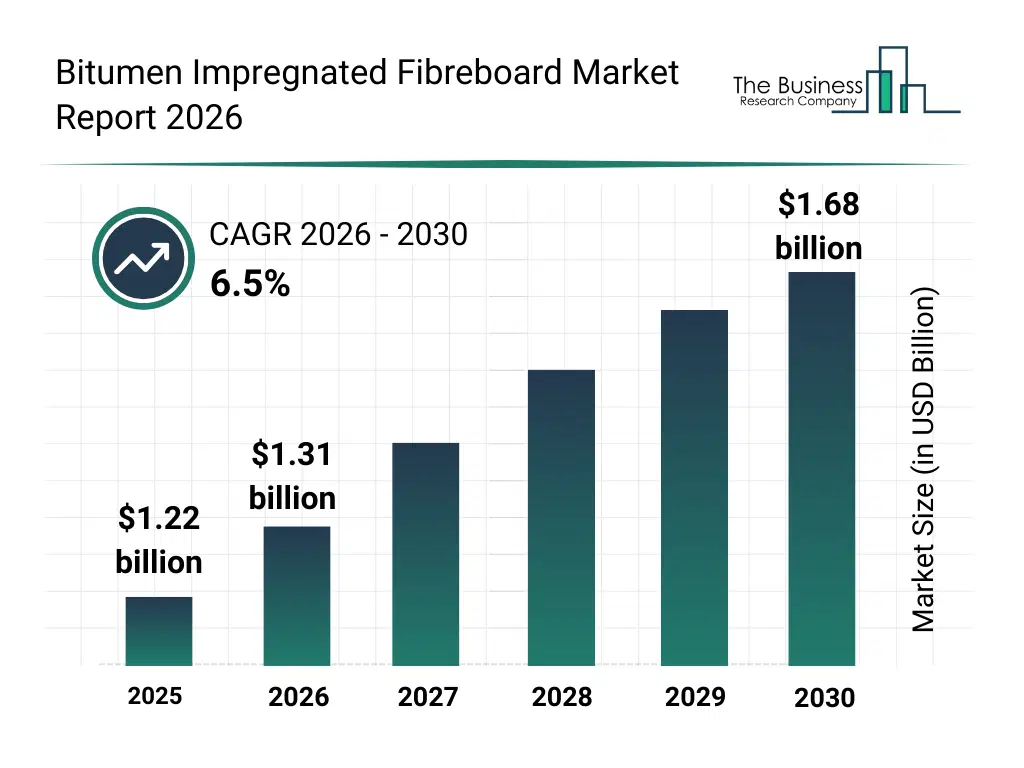
What Is The Bitumen Impregnated Fibreboard Market Size and Share 2026?
The bitumen impregnated fibreboard market size has grown strongly in recent years. It will grow from $1.22 billion in 2025 to $1.31 billion in 2026 at a compound annual growth rate (CAGR) of 6.8%. The growth in the historic period can be attributed to expansion of construction and infrastructure projects, increasing use of durable building materials, adoption of moisture-resistant boards, growth in industrial insulation demand, availability of standardized fibreboard products.What Is The Bitumen Impregnated Fibreboard Market Growth Forecast?
The bitumen impregnated fibreboard market size is expected to see strong growth in the next few years. It will grow to $1.68 billion in 2030 at a compound annual growth rate (CAGR) of 6.5%. The growth in the forecast period can be attributed to increasing demand for sustainable building materials, rising focus on fire safety compliance, expansion of infrastructure refurbishment projects, growing adoption in automotive and electrical industries, increasing preference for long-lasting construction components. Major trends in the forecast period include increasing use in expansion joint applications, rising demand for water-resistant construction boards, growing adoption in acoustic and thermal insulation uses, expansion of fire-resistant fibreboard variants, enhanced focus on long-term structural durability.
Global Bitumen Impregnated Fibreboard Market Segmentation
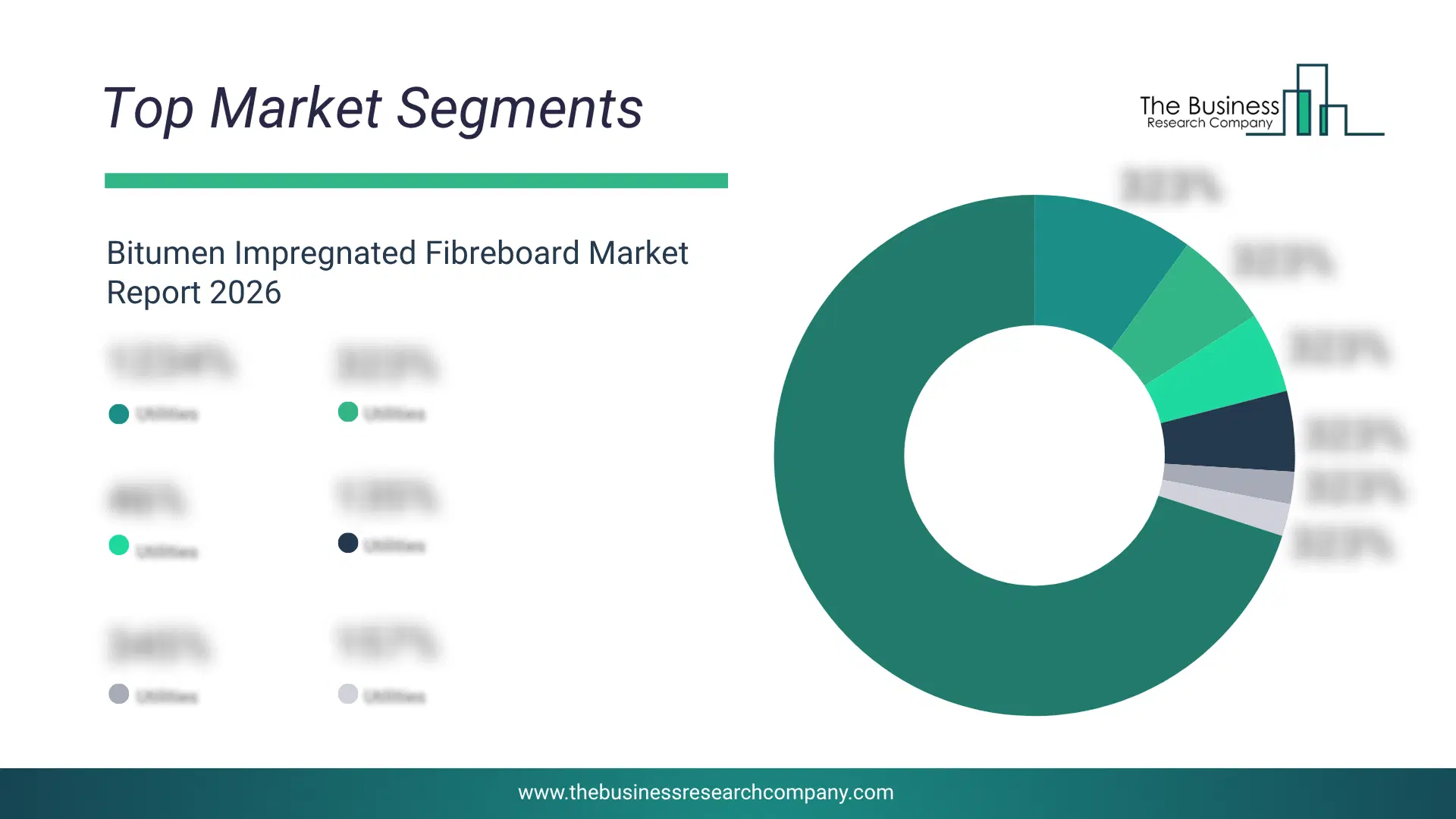
1) By Type: Standard Bitumen Impregnated Fibreboard, Fire-Resistant Bitumen Impregnated Fibreboard, Water-Resistant Bitumen Impregnated Fibreboard, High-Density Bitumen Impregnated Fibreboard, Low-Density Bitumen Impregnated Fibreboard 2) By Thickness: Thin Bitumen Impregnated Fibreboard, Medium Bitumen Impregnated Fibreboard, Thick Bitumen Impregnated Fibreboard 3) By Distribution Channel: Direct Sales, Wholesale Distribution, Online Retail, Specialty Stores 4) By End-Use Industry: Building And Construction, Automotive Industry, Electrical Industry, Furniture Industry, Packaging Industry Subsegments: 1) By Standard Bitumen Impregnated Fibreboard: General Construction Grade, Expansion Joint Filler, Packaging Applications, Acoustic Insulation 2) By Fire-Resistant Bitumen Impregnated Fibreboard: Intumescent Coated Boards, Mineral Wool Composite Boards, Fire-Rated Partition Boards, Fire-Barrier Panels 3) By Water-Resistant Bitumen Impregnated Fibreboard: Marine-Grade Boards, Exterior Wall Sheathing, Damp-Proof Membrane Boards, Roof Underlay Boards 4) By High-Density Bitumen Impregnated Fibreboard: Heavy-Duty Flooring Base, Structural Insulation Panels, High-Load Bearing Applications, Road And Bridge Expansion Joints 5) By Low-Density Bitumen Impregnated Fibreboard: Lightweight Insulation Panels, Ceiling And Partition Boards, Decorative Wall Liners, Soundproofing LayersWhat Are The Drivers Of The Bitumen Impregnated Fibreboard Market?
The increasing demand for construction materials is expected to propel the growth of the bitumen impregnated fibreboard market going forward. Construction materials refer to the raw materials, manufactured products, and composites used in the building, construction, and infrastructure industries to create structures, buildings, roads, and other physical assets. Demand for construction materials is rising due to increasing energy costs that elevate the production and transportation expenses. High demand for construction materials results in greater reliance on bitumen impregnated fiberboards, as they provide essential moisture protection and joint flexibility, helping maintain the structural integrity of buildings and infrastructure. For instance, in July 2024, according to the U.S. Green Building Council, a US-based non-profit organization, in 2024, they were part of over 46, 000 residential projects certified under the LEED green building rating system, with 2023 seeing nearly a 5% rise in new LEED residential project registrations. Therefore, the increasing demand for construction materials is driving the growth of the bitumen impregnated fibreboard industry. The expansion of residential and commercial real estate is expected to propel the growth of the bitumen impregnated fibreboard market going forward. Residential and commercial real estate refer to property types used for housing and business operations, respectively. Residential and commercial real estate are rising due to rapid urbanization that increases demand for housing and business spaces in growing cities. Bitumen impregnated fiberboards are useful in residential and commercial real estate, as they effectively cushion expansion joints, helping to prevent structural damage caused by thermal movement and ensuring long-term building stability. For instance, in June 2023, according to the Northern Ireland Statistics and Research Agency, an Ireland-based government executive agency, it was reported that from the first quarter of 2022 to the first quarter of 2023, the overall construction industry expanded by 6.5%, with the housing sector of construction increasing by 11.1% and the infrastructure subsector by 3.7%. Therefore, the expansion of residential and commercial real estate is driving the growth of the bitumen impregnated fibreboard industry. The government investments in infrastructure development are expected to propel the growth of the bitumen impregnated fibreboard market going forward. Investments in infrastructure development refer to the funding directed toward building and upgrading essential physical systems such as roads, bridges, utilities, and public facilities. The rise in investments in infrastructure development is due to government efforts to stimulate economic growth and enhance public services, leading to improved national productivity and connectivity. Government spending on infrastructure projects supports the use of bitumen-impregnated fiberboards, as these boards are needed in construction joints to handle movement and moisture, helping ensure the long-term durability of roads, bridges, and public buildings. For instance, in July 2024, according to the Office for National Statistics, a UK-based government department, investment in infrastructure reached $17.8 billion (£13.8 billion) in 2023, reflecting a 3.9% increase compared to 2022. Therefore, government investments in infrastructure development are driving the growth of the bitumen impregnated fibreboard industry.Key Players In The Global Bitumen Impregnated Fibreboard Market
Major companies operating in the bitumen impregnated fibreboard market are Fosroc International Limited, Fibrecrete Inc., Estop Group, Paam Group, United Tar, Musandum Group, INSUTECH International Company for Insulation Technology, IKO Industries Ltd., Soprema Group, GAF Materials Corporation, Sika AG, Johns Manville, Owens Corning, Saint‑Gobain, Kingspan Group, Armacell, Isover, Regupol BSW GmbH, CICO Technologies Ltd., Tremco CPG Inc.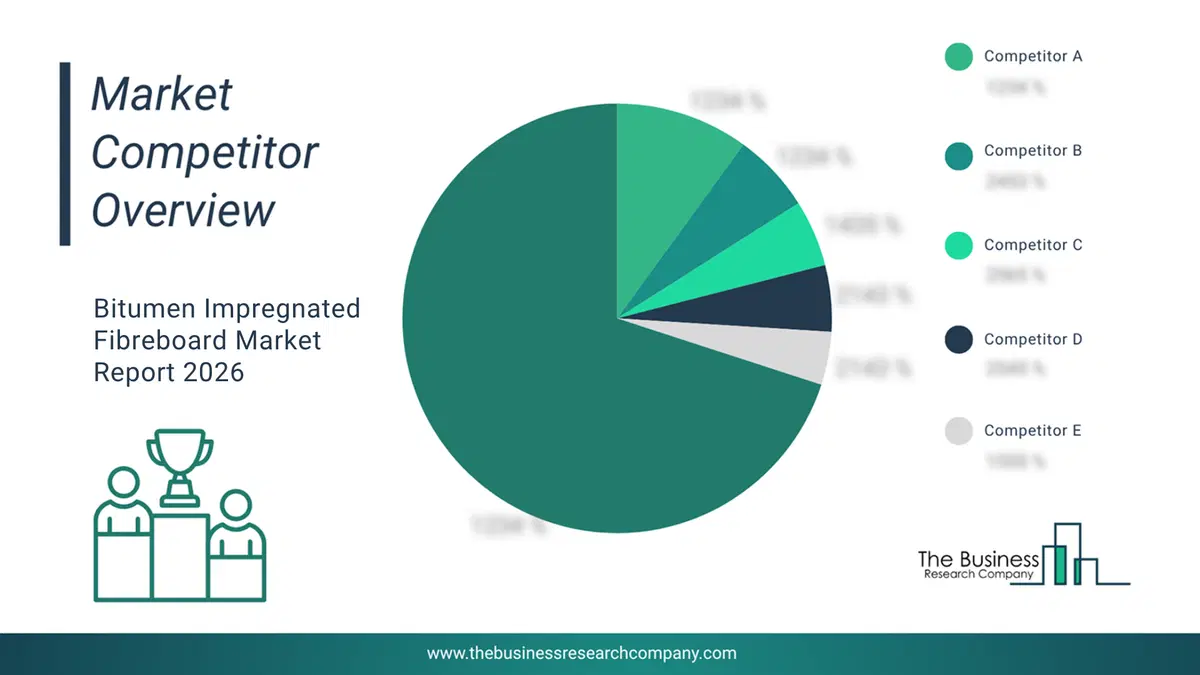
This chart is for illustrative purposes; the full report includes a detailed competitor analysis and comprehensive overview of the top 10 companies in the market.
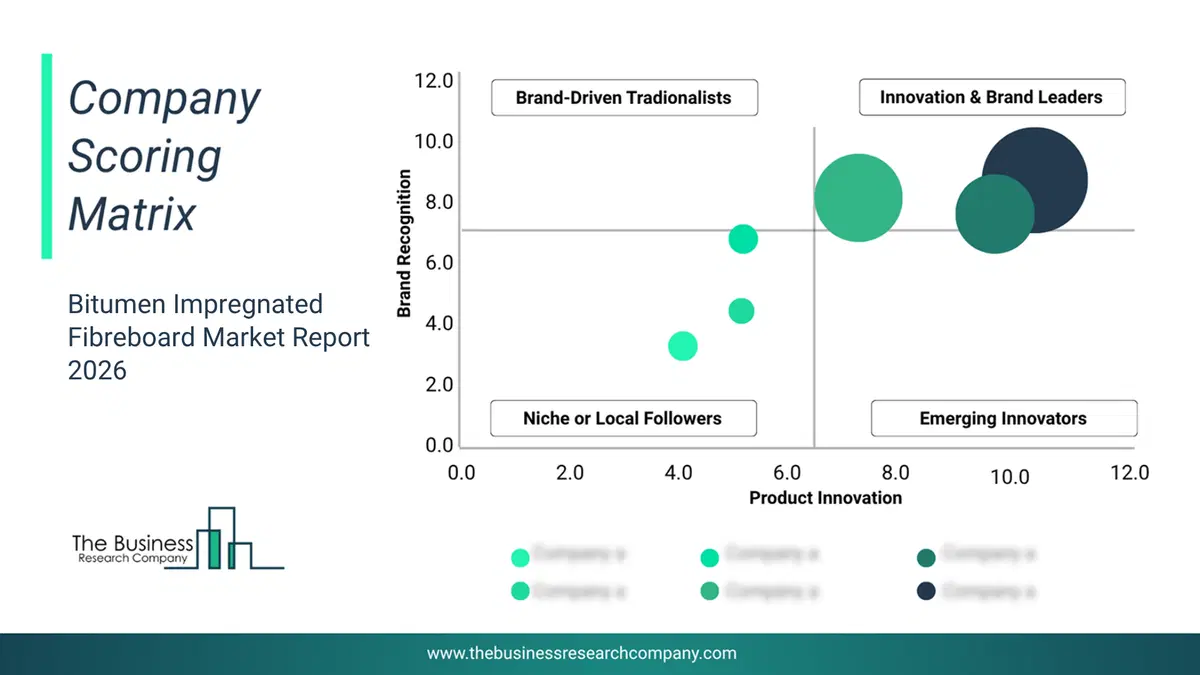
This chart maps companies by product innovation and brand strength, with bubble size indicating relative revenue, helping identify market leaders, challengers, and niche players. This is an illustrative chart; the full report provides a complete and accurate competitive analysis.
Regional Outlook
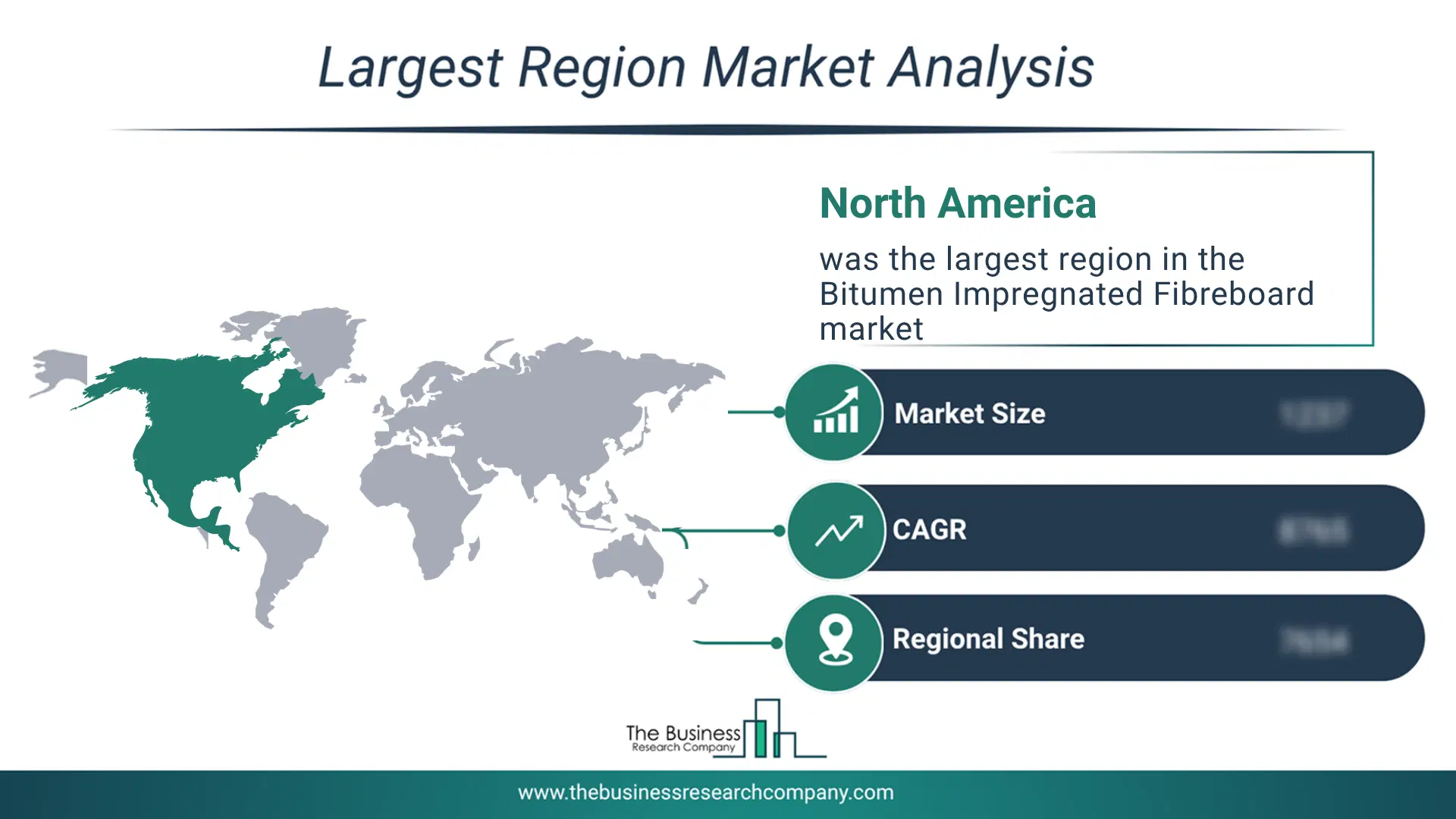
North America was the largest region in the bitumen impregnated fibreboard market in 2025. Asia-Pacific is expected to be the fastest-growing region in the forecast period. The regions covered in this market report are Asia-Pacific, South East Asia, Western Europe, Eastern Europe, North America, South America, Middle East, Africa. The countries covered in this market report are Australia, Brazil, China, France, Germany, India, Indonesia, Japan, Taiwan, Russia, South Korea, UK, USA, Canada, Italy, Spain.What Defines the Bitumen Impregnated Fibreboard Market?
The bitumen-impregnated fiberboard market consists of sales of reinforced bitumen-impregnated fiberboard, eco-friendly or bio-based bitumen fiberboard, thermal-insulated bitumen fiberboard, flexible-grade bitumen fiberboard, and customized-thickness bitumen fiberboard. Values in this market are ‘factory gate’ values, that is, the value of goods sold by the manufacturers or creators of the goods, whether to other entities (including downstream manufacturers, wholesalers, distributors, and retailers) or directly to end customers. The value of goods in this market includes related services sold by the creators of the goods.How is Market Value Defined and Measured?
The market value is defined as the revenues that enterprises gain from the sale of goods and/or services within the specified market and geography through sales, grants, or donations in terms of the currency (in USD unless otherwise specified). The revenues for a specified geography are consumption values that are revenues generated by organizations in the specified geography within the market, irrespective of where they are produced. It does not include revenues from resales along the supply chain, either further along the supply chain or as part of other products.
This chart presents market attractiveness based on a quantitative evaluation of growth, competition, strategic alignment, and risk, offering a clear view of opportunity areas for decision-making. This chart is for illustrative purposes; the full report contains the complete analysis.

This chart highlights the Total Addressable Market (TAM) by estimating the maximum revenue opportunity using an assumption-driven approach, supporting strategic planning and opportunity sizing across markets. The chart is illustrative; the full report provides a more comprehensive analysis.
What Key Data and Analysis Are Included in the Bitumen Impregnated Fibreboard Market Report 2026?
The bitumen impregnated fibreboard market research report is one of a series of new reports from The Business Research Company that provides market statistics, including Market Report 2026?global market size, regional shares, competitors with the market share, detailed market segments, market trends and opportunities, and any further data you may need to thrive in the bitumen impregnated fibreboard Market Report 2026? The market research report delivers a complete perspective of everything you need, with an in-depth analysis of the current and future state of the Market Report 2026?Bitumen Impregnated Fibreboard Market Report Forecast Analysis
| Report Attribute | Details |
|---|---|
| Market Size Value In 2026 | $1.31 billion |
| Revenue Forecast In 2030 | $1.68 billion |
| Growth Rate | CAGR of 6.8% from 2026 to 2030 |
| Base Year For Estimation | 2025 |
| Actual Estimates/Historical Data | 2020-2025 |
| Forecast Period | 2026 - 2030 |
| Market Representation | Revenue in USD Billion and CAGR from 2026 to 2030 |
| Segments Covered | Type, Thickness, Distribution Channel, End-Use Industry |
| Regional Scope | Asia-Pacific, Western Europe, Eastern Europe, North America, South America, Middle East, Africa |
| Country Scope | The countries covered in the report are Australia, Brazil, China, France, Germany, India, Indonesia, Japan, Taiwan, Russia, South Korea, UK, USA, Canada, Italy, Spain. |
| Key Companies Profiled | Fosroc International Limited, Fibrecrete Inc., Estop Group, Paam Group, United Tar, Musandum Group, INSUTECH International Company for Insulation Technology, IKO Industries Ltd., Soprema Group, GAF Materials Corporation, Sika AG, Johns Manville, Owens Corning, Saint‑Gobain, Kingspan Group, Armacell, Isover, Regupol BSW GmbH, CICO Technologies Ltd., Tremco CPG Inc. |
| Customization Scope | Request for Customization |
| Pricing And Purchase Options | Explore Purchase Options |