
Blood Viscometer Market Report 2026
Global Outlook – By Product (Rotational Viscometers, Capillary Viscometers, Other Products), By Application (Blood Viscosity Measurement, Plasma Viscosity Measurement, Other Applications), By End User (Hospitals, Diagnostic Centers, Research Institutes, Other End Users) – Market Size, Trends, Strategies, and Forecast to 2030
Blood Viscometer Market Overview
• Blood Viscometer market size has reached to $1.77 billion in 2025 • Expected to grow to $2.29 billion in 2030 at a compound annual growth rate (CAGR) of 5.3% • Growth Driver: Rising Cardiovascular Disease Prevalence Driving Growth Of Blood Viscometer Market • Market Trend: Innovative Viscosity Technology Enhancing Real-Time Fluid Measurement And Process Control • North America was the largest region in 2025.What Is Covered Under Blood Viscometer Market?
A blood viscometer is a device used to measure the viscosity (thickness and flow resistance) of blood. It assesses how easily blood flows, which is crucial for understanding blood circulation and diagnosing various health conditions. By providing insights into blood's physical properties, it helps monitor diseases such as cardiovascular disorders and diabetes. The main product types of blood viscometers are rotational viscometers, capillary viscometers, and others. Rotational viscometers refer to devices that measure the thickness (viscosity) of blood by rotating a spindle or disc inside a blood sample. The application includes blood viscosity measurement, plasma viscosity measurement, and others, and it is used by various end users such as hospitals, diagnostic centers, research institutes, and others.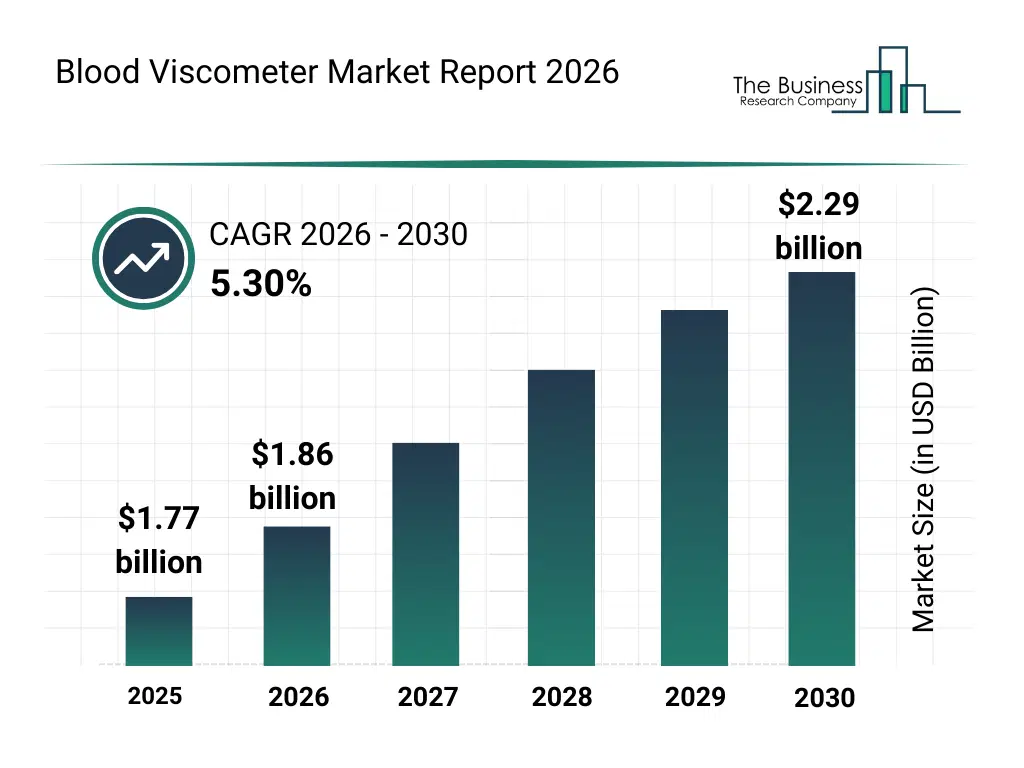
What Is The Blood Viscometer Market Size and Share 2026?
The blood viscometer market size has grown strongly in recent years. It will grow from $1.77 billion in 2025 to $1.86 billion in 2026 at a compound annual growth rate (CAGR) of 5.4%. The growth in the historic period can be attributed to increasing prevalence of cardiovascular diseases, growing use of viscosity testing in diabetes management, expansion of clinical diagnostic laboratories, rising adoption of laboratory automation, increased focus on blood rheology research.What Is The Blood Viscometer Market Growth Forecast?
The blood viscometer market size is expected to see strong growth in the next few years. It will grow to $2.29 billion in 2030 at a compound annual growth rate (CAGR) of 5.3%. The growth in the forecast period can be attributed to increasing demand for early disease detection tools, rising investments in precision diagnostics, growing adoption of portable diagnostic devices, expansion of personalized medicine approaches, increasing clinical research on blood flow disorders. Major trends in the forecast period include increasing adoption of digital blood viscosity measurement devices, rising demand for point-of-care hemorheology testing, growing integration of automated diagnostic platforms, expansion of research-grade viscometers for clinical studies, enhanced focus on high-precision blood flow analysis.
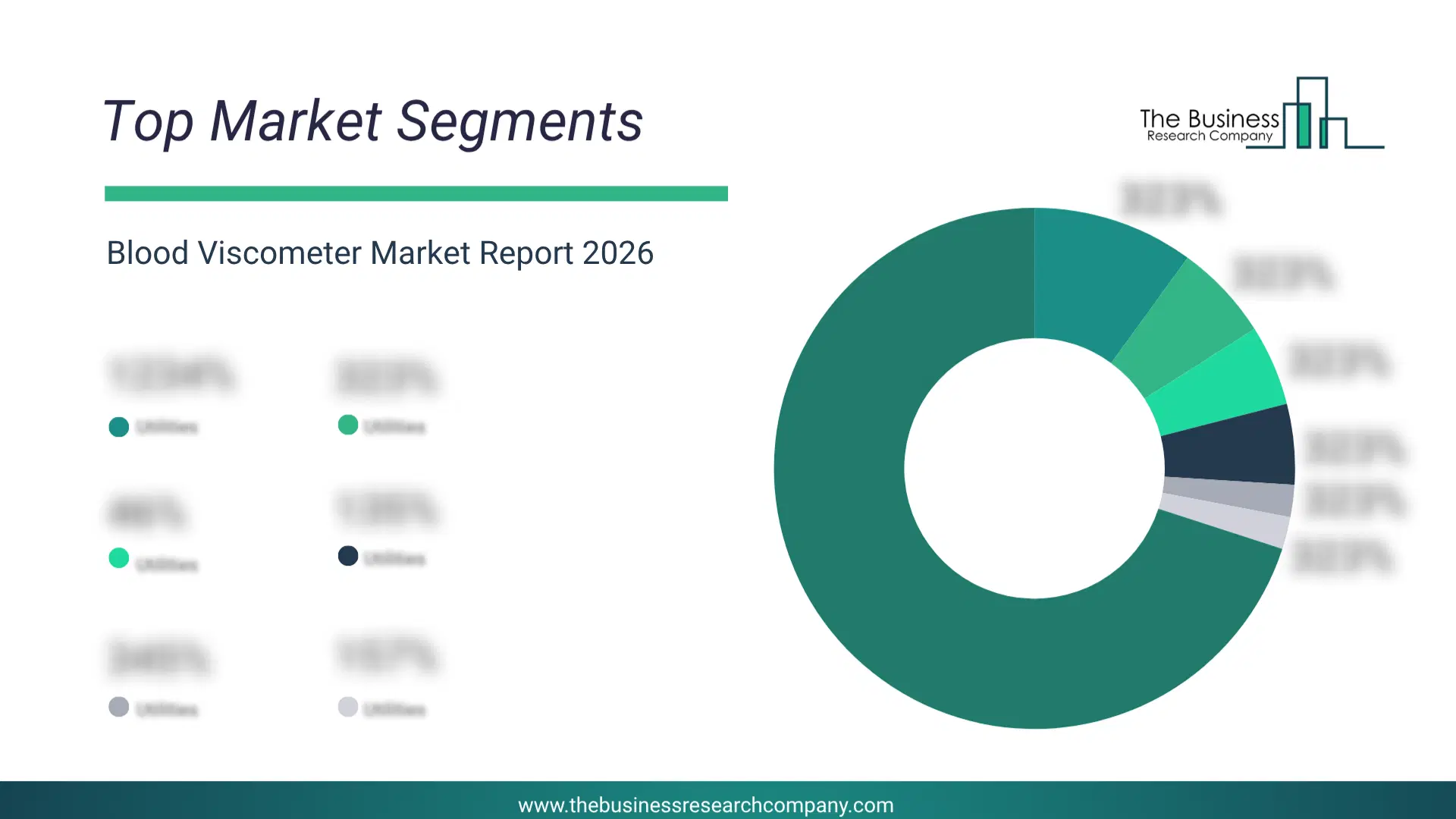
Global Blood Viscometer Market Segmentation
1) By Product: Rotational Viscometers, Capillary Viscometers, Other Products 2) By Application: Blood Viscosity Measurement, Plasma Viscosity Measurement, Other Applications 3) By End User: Hospitals, Diagnostic Centers, Research Institutes, Other End Users Subsegments: 1) By Rotational Viscometers: Brookfield Viscometers, Cone-And-Plate Viscometers, Digital Rotational Viscometers 2) By Capillary Viscometers: Ostwald Viscometers, Ubbelohde Viscometers, Microcapillary Viscometers 3) By Other Products: Vibro Viscometers, Optical Viscometers, Falling Ball ViscometersWhat Is The Driver Of The Blood Viscometer Market?
The rising prevalence of cardiovascular disease is expected to propel the growth of the blood viscometer market going forward. Cardiovascular disease refers to a group of disorders affecting the heart and blood vessels, often leading to heart attacks, strokes, or other heart-related conditions. The rising prevalence of cardiovascular disease is largely due to lifestyle factors such as poor diet, physical inactivity, smoking, and increasing rates of obesity and diabetes, along with aging populations. A blood viscometer is used in cardiovascular disease to measure blood viscosity, helping assess how thick or thin blood is, which can impact circulation and increase the risk of conditions such as heart attacks, strokes, and blood clots. For instance, in January 2024, according to the American Heart Association, a US-based non-profit organization, the age-adjusted death rate from cardiovascular disease increased to 233.3 per 100,000 in 2024, up 4.0% from 224.4 per 100,000 in 2023. Therefore, the rising prevalence of cardiovascular disease is driving the growth of the blood viscometer industry.Key Players In The Global Blood Viscometer Market
Major companies operating in the blood viscometer market are Thermo Fisher Scientific Inc., Xylem Analytics, PerkinElmer Inc., Qualitest, Anton Paar GmbH, AMETEK Brookfield, BYK Gardner, PAC LP., CANNON Instrument Company, Koehler Instrument Company Inc., PCE Instruments, Rheosense Inc., Orbit Research Associates Pvt. Ltd., Swastik Systems & Services, Lamy Rheology, Labomat Essor, Edutek Instrumentation, Lasany International, Emerson Electric Co., Fann Instrument Company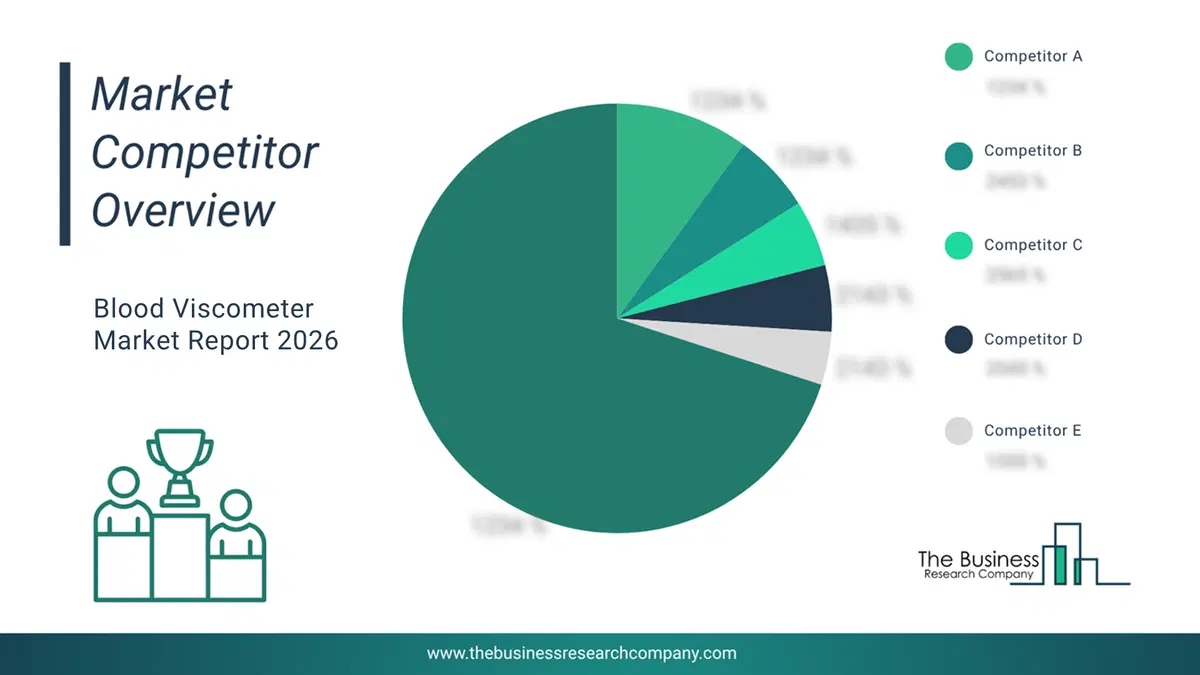
This chart is for illustrative purposes; the full report includes a detailed competitor analysis and comprehensive overview of the top 10 companies in the market.
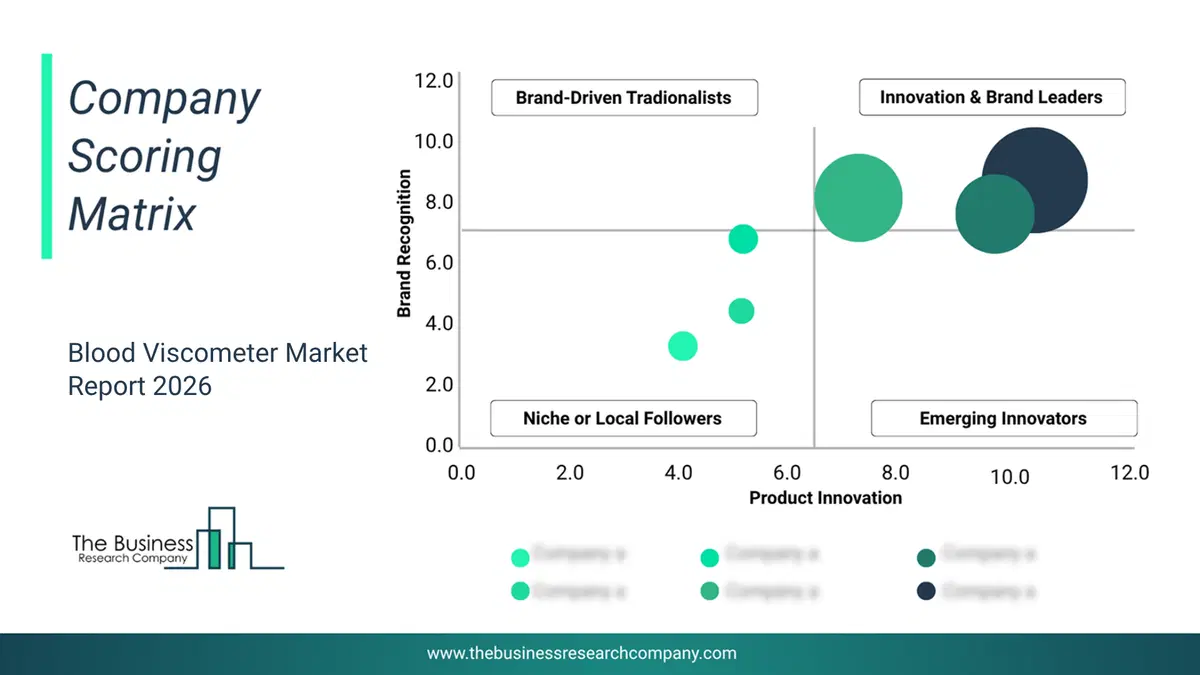
This chart maps companies by product innovation and brand strength, with bubble size indicating relative revenue, helping identify market leaders, challengers, and niche players. This is an illustrative chart; the full report provides a complete and accurate competitive analysis.
Global Blood Viscometer Market Trends and Insights
Major companies operating in the blood viscometer market are focusing on developing innovative products, such as automated viscometers, to gain a competitive edge in the market. An automated viscometer is a device used to measure the viscosity of liquids automatically, without the need for manual intervention. For instance, in March 2023, Sofraser, a France-based electronics manufacturer, launched the INVI viscometer. The INVI viscometer has a compact, inline design that enables continuous, real-time viscosity measurement without manual sampling. It is highly durable, providing accurate results even in extreme industrial conditions, and offers maintenance-free operation with minimal wear and tear. Furthermore, the INVI viscometer can be easily integrated into existing systems for improved process control.What Are Latest Mergers And Acquisitions In The Blood Viscometer Market?
In August 2023, Anton Paar AG, an Austria-based provider of laboratory instruments, acquired Brabender GmbH & Co. KG for an undisclosed amount. This acquisition expands Anton Paar’s strategic capabilities by adding advanced viscometry and rheometry technologies to its measurement-solutions portfolio. It further strengthens the company’s position in the global precision-measurement market by broadening its product offering for material analysis. Brabender GmbH & Co. KG is a Germany-based provider of viscometers.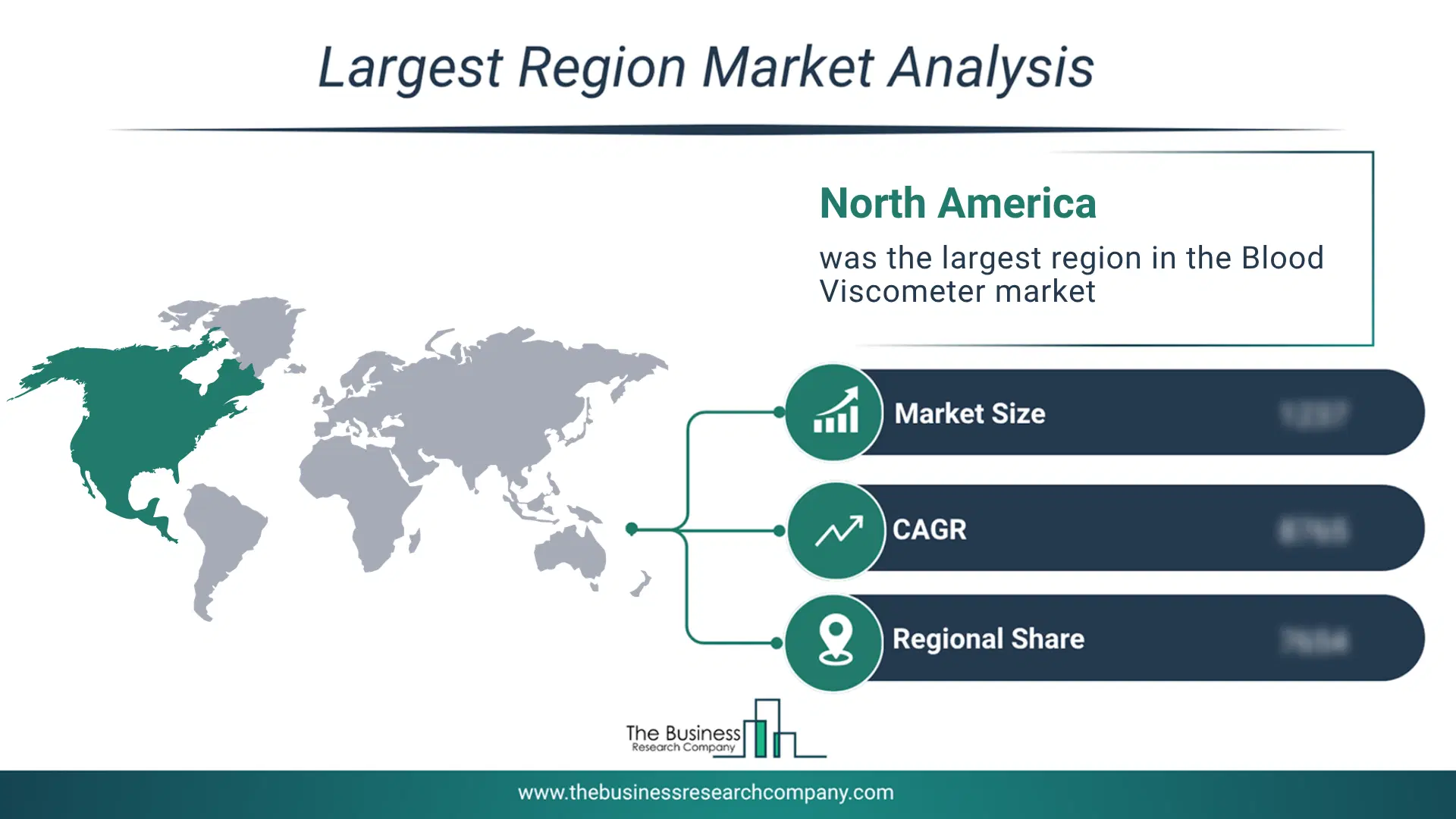
Regional Outlook
North America was the largest region in the blood viscometer market in 2025. The regions covered in this market report are Asia-Pacific, South East Asia, Western Europe, Eastern Europe, North America, South America, Middle East, Africa. The countries covered in this market report are Australia, Brazil, China, France, Germany, India, Indonesia, Japan, Taiwan, Russia, South Korea, UK, USA, Canada, Italy, SpainWhat Defines the Blood Viscometer Market?
The blood viscometer market consists of sales of falling ball viscometers, ultrasonic viscometers, oscillating viscometers, and electromagnetic viscometers. Values in this market are ‘factory gate’ values, that is, the value of goods sold by the manufacturers or creators of the goods, whether to other entities (including downstream manufacturers, wholesalers, distributors, and retailers) or directly to end customers. The value of goods in this market includes related services sold by the creators of the goods.How is Market Value Defined and Measured?
The market value is defined as the revenues that enterprises gain from the sale of goods and/or services within the specified market and geography through sales, grants, or donations in terms of the currency (in USD unless otherwise specified). The revenues for a specified geography are consumption values that are revenues generated by organizations in the specified geography within the market, irrespective of where they are produced. It does not include revenues from resales along the supply chain, either further along the supply chain or as part of other products.
This chart presents market attractiveness based on a quantitative evaluation of growth, competition, strategic alignment, and risk, offering a clear view of opportunity areas for decision-making. This chart is for illustrative purposes; the full report contains the complete analysis.

This chart highlights the Total Addressable Market (TAM) by estimating the maximum revenue opportunity using an assumption-driven approach, supporting strategic planning and opportunity sizing across markets. The chart is illustrative; the full report provides a more comprehensive analysis.
What Key Data and Analysis Are Included in the Blood Viscometer Market Report 2026?
The blood viscometer market research report is one of a series of new reports from The Business Research Company that provides market statistics, including industry global market size, regional shares, competitors with the market share, detailed market segments, market trends and opportunities, and any further data you may need to thrive in the blood viscometer industry. The market research report delivers a complete perspective of everything you need, with an in-depth analysis of the current and future state of the industry.Blood Viscometer Market Report Forecast Analysis
| Report Attribute | Details |
|---|---|
| Market Size Value In 2026 | $1.86 billion |
| Revenue Forecast In 2030 | $2.29 billion |
| Growth Rate | CAGR of 5.3% from 2026 to 2030 |
| Base Year For Estimation | 2025 |
| Actual Estimates/Historical Data | 2020-2025 |
| Forecast Period | 2026 - 2030 |
| Market Representation | Revenue in USD Billion and CAGR from 2026 to 2030 |
| Segments Covered | Product, Application, End User |
| Regional Scope | Asia-Pacific, Western Europe, Eastern Europe, North America, South America, Middle East, Africa |
| Country Scope | The countries covered in the report are Australia, Brazil, China, France, Germany, India, Indonesia, Japan, Taiwan, Russia, South Korea, UK, USA, Canada, Italy, Spain. |
| Key Companies Profiled | Thermo Fisher Scientific Inc., Xylem Analytics, PerkinElmer Inc., Qualitest, Anton Paar GmbH, AMETEK Brookfield, BYK Gardner, PAC LP., CANNON Instrument Company, Koehler Instrument Company Inc., PCE Instruments, Rheosense Inc., Orbit Research Associates Pvt. Ltd., Swastik Systems & Services, Lamy Rheology, Labomat Essor, Edutek Instrumentation, Lasany International, Emerson Electric Co., Fann Instrument Company |
| Customization Scope | Request for Customization |
| Pricing And Purchase Options | Explore Purchase Options |