
Bone Regeneration Material Market Report 2026
Global Outlook – By Product (Demineralized Bone Matrix(DBM), Xenograft, Autografts, Synthetic Bone Graft, Bone Morphogenetic Protein(BMP), Non-Invasive Electrical Bone Growth Stimulators, Invasive Electrical Bone Growth Stimulators), By Technology (3D Printing, Electrospinning, Sol-Gel Technology, Bioprinting, Other Technologies), By Delivery Method (Surgery, Minimally Invasive Procedures, Other Delivery Methods), By Application (Spinal Fusion, Dental Implants, Joint Reconstruction, Craniomaxillofacial Surgery, Trauma Repair, Other Applications), By End-User (Hospitals, Orthopedic Clinics, Dental Clinics, Research Institutions, Other End-Users) – Market Size, Trends, Strategies, and Forecast to 2030
Bone Regeneration Material Market Overview
• Bone Regeneration Material market size has reached to $4.1 billion in 2025 • Expected to grow to $6.45 billion in 2030 at a compound annual growth rate (CAGR) of 9.5% • Growth Driver: Surge In Bone-Related Disorders Driving The Growth Of The Market Due To Rising Prevalence Of Osteoporosis And Aging Population • Market Trend: Synthetic Bone Graft Substitutes Revolutionizes Bone Healing With Advanced Technology • North America was the largest region in 2025 and Asia-Pacific is the fastest growing region.What Is Covered Under Bone Regeneration Material Market?
Bone regeneration materials are bioactive substances and scaffolds designed to repair or replace damaged bone by promoting cell growth and mineralization, including grafts, biomimetic composites, and bioactive molecules. They aim to replicate bone's structure and function while addressing clinical needs like defect size and healing speed. The main types of products in bone regeneration material are demineralized bone matrix (DBM), xenograft, autografts, synthetic bone graft, bone morphogenetic protein (BMP), non-invasive electrical bone growth stimulators, and invasive electrical bone growth stimulators. Demineralized bone matrix is allograft bone that has had its mineral content removed, leaving behind collagen, proteins, and growth factors. These materials utilize various technologies such as 3D printing, electrospinning, sol-gel technology, bioprinting, and others, and are distributed through surgery, minimally invasive procedures, and others. It finds applications in spinal fusion, dental implants, joint reconstruction, craniomaxillofacial surgery, trauma repair, and others, serves a wide range of end users, including hospitals, orthopedic clinics, dental clinics, research institutions, and others.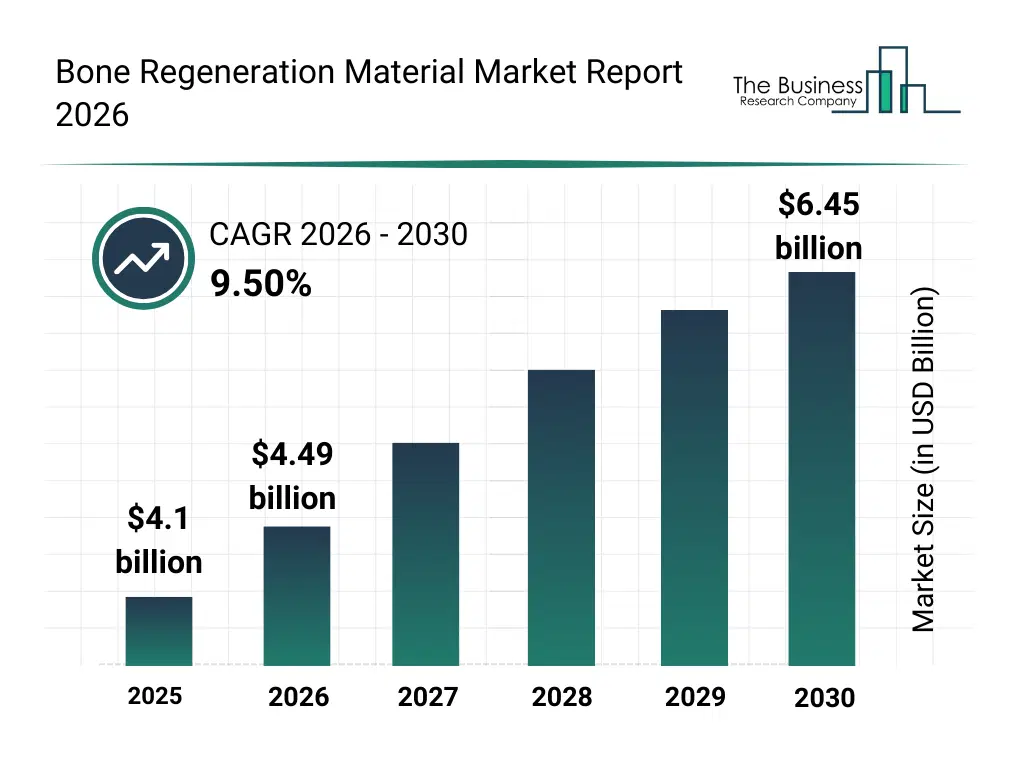
What Is The Bone Regeneration Material Market Size and Share 2026?
The bone regeneration material market size has grown strongly in recent years. It will grow from $4.1 billion in 2025 to $4.49 billion in 2026 at a compound annual growth rate (CAGR) of 9.6%. The growth in the historic period can be attributed to rising incidence of orthopedic injuries, increasing number of spinal fusion procedures, expansion of dental implant surgeries, advances in biomaterial science, growing adoption of bone graft substitutes.What Is The Bone Regeneration Material Market Growth Forecast?
The bone regeneration material market size is expected to see strong growth in the next few years. It will grow to $6.45 billion in 2030 at a compound annual growth rate (CAGR) of 9.5%. The growth in the forecast period can be attributed to increasing demand for regenerative orthopedic solutions, rising use of personalized bone implants, expansion of bioprinting in orthopedics, growing focus on minimally invasive surgeries, increasing investments in advanced bone healing technologies. Major trends in the forecast period include increasing adoption of synthetic bone graft materials, rising use of 3D printed bone scaffolds, growing integration of growth factor-based therapies, expansion of minimally invasive bone repair techniques, enhanced focus on faster bone healing outcomes.
Global Bone Regeneration Material Market Segmentation
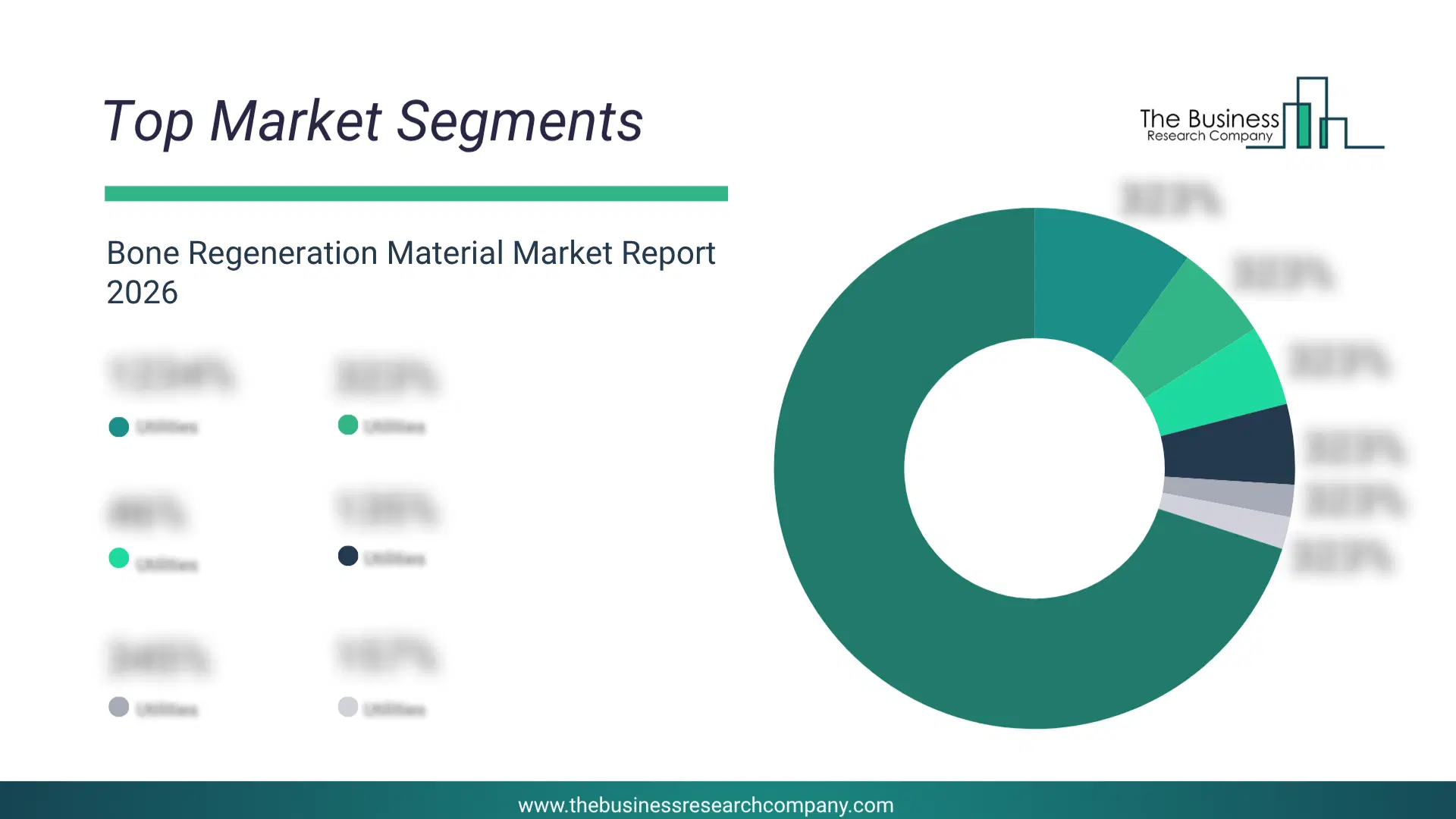
1) By Product: Demineralized Bone Matrix(DBM), Xenograft, Autografts, Synthetic Bone Graft, Bone Morphogenetic Protein(BMP), Non-Invasive Electrical Bone Growth Stimulators, Invasive Electrical Bone Growth Stimulators 2) By Technology: 3D Printing, Electrospinning, Sol-Gel Technology, Bioprinting, Other Technologies 3) By Delivery Method: Surgery, Minimally Invasive Procedures, Other Delivery Methods 4) By Application: Spinal Fusion, Dental Implants, Joint Reconstruction, Craniomaxillofacial Surgery, Trauma Repair, Other Applications 5) By End-User: Hospitals, Orthopedic Clinics, Dental Clinics, Research Institutions, Other End-Users Subsegments: 1) By Demineralized Bone Matrix (DBM): Gel DBM, Putty DBM, Sheet DBM 2) By Xenograft: Bovine-Derived Grafts, Porcine-Derived Grafts 3) By Autografts: Iliac Crest Bone Grafts, Fibula Bone Grafts, Tibial And Rib Bone Grafts 4) By Synthetic Bone Graft: Ceramic-Based Grafts, Polymer-Based Grafts, Composite Grafts 5) By Bone Morphogenetic Protein (BMP): RhBMP-2, RhBMP-7 6) By Non-Invasive Electrical Bone Growth Stimulators: Pulsed Electromagnetic Field Devices (PEMF), Capacitive Coupling Devices 7) By Invasive Electrical Bone Growth Stimulators: Implanted Direct Current Stimulators, Semi-Invasive DevicesWhat Is The Driver Of The Bone Regeneration Material Market?
The increasing prevalence of bone-related disorders is expected to propel the growth of the bone regeneration material market going forward. Bone-related disorders refer to conditions that affect the bones, including diseases like osteoporosis, osteoarthritis, and bone cancer, which can lead to pain, fractures, and reduced mobility. The prevalence of bone-related disorders is rising due to the aging population, as older individuals are more susceptible to conditions like osteoporosis and osteoarthritis. Bone regeneration materials aid in healing bone-related disorders by promoting natural bone growth, restoring bone strength, and enhancing recovery in conditions like fractures and osteoporosis. For instance, in July 2025, according to the Institute for Health Transformation, an Australia-based health research institute, in 2023, Australia recorded a fracture occurring every 2.7 minutes, and this rate is projected to accelerate sharply to one fracture every 30 seconds by 2033. Therefore, the increasing prevalence of bone-related disorders is driving the growth of the bone regeneration material industry.Key Players In The Global Bone Regeneration Material Market
Major companies operating in the bone regeneration material market are Johnson & Johnson, Medtronic plc, Stryker Corporation, Zimmer Biomet, Smith & Nephew plc, Dentsply Sirona Inc., Straumann Holding AG, Integra LifeSciences Corporation, Osstem Implant, Exactech Inc., LifeNet Health, Orthofix Medical Inc., Biocomposites Ltd., NuVasive Inc., Xtant Medical Holdings Inc., Kuros Biosciences AG, LASAK s.r.o., NovaBone Products LLC, SigmaGraft, B&B Dental, Geistlich Pharma AG, RTI Surgical, Collagen Matrix Inc., DePuy Synthes, Wright Medical Group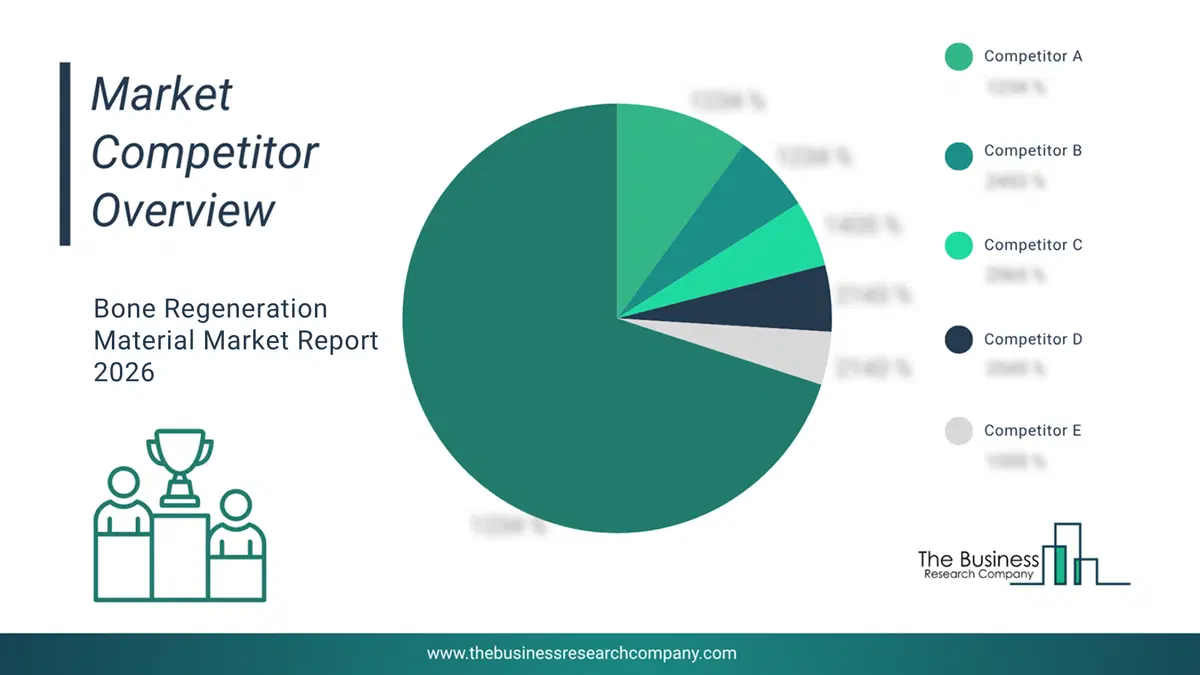
This chart is for illustrative purposes; the full report includes a detailed competitor analysis and comprehensive overview of the top 10 companies in the market.
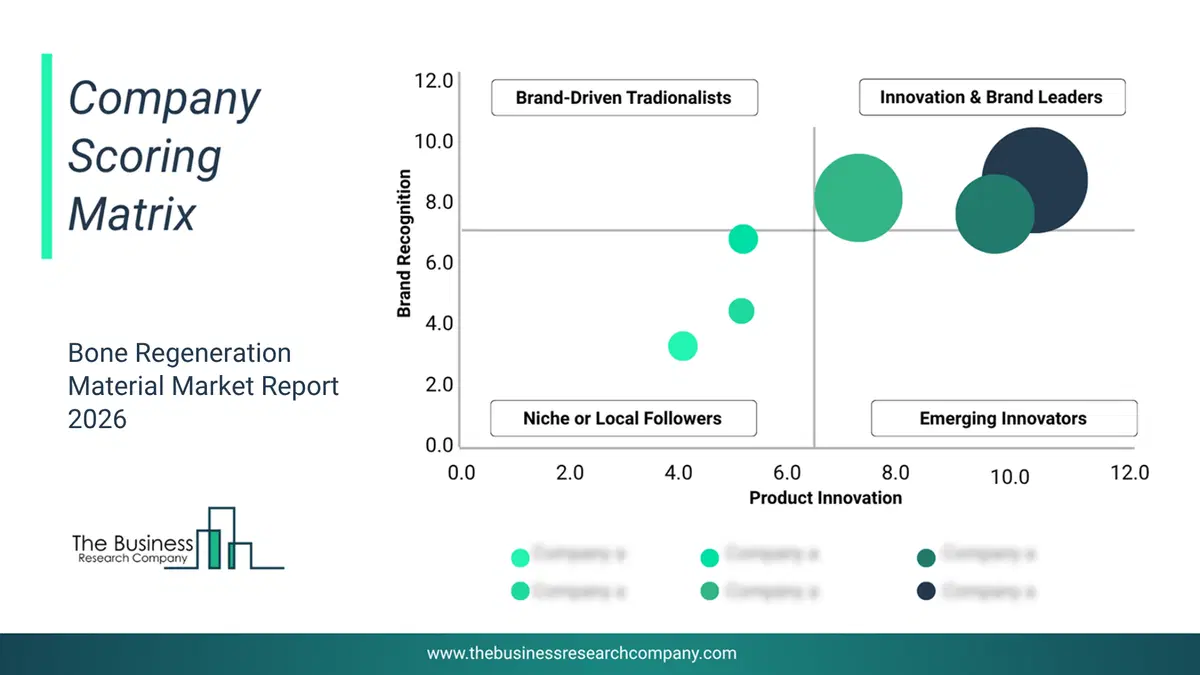
This chart maps companies by product innovation and brand strength, with bubble size indicating relative revenue, helping identify market leaders, challengers, and niche players. This is an illustrative chart; the full report provides a complete and accurate competitive analysis.
Global Bone Regeneration Material Market Trends and Insights
Major companies operating in the bone regeneration material market are focusing on developing innovative solutions, such as synthetic bone graft substitutes to enhance bone healing and regeneration. A synthetic bone graft substitute is a man-made material used to replace or repair damaged bone tissue, promoting healing and bone regeneration in medical procedures. For instance, in May 2023, Royal Biologics, a US-based medical device and life sciences company, launched Bio-Reign 3D, an innovative bone graft substitute featuring a natural hyper-crosslinked carbohydrate polymer that creates a highly porous, interconnected 3D matrix to support bone regeneration. Designed for orthopedic use, Bio-Reign 3D offers excellent moldability, compressibility, and can be sutured to prevent graft migration. It is radiolucent upon implantation for clear imaging and becomes radiopaque as new bone forms, allowing real-time monitoring of healing. Its biodegradation rate aligns with natural bone formation, ensuring gradual replacement by healthy bone.What Are Latest Mergers And Acquisitions In The Bone Regeneration Material Market?
In June 2023, Biocomposites, a UK-based medical device company, acquired Artoss GmbH for an undisclosed amount. With this acquisition, Biocomposites aims to enhance its portfolio with the proprietary NanoBone technology, providing a differentiated offering to help surgeons treat patients with bone regeneration needs and to expand the reach of Artoss' innovative bone graft substitutes through Biocomposites' established global distribution network. Artoss GmbH is a Germany-based medical technology company that specializes in making synthetic bone graft materials that help bones heal and grow.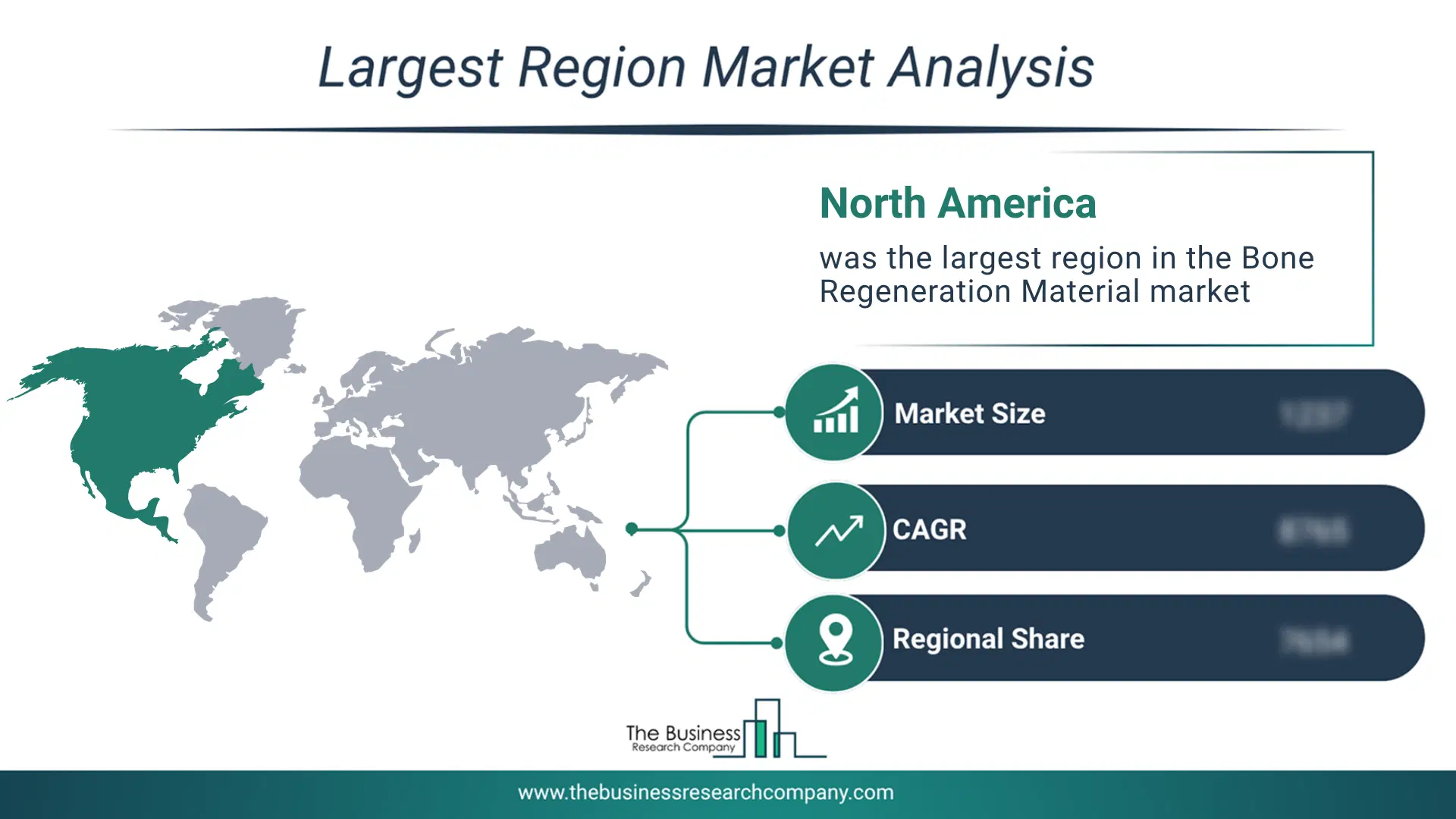
Regional Outlook
North America was the largest region in the bone regeneration material market in 2025. Asia-Pacific is expected to be the fastest-growing region in the forecast period. The regions covered in this market report are Asia-Pacific, South East Asia, Western Europe, Eastern Europe, North America, South America, Middle East, Africa. The countries covered in this market report are Australia, Brazil, China, France, Germany, India, Indonesia, Japan, Taiwan, Russia, South Korea, UK, USA, Canada, Italy, SpainWhat Defines the Bone Regeneration Material Market?
The bone regeneration material market includes sales of bone grafts, barrier membranes, scaffolds, fixation devices, bone morphogenetic proteins, and stem cell-enriched matrices. Values in this market are ‘factory gate’ values, that is, the value of goods sold by the manufacturers or creators of the goods, whether to other entities (including downstream manufacturers, wholesalers, distributors, and retailers) or directly to end customers. The value of goods in this market includes related services sold by the creators of the goods.How is Market Value Defined and Measured?
The market value is defined as the revenues that enterprises gain from the sale of goods and/or services within the specified market and geography through sales, grants, or donations in terms of the currency (in USD unless otherwise specified). The revenues for a specified geography are consumption values that are revenues generated by organizations in the specified geography within the market, irrespective of where they are produced. It does not include revenues from resales along the supply chain, either further along the supply chain or as part of other products.
This chart presents market attractiveness based on a quantitative evaluation of growth, competition, strategic alignment, and risk, offering a clear view of opportunity areas for decision-making. This chart is for illustrative purposes; the full report contains the complete analysis.

This chart highlights the Total Addressable Market (TAM) by estimating the maximum revenue opportunity using an assumption-driven approach, supporting strategic planning and opportunity sizing across markets. The chart is illustrative; the full report provides a more comprehensive analysis.
What Key Data and Analysis Are Included in the Bone Regeneration Material Market Report 2026?
The bone regeneration material market research report is one of a series of new reports from The Business Research Company that provides market statistics, including industry global market size, regional shares, competitors with the market share, detailed market segments, market trends and opportunities, and any further data you may need to thrive in the bone regeneration material industry. The market research report delivers a complete perspective of everything you need, with an in-depth analysis of the current and future state of the industry.Bone Regeneration Material Market Report Forecast Analysis
| Report Attribute | Details |
|---|---|
| Market Size Value In 2026 | $4.49 billion |
| Revenue Forecast In 2030 | $6.45 billion |
| Growth Rate | CAGR of 9.5% from 2026 to 2030 |
| Base Year For Estimation | 2025 |
| Actual Estimates/Historical Data | 2020-2025 |
| Forecast Period | 2026 - 2030 |
| Market Representation | Revenue in USD Billion and CAGR from 2026 to 2030 |
| Segments Covered | Product, Technology, Delivery Method, Application, End-User |
| Regional Scope | Asia-Pacific, Western Europe, Eastern Europe, North America, South America, Middle East, Africa |
| Country Scope | The countries covered in the report are Australia, Brazil, China, France, Germany, India, Indonesia, Japan, Taiwan, Russia, South Korea, UK, USA, Canada, Italy, Spain. |
| Key Companies Profiled | Johnson & Johnson, Medtronic plc, Stryker Corporation, Zimmer Biomet, Smith & Nephew plc, Dentsply Sirona Inc., Straumann Holding AG, Integra LifeSciences Corporation, Osstem Implant, Exactech Inc., LifeNet Health, Orthofix Medical Inc., Biocomposites Ltd., NuVasive Inc., Xtant Medical Holdings Inc., Kuros Biosciences AG, LASAK s.r.o., NovaBone Products LLC, SigmaGraft, B&B Dental, Geistlich Pharma AG, RTI Surgical, Collagen Matrix Inc., DePuy Synthes, Wright Medical Group |
| Customization Scope | Request for Customization |
| Pricing And Purchase Options | Explore Purchase Options |