

Bone Void Fillers Market Report 2026
Global Outlook – By Type (Demineralized Bone Matrix, Calcium phosphate Bone Graft Substitute, Collagen Matrix, Other Types), By Form (Gel And Putty, Granules, Other Forms), By Application (Bone Fracture, Spine Fusion, Other Applications), By End-User (Hospital, Specialty Clinics) – Market Size, Trends, Strategies, and Forecast to 2030
Bone Void Fillers Market Overview
• Bone Void Fillers market size has reached to $3.78 billion in 2025 • Expected to grow to $5.18 billion in 2030 at a compound annual growth rate (CAGR) of 6.5% • Growth Driver: Growing Burden Of Bone Diseases Fueling Growth In The Bone Void Fillers Market • Market Trend: Advancements In Bone Healing Through Carbohydrate Polymer Technologies • North America was the largest region in 2025.What Is Covered Under Bone Void Fillers Market?
Bone void fillers are materials used to fill defects or discontinuities in bone tissue, often resulting from pathologic processes such as trauma, degenerative, or neoplastic conditions. These fillers can be synthetic or natural, and they provide an osteoconductive matrix to facilitate bone healing. The main types of bone void fillers are demineralized bone matrix, calcium phosphate bone graft substitute, collagen matrix, and others. Calcium-phosphate bone graft substitutes are usually either tricalcium phosphate or hydroxyapatite, which is the primary mineral in bone. The various types of forms include gel and putty, granules, and others. These are used in various applications such as bone fracture, spine fusion, others and also by various end-users such as hospitals, and specialty clinics.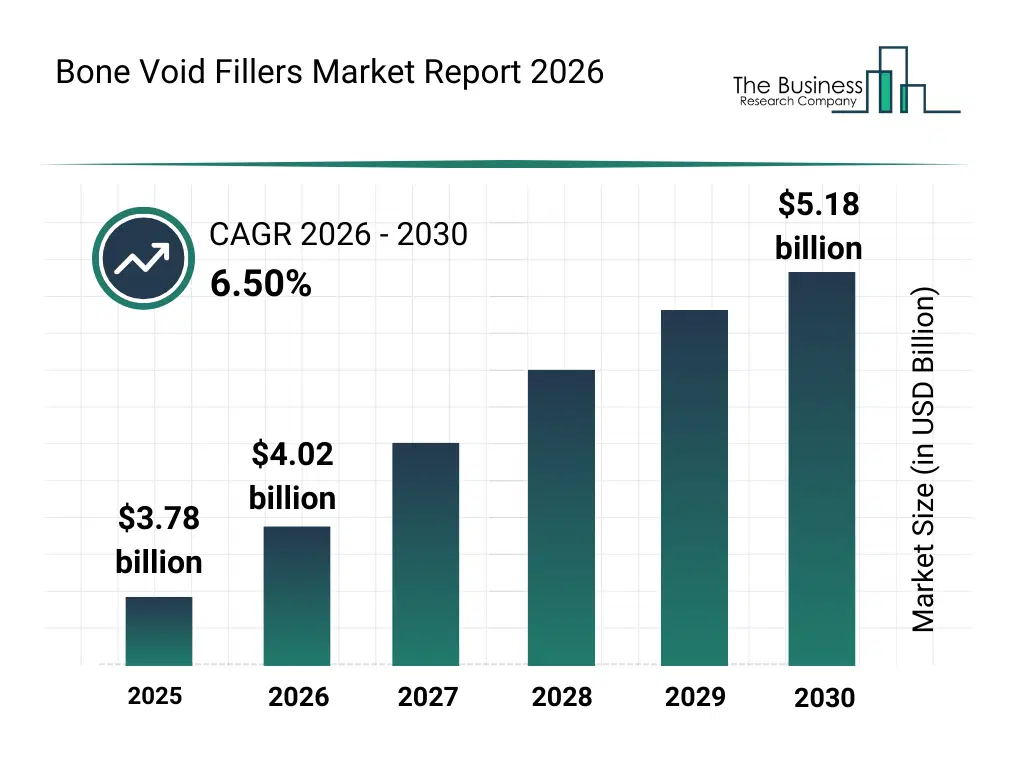
What Is The Bone Void Fillers Market Size and Share 2026?
The bone void fillers market size has grown strongly in recent years. It will grow from $3.78 billion in 2025 to $4.02 billion in 2026 at a compound annual growth rate (CAGR) of 6.5%. The growth in the historic period can be attributed to increasing incidence of bone fractures and trauma, rising orthopedic surgical volumes, growing use of demineralized bone matrix, expansion of spinal fusion procedures, availability of advanced biomaterials.What Is The Bone Void Fillers Market Growth Forecast?
The bone void fillers market size is expected to see strong growth in the next few years. It will grow to $5.18 billion in 2030 at a compound annual growth rate (CAGR) of 6.5%. The growth in the forecast period can be attributed to increasing aging population, rising demand for minimally invasive bone repair solutions, expansion of sports injury treatments, growing adoption of bioactive graft materials, increasing focus on regenerative medicine. Major trends in the forecast period include increasing adoption of synthetic bone graft substitutes, rising use of injectable bone void fillers, growing preference for osteoconductive biomaterials, expansion of minimally invasive orthopedic procedures, enhanced focus on faster bone regeneration.
Global Bone Void Fillers Market Segmentation
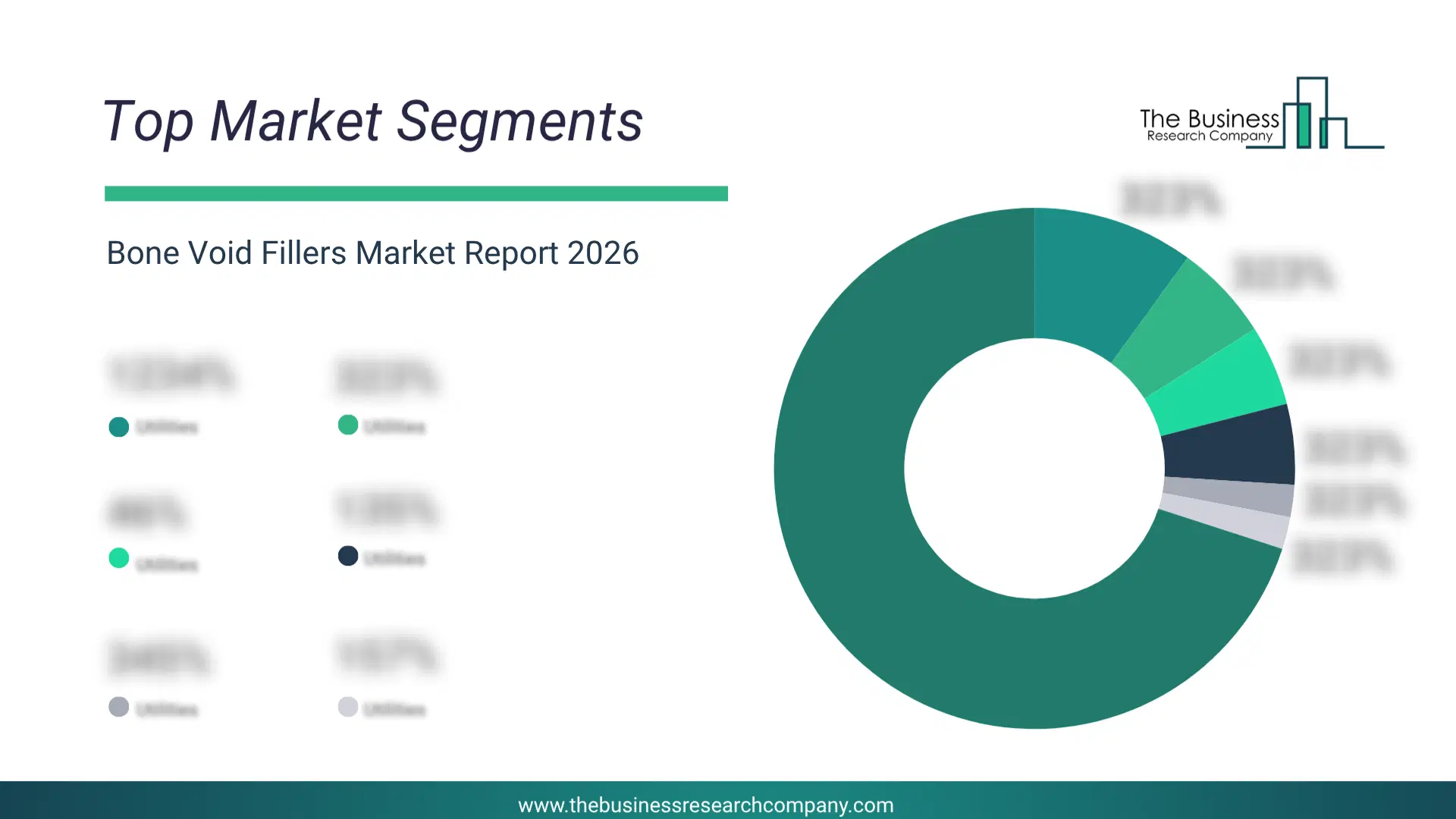
1) By Type: Demineralized Bone Matrix, Calcium phosphate Bone Graft Substitute, Collagen Matrix, Other Types 2) By Form: Gel And Putty, Granules, Other Forms 3) By Application: Bone Fracture, Spine Fusion, Other Applications 4) By End-User: Hospital, Specialty Clinics Subsegments: 1) By Demineralized Bone Matrix: Freeze-Dried Demineralized Bone Matrix (FDBM), Demineralized Bone Matrix Putty 2) By Calcium Phosphate Bone Graft Substitute: Hydroxyapatite, Tricalcium Phosphate 3) By Collagen Matrix: Collagen-Based Gel, Collagen-Based Sponge 4) By Other Types: Synthetic Bone Graft Substitutes, Bone Morphogenetic Proteins (BMPs)What Is The Driver Of The Bone Void Fillers Market?
The growing burden of bone diseases is expected to propel the growth of the bone void filler market going forward. Bone diseases are medical conditions that affect the structure and function of the bones, leading to abnormalities such as weakness, deformity, pain, and impaired growth or repair. Bone void fillers are useful for treating bone diseases by promoting bone growth and repair in areas where bone is damaged by promoting quicker healing, reducing pain, and enhancing the overall success of bone-related treatments. For instance, in August 2023, according to the Institute for Health Metrics and Evaluation (IHME), a US-based research institution, projections indicate that almost 1 billion individuals are expected to suffer from osteoarthritis, with knee osteoarthritis expected to rise by 75% and hand osteoarthritis by 50% by 2050. Therefore, the growing burden of bone diseases is driving the growth of the bone void filler industry.Key Players In The Global Bone Void Fillers Market
Major companies operating in the bone void fillers market are Johnson & Johnson, Medtronic plc, Heraeus Group, Stryker Corporation, Huntsman Corporation, Zimmer Biomet Holdings Inc., Smith and Nephew plc, Arthrex Inc., Globus Medical Inc., NuVasive Inc., Orthofix Medical Inc., Biocomposites Ltd., Aziyo Biologics Inc., Bone Support AB, Collagen Matrix Inc., Royal Biologics Inc., FlexForm Technologies, Orthorebirth Co. Ltd, Vivex Biologics, Mitsubishi Tanabe Pharma Corporation, OsteoBiologics Inc., Bacterin International Inc.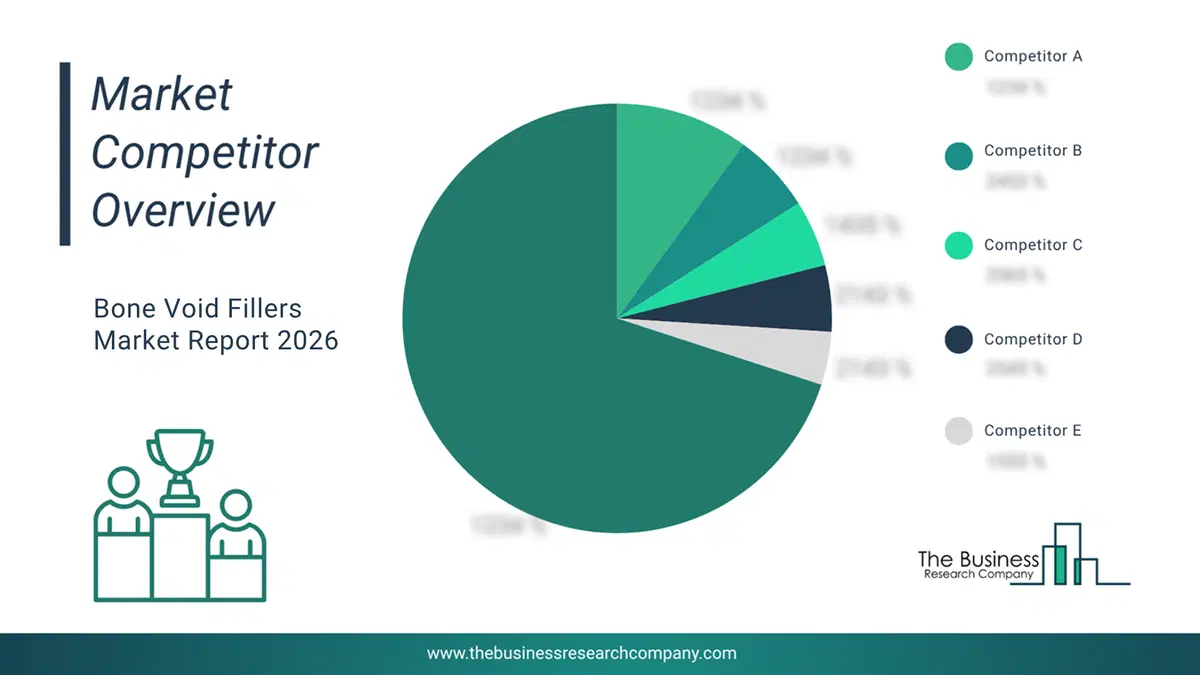
This chart is for illustrative purposes; the full report includes a detailed competitor analysis and comprehensive overview of the top 10 companies in the market.
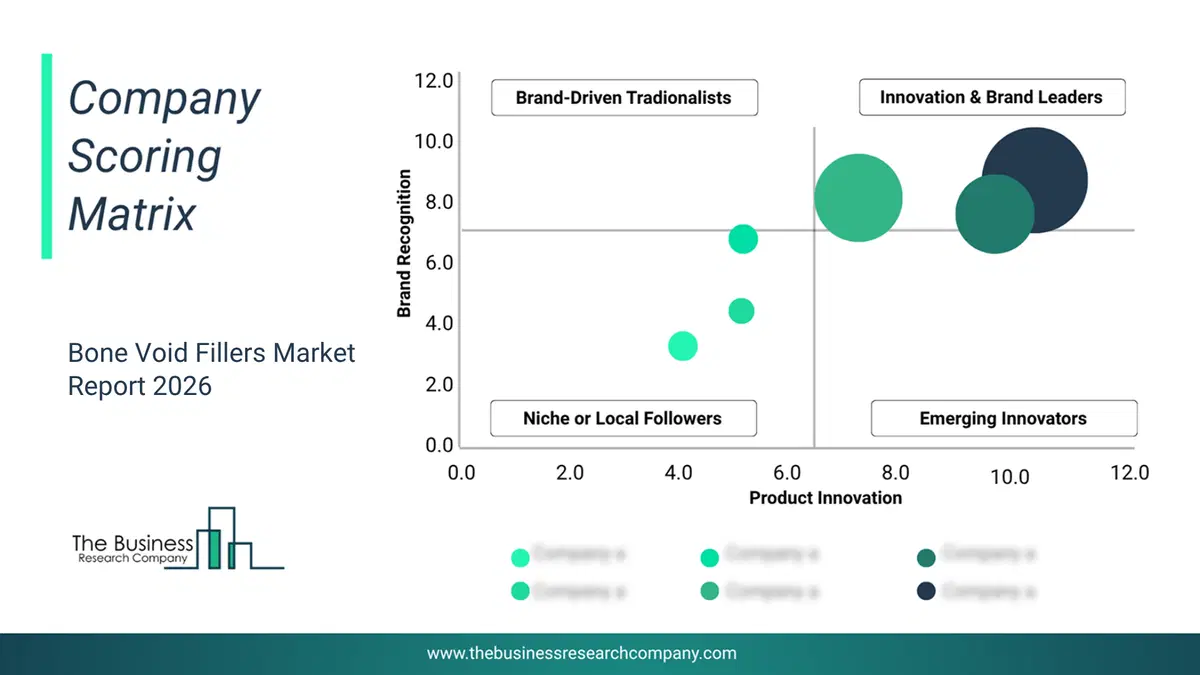
This chart maps companies by product innovation and brand strength, with bubble size indicating relative revenue, helping identify market leaders, challengers, and niche players. This is an illustrative chart; the full report provides a complete and accurate competitive analysis.
Global Bone Void Fillers Market Trends and Insights
Major companies operating in the bone void fillers market are focused on developing innovative products, such as carbohydrate polymer bone graft substitutes, to increase their profitability in the market. A carbohydrate polymer bone graft substitute used as a bone void filler is a synthetic material engineered to mimic the structure of natural bone, promoting the body's bone healing and regeneration processes in areas where bone loss has occurred. For instance, in May 2023, Royal Biologics, a US-based orthobiologics and life science company, launched Bio-Reign 3D, a bone graft substitute made from a hyper-crosslinked natural carbohydrate polymer. It offers an optimal environment for cell growth and blood vessel formation, aiding in bone regeneration. This innovative material transitions from radiolucent to radiopaque as healing progresses, allowing for monitoring of the healing process. It also boasts superior compression, tensile strength, and ease of use, ensuring effective shaping and application of the graft.What Are Latest Mergers And Acquisitions In The Bone Void Fillers Market?
In April 2023, Henry Schein Inc., a US-based healthcare company, acquired a majority ownership stake in Biotech Dental SAS for an undisclosed amount. Through this acquisition, Henry Schein aims to enhance digital integration between Biotech Dental's innovative software and its product suite, fostering streamlined workflows and improved patient outcomes while driving global expansion in the implant and orthodontics sectors. Biotech Dental is a France-based provider of bone void fillers.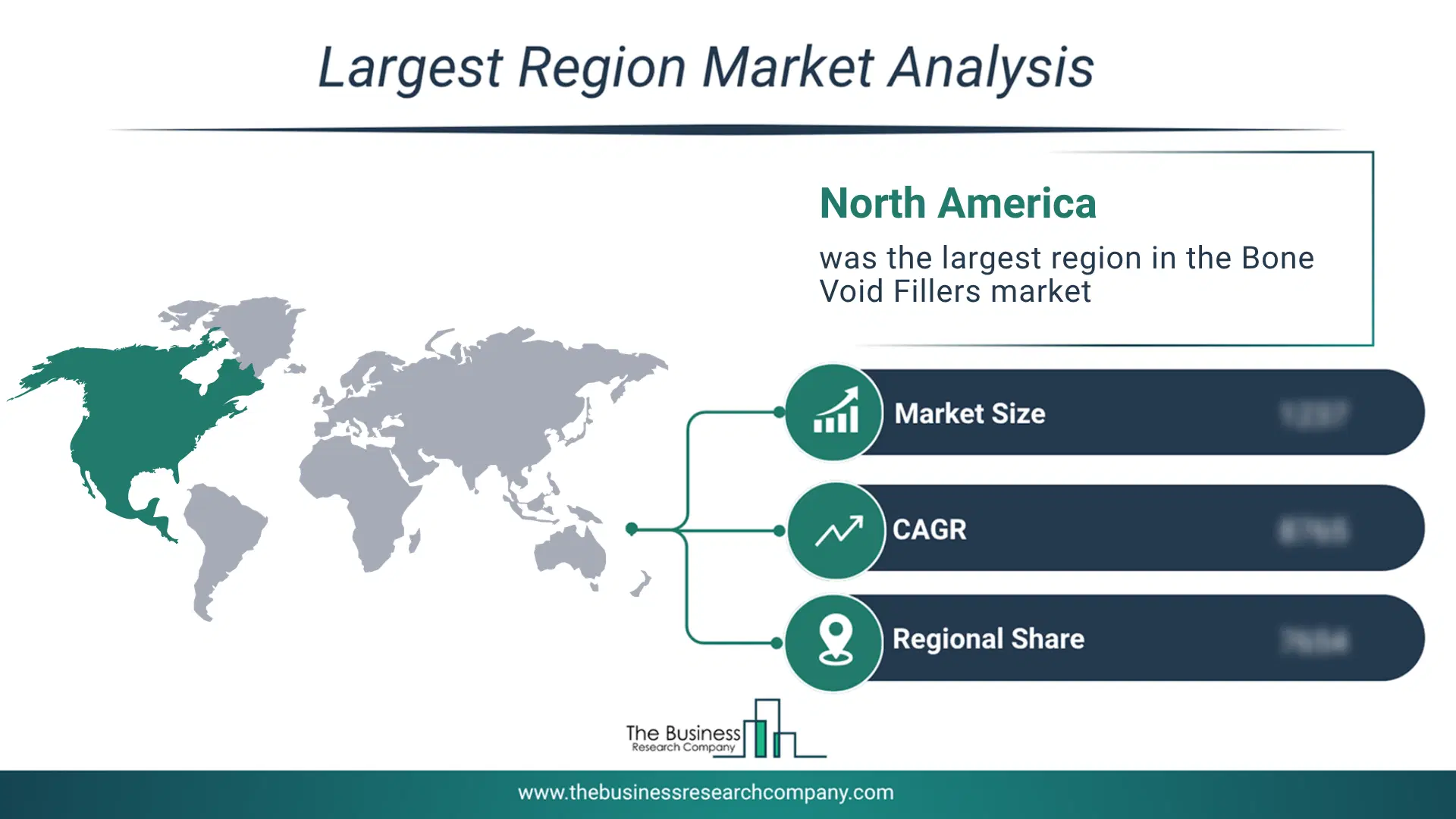
Regional Outlook
North America was the largest region in the bone void fillers market in 2025. The regions covered in this market report are Asia-Pacific, South East Asia, Western Europe, Eastern Europe, North America, South America, Middle East, Africa. The countries covered in this market report are Australia, Brazil, China, France, Germany, India, Indonesia, Japan, Taiwan, Russia, South Korea, UK, USA, Canada, Italy, SpainWhat Defines the Bone Void Fillers Market?
The bone void filler market consists of sales of demineralized bone matrix, bioactive glass, bone morphogenetic proteins, and human bone (autografts and allografts). Values in this market are ‘factory gate’ values, that is the value of goods sold by the manufacturers or creators of the goods, whether to other entities (including downstream manufacturers, wholesalers, distributors, and retailers) or directly to end customers. The value of goods in this market includes related services sold by the creators of the goods.How is Market Value Defined and Measured?
The market value is defined as the revenues that enterprises gain from the sale of goods and/or services within the specified market and geography through sales, grants, or donations in terms of the currency (in USD unless otherwise specified). The revenues for a specified geography are consumption values that are revenues generated by organizations in the specified geography within the market, irrespective of where they are produced. It does not include revenues from resales along the supply chain, either further along the supply chain or as part of other products.
This chart presents market attractiveness based on a quantitative evaluation of growth, competition, strategic alignment, and risk, offering a clear view of opportunity areas for decision-making. This chart is for illustrative purposes; the full report contains the complete analysis.

This chart highlights the Total Addressable Market (TAM) by estimating the maximum revenue opportunity using an assumption-driven approach, supporting strategic planning and opportunity sizing across markets. The chart is illustrative; the full report provides a more comprehensive analysis.
What Key Data and Analysis Are Included in the Bone Void Fillers Market Report 2026?
The bone void fillers market research report is one of a series of new reports from The Business Research Company that provides market statistics, including industry global market size, regional shares, competitors with the market share, detailed market segments, market trends and opportunities, and any further data you may need to thrive in the bone void fillers industry. The market research report delivers a complete perspective of everything you need, with an in-depth analysis of the current and future state of the industry.Bone Void Fillers Market Report Forecast Analysis
| Report Attribute | Details |
|---|---|
| Market Size Value In 2026 | $4.02 billion |
| Revenue Forecast In 2030 | $5.18 billion |
| Growth Rate | CAGR of 6.5% from 2026 to 2030 |
| Base Year For Estimation | 2025 |
| Actual Estimates/Historical Data | 2020-2025 |
| Forecast Period | 2026 - 2030 |
| Market Representation | Revenue in USD Billion and CAGR from 2026 to 2030 |
| Segments Covered | Type, Form, Application, End-User |
| Regional Scope | Asia-Pacific, Western Europe, Eastern Europe, North America, South America, Middle East, Africa |
| Country Scope | The countries covered in the report are Australia, Brazil, China, France, Germany, India, Indonesia, Japan, Taiwan, Russia, South Korea, UK, USA, Canada, Italy, Spain. |
| Key Companies Profiled | Johnson & Johnson, Medtronic plc, Heraeus Group, Stryker Corporation, Huntsman Corporation, Zimmer Biomet Holdings Inc., Smith and Nephew plc, Arthrex Inc., Globus Medical Inc., NuVasive Inc., Orthofix Medical Inc., Biocomposites Ltd., Aziyo Biologics Inc., Bone Support AB, Collagen Matrix Inc., Royal Biologics Inc., FlexForm Technologies, Orthorebirth Co. Ltd, Vivex Biologics, Mitsubishi Tanabe Pharma Corporation, OsteoBiologics Inc., Bacterin International Inc. |
| Customization Scope | Request for Customization |
| Pricing And Purchase Options | Explore Purchase Options |