
Boronate Affinity Tests Market Report 2026
Global Outlook – By Product Type (Test Kits, Instruments, Consumables), By Technology (Fluorescence Based Tests, Colorimetric Assays, Electrochemical Methods), By End User (Diagnostics Laboratories, Research Institutes, Pharmaceutical And Biotechnology Companies) - Market Size, Trends, Strategies, and Forecast to 2030
Boronate Affinity Tests Market Overview
• Boronate Affinity Tests market size has reached to $3.81 billion in 2025 • Expected to grow to $6.08 billion in 2030 at a compound annual growth rate (CAGR) of 9.8% • Growth Driver: Rising Diabetes Rates Drive Growth In Boronate Affinity Testing Market • North America was the largest region in 2025 and Asia-Pacific is the fastest growing region.What Is Covered Under Boronate Affinity Tests Market?
Boronate affinity tests are used to study the interactions between boron-containing compounds and molecules with diol or other cis-diol functional groups. These tests leverage the unique ability of boronate esters to form reversible covalent bonds with diol groups, which is useful for various applications such as protein and carbohydrate analysis and drug development. The main product types of boronate affinity tests are test kits, instruments, and consumables. Test kits for boronate affinity tests are pre-packaged sets that include all necessary reagents and materials to perform the test, designed to detect specific compounds, like glycated proteins, using boronate affinity technology. The technologies are categorized into fluorescence-based tests, colorimetric assays, and electrochemical methods for indications such as type 1 diabetes and type 2 diabetes. The end users include hospitals and clinics, diagnostic laboratories, research institutes, and pharmaceutical and biotechnology companies.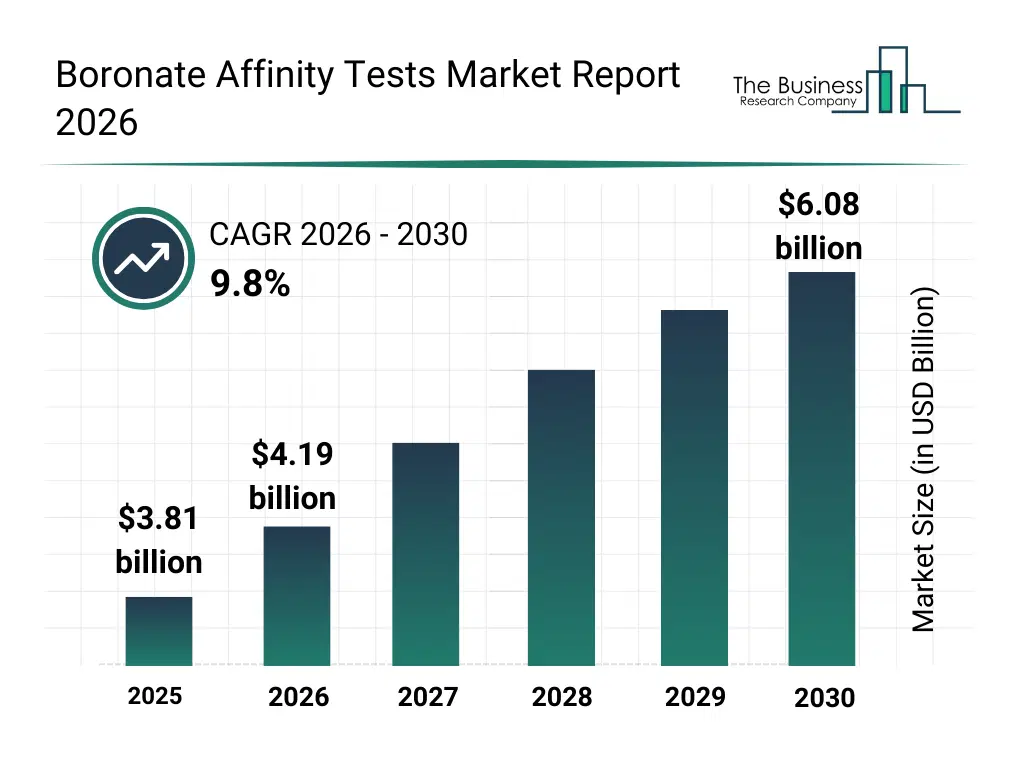
What Is The Boronate Affinity Tests Market Size and Share 2026?
The boronate affinity tests market size has grown strongly in recent years. It will grow from $3.81 billion in 2025 to $4.19 billion in 2026 at a compound annual growth rate (CAGR) of 9.9%. The growth in the historic period can be attributed to increasing prevalence of diabetes diagnostics, expansion of proteomics research activities, growing pharmaceutical R&D investments, adoption of affinity chromatography techniques, increased use of biomarker-based testing.What Is The Boronate Affinity Tests Market Growth Forecast?
The boronate affinity tests market size is expected to see strong growth in the next few years. It will grow to $6.08 billion in 2030 at a compound annual growth rate (CAGR) of 9.8%. The growth in the forecast period can be attributed to increasing demand for precision diagnostics, rising adoption of automated laboratory workflows, growing focus on early disease detection, expansion of personalized medicine research, increasing integration of advanced analytical platforms. Major trends in the forecast period include increasing adoption of boronate-based glycoprotein analysis, rising demand for high-specificity affinity assays, growing use of automated boronate affinity instruments, expansion of drug discovery applications, enhanced focus on high-throughput testing.
Global Boronate Affinity Tests Market Segmentation
1) By Product Type: Test Kits, Instruments, Consumables 2) By Technology: Fluorescence Based Tests, Colorimetric Assays, Electrochemical Methods 3) By End User: Diagnostics Laboratories, Research Institutes, Pharmaceutical And Biotechnology Companies Subsegments: 1) By Test Kits: Boronate Affinity Glycoprotein Test Kits, Boronate Affinity Drug Detection Test Kits, Boronate Affinity Biomarker Test Kits 2) By Instruments: Boronate Affinity Chromatography Systems, Automated Boronate Affinity Test Analyzers 3) By Consumables: Boronate Affinity Resin Columns, Boronate Affinity MembranesWhat Are The Drivers Of The Boronate Affinity Tests Market?
The increasing diabetic population is expected to propel the growth of the boronate affinity tests market going forward. Diabetes is a chronic medical condition characterized by high blood glucose levels due to the body's inability to produce or effectively use insulin. The diabetes cases are rising due to poor diet, especially high consumption of processed foods and sugary drinks, and sedentary lifestyles characterized by minimal physical activity. Moreover, the aging population and family history of diabetes increase the risk, indicating a genetic predisposition. Boronate affinity tests are used in diabetes management to accurately measure glycated proteins, providing a reliable indicator of long-term blood glucose control. For instance, in June 2023, according to the data published by The Lancet, a UK-based book and periodic data publishing organization, global diabetes cases are projected to increase to 1.3 billion by 2050. Therefore, the increasing diabetic population will drive the growth of the boronate affinity tests industry. The increasing focus on personalized medicine is expected to propel the growth of the boronate affinity tests market going forward. Personalized medicine customizes healthcare using individual genetic, environmental, and lifestyle information to optimize treatment outcomes. The growing emphasis on personalized medicine is fueled by a better understanding of genetic variations and their health impacts, as well as advancements in diagnostic tools and progress in data analysis, bioinformatics, and precision medicine technologies. Boronate affinity tests in personalized medicine are used for precise monitoring of glycation levels in patients, aiding in tailored diabetes management and treatment plans. For instance, in February 2024, according to the Personalized Medicine Coalition, a US-based non-profit organization, the FDA approved 16 novel personalized therapies for patients with rare diseases in 2023, compared to six in 2022. Moreover, it includes seven drugs tailored for cancer treatment and three targeting different diseases and conditions. Therefore, the increasing focus on personalized medicine will drive the growth of the boronate affinity tests industry.Key Players In The Global Boronate Affinity Tests Market
Major companies operating in the boronate affinity tests market are F. Hoffmann-La Roche Ltd, Thermo Fisher Scientific Inc., Abbott Laboratories, Siemens Healthineers, Merck KGaA, Tosoh Corporation, Agilent Technologies Inc, Bio-Rad Laboratories Inc, ARKRAY Inc, EKF Diagnostics Holdings plc, Trinity Biotech, SeraCare Life Sciences Inc, Medix Biochemica, Biosynth, Santa Cruz Biotechnology, A Menarini Diagnostics Srl, Diazyme Laboratories Inc, Bioventix PLC, GenWay Biotech Inc, Alere Inc, Green Cross Holdings Corp., HemoCue AB, PTS Diagnostics, Diatheva, OSANG Healthcare Co Ltd, Cypress Diagnostics, Goldsite Diagnostics Inc
This chart is for illustrative purposes; the full report includes a detailed competitor analysis and comprehensive overview of the top 10 companies in the market.
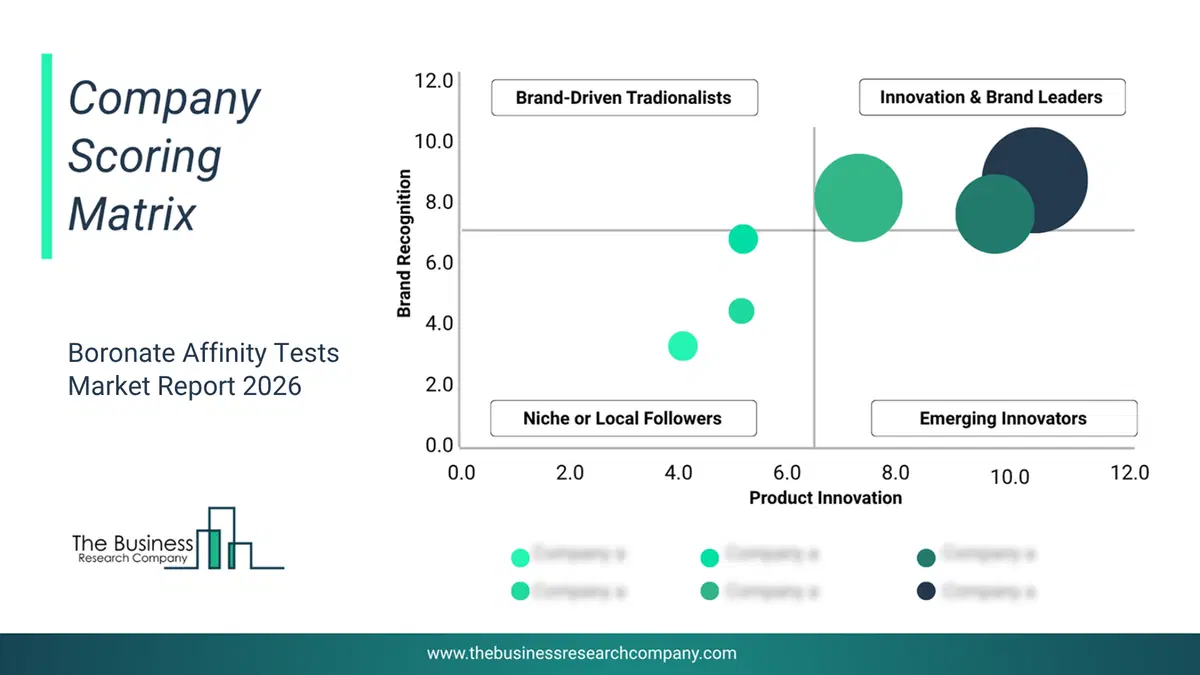
This chart maps companies by product innovation and brand strength, with bubble size indicating relative revenue, helping identify market leaders, challengers, and niche players. This is an illustrative chart; the full report provides a complete and accurate competitive analysis.
What Are Latest Mergers And Acquisitions In The Boronate Affinity Tests Market?
In December 2023, Shenzhen Mindray Bio-Medical Electronics Co., Ltd., a China-based medical technology provider, acquired a 75% stake in DiaSys Diagnostic Systems GmbH for an undisclosed amount. The acquisition aims to boost Mindray's global position in the In vitro diagnostics (IVD) sector by utilizing DiaSys's established supply chains and clinical chemistry expertise. DiaSys Diagnostic Systems GmbH is a Germany-based diagnostic system manufacturer offering HbA1c analyzers tests that uses boronate affinity chromatography.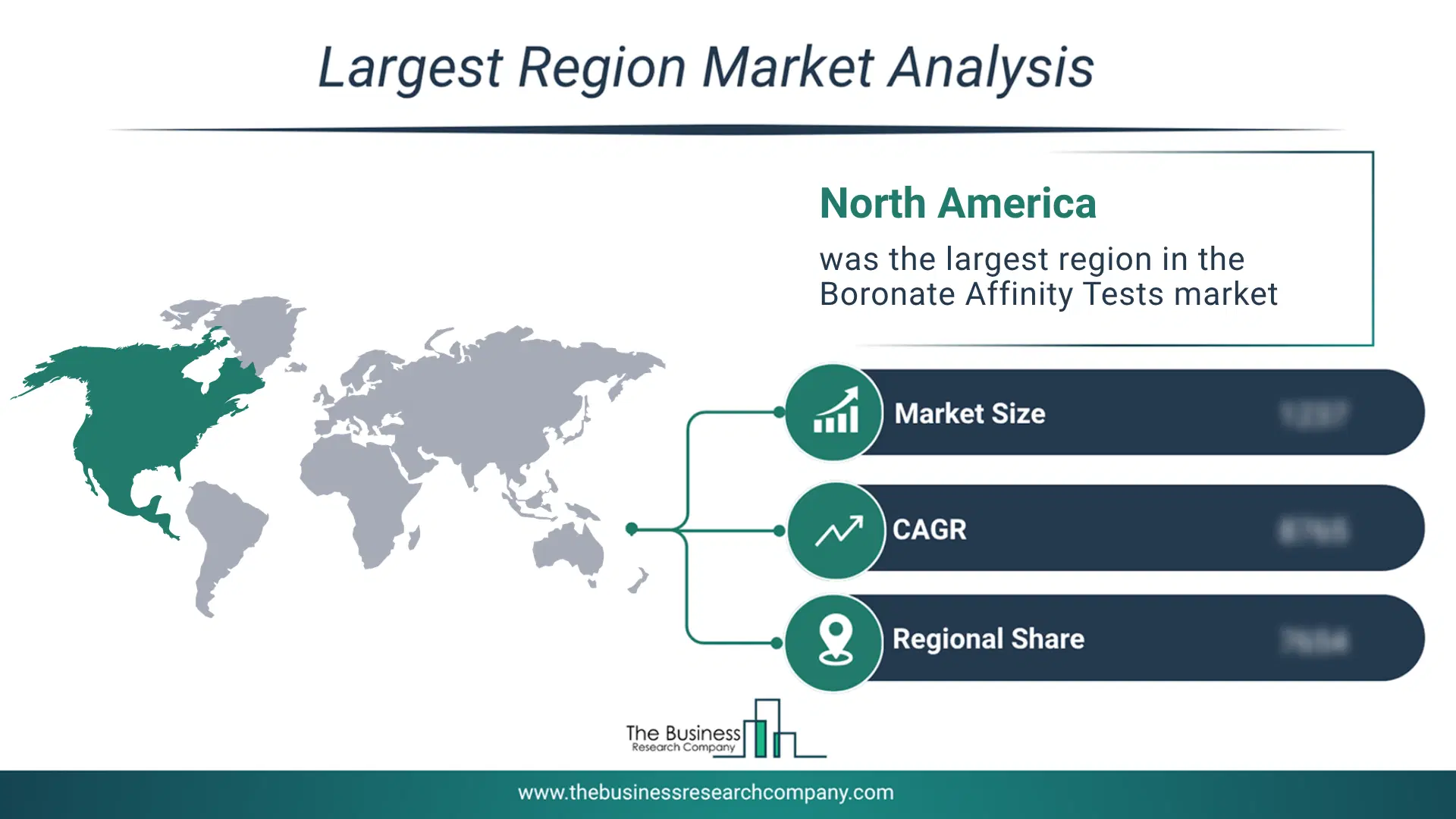
Regional Outlook
North America was the largest region in the boronate affinity tests market in 2025. Asia-Pacific is expected to be the fastest-growing region in the forecast period. The regions covered in this market report are Asia-Pacific, South East Asia, Western Europe, Eastern Europe, North America, South America, Middle East, Africa. The countries covered in this market report are Australia, Brazil, China, France, Germany, India, Indonesia, Japan, Taiwan, Russia, South Korea, UK, USA, Canada, Italy, Spain.What Defines the Boronate Affinity Tests Market?
The boronate affinity tests market consists of revenues earned by entities by providing services such as glycoprotein and carbohydrate detection, glycosylation pattern analysis, and biomolecule isolation using boronic acid derivatives. The market value includes the value of related goods sold by the service provider or included within the service offering. The boronate affinity tests market also includes sales of boronate affinity columns, boronate affinity resins, boronate affinity kits, detection reagents, assay plates, instrumentation and calibration standards. Values in this market are ‘factory gate’ values, that is the value of goods sold by the manufacturers or creators of the goods, whether to other entities (including downstream manufacturers, wholesalers, distributors and retailers) or directly to end customers. The value of goods in this market includes related services sold by the creators of the goods.How is Market Value Defined and Measured?
The market value is defined as the revenues that enterprises gain from the sale of goods and/or services within the specified market and geography through sales, grants, or donations in terms of the currency (in USD unless otherwise specified). The revenues for a specified geography are consumption values that are revenues generated by organizations in the specified geography within the market, irrespective of where they are produced. It does not include revenues from resales along the supply chain, either further along the supply chain or as part of other products.
This chart presents market attractiveness based on a quantitative evaluation of growth, competition, strategic alignment, and risk, offering a clear view of opportunity areas for decision-making. This chart is for illustrative purposes; the full report contains the complete analysis.

This chart highlights the Total Addressable Market (TAM) by estimating the maximum revenue opportunity using an assumption-driven approach, supporting strategic planning and opportunity sizing across markets. The chart is illustrative; the full report provides a more comprehensive analysis.
What Key Data and Analysis Are Included in the Boronate Affinity Tests Market Report 2026?
The boronate affinity tests market research report is one of a series of new reports from The Business Research Company that provides market statistics, including industry global market size, regional shares, competitors with the market share, detailed market segments, market trends and opportunities, and any further data you may need to thrive in the boronate affinity tests industry. The market research report delivers a complete perspective of everything you need, with an in-depth analysis of the current and future state of the industry.Boronate Affinity Tests Market Report Forecast Analysis
| Report Attribute | Details |
|---|---|
| Market Size Value In 2026 | $4.19 billion |
| Revenue Forecast In 2030 | $6.08 billion |
| Growth Rate | CAGR of 9.8% from 2026 to 2030 |
| Base Year For Estimation | 2025 |
| Actual Estimates/Historical Data | 2020-2025 |
| Forecast Period | 2026 - 2030 |
| Market Representation | Revenue in USD Billion and CAGR from 2026 to 2030 |
| Segments Covered | Product Type, Technology, End User |
| Regional Scope | Asia-Pacific, Western Europe, Eastern Europe, North America, South America, Middle East, Africa |
| Country Scope | The countries covered in the report are Australia, Brazil, China, France, Germany, India, Indonesia, Japan, Taiwan, Russia, South Korea, UK, USA, Canada, Italy, Spain |
| Key Companies Profiled | F. Hoffmann-La Roche Ltd, Thermo Fisher Scientific Inc., Abbott Laboratories, Siemens Healthineers, Merck KGaA, Tosoh Corporation, Agilent Technologies Inc, Bio-Rad Laboratories Inc, ARKRAY Inc, EKF Diagnostics Holdings plc, Trinity Biotech, SeraCare Life Sciences Inc, Medix Biochemica, Biosynth, Santa Cruz Biotechnology, A Menarini Diagnostics Srl, Diazyme Laboratories Inc, Bioventix PLC, GenWay Biotech Inc, Alere Inc, Green Cross Holdings Corp., HemoCue AB, PTS Diagnostics, Diatheva, OSANG Healthcare Co Ltd, Cypress Diagnostics, Goldsite Diagnostics Inc |
| Customization Scope | Request for Customization |
| Pricing And Purchase Options | Explore Purchase Options |