
Botanical Soda Alternatives Market Report 2026
Global Outlook – By Product Type (Sparkling Botanical Sodas, Still Botanical Sodas, Botanical Tonic Waters, Botanical Infused Seltzers, Other Product Types), By Flavor (Herbal, Floral, Citrus, Spice, Other Flavors), By Packaging (Bottles, Cans, Cartons, Other Packagings), By Distribution Channel (Supermarkets And Hypermarkets, Convenience Stores, Online Retail Platforms, Specialty Stores, Food Service Outlets), By End User (Individual Consumers, Health Conscious Consumers, Fitness And Wellness Enthusiasts, Hospitality Industry, Other End Users) – Market Size, Trends, Strategies, and Forecast to 2035
Botanical Soda Alternatives Market Overview
• Botanical Soda Alternatives market size has reached to $1.82 billion in 2025 • Expected to grow to $2.7 billion in 2030 at a compound annual growth rate (CAGR) of 8.3% • Growth Driver: Rising Demand For Plant-Based And Functional Beverages Driving The Market Growth Due To Growing Health Consciousness Among Consumers • Market Trend: Shift Toward Health-Driven, Plant-Based Carbonated Drink Formulations • North America was the largest region in 2025 and Asia-Pacific is the fastest growing region.What Is Covered Under Botanical Soda Alternatives Market?
Botanical soda alternatives refer to non-alcoholic carbonated beverages formulated using plant-based ingredients such as herbs, flowers, roots, and botanical extracts. These drinks are designed to provide refreshing flavor profiles while often emphasizing natural, functional, or wellness-oriented properties. They serve as substitutes for traditional sodas by offering lower sugar content, clean-label ingredients, and distinctive botanical taste experiences. The main product types of botanical soda alternatives include sparkling botanical sodas, still botanical sodas, botanical tonic waters, botanical infused seltzers, and other product types. Sparkling botanical sodas refer to carbonated beverages infused with plant-based ingredients, herbs, and natural extracts as healthier alternatives to conventional soft drinks. These beverages are available in flavors such as herbal, floral, citrus, spice, and other flavors and are packaged in bottles, cans, cartons, and other packagings. They are distributed through supermarkets and hypermarkets, convenience stores, online retail platforms, specialty stores, and food service outlets, and they are utilized by end users including individual consumers, health conscious consumers, fitness and wellness enthusiasts, hospitality industry, and others.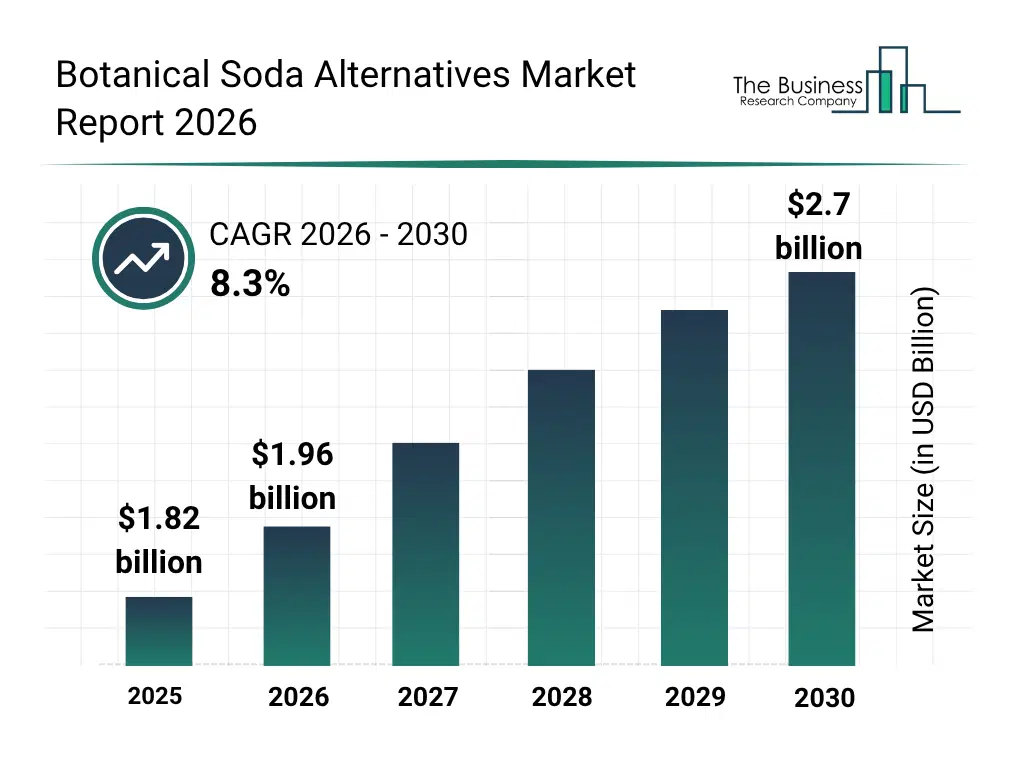
What Is The Botanical Soda Alternatives Market Size and Share 2026?
The botanical soda alternatives market size has grown strongly in recent years. It will grow from $1.82 billion in 2025 to $1.96 billion in 2026 at a compound annual growth rate (CAGR) of 8.1%. The growth in the historic period can be attributed to growing consumer shift away from traditional sugary sodas, increasing awareness regarding natural and plant based ingredients, rising demand for premium non alcoholic beverage alternatives, expansion of wellness and fitness focused lifestyles, growing availability of botanical beverages across retail channels.What Is The Botanical Soda Alternatives Market Growth Forecast?
The botanical soda alternatives market size is expected to see strong growth in the next few years. It will grow to $2.7 billion in 2030 at a compound annual growth rate (CAGR) of 8.3%. The growth in the forecast period can be attributed to increasing demand for functional and immunity supporting beverage products, rising innovation in botanical flavor combinations and formulations, growing online retail penetration for premium beverage products, expanding consumption among younger health conscious consumers, increasing investment in sustainable beverage packaging solutions. Major trends in the forecast period include rising demand for low sugar and clean label botanical beverages, increasing popularity of adaptogenic and functional botanical soda formulations, growing consumer preference for herbal and floral infused sparkling drinks, expanding adoption of organic and plant based beverage ingredients, increasing innovation in premium ready to drink botanical refreshment products.
Global Botanical Soda Alternatives Market Segmentation
1) By Product Type: Sparkling Botanical Sodas, Still Botanical Sodas, Botanical Tonic Waters, Botanical Infused Seltzers, Other Product Types 2) By Flavor: Herbal, Floral, Citrus, Spice, Other Flavors 3) By Packaging: Bottles, Cans, Cartons, Other Packagings 4) By Distribution Channel: Supermarkets And Hypermarkets, Convenience Stores, Online Retail Platforms, Specialty Stores, Food Service Outlets 5) By End User: Individual Consumers, Health Conscious Consumers, Fitness And Wellness Enthusiasts, Hospitality Industry, Other End Users Subsegments: 1) By Sparkling Botanical Sodas: Herbal Extract Sparkling Sodas, Fruit Infused Botanical Sparkling Sodas, Floral Infused Sparkling Sodas, Spiced Botanical Sparkling Sodas, Adaptogenic Herb Sparkling Sodas 2) By Still Botanical Sodas: Herbal Infused Still Sodas, Fruit And Botanical Still Blends, Floral Still Botanical Drinks, Root Based Botanical Still Sodas, Functional Botanical Still Beverages 3) By Botanical Tonic Waters: Quinine Based Botanical Tonics, Herbal And Spice Infused Tonics, Citrus Botanical Tonic Waters, Floral Botanical Tonic Waters, Low Sugar Botanical Tonics 4) By Botanical Infused Seltzers: Herbal Infused Seltzers, Fruit And Botanical Seltzers, Floral Infused Seltzers, Adaptogenic Botanical Seltzers, Organic Botanical Seltzers 5) By Other Product Types: Fermented Botanical Beverages, Botanical Kombucha Variants, Botanical Functional Elixirs, Plant Based Energy Botanical Drinks, Botanical Wellness ShotsWhat Is The Driver Of The Botanical Soda Alternatives Market?
The rising demand for plant-based and functional beverages is expected to propel the growth of the botanical soda alternatives market going forward. Plant-based and functional beverages are drinks formulated primarily from plant-derived ingredients such as herbs, botanicals, fruits, and grains that offer targeted health and wellness benefits beyond basic hydration. The plant-based and functional beverage demand is largely driven by a growing shift among consumers toward health-conscious lifestyles, as increasing awareness of the link between diet and chronic disease has prompted individuals to actively seek cleaner, more natural alternatives to conventional carbonated drinks. The escalating consumer preference for plant-based, low-sugar, and ingredient-transparent beverages directly fuels the adoption of botanical soda alternatives, which are well-positioned as functional, non-alcoholic options offering both refreshment and perceived wellness benefits. For instance, according to the 2024 Plant-Based Foods State of the Marketplace Report by the Plant-Based Foods Industry Association (PBFIA), a US-based organization, several retail categories saw notable growth in 2024, including plant-based protein powders and beverages, which increased by 11% in value and 13% in volume, reaching $450 million. Therefore, the rising demand for plant-based and functional beverages is driving the growth of the botanical soda alternatives industry.Key Players In The Global Botanical Soda Alternatives Market
Major companies operating in the botanical soda alternatives market are PepsiCo Inc., The Coca-Cola Company, Fevertree Drinks plc, Spindrift Beverage Co. Inc., Bundaberg Brewed Drinks Pty Ltd, Fentimans Ltd, Reed’s Inc., Bionade GmbH, Rishi Tea & Botanicals LLC, Cawston Press Ltd, Square Root London Ltd, Belvoir Fruit Farms Ltd, The London Essence Company Ltd, Aqua Monaco GmbH, Luscombe Drinks Ltd, Sipp Eco Beverage Co. Inc., Botanical Brewing Co. Ltd, Thomas Henry GmbH & Co. KG, Franklin & Sons Ltd, Lorina SASGlobal Botanical Soda Alternatives Market Trends and Insights
Major companies operating in the botanical soda alternatives market are focusing on developing advanced beverage innovations, such as plant-based functional soda flavors, to enhance consumer appeal, improve healthier refreshment options, and expand natural ingredient-based beverage portfolios. Plant-based functional soda flavors refer to beverages made from natural plant ingredients that combine flavor (herbs, fruits, and botanicals) with added health benefits like probiotics, vitamins, or antioxidants. For instance, in September 2025, Wildwonder, a US-based producer of sparkling prebiotic and probiotic beverages, launched its new Blackberry Violet holiday flavor as part of its botanical soda product line. It is designed to support growing consumer demand for natural and functional beverages. The product combines fruit and floral botanical ingredients to deliver a refreshing, low-sugar sparkling drink, strengthening the brand’s position in the expanding plant-based soda alternatives market.What Are Latest Mergers And Acquisitions In The Botanical Soda Alternatives Market?
In February 2025, Next in Natural LLC, a US-based consumer packaged goods platform, acquired Aura Bora Inc. for an undisclosed amount. Through this acquisition, the company aims to expand its presence in the fast-growing botanical beverage category and strengthen its portfolio of clean-label, plant-based drink offerings. Aura Bora Inc. is a US-based beverage company that produces herbal-infused sparkling waters made from natural botanical extracts, catering to consumers seeking functional and flavor-forward soda alternatives.Regional Outlook/Insights
North America was the largest region in the botanical soda alternatives market in 2025. Asia-Pacific is expected to be the fastest-growing region in the forecast period. The regions covered in this market report are Asia-Pacific, South East Asia, Western Europe, Eastern Europe, North America, South America, Middle East, Africa. The countries covered in this market report are Australia, Brazil, China, France, Germany, India, Indonesia, Japan, Taiwan, Russia, South Korea, UK, USA, Canada, Italy, Spain.What Defines the Botanical Soda Alternatives Market?
The botanical soda alternatives market consists of sales of elderflower soda, botanical shrub drink, adaptogenic soda, functional botanical drink, and carbonated herbal beverage. Values in this market are ‘factory gate’ values, that is, the value of goods sold by the manufacturers or creators of the goods, whether to other entities (including downstream manufacturers, wholesalers, distributors, and retailers) or directly to end customers. The value of goods in this market includes related services sold by the creators of the goods.How is Market Value Defined and Measured?
The market value is defined as the revenues that enterprises gain from the sale of goods and/or services within the specified market and geography through sales, grants, or donations in terms of the currency (in USD unless otherwise specified). The revenues for a specified geography are consumption values that are revenues generated by organizations in the specified geography within the market, irrespective of where they are produced. It does not include revenues from resales along the supply chain, either further along the supply chain or as part of other products.What Key Data and Analysis Are Included in the Botanical Soda Alternatives Market Report 2026?
The botanical soda alternatives market research report is one of a series of new reports from The Business Research Company that provides market statistics, including industry global market size, regional shares, competitors with the market share, detailed market segments, market trends and opportunities, and any further data you may need to thrive in the botanical soda alternatives industry. The market research report delivers a complete perspective of everything you need, with an in-depth analysis of the current and future state of the industry.Botanical Soda Alternatives Market Report Forecast Analysis
| Report Attribute | Details |
|---|---|
| Market Size Value In 2026 | $1.96 billion |
| Revenue Forecast In 2035 | $2.7 billion |
| Growth Rate | CAGR of 8.3% from 2026 to 2035 |
| Base Year For Estimation | 2025 |
| Actual Estimates/Historical Data | 2020-2025 |
| Forecast Period | 2026 - 2030 - 2035 |
| Market Representation | Revenue in USD Billion and CAGR from 2026 to 2035 |
| Segments Covered | Product Type, Flavor, Packaging, Distribution Channel, End User |
| Regional Scope | Asia-Pacific, Western Europe, Eastern Europe, North America, South America, Middle East, Africa |
| Country Scope | The countries covered in the report are Australia, Brazil, China, France, Germany, India, Indonesia, Japan, Taiwan, Russia, South Korea, UK, USA, Canada, Italy, Spain. |
| Key Companies Profiled | PepsiCo Inc., The Coca-Cola Company, Fevertree Drinks plc, Spindrift Beverage Co. Inc., Bundaberg Brewed Drinks Pty Ltd, Fentimans Ltd, Reed’s Inc., Bionade GmbH, Rishi Tea & Botanicals LLC, Cawston Press Ltd, Square Root London Ltd, Belvoir Fruit Farms Ltd, The London Essence Company Ltd, Aqua Monaco GmbH, Luscombe Drinks Ltd, Sipp Eco Beverage Co. Inc., Botanical Brewing Co. Ltd, Thomas Henry GmbH & Co. KG, Franklin & Sons Ltd, Lorina SAS |
| Customization Scope | Request for Customization |
| Pricing And Purchase Options | Explore Purchase Options |