

Brachytherapy Devices Market Report 2026
Global Outlook – By Product Type (Brachytherapy Afterloaders, Brachytherapy Applicators, Other Product Types), By Indications (Prostate Cancer, Breast Cancer, Cervical Cancer, Skin Cancer, Other Indications), By Dose Rate (High Dose Rate (HDR) Brachytherapy, Low Dose Rate (LDR) Brachytherapy, Pulse Dose Rate (PDR) Brachytherapy), By End-User (Hospitals, Specialty Clinics, Other End-Users) – Market Size, Trends, Strategies, and Forecast to 2030
Brachytherapy Devices Market Overview
• Brachytherapy Devices market size has reached to $0.8 billion in 2025 • Expected to grow to $1.1 billion in 2030 at a compound annual growth rate (CAGR) of 6.5% • Growth Driver: The Rising Prevalence Of Cancer Driving Growth In The Brachytherapy Devices Market • Market Trend: Technological Advancements In Brachytherapy Devices For Enhancing Precision • North America was the largest region in 2025 and Asia-Pacific is the fastest growing region.What Is Covered Under Brachytherapy Devices Market?
Brachytherapy devices are specialized medical instruments used to deliver internal radiation therapy directly to or near cancerous tumors. These devices enable high-dose radiation to be administered with minimal impact on surrounding healthy tissues, making it a highly effective treatment for certain types of cancer that are challenging to treat with external beam radiation. The main product types of brachytherapy devices are brachytherapy after loaders, brachytherapy applicators, and others. Brachytherapy after loaders are automated systems used to insert and retract radioactive sources during brachytherapy treatments, ensuring precise delivery. The various indications include prostate cancer, breast cancer, cervical cancer, skin cancer, and others with various dose rates such as high dose rate (HDR) brachytherapy, low dose rate (LDR) brachytherapy, pulse dose rate (PDR) brachytherapy. These are used by various end-users such as hospitals, specialty clinics, and others.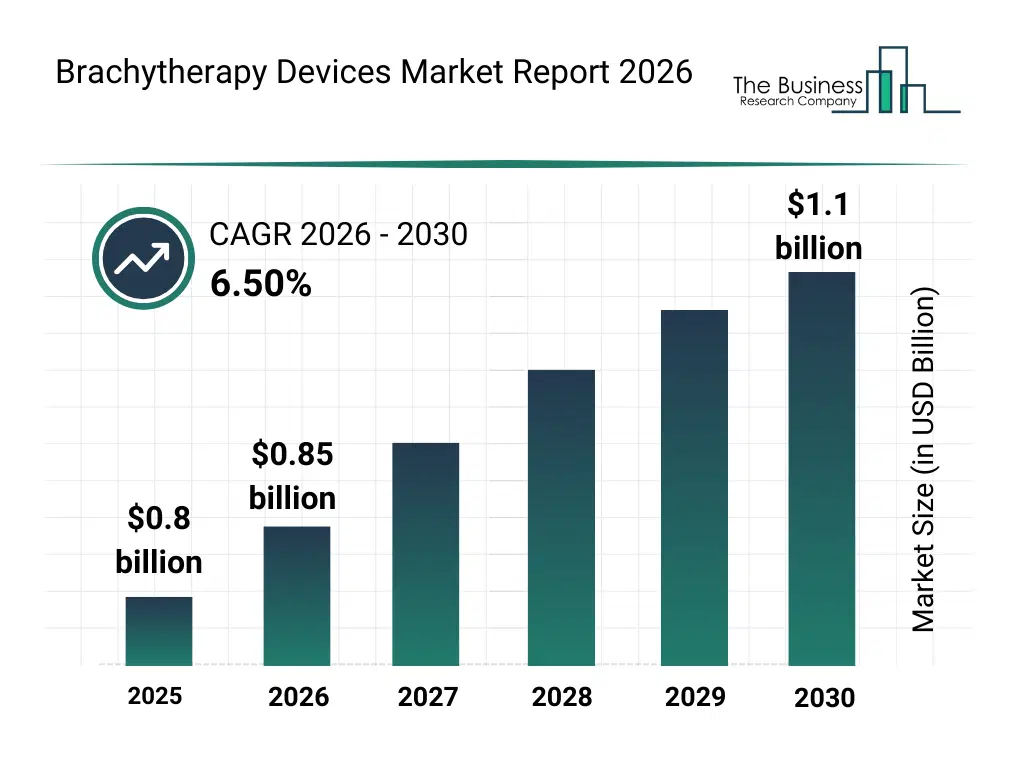
What Is The Brachytherapy Devices Market Size and Share 2026?
The brachytherapy devices market size has grown strongly in recent years. It will grow from $0.8 billion in 2025 to $0.85 billion in 2026 at a compound annual growth rate (CAGR) of 6.9%. The growth in the historic period can be attributed to limited availability of brachytherapy devices, reliance on low dose rate (ldr) treatments, increasing incidence of prostate and cervical cancers, slow adoption of automated afterloaders, constrained oncology infrastructure in emerging regions.What Is The Brachytherapy Devices Market Growth Forecast?
The brachytherapy devices market size is expected to see strong growth in the next few years. It will grow to $1.1 billion in 2030 at a compound annual growth rate (CAGR) of 6.5%. The growth in the forecast period can be attributed to technological advancements in hdr and pdr brachytherapy, growth of specialty cancer clinics, rising investment in oncology healthcare, integration of ai and digital planning software, expanding awareness of brachytherapy benefits among clinicians. Major trends in the forecast period include rising adoption of high dose rate (hdr) brachytherapy, increasing use of minimally invasive brachytherapy procedures, expansion of cancer treatment centers and specialty clinics, integration of treatment planning software and qa devices, growing focus on patient safety and precision radiation delivery.
Global Brachytherapy Devices Market Segmentation
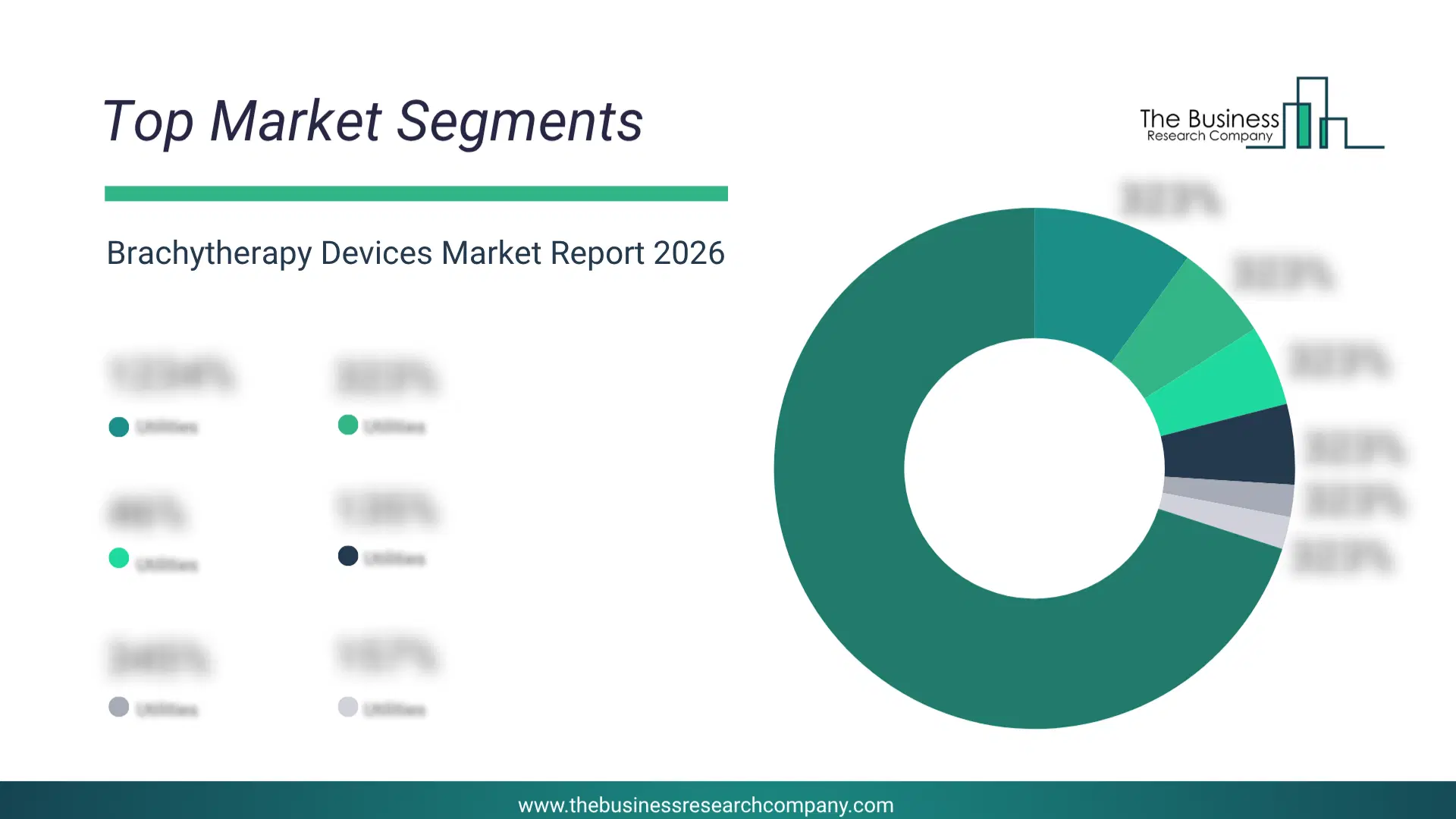
1) By Product Type: Brachytherapy Afterloaders, Brachytherapy Applicators, Other Product Types 2) By Indications: Prostate Cancer, Breast Cancer, Cervical Cancer, Skin Cancer, Other Indications 3) By Dose Rate: High Dose Rate (HDR) Brachytherapy, Low Dose Rate (LDR) Brachytherapy, Pulse Dose Rate (PDR) Brachytherapy 4) By End-User: Hospitals, Specialty Clinics, Other End-Users Subsegments: 1) By Brachytherapy Afterloaders: Remote Afterloaders, Manual Afterloaders 2) By Brachytherapy Applicators: Intravaginal Applicators, Interstitial Applicators, Intracavitary Applicators 3) By Other Product Types: Brachytherapy Seeds, Treatment Planning Software, Quality Assurance DevicesWhat Is The Driver Of The Brachytherapy Devices Market?
The increasing prevalence of cancer is expected to propel the growth of the brachytherapy devices market going forward. Cancer is a complex group of diseases characterized by the abnormal growth and spread of cells. The increasing prevalence of cancer is due to the aging population, lifestyle factors, genetic factors, and environmental exposures. Brachytherapy devices offer significant benefits to cancer patients by delivering targeted radiation directly to the tumor, which maximizes treatment effectiveness while minimizing damage to surrounding healthy tissue. This precise approach not only enhances the efficacy of the therapy but also reduces side effects, shortens treatment duration, and lowers the risk of cancer recurrence, ultimately improving patient outcomes and quality of life. For instance, in August 2024, according to the Macmillan Cancer Support, a UK-based organization, reported that in 2024, more than 3 million people in the UK are living with cancer, this figure is projected to increase to 3.5 million by 2025, 4 million by 2030, and 5.3 million by 2040. Therefore, the increasing prevalence of cancer is driving the growth of the brachytherapy devices industry.Key Players In The Global Brachytherapy Devices Market
Major companies operating in the brachytherapy devices market are Siemens Healthineers AG, Becton Dickinson and Company, GE HealthCare Technologies Inc., Boston Scientific Corporation, Koninklijke Philips N.V., Varian Medical Systems Inc., Carl Zeiss Meditec AG, Elekta AB, Hologic Inc., Mirion Technologies Inc., Accuray Inc., Eckert & Ziegler BEBIG S.A., Theragenics Corporation, Sensus Healthcare Inc., Aetna Inc., CIVCO Medical Solutions, iCAD Inc., IsoRay Inc., BEBIG Medical GmbH, IsoAid L.L.C.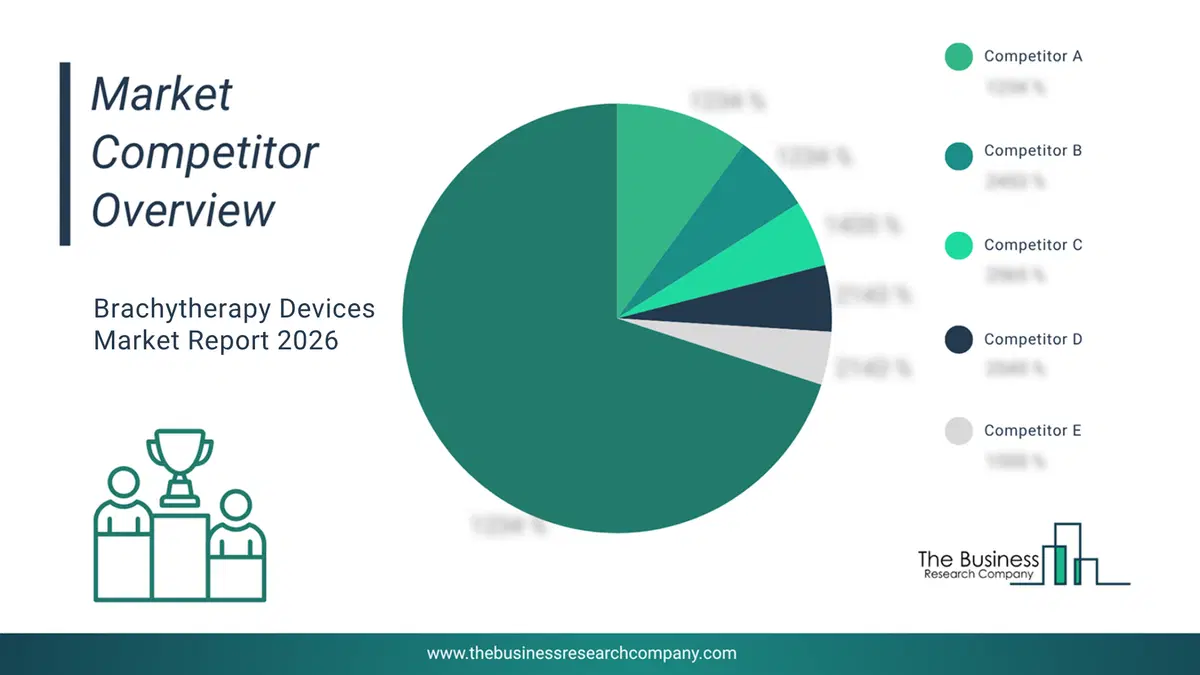
This chart is for illustrative purposes; the full report includes a detailed competitor analysis and comprehensive overview of the top 10 companies in the market.
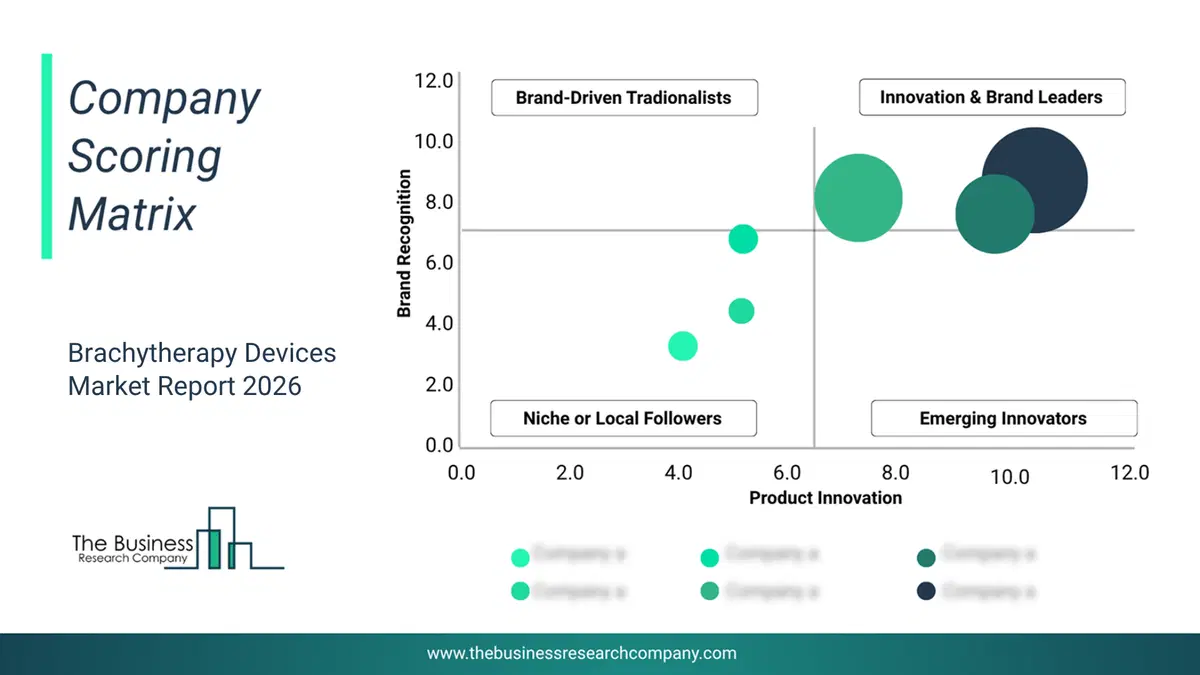
This chart maps companies by product innovation and brand strength, with bubble size indicating relative revenue, helping identify market leaders, challengers, and niche players. This is an illustrative chart; the full report provides a complete and accurate competitive analysis.
Global Brachytherapy Devices Market Trends and Insights
Major companies operating in the brachytherapy devices market are focusing on developing innovative solutions, such as state-of-the-art brachytherapy machines, to benefit many patients needing specialized cancer care. A state-of-the-art brachytherapy machine is a cutting-edge device designed to deliver internal radiation therapy with the highest precision, efficacy, and safety. This machine enables the administration of a high dose of radiation to the cancerous tissue while minimizing exposure to the surrounding healthy tissues. For instance, in June 2024, AIIMS Nagpur, an India-based medical institute, launched a state-of-the-art brachytherapy machine to enhance cancer treatment precision. This advanced technology allows for localized radiation therapy, targeting tumors more effectively while minimizing damage to surrounding healthy tissue. The machine is expected to improve treatment outcomes for radiation therapy patients by providing a more accurate and controlled radiation delivery.What Are Latest Mergers And Acquisitions In The Brachytherapy Devices Market?
In October 2023, Elekta, a Sweden-based neuroscience company, acquired Xoft business from iCAD Inc. for an undisclosed amount. With this acquisition, Elekta aims to enhance its brachytherapy portfolio and deliver improved outcomes for patients dealing with cancer. iCAD Inc. is a US-based company that manufactures brachytherapy devices.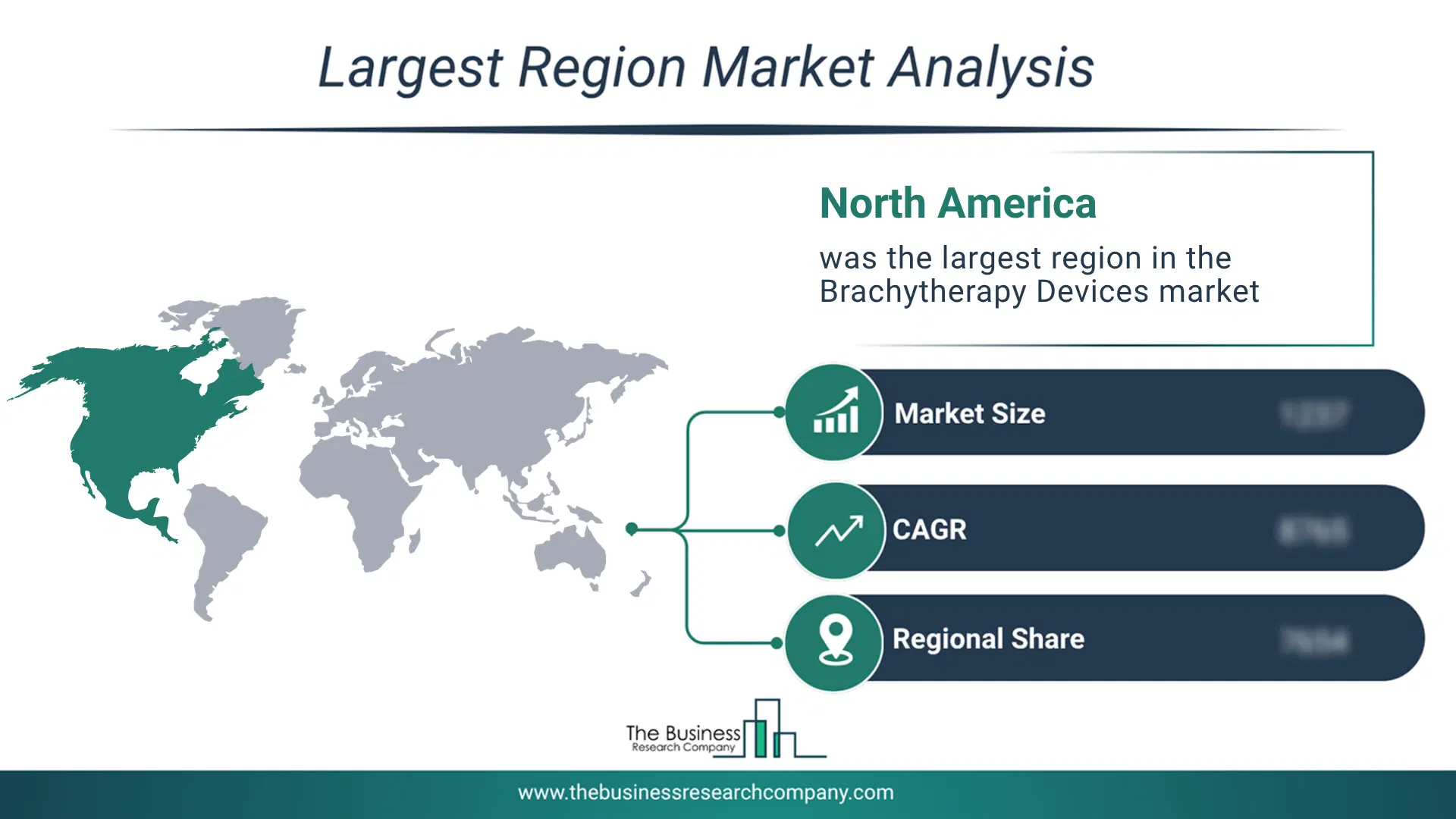
Regional Outlook
North America was the largest region in the brachytherapy devices market in 2025. Asia-Pacific is expected to be the fastest-growing region in the market going forward. The regions covered in this market report are Asia-Pacific, South East Asia, Western Europe, Eastern Europe, North America, South America, Middle East, Africa. The countries covered in this market report are Australia, Brazil, China, France, Germany, India, Indonesia, Japan, Taiwan, Russia, South Korea, UK, USA, Canada, Italy, SpainWhat Defines the Brachytherapy Devices Market?
The brachytherapy devices market consists of sales of applicators, catheters, needles, and seed implants. Values in this market are ‘factory gate’ values, that is the value of goods sold by the manufacturers or creators of the goods, whether to other entities (including downstream manufacturers, wholesalers, distributors, and retailers) or directly to end customers. The value of goods in this market includes related services sold by the creators of the goods.How is Market Value Defined and Measured?
The market value is defined as the revenues that enterprises gain from the sale of goods and/or services within the specified market and geography through sales, grants, or donations in terms of the currency (in USD unless otherwise specified). The revenues for a specified geography are consumption values that are revenues generated by organizations in the specified geography within the market, irrespective of where they are produced. It does not include revenues from resales along the supply chain, either further along the supply chain or as part of other products.
This chart presents market attractiveness based on a quantitative evaluation of growth, competition, strategic alignment, and risk, offering a clear view of opportunity areas for decision-making. This chart is for illustrative purposes; the full report contains the complete analysis.

This chart highlights the Total Addressable Market (TAM) by estimating the maximum revenue opportunity using an assumption-driven approach, supporting strategic planning and opportunity sizing across markets. The chart is illustrative; the full report provides a more comprehensive analysis.
What Key Data and Analysis Are Included in the Brachytherapy Devices Market Report 2026?
The brachytherapy devices market research report is one of a series of new reports from The Business Research Company that provides market statistics, including industry global market size, regional shares, competitors with the market share, detailed market segments, market trends and opportunities, and any further data you may need to thrive in the brachytherapy devices industry. The market research report delivers a complete perspective of everything you need, with an in-depth analysis of the current and future state of the industry.Brachytherapy Devices Market Report Forecast Analysis
| Report Attribute | Details |
|---|---|
| Market Size Value In 2026 | $0.85 billion |
| Revenue Forecast In 2030 | $1.1 billion |
| Growth Rate | CAGR of 6.5% from 2026 to 2030 |
| Base Year For Estimation | 2025 |
| Actual Estimates/Historical Data | 2020-2025 |
| Forecast Period | 2026 - 2030 |
| Market Representation | Revenue in USD Billion and CAGR from 2026 to 2030 |
| Segments Covered | Product Type, Indications, Dose Rate, End-User |
| Regional Scope | Asia-Pacific, Western Europe, Eastern Europe, North America, South America, Middle East, Africa |
| Country Scope | The countries covered in the report are Australia, Brazil, China, France, Germany, India, Indonesia, Japan, Taiwan, Russia, South Korea, UK, USA, Canada, Italy, Spain. |
| Key Companies Profiled | Siemens Healthineers AG, Becton Dickinson and Company, GE HealthCare Technologies Inc., Boston Scientific Corporation, Koninklijke Philips N.V., Varian Medical Systems Inc., Carl Zeiss Meditec AG, Elekta AB, Hologic Inc., Mirion Technologies Inc., Accuray Inc., Eckert & Ziegler BEBIG S.A., Theragenics Corporation, Sensus Healthcare Inc., Aetna Inc., CIVCO Medical Solutions, iCAD Inc., IsoRay Inc., BEBIG Medical GmbH, IsoAid L.L.C. |
| Customization Scope | Request for Customization |
| Pricing And Purchase Options | Explore Purchase Options |