

Brain Mapping Instruments Market Report 2026
Global Outlook – By Product (Computed Axial Tomography (CAT), Positron Emission Tomography, Electroencephalography (EEG), Functional Near-Infrared Spectroscopy (FNIRS), Functional Magnetic Resonance Imaging (FMRI), Other Products), By Procedure (Devices For Invasive Procedures, Devices For Non-invasive Procedures), By End User (Hospitals, Ambulatory Centers) – Market Size, Trends, Strategies, and Forecast to 2030
Brain Mapping Instruments Market Overview
• Brain Mapping Instruments market size has reached to $2.42 billion in 2025 • Expected to grow to $3.33 billion in 2030 at a compound annual growth rate (CAGR) of 6.6% • Growth Driver: Impact Of Increasing Neurological Disorders On The Growth Of The Brain Mapping Instrument • Market Trend: Sensing-Enabled Adaptive Neuromodulation With BrainSense-Enabled Closed-Loop DBS • North America was the largest region in 2025 and Asia-Pacific is the fastest growing region.What Is Covered Under Brain Mapping Instruments Market?
A brain mapping instrument is a device or tool used to visualize, measure, and analyze the structure and function of the brain. These instruments employ various technologies to provide detailed images and data about brain activity, connectivity, and anatomy. Brain mapping instruments are essential in neuroscience research, clinical diagnosis, and treatment planning. The main products of brain mapping instruments are computed axial tomography (CAT), positron emission tomography, electroencephalography (EEG), functional near-infrared spectroscopy (fNIRS), functional magnetic resonance imaging (fMRI), and others. Computed Axial Tomography (CAT) or Computed Tomography (CT) is an advanced medical imaging technique that uses X-rays and computer processing to generate highly detailed, cross-sectional images of the body's internal structures. It is a valuable diagnostic tool in modern healthcare. The various procedures include devices for invasive procedures and devices for non-invasive procedures and are used by several end users such as hospitals and ambulatory centers.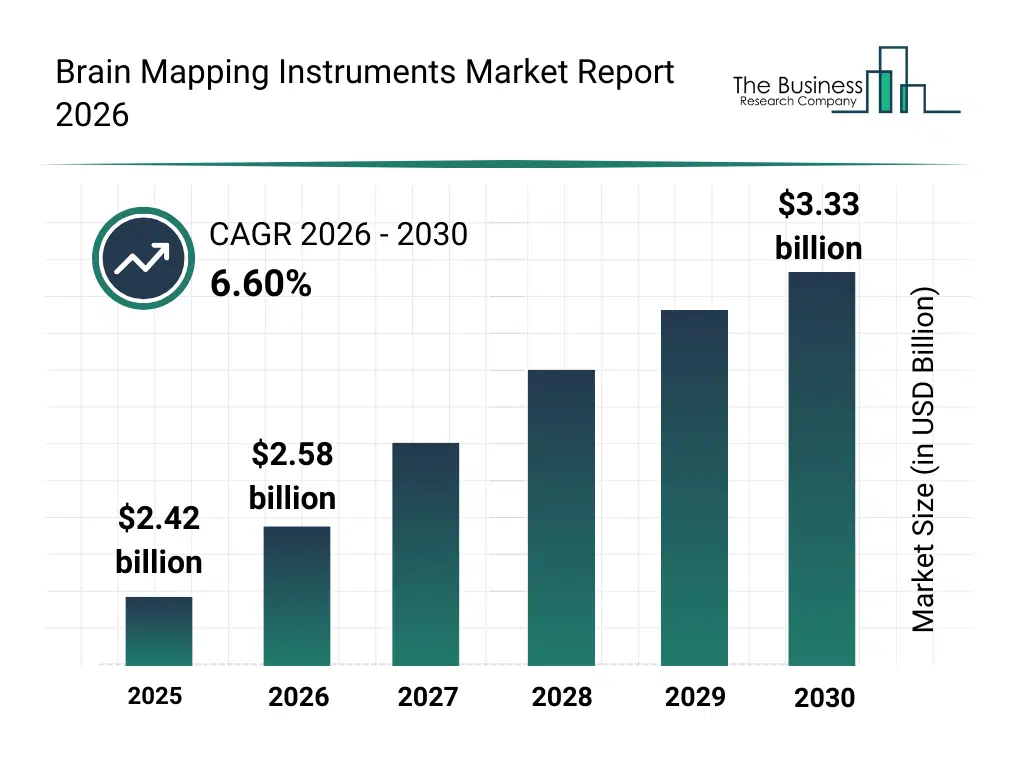
What Is The Brain Mapping Instruments Market Size and Share 2026?
The brain mapping instruments market size has grown strongly in recent years. It will grow from $2.42 billion in 2025 to $2.58 billion in 2026 at a compound annual growth rate (CAGR) of 6.6%. The growth in the historic period can be attributed to growth in neurological disorder diagnosis programs, increasing utilization of eeg and ct-based brain mapping systems, early adoption of neuroimaging tools in hospital and research centers, expansion of brain activity monitoring in clinical neurology, rising investment in neuroscience research infrastructure.What Is The Brain Mapping Instruments Market Growth Forecast?
The brain mapping instruments market size is expected to see strong growth in the next few years. It will grow to $3.33 billion in 2030 at a compound annual growth rate (CAGR) of 6.6%. The growth in the forecast period can be attributed to rising demand for fmri and pet-based functional brain mapping, increasing uptake of hybrid and high-resolution imaging systems, higher adoption of non-invasive mapping solutions in ambulatory settings, growing integration of multimodal brain analysis tools, expanding application of brain mapping in precision medicine and neurotherapeutics. Major trends in the forecast period include increasing adoption of advanced neuroimaging and brain activity monitoring technologies, growing use of brain mapping instruments in clinical diagnosis and treatment planning, expansion of brain mapping applications in neuroscience and cognitive research, rising preference for non-invasive and patient-friendly brain mapping procedures, focus on enhancing imaging accuracy, data quality, and diagnostic efficiency.
Global Brain Mapping Instruments Market Segmentation
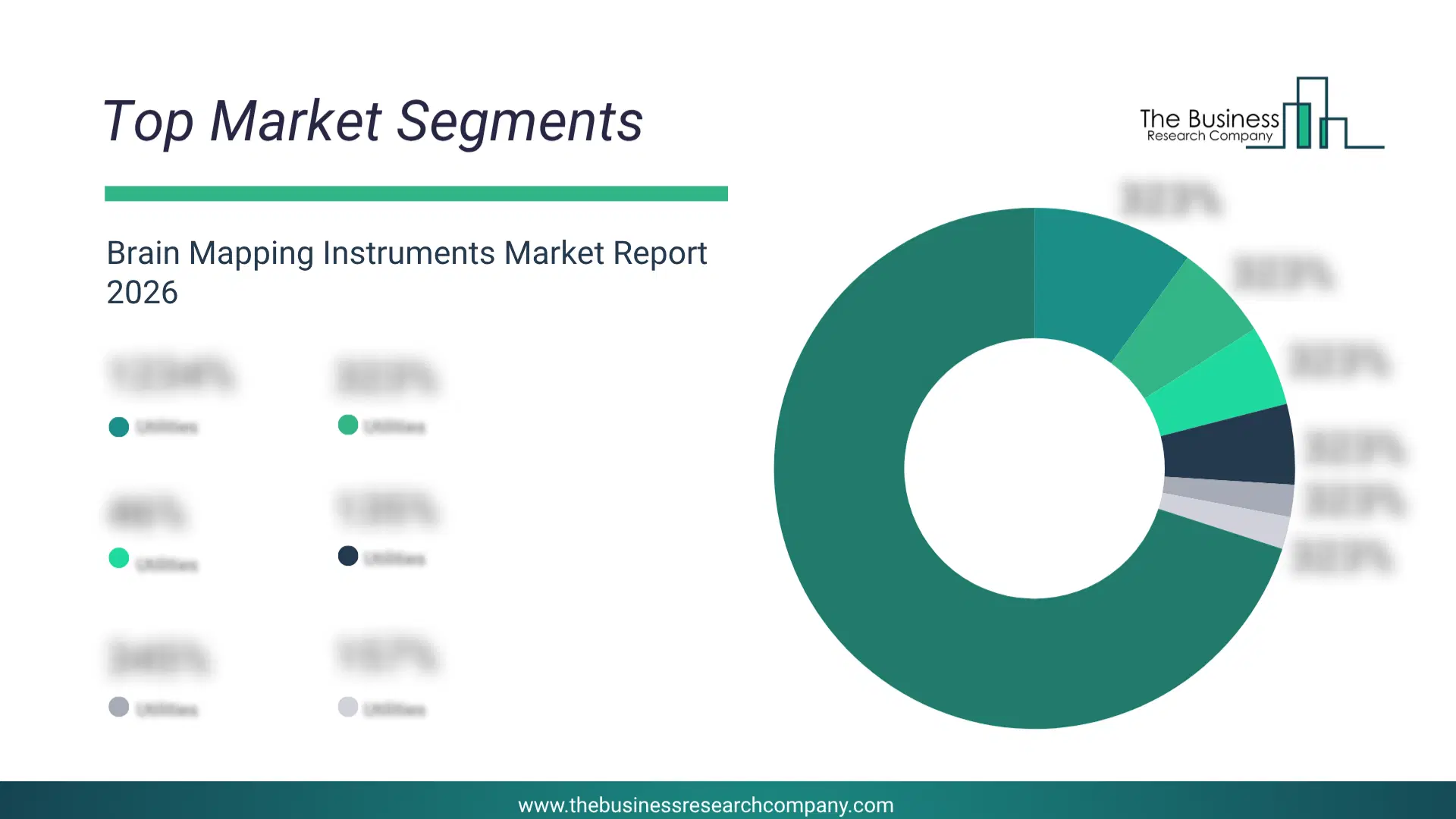
1) By Product: Computed Axial Tomography (CAT), Positron Emission Tomography, Electroencephalography (EEG), Functional Near-Infrared Spectroscopy (FNIRS), Functional Magnetic Resonance Imaging (FMRI), Other Products 2) By Procedure: Devices For Invasive Procedures, Devices For Non-invasive Procedures 3) By End User: Hospitals, Ambulatory Centers Subsegments: 1) By Computed Axial Tomography (CAT): Conventional CT Scanners, High-Resolution CT Scanners, Portable CT Scanners 2) By Positron Emission Tomography (PET): PET Scanners (Standalone), Hybrid PET/CT Scanners, PET/MRI Scanners 3) By Electroencephalography (EEG): Digital EEG Systems, Ambulatory EEG Systems, Video EEG Monitoring Systems 4) By Functional Near-Infrared Spectroscopy (FNIRS): Continuous Wave Fnirs Systems, Frequency Domain Fnirs Systems, Hybrid Fnirs Systems 5) By Functional Magnetic Resonance Imaging (FMRI): Resting-State Fmri, Task-Based Fmri, High-Field MRI Systems 6) By Other Products: Magnetoencephalography (MEG) Systems, Near-Infrared Spectroscopy (NIRS) Devices, Transcranial Magnetic Stimulation (TMS) SystemsWhat Is The Driver Of The Brain Mapping Instruments Market?
An increase in the prevalence of neurological disorders is expected to propel the growth of the brain mapping instrument market going forward. Neurological disorders are conditions affecting the brain, spinal cord, and nerves, leading to symptoms such as movement issues, cognitive decline, and sensory problems, examples including Alzheimer's, Parkinson's, epilepsy, multiple sclerosis, and stroke. The increasing prevalence of neurological disorders is due to population aging, urbanization, lifestyle changes, improved diagnostic capabilities, and environmental and infectious risk factors. Brain mapping instruments are essential in clinical practice and research, enabling deeper insights into neurological disorders and guiding personalized treatment strategies. For instance, in March 2023, according to the Alzheimer’s Association, a US-based non-profit voluntary health organization, in the United States, an estimated 6.7 million Americans aged 65 and older were living with Alzheimer's dementia, which is a neurological disorder. Further, by 2060, the number of people aged 65 and older with Alzheimer's dementia is projected to increase to 13.8 million. Therefore, the increase in the prevalence of neurological disorders drives the growth of the brain mapping instrument industry.Key Players In The Global Brain Mapping Instruments Market
Major companies operating in the brain mapping instruments market are Siemens Healthineers, GE Healthcare, Philips Healthcare, Elekta AB, Nihon Kohden Corporation, Brainlab AG, Natus Medical Incorporated, Hitachi Medical Systems, Canon Medical Systems Corporation, Compumedics Limited, Medtronic PLC, Magstim Company Limited, EB Neuro S.p.A., Brain Products GmbH, Soterix Medical Inc., Rogue Research Inc., NIRx Medical Technologies LLC, Neurosoft, Artinis Medical Systems, Gowerlabs Ltd.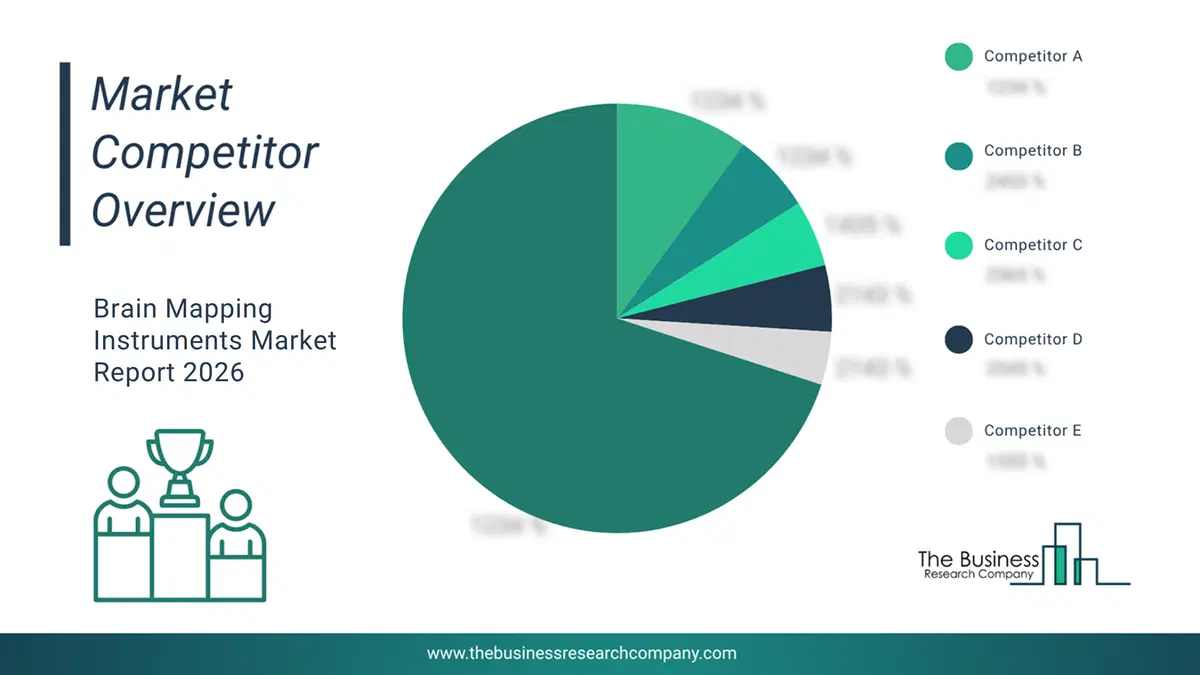
This chart is for illustrative purposes; the full report includes a detailed competitor analysis and comprehensive overview of the top 10 companies in the market.
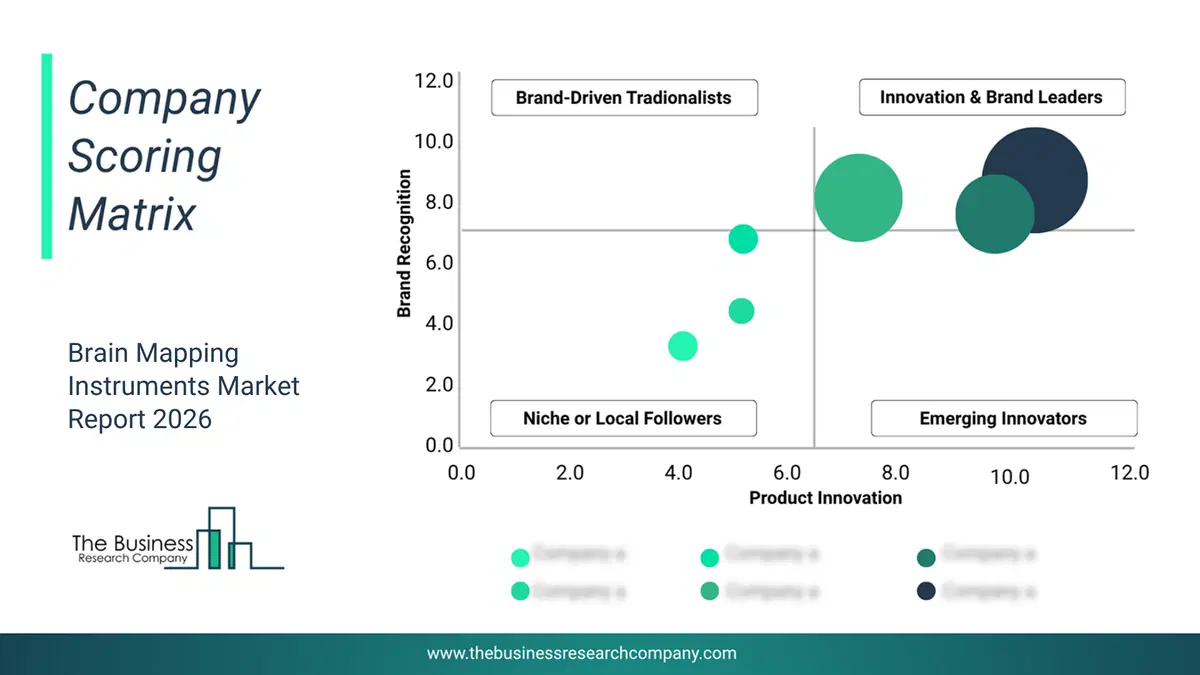
This chart maps companies by product innovation and brand strength, with bubble size indicating relative revenue, helping identify market leaders, challengers, and niche players. This is an illustrative chart; the full report provides a complete and accurate competitive analysis.
Global Brain Mapping Instruments Market Trends and Insights
Major companies operating in the brain mapping instruments market are focusing on sensing-enabled adaptive neuromodulation, such as BrainSense‑enabled closed‑loop deep brain stimulation (DBS), which integrates real-time brain signal detection to tailor stimulation therapy. BrainSense technology is a neuro‑interface embedded in DBS systems that records local field potentials (LFPs) from specific brain regions, processes these signals, and adjusts electrical stimulation dynamically based on a patient’s neural activity, optimizing therapeutic effects and minimizing side effects. For instance, in February 2025, Medtronic, a US-based medical‑technology company, introduced its BrainSense Adaptive DBS system following FDA approval, offering features such as real-time self-adjusting stimulation, a BrainSense Electrode Identifier to rapidly determine the optimal electrode contact, and closed-loop personalized therapy that adapts both in clinical settings and during a patient’s daily life.What Are Latest Mergers And Acquisitions In The Brain Mapping Instruments Market?
In May 2025, Firefly Neuroscience, Inc., a US-based AI company developing brain‑health solutions, acquired Evoke Neuroscience, Inc. for US$ 6 million. With this acquisition, Firefly significantly expanded its proprietary brain‑wave (EEG/ERP) database, patent portfolio, and commercial footprint to accelerate its development of a foundation model of the human brain. Evoke Neuroscience is a US-based medical‑device company that provides hardware and software for comprehensive EEG/ERP‑based brain health assessments.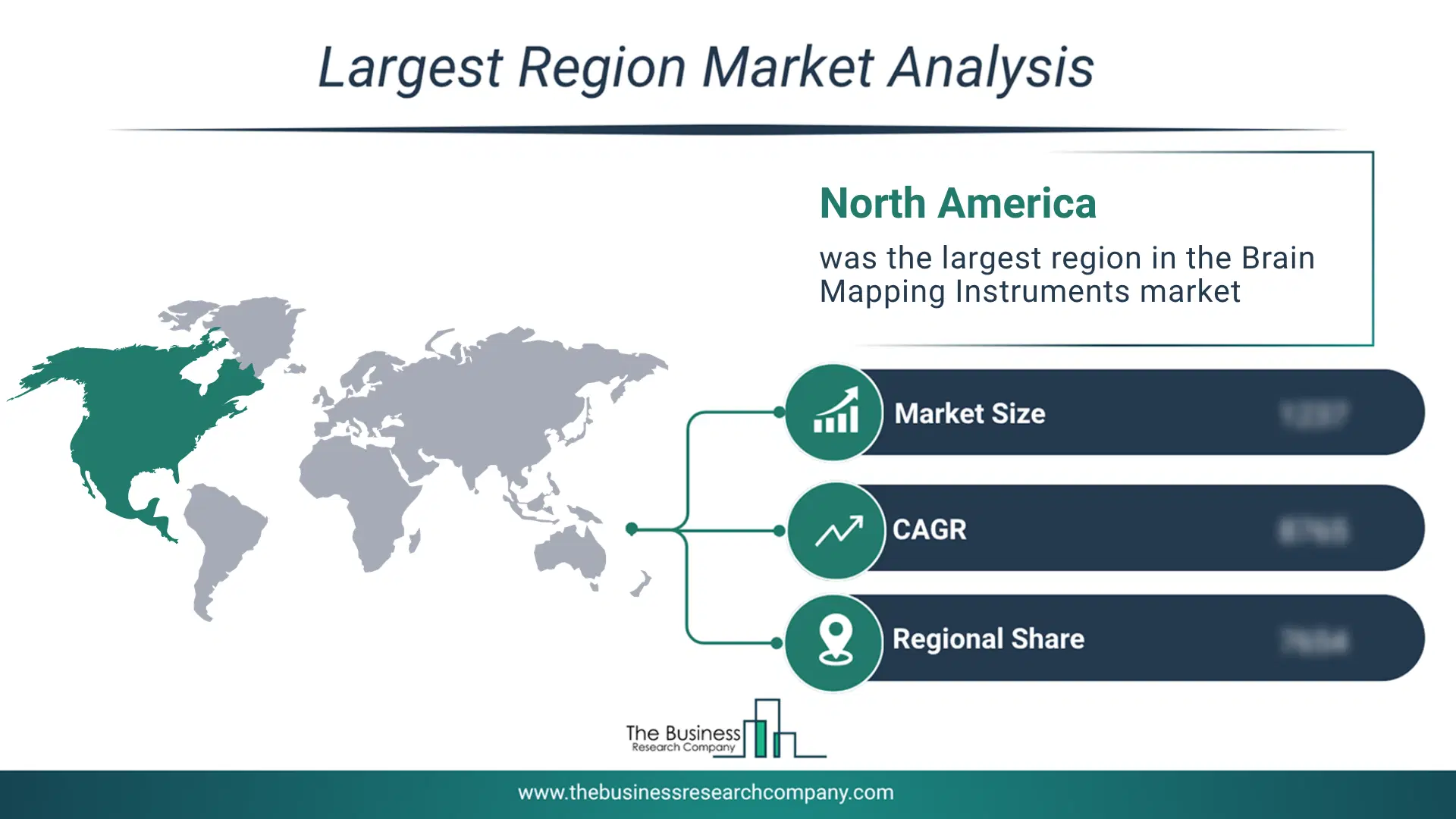
Regional Outlook
North America was the largest region in the brain mapping instruments market in 2025. Asia-Pacific is expected to be the fastest-growing region in the forecast period. The regions covered in this market report are Asia-Pacific, South East Asia, Western Europe, Eastern Europe, North America, South America, Middle East, Africa. The countries covered in this market report are Australia, Brazil, China, France, Germany, India, Indonesia, Japan, Taiwan, Russia, South Korea, UK, USA, Canada, Italy, SpainWhat Defines the Brain Mapping Instruments Market?
The brain mapping instruments market consists of sales of electroencephalography (EEG) systems, magnetoencephalography (MEG) systems, near-infrared spectroscopy (NIRS) systems, magnetic resonance spectroscopy (MRS) systems, and optogenetics tools. Values in this market are ‘factory gate’ values, that is the value of goods sold by the manufacturers or creators of the goods, whether to other entities (including downstream manufacturers, wholesalers, distributors and retailers) or directly to end customers. The value of goods in this market includes related services sold by the creators of the goods.How is Market Value Defined and Measured?
The market value is defined as the revenues that enterprises gain from the sale of goods and/or services within the specified market and geography through sales, grants, or donations in terms of the currency (in USD unless otherwise specified). The revenues for a specified geography are consumption values that are revenues generated by organizations in the specified geography within the market, irrespective of where they are produced. It does not include revenues from resales along the supply chain, either further along the supply chain or as part of other products.
This chart presents market attractiveness based on a quantitative evaluation of growth, competition, strategic alignment, and risk, offering a clear view of opportunity areas for decision-making. This chart is for illustrative purposes; the full report contains the complete analysis.

This chart highlights the Total Addressable Market (TAM) by estimating the maximum revenue opportunity using an assumption-driven approach, supporting strategic planning and opportunity sizing across markets. The chart is illustrative; the full report provides a more comprehensive analysis.
What Key Data and Analysis Are Included in the Brain Mapping Instruments Market Report 2026?
The brain mapping instruments market research report is one of a series of new reports from The Business Research Company that provides market statistics, including industry global market size, regional shares, competitors with the market share, detailed market segments, market trends and opportunities, and any further data you may need to thrive in the brain mapping instruments industry. The market research report delivers a complete perspective of everything you need, with an in-depth analysis of the current and future state of the industry.Brain Mapping Instruments Market Report Forecast Analysis
| Report Attribute | Details |
|---|---|
| Market Size Value In 2026 | $2.58 billion |
| Revenue Forecast In 2030 | $3.33 billion |
| Growth Rate | CAGR of 6.6% from 2026 to 2030 |
| Base Year For Estimation | 2025 |
| Actual Estimates/Historical Data | 2020-2025 |
| Forecast Period | 2026 - 2030 |
| Market Representation | Revenue in USD Billion and CAGR from 2026 to 2030 |
| Segments Covered | Product, Procedure, End User |
| Regional Scope | Asia-Pacific, Western Europe, Eastern Europe, North America, South America, Middle East, Africa |
| Country Scope | The countries covered in the report are Australia, Brazil, China, France, Germany, India, Indonesia, Japan, Taiwan, Russia, South Korea, UK, USA, Canada, Italy, Spain. |
| Key Companies Profiled | Siemens Healthineers, GE Healthcare, Philips Healthcare, Elekta AB, Nihon Kohden Corporation, Brainlab AG, Natus Medical Incorporated, Hitachi Medical Systems, Canon Medical Systems Corporation, Compumedics Limited, Medtronic PLC, Magstim Company Limited, EB Neuro S.p.A., Brain Products GmbH, Soterix Medical Inc., Rogue Research Inc., NIRx Medical Technologies LLC, Neurosoft, Artinis Medical Systems, Gowerlabs Ltd. |
| Customization Scope | Request for Customization |
| Pricing And Purchase Options | Explore Purchase Options |