
Brake-By-Wire System Market Report 2026
Global Outlook – By Type (Hydraulic Or Wet Type, Electronic Or Dry Type), By Sales Channel (Original Equipment Manufacturers (OEMs), Aftermarket), By Application (Passenger Vehicles, Commercial Vehicles) – Market Size, Trends, Strategies, and Forecast to 2030
Brake-By-Wire System Market Overview
• Brake-By-Wire System market size has reached to $2.49 billion in 2025 • Expected to grow to $3.96 billion in 2030 at a compound annual growth rate (CAGR) of 9.8% • Growth Driver: Electric Vehicle Adoption Drives Growth In The Brake-by-Wire System Market • Market Trend: Advancements In Electro-Mechanical Brake Systems Enhance Vehicle Safety And Efficiency • North America was the largest region in 2025.Market Gains By 2030 – Top Opportunities By Segment
Market Gain identifies the most promising market opportunities by highlighting the segments or products expected to generate the highest incremental revenue growth over the next five years.
What Is Covered Under Brake-By-Wire System Market?
A brake-by-wire (BBW) system is an advanced braking technology that uses electronic controls to convert the driver's brake pedal input into electronic signals that regulate the level of braking power supplied to the wheels. Brake-by-wire systems offer faster and more precise braking responses than older systems, enhancing vehicle safety and handling. The main types of brake-by-wire systems are hydraulic, or wet type, and electronic, or dry type. Hydraulic or wet-type brake-by-wire systems transmit braking force using hydraulic fluid while incorporating electronic controls for enhanced precision and response, making them reliable and suitable for heavy-duty applications. They are sold through various sales channels, such as original equipment manufacturers (OEMs) and aftermarket, for several applications, including passenger vehicles and commercial vehicles.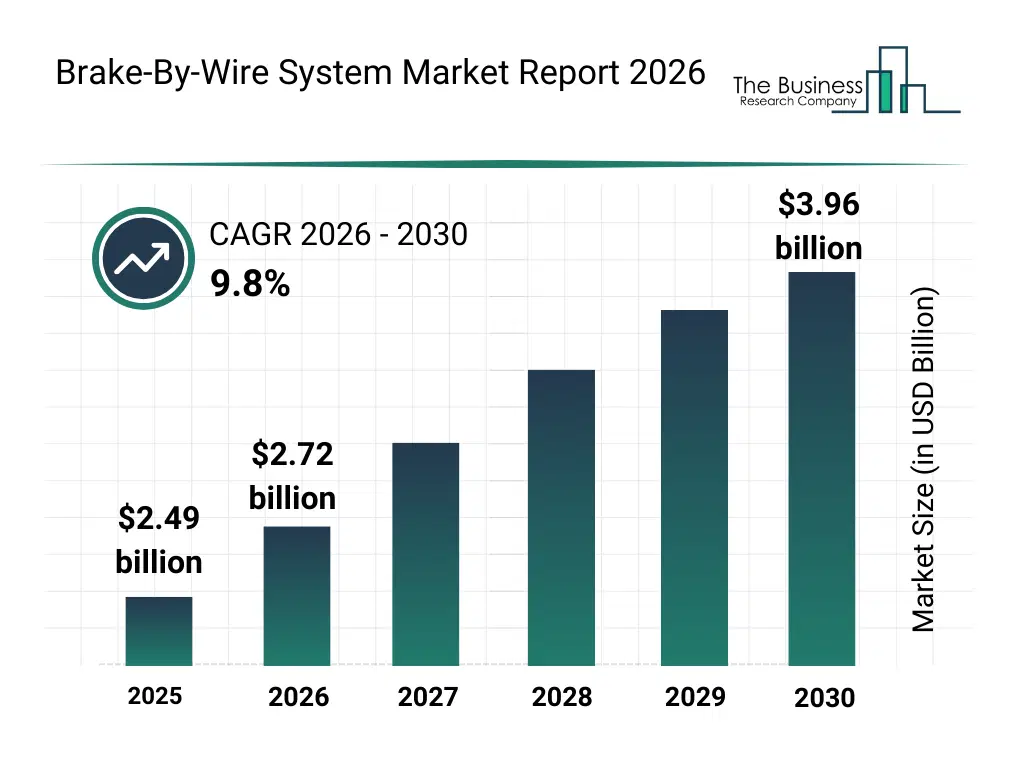
What Is The Brake-By-Wire System Market Size and Share 2026?
The brake-by-wire system market size has grown strongly in recent years. It will grow from $2.49 billion in 2025 to $2.72 billion in 2026 at a compound annual growth rate (CAGR) of 9.3%. The growth in the historic period can be attributed to advancement of electronic control units, early adoption in premium vehicles, braking system electrification, drive-by-wire development, vehicle safety innovation.What Is The Brake-By-Wire System Market Growth Forecast?
The brake-by-wire system market size is expected to see strong growth in the next few years. It will grow to $3.96 billion in 2030 at a compound annual growth rate (CAGR) of 9.8%. The growth in the forecast period can be attributed to autonomous vehicle deployment, electric vehicle platform growth, software-defined vehicles, demand for faster braking response, regulatory push for advanced safety. Major trends in the forecast period include adoption of electronic braking architectures, growth of electro-mechanical brakes, integration with autonomous driving systems, demand for redundant safety systems, expansion in ev platforms.
Global Brake-By-Wire System Market Segmentation
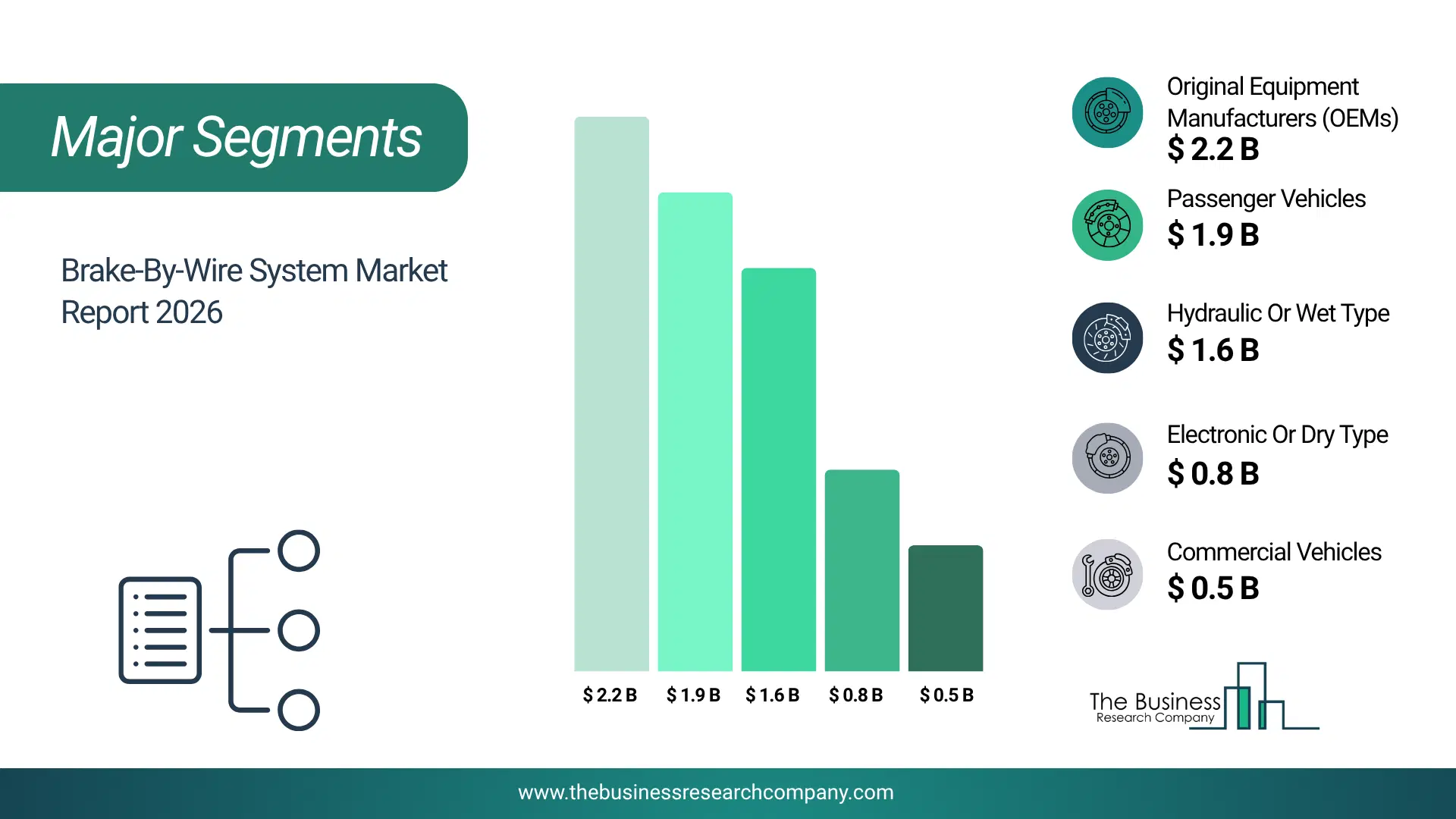
1) By Type: Hydraulic Or Wet Type, Electronic Or Dry Type 2) By Sales Channel: Original Equipment Manufacturers (OEMs), Aftermarket 3) By Application: Passenger Vehicles, Commercial Vehicles Subsegments: 1) By Hydraulic Or Wet Type: Electro-Hydraulic Brake (Ehb) Systems, Hydraulic Actuators And Modules 2) By Electronic Or Dry Type: Electro-Mechanical Brake (Emb) Systems, Electronic Actuators, Brake-By-Wire Control Modules The top segments in the brake-by-wire system market will be: • Original Equipment Manufacturers (OEMs) will reach $2278.27 Million by 2025. • Passenger Vehicles will reach $1977.47 Million by 2025. • Hydraulic Or Wet Type will reach $1643.6 Million by 2025. • Electronic Or Dry Type will reach $846.43 Million by 2025. • Commercial Vehicles will reach $512.55 Million by 2025.What Is The Driver Of The Brake-By-Wire System Market?
The growing adoption of electric vehicles is expected to propel the growth of the brake-by-wire system market going forward. Electric vehicles (EVs) are automobiles operated by electric motors that run on electricity stored in batteries or other energy storage technologies. With growing environmental concerns, growing EV infrastructure development, and government incentives, there is a push towards EV adoption. Brake-by-wire systems use electronic controls for precise and responsive braking, enhancing vehicle handling and stability by removing hydraulic components. They reduce weight and improve overall efficiency and range. For instance, in 2024, according to the International Energy Agency, a France-based intergovernmental organization, electric car sales grew by an additional 3.5 million units in 2024 compared with the previous year. Therefore, the growing adoption of electric vehicles drives the brake-by-wire system industry.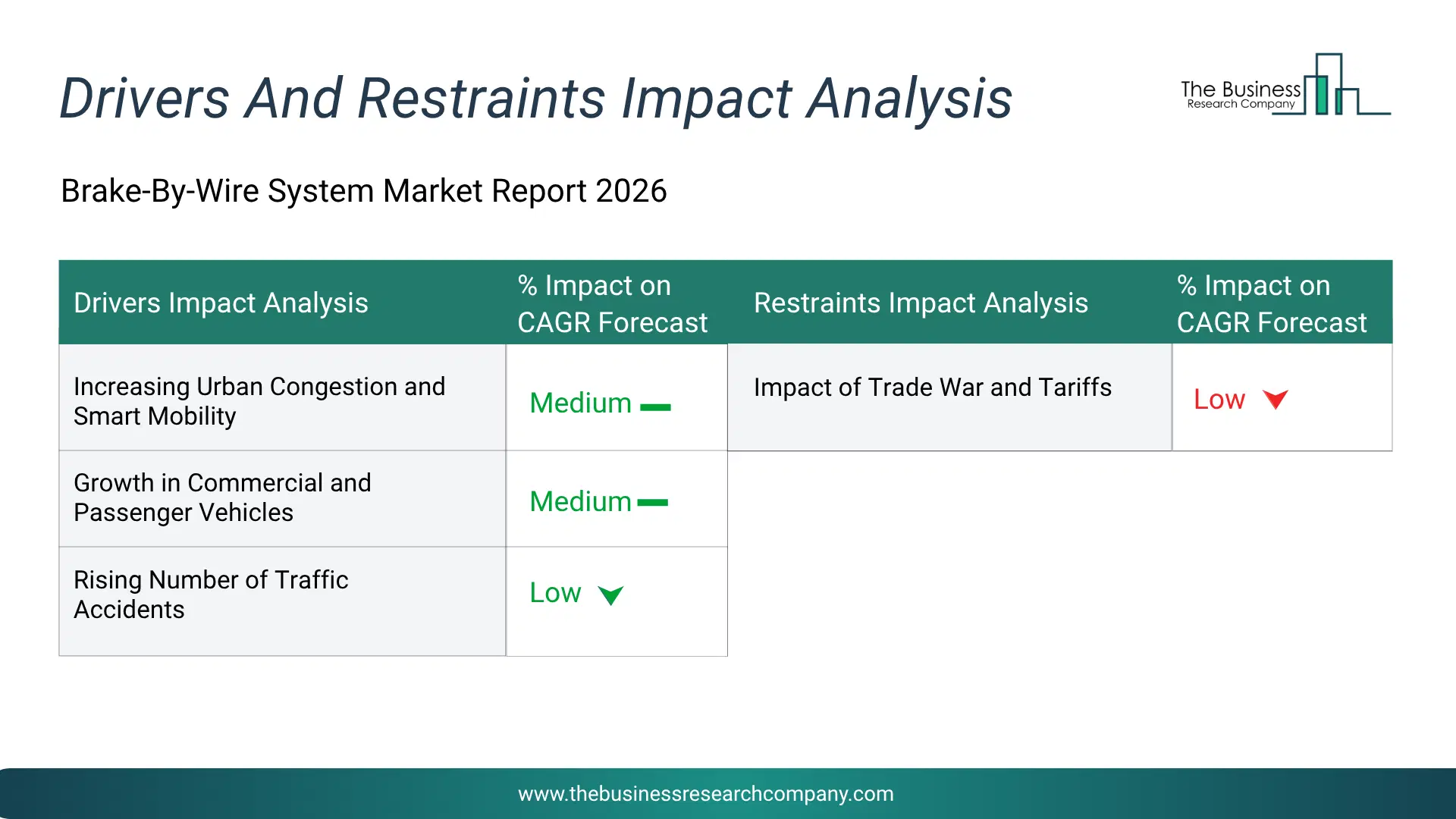
Infographic Chart Showing Key Market Drivers Analysis And Restraints For Brake-By-Wire System Market
The chart presents an impact analysis of key drivers and restraints, quantifying their relative influence on the market's growth rate and helping assess the balance between growth enablers and limiting factors. This chart offers a high-level perspective; the full report contains more detailed insights.
How Will The Drivers Impact Growth In The Global Brake-By-Wire System Market?
• Increasing Urban Congestion and Smart Mobility (Medium) – The increasing urban congestion and smart mobility will become a key driver of growth in the brake-by-wire system market by 2030. Urban congestion and the rise of smart mobility solutions are accelerating the adoption of brake-by-wire systems by demanding faster, more precise braking for improved traffic flow and safety. These electronic systems enable seamless integration with advanced driver-assistance and autonomous technologies, making them ideal for connected, data-driven urban transport networks. Additionally, their reduced mechanical complexity supports lower maintenance and better efficiency in high-frequency stop-and-go conditions common in city environments. Therefore, increasing urban congestion and smart mobility will drive the growth of the brake-by-wire system market. As a result, the increasing urban congestion and smart mobility is anticipated to contributing to a 2.3% annual growth in the market. • Growth in Commercial and Passenger Vehicles (Medium) – The growth in commercial vehicle and passenger vehicle will emerge as a major factor driving the expansion of the brake-by-wire system market by 2030. The commercial and passenger vehicle production directly supports the expansion of brake-by-wire (BbW) systems, as manufacturers seek advanced braking technologies to enhance safety, performance, and efficiency. Increasing demand for electric and autonomous vehicles within both segments further accelerates the adoption of BbW, which offers faster response times, precise control, and compatibility with modern vehicle architectures. Commercial fleets benefit from reduced maintenance and improved diagnostics, while passenger vehicles gain enhanced driving comfort and safety features. Therefore, growth in commercial vehicle and passenger vehicle will drive the growth of the brake-by-wire system market. Consequently, the growth in commercial vehicle and passenger vehicle is projected to contributing to a 1.8% annual growth in the market. • Rising Number of Traffic Accidents (Low) – The rising number of traffic accidents within digital manufacturing processes will serve as a key growth catalyst for the brake-by-wire system market by 2030, the increasing incidence of traffic accidents is intensifying the demand for advanced safety technologies, positioning brake-by-wire systems as a critical solution. By enabling faster, more precise braking response than traditional systems, brake-by-wire enhances vehicle control and reduces collision risks. Its seamless integration with advanced driver-assistance systems (ADAS) and autonomous driving platforms further supports OEMs in meeting evolving safety standards. Consequently, the surge in road accidents is accelerating the adoption of brake-by-wire systems as a strategic imperative for enhancing automotive safety performance. Therefore, the rising number of traffic accidents will drive the growth of the brake-by-wire system market. Therefore, this rising number of traffic accidents is projected to supporting to a 1.3% annual growth in the market. • Favorable Government Incentives (High) – The favorable government incentives will become a significant driver contributing to the growth of the brake-by-wire system market by 2030. Favorable government incentives play a pivotal role in driving the adoption of brake-by-wire systems by lowering development costs and encouraging investment in advanced braking technologies. Financial support mechanisms such as tax credits, subsidies, and R&D grants accelerate innovation and facilitate the commercialization of high-performance, safety-enhancing solutions. Moreover, regulatory alignment with the growth of electric and autonomous vehicles further strengthens demand for brake-by-wire integration. Therefore, Favorable government incentives will drive the growth of the brake-by-wire system market. Consequently, the favorable government incentives is projected to contributing to a 0.8% annual growth in the market.How Will The Restraints Impact Growth In The Global Brake-By-Wire System Market?
• Concerns Over System Reliability and Redundancy (Medium) – Concerns Over System Reliability and Redundancy will restrict the growth of the Brake-By-Wire System market during the forecast period. Brake-by-wire systems rely on electronic components and software, raising concerns about reliability and fail-safe operation. The absence of mechanical backup in some systems creates safety concerns among consumers and regulators. Reliability issues and concerns about system failure can limit adoption and affect consumer confidence in brake-by-wire technology. • Cybersecurity Risks (Medium) – Cybersecurity Risks will restrict the growth of the Brake-By-Wire System market during the forecast period. Brake-by-wire systems are vulnerable to cyberattacks that could compromise vehicle safety and control. Cybersecurity risks including hacking and system manipulation create concerns for automakers and regulators. Security vulnerabilities can affect consumer trust and may lead to stricter regulatory requirements, limiting market growth and adoption. • Impact of Trade War and Tariffs (Low) – Impact of Trade War and Tariffs will restrict the growth of the Brake-By-Wire System market during the forecast period. Brake-by-wire systems rely on imported electronic components, sensors, and specialized materials. Trade tariffs and restrictions can increase production costs and affect product availability. Trade barriers may also impact automotive manufacturing and component supply, affecting brake-by-wire adoption.Key Players In The Global Brake-By-Wire System Market
Major companies operating in the brake-by-wire system market report include Robert Bosch GmbH, ZF Friedrichshafen AG, Continental AG, Hyundai Mobis Co. Ltd., Denso Corporation, Hitachi Astemo Ltd., Knorr‑Bremse AG, Mando Corp., Brembo N.V., Advics Co. Ltd., Nissin Kogyo Co. Ltd., WABCO Holdings Inc., Haldex AB, Valeo SA, TRW Automotive Holdings Corp., Nidec Corporation, JTEKT Corporation, Bosch Engineering GmbH, Aisin Corporation, Chassis Autonomy SBA AB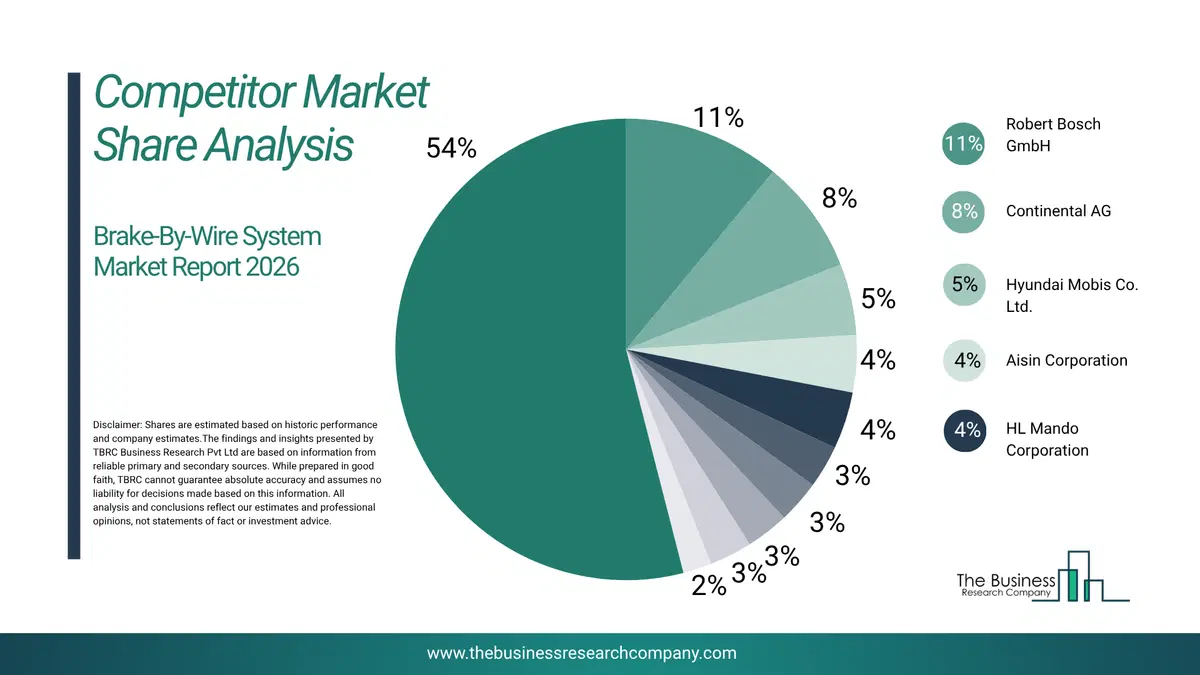
This chart is for illustrative purposes; the full report includes a detailed competitor analysis and comprehensive overview of the top 10 companies in the market.
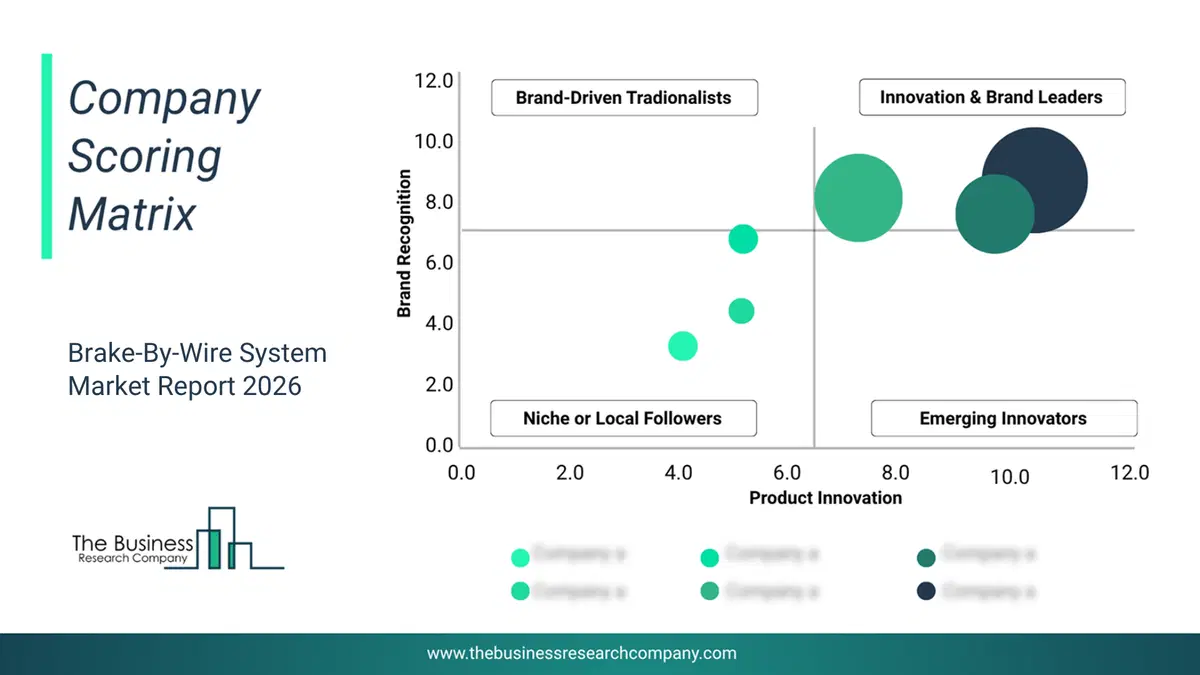
This chart maps companies by product innovation and brand strength, with bubble size indicating relative revenue, helping identify market leaders, challengers, and niche players. This is an illustrative chart; the full report provides a complete and accurate competitive analysis.
Global Brake-By-Wire System Market Trends and Insights
Major companies in the brake-by-wire system market are developing advanced braking technology such as electro-mechanical brake systems, to enhance vehicle safety and improve braking efficiency. An electro-mechanical brake system replaces traditional hydraulic components with electric actuators and mechanical linkages, using electronic controls for precise braking that reduces weight and improves overall efficiency. For instance, in November 2023, ZF Friedrichshafen AG, a Germany-based technology company supplying advanced mobility products, launched the 'dry' brake-by-wire system. It assures safety by duplicating all connections and systems for data transmission, processing, and motor power supply. It provides up to 9 meters shorter stopping distances during 100 km/h automatic emergency braking and up to 17% additional range for electric vehicles owing to improved brake energy recuperation. The dry brake-by-wire system also minimizes particle emissions from brake abrasion by limiting residual drag torques and removing the need to change brake fluids, lowering maintenance requirements.What Are Latest Mergers And Acquisitions In The Brake-By-Wire System Market?
In July 2023, Kongsberg Automotive (KA), a Norway-based technology provider to the vehicle industry, acquired a 20% share of Chassis Autonomy for an undisclosed amount. The acquisition enables KA to provide unique technology to its customers and assist them in incorporating fail-operational steer-by-wire solutions into their vehicles, preparing them for autonomous driving. The deal strengthens the relationship between KA and Chassis Autonomy, which began in 2022. Chassis Autonomy is a Sweden-based designer and provider of brake-by-wire systems for highly automated and autonomous vehicles.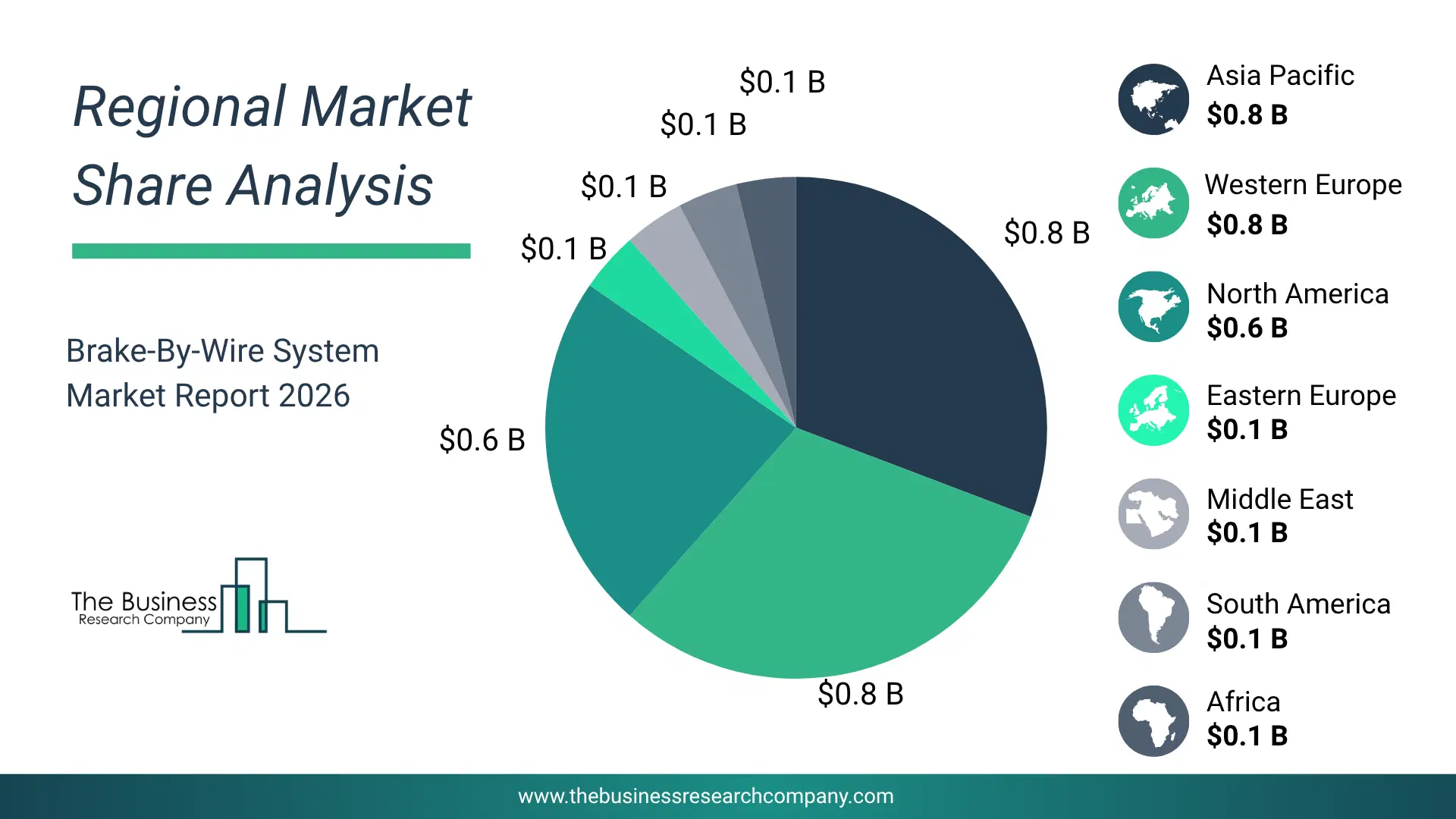
Regional Outlook
North America was the largest region in the brake-by-wire system market in 2025. The regions covered in this market report include Asia-Pacific, South East Asia, Western Europe, Eastern Europe, North America, South America, Middle East, Africa. The countries covered in this market report include Australia, Brazil, China, France, Germany, India, Indonesia, Japan, Taiwan, Russia, South Korea, UK, USA, Canada, Italy, SpainWhat Defines the Brake-By-Wire System Market?
The brake-by-wire system market consists of revenues earned by entities by providing services such as weight reduction, safety and precision, customization, and adaptability. The market value includes the value of related goods sold by the service provider or included within the service offering. The brake-by-wire system market also includes sales of electronic control units (ECUs), brake actuators, brake pedal sensors, brake pressure sensors, diagnostics and monitoring tools, and electronic parking brake (EPB) components. Values in this market are ‘factory gate’ values, that is, the value of goods sold by the manufacturers or creators of the goods, whether to other entities (including downstream manufacturers, wholesalers, distributors, and retailers) or directly to end customers. The value of goods in this market includes related services sold by the creators of the goods.How is Market Value Defined and Measured?
The market value is defined as the revenues that enterprises gain from the sale of goods and/or services within the specified market and geography through sales, grants, or donations in terms of the currency (in USD unless otherwise specified). The revenues for a specified geography are consumption values that are revenues generated by organizations in the specified geography within the market, irrespective of where they are produced. It does not include revenues from resales along the supply chain, either further along the supply chain or as part of other products.
This chart presents market attractiveness based on a quantitative evaluation of growth, competition, strategic alignment, and risk, offering a clear view of opportunity areas for decision-making. This chart is for illustrative purposes; the full report contains the complete analysis.

This chart highlights the Total Addressable Market (TAM) by estimating the maximum revenue opportunity using an assumption-driven approach, supporting strategic planning and opportunity sizing across markets. The chart is illustrative; the full report provides a more comprehensive analysis.
What Key Data and Analysis Are Included in the Brake-By-Wire System Market Report 2026?
The brake-by-wire system market research report is one of a series of new reports from The Business Research Company that provides market statistics, including industry global market size, regional shares, competitors with the market share, detailed market segments, market trends and opportunities, and any further data you may need to thrive in the brake-by-wire system industry. The market research report delivers a complete perspective of everything you need, with an in-depth analysis of the current and future state of the industry.Brake-By-Wire System Market Report Forecast Analysis
| Report Attribute | Details |
|---|---|
| Market Size Value In 2026 | $2.72 billion |
| Revenue Forecast In 2030 | $3.96 billion |
| Growth Rate | CAGR of 9.3% from 2026 to 2030 |
| Base Year For Estimation | 2025 |
| Actual Estimates/Historical Data | 2020-2025 |
| Forecast Period | 2026 - 2030 |
| Market Representation | Revenue in USD Billion and CAGR from 2026 to 2030 |
| Segments Covered | Type, Sales Channel, Application |
| Regional Scope | Asia-Pacific, Western Europe, Eastern Europe, North America, South America, Middle East, Africa |
| Country Scope | The countries covered in the report are Australia, Brazil, China, France, Germany, India, Indonesia, Japan, Taiwan, Russia, South Korea, UK, USA, Canada, Italy, Spain. |
| Key Companies Profiled | Robert Bosch GmbH, ZF Friedrichshafen AG, Continental AG, Hyundai Mobis Co. Ltd., Denso Corporation, Hitachi Astemo Ltd., Knorr‑Bremse AG, Mando Corp., Brembo N.V., Advics Co. Ltd., Nissin Kogyo Co. Ltd., WABCO Holdings Inc., Haldex AB, Valeo SA, TRW Automotive Holdings Corp., Nidec Corporation, JTEKT Corporation, Bosch Engineering GmbH, Aisin Corporation, Chassis Autonomy SBA AB |
| Customization Scope | Request for Customization |
| Pricing And Purchase Options | Explore Purchase Options |