

Breast Cancer Gene (BRCA) Mutations Treatment Market Report 2026
Global Outlook – By Treatment Type (Targeted Therapies, Chemotherapy, Hormonal Therapy, Immunotherapy), By Indication (Breast Cancer, Ovarian Cancer, Pancreatic Cancer, Prostate Cancer), By Administration Route (Oral, Intravenous, Subcutaneous), By End-User (Hospitals, Clinics, Cancer Specialty Clinics) – Market Size, Trends, Strategies, and Forecast to 2030
Breast Cancer Gene (BRCA) Mutations Treatment Market Overview
• Breast Cancer Gene (BRCA) Mutations Treatment market size has reached to $5.01 billion in 2025 • Expected to grow to $7 billion in 2030 at a compound annual growth rate (CAGR) of 6.9% • Growth Driver: Increasing Demand For Targeted Therapies Is Driving The Market Growth Due To Precision Treatment Benefits • North America was the largest region in 2025 and Asia-Pacific is the fastest growing region.What Is Covered Under Breast Cancer Gene (BRCA) Mutations Treatment Market?
Breast cancer gene (BRCA) mutation treatment refers to the treatment that focuses on managing and lowering the risk of breast and ovarian cancers in individuals with harmful BRCA1 or BRCA2 mutations. It aims to enable early mutation detection and apply preventive strategies to enhance patient outcomes. The main types of breast cancer gene (BRCA) mutation treatments are targeted therapies, chemotherapy, hormonal therapy, and immunotherapy. Targeted therapies are drugs designed to specifically disrupt molecules or pathways critical to cancer cell growth, enabling precise treatment while minimizing harm to healthy cells. These therapies are used for various indications, including breast cancer, ovarian cancer, pancreatic cancer, and prostate cancer. These are administered through various route of administration such as oral, intravenous, and subcutaneous, and are used by different end users, including hospitals, clinics, and cancer specialty centers.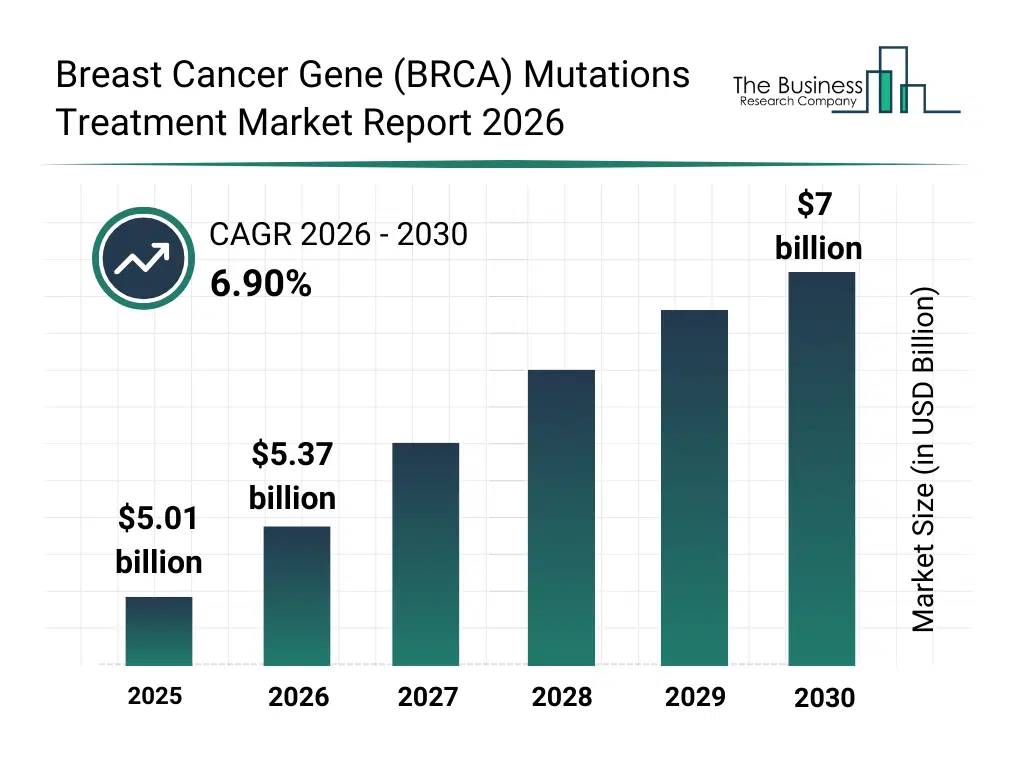
What Is The Breast Cancer Gene (BRCA) Mutations Treatment Market Size and Share 2026?
The breast cancer gene (brca) mutations treatment market size has grown strongly in recent years. It will grow from $5.01 billion in 2025 to $5.37 billion in 2026 at a compound annual growth rate (CAGR) of 7.2%. The growth in the historic period can be attributed to limited awareness of brca mutations, restricted access to genetic testing services, reliance on conventional chemotherapy, increasing incidence of breast and ovarian cancer, gradual adoption of targeted therapies.What Is The Breast Cancer Gene (BRCA) Mutations Treatment Market Growth Forecast?
The breast cancer gene (brca) mutations treatment market size is expected to see strong growth in the next few years. It will grow to $7 billion in 2030 at a compound annual growth rate (CAGR) of 6.9%. The growth in the forecast period can be attributed to advancements in genomic sequencing technologies, expansion of parp inhibitor indications, rising investment in precision oncology, increasing adoption of combination therapies, supportive reimbursement policies for genetic testing and targeted treatments. Major trends in the forecast period include rising adoption of genetic testing and early brca mutation screening, growing use of parp inhibitors in targeted therapy, increasing focus on preventive and risk-reduction treatment strategies, expansion of personalized and precision oncology approaches, improved access to multimodal treatment options for brca-related cancers.
Global Breast Cancer Gene (BRCA) Mutations Treatment Market Segmentation
1) By Treatment Type: Targeted Therapies, Chemotherapy, Hormonal Therapy, Immunotherapy 2) By Indication: Breast Cancer, Ovarian Cancer, Pancreatic Cancer, Prostate Cancer 3) By Administration Route: Oral, Intravenous, Subcutaneous 4) By End-User: Hospitals, Clinics, Cancer Specialty Clinics Subsegments: 1) By Targeted Therapies: Poly (ADP-Ribose) Polymerase Inhibitors, Mammalian Target Of Rapamycin Inhibitors, Cyclin-Dependent Kinase 4 And 6 Inhibitors, Tyrosine Kinase Inhibitors 2) By Chemotherapy: Platinum-Based chemotherapy, Anthracyclines, Taxanes, Antimetabolites 3) By Hormonal Therapy: Selective Estrogen Receptor Modulators (SERMs), Aromatase Inhibitors, Selective Estrogen Receptor Degraders (SERDs), Luteinizing Hormone-Releasing Hormone (LHRH) Agonists 4) By Immunotherapy: Immune Checkpoint Inhibitors, Cancer Vaccines, Monoclonal AntibodiesWhat Are The Drivers Of The Breast Cancer Gene (BRCA) Mutations Treatment Market?
The increasing demand for targeted therapies is expected to propel the growth of the breast cancer gene (BRCA) mutation treatment market going forward. Targeted therapies are medical treatments that specifically attack cancer cells by focusing on genetic mutations or proteins involved in cancer growth. The rising demand for targeted therapies is primarily due to their ability to specifically attack disease-causing cells or molecules while minimizing damage to healthy tissues, resulting in improved treatment effectiveness and fewer side effects compared to traditional therapies. Targeted therapies support the treatment of breast cancer gene (BRCA) mutations by offering precision medicines that specifically address the genetic alterations driving the disease, improving treatment outcomes and reducing unnecessary side effects. For instance, in July 2023, according to the report published by the American Society of Gene & Cell Therapy (ASGCT), a US-based professional membership organization, at the end of Q1 2023, there were 247 gene therapies in Phase II, this number rose by 5% and reached 260 by the end of Q2 2023. Therefore, increasing demand for targeted therapies is driving the growth of the breast cancer gene (BRCA) mutation treatment market. The growing focus on personalised medicine is expected to propel the growth of the breast cancer gene (BRCA) mutation treatment market going forward. Personalised medicine refers to tailoring medical treatment to an individual’s unique genetic, biological, and clinical characteristics. The rise in personalised medicine is driven by advances in genetic testing, which allow treatments to be tailored more precisely to each individual’s biological makeup. Growing focus on personalised medicine is transforming the management of BRCA gene mutations by enabling tailored risk assessment, targeted therapies such as PARP inhibitors, and individualized preventive strategies that optimize treatment efficacy while minimizing adverse effects, ultimately improving outcomes for patients with hereditary breast and ovarian cancers. For instance, in February 2024, Personalized Medicine Coalition, a US-based non-profit organization, in 2023, FDA approved 16 new personalized treatments for rare disease patients, up from 6 in 2022. The newly approved personalized treatments for 2023 also include seven cancer drugs and three for other diseases and conditions. Therefore, the growing focus on personalised medicine is driving the growth of the breast cancer gene (BRCA) mutation treatment market.Key Players In The Global Breast Cancer Gene (BRCA) Mutations Treatment Market
Major companies operating in the breast cancer gene (brca) mutations treatment market are Pfizer Inc., Merck & Co. Inc., AbbVie Inc., Thermo Fisher Scientific Inc., AstraZeneca PLC, Novartis AG, GSK plc, Janssen Biotech Inc., Astellas Pharma Inc., Genentech Inc., Clovis Oncology Inc., Owkin Inc., Allarity Therapeutics Inc., VBL Therapeutics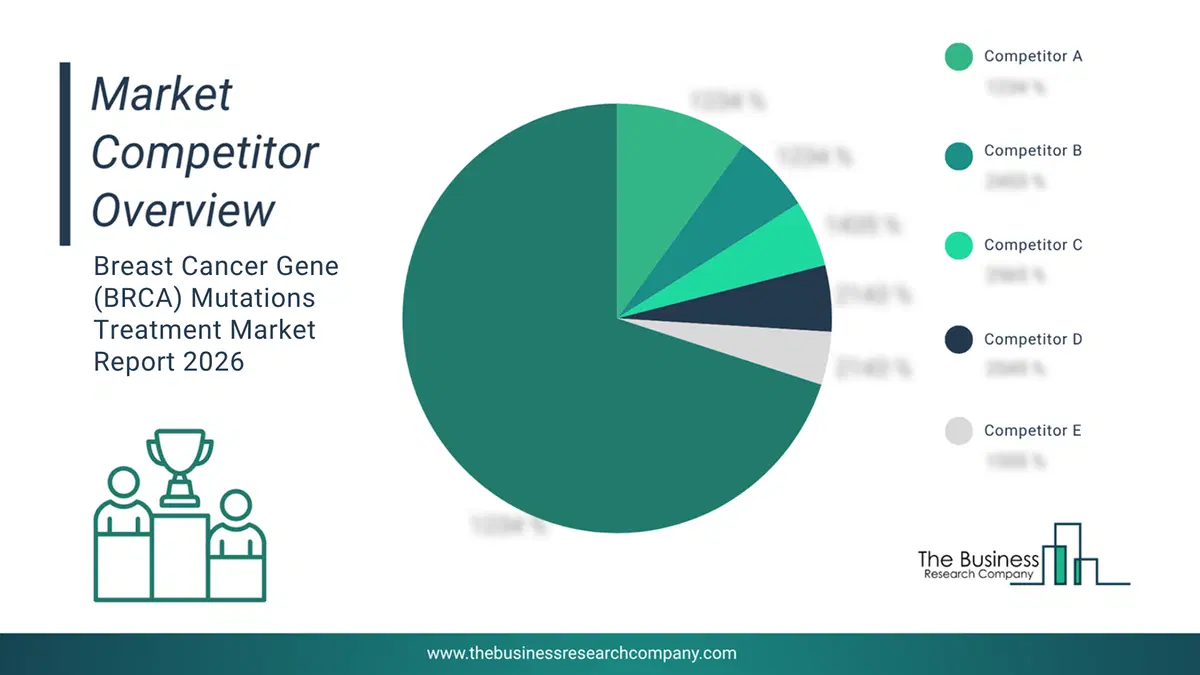
This chart is for illustrative purposes; the full report includes a detailed competitor analysis and comprehensive overview of the top 10 companies in the market.
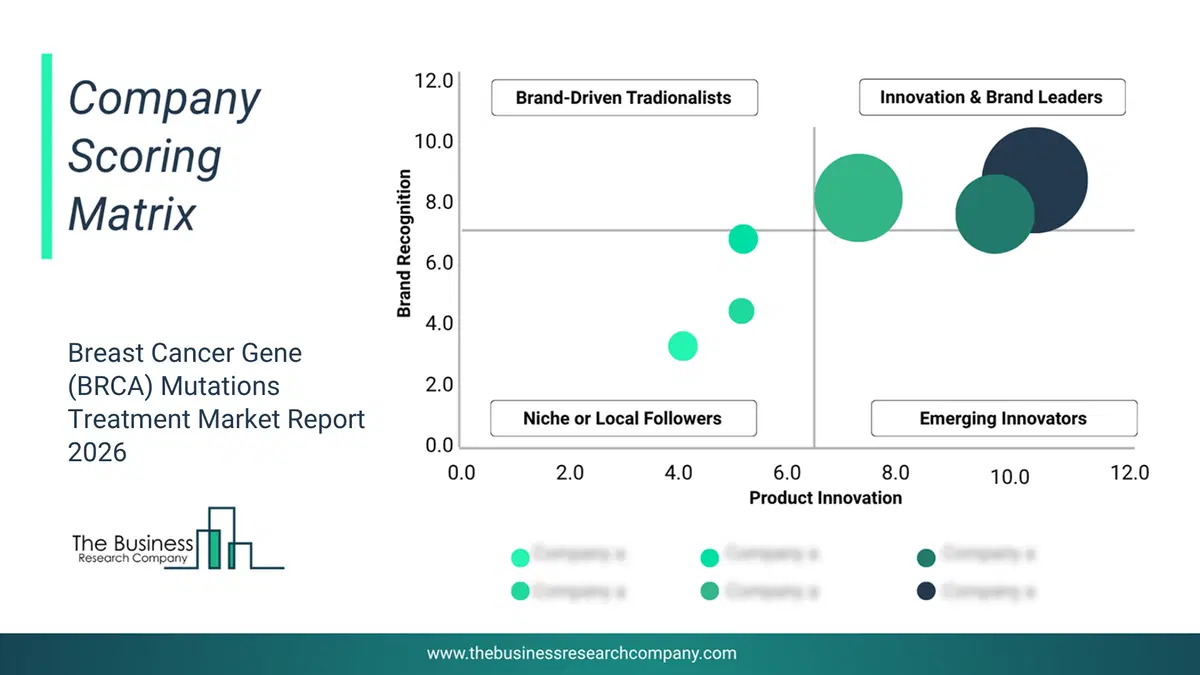
This chart maps companies by product innovation and brand strength, with bubble size indicating relative revenue, helping identify market leaders, challengers, and niche players. This is an illustrative chart; the full report provides a complete and accurate competitive analysis.
What Are Latest Mergers And Acquisitions In The Breast Cancer Gene (BRCA) Mutations Treatment Market?
In October 2024, Owkin Inc., a US-based biotechnology company, partnered with AstraZeneca plc to accelerate and expand access to gBRCA pre-screening. The partnership aims to create an AI-driven gBRCA pre-screening tool that utilizes digitized pathology slides to speed up and broaden access to breast cancer gene (BRCA) mutation testing in breast cancer patients. AstraZeneca plc is a UK-based biopharmaceutical company specializing in providing breast cancer gene (BRCA) mutation treatment.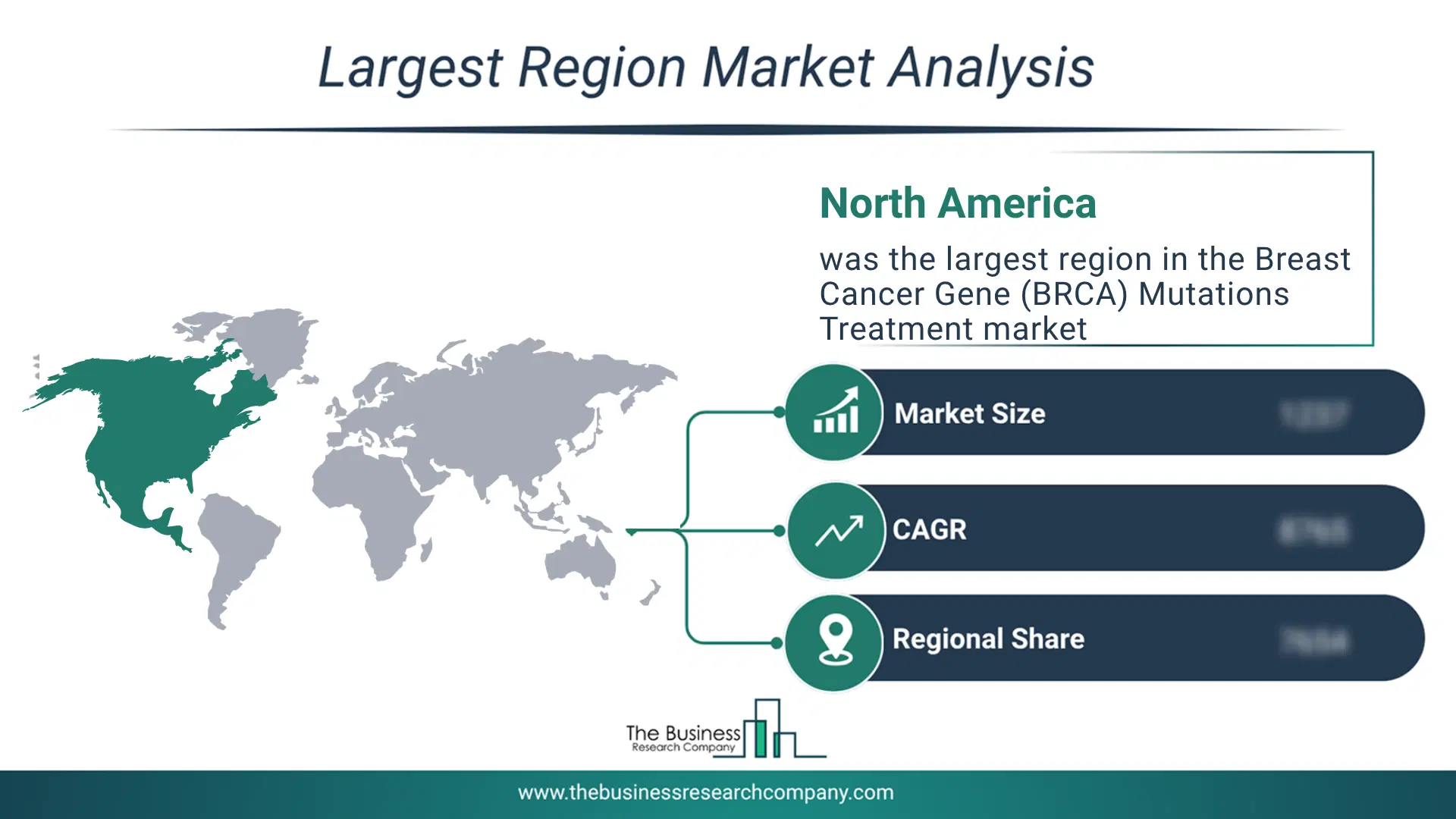
Regional Insights
North America was the largest region in the breast cancer gene (BRCA) mutations treatment market in 2025. Asia-Pacific is expected to be the fastest-growing region in the forecast period. The regions covered in this market report are Asia-Pacific, South East Asia, Western Europe, Eastern Europe, North America, South America, Middle East, Africa. The countries covered in this market report are Australia, Brazil, China, France, Germany, India, Indonesia, Japan, Taiwan, Russia, South Korea, UK, USA, Canada, Italy, Spain.What Defines the Breast Cancer Gene (BRCA) Mutations Treatment Market?
The breast cancer gene (BRCA) mutations treatment market consists of revenues earned by entities by providing services such as genetic testing and counseling, targeted therapy administration, radiation therapy, surgical interventions (including mastectomy and oophorectomy), and post-treatment follow-up care. The market value includes the value of related goods sold by the service provider or included within the service offering. The breast cancer gene (BRCA) mutations treatment market also includes sales of genetic breast cancer gene (BRCA) testing kits, homologous recombination deficiency (HRD) assays, imaging tools, and emerging preventive immunotherapy vaccines. Values in this market are ‘factory gate’ values, that is, the value of goods sold by the manufacturers or creators of the goods, whether to other entities (including downstream manufacturers, wholesalers, distributors, and retailers) or directly to end customers. The value of goods in this market includes related services sold by the creators of the goods.How is Market Value Defined and Measured?
The market value is defined as the revenues that enterprises gain from the sale of goods and/or services within the specified market and geography through sales, grants, or donations in terms of the currency (in USD unless otherwise specified). The revenues for a specified geography are consumption values that are revenues generated by organizations in the specified geography within the market, irrespective of where they are produced. It does not include revenues from resales along the supply chain, either further along the supply chain or as part of other products.
This chart presents market attractiveness based on a quantitative evaluation of growth, competition, strategic alignment, and risk, offering a clear view of opportunity areas for decision-making. This chart is for illustrative purposes; the full report contains the complete analysis.

This chart highlights the Total Addressable Market (TAM) by estimating the maximum revenue opportunity using an assumption-driven approach, supporting strategic planning and opportunity sizing across markets. The chart is illustrative; the full report provides a more comprehensive analysis.
What Key Data and Analysis Are Included in the Breast Cancer Gene (BRCA) Mutations Treatment Market Report 2026?
The breast cancer gene (brca) mutations treatment market research report is one of a series of new reports from The Business Research Company that provides market statistics, including industry global market size, regional shares, competitors with the market share, detailed market segments, market trends and opportunities, and any further data you may need to thrive in the breast cancer gene (brca) mutations treatment industry. The market research report delivers a complete perspective of everything you need, with an in-depth analysis of the current and future state of the industry.Breast Cancer Gene (BRCA) Mutations Treatment Market Report Forecast Analysis
| Report Attribute | Details |
|---|---|
| Market Size Value In 2026 | $5.37 billion |
| Revenue Forecast In 2030 | $7 billion |
| Growth Rate | CAGR of 7.2% from 2026 to 2030 |
| Base Year For Estimation | 2025 |
| Actual Estimates/Historical Data | 2020-2025 |
| Forecast Period | 2026 - 2030 |
| Market Representation | Revenue in USD Billion and CAGR from 2026 to 2030 |
| Segments Covered | Treatment Type, Indication, Administration Route, End-User |
| Regional Scope | Asia-Pacific, Western Europe, Eastern Europe, North America, South America, Middle East, Africa |
| Country Scope | The countries covered in the report are Australia, Brazil, China, France, Germany, India, Indonesia, Japan, Taiwan, Russia, South Korea, UK, USA, Canada, Italy, Spain. |
| Key Companies Profiled | Pfizer Inc., Merck & Co. Inc., AbbVie Inc., Thermo Fisher Scientific Inc., AstraZeneca PLC, Novartis AG, GSK plc, Janssen Biotech Inc., Astellas Pharma Inc., Genentech Inc., Clovis Oncology Inc., Owkin Inc., Allarity Therapeutics Inc., VBL Therapeutics |
| Customization Scope | Request for Customization |
| Pricing And Purchase Options | Explore Purchase Options |