
Breast Cancer Monoclonal Antibodies Market Report 2026
Global Outlook – By Product (Naked Mabs, Conjugated Mabs), By Treatment (Chemotherapy, Surgery & Radiation Therapy, Targeted Therapy, Biologic Therapy, Hormone Therapy), By End-User (Hospitals, Retail Pharmacies) – Market Size, Trends, Strategies, and Forecast to 2030
Breast Cancer Monoclonal Antibodies Market Overview
• Breast Cancer Monoclonal Antibodies market size has reached to $21.47 billion in 2025 • Expected to grow to $33.27 billion in 2030 at a compound annual growth rate (CAGR) of 9.2% • Growth Driver: Rising Breast Cancer Incidence Fuels Growth In The Market • Market Trend: Advancements In Convenient Administration Formats For Targeted Cancer Treatments • North America was the largest region in 2025.What Is Covered Under Breast Cancer Monoclonal Antibodies Market?
Breast cancer monoclonal antibodies (mABs) refer to the use of antibodies in the treatment of both early-stage and advanced breast cancer. It functions by identifying and locating particular proteins in cancer cells. Every MAB recognizes a different protein. Therefore, different MABs must be created to target various cancer types. They kill the cancer cell in various ways depending on the protein they are targeting. The main types of breast cancer monoclonal antibodies are naked mABs and conjugated mABs. Naked mABs are antibodies that are free of any drugs or radioactive materials. They are self-contained. The most prevalent type of mAb used to fight cancer is this one. The different types of treatments include chemotherapy, surgery & radiation therapy, targeted therapy, biologic therapy, and hormone therapy, and they are used in various sectors such as hospitals, and retail pharmacies.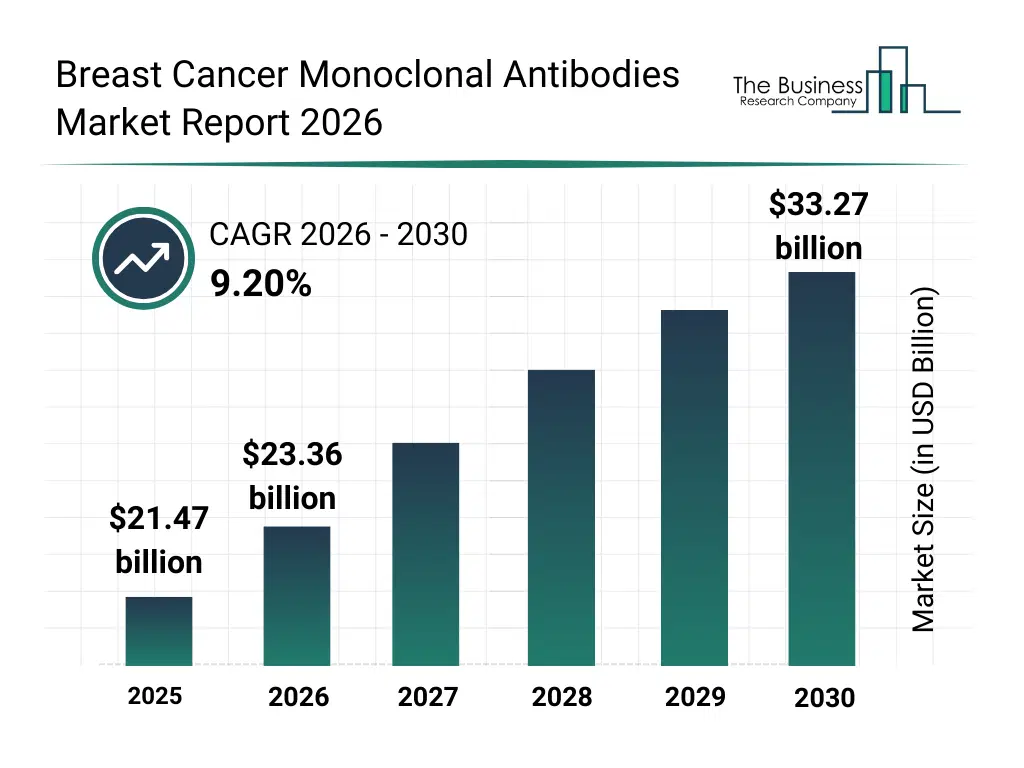
What Is The Breast Cancer Monoclonal Antibodies Market Size and Share 2026?
The breast cancer monoclonal antibodies market size has grown strongly in recent years. It will grow from $21.47 billion in 2025 to $23.36 billion in 2026 at a compound annual growth rate (CAGR) of 8.8%. The growth in the historic period can be attributed to rising global prevalence of breast cancer, early approvals of monoclonal antibody therapies, increasing awareness of targeted cancer treatments, expansion of oncology treatment centers, growing use of biologic therapies in oncology.What Is The Breast Cancer Monoclonal Antibodies Market Growth Forecast?
The breast cancer monoclonal antibodies market size is expected to see strong growth in the next few years. It will grow to $33.27 billion in 2030 at a compound annual growth rate (CAGR) of 9.2%. The growth in the forecast period can be attributed to development of next-generation conjugated mabs, increasing focus on personalized cancer treatment, rising adoption of biosimilars, expansion of oncology biologics manufacturing, growing healthcare investment in cancer therapeutics. Major trends in the forecast period include rising adoption of targeted monoclonal antibody therapies in breast cancer, increasing use of combination therapies with chemotherapy and hormone therapy, growing demand for her2-targeted and biomarker-specific treatments, expansion of conjugated monoclonal antibodies for advanced breast cancer, improved clinical outcomes driving long-term monoclonal antibody use.
Global Breast Cancer Monoclonal Antibodies Market Segmentation
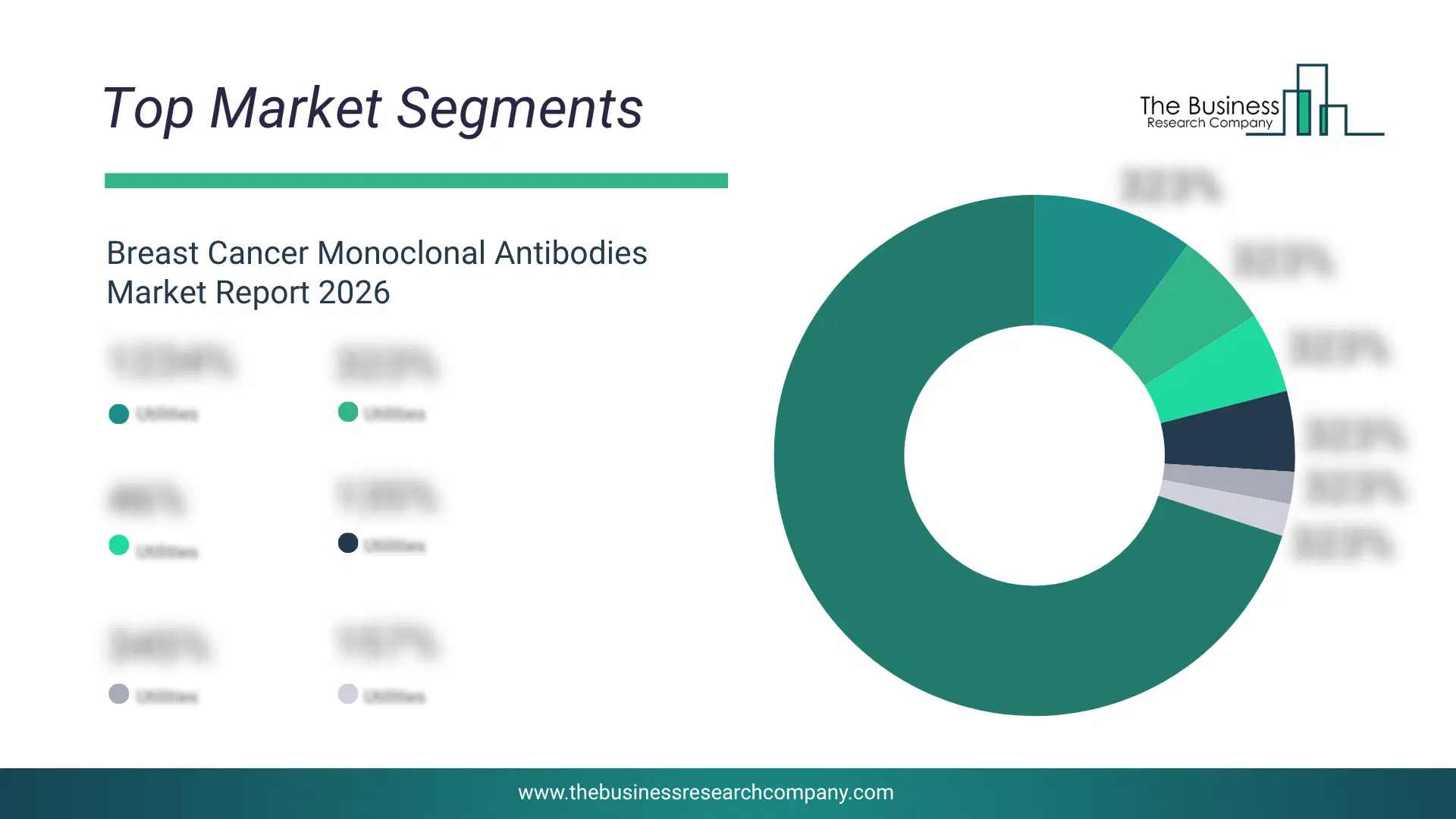
1) By Product: Naked Mabs, Conjugated Mabs 2) By Treatment: Chemotherapy, Surgery & Radiation Therapy, Targeted Therapy, Biologic Therapy, Hormone Therapy 3) By End-User: Hospitals, Retail Pharmacies Subsegments: 1) By Naked MABs: Trastuzumab (Herceptin), Rituximab, Cetuximab, Other Naked MABs 2) By Conjugated MABs: Ado-trastuzumab emtansine (Kadcyla), Brentuximab vedotin, Other Conjugated MABsWhat Is The Driver Of The Breast Cancer Monoclonal Antibodies Market?
The rising prevalence of breast cancer globally is expected to propel the growth of the breast cancer monoclonal antibody market going forward. Breast cancer is a disease in which cells in the breast grow uncontrollably, forming a tumor that can invade nearby tissues or spread to other parts of the body. Breast cancer is rising primarily due to lifestyle changes, as factors like poor diet and reduced physical activity increase the risk of abnormal cell growth in the breast. Breast cancer monoclonal antibodies help treat breast cancer by specifically targeting and blocking cancer cell growth pathways, thereby slowing tumor progression and improving patient outcomes. For instance, in June 2024, according to the American Society of Plastic Surgeons, a US-based Medication company, in 2023, approximately 25.4 million cosmetic minimally invasive procedures were performed, including 153,600 breast lift surgeries, a 7% increase compared to 2022. Therefore, the rising prevalence of breast cancer globally is expected to boost the growth of the breast cancer monoclonal antibody market.Key Players In The Global Breast Cancer Monoclonal Antibodies Market
Major companies operating in the breast cancer monoclonal antibodies market are Amgen Inc., Mylan N.V., Merck & Co. Inc., Novartis AG, GlaxoSmithKline plc., Daiichi Sankyo Company Ltd., Biocad, Boehringer Ingelheim International GmbH, Bristol-Myers Squibb Company, Celldex Therapeutics Inc., Celltrion Inc., F. Hoffmann-La Roche AG, Immunomedics Inc., MacroGenics Inc., Pfizer Inc., Teva Pharmaceutical Industries Ltd., Puma Biotechnology Inc., Seattle Genetics Inc., AstraZeneca plc, Eisai Co. Ltd., ImmunoGen Inc., Eli Lilly and Company, AbbVie Inc., Johnson & Johnson, Mersana Therapeutics Inc.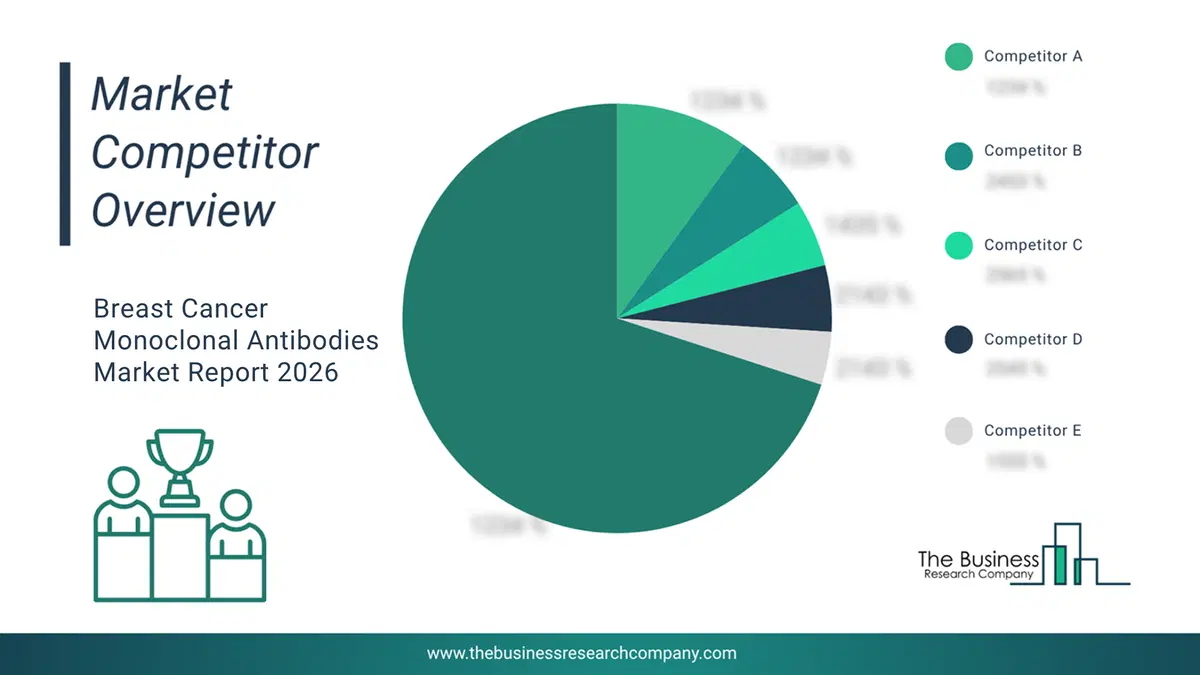
This chart is for illustrative purposes; the full report includes a detailed competitor analysis and comprehensive overview of the top 10 companies in the market.
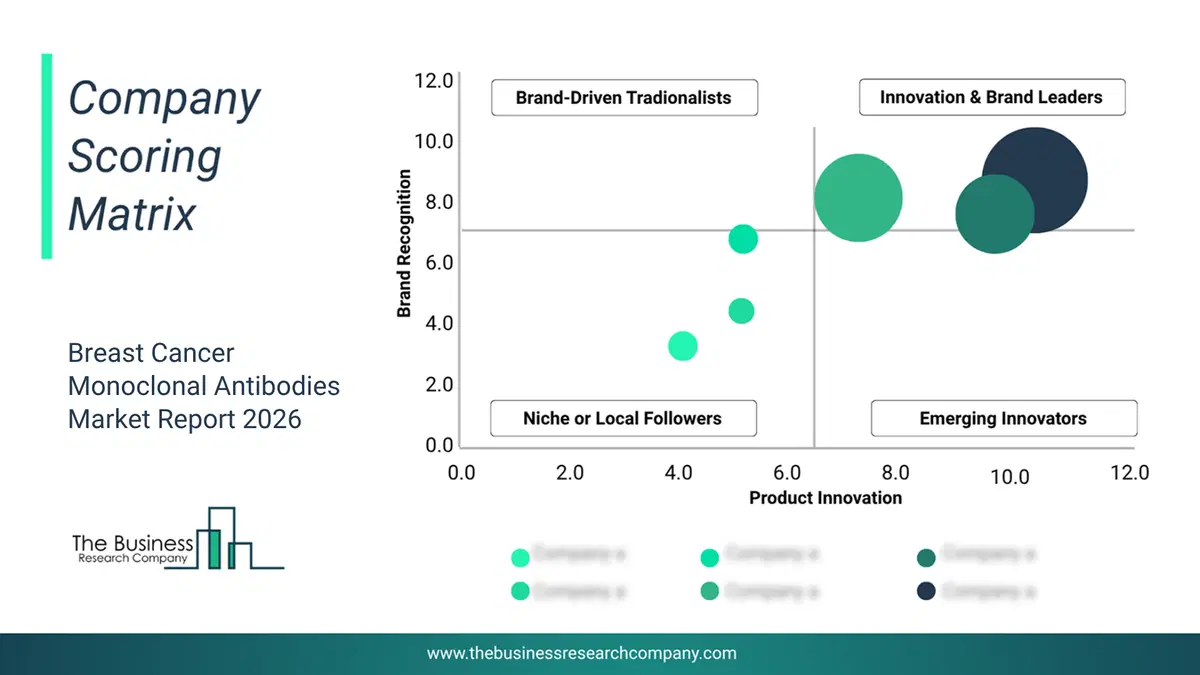
This chart maps companies by product innovation and brand strength, with bubble size indicating relative revenue, helping identify market leaders, challengers, and niche players. This is an illustrative chart; the full report provides a complete and accurate competitive analysis.
Global Breast Cancer Monoclonal Antibodies Market Trends and Insights
Major companies operating in the breast cancer monoclonal antibodies market are introducing innovative subcutaneous formulations to enhance treatment convenience, reduce administration time, and improve patient access to HER2-targeted therapies. Subcutaneous combinations allow rapid delivery of biologics without the need for prolonged intravenous infusions, supporting better patient experience and healthcare efficiency. For instance, in November 2023, Chugai Pharmaceutical, a Japan-based biopharmaceutical company, launched Phesgo, a fixed-dose subcutaneous combination of pertuzumab and trastuzumab, for the treatment of HER2-positive breast and colorectal cancer. This advancement aims to streamline HER2-targeted therapy by enabling faster, more convenient administration while maintaining clinical efficacy. The launch strengthens Chugai’s oncology portfolio and supports wider adoption of patient-friendly biologic therapies in oncology care.What Are Latest Mergers And Acquisitions In The Breast Cancer Monoclonal Antibodies Market?
In December 2023, Pfizer Inc., a US-based pharmaceutical and biotechnology company, acquired Seagen Inc. for $42 billion. The acquisition aims to strengthen Pfizer's position in the oncology market by enhancing its portfolio of innovative cancer therapies, particularly in the development of targeted treatments for various cancers, including breast cancer. Seagen Inc. is a US-based biotechnology company specializing in the development of innovative therapies for the treatment of cancer, particularly through the use of monoclonal antibodies and antibody-drug conjugates.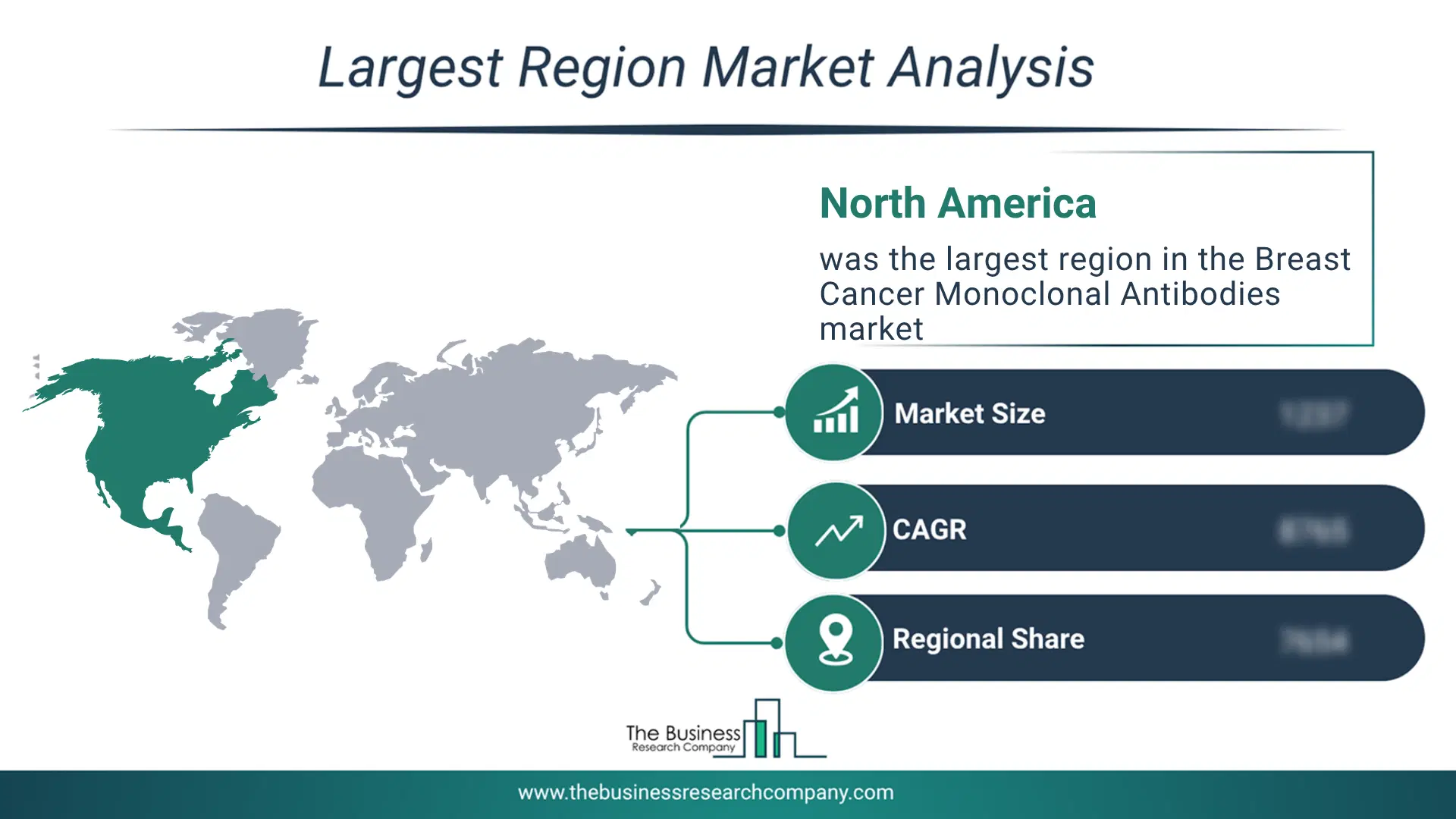
Regional Insights
North America was the largest region in the breast cancer monoclonal antibodies market in 2025. The regions covered in this market report are Asia-Pacific, South East Asia, Western Europe, Eastern Europe, North America, South America, Middle East, Africa. The countries covered in this market report are Australia, Brazil, China, France, Germany, India, Indonesia, Japan, Taiwan, Russia, South Korea, UK, USA, Canada, Italy, Spain.What Defines the Breast Cancer Monoclonal Antibodies Market?
The breast cancer monoclonal antibodies (mABs) market consists of sales of trastuzumab, pertuzumab, bevacizumab, and rituximab. Values in this market are factory gate values, that is the value of goods sold by the manufacturers or creators of the goods, whether to other entities (including downstream manufacturers, wholesalers, distributors and retailers) or directly to end customers. The value of goods in this market includes related services sold by the creators of the goods.How is Market Value Defined and Measured?
The market value is defined as the revenues that enterprises gain from the sale of goods and/or services within the specified market and geography through sales, grants, or donations in terms of the currency (in USD unless otherwise specified). The revenues for a specified geography are consumption values that are revenues generated by organizations in the specified geography within the market, irrespective of where they are produced. It does not include revenues from resales along the supply chain, either further along the supply chain or as part of other products.
This chart presents market attractiveness based on a quantitative evaluation of growth, competition, strategic alignment, and risk, offering a clear view of opportunity areas for decision-making. This chart is for illustrative purposes; the full report contains the complete analysis.

This chart highlights the Total Addressable Market (TAM) by estimating the maximum revenue opportunity using an assumption-driven approach, supporting strategic planning and opportunity sizing across markets. The chart is illustrative; the full report provides a more comprehensive analysis.
What Key Data and Analysis Are Included in the Breast Cancer Monoclonal Antibodies Market Report 2026?
The breast cancer monoclonal antibodies market research report is one of a series of new reports from The Business Research Company that provides market statistics, including industry global market size, regional shares, competitors with the market share, detailed market segments, market trends and opportunities, and any further data you may need to thrive in the breast cancer monoclonal antibodies industry. The market research report delivers a complete perspective of everything you need, with an in-depth analysis of the current and future state of the industry.Breast Cancer Monoclonal Antibodies Market Report Forecast Analysis
| Report Attribute | Details |
|---|---|
| Market Size Value In 2026 | $23.36 billion |
| Revenue Forecast In 2030 | $33.27 billion |
| Growth Rate | CAGR of 8.8% from 2026 to 2030 |
| Base Year For Estimation | 2025 |
| Actual Estimates/Historical Data | 2020-2025 |
| Forecast Period | 2026 - 2030 |
| Market Representation | Revenue in USD Billion and CAGR from 2026 to 2030 |
| Segments Covered | Product, Treatment, End-User |
| Regional Scope | Asia-Pacific, Western Europe, Eastern Europe, North America, South America, Middle East, Africa |
| Country Scope | The countries covered in the report are Australia, Brazil, China, France, Germany, India, Indonesia, Japan, Taiwan, Russia, South Korea, UK, USA, Canada, Italy, Spain. |
| Key Companies Profiled | Amgen Inc., Mylan N.V., Merck & Co. Inc., Novartis AG, GlaxoSmithKline plc., Daiichi Sankyo Company Ltd., Biocad, Boehringer Ingelheim International GmbH, Bristol-Myers Squibb Company, Celldex Therapeutics Inc., Celltrion Inc., F. Hoffmann-La Roche AG, Immunomedics Inc., MacroGenics Inc., Pfizer Inc., Teva Pharmaceutical Industries Ltd., Puma Biotechnology Inc., Seattle Genetics Inc., AstraZeneca plc, Eisai Co. Ltd., ImmunoGen Inc., Eli Lilly and Company, AbbVie Inc., Johnson & Johnson, Mersana Therapeutics Inc. |
| Customization Scope | Request for Customization |
| Pricing And Purchase Options | Explore Purchase Options |