
Breast Milk Substitutes Market Report 2026
Global Outlook – By Product Type (Ready-To-Use, Powdered, Concentrated Liquid), By Substitute Type (Milk-Based Formula, Soy-Based Formula, Hypoallergenic Formula, Other Substitute Types), By Consumer Age (Below 6 Months, 6-23 Months), By Distribution Channel (Supermarkets Or Hypermarkets, Pharmacies, Online Retail), By End Users (Hospitals And Clinics, Specialty Clinics, Other End Users) – Market Size, Trends, Strategies, and Forecast to 2030
Breast Milk Substitutes Market Overview
• Breast Milk Substitutes market size has reached to $17.55 billion in 2025 • Expected to grow to $26.14 billion in 2030 at a compound annual growth rate (CAGR) of 8.3% • Growth Driver: Rising Female Workforce Participation Driving The Growth Of The Market Due To Increasing Demand From Working Mothers • Market Trend: Nestlé Launches HMO-Enriched Growing-Up Milk to Strengthen Early Life Nutrition in China • North America was the largest region in 2025 and Asia-Pacific is the fastest growing region.What Is Covered Under Breast Milk Substitutes Market?
Breast milk substitutes are commercially formulated products designed to provide essential nutrients for infants who are not breastfed, either partially or entirely. These substitutes include infant formulas made from cow’s milk, soy, or hydrolyzed proteins, fortified with vitamins, minerals, and essential fatty acids to support growth and development. They serve as an alternative when breastfeeding is not possible due to medical, personal, or logistical reasons. The main breast milk substitute products are ready-to-use, powdered, and concentrated liquid. Ready-to-use breast milk substitutes come in a pre-mixed liquid form that does not require any preparation or dilution. It offers various types of substitutes, including milk-based formula, soy-based formula, hypoallergenic formula, and others, and is used for below 6 months and 6-23 months of age. It is distributed through supermarkets or hypermarkets, pharmacies, and online retail and is used by various end users such as hospitals and clinics, specialty clinics, and others.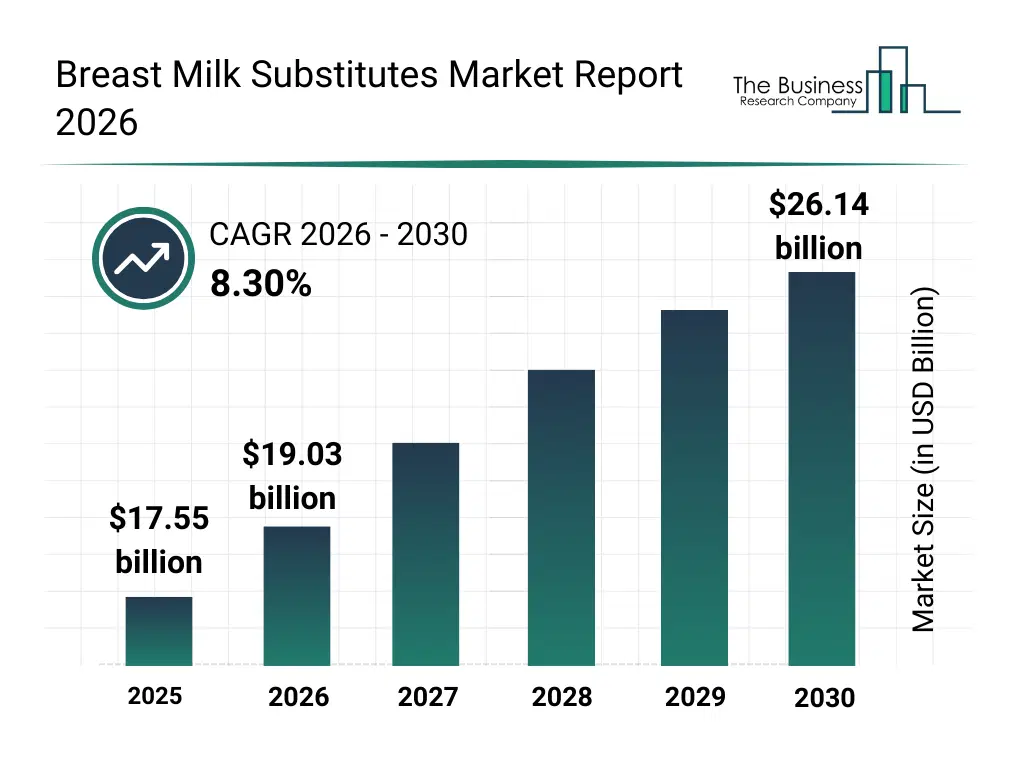
What Is The Breast Milk Substitutes Market Size and Share 2026?
The breast milk substitutes market size has grown strongly in recent years. It will grow from $17.55 billion in 2025 to $19.03 billion in 2026 at a compound annual growth rate (CAGR) of 8.4%. The growth in the historic period can be attributed to decline in breastfeeding rates in urban areas, rising working women population, increasing awareness of infant nutrition, expansion of retail infant care products, growth in pediatric healthcare access.What Is The Breast Milk Substitutes Market Growth Forecast?
The breast milk substitutes market size is expected to see strong growth in the next few years. It will grow to $26.14 billion in 2030 at a compound annual growth rate (CAGR) of 8.3%. The growth in the forecast period can be attributed to rising infant population in developing regions, increasing demand for premium infant formulas, expansion of e-commerce distribution channels, innovation in nutritional formulations, growing awareness of infant food safety. Major trends in the forecast period include rising demand for infant nutrition alternatives, increasing adoption of hypoallergenic formulations, growing preference for fortified and organic formulas, expansion of ready-to-use infant nutrition products, increasing focus on infant digestive health.
Global Breast Milk Substitutes Market Segmentation
1) By Product Type: Ready-To-Use, Powdered, Concentrated Liquid 2) By Substitute Type: Milk-Based Formula, Soy-Based Formula, Hypoallergenic Formula, Other Substitute Types 3) By Consumer Age: Below 6 Months, 6-23 Months 4) By Distribution Channel: Supermarkets Or Hypermarkets, Pharmacies, Online Retail 5) By End Users: Hospitals And Clinics, Specialty Clinics, Other End Users Subsegments: 1) By Ready-To-Use: Standard Infant Formula, Specialized Infant Formula, Organic Infant Formula 2) By Powdered: Standard Powdered Formula, Hypoallergenic Powdered Formula, Organic Powdered Formula 3) By Concentrated Liquid: Standard Concentrated Formula, Lactose-Free Concentrated Formula, Organic Concentrated FormulaWhat Is The Driver Of The Breast Milk Substitutes Market?
The rising female workforce participation is expected to propel the growth of the breast milk substitutes market going forward. Female workforce participation refers to the percentage of women who are employed or actively seeking employment within the labor market. Female workforce participation is increasing primarily due to improving access to education, which equips women with skills and qualifications, enabling greater employment opportunities and economic independence. Breast milk substitutes are required for the female workforce as they provide a convenient and nutritionally adequate feeding option for infants when working mothers are unable to breastfeed due to time constraints, workplace limitations, or lack of maternity leave, ensuring that their babies receive essential nutrients while they maintain their professional commitments. For instance, in February 2025, according to the House of Commons, a UK-based government body, in the UK, 16.37 million women aged 16 and above were employed between October and December 2024. Therefore, the rising female workforce participation is driving the growth of the breast milk substitutes industry.Key Players In The Global Breast Milk Substitutes Market
Major companies operating in the breast milk substitutes market are Nestlé S.A., Mead Johnson Nutrition Company LLC, BASF SE, Abbott Laboratories, Danone S.A., The Kraft Heinz Company, Koninklijke FrieslandCampina N.V. (FrieslandCampina), Arla Foods Amba, Reckitt Benckiser Group plc, Fonterra Co-operative Group Limited, Perrigo Company plc, The Hain Celestial Group Inc., Hero Group AG, HiPP GmbH & Co. Vertrieb KG, Beingmate Baby & Child Food Co. Ltd., Bellamy's Organic Pty Ltd., Vitagermine SAS, Kendal Nutricare Ltd. (Kendamil), Cow & Gate, Humana Inc.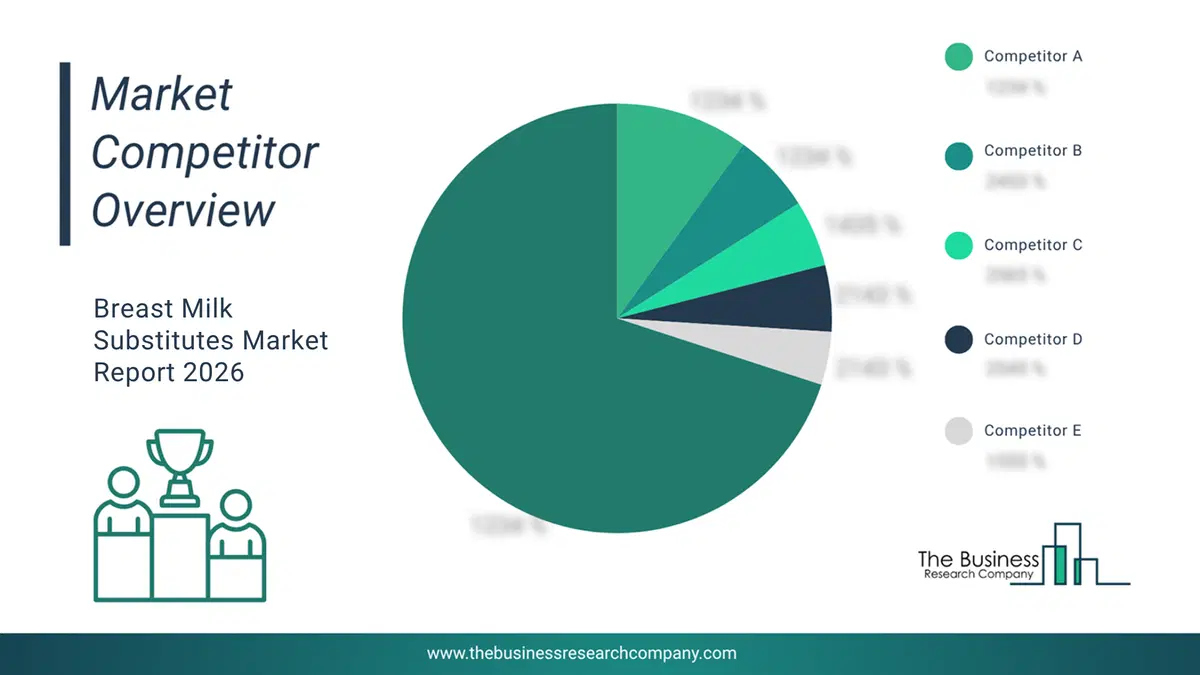
This chart is for illustrative purposes; the full report includes a detailed competitor analysis and comprehensive overview of the top 10 companies in the market.
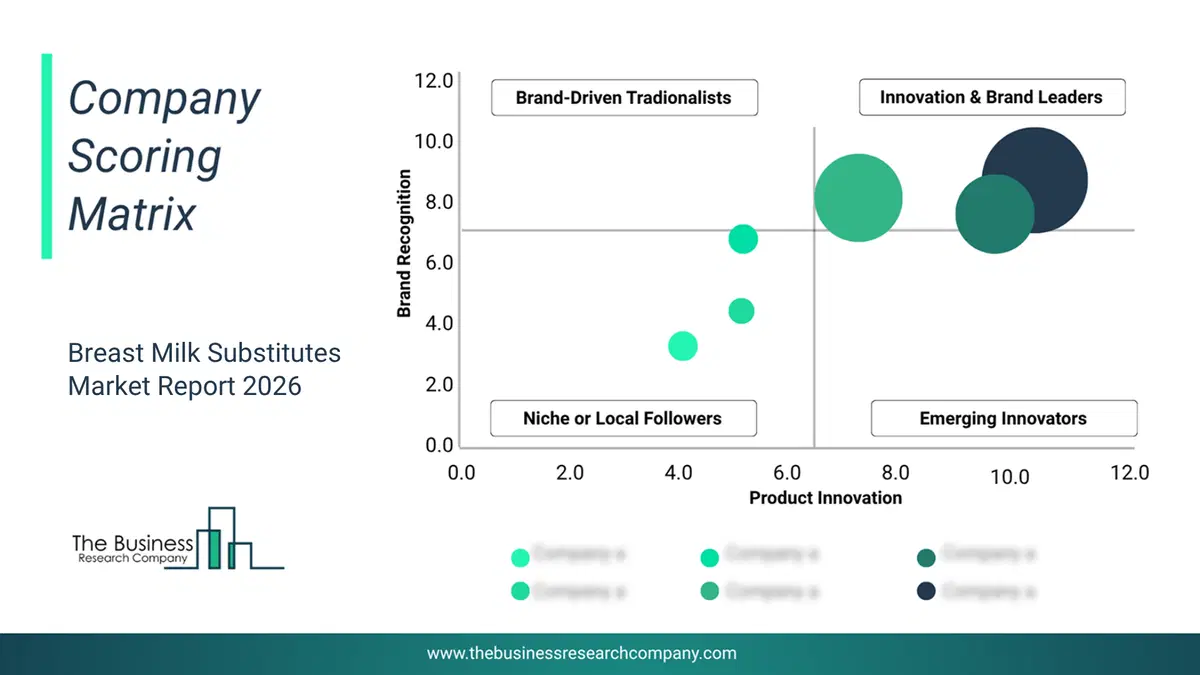
This chart maps companies by product innovation and brand strength, with bubble size indicating relative revenue, helping identify market leaders, challengers, and niche players. This is an illustrative chart; the full report provides a complete and accurate competitive analysis.
Global Breast Milk Substitutes Market Trends and Insights
Major companies operating in the breast milk substitutes market are focusing on scientific innovation, such as Human Milk Oligosaccharide (HMO)-enriched formulations, to more closely replicate the functional benefits of natural breast milk and support immune, gut, and cognitive development in young children. HMO-Enriched Formulations incorporate bioactive oligosaccharides, found as the third most abundant solid component in human breast milk to enhance immunity, promote healthy gut microbiota, and support early cognitive growth. For instance, in November 2023, Nestle, a Switzerland-based nutrition science company, launched a new growing-up milk under the Wyeth illuma brand in mainland China containing two key HMOs, 2-Fucosyllactose (2FL) and Lacto-N-(neo)tetraose (LNnT). Manufactured at its Suzhou facility, the product integrates HMOs along with essential proteins and lipids to strengthen gut health, immune development, and cognitive outcomes, following recent regulatory approval by China’s National Health Commission for the use of HMOs in infant nutrition.What Are Latest Mergers And Acquisitions In The Breast Milk Substitutes Market?
In July 2023, Bobbie Baby Inc., a US-based infant formula company, acquired Nature’s One LLC for an undisclosed amount. This strategic acquisition allows Bobbie to expand its growth potential while enhancing domestic manufacturing capabilities and strengthening a more reliable supply chain. Nature’s One LLC is a US-based provider of breast milk substitutes.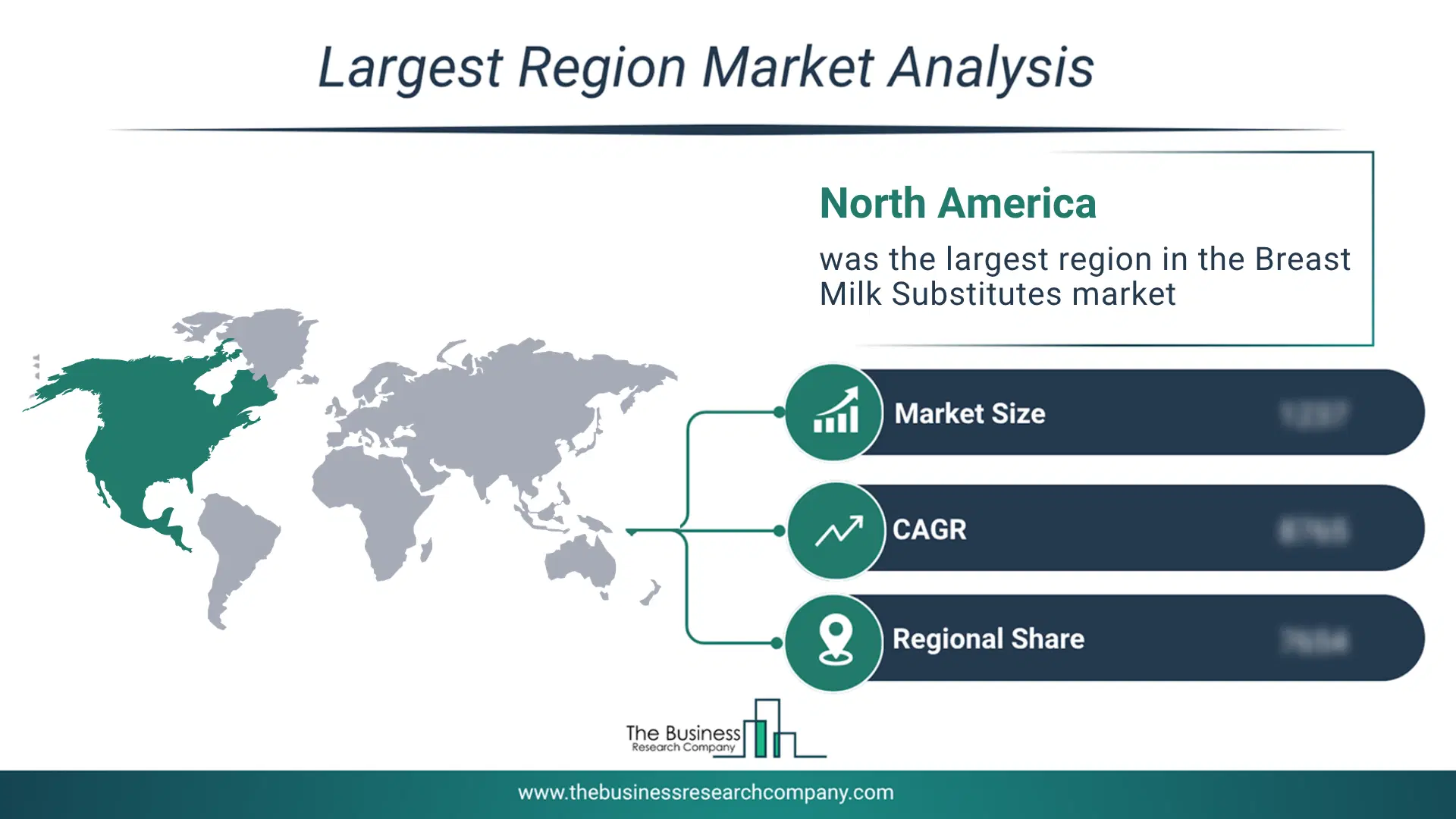
Regional Insights
North America was the largest region in the breast milk substitutes market in 2025. Asia-Pacific is expected to be the fastest-growing region in the forecast period. The regions covered in this market report are Asia-Pacific, South East Asia, Western Europe, Eastern Europe, North America, South America, Middle East, Africa. The countries covered in this market report are Australia, Brazil, China, France, Germany, India, Indonesia, Japan, Taiwan, Russia, South Korea, UK, USA, Canada, Italy, Spain.What Defines the Breast Milk Substitutes Market?
The breast milk substitutes market consists of sales of infant formulas, follow-on formulas, lactose-free formulas, and organic formulas. Values in this market are ‘factory gate’ values, that is the value of goods sold by the manufacturers or creators of the goods, whether to other entities (including downstream manufacturers, wholesalers, distributors and retailers) or directly to end customers. The value of goods in this market includes related services sold by the creators of the goods.How is Market Value Defined and Measured?
The market value is defined as the revenues that enterprises gain from the sale of goods and/or services within the specified market and geography through sales, grants, or donations in terms of the currency (in USD unless otherwise specified). The revenues for a specified geography are consumption values that are revenues generated by organizations in the specified geography within the market, irrespective of where they are produced. It does not include revenues from resales along the supply chain, either further along the supply chain or as part of other products.
This chart presents market attractiveness based on a quantitative evaluation of growth, competition, strategic alignment, and risk, offering a clear view of opportunity areas for decision-making. This chart is for illustrative purposes; the full report contains the complete analysis.

This chart highlights the Total Addressable Market (TAM) by estimating the maximum revenue opportunity using an assumption-driven approach, supporting strategic planning and opportunity sizing across markets. The chart is illustrative; the full report provides a more comprehensive analysis.
What Key Data and Analysis Are Included in the Breast Milk Substitutes Market Report 2026?
The breast milk substitutes market research report is one of a series of new reports from The Business Research Company that provides market statistics, including industry global market size, regional shares, competitors with the market share, detailed market segments, market trends and opportunities, and any further data you may need to thrive in the breast milk substitutes industry. The market research report delivers a complete perspective of everything you need, with an in-depth analysis of the current and future state of the industry.Breast Milk Substitutes Market Report Forecast Analysis
| Report Attribute | Details |
|---|---|
| Market Size Value In 2026 | $19.03 billion |
| Revenue Forecast In 2030 | $26.14 billion |
| Growth Rate | CAGR of 8.4% from 2026 to 2030 |
| Base Year For Estimation | 2025 |
| Actual Estimates/Historical Data | 2020-2025 |
| Forecast Period | 2026 - 2030 |
| Market Representation | Revenue in USD Billion and CAGR from 2026 to 2030 |
| Segments Covered | Product Type, Substitute Type, Consumer Age, Distribution Channel, End Users |
| Regional Scope | Asia-Pacific, Western Europe, Eastern Europe, North America, South America, Middle East, Africa |
| Country Scope | The countries covered in the report are Australia, Brazil, China, France, Germany, India, Indonesia, Japan, Taiwan, Russia, South Korea, UK, USA, Canada, Italy, Spain. |
| Key Companies Profiled | Nestlé S.A., Mead Johnson Nutrition Company LLC, BASF SE, Abbott Laboratories, Danone S.A., The Kraft Heinz Company, Koninklijke FrieslandCampina N.V. (FrieslandCampina), Arla Foods Amba, Reckitt Benckiser Group plc, Fonterra Co-operative Group Limited, Perrigo Company plc, The Hain Celestial Group Inc., Hero Group AG, HiPP GmbH & Co. Vertrieb KG, Beingmate Baby & Child Food Co. Ltd., Bellamy's Organic Pty Ltd., Vitagermine SAS, Kendal Nutricare Ltd. (Kendamil), Cow & Gate, Humana Inc. |
| Customization Scope | Request for Customization |
| Pricing And Purchase Options | Explore Purchase Options |