
Bruton's Tyrosine Kinase (BTK) Inhibitor Market Report 2026
Global Outlook – By Drug Type (First-Generation Bruton's Tyrosine Kinase (BTK) Inhibitors, Second-Generation Bruton's Tyrosine Kinase (BTK) Inhibitors, Third-Generation Bruton's Tyrosine Kinase (BTK) Inhibitors), By Route Of Administration (Oral Administration, Intravenous Administration, Subcutaneous Administration), By Application (Chronic Lymphocytic Leukemia (CLL), Follicular Lymphoma, Mantle Cell Lymphoma, Marginal Zone Lymphoma, Small Lymphocytic Lymphoma (SLL), Waldenstrom Macroglobulinemia, Other Selective B Cell Malignancies, Chronic Graft-Versus-Host Disease, Other Applications), By End User (Hospitals, Specialty Clinics, Research Laboratories, Pharmacies, Other End Users) – Market Size, Trends, Strategies, and Forecast to 2030
Bruton's Tyrosine Kinase (BTK) Inhibitor Market Overview
• Bruton's Tyrosine Kinase (BTK) Inhibitor market size has reached to $11.52 billion in 2025 • Expected to grow to $21.76 billion in 2030 at a compound annual growth rate (CAGR) of 13.5% • Growth Driver: Increasing Prevalence Of Hematological Malignancies Fueling The Growth Of The Market Due To Rising Aging Population • Market Trend: Advancements In BTK Inhibitors For Enhanced Treatment Outcomes • North America was the largest region in 2025 and Asia-Pacific is the fastest growing region.What Is Covered Under Bruton's Tyrosine Kinase (BTK) Inhibitor Market?
Bruton’s tyrosine kinase (BTK) inhibitor refers to a class of drugs that block the activity of the BTK enzyme, which plays a key role in the signaling pathways of B-cells. By inhibiting BTK, these drugs help prevent the growth and survival of malignant B-cells in certain blood cancers and autoimmune diseases. The main drug types of bruton's tyrosine kinase (BTK) inhibitors are first-generation bruton's tyrosine kinase (BTK) inhibitors, second-generation bruton's tyrosine kinase (BTK) inhibitors, and third-generation bruton's tyrosine kinase (BTK) inhibitors. First-generation bruton's tyrosine kinase (BTK) inhibitors refer to the first group of medicines that block BTK to treat blood cancers by stopping cancer cell growth. The multiple routes of administration involved are oral administration, intravenous administration, and subcutaneous administration. The various application classes include chronic lymphocytic leukemia (CLL), follicular lymphoma, mantle cell lymphoma, marginal zone lymphoma, small lymphocytic lymphoma (SLL), Waldenstrom macroglobulinemia, other selective B-cell malignancies, chronic graft-versus-host disease, and others and are used by various end users such as hospitals, specialty clinics, research laboratories, pharmacies, and others.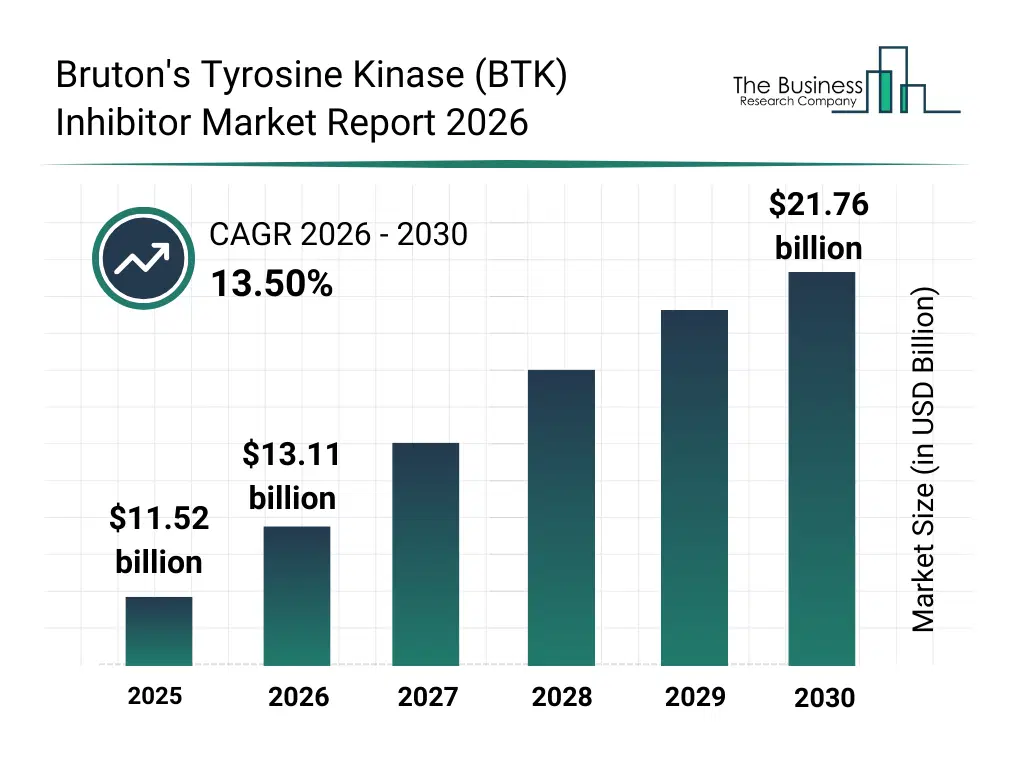
What Is The Bruton's Tyrosine Kinase (BTK) Inhibitor Market Size and Share 2026?
The bruton's tyrosine kinase (btk) inhibitor market size has grown rapidly in recent years. It will grow from $11.52 billion in 2025 to $13.11 billion in 2026 at a compound annual growth rate (CAGR) of 13.8%. The growth in the historic period can be attributed to emergence of first-generation btk inhibitors, increasing prevalence of chronic lymphocytic leukemia, growing hospital and specialty clinic infrastructure, initial research and development investments in b-cell malignancies, limited therapeutic options for autoimmune diseases.What Is The Bruton's Tyrosine Kinase (BTK) Inhibitor Market Growth Forecast?
The bruton's tyrosine kinase (btk) inhibitor market size is expected to see rapid growth in the next few years. It will grow to $21.76 billion in 2030 at a compound annual growth rate (CAGR) of 13.5%. The growth in the forecast period can be attributed to development of next-generation btk inhibitors with improved safety profiles, expansion of targeted therapies for rare b-cell malignancies, increasing personalized medicine approaches, rising investments in clinical trials and research, growing partnerships between biotechnology and pharmaceutical companies. Major trends in the forecast period include rising adoption of second- and third-generation btk inhibitors, expansion of oral and subcutaneous administration routes, increasing use in rare b-cell malignancies and autoimmune disorders, focus on clinical trials and research for novel applications, growing collaborations between pharma companies and research institutions.
Global Bruton's Tyrosine Kinase (BTK) Inhibitor Market Segmentation
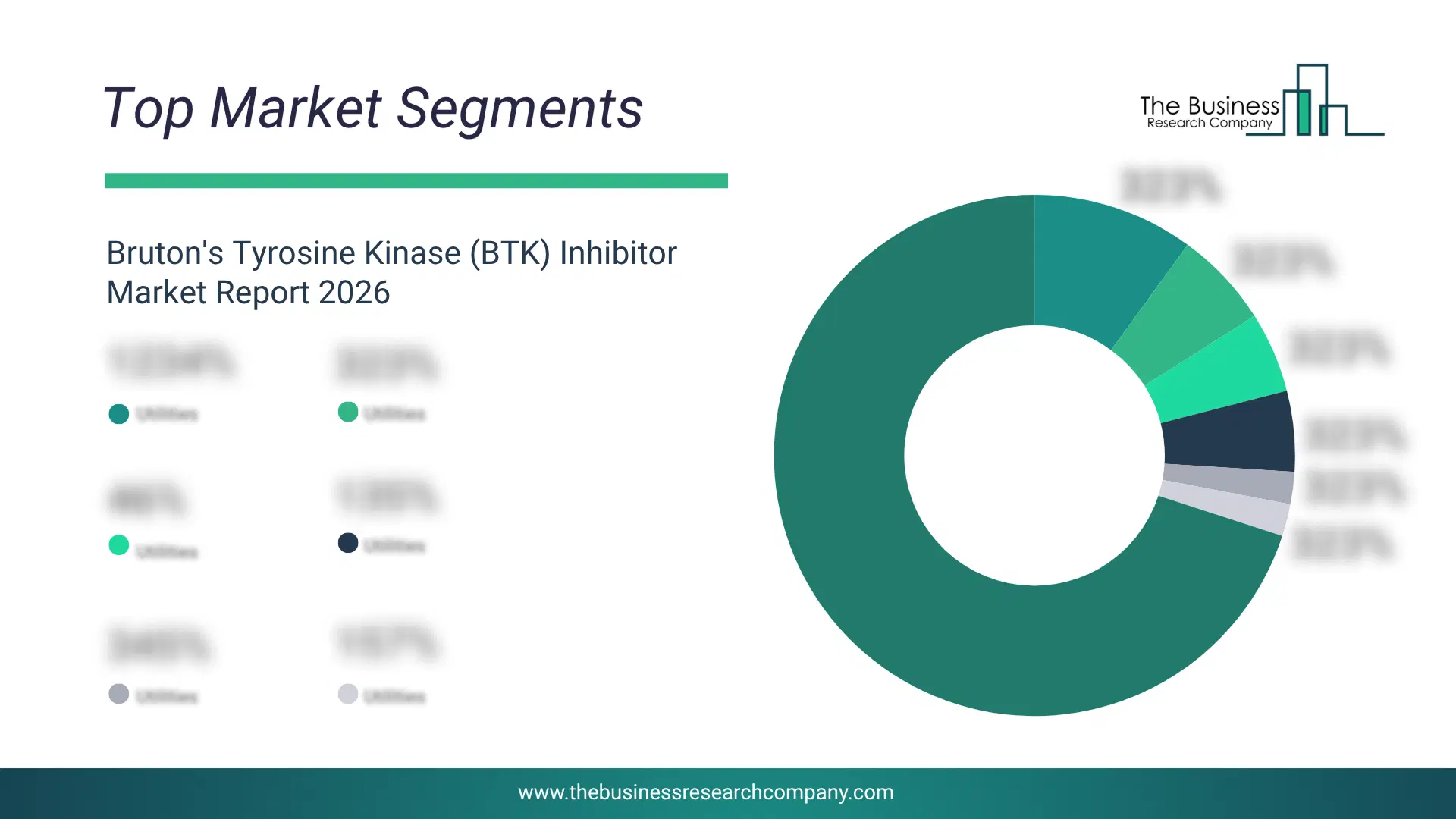
1) By Drug Type: First-Generation Bruton's Tyrosine Kinase (BTK) Inhibitors, Second-Generation Bruton's Tyrosine Kinase (BTK) Inhibitors, Third-Generation Bruton's Tyrosine Kinase (BTK) Inhibitors 2) By Route Of Administration: Oral Administration, Intravenous Administration, Subcutaneous Administration 3) By Application: Chronic Lymphocytic Leukemia (CLL), Follicular Lymphoma, Mantle Cell Lymphoma, Marginal Zone Lymphoma, Small Lymphocytic Lymphoma (SLL), Waldenstrom Macroglobulinemia, Other Selective B Cell Malignancies, Chronic Graft-Versus-Host Disease, Other Applications 4) By End User: Hospitals, Specialty Clinics, Research Laboratories, Pharmacies, Other End Users Subsegments: 1) By First-Generation Bruton's Tyrosine Kinase (BTK) Inhibitors: Ibrutinib, CC-292 (Spebrutinib) 2) By Second-Generation Bruton's Tyrosine Kinase (BTK) Inhibitors: Acalabrutinib, Zanubrutinib, Tirabrutinib 3) By Third-Generation Bruton's Tyrosine Kinase (BTK) Inhibitors: Pirtobrutinib (LOXO-305/Jaypirca), Nemtabrutinib (ARQ 531)What Is The Driver Of The Bruton's Tyrosine Kinase (BTK) Inhibitor Market?
The increasing prevalence of hematological malignancies is expected to propel the growth of the bruton's tyrosine kinase (BTK) inhibitor market going forward. Hematological malignancies refer to cancers that begin in the blood, bone marrow, or lymphatic system, which include leukemia, lymphoma, and multiple myeloma, affecting how blood and immune cells function. The growing aging population worldwide is contributing to an increased risk of developing blood cancers such as leukemia, lymphoma, and myeloma, as the likelihood of these diseases rises with age. Bruton’s tyrosine kinase (BTK) inhibitors help hematological malignancies by allowing patients to live longer with controlled disease and reducing cancer cell growth and relapse, thereby increasing survival rates and contributing to higher prevalence figures. For instance, in February 2023, according to the report published by the Leukemia Foundation, an Australia-based non-profit organization, between 2022 and 2035, over 7,000 children, 6,000 young adults, and 108,000 adults (25–65) are expected to be diagnosed with blood cancers, mainly including acute lymphoblastic leukemia, acute myeloid leukemia, and non-Hodgkin lymphoma. Therefore, the increasing prevalence of hematological malignancies is driving the growth of the bruton's tyrosine kinase (BTK) inhibitor industry.Key Players In The Global Bruton's Tyrosine Kinase (BTK) Inhibitor Market
Major companies operating in the bruton's tyrosine kinase (btk) inhibitor market are Johnson & Johnson Inc., AbbVie Inc., Nurix Therapeutics Inc., InnoCare Pharma Limited, Carna Biosciences Inc., Aptose Biosciences Inc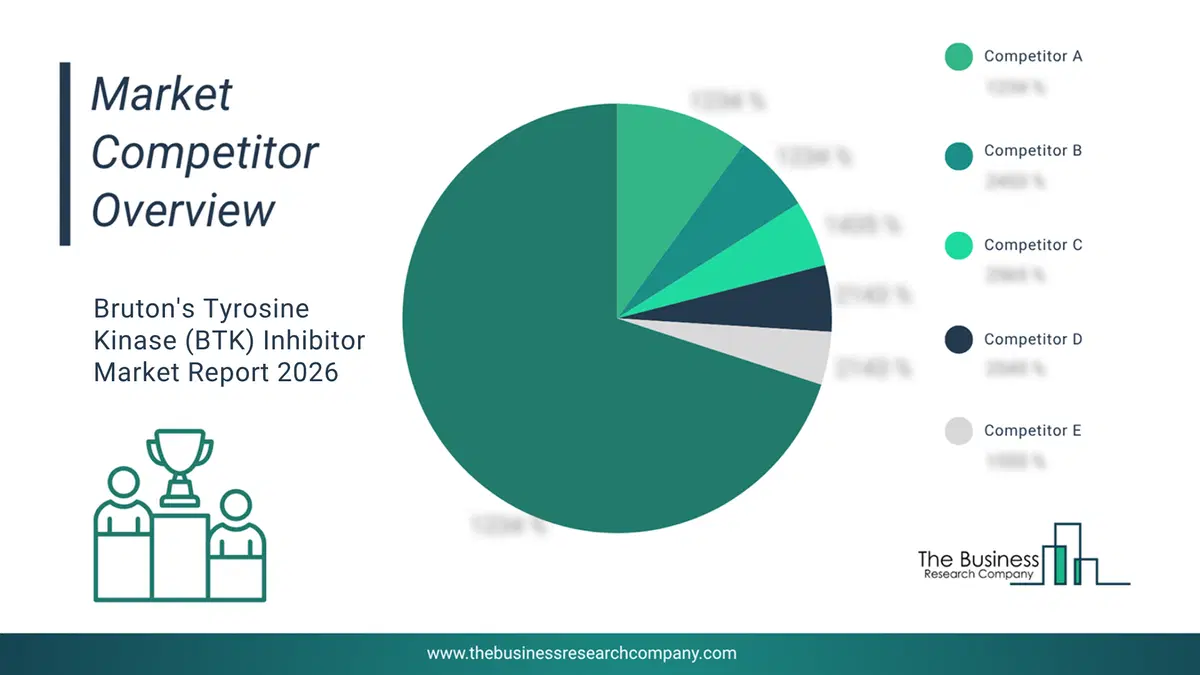
This chart is for illustrative purposes; the full report includes a detailed competitor analysis and comprehensive overview of the top 10 companies in the market.
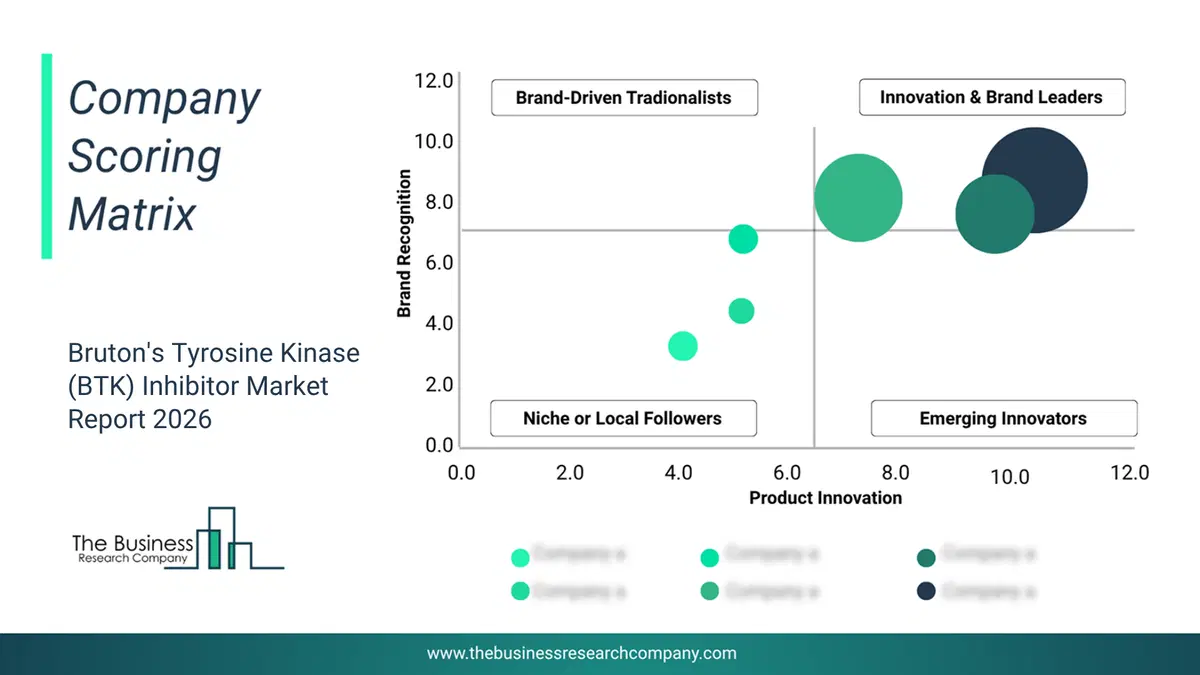
This chart maps companies by product innovation and brand strength, with bubble size indicating relative revenue, helping identify market leaders, challengers, and niche players. This is an illustrative chart; the full report provides a complete and accurate competitive analysis.
Global Bruton's Tyrosine Kinase (BTK) Inhibitor Market Trends and Insights
Major companies operating in the bruton's tyrosine kinase (BTK) inhibitor market are focusing on advancements in drug development, such as targeted therapy, to enhance treatment outcomes. Targeted therapy refers to a type of treatment that uses drugs or other substances to specifically target and attack cancer cells or disease-related pathways while causing minimal damage to normal, healthy cells. For instance, in July 2025, Glenmark Pharmaceuticals Ltd., an India-based pharmaceutical company, launched Brukinsa (zanubrutinib), a new treatment option for Indian patients with hematological (blood) cancers. It is the first and only Bruton’s tyrosine kinase (BTK) inhibitor in India approved to treat five types of B-cell malignancies. It offers unique features that distinguish it as a next-generation Bruton’s tyrosine kinase (BTK) inhibitor for treating B-cell malignancies. It achieves sustained, high-level BTK occupancy in both blood and lymph nodes, enhancing its effectiveness in blocking cancerous B-cell survival. Brukinsa has an improved safety profile with fewer cardiac side effects and lower discontinuation rates compared to first-generation BTK inhibitors. It also offers flexible dosing, allowing patients to take either 160 mg twice daily or 320 mg once daily based on tolerance and convenience.What Are Latest Mergers And Acquisitions In The Bruton's Tyrosine Kinase (BTK) Inhibitor Market?
In December 2024, Innovent Biologics Inc., a China-based biopharmaceutical company, partnered with Eli Lilly and Company to commercialize and distribute Jaypirca (pirtobrutinib) in mainland China. Through this partnership, Innovent aims to expand its oncology portfolio and leverage its commercial infrastructure by marketing and distributing Jaypirca, the first and only approved non-covalent Bruton's tyrosine kinase (BTK) inhibitor, to patients with relapsed or refractory mantle cell lymphoma. Eli Lilly retains responsibility for research and development as well as post-market medical affairs for Jaypirca. Eli Lilly and Company is a US-based pharmaceutical company that provides bruton's tyrosine kinase (BTK) inhibitors.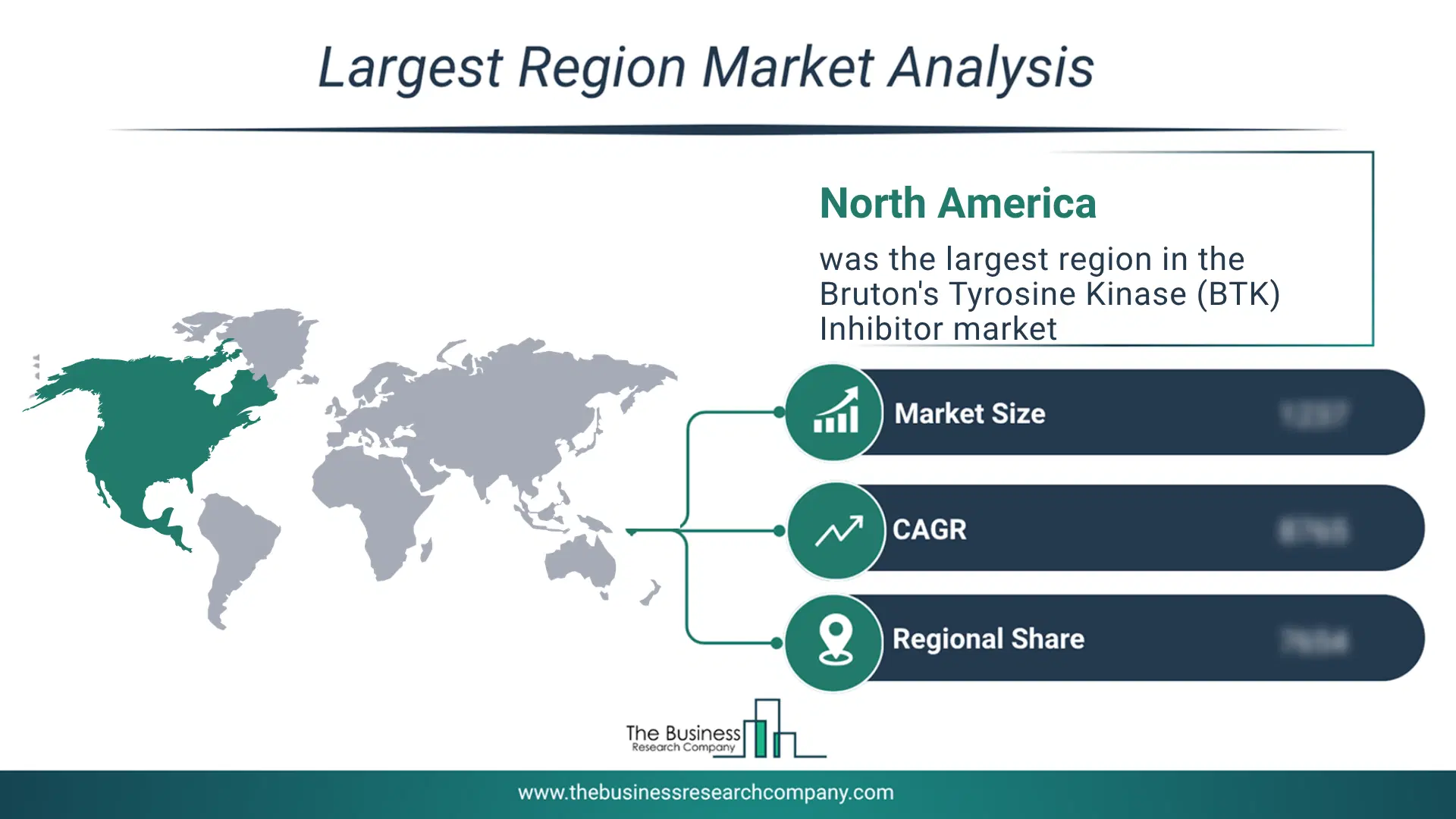
Regional Insights
North America was the largest region in the bruton's tyrosine kinase (BTK) inhibitor market in 2025. Asia-Pacific is expected to be the fastest-growing region in the forecast period. The regions covered in the bruton's tyrosine kinase (btk) inhibitor market report are Asia-Pacific, South East Asia, Western Europe, Eastern Europe, North America, South America, Middle East, Africa. The countries covered in the bruton's tyrosine kinase (btk) inhibitor market report are Australia, Brazil, China, France, Germany, India, Indonesia, Japan, Taiwan, Russia, South Korea, UK, USA, Canada, Italy, Spain.What Defines the Bruton's Tyrosine Kinase (BTK) Inhibitor Market?
The bruton's tyrosine kinase (BTK) inhibitor market consists of sales of ibrutinib, acalabrutinib, zanubrutinib, spebrutinib, and evobrutinib. Values in this market are ‘factory gate’ values, that is the value of goods sold by the manufacturers or creators of the goods, whether to other entities (including downstream manufacturers, wholesalers, distributors and retailers) or directly to end customers. The value of goods in this market includes related services sold by the creators of the goods.How is Market Value Defined and Measured?
The market value is defined as the revenues that enterprises gain from the sale of goods and/or services within the specified market and geography through sales, grants, or donations in terms of the currency (in USD unless otherwise specified). The revenues for a specified geography are consumption values that are revenues generated by organizations in the specified geography within the market, irrespective of where they are produced. It does not include revenues from resales along the supply chain, either further along the supply chain or as part of other products.
This chart presents market attractiveness based on a quantitative evaluation of growth, competition, strategic alignment, and risk, offering a clear view of opportunity areas for decision-making. This chart is for illustrative purposes; the full report contains the complete analysis.

This chart highlights the Total Addressable Market (TAM) by estimating the maximum revenue opportunity using an assumption-driven approach, supporting strategic planning and opportunity sizing across markets. The chart is illustrative; the full report provides a more comprehensive analysis.
What Key Data and Analysis Are Included in the Bruton's Tyrosine Kinase (BTK) Inhibitor Market Report 2026?
The bruton's tyrosine kinase (btk) inhibitor market research report is one of a series of new reports from The Business Research Company that provides market statistics, including industry global market size, regional shares, competitors with the market share, detailed market segments, market trends and opportunities, and any further data you may need to thrive in the bruton's tyrosine kinase (btk) inhibitor industry. The market research report delivers a complete perspective of everything you need, with an in-depth analysis of the current and future state of the industry.Bruton's Tyrosine Kinase (BTK) Inhibitor Market Report Forecast Analysis
| Report Attribute | Details |
|---|---|
| Market Size Value In 2026 | $13.11 billion |
| Revenue Forecast In 2030 | $21.76 billion |
| Growth Rate | CAGR of 13.8% from 2026 to 2030 |
| Base Year For Estimation | 2025 |
| Actual Estimates/Historical Data | 2020-2025 |
| Forecast Period | 2026 - 2030 |
| Market Representation | Revenue in USD Billion and CAGR from 2026 to 2030 |
| Segments Covered | Drug Type, Route Of Administration, Application, End User |
| Regional Scope | Asia-Pacific, Western Europe, Eastern Europe, North America, South America, Middle East, Africa |
| Country Scope | The countries covered in the report are Australia, Brazil, China, France, Germany, India, Indonesia, Japan, Taiwan, Russia, South Korea, UK, USA, Canada, Italy, Spain. |
| Key Companies Profiled | Johnson & Johnson Inc., AbbVie Inc., Nurix Therapeutics Inc., InnoCare Pharma Limited, Carna Biosciences Inc., Aptose Biosciences Inc |
| Customization Scope | Request for Customization |
| Pricing And Purchase Options | Explore Purchase Options |