
Bus Transmission System Market Report 2026
Global Outlook – By Transmission Type (Manual Transmission, Automatic Transmission, Automated Manual Transmission, Continuously Variable Transmission, Dual-Clutch Transmission), By Propulsion Type (Diesel Buses, Electric Buses, Hybrid Buses, Compressed Natural Gas Buses, Other Propulsion Types), By Sales Channel (Original Equipment Manufacturer, Aftermarket), By Application (Public Transit Operations, Private Fleet Operations, School Transportation, Tourism And Intercity Transport) – Market Size, Trends, Strategies, and Forecast to 2030
Bus Transmission System Market Overview
• Bus Transmission System market size has reached to $30.7 billion in 2025 • Expected to grow to $44.3 billion in 2030 at a compound annual growth rate (CAGR) of 7.5% • Growth Driver: Increasing Adoption Of Electric Buses Driving The Growth Of The Market Due To Stricter Government Regulations • Market Trend: Advanced Automated Shifting Solutions Enhance Fuel Efficiency And Operational Performance In Commercial Buses • Asia-Pacific was the largest region and fastest growing region.What Is Covered Under Bus Transmission System Market?
The bus transmission system refers to the mechanical system in buses that transfers power generated by the engine or electric motor to the wheels, enabling vehicle movement and speed control. It includes components such as the gearbox, clutch, driveshaft, differential, and related transmission components designed to manage torque delivery and improve vehicle performance. The main transmission types of bus transmission systems include manual transmission, automatic transmission, automated manual transmission, continuously variable transmission, and dual-clutch transmission. Manual transmission refers to a transmission system in which the driver manually selects gear ratios and operates the clutch to control power transfer. These transmission systems are used across diesel buses, electric buses, hybrid buses, compressed natural gas buses, and other propulsion types. They are supplied through original equipment manufacturer and aftermarket channels and are used in public transit operations, private fleet operations, school transportation, and tourism and intercity transport.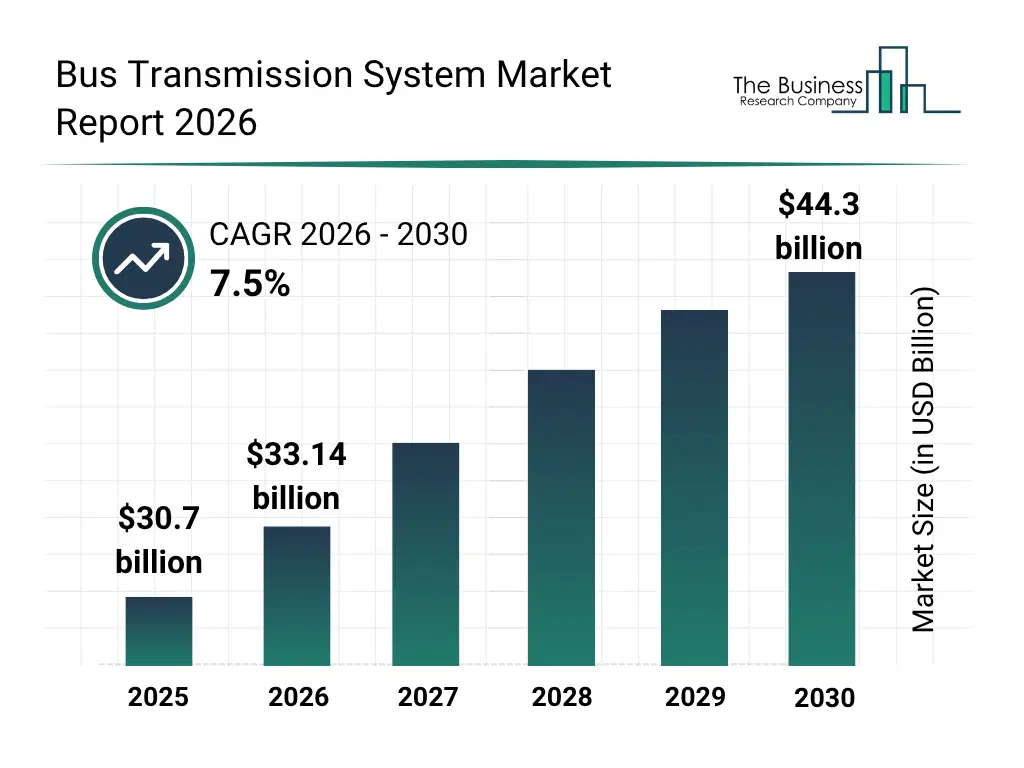
What Is The Bus Transmission System Market Size and Share 2026?
The bus transmission system market size has grown strongly in recent years. It will grow from $30.7 billion in 2025 to $33.14 billion in 2026 at a compound annual growth rate (CAGR) of 7.9%. The growth in the historic period can be attributed to rising urban bus fleet expansion, increasing demand for public transportation, growing diesel bus production, increasing adoption of automatic transmissions, expanding school and intercity transportation fleets.What Is The Bus Transmission System Market Growth Forecast?
The bus transmission system market size is expected to see strong growth in the next few years. It will grow to $44.3 billion in 2030 at a compound annual growth rate (CAGR) of 7.5%. The growth in the forecast period can be attributed to rising electric bus deployment, growing demand for energy-efficient propulsion systems, increasing public transit modernization, expanding hybrid and alternative-fuel bus fleets, growing demand for advanced transmission systems. Major trends in the forecast period include rising adoption of multi-speed automatic transmissions in buses, growing demand for improved torque delivery and fuel efficiency, increasing use of lightweight transmission components, rising demand for durable heavy-duty transmission systems, growing preference for smoother shifting and enhanced passenger comfort.Tariff Impact On Bus Transmission System Market
Tariffs are impacting the bus transmission system market by increasing the cost of imported gearboxes, clutches, driveshafts, differentials, precision components, and transmission control components used in bus manufacturing. This is raising vehicle production and maintenance costs and creating supply-chain pressures for bus manufacturers and fleet operators, particularly in regions dependent on imported automotive components such as Asia-Pacific, Europe, and North America. Hardware-intensive segments such as automatic transmissions, automated manual transmissions, and dual-clutch transmissions are most affected due to their reliance on specialized components and global supply chains. However, tariffs are also encouraging local component manufacturing, regional supplier diversification, and increased investment in domestic transmission production, strengthening supply-chain resilience in the market.
Global Bus Transmission System Market Segmentation
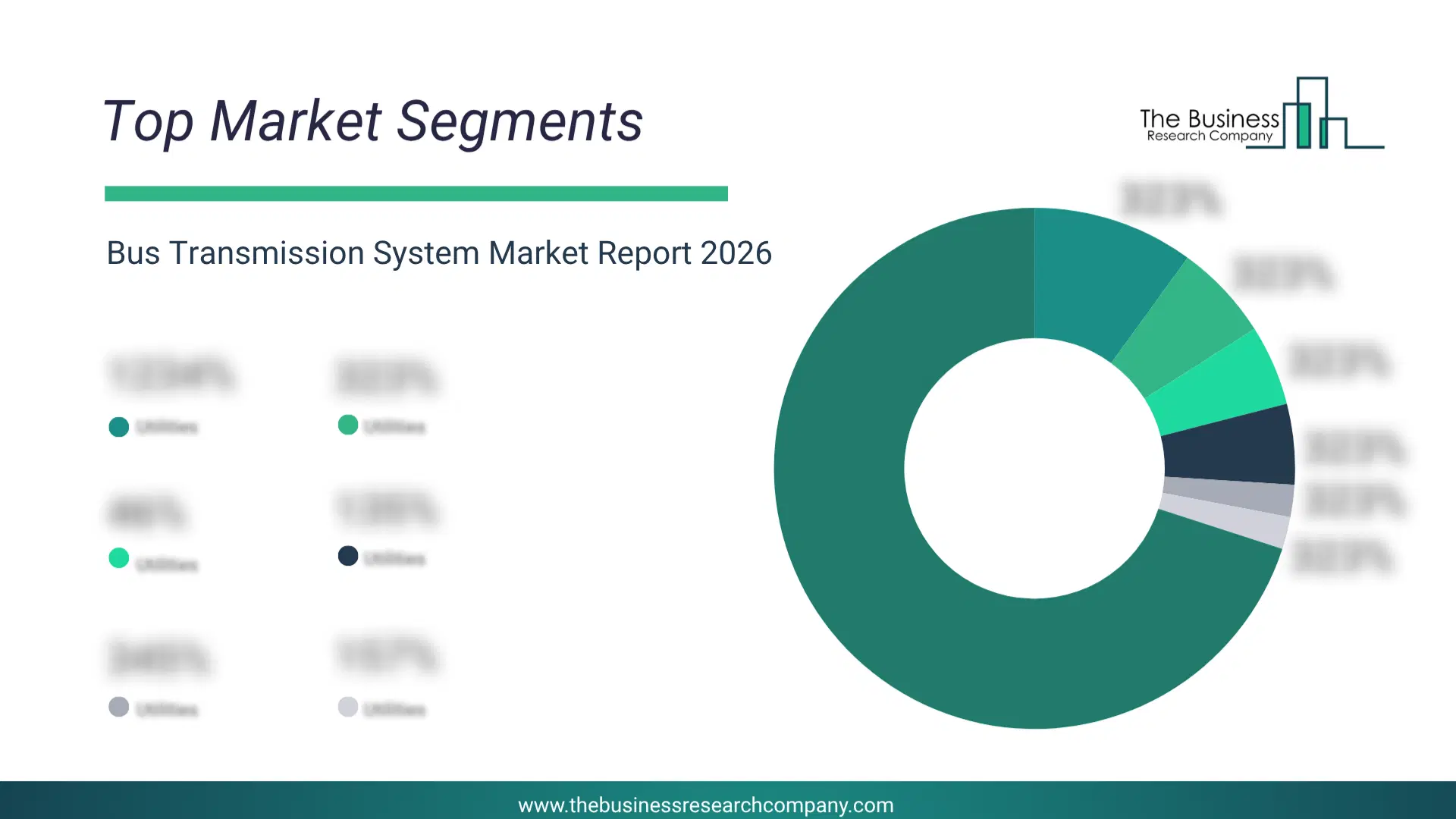
1) By Transmission Type: Manual Transmission, Automatic Transmission, Automated Manual Transmission, Continuously Variable Transmission, Dual-Clutch Transmission 2) By Propulsion Type: Diesel Buses, Electric Buses, Hybrid Buses, Compressed Natural Gas Buses, Other Propulsion Types 3) By Sales Channel: Original Equipment Manufacturer, Aftermarket 4) By Application: Public Transit Operations, Private Fleet Operations, School Transportation, Tourism And Intercity Transport Subsegments: 1) By Manual Transmission: Five-Speed Manual Transmission, Six-Speed Manual Transmission, Nine-Speed Manual Transmission, Constant-Mesh Manual Transmission, Synchromesh Manual Transmission 2) By Automatic Transmission: Two-Speed Automatic Transmission, Three-Speed Automatic Transmission, Four-Speed Automatic Transmission, Five-Speed Automatic Transmission, Six-Speed And Above Automatic Transmission 3) By Automated Manual Transmission: Single-Clutch Automated Manual Transmission, Sequential Automated Manual Transmission, Multi-Speed Automated Manual Transmission, Heavy-Duty Automated Manual Transmission 4) By Continuously Variable Transmission: Belt-Driven Continuously Variable Transmission, Chain-Driven Continuously Variable Transmission, Toroidal Continuously Variable Transmission, Hybrid Continuously Variable Transmission 5) By Dual-Clutch Transmission: Wet Dual-Clutch Transmission, Dry Dual-Clutch Transmission, Six-Speed Dual-Clutch Transmission, Seven-Speed Dual-Clutch Transmission, Eight-Speed And Above Dual-Clutch TransmissionWhat Is The Driver Of The Bus Transmission System Market?
The increasing adoption of electric buses is expected to propel the growth of the bus transmission system market going forward. Electric buses are passenger vehicles powered by electricity stored in batteries instead of conventional diesel or gasoline engines, offering zero tailpipe emissions, lower operating costs, and more sustainable public transportation. The adoption of electric buses is due to stricter government regulations aimed at reducing vehicle emissions, promoting cleaner transportation, and supporting the transition toward sustainable public transit systems. Increasing adoption of electric buses is driving demand for advanced bus transmission systems, as electric drivetrains require specialised electric transmission solutions to improve energy efficiency, performance, and reliability in public transportation operations. For instance, in April 2026, according to the International Energy Agency (IEA), a France based intergovernmental organization, Europe sold more than 12,000 electric buses in 2025, representing a 28% increase compared to 2024. Additionally, electric buses accounted for more than 12% of all new bus sales, while battery electric city buses represented over 55% of new city bus sales in the European Union, up from around 45% in 2024. Therefore, increasing adoption of electric buses is driving the growth of the bus transmission system industry.Key Players In The Global Bus Transmission System Market
Major companies operating in the bus transmission system market are Robert Bosch GmbH, ZF Friedrichshafen AG, Volvo AB, Cummins Inc, Magna International Inc, Aisin Corporation, Eaton Corporation plc, Dana Incorporated, Scania AB, BYD Company Limited, Valeo SE, Knorr-Bremse AG, Allison Transmission Holdings Inc, Voith GmbH & Co KGaA, Zhengzhou Yutong Bus Co Ltd, Nidec Corporation, Hyundai Transys Inc, FPT Industrial S p A, Shaanxi Fast Auto Drive Group Co Ltd, Kessler & Co GmbH & Co KG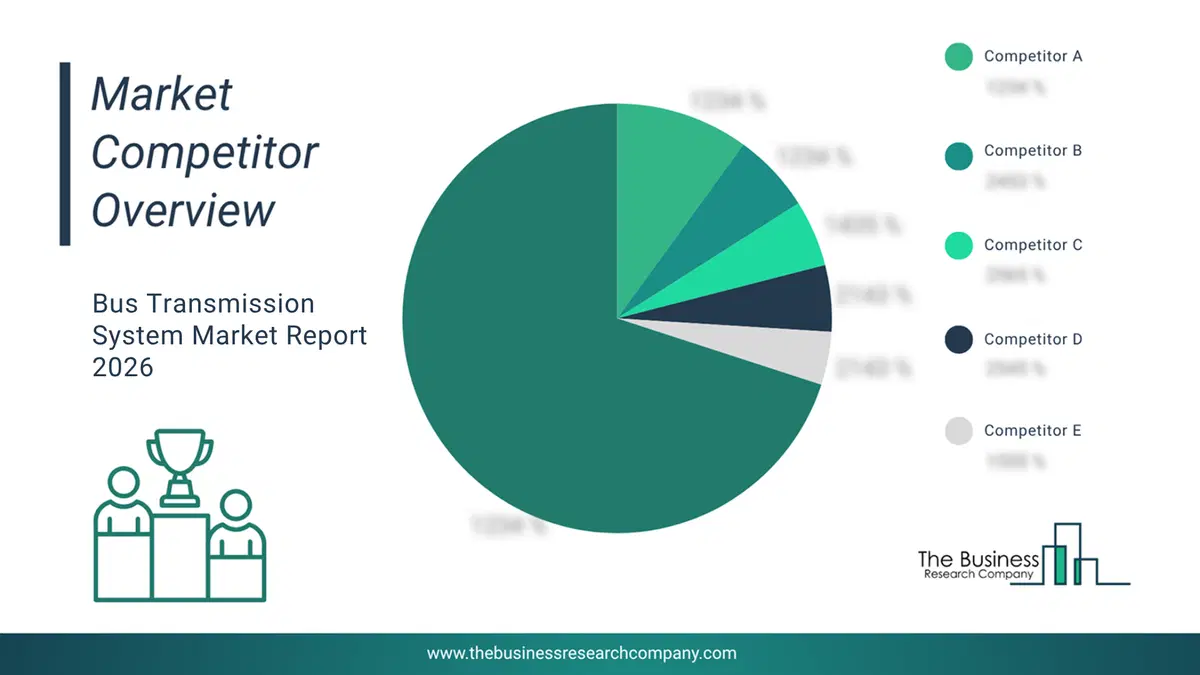
This chart is for illustrative purposes; the full report includes a detailed competitor analysis and comprehensive overview of the top 10 companies in the market.
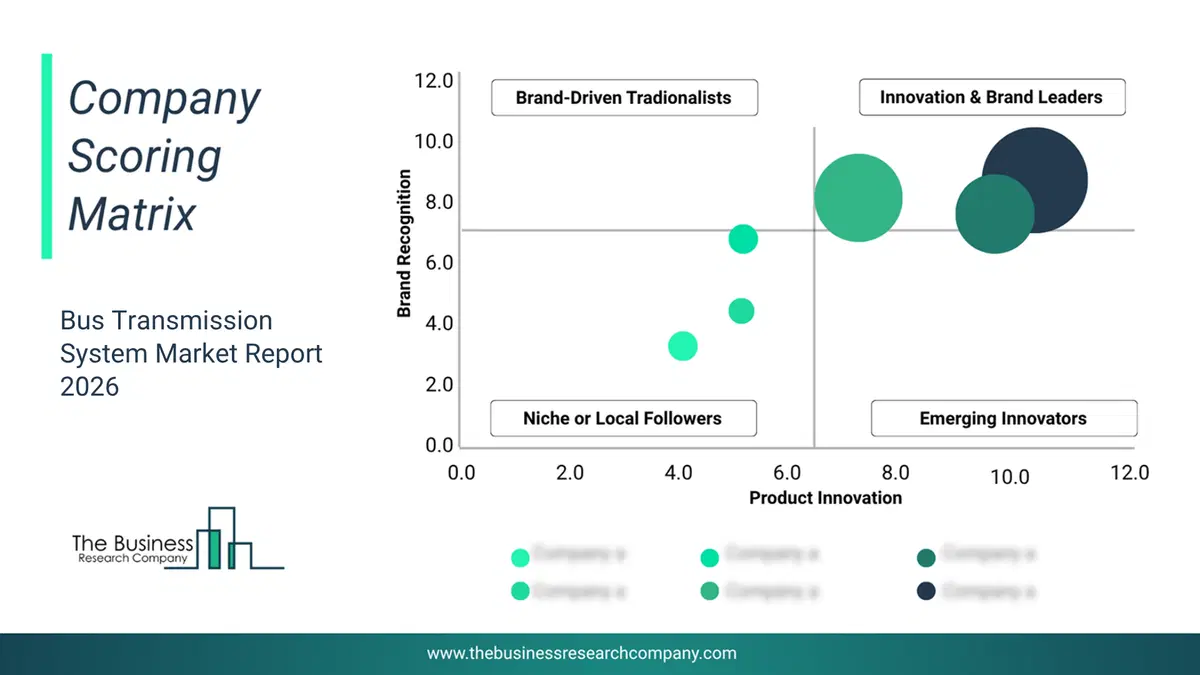
This chart maps companies by product innovation and brand strength, with bubble size indicating relative revenue, helping identify market leaders, challengers, and niche players. This is an illustrative chart; the full report provides a complete and accurate competitive analysis.
Global Bus Transmission System Market Trends and Insights
Major companies operating in the bus transmission system market are focusing on developing innovative solutions, such as automated manual transmission (AMT) systems, to enhance fuel efficiency, driver comfort, operational productivity, reduced maintenance costs, and fleet performance. Automated manual transmission (AMT) systems combine the mechanical efficiency of traditional manual transmissions with electronic control systems that automate clutch operation and gear shifting, reducing driver intervention while improving shift accuracy compared with conventional manual bus transmissions. For instance, in July 2026, Daimler India Commercial Vehicles Private Limited (DICV), an India-based commercial vehicle manufacturer, launched the BharatBenz Torqshift 1926 AMT heavy-duty bus chassis, an advanced bus chassis equipped with an automated manual transmission technology for intercity and staff transportation applications. The Torqshift 1926 integrates a globally proven AMT system that automatically selects optimal gears based on driving conditions, reducing frequent clutch and gear operations required in traditional manual transmissions. The system is designed to improve driver convenience, especially on long-distance routes, by minimizing manual effort and supporting smoother vehicle operation. It is paired with a heavy-duty powertrain designed for demanding bus applications, helping fleet operators achieve improved efficiency and lower operating costs. The AMT technology supports intercity buses, staff transport vehicles, and other commercial passenger transport applications where reliability and productivity are critical. The launch demonstrates the growing adoption of automated transmission technologies in buses as manufacturers aim to improve fleet economics and address driver availability challenges.What Are Latest Mergers And Acquisitions In The Bus Transmission System Market?
In July 2025, Allison Transmission Holdings Inc., a US-based company that is a provider of fully automatic transmissions and hybrid propulsion systems for transit, coach, and school buses, partnered with the Maryland Transit Administration (MTA) to bring eGen Flex-equipped electric hybrid buses to Baltimore. Through this partnership, Allison Transmission and the Maryland Transit Administration aim to deploy advanced hybrid propulsion technology in transit buses to improve fuel efficiency, reduce emissions, enable engine-off operation in urban routes, and enhance public transportation performance. The eGen Flex system is an electrified hybrid transmission solution that integrates electric motors, a multi-speed gearbox, and energy management technologies to support hybrid bus applications. The Maryland Transit Administration (MTA) is a US-based public transportation agency.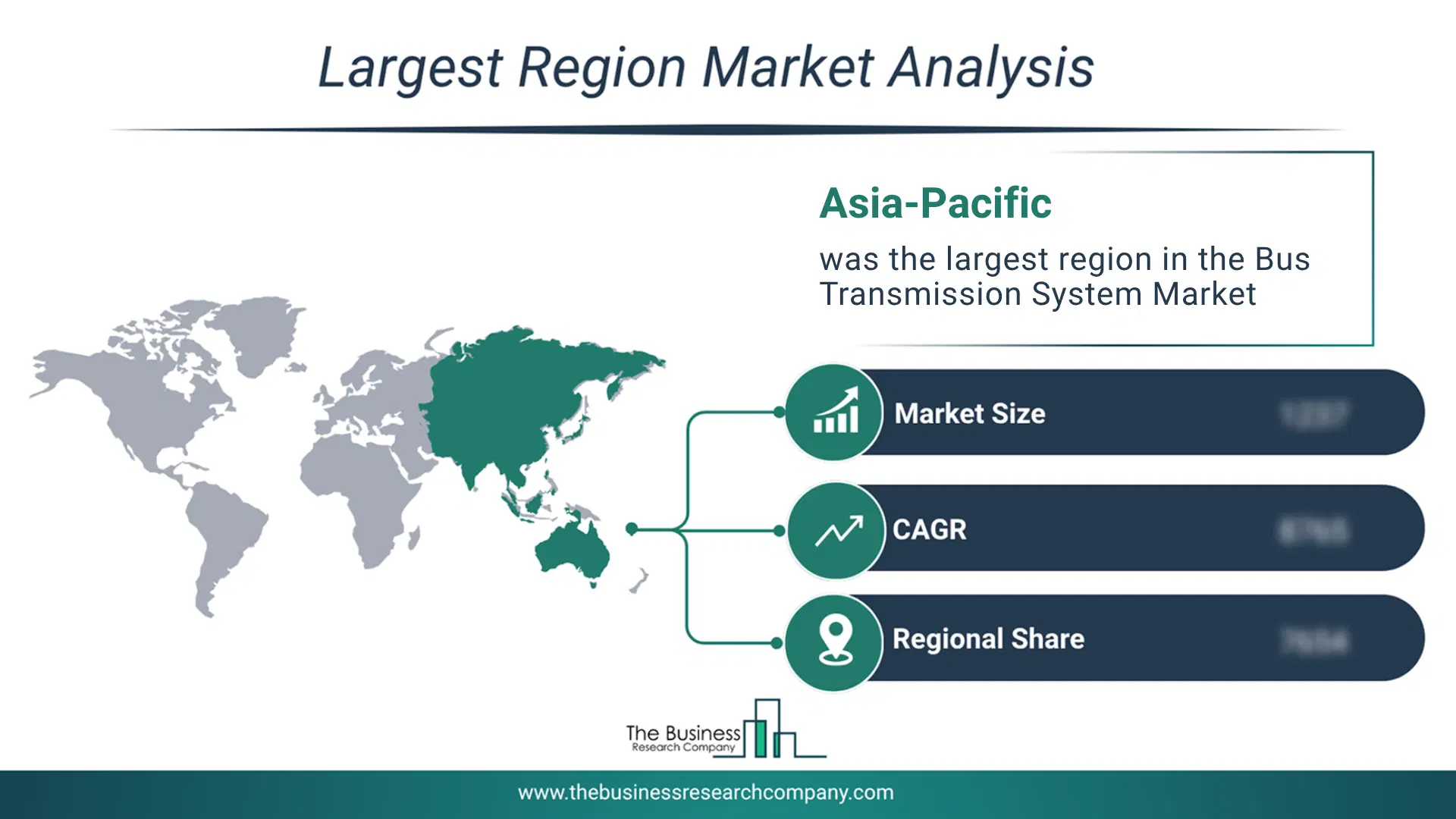
Regional Outlook
Asia-Pacific was the largest region in the bus transmission system market in 2025. Asia-Pacific is expected to be the fastest-growing region in the forecast period. The regions covered in this market report are Asia-Pacific, South East Asia, Western Europe, Eastern Europe, North America, South America, Middle East, Africa. The countries covered in this market report are Australia, Brazil, China, France, Germany, India, Indonesia, Japan, Taiwan, Russia, South Korea, UK, USA, Canada, Italy, Spain.What Defines the Bus Transmission System Market?
The bus transmission system market consists of sales of transmission gear sets, clutch assemblies, torque converters, driveshaft and differential components, and transmission control units. Values in this market are ‘factory gate’ values, that is, the value of goods sold by the manufacturers or creators of the goods, whether to other entities (including downstream manufacturers, wholesalers, distributors, and retailers) or directly to end customers. The value of goods in this market includes related services sold by the creators of the goods.How is Market Value Defined and Measured?
The market value is defined as the revenues that enterprises gain from the sale of goods and/or services within the specified market and geography through sales, grants, or donations in terms of the currency (in USD unless otherwise specified). The revenues for a specified geography are consumption values that are revenues generated by organizations in the specified geography within the market, irrespective of where they are produced. It does not include revenues from resales along the supply chain, either further along the supply chain or as part of other products.
This chart presents market attractiveness based on a quantitative evaluation of growth, competition, strategic alignment, and risk, offering a clear view of opportunity areas for decision-making. This chart is for illustrative purposes; the full report contains the complete analysis.

This chart highlights the Total Addressable Market (TAM) by estimating the maximum revenue opportunity using an assumption-driven approach, supporting strategic planning and opportunity sizing across markets. The chart is illustrative; the full report provides a more comprehensive analysis.
What Key Data and Analysis Are Included in the Bus Transmission System Market Report 2026?
The bus transmission system market research report is one of a series of new reports from The Business Research Company that provides market statistics, including industry global market size, regional shares, competitors with the market share, detailed market segments, market trends and opportunities, and any further data you may need to thrive in the bus transmission system industry. The market research report delivers a complete perspective of everything you need, with an in-depth analysis of the current and future state of the industry.Bus Transmission System Market Report Forecast Analysis
| Report Attribute | Details |
|---|---|
| Market Size Value In 2026 | $33.14 billion |
| Revenue Forecast In 2030 | $44.3 billion |
| Growth Rate | CAGR of 7.5% from 2026 to 2030 |
| Base Year For Estimation | 2025 |
| Actual Estimates/Historical Data | 2020-2025 |
| Forecast Period | 2026 - 2030 |
| Market Representation | Revenue in USD Billion and CAGR from 2026 to 2030 |
| Segments Covered | Transmission Type, Propulsion Type, Sales Channel, Application |
| Regional Scope | Asia-Pacific, Western Europe, Eastern Europe, North America, South America, Middle East, Africa |
| Country Scope | The countries covered in the report are Australia, Brazil, China, France, Germany, India, Indonesia, Japan, Taiwan, Russia, South Korea, UK, USA, Canada, Italy, Spain. |
| Key Companies Profiled | Robert Bosch GmbH, ZF Friedrichshafen AG, Volvo AB, Cummins Inc, Magna International Inc, Aisin Corporation, Eaton Corporation plc, Dana Incorporated, Scania AB, BYD Company Limited, Valeo SE, Knorr-Bremse AG, Allison Transmission Holdings Inc, Voith GmbH & Co KGaA, Zhengzhou Yutong Bus Co Ltd, Nidec Corporation, Hyundai Transys Inc, FPT Industrial S p A, Shaanxi Fast Auto Drive Group Co Ltd, Kessler & Co GmbH & Co KG |
| Customization Scope | Request for Customization |
| Pricing And Purchase Options | Explore Purchase Options |