
C-C Chemokine Receptor Type 4 Market Report 2026
Global Outlook – By Product Type (Monoclonal Antibodies, Small Molecule Inhibitors, Peptide-Based Therapeutics, Combination Therapy Products), By Mode Of Administration (Injectables, Oral Tablets, Topical Applications, Nasal Sprays), By Application (Immunology, Central Nervous System, Mycosis Fungoides, Other Applications), By End-User (Pharmaceutical Companies, Biotechnology Companies, Research Institutions, Contract Research Organizations, Hospitals And Clinics) – Market Size, Trends, Strategies, and Forecast to 2030
C-C Chemokine Receptor Type 4 Market Overview
• C-C Chemokine Receptor Type 4 market size has reached to $1.25 billion in 2025 • Expected to grow to $1.96 billion in 2030 at a compound annual growth rate (CAGR) of 9.3% • Growth Driver: Growing Patient Demand for Cancer Therapies Driving The Growth Of The Market • Market Trend: Advancements in Oral CCR4 Antagonists Enhancing Immunotherapy Response and Clinical Outcomes • North America was the largest region in 2025 and Asia-Pacific is the fastest growing region.What Is Covered Under C-C Chemokine Receptor Type 4 Market?
C-C chemokine receptor type 4 (CCR4) is a protein found on the surface of certain immune cells, such as T helper 2 cells and regulatory T cells. It binds to specific chemokines, such as CCL17 and CCL22, to guide immune cell movement toward sites of inflammation or lymphoid tissues. CCR4 plays important roles in immune regulation, allergic responses, and cancer progression and serves as a therapeutic target in various diseases. The main product types of C-C chemokine receptor type 4 include monoclonal antibodies, small molecule inhibitors, peptide-based therapeutics, and combination therapy products. CCR4 monoclonal antibodies are laboratory-produced antibodies that specifically attach to the CCR4 receptor on immune cells to regulate immune system activity for treatment purposes. It is administered through injectables, oral tablets, topical applications, and nasal sprays and is applied for immunology, central nervous system, mycosis fungoides, and others. It is used by several end-users, including pharmaceutical companies, biotechnology companies, research institutions, contract research organizations, and hospitals and clinics.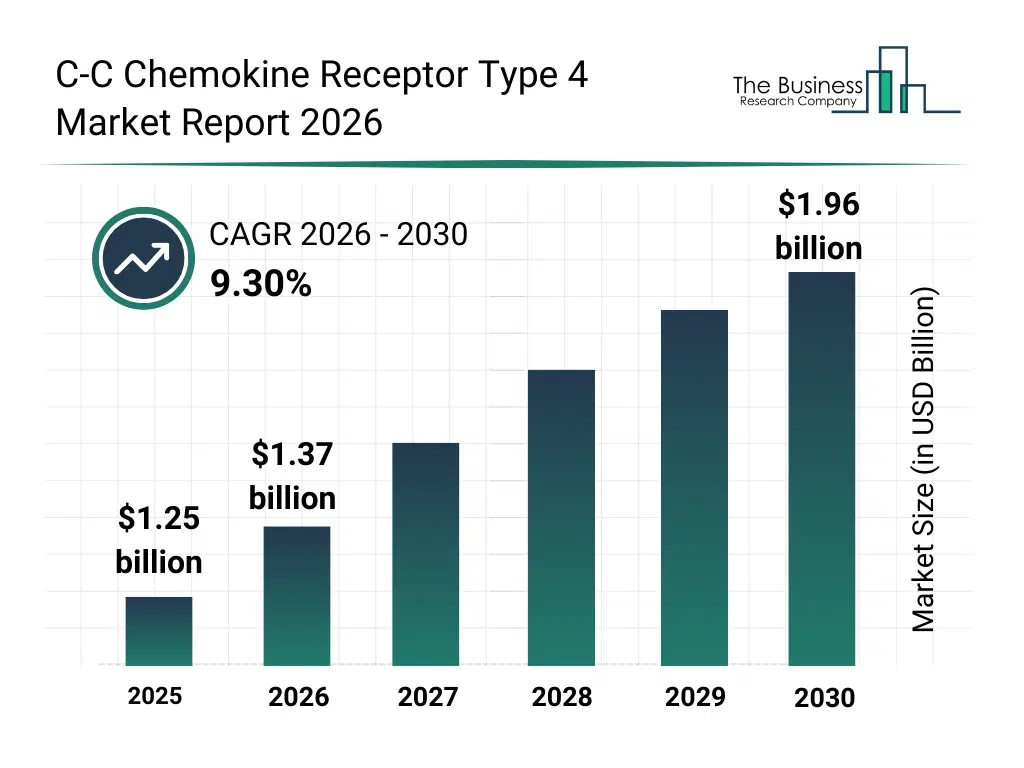
What Is The C-C Chemokine Receptor Type 4 Market Size and Share 2026?
The c-c chemokine receptor type 4 market size has grown strongly in recent years. It will grow from $1.25 billion in 2025 to $1.37 billion in 2026 at a compound annual growth rate (CAGR) of 9.6%. The growth in the historic period can be attributed to increasing understanding of chemokine receptor biology, expansion of immuno-oncology research, rising incidence of immune-related disorders, growth of targeted therapy development, increasing investment in biologics research.What Is The C-C Chemokine Receptor Type 4 Market Growth Forecast?
The c-c chemokine receptor type 4 market size is expected to see strong growth in the next few years. It will grow to $1.96 billion in 2030 at a compound annual growth rate (CAGR) of 9.3%. The growth in the forecast period can be attributed to increasing adoption of precision medicine approaches, rising demand for novel immunotherapy targets, expansion of personalized oncology treatments, growing use of biomarker-driven drug development, increasing regulatory support for advanced biologics. Major trends in the forecast period include increasing development of ccr4-targeted monoclonal antibodies, rising research into combination immunotherapies, growing focus on t-cell modulation therapies, expansion of clinical trials in oncology and immunology, enhanced interest in precision immune targeting.
Global C-C Chemokine Receptor Type 4 Market Segmentation
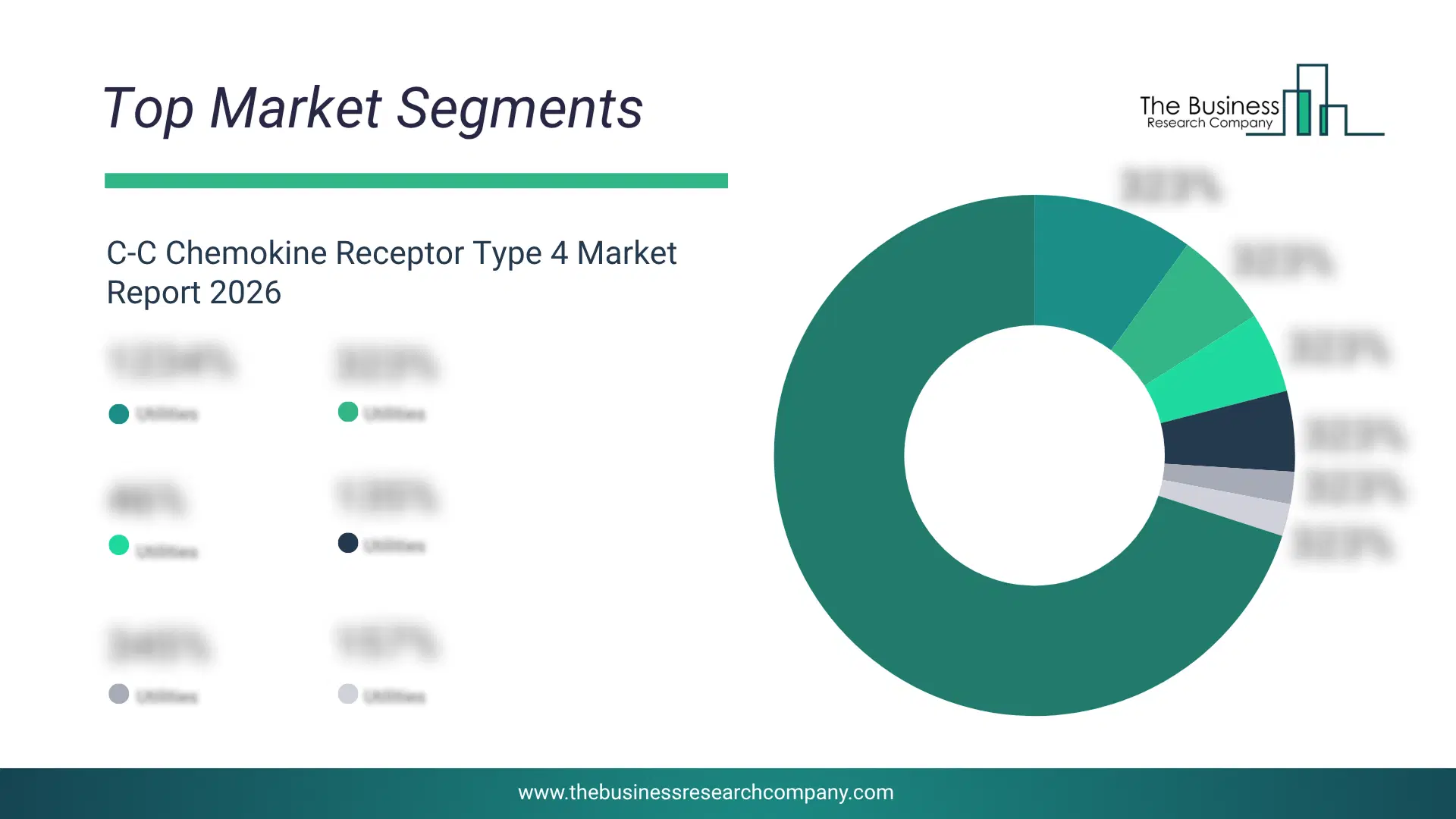
1) By Product Type: Monoclonal Antibodies, Small Molecule Inhibitors, Peptide-Based Therapeutics, Combination Therapy Products 2) By Mode Of Administration: Injectables, Oral Tablets, Topical Applications, Nasal Sprays 3) By Application: Immunology, Central Nervous System, Mycosis Fungoides, Other Applications 4) By End-User: Pharmaceutical Companies, Biotechnology Companies, Research Institutions, Contract Research Organizations, Hospitals And Clinics Subsegments: 1) By Monoclonal Antibodies: Humanized Monoclonal Antibodies, Fully Human Monoclonal Antibodies, Chimeric Monoclonal Antibodies, Antibody-Drug Conjugates (ADCs) 2) By Small Molecule Inhibitors: Competitive Inhibitors, Allosteric Inhibitors, Reversible Inhibitors, Irreversible Inhibitors 3) By Peptide-Based Therapeutics: Linear Peptides, Cyclic Peptides, Stapled Peptides, Peptidomimetics 4) By Combination Therapy Products: Monoclonal Antibody And Chemotherapy, Small Molecule Inhibitor And Immunotherapy, Peptide Therapeutic And Monoclonal Antibody, Multi-Targeted Combination TherapiesWhat Are The Drivers Of The C-C Chemokine Receptor Type 4 Market?
The growing patient demand for cancer therapies is expected to propel the growth of the C-C chemokine receptor type 4 market going forward. Cancer therapies encompass a broad range of medical treatments, such as chemotherapy, radiation, and targeted immunotherapies, designed to treat malignancies by destroying cancer cells or inhibiting their growth. The demand for cancer therapies is rising due to the increasing global prevalence of cancer, driven by aging populations, environmental factors, and improved screening programs that detect cases earlier. The growing patient demand for cancer therapies increases the need for C-C chemokine receptor type 4 (CCR4) targeting agents, as these therapies specifically inhibit CCR4-positive regulatory T cells (Tregs) in the tumor microenvironment, enhancing the body's natural immune response against tumors and improving treatment outcomes for patients with T-cell lymphomas and other solid tumors. For instance, in May 2024, according to IQVIA Holdings Inc., a US-based clinical research services company, In 2023, global spending on cancer medicines rose to $223 billion an increase of $25 billion from 2022 and is expected to climb to $409 billion by 2028. Therefore, the growing patient demand for cancer therapies is driving the growth of the C-C chemokine receptor type 4 industry. The growing demand for personalized medicine is expected to propel the growth of the C-C chemokine receptor type 4 market going forward. Personalized medicine is an approach to healthcare that customizes treatment and preventive measures based on a person’s unique genetic profile, lifestyle, and environmental influences. The demand for personalized medicine is rising as advancements in genetic testing and data analytics enable more precise and effective treatments, reducing trial-and-error prescribing and improving patient outcomes. The growing demand for personalized medicine increases the need for C-C chemokine receptor type 4 (CCR4), as therapies targeting CCR4 can be tailored to a patient’s specific cancer or immune system characteristics, enabling more precise and effective treatment. For instance, in February 2024, according to the Personalized Medicine Coalition (PMC), a US-based non-profit organization, the FDA authorized 16 new personalized treatments for rare disease patients in 2023, compared to just six approvals in 2022. Therefore, the growing demand for personalized medicine is driving the growth of the C-C chemokine receptor type 4 industry.Key Players In The Global C-C Chemokine Receptor Type 4 Market
Major companies operating in the c-c chemokine receptor type 4 market are Pfizer Inc., Merck & Co. Inc., Bristol-Myers Squibb Company, Thermo Fisher Scientific Inc., GlaxoSmithKline plc (GSK), Amgen Inc., Astellas Pharma Inc., Daiichi Sankyo Company Limited, Ono Pharmaceutical Co. Ltd., Kyowa Kirin Co. Ltd., RAPT Therapeutics Inc., Abcam Plc, R&D Systems Inc., Sino Biological Inc., CUSABIO Technology LLC, Aurigene Oncology Limited, Creative Biolabs Inc., MyBioSource Inc., Multispan Inc., Shanghai Meiyue Biotech Development Co. Ltd.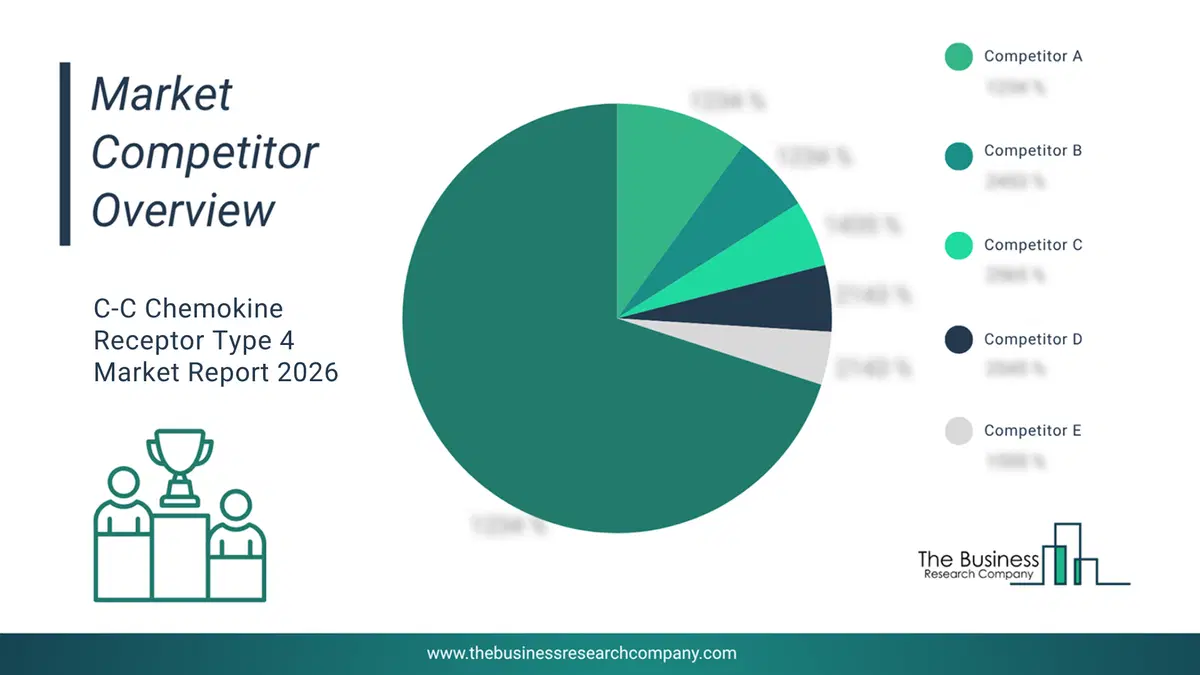
This chart is for illustrative purposes; the full report includes a detailed competitor analysis and comprehensive overview of the top 10 companies in the market.
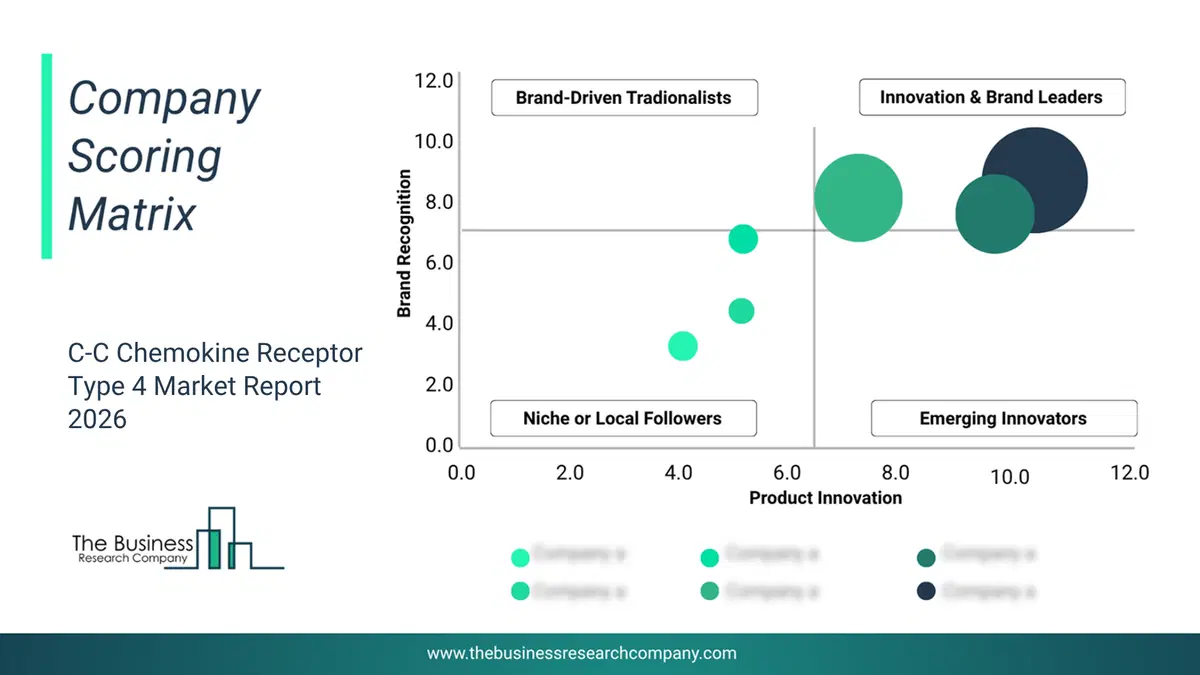
This chart maps companies by product innovation and brand strength, with bubble size indicating relative revenue, helping identify market leaders, challengers, and niche players. This is an illustrative chart; the full report provides a complete and accurate competitive analysis.
Global C-C Chemokine Receptor Type 4 Market Trends and Insights
Major companies operating in the C-C chemokine receptor type 4 market are focusing on developing advanced therapies, such as oral CCR4 antagonists used in combination with anti–PD-1 immunotherapy, to enhance antitumor immune responses and address treatment resistance in solid tumors. Oral CCR4 antagonists refer to small-molecule drugs designed to block the CCR4 receptor involved in regulating immune-suppressive T-cells within the tumor microenvironment, thereby improving the effectiveness of checkpoint inhibitor therapies. For instance, in April 2024, RAPT Therapeutics Inc., a US-based clinical-stage biopharmaceutical company, announced promising Phase 2 results for Tivumecirnon (FLX475) combined with pembrolizumab in patients with checkpoint inhibitor–experienced head and neck cancer. The therapy demonstrated meaningful clinical activity, including higher response rates in HPV-positive patients. This combination approach aims to improve patient outcomes and offer a more effective treatment strategy for difficult-to-treat cancers.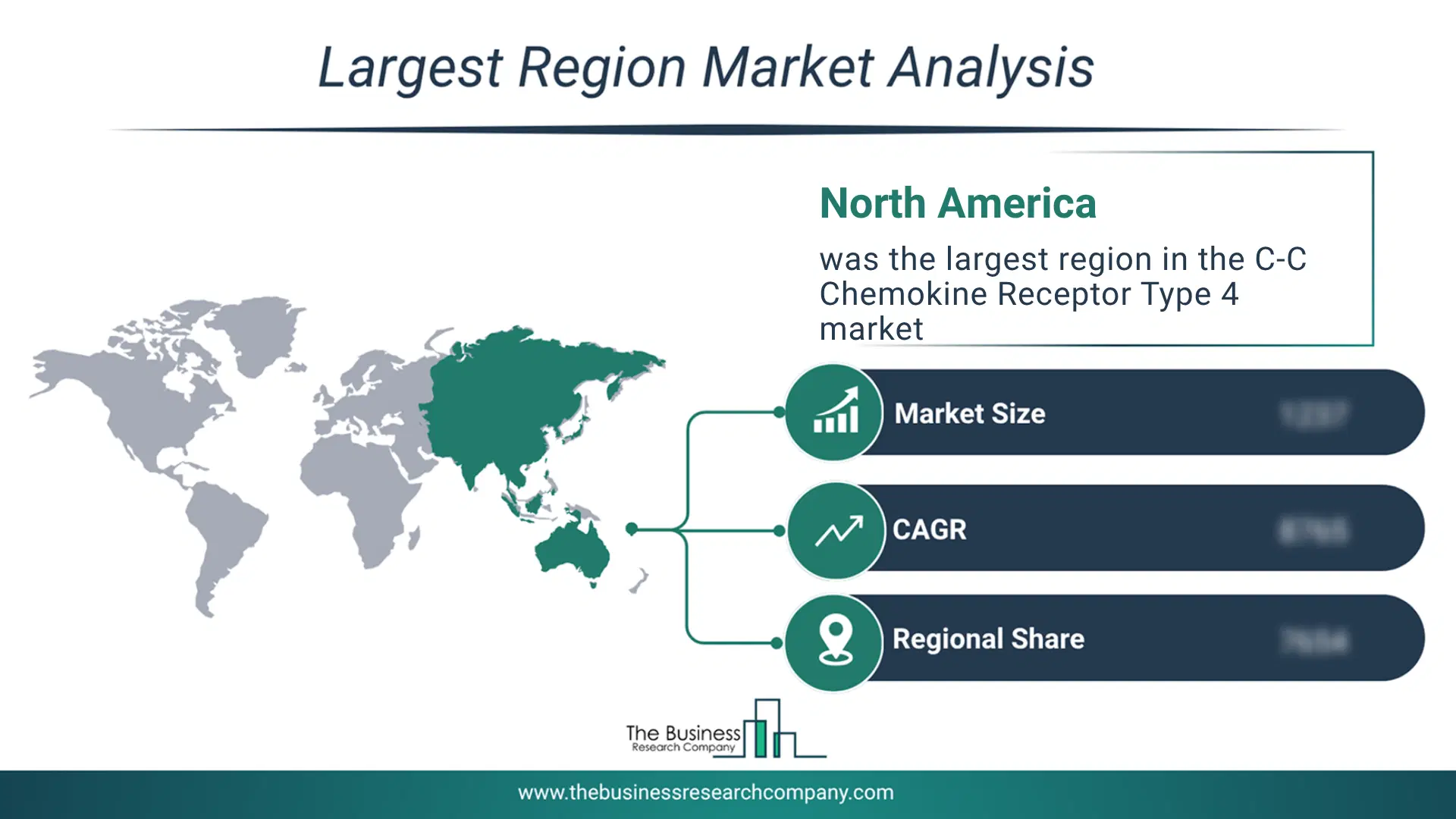
Regional Insights
North America was the largest region in the C-C chemokine receptor type 4 market in 2025. Asia-Pacific is expected to be the fastest-growing region in the forecast period. The regions covered in this market report are Asia-Pacific, South East Asia, Western Europe, Eastern Europe, North America, South America, Middle East, Africa. The countries covered in this market report are Australia, Brazil, China, France, Germany, India, Indonesia, Japan, Taiwan, Russia, South Korea, UK, USA, Canada, Italy, Spain.What Defines the C-C Chemokine Receptor Type 4 Market?
The C-C chemokine receptor type 4 market consists of sales of diagnostic assay kits, flow cytometry reagents, ELISA detection kits, gene expression assays, and immunotherapy vaccines. Values in this market are ‘factory gate’ values, that is the value of goods sold by the manufacturers or creators of the goods, whether to other entities (including downstream manufacturers, wholesalers, distributors and retailers) or directly to end customers. The value of goods in this market includes related services sold by the creators of the goods.How is Market Value Defined and Measured?
The market value is defined as the revenues that enterprises gain from the sale of goods and/or services within the specified market and geography through sales, grants, or donations in terms of the currency (in USD unless otherwise specified). The revenues for a specified geography are consumption values that are revenues generated by organizations in the specified geography within the market, irrespective of where they are produced. It does not include revenues from resales along the supply chain, either further along the supply chain or as part of other products.
This chart presents market attractiveness based on a quantitative evaluation of growth, competition, strategic alignment, and risk, offering a clear view of opportunity areas for decision-making. This chart is for illustrative purposes; the full report contains the complete analysis.

This chart highlights the Total Addressable Market (TAM) by estimating the maximum revenue opportunity using an assumption-driven approach, supporting strategic planning and opportunity sizing across markets. The chart is illustrative; the full report provides a more comprehensive analysis.
What Key Data and Analysis Are Included in the C-C Chemokine Receptor Type 4 Market Report 2026?
The c-c chemokine receptor type 4 market research report is one of a series of new reports from The Business Research Company that provides market statistics, including industry global market size, regional shares, competitors with the market share, detailed market segments, market trends and opportunities, and any further data you may need to thrive in the c-c chemokine receptor type 4 industry. The market research report delivers a complete perspective of everything you need, with an in-depth analysis of the current and future state of the industry.C-C Chemokine Receptor Type 4 Market Report Forecast Analysis
| Report Attribute | Details |
|---|---|
| Market Size Value In 2026 | $1.37 billion |
| Revenue Forecast In 2030 | $1.96 billion |
| Growth Rate | CAGR of 9.6% from 2026 to 2030 |
| Base Year For Estimation | 2025 |
| Actual Estimates/Historical Data | 2020-2025 |
| Forecast Period | 2026 - 2030 |
| Market Representation | Revenue in USD Billion and CAGR from 2026 to 2030 |
| Segments Covered | Product Type, Mode Of Administration, Application, End-User |
| Regional Scope | Asia-Pacific, Western Europe, Eastern Europe, North America, South America, Middle East, Africa |
| Country Scope | The countries covered in the report are Australia, Brazil, China, France, Germany, India, Indonesia, Japan, Taiwan, Russia, South Korea, UK, USA, Canada, Italy, Spain. |
| Key Companies Profiled | Pfizer Inc., Merck & Co. Inc., Bristol-Myers Squibb Company, Thermo Fisher Scientific Inc., GlaxoSmithKline plc (GSK), Amgen Inc., Astellas Pharma Inc., Daiichi Sankyo Company Limited, Ono Pharmaceutical Co. Ltd., Kyowa Kirin Co. Ltd., RAPT Therapeutics Inc., Abcam Plc, R&D Systems Inc., Sino Biological Inc., CUSABIO Technology LLC, Aurigene Oncology Limited, Creative Biolabs Inc., MyBioSource Inc., Multispan Inc., Shanghai Meiyue Biotech Development Co. Ltd. |
| Customization Scope | Request for Customization |
| Pricing And Purchase Options | Explore Purchase Options |