
C-X-C Chemokine Receptor Type 2 Market Report 2026
Global Outlook – By Product Type (Antagonists, Agonists, Inhibitors, Other Product Types), By Drug Type (Monoclonal Antibodies, Small Molecule Inhibitors, Peptide-based Therapeutics, Gene Therapy Products), By Route Of Administration (Intravenous, Subcutaneous, Oral, Topical), By Application (Cancer Treatment, Autoimmune Disorders, Infectious Diseases, Inflammatory Diseases, Other Applications), By End User (Hospitals, Research Institutions, Pharmaceutical Companies, Contract Research Organizations, Other End Users) – Market Size, Trends, Strategies, and Forecast to 2030
C-X-C Chemokine Receptor Type 2 Market Overview
• C-X-C Chemokine Receptor Type 2 market size has reached to $1.38 billion in 2025 • Expected to grow to $2.39 billion in 2030 at a compound annual growth rate (CAGR) of 11.5% • Growth Driver: Rising Prevalence Of Inflammatory Conditions Fueling The Growth Of The Market Due To Increasing Environmental Pollution And Chronic Immune Responses • North America was the largest region in 2025 and Asia-Pacific is the fastest growing region.What Is Covered Under C-X-C Chemokine Receptor Type 2 Market?
C-X-C chemokine receptor type 2 (CXCR2) is a G protein-coupled receptor primarily expressed on neutrophils and other immune cells. It binds chemokines to mediate chemotaxis, guiding immune cells to sites of inflammation or infection. Its primary purpose is to regulate inflammatory responses and immune cell recruitment, playing a key role in host defense and pathological inflammation. The main product types of C-X-C chemokine receptor type 2 include antagonists, agonists, inhibitors, and others. Antagonists are drugs that block the receptor's activity, preventing it from binding to chemokines and thereby reducing inflammation and immune cell recruitment. The various drug types available are monoclonal antibodies, small molecule inhibitors, peptide-based therapeutics, and gene therapy products and are administered through different routes, including intravenous, subcutaneous, oral, and topical. They are used in a wide range of applications such as cancer treatment, autoimmune disorders, infectious diseases, and inflammatory diseases, with key end users including hospitals, research institutions, pharmaceutical companies, contract research organizations, and others.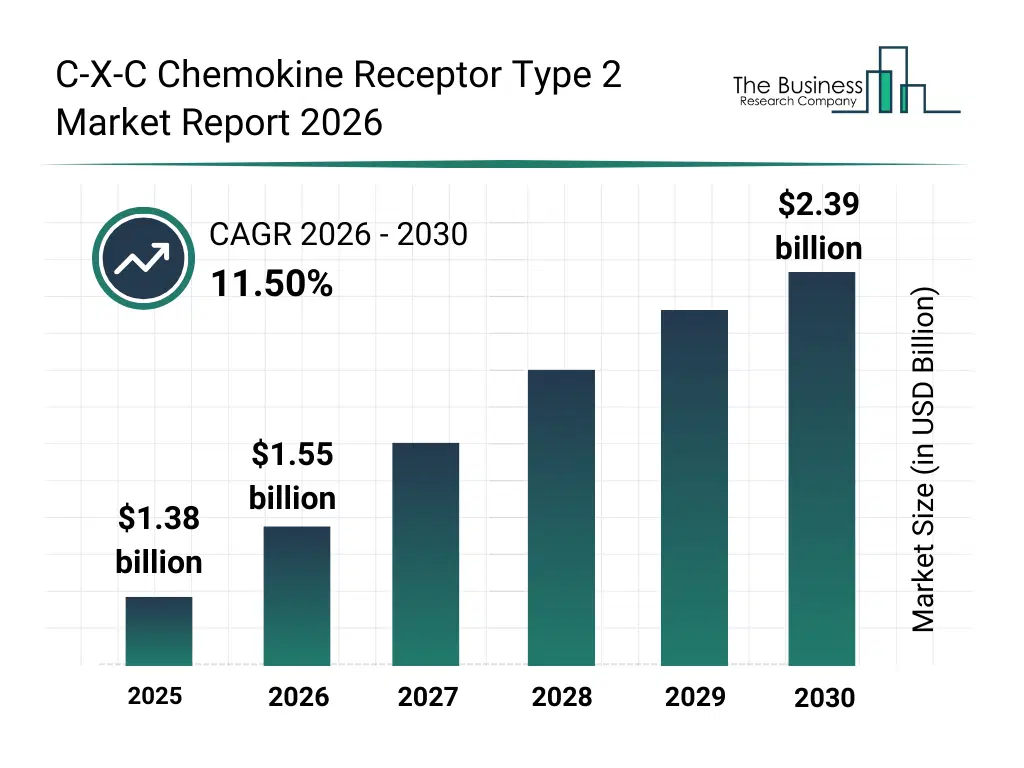
What Is The C-X-C Chemokine Receptor Type 2 Market Size and Share 2026?
The c-x-c chemokine receptor type 2 market size has grown rapidly in recent years. It will grow from $1.38 billion in 2025 to $1.55 billion in 2026 at a compound annual growth rate (CAGR) of 11.8%. The growth in the historic period can be attributed to limited understanding of cxcr2 biology, reliance on conventional anti-inflammatory drugs, growing research on chemokine signaling, early-stage monoclonal antibody development, increasing prevalence of inflammatory diseases.What Is The C-X-C Chemokine Receptor Type 2 Market Growth Forecast?
The c-x-c chemokine receptor type 2 market size is expected to see rapid growth in the next few years. It will grow to $2.39 billion in 2030 at a compound annual growth rate (CAGR) of 11.5%. The growth in the forecast period can be attributed to development of novel small molecule and peptide inhibitors, expansion of clinical trials for cxcr2 therapies, rising adoption of personalized and targeted immunotherapies, integration of digital biomarkers and ai-based drug discovery, increasing pharmaceutical investment in oncology and autoimmune markets. Major trends in the forecast period include development of selective cxcr2 inhibitors and dual cxcr1/2 inhibitors, advancements in monoclonal antibody and peptide-based therapeutics, expansion of applications in cancer, autoimmune, and inflammatory diseases, growth in gene therapy and rna-based therapeutics targeting cxcr2, integration of cxcr2 targeted therapies with personalized medicine approaches.
Global C-X-C Chemokine Receptor Type 2 Market Segmentation
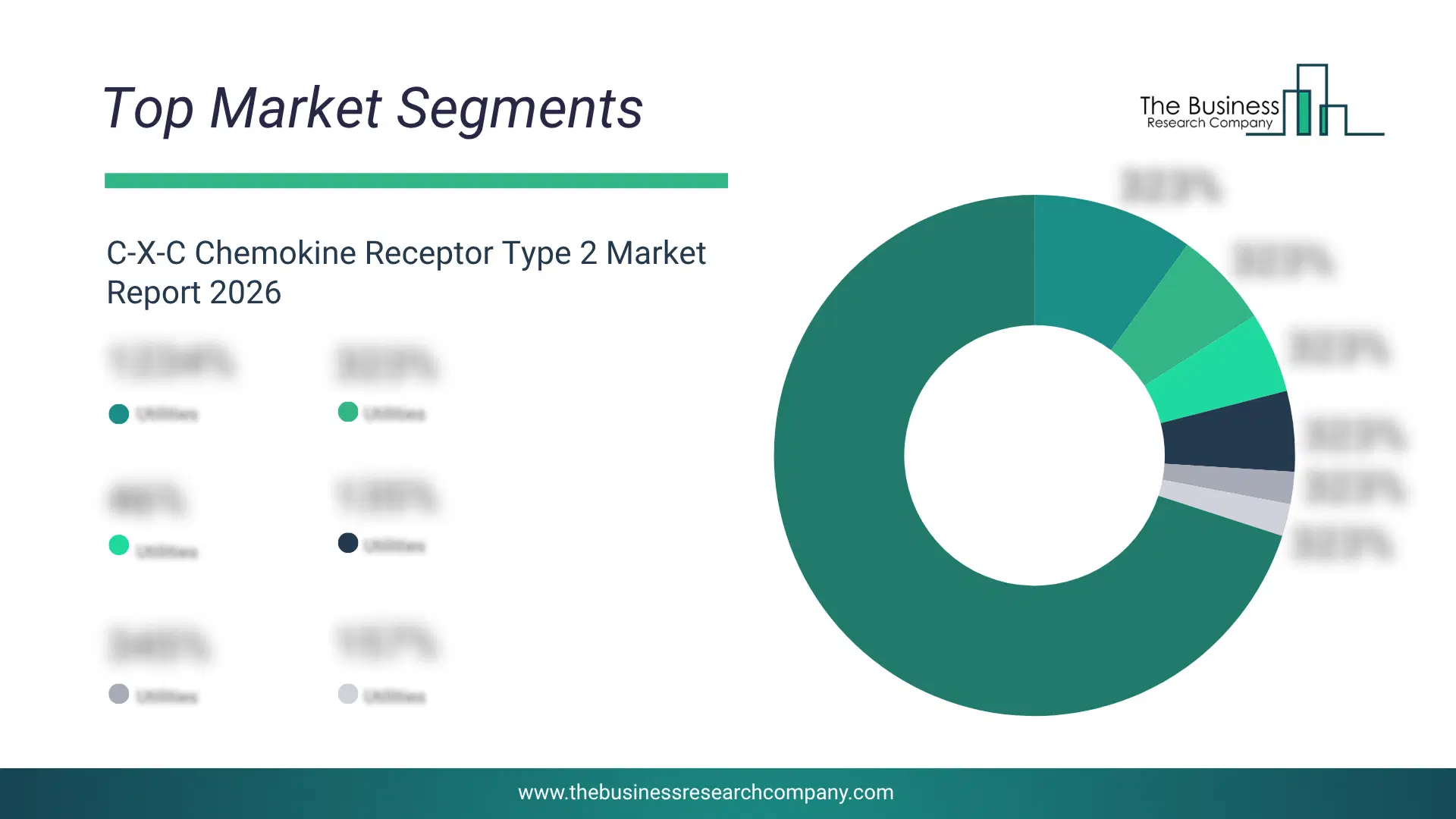
1) By Product Type: Antagonists, Agonists, Inhibitors, Other Product Types 2) By Drug Type: Monoclonal Antibodies, Small Molecule Inhibitors, Peptide-based Therapeutics, Gene Therapy Products 3) By Route Of Administration: Intravenous, Subcutaneous, Oral, Topical 4) By Application: Cancer Treatment, Autoimmune Disorders, Infectious Diseases, Inflammatory Diseases, Other Applications 5) By End User: Hospitals, Research Institutions, Pharmaceutical Companies, Contract Research Organizations, Other End Users Subsegments: 1) By Antagonists: Small Molecule Antagonists, Peptide Antagonists, Monoclonal Antibody Antagonists, Synthetic Antagonists 2) By Agonists: Chemokine-Based Agonists, Recombinant Protein Agonists, Peptide-Based Agonists, Modified Cytokine Agonists 3) By Inhibitors: Selective CXCR2 Inhibitors, Dual CXCR1 Or 2 Inhibitors, Allosteric Inhibitors, Irreversible Inhibitors 4) By Other Product Types: RNA-Based Therapeutics, Gene Therapy Vectors, Cell-Based Therapeutics, Biologic Response ModifiersWhat Are The Drivers Of The C-X-C Chemokine Receptor Type 2 Market?
The rising prevalence of inflammatory conditions is expected to propel the growth of the C-X-C chemokine receptor type 2 market going forward. Inflammatory conditions refer to medical disorders caused by the body's immune response, leading to swelling, redness, heat, pain, and loss of function in affected tissues or organs. The growth in inflammatory conditions is primarily driven by increasing environmental pollution, which triggers immune system responses and chronic inflammation. C-X-C Chemokine Receptor Type 2 (CXCR2) supports treatments for inflammatory conditions by precisely regulating immune cell migration and inflammatory responses. It reduces off-target effects by enabling small-molecule inhibitors and biologics that specifically modulate CXCR2 activity, improving treatment efficacy and patient outcomes. For instance, in May 2024, according to the Centers for Disease Control and Prevention, a US-based government agency, the prevalence of asthma among adults aged 18 and over in the United States increased from 8.7% in 2022 to 8.9% in 2023. Therefore, the rising prevalence of inflammatory conditions is driving the growth of the C-X-C chemokine receptor type 2 industry. The increasing focus on targeted therapies is expected to propel the growth of the C-X-C chemokine receptor type 2 market going forward. Targeted therapies are treatments that specifically target and inhibit molecular abnormalities in cancer or other diseases to improve treatment precision and minimize harm to healthy cells. The rising focus on targeted therapies is primarily driven by the advancements in precision medicine, which enables personalized, more effective treatments based on individual genetic profiles. C-X-C chemokine receptor type 2 enables targeted therapies by guiding immune responses, supporting precise treatments for autoimmune and inflammatory diseases. It supports precision medicine by allowing the development of small-molecule inhibitors and biologics that specifically modulate CXCR2 activity, improving therapeutic efficacy and reducing off-target effects. For instance, in December 2024, according to the American Society of Gene & Cell Therapy (ASGCT), a US-based non-profit medical and scientific organization, the Food and Drug Administration (FDA) approved 6 gene therapy products in 2023, up from 5 approvals in 2022. Therefore, the increasing focus on targeted therapies is driving the growth of the C-X-C chemokine receptor type 2 industry. The growing investments and research & development activities are expected to drive the growth in the C-X-C chemokine receptor type 2 market going forward. Investments refer to the allocation of resources, such as money or assets, into projects or ventures with the expectation of generating future returns, while Research & Development (R&D) activities involve systematic efforts to innovate processes or technologies and create new knowledge to drive growth and competitiveness. Growing investments and research & development activities are rising due to advancements in technology, as companies increasingly invest to innovate, enhance efficiency, and maintain a competitive edge in rapidly evolving markets. C-X-C chemokine receptor type 2 drives investments and research & development activities by serving as a promising therapeutic target, encouraging pharmaceutical companies to allocate resources toward innovative drug discovery and advanced clinical trials. For instance, in February 2025, according to a report published by the National Science Foundation (NSF), a U.S.-based federal agency, total research and experimental development (R&D) expenditures in the United States totaled $892 billion in 2022, with an estimated rise to $940 billion in 2023. Therefore, the growing investments and research & development activities are driving the C-X-C chemokine receptor type 2 industry.Key Players In The Global C-X-C Chemokine Receptor Type 2 Market
Major companies operating in the c-x-c chemokine receptor type 2 market are AstraZeneca plc, GSK plc, Eli Lilly and Company, Bio-Techne Corporation, Dompé Farmaceutici S.p.A., Miltenyi Biotec B.V. & Co. KG, Abcam plc, Selleck Chemicals LLC, Cell Signaling Technology Inc., RayBiotech Inc., Bethyl Laboratories Inc., Creative Biolabs Inc., TargetMol LLC, MedChemExpress LLC, BioCompare Inc., Boster Biological Technology Co. Ltd., TME Pharma GmbH, InvivoChem Ltd., Abbexa Ltd., Abiocode Inc.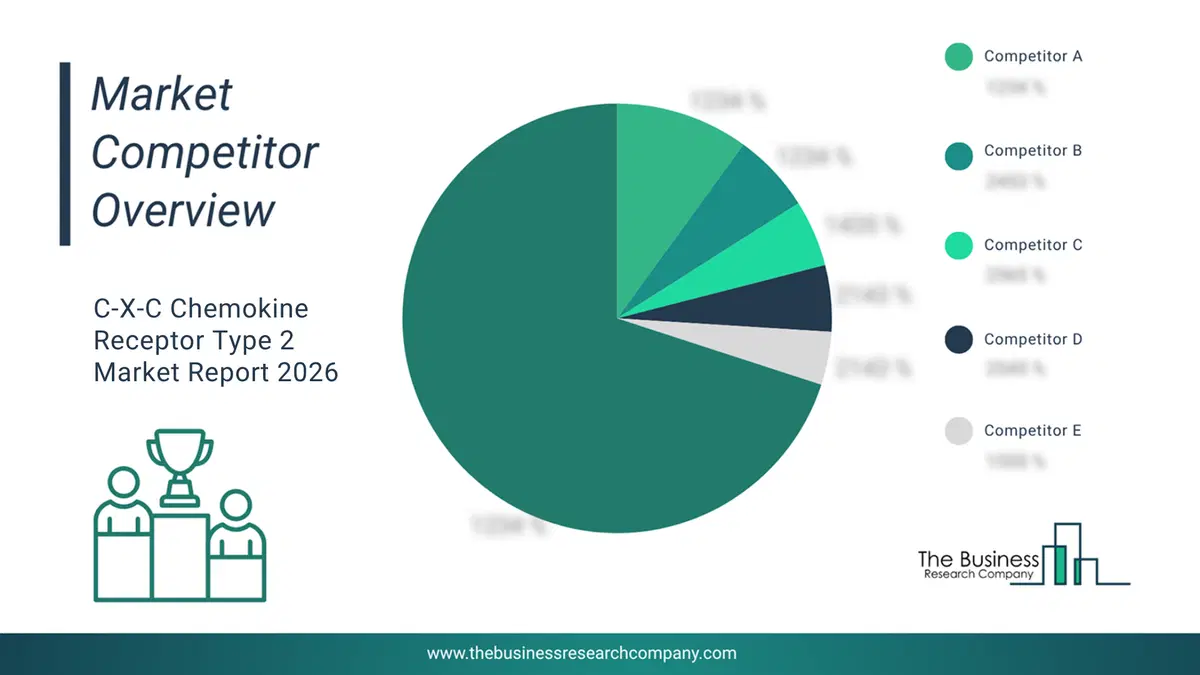
This chart is for illustrative purposes; the full report includes a detailed competitor analysis and comprehensive overview of the top 10 companies in the market.
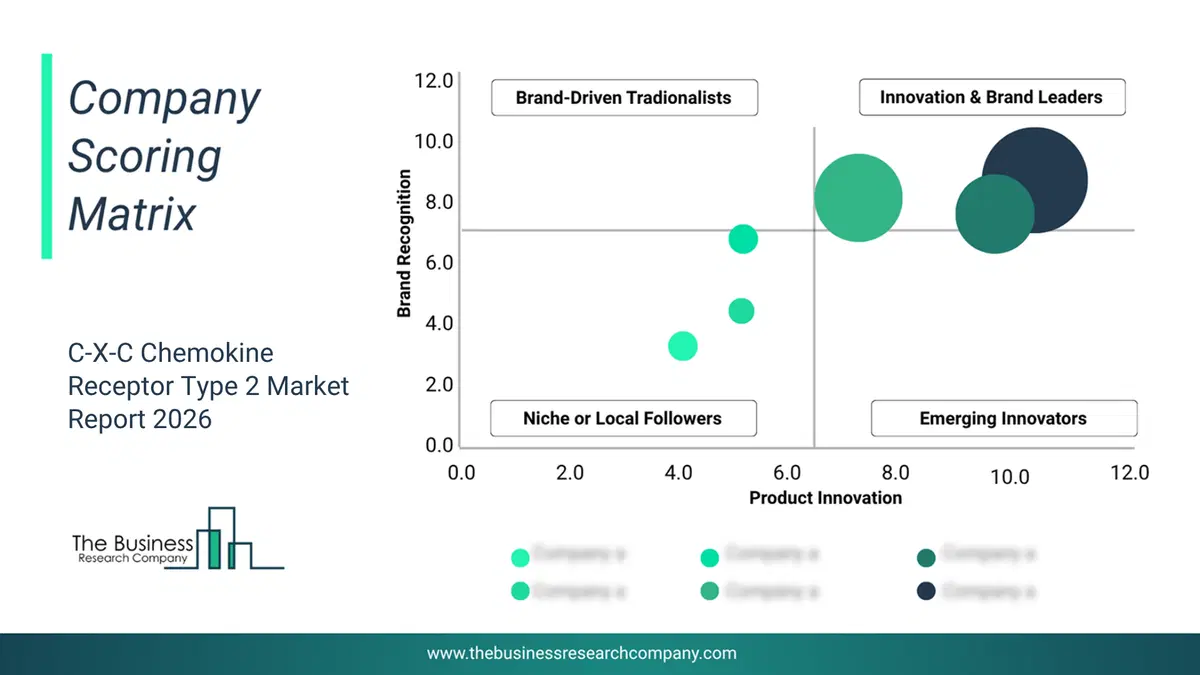
This chart maps companies by product innovation and brand strength, with bubble size indicating relative revenue, helping identify market leaders, challengers, and niche players. This is an illustrative chart; the full report provides a complete and accurate competitive analysis.
Regional Insights
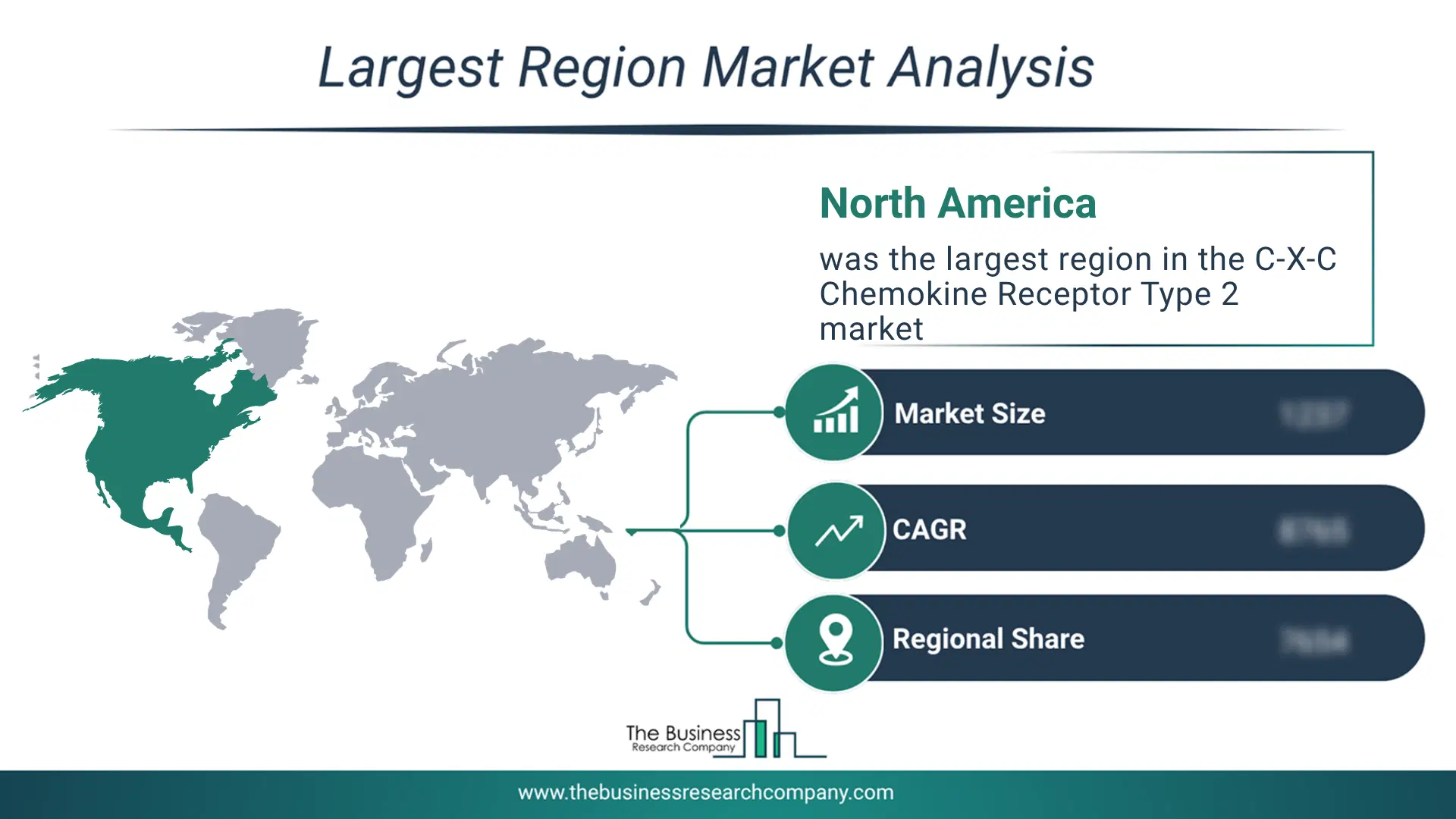
North America was the largest region in the C-X-C chemokine receptor type 2 market in 2025. Asia-Pacific is expected to be the fastest-growing region in the forecast period. The regions covered in this market report are Asia-Pacific, South East Asia, Western Europe, Eastern Europe, North America, South America, Middle East, Africa. The countries covered in this market report are Australia, Brazil, China, France, Germany, India, Indonesia, Japan, Taiwan, Russia, South Korea, UK, USA, Canada, Italy, Spain.What Defines the C-X-C Chemokine Receptor Type 2 Market?
The C-X-C chemokine receptor type 2 market consists of sales of ribonucleic acid (RNA)-based therapeutics, cell-based therapies, biologic response modifiers, diagnostic imaging agents, companion diagnostics, and recombinant proteins. Values in this market are ‘factory gate’ values, that is, the value of goods sold by the manufacturers or creators of the goods, whether to other entities (including downstream manufacturers, wholesalers, distributors, and retailers) or directly to end customers. The value of goods in this market includes related services sold by the creators of the goods.How is Market Value Defined and Measured?
The market value is defined as the revenues that enterprises gain from the sale of goods and/or services within the specified market and geography through sales, grants, or donations in terms of the currency (in USD unless otherwise specified). The revenues for a specified geography are consumption values that are revenues generated by organizations in the specified geography within the market, irrespective of where they are produced. It does not include revenues from resales along the supply chain, either further along the supply chain or as part of other products.
This chart presents market attractiveness based on a quantitative evaluation of growth, competition, strategic alignment, and risk, offering a clear view of opportunity areas for decision-making. This chart is for illustrative purposes; the full report contains the complete analysis.

This chart highlights the Total Addressable Market (TAM) by estimating the maximum revenue opportunity using an assumption-driven approach, supporting strategic planning and opportunity sizing across markets. The chart is illustrative; the full report provides a more comprehensive analysis.
What Key Data and Analysis Are Included in the C-X-C Chemokine Receptor Type 2 Market Report 2026?
The c-x-c chemokine receptor type 2 market research report is one of a series of new reports from The Business Research Company that provides market statistics, including industry global market size, regional shares, competitors with the market share, detailed market segments, market trends and opportunities, and any further data you may need to thrive in the c-x-c chemokine receptor type 2 industry. The market research report delivers a complete perspective of everything you need, with an in-depth analysis of the current and future state of the industry.C-X-C Chemokine Receptor Type 2 Market Report Forecast Analysis
| Report Attribute | Details |
|---|---|
| Market Size Value In 2026 | $1.55 billion |
| Revenue Forecast In 2030 | $2.39 billion |
| Growth Rate | CAGR of 11.8% from 2026 to 2030 |
| Base Year For Estimation | 2025 |
| Actual Estimates/Historical Data | 2020-2025 |
| Forecast Period | 2026 - 2030 |
| Market Representation | Revenue in USD Billion and CAGR from 2026 to 2030 |
| Segments Covered | Product Type, Drug Type, Route Of Administration, Application, End User |
| Regional Scope | Asia-Pacific, Western Europe, Eastern Europe, North America, South America, Middle East, Africa |
| Country Scope | The countries covered in the report are Australia, Brazil, China, France, Germany, India, Indonesia, Japan, Taiwan, Russia, South Korea, UK, USA, Canada, Italy, Spain. |
| Key Companies Profiled | AstraZeneca plc, GSK plc, Eli Lilly and Company, Bio-Techne Corporation, Dompé Farmaceutici S.p.A., Miltenyi Biotec B.V. & Co. KG, Abcam plc, Selleck Chemicals LLC, Cell Signaling Technology Inc., RayBiotech Inc., Bethyl Laboratories Inc., Creative Biolabs Inc., TargetMol LLC, MedChemExpress LLC, BioCompare Inc., Boster Biological Technology Co. Ltd., TME Pharma GmbH, InvivoChem Ltd., Abbexa Ltd., Abiocode Inc. |
| Customization Scope | Request for Customization |
| Pricing And Purchase Options | Explore Purchase Options |