
Cancer Cell Analysis Market Report 2026
Global Outlook – By Product And Service (Reagents And Consumables, Instruments, Accessories, Software, Service), By Type Of Analysis (Genomic Analysis, Proteomic Analysis, Metabolomic Analysis, Transcriptomic Analysis, Histopathological Analysis), By Technology (Next-Generation Sequencing (NGS), Polymerase Chain Reaction (PCR), Mass Spectrometry, Flow Cytometry, Immunohistochemistry (IHC)), By Application (Biomarker Discovery, Drug Development And Discovery, Precision Medicine, Clinical Diagnosis, Research And Development), By End-Use (Pharmaceutical And Biotechnology Companies, Hospitals And Clinical Testing Laboratories, Academic And Research Institutes, Other End-Uses) – Market Size, Trends, Strategies, and Forecast to 2030
Cancer Cell Analysis Market Overview
• Cancer Cell Analysis market size has reached to $11.41 billion in 2025 • Expected to grow to $17.5 billion in 2030 at a compound annual growth rate (CAGR) of 8.9% • Growth Driver: Rising Investments In Cancer Research Driving The Growth Of The Market Due To Enhanced Diagnostic And Therapeutic Advancements • Market Trend: Rare Cell And Circulating Tumor Cell Enrichment Driving Advancements In Cancer Research And Diagnostic Efficiency • North America was the largest region in 2025 and Asia-Pacific is the fastest growing region.What Is Covered Under Cancer Cell Analysis Market?
Cancer cell analysis is the detailed examination of cancerous cells using advanced laboratory and imaging techniques to understand their structure, behavior, and genetic characteristics. Its primary goal is to support early detection, accurate diagnosis, and personalized treatment strategies for cancer patients. It also enables researchers to study tumor progression, evaluate treatment responses, identify biomarkers, and develop innovative therapies, thereby advancing precision oncology and improving patient outcomes. The main product and service in the cancer cell analysis market are reagents and consumables, instruments, accessories, software, and service. Reagents and consumables refer to the essential chemical and biological materials, such as cell culture media, antibodies, stains, enzyme kits, and buffers, used to perform, detect, and analyze cancer cells accurately. The types of analysis cover genomic analysis, proteomic analysis, metabolomic analysis, transcriptomic analysis, and histopathological analysis. The key technologies include next-generation sequencing (NGS), polymerase chain reaction (PCR), mass spectrometry, flow cytometry, and immunohistochemistry (IHC). The various applications include biomarker discovery, drug development and discovery, precision medicine, clinical diagnosis, and research and development. The different end-uses encompass pharmaceutical and biotechnology companies, hospitals and clinical testing laboratories, academic and research institutes, and others.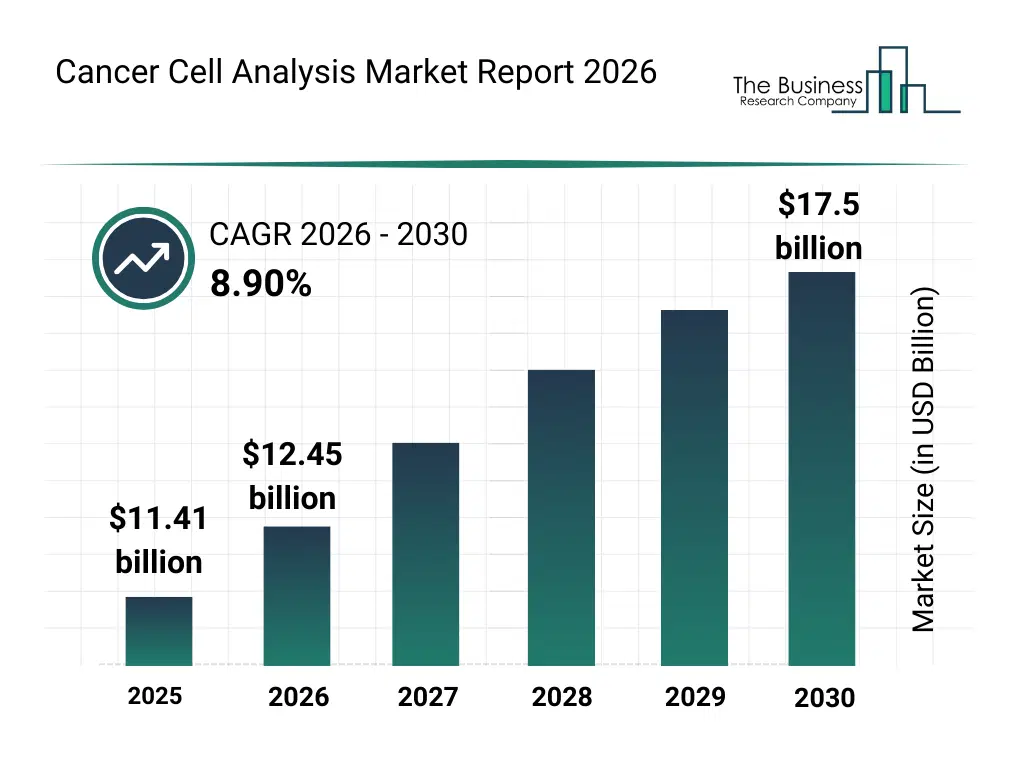
What Is The Cancer Cell Analysis Market Size and Share 2026?
The cancer cell analysis market size has grown strongly in recent years. It will grow from $11.41 billion in 2025 to $12.45 billion in 2026 at a compound annual growth rate (CAGR) of 9.2%. The growth in the historic period can be attributed to rising cancer prevalence, limitations of conventional diagnostic techniques, lack of early detection tools, low adoption of multi-omics approaches, limited research infrastructure.What Is The Cancer Cell Analysis Market Growth Forecast?
The cancer cell analysis market size is expected to see strong growth in the next few years. It will grow to $17.5 billion in 2030 at a compound annual growth rate (CAGR) of 8.9%. The growth in the forecast period can be attributed to growth of ai-assisted imaging and analysis, adoption of single-cell technologies, integration of multi-omics platforms, expansion of high-throughput screening, rising demand for personalized oncology and precision medicine. Major trends in the forecast period include AI-based cancer cell imaging, multi-omics integration, single-cell analysis technologies, high-throughput screening platforms, personalized oncology insights.
Global Cancer Cell Analysis Market Segmentation
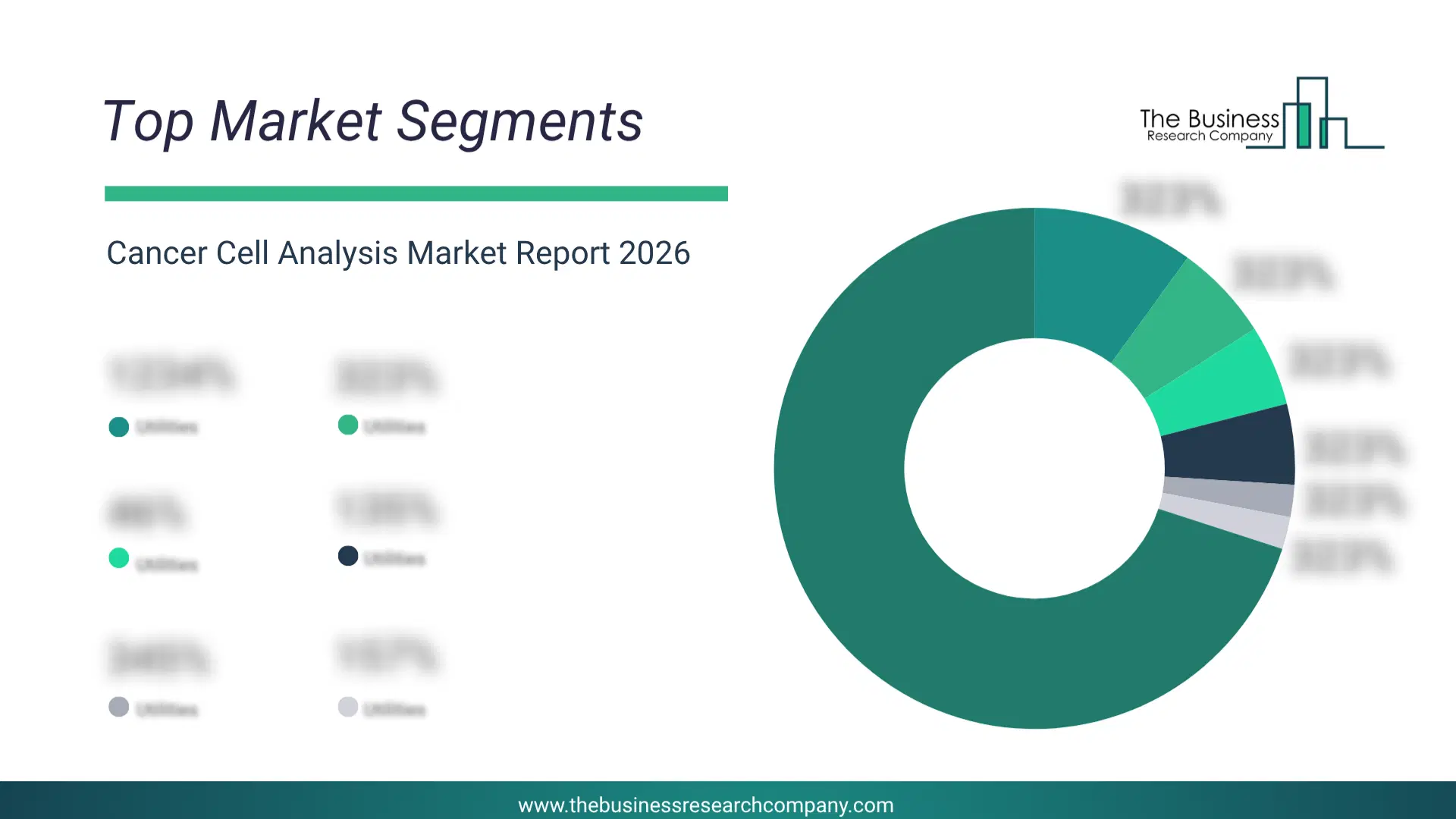
1) By Product And Service: Reagents And Consumables, Instruments, Accessories, Software, Service 2) By Type Of Analysis: Genomic Analysis, Proteomic Analysis, Metabolomic Analysis, Transcriptomic Analysis, Histopathological Analysis 3) By Technology: Next-Generation Sequencing (NGS), Polymerase Chain Reaction (PCR), Mass Spectrometry, Flow Cytometry, Immunohistochemistry (IHC) 4) By Application: Biomarker Discovery, Drug Development And Discovery, Precision Medicine, Clinical Diagnosis, Research And Development 5) By End-Use: Pharmaceutical And Biotechnology Companies, Hospitals And Clinical Testing Laboratories, Academic And Research Institutes, Other End-Uses Subsegments: 1) By Reagents And Consumables: Cell Culture Media, Antibodies, Stains And Dyes, Enzyme Kits, Buffers And Solutions 2) By Instruments: Flow Cytometers, Microscopes, Cell Analyzers, Automated Cell Counters, Imaging Systems 3) By Accessories: Pipettes And Tips, Culture Plates And Flasks, Microplates, Filtration Units, Sample Tubes 4) By Software: Data Analysis Software, Image Analysis Software, Laboratory Information Management Systems, Visualization Tools, Quantification Software 5) By Service: Technical Support Services, Installation And Maintenance Services, Calibration Services, Training And Education Services, Consultation ServicesWhat Is The Driver Of The Cancer Cell Analysis Market?
The growing investments in cancer research are expected to drive the expansion of the cancer cell analysis market in the coming years. Cancer research refers to the study of cancer’s causes, diagnosis, treatment, and prevention to improve patient outcomes and reduce mortality. Investments in cancer research are increasing due to the growing global burden of cancer, prompting governments and private organizations to fund more studies focused on improving diagnostics and developing effective treatments. Cancer cell analysis plays a crucial role in cancer research by offering detailed insights into tumor biology, heterogeneity, and progression, enabling researchers to discover new biomarkers, assess treatment responses, and design targeted therapies. For instance, according to the National Cancer Institute, a US-based government agency, the budget for cancer research in fiscal year 2024 was $7.2 billion, reflecting a 1.7% increase from 2023. Thus, the growing investments in cancer research will drive the demand for the cancer cell analysis industry.Key Players In The Global Cancer Cell Analysis Market
Major companies operating in the cancer cell analysis market are F. Hoffmann-La Roche AG, Thermo Fisher Scientific Inc., Abbott Laboratories, Danaher Corporation, Siemens Healthineers AG, Merck KGaA, GE Healthcare Technologies Inc., Becton Dickinson and Company, Agilent Technologies Inc., Olympus Corporation, Illumina Inc., Sartorius AG, PerkinElmer Inc., Sysmex Corporation, Bruker Corporation, Bio-Rad Laboratories Inc., QIAGEN N.V., Tecan Group Ltd., Miltenyi Biotec B.V. & Co. KG, Abcam plc, Promega Corporation, Creative Bioarray Inc., NanoCellect Biomedical Inc., Cell Biolabs Inc., Meiji Techno Co. Ltd.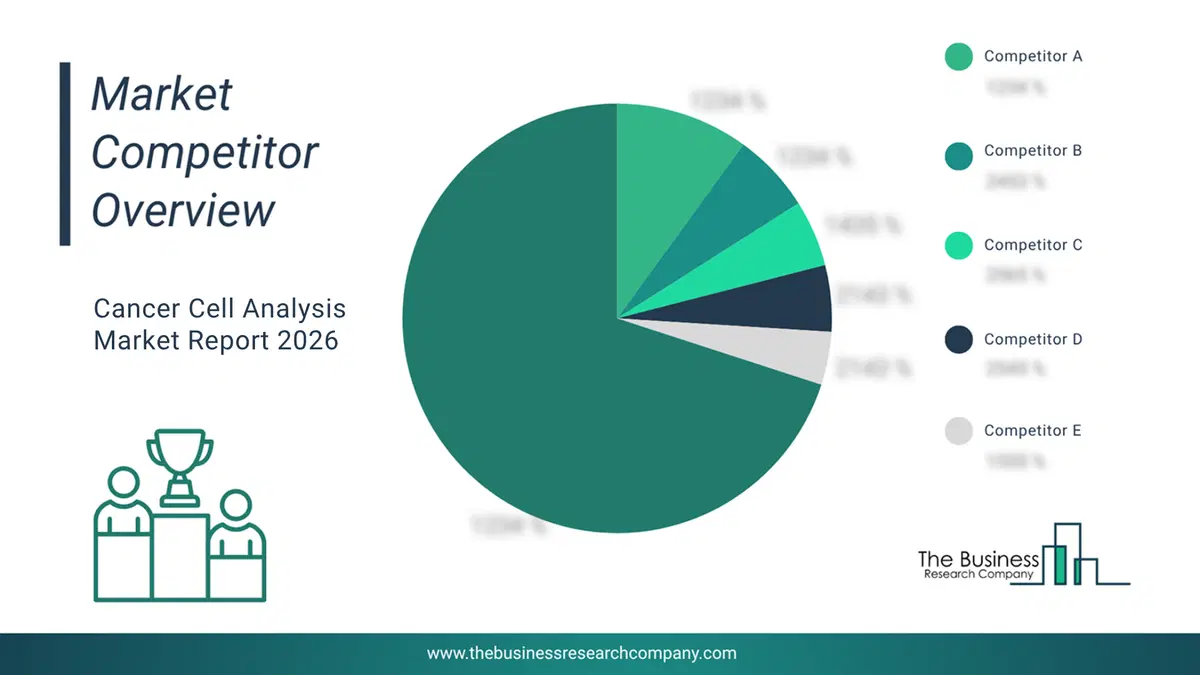
This chart is for illustrative purposes; the full report includes a detailed competitor analysis and comprehensive overview of the top 10 companies in the market.
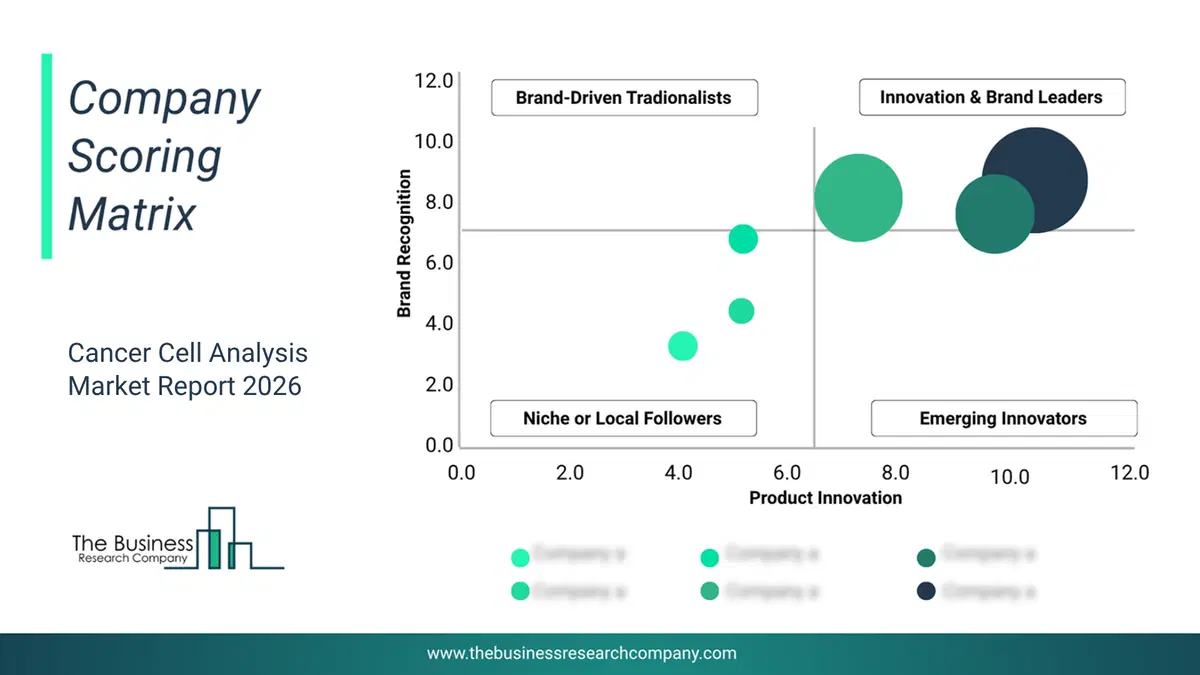
This chart maps companies by product innovation and brand strength, with bubble size indicating relative revenue, helping identify market leaders, challengers, and niche players. This is an illustrative chart; the full report provides a complete and accurate competitive analysis.
Global Cancer Cell Analysis Market Trends and Insights
Major companies operating in the cancer cell analysis market are focusing on advanced innovations such as rare cell and circulating tumor cell (CTC) enrichment technologies to improve cancer research and diagnostic capabilities. Rare cell and CTC enrichment refers to the isolation and capture of extremely low-frequency tumor cells from blood samples, which provides critical insights into tumor heterogeneity, disease progression, and treatment response. For instance, in June 2024, Bio-Rad Laboratories Inc., a U.S.-based life science research and clinical diagnostics company, launched Celselect Slides 2.0, an advanced microfluidic slide technology designed to enhance rare cell and CTC capture using its Genesis Cell Isolation System. The new version enables 2.5 times more sample capacity per slide, increasing microchambers from 56,400 to 140,800, and supports seamless integration into existing workflows, accelerating cancer research and improving the efficiency of cell analysis. This technology integrates smoothly into laboratory workflows without requiring major adjustments.What Are Latest Mergers And Acquisitions In The Cancer Cell Analysis Market?
In August 2023, Cell Microsystems Inc., a US-based life sciences company, acquired Fluxion Biosciences Inc. for an undisclosed amount. With this acquisition, Cell Microsystems aims to expand its single-cell analysis portfolio, enhance cancer cell research capabilities, and offer integrated solutions for circulating tumor cell isolation and downstream molecular analysis. Fluxion Biosciences Inc. is a US-based biotechnology company specializing in cancer cell analysis and circulating tumor cell (CTC) isolation technologies.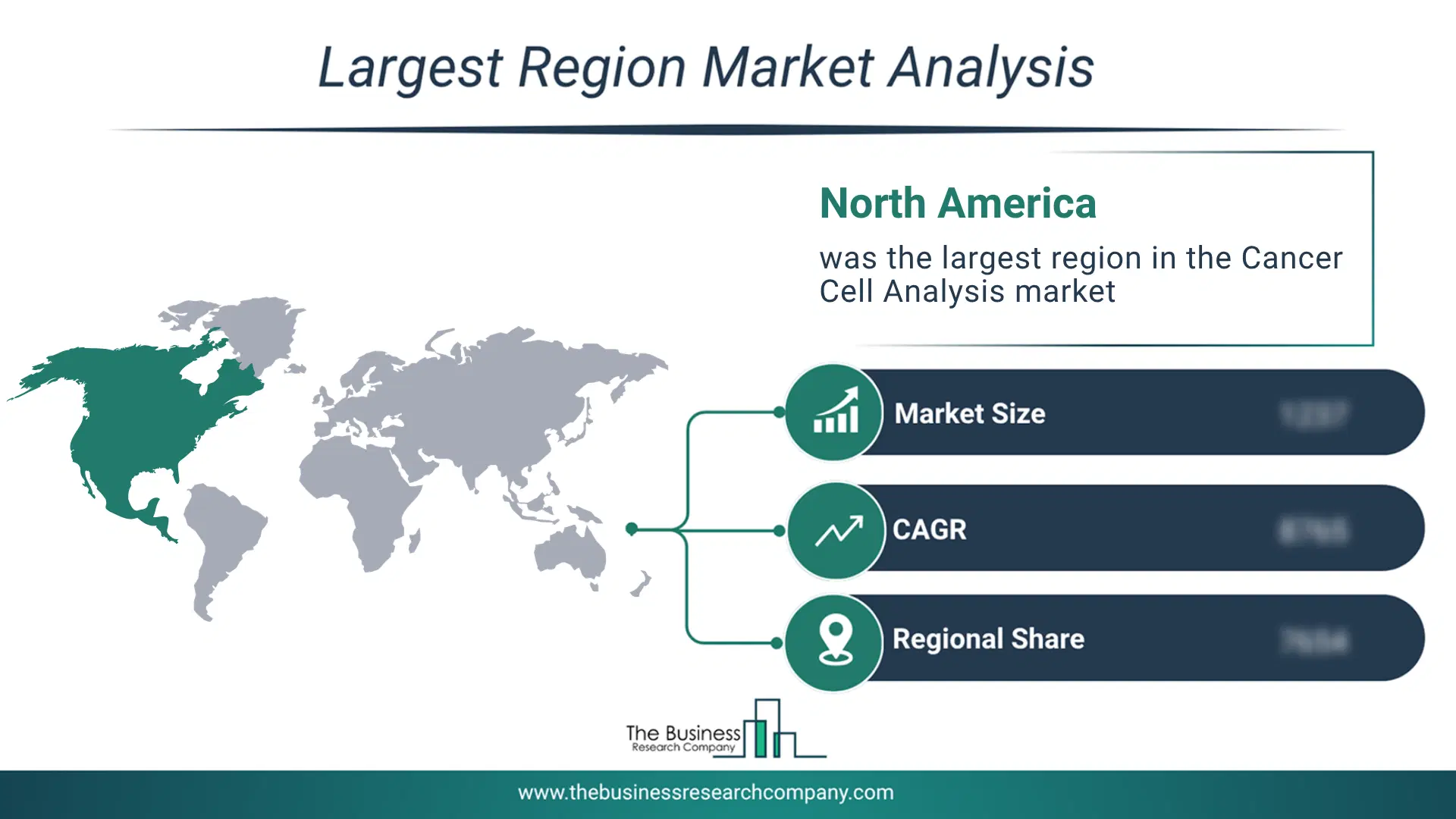
Regional Outlook
North America was the largest region in the cancer cell analysis market in 2025. Asia-Pacific is expected to be the fastest-growing region in the forecast period. The regions covered in this market report are Asia-Pacific, South East Asia, Western Europe, Eastern Europe, North America, South America, Middle East, Africa. The countries covered in this market report are Australia, Brazil, China, France, Germany, India, Indonesia, Japan, Taiwan, Russia, South Korea, UK, USA, Canada, Italy, SpainWhat Defines the Cancer Cell Analysis Market?
The cancer cell analysis market includes revenues earned by entities by providing services such as consulting and research support services, data analysis and bioinformatics services, drug screening and efficacy testing, histopathology and digital pathology services, and clinical trial support services. The market value includes the value of related goods sold by the service provider or included within the service offering. The cancer cell analysis market also includes sales of digital pathology scanners, microfluidic devices, liquid biopsy kits, and immunohistochemistry (IHC) kits. Values in this market are ‘factory gate’ values, that is the value of goods sold by the manufacturers or creators of the goods, whether to other entities (including downstream manufacturers, wholesalers, distributors and retailers) or directly to end customers. The value of goods in this market includes related services sold by the creators of the goods.How is Market Value Defined and Measured?
The market value is defined as the revenues that enterprises gain from the sale of goods and/or services within the specified market and geography through sales, grants, or donations in terms of the currency (in USD unless otherwise specified). The revenues for a specified geography are consumption values that are revenues generated by organizations in the specified geography within the market, irrespective of where they are produced. It does not include revenues from resales along the supply chain, either further along the supply chain or as part of other products.
This chart presents market attractiveness based on a quantitative evaluation of growth, competition, strategic alignment, and risk, offering a clear view of opportunity areas for decision-making. This chart is for illustrative purposes; the full report contains the complete analysis.

This chart highlights the Total Addressable Market (TAM) by estimating the maximum revenue opportunity using an assumption-driven approach, supporting strategic planning and opportunity sizing across markets. The chart is illustrative; the full report provides a more comprehensive analysis.
What Key Data and Analysis Are Included in the Cancer Cell Analysis Market Report 2026?
The cancer cell analysis market research report is one of a series of new reports from The Business Research Company that provides market statistics, including industry global market size, regional shares, competitors with the market share, detailed market segments, market trends and opportunities, and any further data you may need to thrive in the cancer cell analysis industry. The market research report delivers a complete perspective of everything you need, with an in-depth analysis of the current and future state of the industry.Cancer Cell Analysis Market Report Forecast Analysis
| Report Attribute | Details |
|---|---|
| Market Size Value In 2026 | $12.45 billion |
| Revenue Forecast In 2030 | $17.5 billion |
| Growth Rate | CAGR of 8.9% from 2026 to 2030 |
| Base Year For Estimation | 2025 |
| Actual Estimates/Historical Data | 2020-2025 |
| Forecast Period | 2026 - 2030 |
| Market Representation | Revenue in USD Billion and CAGR from 2026 to 2030 |
| Segments Covered | Product And Service, Type Of Analysis, Technology, Application, End-Use |
| Regional Scope | Asia-Pacific, Western Europe, Eastern Europe, North America, South America, Middle East, Africa |
| Country Scope | The countries covered in the report are Australia, Brazil, China, France, Germany, India, Indonesia, Japan, Taiwan, Russia, South Korea, UK, USA, Canada, Italy, Spain. |
| Key Companies Profiled | F. Hoffmann-La Roche AG, Thermo Fisher Scientific Inc., Abbott Laboratories, Danaher Corporation, Siemens Healthineers AG, Merck KGaA, GE Healthcare Technologies Inc., Becton Dickinson and Company, Agilent Technologies Inc., Olympus Corporation, Illumina Inc., Sartorius AG, PerkinElmer Inc., Sysmex Corporation, Bruker Corporation, Bio-Rad Laboratories Inc., QIAGEN N.V., Tecan Group Ltd., Miltenyi Biotec B.V. & Co. KG, Abcam plc, Promega Corporation, Creative Bioarray Inc., NanoCellect Biomedical Inc., Cell Biolabs Inc., Meiji Techno Co. Ltd. |
| Customization Scope | Request for Customization |
| Pricing And Purchase Options | Explore Purchase Options |