
Cancer Clinical Decision Tools Market Report 2026
Global Outlook – By Type (Risk Assessment Tool(RAT), Qcancer), By End-User (Hospital, Clinics) – Market Size, Trends, Strategies, and Forecast to 2030
Cancer Clinical Decision Tools Market Overview
• Cancer Clinical Decision Tools market size has reached to $0.55 billion in 2025 • Expected to grow to $0.88 billion in 2030 at a compound annual growth rate (CAGR) of 10.2% • Growth Driver: Rise In Cancer Cases Drives Demand For Cancer Clinical Decision Tools • Market Trend: AI-Driven Prognostic Platforms Transforming Growth in the Cancer Clinical Decision Tools Market • North America was the largest region in 2025.What Is Covered Under Cancer Clinical Decision Tools Market?
Cancer clinical decision tools refer to the tools that are developed to help medical practitioners identify suspected cancer signs and symptoms and treat patients effectively. These tools aid in clinical decision-making by assisting GPs in deciding whether to refer or seek additional diagnostic testing in patients suspected of having cancer. The main types of cancer clinical decision tools are risk assessment tools (RAT) and Qcancer. By examining a combination of risk factors, including genetic, environmental, and behavioral risk factors, risk assessment tools make it easier to translate these risk models into estimates of an individual’s likelihood of acquiring certain malignancies. The different sectors include hospitals and clinics.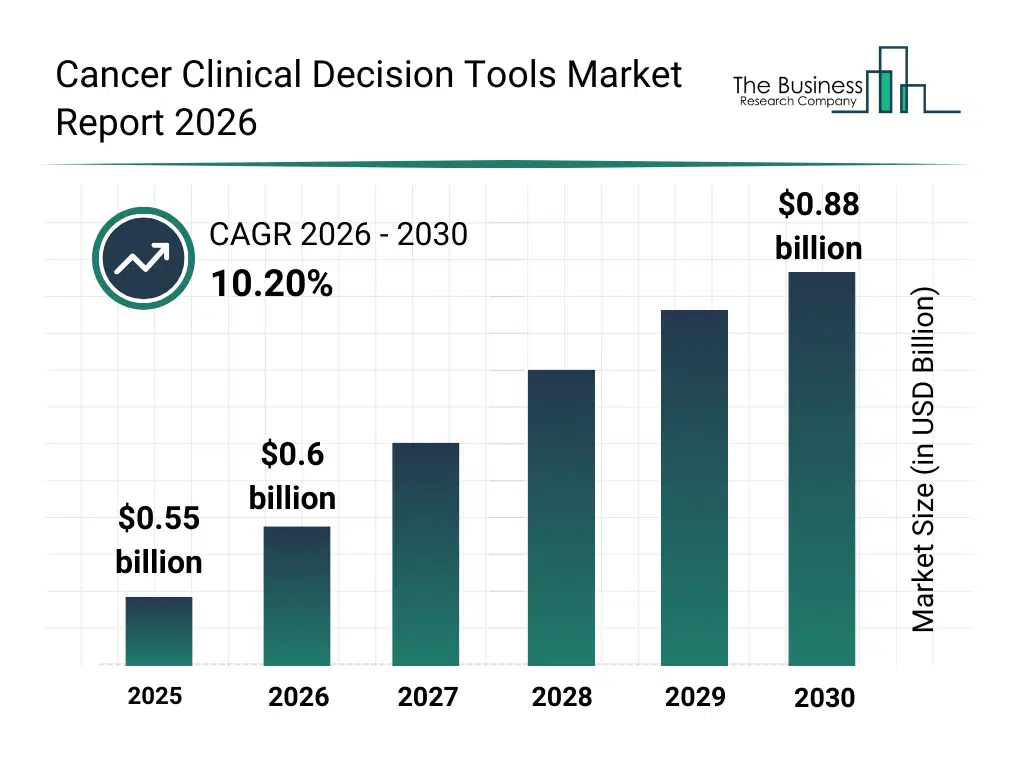
What Is The Cancer Clinical Decision Tools Market Size and Share 2026?
The cancer clinical decision tools market size has grown strongly in recent years. It will grow from $0.55 billion in 2025 to $0.6 billion in 2026 at a compound annual growth rate (CAGR) of 9.0%. The growth in the historic period can be attributed to rising cancer incidence rates, growing burden on primary care physicians, limited early diagnostic tools in primary care, increasing emphasis on referral accuracy, expansion of hospital and clinic infrastructure.What Is The Cancer Clinical Decision Tools Market Growth Forecast?
The cancer clinical decision tools market size is expected to see rapid growth in the next few years. It will grow to $0.88 billion in 2030 at a compound annual growth rate (CAGR) of 10.2%. The growth in the forecast period can be attributed to advancement of ai-driven decision tools, integration of genomic and risk profiling data, expansion of digital health platforms, increasing government screening initiatives, growing adoption of evidence-based oncology guidelines. Major trends in the forecast period include increasing adoption of clinical decision support tools in oncology, rising focus on early cancer detection and risk stratification, growing use of symptom checkers and risk calculators by gps, expansion of guideline-based referral and decision frameworks, integration of cancer decision tools into primary care workflows.
Global Cancer Clinical Decision Tools Market Segmentation
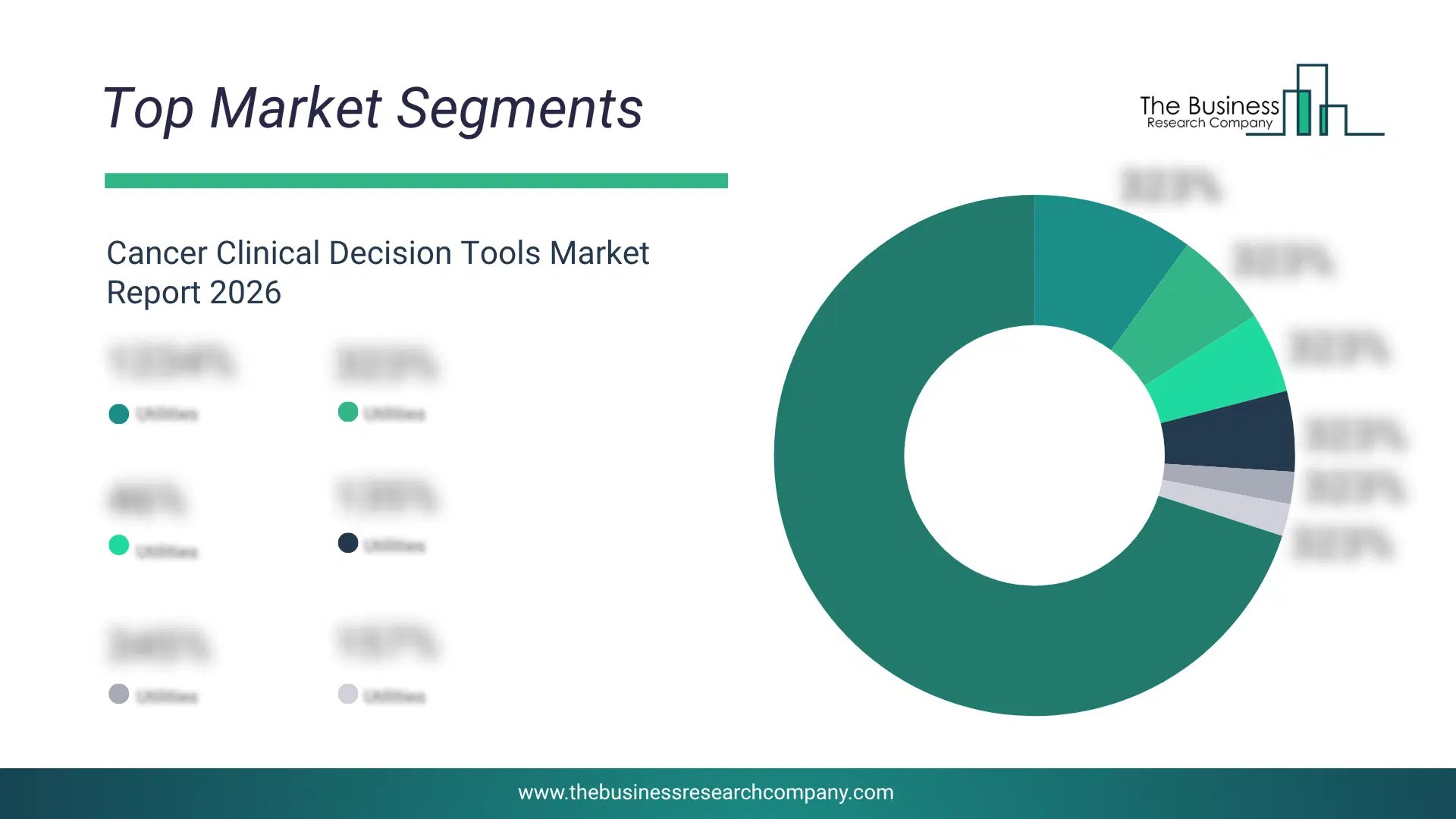
1) By Type: Risk Assessment Tool(RAT), Qcancer 2) By End-User: Hospital, Clinics Subsegments: 1) By Risk Assessment Tool (RAT): Family History Assessment, Genetic Testing and Counseling, Lifestyle and Environmental Risk Factors Evaluation 2) By Qcancer: Symptom Checker, Risk Calculator, Guideline-Based RecommendationsWhat Is The Driver Of The Cancer Clinical Decision Tools Market?
The rise in cancer incidence is expected to propel the growth of the cancer clinical decision tools market going forward. Cancer incidence is the number of new cases of cancer that are diagnosed in a specific population during a certain period of time, showing how frequently the disease occurs. Cancer incidence is rising due to increasing exposure to risk factors such as unhealthy lifestyles, which can lead to genetic mutations and abnormal cell growth over time. Cancer clinical decision tools help track, predict, and manage cancer cases more effectively, enabling early detection and timely intervention that can influence observed cancer incidence trends. For instance, in October 2025, according to the NHS England, a UK-based publicly funded healthcare system, there were 354,820 new cancer diagnoses in 2023, which is 8,605 more than in 2022. Therefore, the rise in cancer incidence rates across the globe will increase the demand for cancer clinical decision tools industry.Key Players In The Global Cancer Clinical Decision Tools Market
Major companies operating in the cancer clinical decision tools market are McKesson Corporation, Philips Healthcare, Siemens Healthineers AG, Elsevier B.V., National Decision Support Company, Cerner Corporation, GE Healthcare, Allscripts Healthcare Solutions Inc., Epic Systems Corporation, RaySearch Laboratories AB, Elekta AB, Varian Medical Systems Inc., Accuray Incorporated, F. Hoffmann-La Roche Ltd., Flatiron Health Inc., Tempus Labs Inc., NantHealth Inc., Syapse Inc., Inspirata Inc., Prognos Health Inc., Deep 6 AI Inc., PathAI Inc.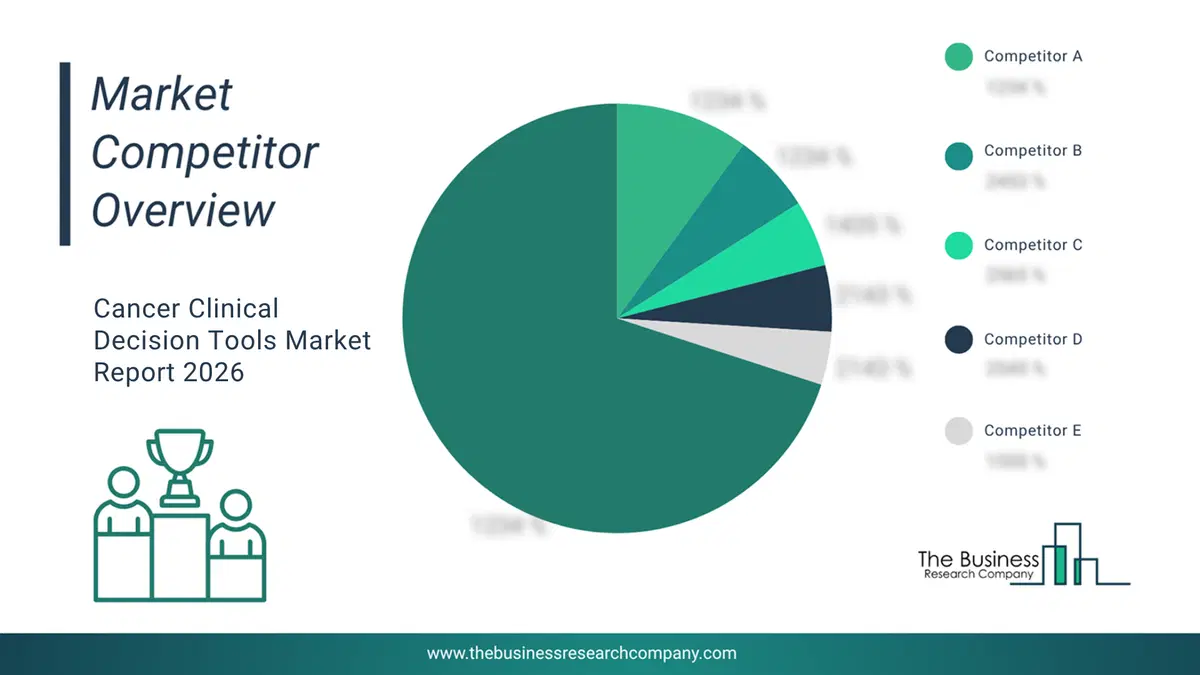
This chart is for illustrative purposes; the full report includes a detailed competitor analysis and comprehensive overview of the top 10 companies in the market.
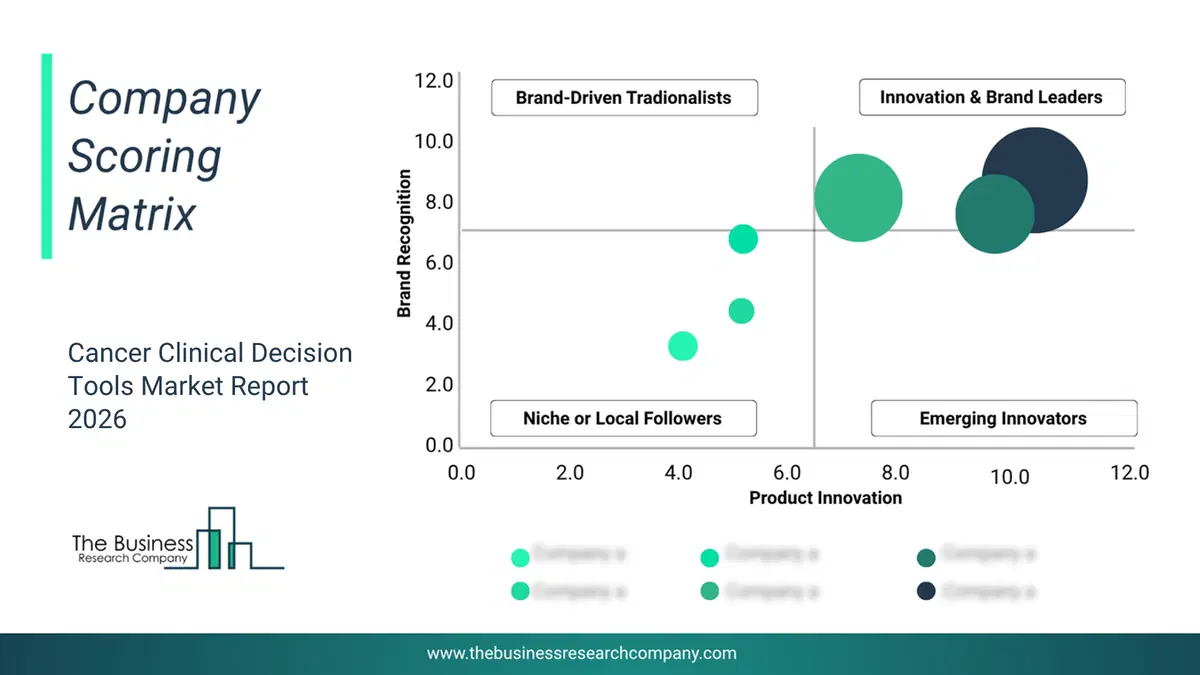
This chart maps companies by product innovation and brand strength, with bubble size indicating relative revenue, helping identify market leaders, challengers, and niche players. This is an illustrative chart; the full report provides a complete and accurate competitive analysis.
Global Cancer Clinical Decision Tools Market Trends and Insights
Major companies operating in the cancer clinical decision tools market are increasingly leveraging AI-powered prognostic decision support systems, to meet the rising demand for more personalized, data-driven oncology care driven by growing cancer incidence, the need for better risk stratification, and pressure to optimize treatment pathways. These AI prognostic systems use deep-learning models to analyze multimodal data such as imaging, electronic health records, and clinical biomarkers to predict outcomes like survival, recurrence risk, or treatment response much more precisely than traditional rule-based tools. For instance, in February 2025, Onc.AI, a US-based health-tech company, that its Serial CTRS (Cancer Treatment Risk Stratification) tool earned FDA Breakthrough Device Designation; this AI tool stratifies non–small cell lung cancer (NSCLC) patients into high- and low-risk mortality categories by analyzing diagnostic imaging scans with a deep-learning algorithm, thereby helping oncologists make more informed decisions about therapy intensity and follow-up. Serial CTRS’s ability to predict long-term survival outcomes enables better patient stratification, more tailored treatment planning, and optimized resource allocation, representing a major step forward from conventional prognostic models that rely on limited clinical parameters.What Are Latest Mergers And Acquisitions In The Cancer Clinical Decision Tools Market?
In April 2025, RadNet Inc., a US-based provider of diagnostic imaging services and AI-driven digital health solutions, acquired iCAD, Inc. for approximately US$ 103 million (all-stock transaction). With this acquisition, RadNet (via its DeepHealth subsidiary) aimed to accelerate AI-powered early detection and diagnosis of breast cancer by integrating iCAD’s advanced imaging and risk-evaluation tools into its cancer‑screening platform. iCAD Inc. is a US-based company that develops clinically validated AI-based breast health solutions, including cancer detection, density assessment, and personalized risk evaluation.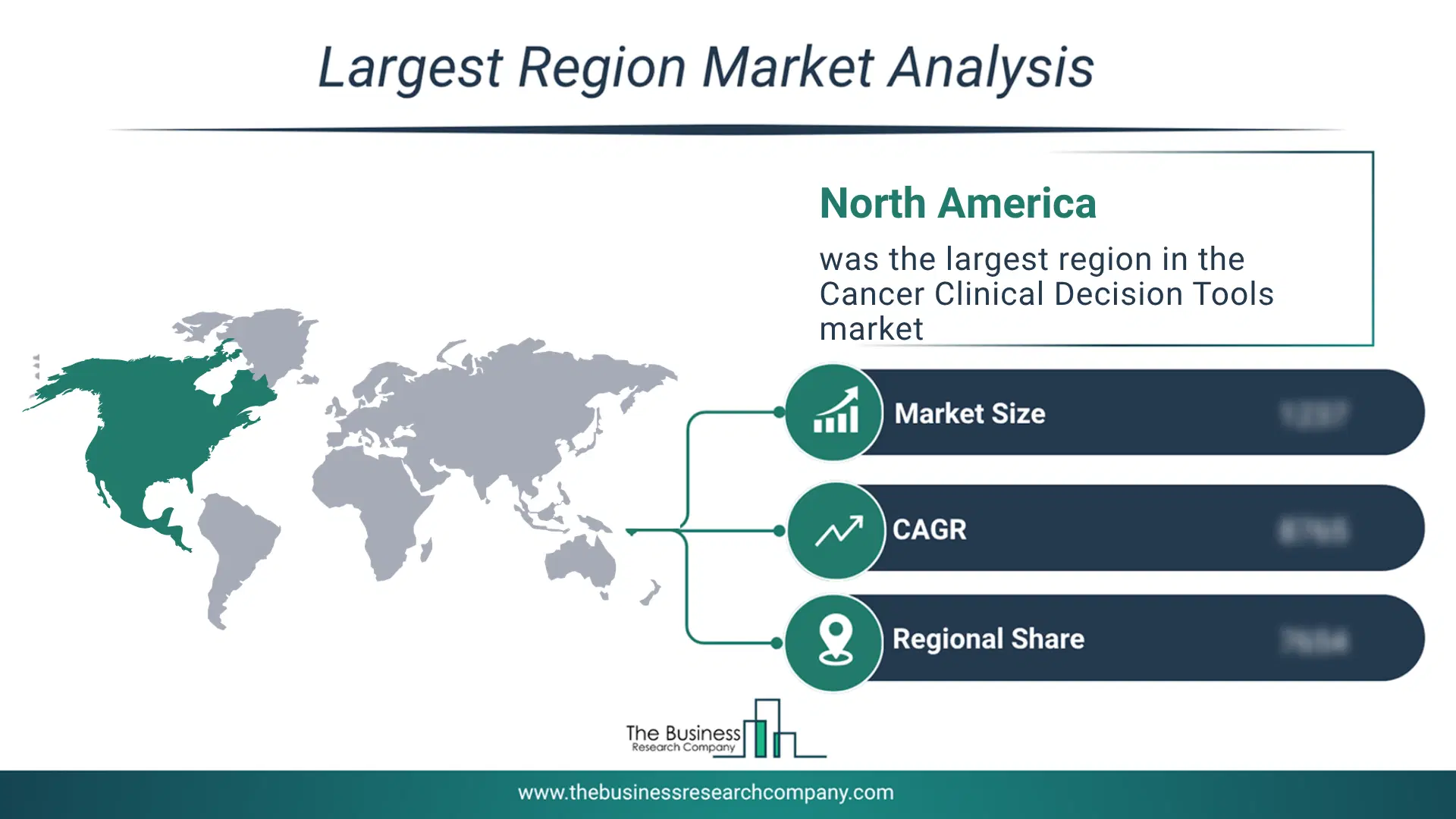
Regional Insights
North America was the largest region in the cancer clinical decision tools market in 2025. The regions covered in this market report are Asia-Pacific, South East Asia, Western Europe, Eastern Europe, North America, South America, Middle East, Africa. The countries covered in this market report are Australia, Brazil, China, France, Germany, India, Indonesia, Japan, Taiwan, Russia, South Korea, UK, USA, Canada, Italy, Spain.What Defines the Cancer Clinical Decision Tools Market?
The market for cancer clinical decision tools consists of sales of risk assessment tools, Q-Cancer tools, and MacMillan’s cancer decision tool. Values in this market are ‘factory gate values,’ that is, the value of goods sold by the manufacturers or creators of the goods, whether to other entities (including downstream manufacturers, wholesalers, distributors, and retailers) or directly to end customers. The value of goods in this market includes related services sold by the creators of the goods.How is Market Value Defined and Measured?
The market value is defined as the revenues that enterprises gain from the sale of goods and/or services within the specified market and geography through sales, grants, or donations in terms of the currency (in USD unless otherwise specified). The revenues for a specified geography are consumption values that are revenues generated by organizations in the specified geography within the market, irrespective of where they are produced. It does not include revenues from resales along the supply chain, either further along the supply chain or as part of other products.
This chart presents market attractiveness based on a quantitative evaluation of growth, competition, strategic alignment, and risk, offering a clear view of opportunity areas for decision-making. This chart is for illustrative purposes; the full report contains the complete analysis.

This chart highlights the Total Addressable Market (TAM) by estimating the maximum revenue opportunity using an assumption-driven approach, supporting strategic planning and opportunity sizing across markets. The chart is illustrative; the full report provides a more comprehensive analysis.
What Key Data and Analysis Are Included in the Cancer Clinical Decision Tools Market Report 2026?
The cancer clinical decision tools market research report is one of a series of new reports from The Business Research Company that provides market statistics, including industry global market size, regional shares, competitors with the market share, detailed market segments, market trends and opportunities, and any further data you may need to thrive in the cancer clinical decision tools industry. The market research report delivers a complete perspective of everything you need, with an in-depth analysis of the current and future state of the industry.Cancer Clinical Decision Tools Market Report Forecast Analysis
| Report Attribute | Details |
|---|---|
| Market Size Value In 2026 | $0.6 billion |
| Revenue Forecast In 2030 | $0.88 billion |
| Growth Rate | CAGR of 9.0% from 2026 to 2030 |
| Base Year For Estimation | 2025 |
| Actual Estimates/Historical Data | 2020-2025 |
| Forecast Period | 2026 - 2030 |
| Market Representation | Revenue in USD Billion and CAGR from 2026 to 2030 |
| Segments Covered | Type, End-User |
| Regional Scope | Asia-Pacific, Western Europe, Eastern Europe, North America, South America, Middle East, Africa |
| Country Scope | The countries covered in the report are Australia, Brazil, China, France, Germany, India, Indonesia, Japan, Taiwan, Russia, South Korea, UK, USA, Canada, Italy, Spain. |
| Key Companies Profiled | McKesson Corporation, Philips Healthcare, Siemens Healthineers AG, Elsevier B.V., National Decision Support Company, Cerner Corporation, GE Healthcare, Allscripts Healthcare Solutions Inc., Epic Systems Corporation, RaySearch Laboratories AB, Elekta AB, Varian Medical Systems Inc., Accuray Incorporated, F. Hoffmann-La Roche Ltd., Flatiron Health Inc., Tempus Labs Inc., NantHealth Inc., Syapse Inc., Inspirata Inc., Prognos Health Inc., Deep 6 AI Inc., PathAI Inc. |
| Customization Scope | Request for Customization |
| Pricing And Purchase Options | Explore Purchase Options |