
Cancer Diagnostics Market Report 2026
Global Outlook – By Products (Companion Diagnostics, Molecular Diagnostics), By Method (Biopsy, Endoscopy, Tumor Biomarker Tests, Imaging), By Application (Cervical Cancer, Breast Cancer, Liver Cancer, Blood Cancer, Kidney Cancer, Colorectal Cancer, Pancreatic Cancer, Ovarian Cancer, Melanoma, Other Applications), By End-User (Cancer Research Institutes, Diagnostic Laboratories, Hospitals, Other End Users) – Market Size, Trends, Strategies, and Forecast to 2030
Cancer Diagnostics Market Overview
• Cancer Diagnostics market size has reached to $25.5 billion in 2025 • Expected to grow to $44.69 billion in 2030 at a compound annual growth rate (CAGR) of 11.8% • Growth Driver: Rising Healthcare Expenditure Fuels Cancer Diagnostics Market • Market Trend: Technology Advancements With Artificial Intelligence (AI) In Cancer Diagnostics Devices Market • North America was the largest region in 2025 and Asia-Pacific is the fastest growing region.What Is Covered Under Cancer Diagnostics Market?
Cancer diagnostics refers to the processes, tests, and technologies used to identify the presence of cancer in individuals. This field encompasses a range of methodologies designed to detect, stage, and characterize cancer, allowing for timely and effective treatment. The main products in cancer diagnostics are companion diagnostics and molecular diagnostics. Molecular diagnostics is a laboratory method that is used to check for certain proteins, genes, or other molecules that may be a sign of cancer. The methods used in cancer diagnostics are biopsy, endoscopy, tumor biomarker tests, and imaging. The applications covered in cancer diagnostics are cervical cancer, breast cancer, liver cancer, blood cancer, kidney cancer, colorectal cancer, pancreatic cancer, ovarian cancer, melanoma, and others that are used by end-users such as cancer research institutes, diagnostic laboratories, hospitals, and others.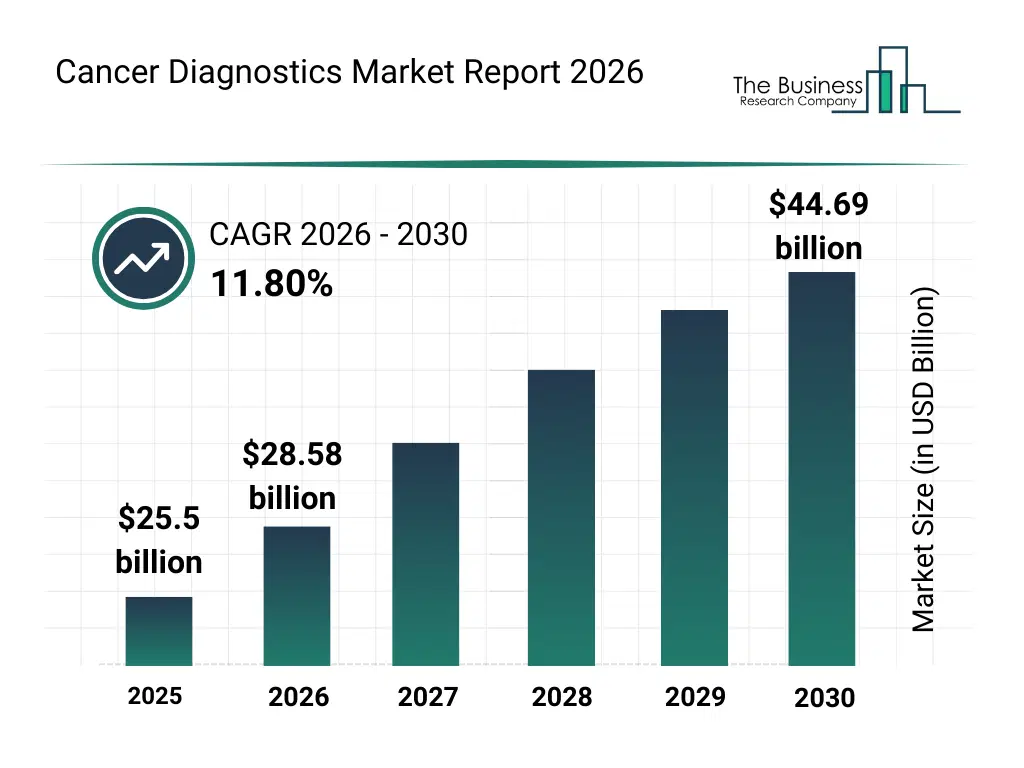
What Is The Cancer Diagnostics Market Size and Share 2026?
The cancer diagnostics market size has grown rapidly in recent years. It will grow from $25.5 billion in 2025 to $28.58 billion in 2026 at a compound annual growth rate (CAGR) of 12.1%. The growth in the historic period can be attributed to rising global cancer prevalence, increased investments in oncology research, expansion of hospital diagnostic infrastructure, growing adoption of imaging-based cancer detection, improvements in laboratory automation.What Is The Cancer Diagnostics Market Growth Forecast?
The cancer diagnostics market size is expected to see rapid growth in the next few years. It will grow to $44.69 billion in 2030 at a compound annual growth rate (CAGR) of 11.8%. The growth in the forecast period can be attributed to increasing demand for personalized cancer therapies, rising adoption of next-generation sequencing diagnostics, expansion of population-wide cancer screening programs, growing investments in AI-enabled oncology diagnostics, continuous innovation in multi-cancer detection tests. Major trends in the forecast period include increasing adoption of molecular and companion diagnostics, rising integration of ai in cancer detection, growing use of biomarker-based testing, expansion of high-throughput diagnostic platforms, enhanced focus on early cancer screening.
Global Cancer Diagnostics Market Segmentation
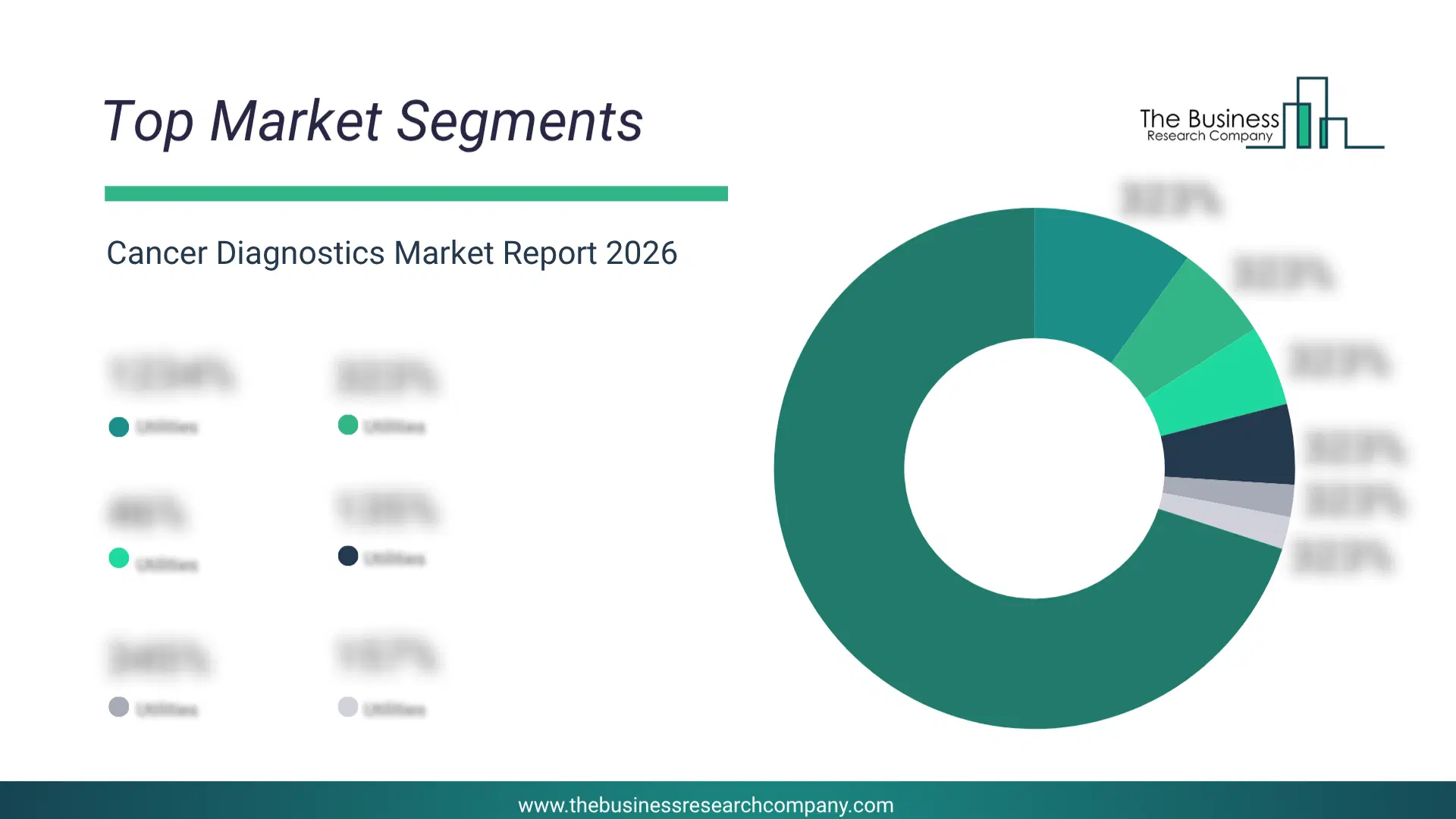
1) By Products: Companion Diagnostics, Molecular Diagnostics 2) By Method: Biopsy, Endoscopy, Tumor Biomarker Tests, Imaging 3) By Application: Cervical Cancer, Breast Cancer, Liver Cancer, Blood Cancer, Kidney Cancer, Colorectal Cancer, Pancreatic Cancer, Ovarian Cancer, Melanoma, Other Applications 4) By End-User: Cancer Research Institutes, Diagnostic Laboratories, Hospitals, Other End Users Subsegments: 1) By Companion Diagnostics: Biomarker-Based Companion Diagnostics, Genetic Testing-Based Companion Diagnostics, Immunohistochemistry-Based Companion Diagnostics, PCR-Based Companion Diagnostics, Other Companion Diagnostics, 2) By Molecular Diagnostics: Polymerase Chain Reaction (PCR) Diagnostics, Next-Generation Sequencing (NGS) Diagnostics, In Situ Hybridization Diagnostics, Microarray-Based Diagnostics, DNA Or RNA Extraction Kits, Other Molecular DiagnosticsWhat Are The Drivers Of The Cancer Diagnostics Market?
The rising healthcare expenditure is expected to propel the growth of the cancer diagnostics market going forward. Healthcare expenditure refers to the total amount of financial resources spent on healthcare services, including medical treatments, hospital care, medications, and public health initiatives, by governments, businesses, and individuals. The increasing demand for healthcare expenditure is due to the rising prevalence of chronic diseases, which require long-term and costly treatments. Rising healthcare expenditure enhances cancer diagnostics by supporting the adoption of advanced screening technologies and expanding access to early detection services. It improves diagnostic accuracy through greater investment in modern equipment and specialized labs, enabling timely intervention and better patient outcomes. For instance, in May 2024, according to the Office for National Statistics, a UK-based government department, total healthcare expenditure saw a 5.6% increase in nominal terms in 2023, an increase of 0.9% growth compared to 2022. Therefore, the rising healthcare expenditure is driving the growth of the cancer diagnostics industry. The increasing incidences of lung cancer are expected to propel the growth of the cancer diagnostics market going forward. Lung cancer refers to a type of cancer that originates in the tissues of the lungs, and abnormal cells within the lungs start growing uncontrollably, forming tumours and potentially spreading to other parts of the body. Cancer diagnostic devices are used in the detection, diagnosis, and monitoring of lung cancer to help healthcare professionals identify its presence, determine its type and stage, and guide treatment decisions. For instance, in March 2023, according to the American Society of Clinical Oncology (ASCO), a US-based organization, it is estimated that in the United States, there will be 238,340 people diagnosed with lung cancer in 2023, an increase from 236,000 people diagnosed with lung cancer in 2022. Therefore, the increasing incidence of lung cancer is driving the growth of the cancer diagnostics industry.Key Players In The Global Cancer Diagnostics Market
Major companies operating in the cancer diagnostics market are Abbott Laboratories, Becton Dickinson and Company, Hologic, GE Healthcare Ltd., Thermo Fisher Scientific, Siemens Healthcare GmbH, Biogenex Laboratories, Veracyte, PathAI, Bio-Rad Laboratories, BioChain, DiagnoCure, Illumina, Myriad Genetics, CompanionDx, Epic Sciences, Genomic Health, Affymetrix, Agilent Technologies, Adaptive Biotechnologies, Biocartis, Biocept, Cancer Genetics Inc., Caris Life Sciences, Cepheid, Epigenomics AG, Exact Sciences, Foundation Medicine, GenMark Diagnostics, Guardant Health, HalioDX, Invitae Corporation, NanoString Technologies, Natera, NeoGenomics, Oncura Inc., PerkinElmer, Personal Genome Diagnostics, Qiagen, Roche Diagnostics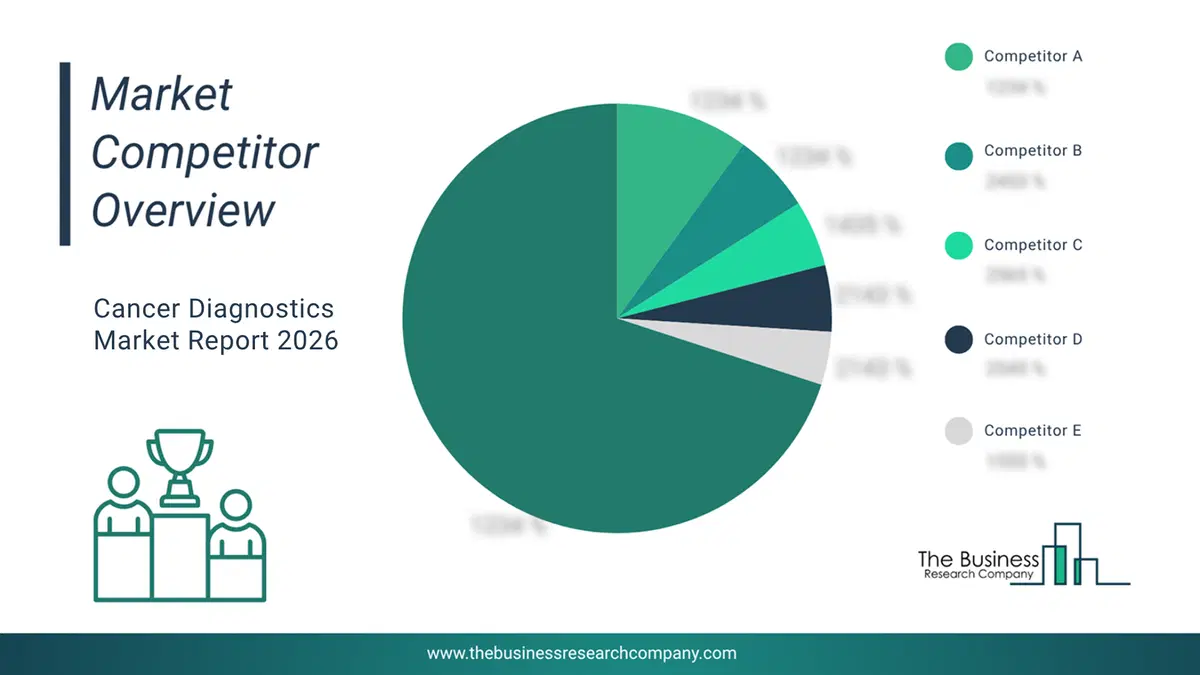
This chart is for illustrative purposes; the full report includes a detailed competitor analysis and comprehensive overview of the top 10 companies in the market.
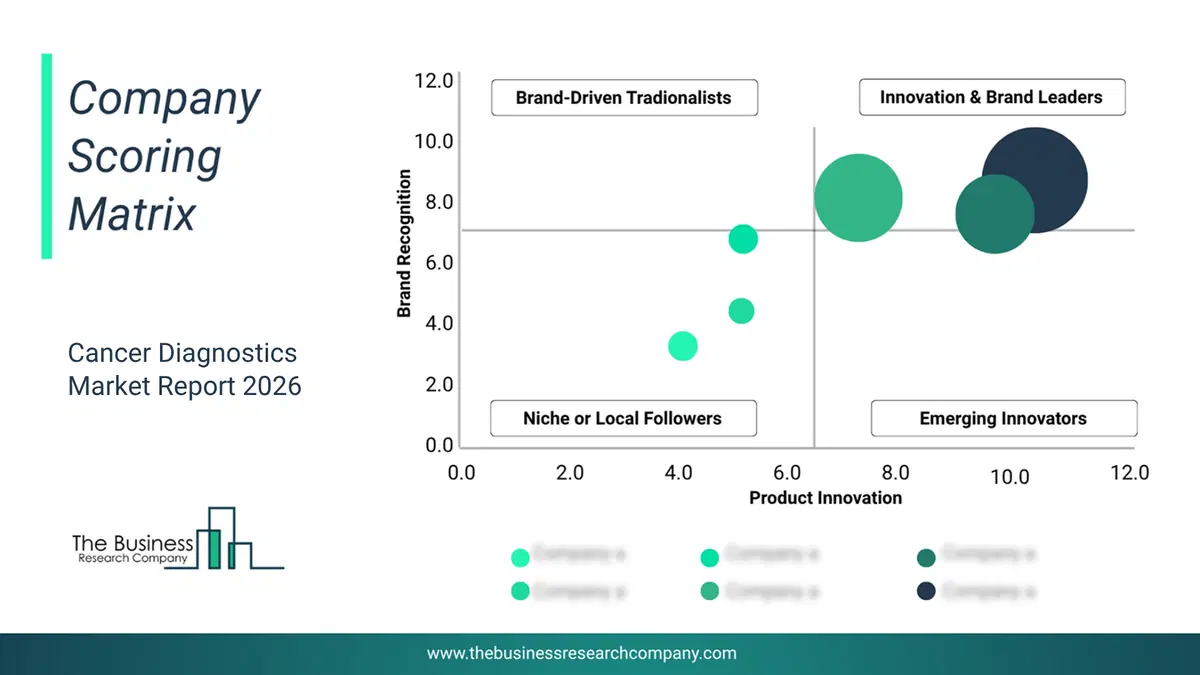
This chart maps companies by product innovation and brand strength, with bubble size indicating relative revenue, helping identify market leaders, challengers, and niche players. This is an illustrative chart; the full report provides a complete and accurate competitive analysis.
Global Cancer Diagnostics Market Trends and Insights
Major companies operating in the cancer diagnostic device market are focusing on the development of technology with artificial intelligence (AI), such as QAi Prostate, to gain a competitive edge in the market. QAi Prostate is used as a cancer diagnostic device for prostate cancer diagnosis. For Instance, in March 2023, Qritive, a Singapore-based company that develops AI-powered diagnostic tools for pathologists, launched QAi Prostate. QAi Prostate is an advanced artificial intelligence (AI)-powered prostate cancer diagnosis tool. QAi Prostate uses machine learning algorithms to accurately identify and classify malignant and benign areas in prostate tissue samples. This tool is designed to help pathologists detect prostate cancer and differentiate between malignant and benign areas in prostate tissue samples.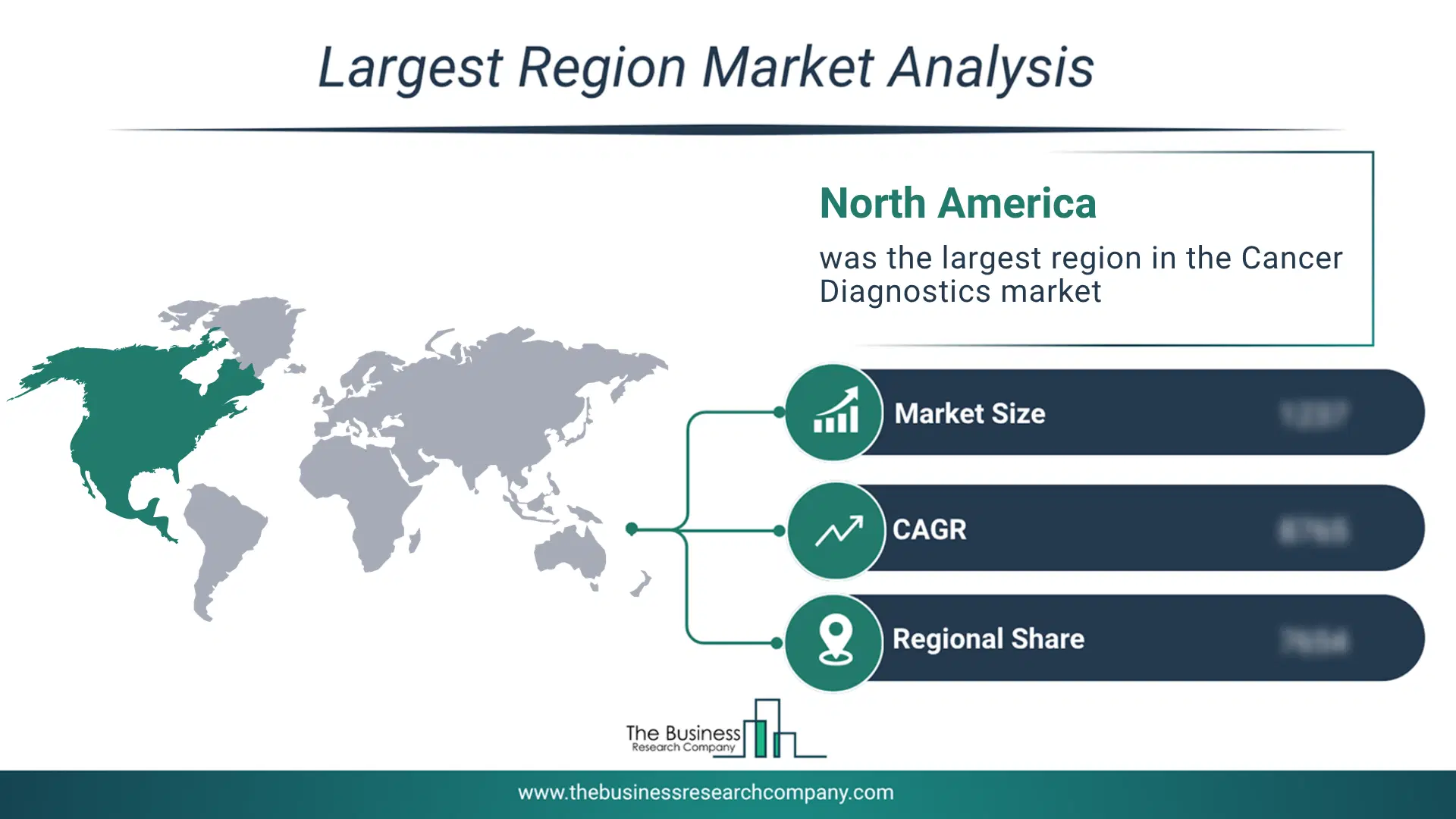
Regional Outlook
North America was the largest region in the cancer diagnostics market in 2025. Asia-Pacific was the second-largest region in the global cancer diagnostics market. The regions covered in this market report are Asia-Pacific, South East Asia, Western Europe, Eastern Europe, North America, South America, Middle East, Africa. The countries covered in this market report are China, India, Japan, Australia, Indonesia, South Korea, Bangladesh, Thailand, Vietnam, Malaysia, Singapore, Philippines, Hong Kong, Taiwan, New Zealand, UK, Germany, France, Italy, Spain, Austria, Belgium, Denmark, Finland, Ireland, Netherlands, Norway, Portugal, Sweden, Switzerland, Russia, Czech Republic, Poland, Romania, Ukraine, USA, Canada, Mexico, Brazil, Chile, Argentina, Colombia, Peru, Saudi Arabia, Israel, Iran, Turkey, UAE, Egypt, Nigeria, South Africa.What Defines the Cancer Diagnostics Market?
The cancer diagnostics market consists of sales of pathology-based instruments (slide staining systems, tissue processing systems, cell processors, PCR instruments, NGS instruments, and other pathology-based instruments), imaging Instruments (CT systems, ultrasound systems, MRI systems, mammography systems, and nuclear imaging systems) and biopsy instruments that are used for the diagnosis of cancer. Values in this market are factory gate values, that is the value of goods sold by the manufacturers or creators of the goods, whether to other entities (including downstream manufacturers, wholesalers, distributors, and retailers) or directly to end customers.How is Market Value Defined and Measured?
The market value is defined as the revenues that enterprises gain from the sale of goods and/or services within the specified market and geography through sales, grants, or donations in terms of the currency (in USD unless otherwise specified). The revenues for a specified geography are consumption values that are revenues generated by organizations in the specified geography within the market, irrespective of where they are produced. It does not include revenues from resales along the supply chain, either further along the supply chain or as part of other products.
This chart presents market attractiveness based on a quantitative evaluation of growth, competition, strategic alignment, and risk, offering a clear view of opportunity areas for decision-making. This chart is for illustrative purposes; the full report contains the complete analysis.

This chart highlights the Total Addressable Market (TAM) by estimating the maximum revenue opportunity using an assumption-driven approach, supporting strategic planning and opportunity sizing across markets. The chart is illustrative; the full report provides a more comprehensive analysis.
What Key Data and Analysis Are Included in the Cancer Diagnostics Market Report 2026?
The cancer diagnostics market research report is one of a series of new reports from The Business Research Company that provides market statistics, including industry global market size, regional shares, competitors with the market share, detailed market segments, market trends and opportunities, and any further data you may need to thrive in the cancer diagnostics industry. The market research report delivers a complete perspective of everything you need, with an in-depth analysis of the current and future state of the industry.Cancer Diagnostics Market Report Forecast Analysis
| Report Attribute | Details |
|---|---|
| Market Size Value In 2026 | $28.58 billion |
| Revenue Forecast In 2030 | $44.69 billion |
| Growth Rate | CAGR of 11.8% from 2026 to 2030 |
| Base Year For Estimation | 2025 |
| Actual Estimates/Historical Data | 2020-2025 |
| Forecast Period | 2026 - 2030 |
| Market Representation | Revenue in USD Billion and CAGR from 2026 to 2030 |
| Segments Covered | Products, Method, Application, End-User |
| Regional Scope | Asia-Pacific, Western Europe, Eastern Europe, North America, South America, Middle East, Africa |
| Country Scope | The countries covered in the report are Australia, Brazil, China, France, Germany, India, Indonesia, Japan, Taiwan, Russia, South Korea, UK, USA, Canada, Italy, Spain. |
| Key Companies Profiled | Abbott Laboratories, Becton Dickinson and Company, Hologic, GE Healthcare Ltd., Thermo Fisher Scientific, Siemens Healthcare GmbH, Biogenex Laboratories, Veracyte, PathAI, Bio-Rad Laboratories, BioChain, DiagnoCure, Illumina, Myriad Genetics, CompanionDx, Epic Sciences, Genomic Health, Affymetrix, Agilent Technologies, Adaptive Biotechnologies, Biocartis, Biocept, Cancer Genetics Inc., Caris Life Sciences, Cepheid, Epigenomics AG, Exact Sciences, Foundation Medicine, GenMark Diagnostics, Guardant Health, HalioDX, Invitae Corporation, NanoString Technologies, Natera, NeoGenomics, Oncura Inc., PerkinElmer, Personal Genome Diagnostics, Qiagen, Roche Diagnostics |
| Customization Scope | Request for Customization |
| Pricing And Purchase Options | Explore Purchase Options |