Contact Us
  Search
The Business Research Company Logo
Canned Vegetables Market 2025
Published :May 2025
Pages :312
Format :PDF
Delivery Time :2-3 Business Days
Why 2-3 days? We update the report with the latest data and news before delivery. Let us know if you need us to expedite.
Report Price :$4,490.00

Canned Vegetables Market 2025

By Type (Sliced, Peeled, Other Types), By Distribution Channel (Store-Based, Non-Store-Based), By Application (Culinary, Salads And Soups, Toppings And Dressings, Other Applications), And By Region, Opportunities And Strategies – Global Forecast To 2035

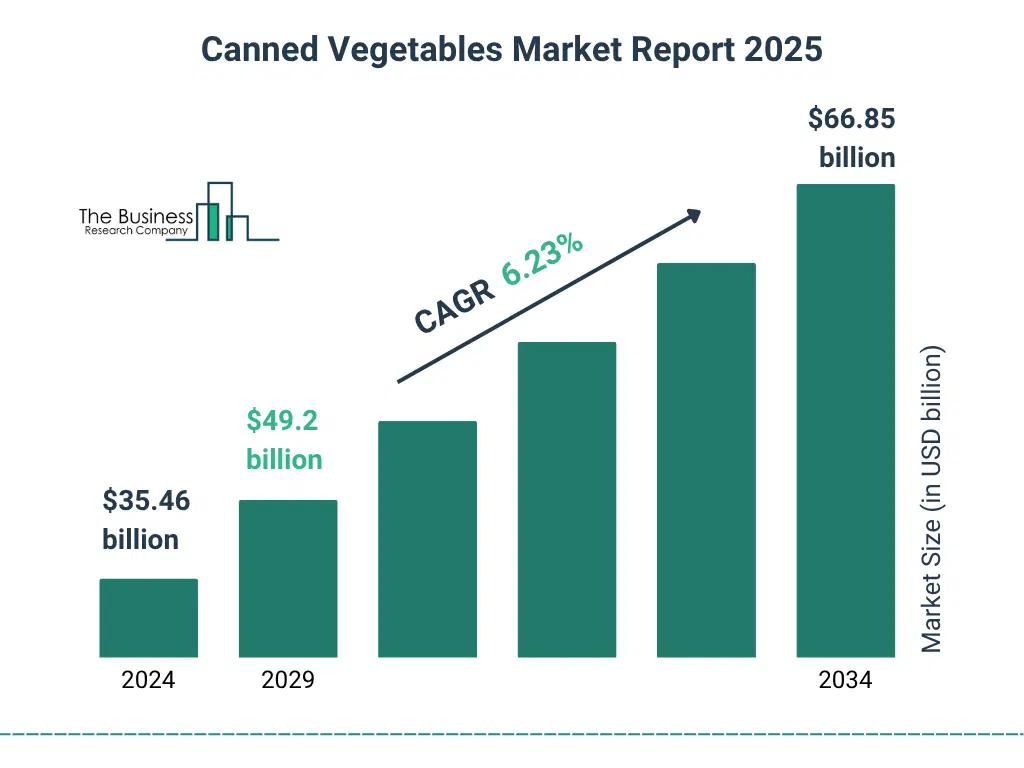
Canned Vegetables Market Size and growth rate 2025 to 2029: Graph

Canned Vegetables Market Definition

Canned vegetables are vegetables that have been harvested, cleaned, trimmed, and preserved by sealing in airtight containers (like metal cans, glass jars, or retort pouches) and heating to a temperature that destroys harmful microorganisms, enabling long-term storage without refrigeration. The canned vegetables market consists of revenues generated by entities (organizations, sole traders, and partnerships) involved in preserving vegetables in airtight containers. This market includes products like canned peas, beans, corn, tomatoes, and mixed vegetables, catering to consumer needs for convenience, extended shelf life, and off-season availability.

Research Expert

Book your 30 minutes free consultation with our research experts

> Canned Vegetables Market Size

The global canned vegetables market reached a value of nearly $35,463.52 million in 2024, having grown at a compound annual growth rate (CAGR) of 5.73% since 2019. The market is expected to grow from $35,463.52 million in 2024 to $49,203.94 million in 2029 at a rate of 6.77%. The market is then expected to grow at a CAGR of 6.23% from 2029 and reach $66,852.73 million in 2034. Growth in the historic period resulted from the rise in consumption of various packaged food products, rising health consciousness and government food safety regulations and standards. Factors that negatively affected growth in the historic period was raw material price volatility. Going forward, growth of e-commerce, rising food service industry demand, growing popularity of plant-based diets and demand for eco-friendly packaging will drive the growth. Factor that could hinder the growth of the canned vegetables market in the future include stringent food safety regulations and rising cost of packaging.

Canned Vegetables Market Drivers

The key drivers of the Canned Vegetables market include: Growth Of E-Commerce Growth of e-commerce is expected to propel the growth of the canned vegetables market. The growth of e-commerce benefits the canned vegetables industry by expanding consumer access to a wider variety of products, enabling direct-to-consumer sales, and enhancing convenience through home delivery. It also allows brands to leverage digital marketing, subscription services, and data analytics to better understand consumer preferences and drive sales. For instance, in 2024, according to the International Trade Administration (ITA), a US-based government agency, global business to consumer (B2C) e-commerce revenue is projected to reach USD $5.5 trillion by 2027, driven by a consistent compound annual growth rate (CAGR) of 14.4%. Therefore, the growth of e-commerce will drive the growth of the canned vegetables market.

Canned Vegetables Market Restraints

The key restraints on the canned vegetables market include: Stringent Food Safety Regulations Stringent food safety regulations are expected to hamper the growth of the canned vegetables market going forward. Strict food safety regulations pose challenges for the canned vegetables industry by raising compliance costs, enforcing stringent quality control standards, and necessitating frequent contaminant testing. They can also result in product recalls and more stringent labeling requirements, adding complexity and expense to production. For instance, in September 2024, The Ministry of Commerce and Industry, an India-based government department mandated adherence to specific national standards for cookware, utensils, and cans used for foods and beverages. This order enforces the use of standards like IS 9396 (Part 1):1987 for tinplate cans and IS 14407:1996 for aluminum cans. Therefore, stringent food safety regulations may hinder the growth of canned vegetables market.

Need data on a specific region in this market?

Opportunities And Recommendations In The Canned Vegetables Market

Opportunities –Recommendations-
Chat with us