

CAR-T Therapy Market Report 2026
Global Outlook – By Type (Monotherapy, Combination Therapy), By Target Antigen (CD19, CD22, BCMA, Other Target Antigens), By Application (Acute Lymphoblastic Leukemia, Diffuse Large B-Cell Lymphoma, Follicular Lymphoma, Chronic Lymphocytic Leukemia, Multiple Myeloma, Other Applications) – Market Size, Trends, Strategies, and Forecast to 2030
CAR-T Therapy Market Overview
• CAR-T Therapy market size has reached to $2.98 billion in 2025 • Expected to grow to $6.08 billion in 2030 at a compound annual growth rate (CAGR) of 15.2% • Growth Driver: Increasing Cancer Prevalence Driving Growth In The CAR-T Therapy Market • Market Trend: Advancements in CAR-T Therapy: The Role of Diagnostic Tools in Enhancing Treatment Personalization and Patient Outcomes • North America was the largest region in 2025 and Western Europe is the fastest growing region.What Is Covered Under CAR-T Therapy Market?
The chimeric antigen receptor-T therapy is a type of immunotherapy in which T-cells are taken from the patient’s blood are modified in a laboratory with the addition of a special protein receptor that grants T-cells the power to recognize as well as kill cancer cells easily, along with infusing the same back into that patient. This special protein receptor, known as the chimeric antigen receptor (CAR), attaches to a specific protein in a patient’s cancer cells. The infused cells multiply and prevail in the patient’s body as living drugs. The main types of chimeric antigen receptor -T therapy is monotherapy and combination therapy. Monotherapy is used in the treatment of any disease with a single drug. The target antigens involved are CD19, CD22, and others that are used in various applications such as acute lymphoblastic leukemia, diffuse large B-cell lymphoma, follicular lymphoma, chronic lymphocytic leukemia, multiple myeloma, and others.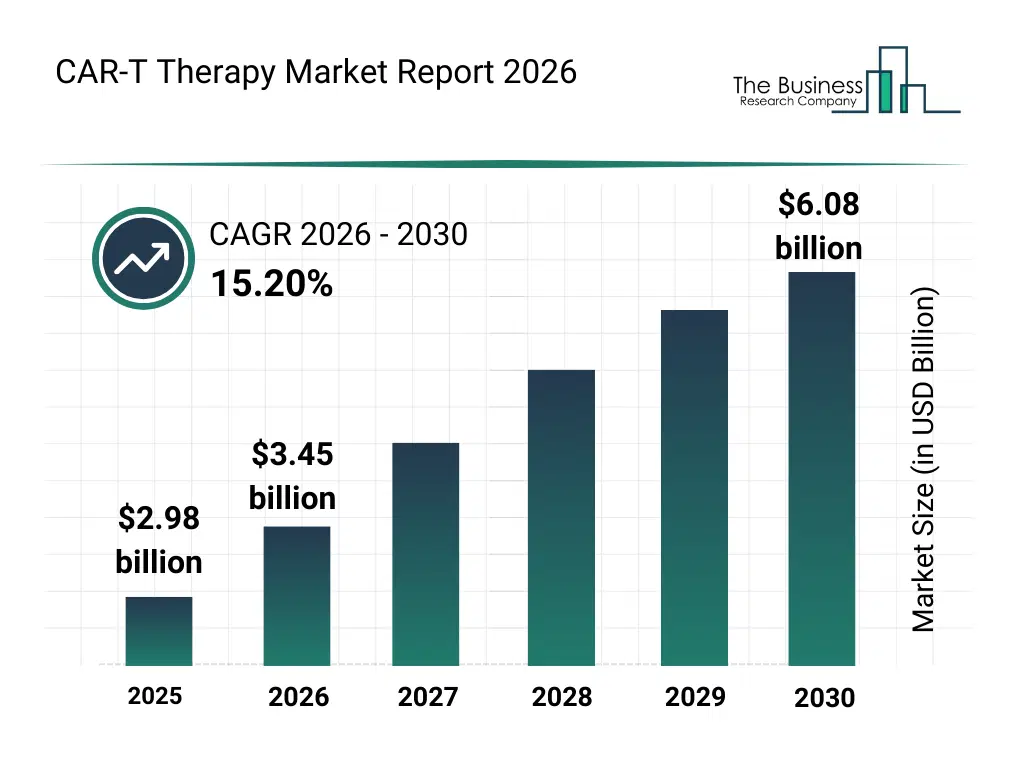
What Is The CAR-T Therapy Market Size and Share 2026?
The car-t therapy market size has grown rapidly in recent years. It will grow from $2.98 billion in 2025 to $3.45 billion in 2026 at a compound annual growth rate (CAGR) of 15.9%. The growth in the historic period can be attributed to limited availability of personalized immunotherapy, high cost of early car-t treatments, dependence on hospital-based cell processing, nascent regulatory frameworks, low patient awareness of car-t therapy.What Is The CAR-T Therapy Market Growth Forecast?
The car-t therapy market size is expected to see rapid growth in the next few years. It will grow to $6.08 billion in 2030 at a compound annual growth rate (CAGR) of 15.2%. The growth in the forecast period can be attributed to technological advancements in t-cell engineering, growing investment in oncology research, expansion of commercial car-t manufacturing facilities, increasing regulatory approvals, rising collaborations between biopharma and academic institutions. Major trends in the forecast period include rising adoption of car-t therapies in hematologic malignancies, development of targeted antigen-specific car-t treatments, increasing use of combination therapy approaches, expansion of clinical trials and research programs, focus on reducing therapy costs and enhancing accessibility.
Global CAR-T Therapy Market Segmentation
1) By Type: Monotherapy, Combination Therapy 2) By Target Antigen: CD19, CD22, BCMA, Other Target Antigens 3) By Application: Acute Lymphoblastic Leukemia, Diffuse Large B-Cell Lymphoma, Follicular Lymphoma, Chronic Lymphocytic Leukemia, Multiple Myeloma, Other Applications Subsegments: 1) By Monotherapy: CD19-targeted CAR-T Therapy, BCMA-Targeted CAR-T Therapy 2) By Combination Therapy: CAR-T Therapy With Immune Checkpoint Inhibitors, CAR-T Therapy With Other Targeted Therapies, CAR-T Therapy With Chemotherapy Or RadiotherapyWhat Is The Driver Of The CAR-T Therapy Market?
The rising prevalence of cancer is expected to propel the growth of the CAR-T therapy market going forward. The rising prevalence of cancer refers to the increasing number of diagnosed cases of cancer within a specific population or region over a given period. The rising prevalence of cancer has driven research and investment in cancer therapies, including cellular immunotherapies. These treatments represent a significant advancement in the field of oncology and are particularly relevant for addressing the needs of cancer patients. For instance, in July 2024, according to the Australian Institute of Health and Welfare, an Australia-based government agency, in In Australia, cancer diagnoses increased from 160,570 in 2022 to 164,694 in 2023, demonstrating a marked rise over the past year. This trend emphasizes the increasing prevalence of cancer across the nation. Therefore, the rising prevalence of cancer is driving the growth of the CAR-T therapy industry.Key Players In The Global CAR-T Therapy Market
Major companies operating in the car-t therapy market are Gilead Sciences, Novartis AG, Biocon, Gracell Biotechnology Ltd., CARsgen Therapeutics, Takeda Pharmaceutical Company, Astellas Pharma, Innovative Cellular Therapeutics, Cellular Biomedicine Group, PersonGen Biomedicine, Hebei Senlang Biotech, Adaptimmune (UK), Autolus Therapeutics, BioNTech, Cellectis, Celyad, Immatics, Biocad, Celgene Corporation, Johnson & Johnson, F. Hoffmann-La Roche Ltd., Eli Lilly and Company, Amgen, AstraZeneca, Merck, Pfizer, Juno Therapeutics, Allogene Therapeutics, Precision BioSciences, Bellicum, GlaxoSmithKline plc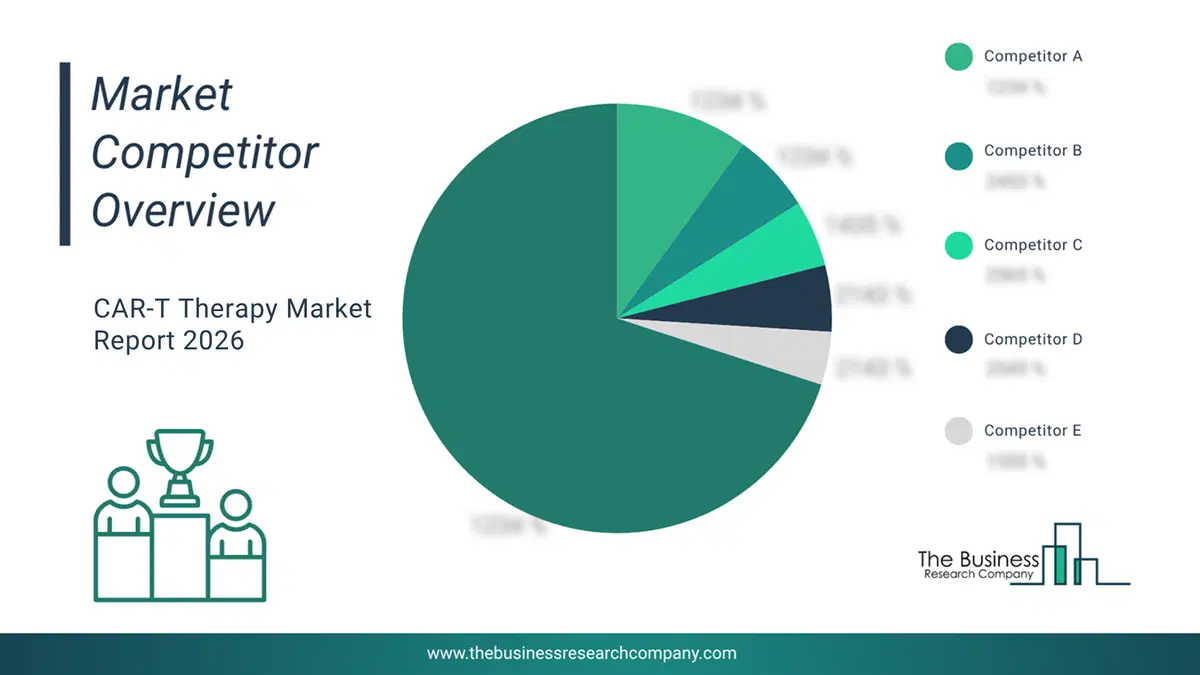
This chart is for illustrative purposes; the full report includes a detailed competitor analysis and comprehensive overview of the top 10 companies in the market.
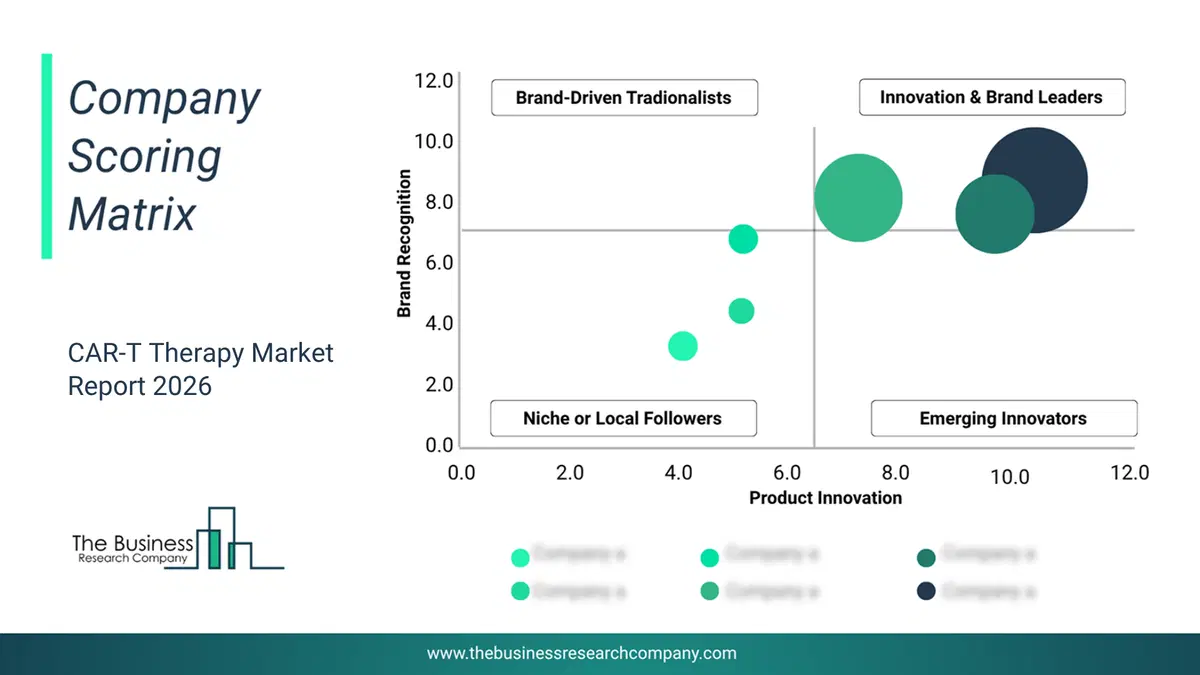
This chart maps companies by product innovation and brand strength, with bubble size indicating relative revenue, helping identify market leaders, challengers, and niche players. This is an illustrative chart; the full report provides a complete and accurate competitive analysis.
Global CAR-T Therapy Market Trends and Insights
Major companies operating in the CAR-T therapy market are focusing on developing technologically advanced solutions such as diagnostic tools to enhance treatment personalization and improve patient outcomes. Diagnostic tools are instruments, devices, or software used to identify and analyze diseases, conditions, or health issues in individuals. These tools can include tests, imaging equipment, or lab analyses that provide insights into a patient's health status, aiding in accurate diagnosis and effective treatment planning. For instance, in February 2023, Eurofins Viracor, a US-based clinical diagnostic laboratory, launched the ExPeCT Expansion and Persistence of CAR T Assay to help clinicians better understand how CAR-T therapy is performing for their patients. offers significant benefits for monitoring patients undergoing CAR T cell therapy. First, it enables longitudinal tracking of CAR T cell expansion and persistence, providing real-time data that can inform treatment efficacy and patient management. Additionally, the assay helps identify patients at risk of treatment failure due to inadequate CAR T cell dynamics, allowing for timely interventions that could improve clinical outcomes in hematological malignancies.What Are Latest Mergers And Acquisitions In The CAR-T Therapy Market?
In July 2023, Astellas Pharma Inc., a Japan-based pharmaceutical company, acquired Iveric Bio for $5.9 billion. With this acquisition, Astellas is better positioned to serve patients with ocular illnesses at high risk of going blind. The chance to establish a top-tier organization with Iveric Bio's ophthalmology knowledge and capabilities and Astellas' global resources is exceptional and has the potential to help patients worldwide who suffer from blinding retinal illnesses, including GA. The transaction was subject to Iveric Bio's stockholders' approval and other usual closing requirements, such as obtaining necessary regulatory approvals. Iveric Bio is a US-based Biotech company.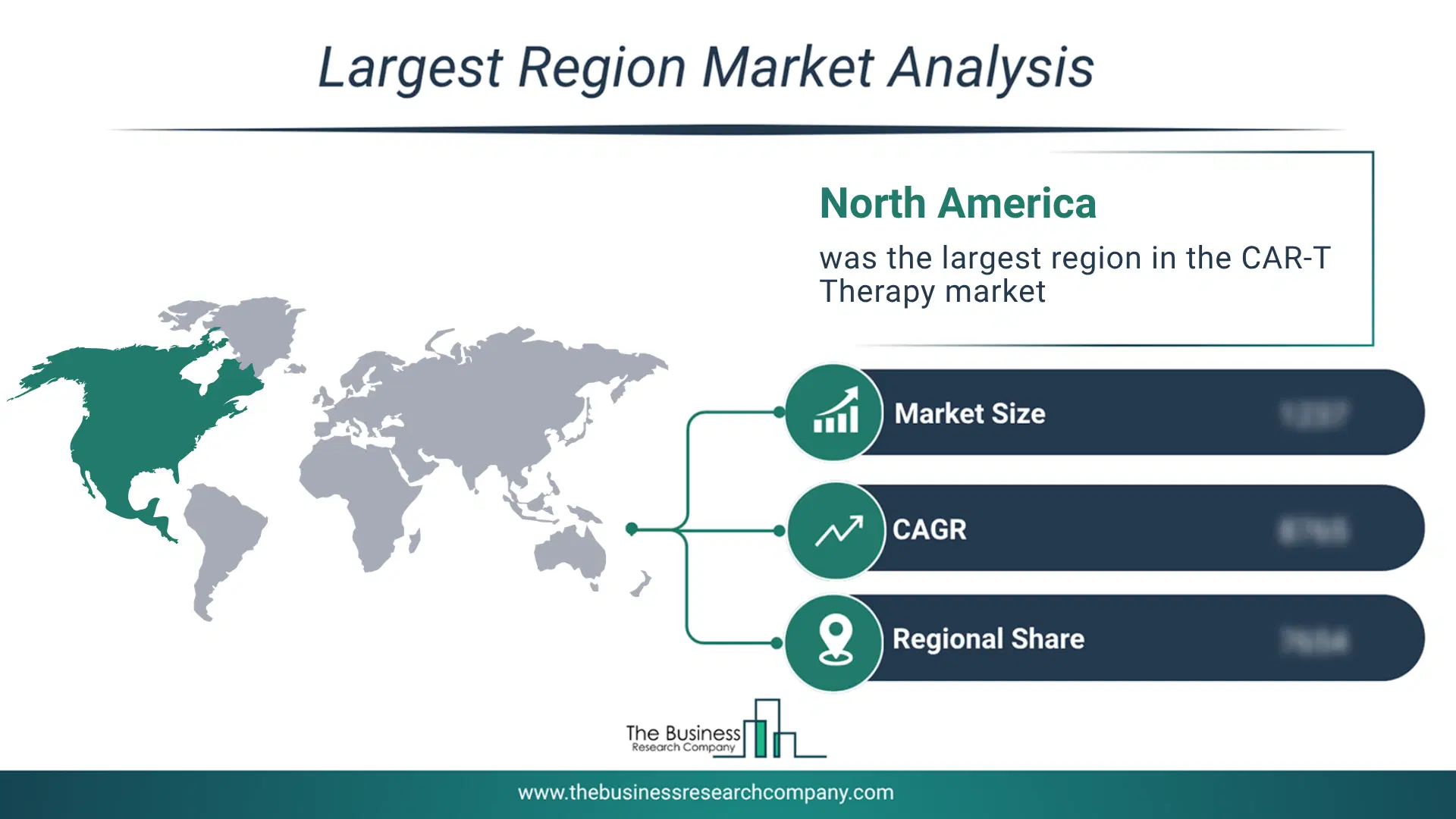
Regional Outlook
North America was the largest region in the CAR-T therapy market in 2025. Western Europe was the second-largest region in the global CAR-T therapy market share. The regions covered in this market report are Asia-Pacific, South East Asia, Western Europe, Eastern Europe, North America, South America, Middle East, Africa. The countries covered in this market report are Australia, Brazil, China, France, Germany, India, Indonesia, Japan, Taiwan, Russia, South Korea, UK, USA, Canada, Italy, SpainWhat Defines the CAR-T Therapy Market?
The chimeric antigen receptor -T therapy market includes revenues earned by CAR-T therapy products and related services. The market value includes the value of related goods sold by the service provider or included within the service offering. Only goods and services traded between entities or sold to end consumers are included.How is Market Value Defined and Measured?
The market value is defined as the revenues that enterprises gain from the sale of goods and/or services within the specified market and geography through sales, grants, or donations in terms of the currency (in USD unless otherwise specified). The revenues for a specified geography are consumption values that are revenues generated by organizations in the specified geography within the market, irrespective of where they are produced. It does not include revenues from resales along the supply chain, either further along the supply chain or as part of other products.
This chart presents market attractiveness based on a quantitative evaluation of growth, competition, strategic alignment, and risk, offering a clear view of opportunity areas for decision-making. This chart is for illustrative purposes; the full report contains the complete analysis.

This chart highlights the Total Addressable Market (TAM) by estimating the maximum revenue opportunity using an assumption-driven approach, supporting strategic planning and opportunity sizing across markets. The chart is illustrative; the full report provides a more comprehensive analysis.
What Key Data and Analysis Are Included in the CAR-T Therapy Market Report 2026?
The car-t therapy market research report is one of a series of new reports from The Business Research Company that provides market statistics, including industry global market size, regional shares, competitors with the market share, detailed market segments, market trends and opportunities, and any further data you may need to thrive in the car-t therapy industry. The market research report delivers a complete perspective of everything you need, with an in-depth analysis of the current and future state of the industry.CAR-T Therapy Market Report Forecast Analysis
| Report Attribute | Details |
|---|---|
| Market Size Value In 2026 | $3.45 billion |
| Revenue Forecast In 2030 | $6.08 billion |
| Growth Rate | CAGR of 15.2% from 2026 to 2030 |
| Base Year For Estimation | 2025 |
| Actual Estimates/Historical Data | 2020-2025 |
| Forecast Period | 2026 - 2030 |
| Market Representation | Revenue in USD Billion and CAGR from 2026 to 2030 |
| Segments Covered | Type, Target Antigen, Application |
| Regional Scope | Asia-Pacific, Western Europe, Eastern Europe, North America, South America, Middle East, Africa |
| Country Scope | The countries covered in the report are Australia, Brazil, China, France, Germany, India, Indonesia, Japan, Taiwan, Russia, South Korea, UK, USA, Canada, Italy, Spain. |
| Key Companies Profiled | Gilead Sciences, Novartis AG, Biocon, Gracell Biotechnology Ltd., CARsgen Therapeutics, Takeda Pharmaceutical Company, Astellas Pharma, Innovative Cellular Therapeutics, Cellular Biomedicine Group, PersonGen Biomedicine, Hebei Senlang Biotech, Adaptimmune (UK), Autolus Therapeutics, BioNTech, Cellectis, Celyad, Immatics, Biocad, Celgene Corporation, Johnson & Johnson, F. Hoffmann-La Roche Ltd., Eli Lilly and Company, Amgen, AstraZeneca, Merck, Pfizer, Juno Therapeutics, Allogene Therapeutics, Precision BioSciences, Bellicum, GlaxoSmithKline plc |
| Customization Scope | Request for Customization |
| Pricing And Purchase Options | Explore Purchase Options |