
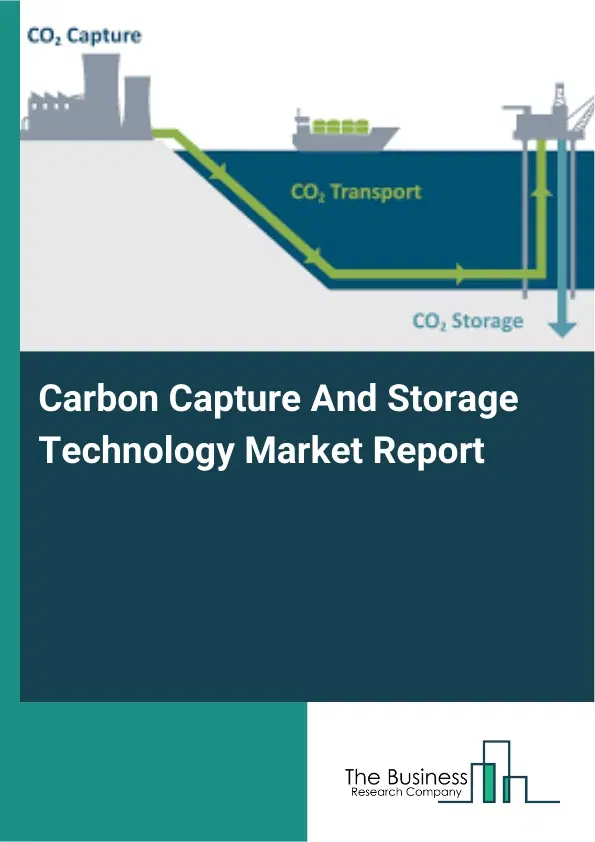
Carbon Capture And Storage Technology Market Report 2026
Global Outlook – By Type (Carbon Capture And Storage (CCS), Carbon Capture And Utilization (CCU)), By Technology (Pre-Combustion, Post-Combustion, Oxy-Fuel Combustion), By Application (Industrial Facilities, Power Plant, Other Applications) – Market Size, Trends, Strategies, and Forecast to 2030
Carbon Capture And Storage Technology Market Overview
• Carbon Capture And Storage Technology market size has reached to $3.7 billion in 2025 • Expected to grow to $6.62 billion in 2030 at a compound annual growth rate (CAGR) of 11.9% • Growth Driver: Growth Of Carbon Capture and Storage Technology In The Era Of Cleaner Energy • Market Trend: Increasing Focus On Technological Advancements In Carbon Capture And Storage • North America was the largest region in 2025 and Europe is the fastest growing region.What Is Covered Under Carbon Capture And Storage Technology Market?
Carbon capture and storage (CCS) technology is designed to mitigate greenhouse gas emissions, particularly carbon dioxide (CO2), from industrial processes and power generation. The goals of CCS technology are to prevent CO2 from entering the atmosphere, thereby reducing its contribution to climate change, and to enable the continued use of fossil fuels while minimizing their environmental impact. The main types of carbon capture and storage technology are carbon capture and storage (CCS), and carbon capture and utilization (CCU). CCS involves capturing carbon dioxide (CO2) emissions produced from burning fossil fuels or other industrial processes and storing them underground or in other long-term storage facilities to prevent their release into the atmosphere. The various technologies including pre-combustion, post-combustion, and oxy-fuel combustion are used in various applications such as industrial facilities, power plants, and others.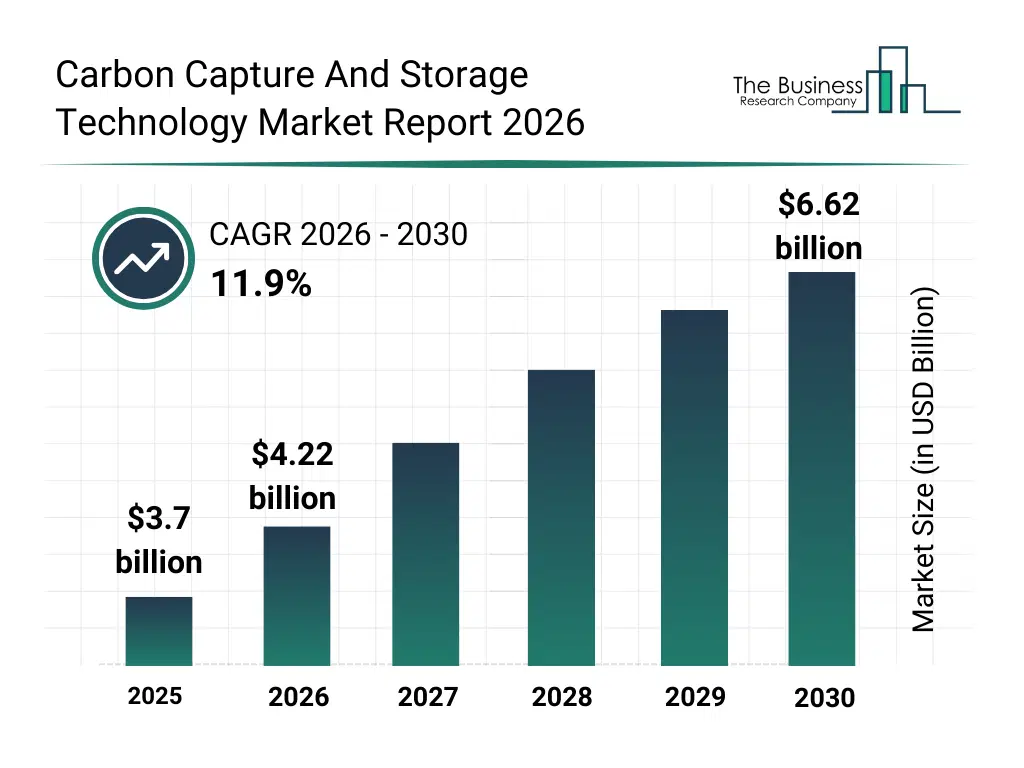
What Is The Carbon Capture And Storage Technology Market Size and Share 2026?
The carbon capture and storage technology market size has grown rapidly in recent years. It will grow from $3.7 billion in 2025 to $4.22 billion in 2026 at a compound annual growth rate (CAGR) of 14.1%. The growth in the historic period can be attributed to rising industrial emissions, increasing coal-based power generation, early government incentives for ccS projects, technological limitations in co? storage, growing environmental awareness.What Is The Carbon Capture And Storage Technology Market Growth Forecast?
The carbon capture and storage technology market size is expected to see rapid growth in the next few years. It will grow to $6.62 billion in 2030 at a compound annual growth rate (CAGR) of 11.9%. The growth in the forecast period can be attributed to stricter global emission regulations, advancement in storage and capture technologies, growth in power and industrial sectors, increased investment in ccS infrastructure, expansion of co? utilization markets. Major trends in the forecast period include carbon capture efficiency optimization, co? transportation infrastructure development, enhanced storage safety and monitoring, regulatory compliance and emission standards, integration with renewable energy systems.
Global Carbon Capture And Storage Technology Market Segmentation
1) By Type: Carbon Capture And Storage (CCS), Carbon Capture And Utilization (CCU) 2) By Technology: Pre-Combustion, Post-Combustion, Oxy-Fuel Combustion 3) By Application: Industrial Facilities, Power Plant, Other Applications Subsegments: 1) By Carbon Capture And Storage (CCS): Post-Combustion Capture, Pre-Combustion Capture, Oxy-Fuel Combustion, Storage (Geological Storage, Deep Saline Aquifers, Oil And Gas Reservoirs) 2) By Carbon Capture And Utilization (CCU): CO? To Chemicals And Fuels, CO? For Enhanced Oil Recovery (EOR), CO? For Building Materials (Concrete), CO? In Agricultural Applications (Greenhouses)What Is The Driver Of The Carbon Capture And Storage Technology Market?
The growing demand for cleaner energy is expected to propel the growth of the carbon capture and storage technology market going forward. Cleaner energy refers to sources and technologies with lower greenhouse gas emissions and environmental impacts compared to traditional fossil fuels. Growing demand for cleaner energy is fueled by environmental concerns, emissions regulations, and a push for sustainable, renewable sources to combat climate change and secure a healthier future. Cleaner energy often uses carbon capture and storage (CCS) technology to trap carbon dioxide from energy generation and industry, cutting emissions and environmental impact. For instance, in September 2024, according to the Department for Energy Security and Net Zero, a UK-based governmental department, in Q2 2024, total renewable generation rose 19% year-over-year to 32.8 TWh, driven by favorable weather. Onshore wind generation grew 42% to 7.3 TWh, while offshore wind increased 13% to 9.7 TWh. Therefore, the growing demand for cleaner energy is driving the growth of the carbon capture and storage technology industry.Key Players In The Global Carbon Capture And Storage Technology Market
Major companies operating in the carbon capture and storage technology market are Shell plc; Chevron Corporation; Occidental Petroleum Corporation; Siemens AG; Schneider Electric SE; Honeywell International Inc.; Mitsubishi Heavy Industries Ltd.; ABB Ltd.; Schlumberger NV; Bechtel Corporation; Aker Solutions ASA; NET Power Inc.; LanzaTech Global Inc.; Carbon Engineering Ltd.; Climeworks AG; Carbon Clean Solutions Pvt. Ltd.; Global Thermostat PBC; C-Capture Limited; ION Clean Energy; Svante Inc.
This chart is for illustrative purposes; the full report includes a detailed competitor analysis and comprehensive overview of the top 10 companies in the market.
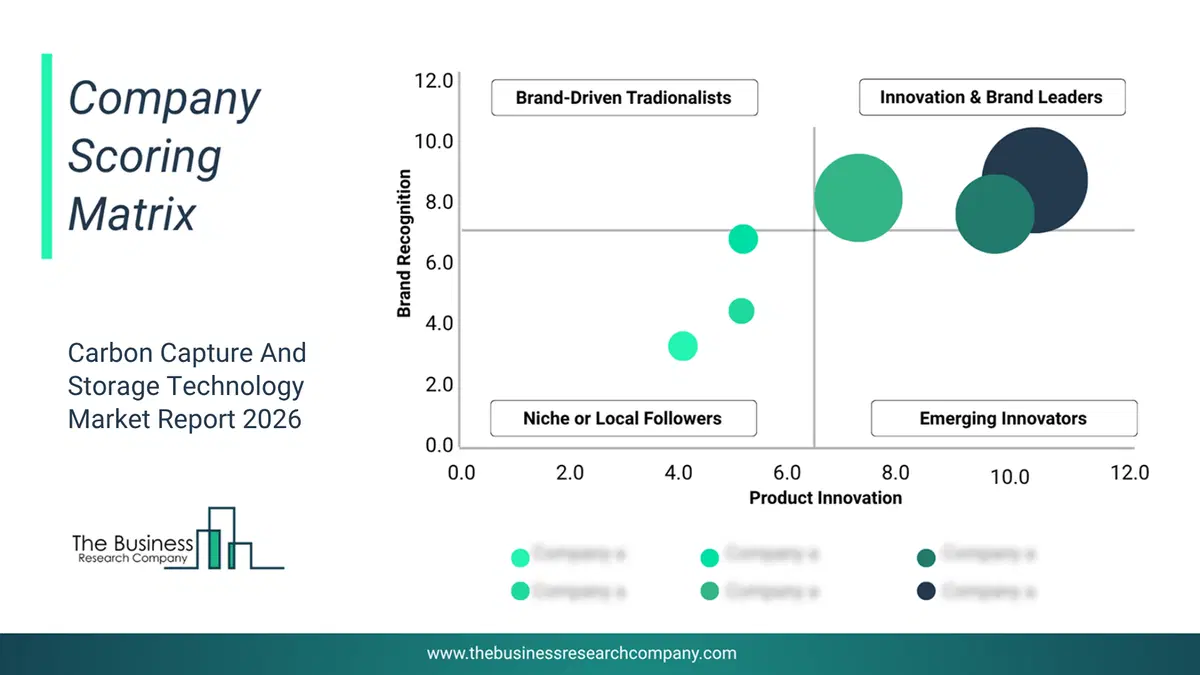
This chart maps companies by product innovation and brand strength, with bubble size indicating relative revenue, helping identify market leaders, challengers, and niche players. This is an illustrative chart; the full report provides a complete and accurate competitive analysis.
Global Carbon Capture And Storage Technology Market Trends and Insights
Major companies operating in the carbon capture and storage technology market are concentrating sustainability initiatives, such as commercial direct air capture (DAC) facilities, to accelerate the deployment of carbon removal technologies. Direct air capture technologies utilize innovative processes such as using limestone to absorb CO2 from the air, powered by renewable energy, play a crucial role in scaling up carbon removal efforts to meet global climate goals, with the captured CO2 stored in concrete. For instance, in January 2024, Heirloom Carbon Technologies Inc., a US-based environment services company, launched the DAC facility for concrete CO2 capture with a capacity to capture 1,000 tons of CO2 annually in the US. This innovative process involves using renewable energy to extract CO2 from limestone, producing calcium oxide, which is then transformed into calcium hydroxide powder to capture CO2 from the air. The captured CO2 is stored underground or integrated into concrete through a partnership with CarbonCure Technologies. Heirloom and CarbonCure have signed an agreement to store CO2 captured by Heirloom's DAC facilities in nearby concrete plants, providing a scalable and immediately available storage solution.What Are Latest Mergers And Acquisitions In The Carbon Capture And Storage Technology Market?
In August 2023, Occidental, a US-based energy company, acquired Carbon Engineering Ltd. for an undisclosed amount. With this acquisition Occidental’s aim is to accelerate the development and deployment of direct air capture (DAC) technology on a large scale as a cost-effective and global carbon removal solution. Carbon Engineering Ltd. is a Canada-based company that specializes in direct air capture and carbon removal solutions.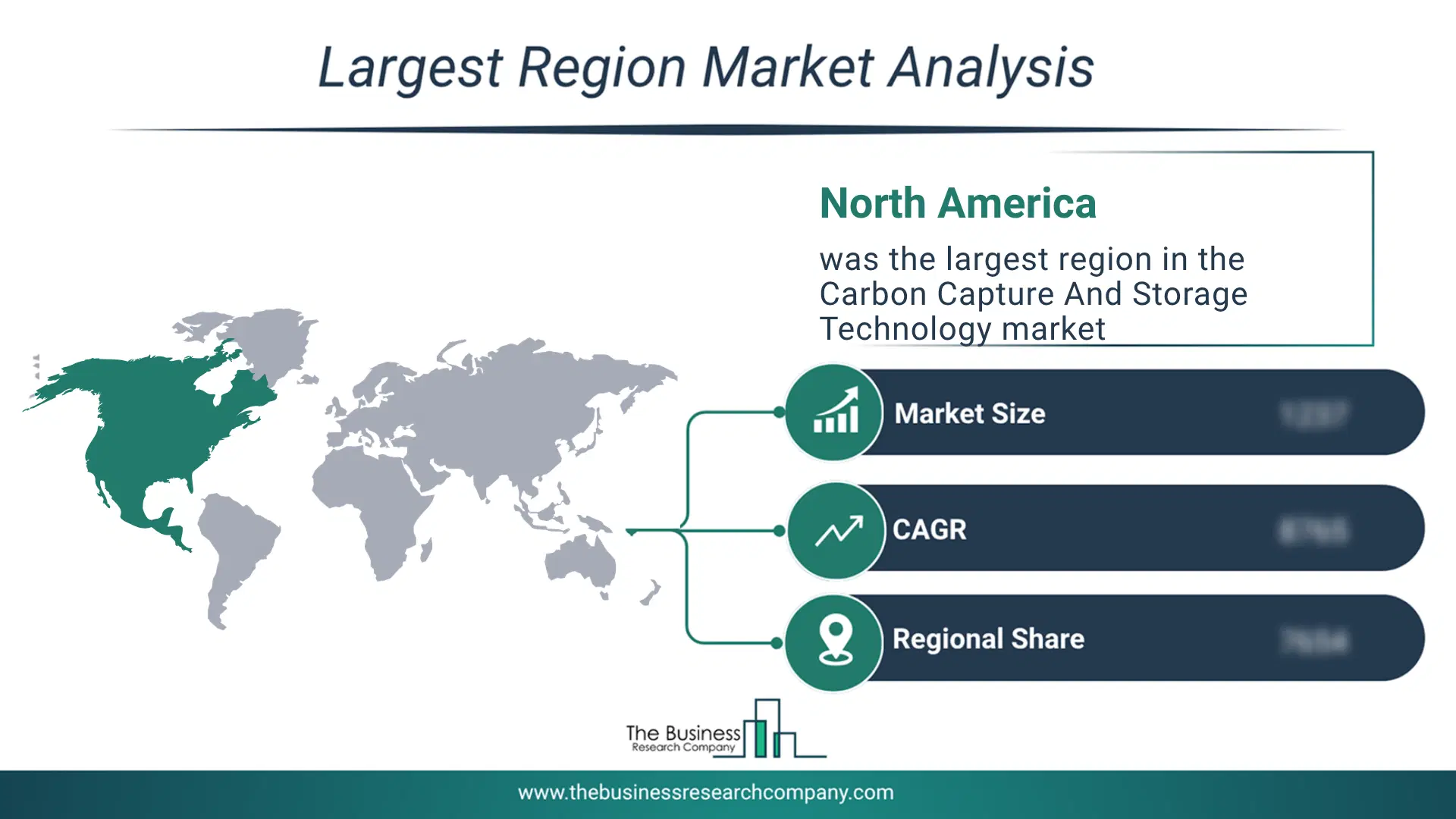
Regional Insights
North America was the largest region in the carbon capture and storage technology market in 2025. Europe is expected to be the fastest growing region in the market. The regions covered in this market report are Asia-Pacific, South East Asia, Western Europe, Eastern Europe, North America, South America, Middle East, Africa. The countries covered in this market report are Australia, Brazil, China, France, Germany, India, Indonesia, Japan, Taiwan, Russia, South Korea, UK, USA, Canada, Italy, SpainWhat Defines the Carbon Capture And Storage Technology Market?
The carbon capture and storage technology market consists of revenues earned by entities through technology licensing, consulting, and advisory services. The market value includes the value of related goods sold by the service provider or included within the service offering. The carbon capture and storage technology market also includes sales of CO2 pipeline systems, CO2 shipping and tanker systems, geologic storage systems, and enhanced oil recovery (EOR) systems. Values in this market are ‘factory gate’ values, that is the value of goods sold by the manufacturers or creators of the goods, whether to other entities (including downstream manufacturers, wholesalers, distributors, and retailers) or directly to end customers. The value of goods in this market includes related services sold by the creators of the goods.How is Market Value Defined and Measured?
The market value is defined as the revenues that enterprises gain from the sale of goods and/or services within the specified market and geography through sales, grants, or donations in terms of the currency (in USD unless otherwise specified). The revenues for a specified geography are consumption values that are revenues generated by organizations in the specified geography within the market, irrespective of where they are produced. It does not include revenues from resales along the supply chain, either further along the supply chain or as part of other products.
This chart presents market attractiveness based on a quantitative evaluation of growth, competition, strategic alignment, and risk, offering a clear view of opportunity areas for decision-making. This chart is for illustrative purposes; the full report contains the complete analysis.

This chart highlights the Total Addressable Market (TAM) by estimating the maximum revenue opportunity using an assumption-driven approach, supporting strategic planning and opportunity sizing across markets. The chart is illustrative; the full report provides a more comprehensive analysis.
What Key Data and Analysis Are Included in the Carbon Capture And Storage Technology Market Report 2026?
The carbon capture and storage technology market research report is one of a series of new reports from The Business Research Company that provides market statistics, including industry global market size, regional shares, competitors with the market share, detailed market segments, market trends and opportunities, and any further data you may need to thrive in the carbon capture and storage technology industry. The market research report delivers a complete perspective of everything you need, with an in-depth analysis of the current and future state of the industry.Carbon Capture And Storage Technology Market Report Forecast Analysis
| Report Attribute | Details |
|---|---|
| Market Size Value In 2026 | $4.22 billion |
| Revenue Forecast In 2030 | $6.62 billion |
| Growth Rate | CAGR of 11.9% from 2026 to 2030 |
| Base Year For Estimation | 2025 |
| Actual Estimates/Historical Data | 2020-2025 |
| Forecast Period | 2026 - 2030 |
| Market Representation | Revenue in USD Billion and CAGR from 2026 to 2030 |
| Segments Covered | Type, Technology, Application |
| Regional Scope | Asia-Pacific, Western Europe, Eastern Europe, North America, South America, Middle East, Africa |
| Country Scope | The Countries Covered In This Market Report Are Australia, Brazil, China, France, Germany, India, Indonesia, Japan, Taiwan, Russia, South Korea, Uk, Usa, Canada, Italy, Spain. |
| Key Companies Profiled | Shell plc, Chevron Corporation, Occidental Petroleum Corporation, Siemens AG, Schneider Electric SE, Honeywell International Inc., Mitsubishi Heavy Industries Ltd., ABB Ltd., Schlumberger NV, Bechtel Corporation, Aker Solutions ASA, NET Power Inc., LanzaTech Global Inc., Carbon Engineering Ltd., Climeworks AG, Carbon Clean Solutions Pvt. Ltd., Global Thermostat PBC, C-Capture Limited, ION Clean Energy, Svante Inc. |
| Customization Scope | Request for Customization |
| Pricing And Purchase Options | Explore Purchase Options |