
Carbon Capture Market Report 2026
Global Outlook – By Technology Type (Post-Combustion, Industrial Process, Pre-Combustion, Oxy-Combustion), By Equipment Type (Adsorption Systems, Absorption Systems, Membrane Separation Units, Compression And Transport Infrastructure, Monitoring And Storage Support Solutions), By Service (Capture System Design And Engineering, Capture Equipment Supply, Integration And Installation, Operation And Maintenance, Transportation Management, Storage Or Utilization Support), By Application (Carbon Dioxide Storage, Carbon Dioxide Utilization, Carbon Dioxide Transportation), By End Use Industry (Oil And Gas, Power Generation, Cement, Steel, Chemicals, Waste Management, Pulp And Paper) – Market Size, Trends, Strategies, and Forecast to 2030
Carbon Capture Market Overview
• Carbon Capture market size has reached to $4.54 billion in 2025 • Expected to grow to $9.10 billion in 2030 at a compound annual growth rate (CAGR) of 14.8% • Growth Driver: Surge In Demand For Efficient CO? Capture Solutions Fueling The Growth Of The Market Due To Expansion Of Carbon Capture Infrastructure And Technologies • Market Trend: Carbon Capture Technology Accelerates Decarbonization in Shipping • North America was the largest region in 2025 and Asia-Pacific is the fastest growing region.Market Gains By 2030 – Top Opportunities By Segment
Market Gain identifies the most promising market opportunities by highlighting the segments or products expected to generate the highest incremental revenue growth over the next five years.
What Is Covered Under Carbon Capture Market?
Carbon capture is the process of separating carbon dioxide from industrial emissions or ambient air before it enters the atmosphere. It uses engineered systems to extract, compress, and prepare the captured carbon dioxide for transport or storage. It helps to cut overall emissions by preventing carbon dioxide from contributing to climate change. The main technology types of carbon capture are including post-combustion, industrial process, pre-combustion, and oxy-combustion. Post-combustion refers to a type of carbon capture technology that captures carbon dioxide from flue gases after fuel combustion, enabling CO₂ separation and reducing emission release from industrial and energy generation facilities. The equipment types include adsorption systems, absorption systems, membrane separation units, compression and transport infrastructure, and monitoring and storage support solutions. The services include capture system design and engineering, capture equipment supply, integration and installation, operation and maintenance, transportation management, and storage or utilization support.There are applications such as carbon dioxide storage, carbon dioxide utilization, and carbon dioxide transportation and the key end use industries including oil and gas, power generation, cement, steel, chemicals, waste management, and pulp and paper.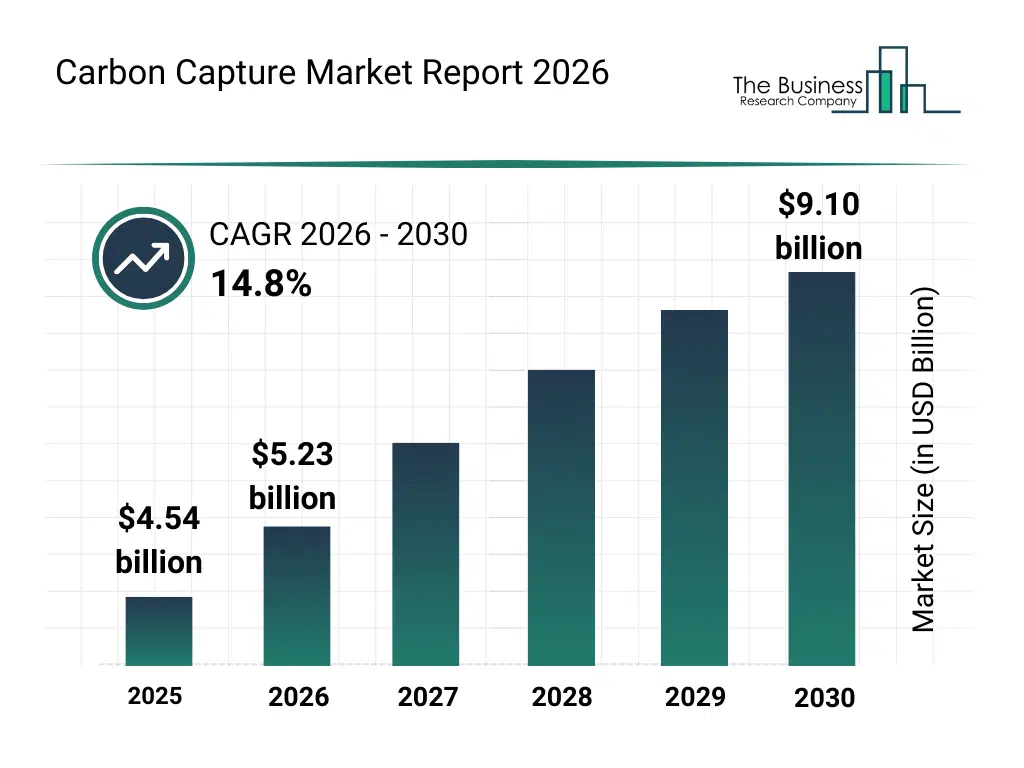
What Is The Carbon Capture Market Size and Share 2026?
The carbon capture market size has grown rapidly in recent years. It will grow from $4.54 billion in 2025 to $5.23 billion in 2026 at a compound annual growth rate (CAGR) of 15.1%. The growth in the historic period can be attributed to increasing regulatory pressure for industrial emission reduction, growing adoption of post combustion systems in power generation, rising deployment of carbon capture in oil and gas operations, increasing investment in industrial process capture for cement and steel, expanding government funded pilot and demonstration projects.What Is The Carbon Capture Market Growth Forecast?
The carbon capture market size is expected to see rapid growth in the next few years. It will grow to $9.10 billion in 2030 at a compound annual growth rate (CAGR) of 14.8%. The growth in the forecast period can be attributed to growing demand for low carbon industrial production, rising investment in large scale capture infrastructure, increasing adoption of oxy combustion technologies, expanding carbon dioxide utilization pathways in chemicals and materials, increasing government incentives for decarbonization. Major trends in the forecast period include advancements in membrane separation technology, innovations in solid sorbent materials, development of modular capture units, research and development in direct air capture systems, improvements in carbon dioxide compression efficiency.
Global Carbon Capture Market Segmentation
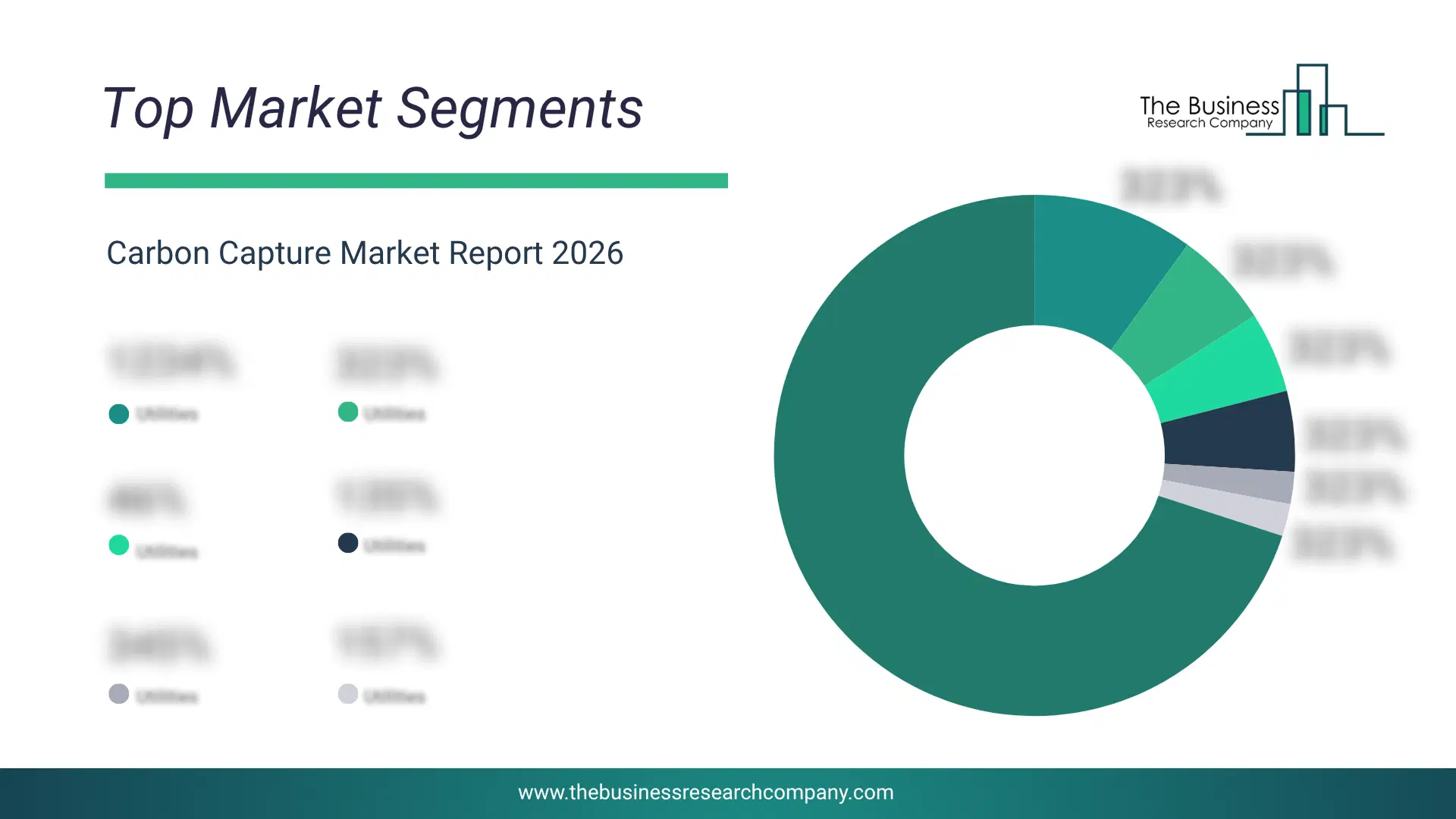
1) By Technology Type: Post-Combustion, Industrial Process, Pre-Combustion, Oxy-Combustion 2) By Equipment Type: Adsorption Systems, Absorption Systems, Membrane Separation Units, Compression And Transport Infrastructure, Monitoring And Storage Support Solutions 3) By Service: Capture System Design And Engineering, Capture Equipment Supply, Integration And Installation, Operation And Maintenance, Transportation Management, Storage Or Utilization Support 4) By Application: Carbon Dioxide Storage, Carbon Dioxide Utilization, Carbon Dioxide Transportation 5) By End Use Industry: Oil And Gas, Power Generation, Cement, Steel, Chemicals, Waste Management, Pulp And Paper Subsegments: 1) By Post Combustion: Solvent Based Capture, Solid Sorbent Based Capture, Membrane Based Capture, Calcium Looping 2) By Industrial Process: Cement Production Capture, Steel Manufacturing Capture, Chemical Processing Capture, Refinery Emission Capture 3) By Pre Combustion: Gasification Based Capture, Shift Reaction Based Capture, Solvent Based Separation, Physical Sorbent Based Separation 4) By Oxy Combustion: Oxygen Supply Systems, Flue Gas Recirculation Systems, Cryogenic Air Separation Systems, Integrated Oxy Fuel Boilers The top segments in the carbon capture market will be: • Post-Combustion will reach $3.89 Billion by 2030. • Industrial Process will reach $2.25 Billion by 2030. • Pre-Combustion will reach $0.83 Billion by 2030. • Oxy-Combustion will reach $0.74 Billion by 2030.What Is The Driver Of The Carbon Capture Market?
The increasing demand for efficient CO₂ capture solutions is expected to propel the growth of the carbon capture market going forward. Efficient CO₂ capture solutions refer to advanced materials and technologies capable of absorbing, adsorbing, or binding carbon dioxide from industrial emissions or ambient air with high selectivity and performance. Demand for efficient CO₂ capture solutions as countries and industries commit to reducing greenhouse gas emissions and meeting net-zero targets. Carbon capture supports efficient CO₂ capture solutions by using advanced technologies to trap and store carbon dioxide emissions from industrial and power generation processes. It helps reduce greenhouse gas emissions and supports climate mitigation efforts by preventing CO₂ from entering the atmosphere. For instance, in March 2024, according to the International Energy Agency, a France-based intergovernmental organization, the carbon dioxide capture capacity for 2030 increased by 35% in 2023, and storage capacity rose by 70%, bringing total capture potential to over 430 million tonnes per year and storage capacity to around 620 million tonnes of carbon dioxide per year. Therefore, the increasing demand for efficient CO₂ capture solutions is driving the growth of the carbon capture industry.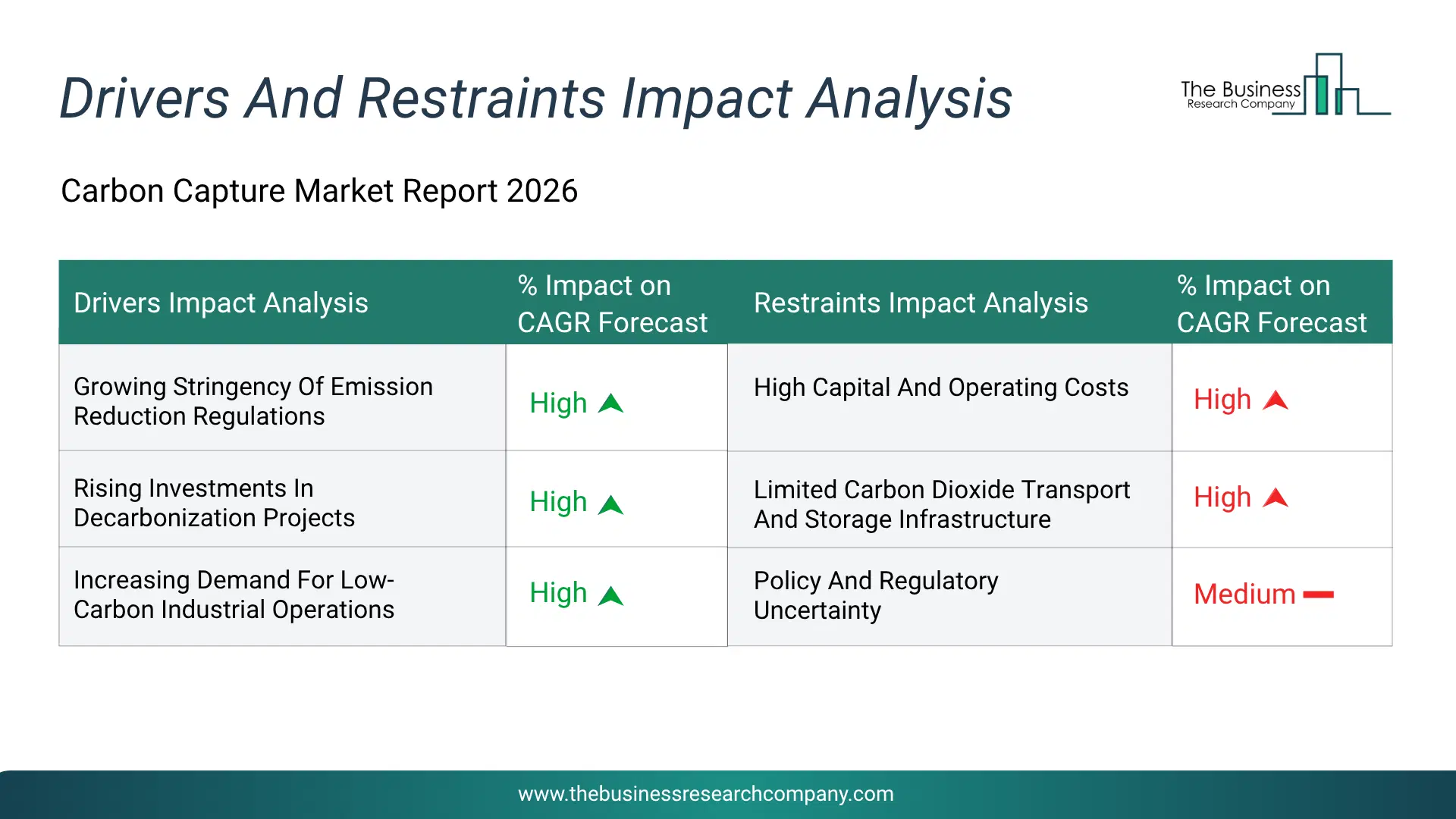
Infographic Chart Showing Key Market Drivers Analysis And Restraints For Carbon Capture Market
The chart presents an impact analysis of key drivers and restraints, quantifying their relative influence on the market's growth rate and helping assess the balance between growth enablers and limiting factors. This chart offers a high-level perspective; the full report contains more detailed insights.
How Will The Drivers Impact Growth In The Global Carbon Capture Market?
• Growing Stringency Of Emission Reduction Regulations (High) – During the forecast period, the growing stringency of emission reduction regulations is expected to become a key growth driver for the carbon capture market by 2030. Governments and regulatory authorities are implementing stricter carbon reduction policies to limit greenhouse gas emissions from high-emission industries. Carbon capture technologies enable sectors such as power generation, cement, steel, and chemicals to achieve emission targets while maintaining operational continuity. Increasing carbon pricing mechanisms, climate commitments, and regulatory frameworks are encouraging industries to adopt advanced capture solutions. This shift toward compliance-driven carbon management is supporting widespread technology deployment. • Rising Investments In Decarbonization Projects (High) – During the forecast period, the rising investments in decarbonization projects are expected to emerge as a major factor driving the expansion of the carbon capture market by 2030. Increasing funding from energy companies, industrial operators, and governments is accelerating the development of large-scale carbon capture facilities and supporting infrastructure. Financial incentives, carbon credit programs, and sustainability-focused investments are improving commercial feasibility and encouraging project deployment. Continuous investment in advanced capture technologies is enabling higher efficiency, scalability, and broader industrial adoption. • Increasing Demand For Low-Carbon Industrial Operations (High) – During the forecast period, the increasing demand for low-carbon industrial operations is expected to act as a key growth catalyst for the carbon capture market by 2030. Industries are adopting carbon capture solutions to reduce environmental impact while continuing large-scale production activities. Growing pressure from customers, investors, and supply chains to achieve sustainability goals is increasing the need for effective emission management technologies. Carbon capture enables hard-to-abate sectors to improve environmental performance, maintain competitiveness, and support long-term climate strategies.How Will The Restraints Impact Growth In The Global Carbon Capture Market?
• High Capital And Operating Costs (High) – During the forecast period, high capital and operating costs act as a major restraint for the carbon capture market because installing capture equipment, compression systems, and transportation infrastructure requires substantial upfront investment. In addition, energy consumption and maintenance expenses increase the overall cost of operations. These high costs make project economics challenging, particularly for small and medium-sized facilities. Limited financial returns and long payback periods discourage widespread adoption. As a result, market growth is constrained in cost-sensitive industries. • Limited Carbon Dioxide Transport And Storage Infrastructure (High) – During the forecast period, limited carbon dioxide transport and storage infrastructure acts as a significant restraint for the carbon capture market because many regions lack sufficient pipelines, storage facilities, and geological reservoirs needed for large-scale deployment. The absence of integrated carbon management networks increases project complexity and operational risks. Developing new infrastructure requires substantial investments and regulatory approvals. These challenges delay project execution and restrict market expansion. Consequently, carbon capture adoption remains uneven across regions. • Policy And Regulatory Uncertainty (High) – During the forecast period, policy and regulatory uncertainty acts as a significant restraint on the carbon capture market because the commercial viability of carbon capture projects often depends on government incentives, carbon pricing mechanisms, tax credits, and long-term climate policies. Frequent changes in environmental regulations, funding programs, and emissions reduction targets can create uncertainty for project developers and investors. Delays in obtaining permits and approvals for carbon capture, transportation, and storage facilities can further extend project timelines and increase development costs. Inconsistent regulatory frameworks across countries also make it difficult for companies to plan and scale cross-border carbon capture initiatives. This uncertainty discourages long-term investments and slows the deployment of new projects. Consequently, policy and regulatory uncertainty can restrain the growth of the carbon capture market.Key Players In The Global Carbon Capture Market
Major companies operating in the carbon capture market are Occidental Petroleum Corp., Svante Technologies Inc., Climeworks AG, Blue Planet Ltd., CarbonCure Technologies Inc., Carbon Engineering Ltd., AirCapture LLC, Deep Sky, 1PointFive LLC, CarbonBuilt, Heirloom Carbon Technologies Inc., Aker Carbon Capture ASA, Carbon Clean Solutions Ltd., Carbfix, 8 Rivers Capital LLC, Mission Zero Technologies, Soletair Power Oy, Carbyon B.V., Noya Inc., ZeoDAC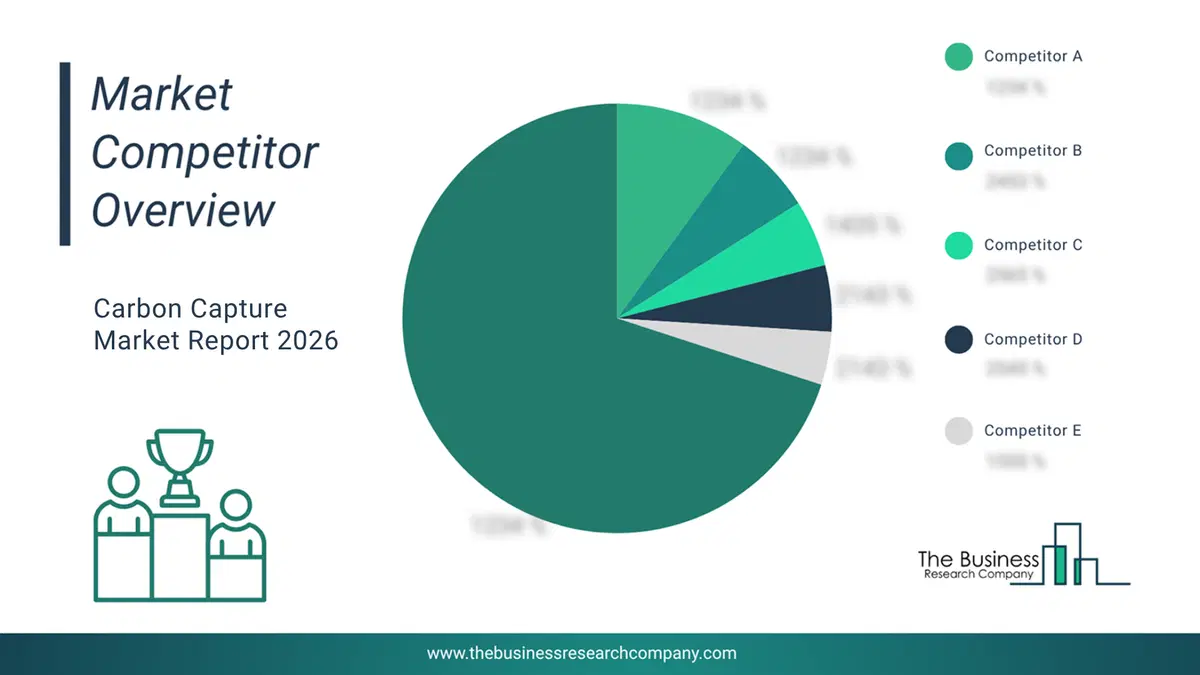
This chart is for illustrative purposes; the full report includes a detailed competitor analysis and comprehensive overview of the top 10 companies in the market.
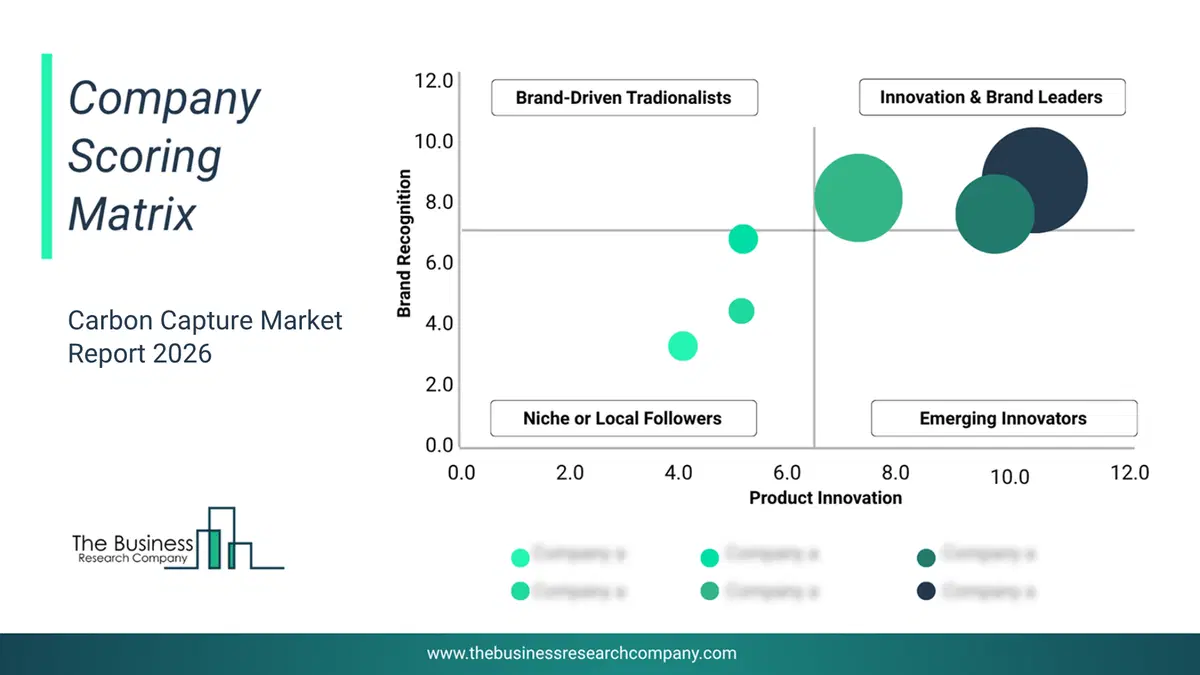
This chart maps companies by product innovation and brand strength, with bubble size indicating relative revenue, helping identify market leaders, challengers, and niche players. This is an illustrative chart; the full report provides a complete and accurate competitive analysis.
Global Carbon Capture Market Trends and Insights
Major companies operating in the carbon capture market are focusing on developing advanced products, such as full-scale onboard CO₂ capture systems, to reduce greenhouse gas emissions, comply with environmental regulations, and support shipping decarbonization. Full-scale onboard CO₂ capture systems refer to integrated carbon capture solutions installed directly on ships, vehicles, or industrial equipment that actively capture and store carbon dioxide emissions at the source during operation. For instance, in May 2025, Wartsila Corporation, a Finland-based technology company, launched its Wärtsilä Carbon Capture Solution commercially following a successful full-scale installation on Solvang ASA’s Clipper Eris, a 21,000 m³ ethylene carrier. It also aims to reduce vessel emissions by up to 70%, offering ship owners a scalable and immediate path toward net-zero maritime operations.What Are Latest Mergers And Acquisitions In The Carbon Capture Market?
In March 2024, Schlumberger Limited, a US-based technology and energy services provider, acquired an 80% majority stake in Aker Carbon Capture Holding AS for NOK 4.12 billion ($380 million). With this acquisition, SLB aims to accelerate the commercialization and scale-up of carbon capture technologies by integrating its industrial decarbonization expertise with Aker Carbon Capture’s proprietary amine-based CO₂ solutions, strengthening its position in the carbon capture market. Aker Carbon Capture ASA is a Norway-based company providing modular and scalable carbon capture solutions for industries such as cement, waste-to-energy, and gas-to-power.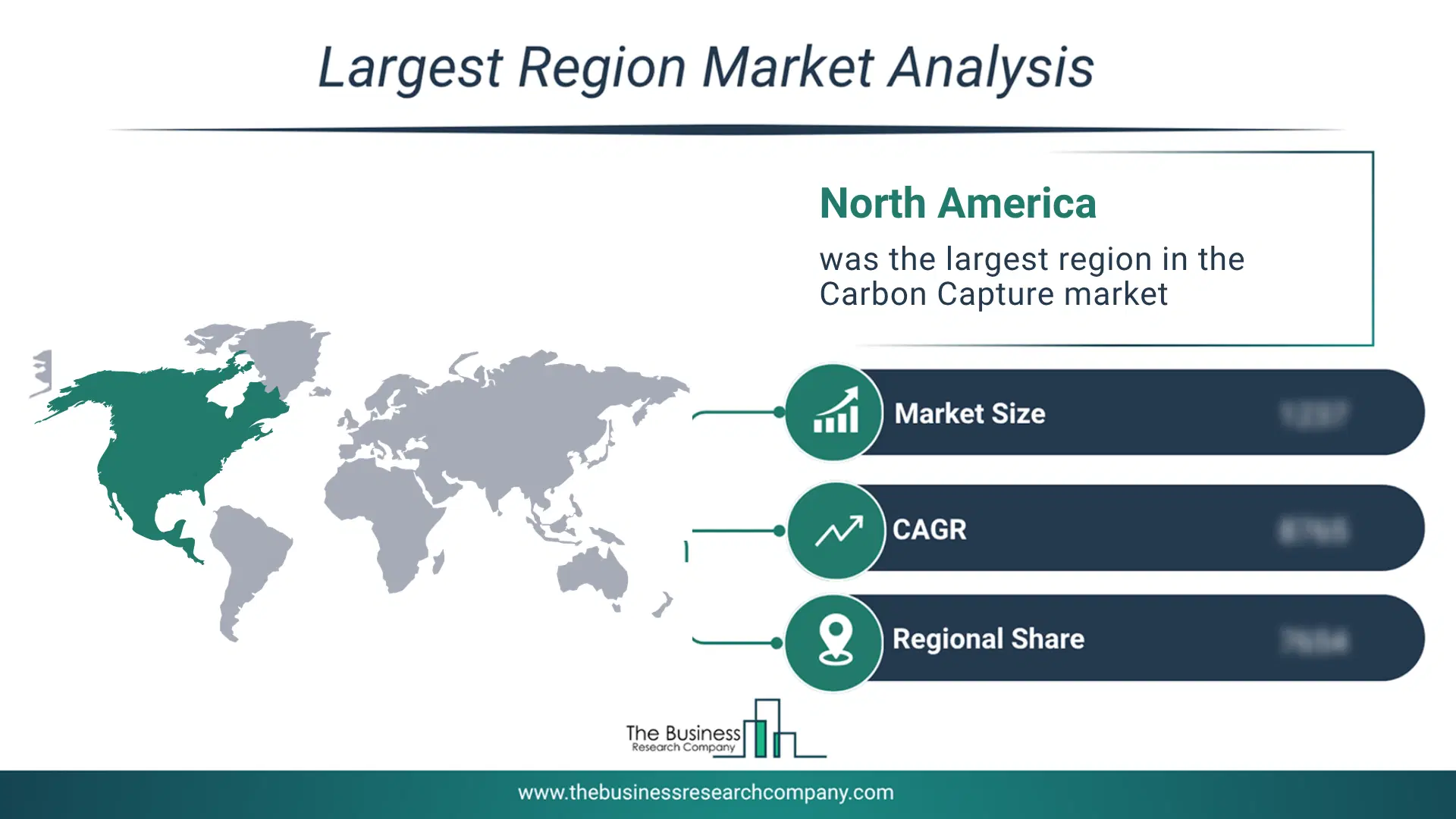
Regional Insights
North America was the largest region in the carbon capture market in 2025. Asia-Pacific is expected to be the fastest-growing region in the forecast period. The regions covered in this market report are Asia-Pacific, South East Asia, Western Europe, Eastern Europe, North America, South America, Middle East, Africa. The countries covered in this market report are Australia, Brazil, China, France, Germany, India, Indonesia, Japan, Taiwan, Russia, South Korea, UK, USA, Canada, Italy, Spain.What Defines the Carbon Capture Market?
The carbon capture market consists of revenues earned by entities by providing services such as designing and deploying capture systems, integrating capture solutions into industrial facilities, supplying ongoing operational support and maintenance, managing carbon dioxide compression and transportation, and enabling long-term storage or utilization pathways. The market value includes the value of related goods sold by the service provider or included within the service offering. The carbon capture market includes sales of carbon dioxide capture equipment, adsorption and absorption systems, membrane separation units, carbon dioxide compression and transport infrastructure, and monitoring and storage support solutions. Values in this market are ‘factory gate’ values, that is, the value of goods sold by the manufacturers or creators of the goods, whether to other entities (including downstream manufacturers, wholesalers, distributors, and retailers) or directly to end customers. The value of goods in this market includes related services sold by the creators of the goods.How is Market Value Defined and Measured?
The market value is defined as the revenues that enterprises gain from the sale of goods and/or services within the specified market and geography through sales, grants, or donations in terms of the currency (in USD unless otherwise specified). The revenues for a specified geography are consumption values that are revenues generated by organizations in the specified geography within the market, irrespective of where they are produced. It does not include revenues from resales along the supply chain, either further along the supply chain or as part of other products.
This chart presents market attractiveness based on a quantitative evaluation of growth, competition, strategic alignment, and risk, offering a clear view of opportunity areas for decision-making. This chart is for illustrative purposes; the full report contains the complete analysis.

This chart highlights the Total Addressable Market (TAM) by estimating the maximum revenue opportunity using an assumption-driven approach, supporting strategic planning and opportunity sizing across markets. The chart is illustrative; the full report provides a more comprehensive analysis.
What Key Data and Analysis Are Included in the Carbon Capture Market Report 2026?
The carbon capture market research report is one of a series of new reports from The Business Research Company that provides market statistics, including industry global market size, regional shares, competitors with the market share, detailed market segments, market trends and opportunities, and any further data you may need to thrive in the carbon capture industry. The market research report delivers a complete perspective of everything you need, with an in-depth analysis of the current and future state of the industry.Carbon Capture Market Report Forecast Analysis
| Report Attribute | Details |
|---|---|
| Market Size Value In 2026 | $5.23 billion |
| Revenue Forecast In 2030 | $9.10 billion |
| Growth Rate | CAGR of 15.1% from 2026 to 2030 |
| Base Year For Estimation | 2025 |
| Actual Estimates/Historical Data | 2020-2025 |
| Forecast Period | 2026 - 2030 |
| Market Representation | Revenue in USD Billion and CAGR from 2026 to 2030 |
| Segments Covered | Technology Type, Equipment Type, Service, Application, End Use Industry |
| Regional Scope | Asia-Pacific, Western Europe, Eastern Europe, North America, South America, Middle East, Africa |
| Country Scope | The countries covered in the report are Australia, Brazil, China, France, Germany, India, ... |
| Key Companies Profiled | Occidental Petroleum Corp., Svante Technologies Inc., Climeworks AG, Blue Planet Ltd., CarbonCure Technologies Inc., Carbon Engineering Ltd., AirCapture LLC, Deep Sky, 1PointFive LLC, CarbonBuilt, Heirloom Carbon Technologies Inc., Aker Carbon Capture ASA, Carbon Clean Solutions Ltd., Carbfix, 8 Rivers Capital LLC, Mission Zero Technologies, Soletair Power Oy, Carbyon B.V., Noya Inc., ZeoDAC |
| Customization Scope | Request for Customization |
| Pricing And Purchase Options | Explore Purchase Options |