

Carbon Dioxide Market Report 2026
Global Outlook – By Product Type (Liquid Carbon Dioxide, Solid Carbon Dioxide, Gaseous Carbon Dioxide ), By Grade Type (Medical Grade, Food Grade, Industrial Grade, Other Grade ), By Application (Food And Beverages, Oil And Gas, Medical, Rubber, Fire Fighting, Chemicals, Metal Products, Other Applications ) – Market Size, Trends, Strategies, and Forecast to 2030
Carbon Dioxide Market Overview
• Carbon Dioxide market size has reached to $10.52 billion in 2025 • Expected to grow to $16.61 billion in 2030 at a compound annual growth rate (CAGR) of 9.8% • Growth Driver: Growing Demand For Firefighting In Carbon Dioxide Market • Market Trend: Saudi Aramco Tests Direct Air Capture Technology For CO2 Management • Asia-Pacific was the largest region and fastest growing region.Market Gains By 2030 – Top Opportunities By Segment
Market Gain identifies the most promising market opportunities by highlighting the segments or products expected to generate the highest incremental revenue growth over the next five years.
What Is Covered Under Carbon Dioxide Market?
Carbon dioxide is a colorless chemical element that is a product of both fermentation and combustion. It is widely used in the food industry for applications such as removing the caffeine from coffee beans to make decaffeinated coffee and for carbonating beer, and soft drinks. It is also used for cooling in the food and manufacturing industries. The main product types of carbon dioxide are liquid carbon dioxide, solid carbon dioxide, and gaseous carbon dioxide. Liquid carbon dioxide is carbon dioxide gas that has been highly compressed and cooled to a liquid form. Carbon dioxide exists as a liquid below the temperature of 31C and above the triple point at a temperature of 56.6 C and 4.18 bar. The sources are hydrogen, ethyl alcohol, ethylene oxide, substituted natural gas, and other sources. The various applications involved are food and beverages, oil & gas, medical, rubber, firefighting, and other applications.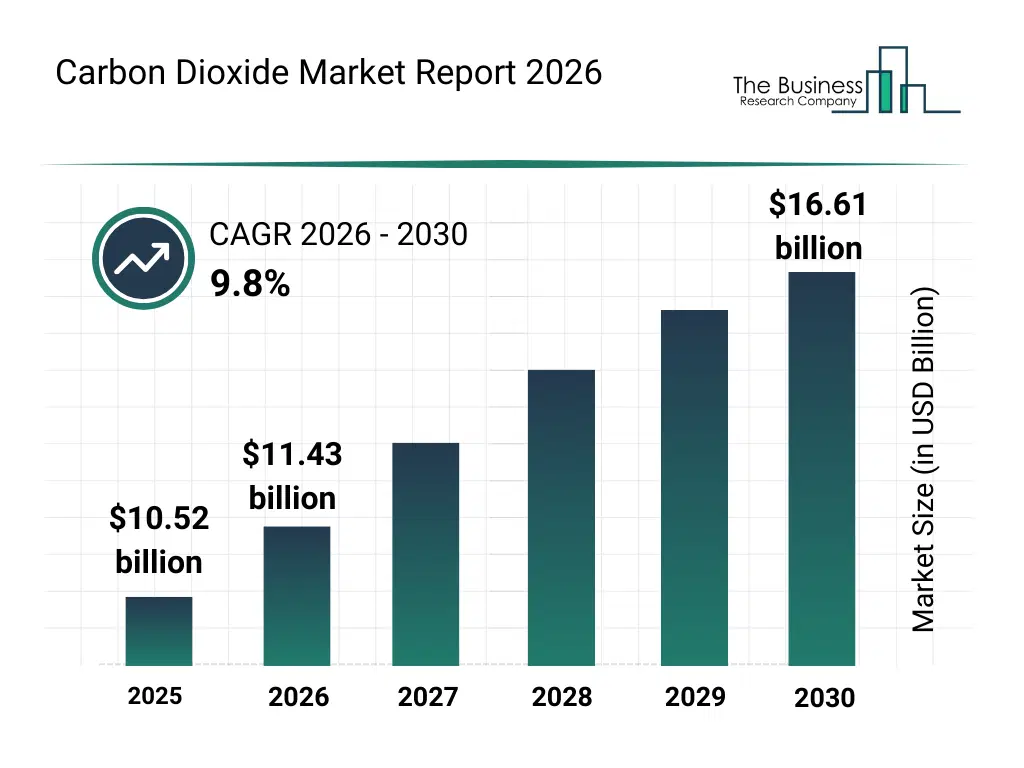
What Is The Carbon Dioxide Market Size and Share 2026?
The carbon dioxide market size has grown strongly in recent years. It will grow from $10.52 billion in 2025 to $11.43 billion in 2026 at a compound annual growth rate (CAGR) of 8.6%. The growth in the historic period can be attributed to expansion of beverage manufacturing, growth of food preservation industries, rising use in welding and metal fabrication, availability of fermentation-based co₂ sources, industrial gas infrastructure development.What Is The Carbon Dioxide Market Growth Forecast?
The carbon dioxide market size is expected to see strong growth in the next few years. It will grow to $16.61 billion in 2030 at a compound annual growth rate (CAGR) of 9.8%. The growth in the forecast period can be attributed to increasing focus on carbon capture utilization, rising demand for medical-grade co₂, expansion of sustainable refrigeration solutions, growing greenhouse agriculture adoption, increasing investments in co₂ recovery technologies. Major trends in the forecast period include increasing demand for food and beverage carbonation, rising use of co₂ in cold chain logistics, growing adoption in medical and pharmaceutical applications, expansion of greenhouse enrichment practices, enhanced recovery and reuse of industrial co₂.
Global Carbon Dioxide Market Segmentation
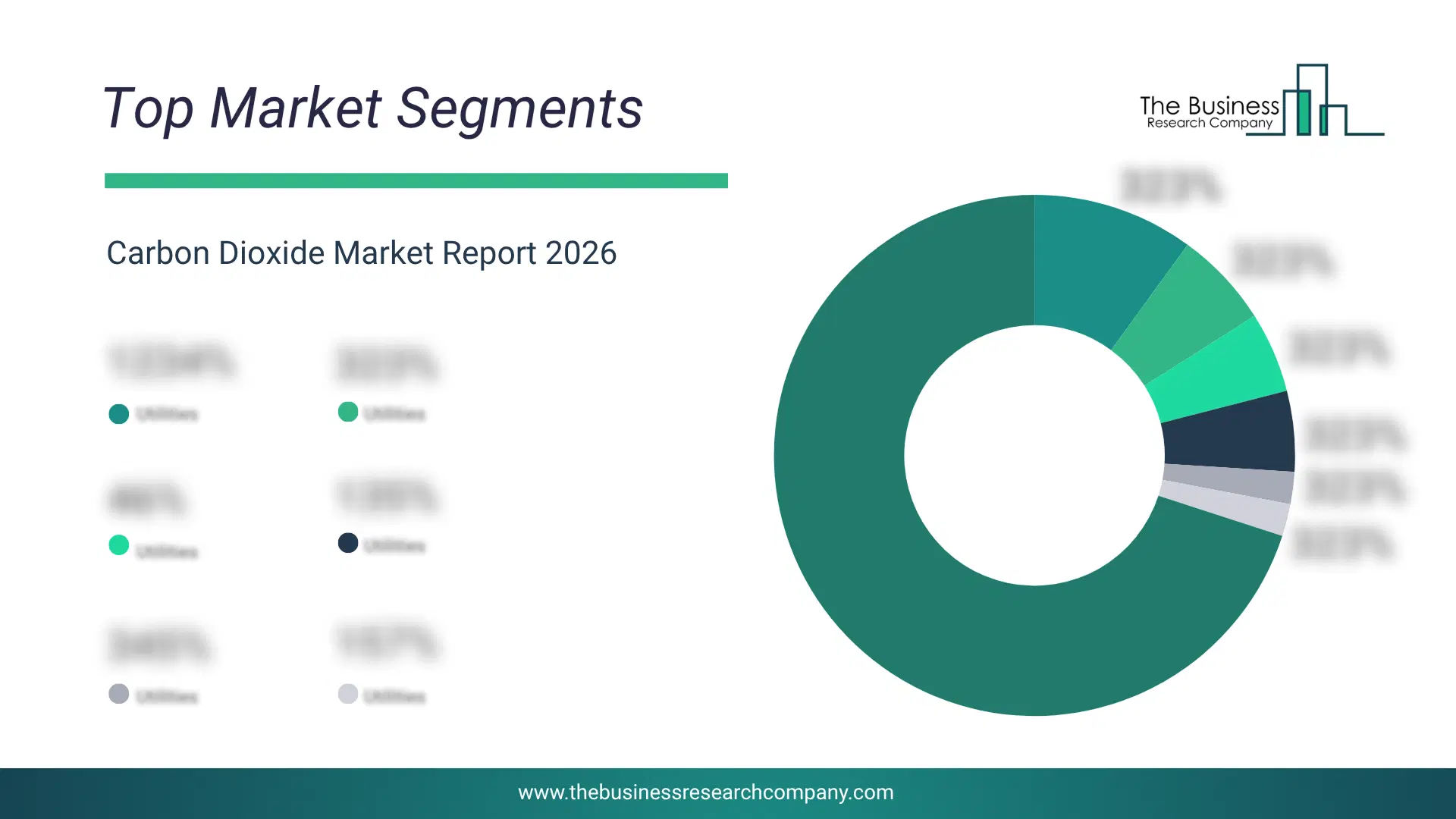
1) By Product Type: Liquid Carbon Dioxide, Solid Carbon Dioxide, Gaseous Carbon Dioxide 2) By Grade Type: Medical Grade, Food Grade, Industrial Grade, Other Grade 3) By Application: Food And Beverages, Oil And Gas, Medical, Rubber, Fire Fighting, Chemicals, Metal Products, Other Applications Subsegments: 1) By Liquid Carbon Dioxide: Food and Beverage Grade Liquid CO₂, Industrial Grade Liquid CO₂, Pharmaceutical Grade Liquid CO₂ 2) By Solid Carbon Dioxide (Dry Ice): Food Packaging And Preservation, Refrigeration And Shipping, Blast Cleaning Applications 3) By Gaseous Carbon Dioxide: Industrial Applications (Welding, Metal Fabrication), Beverage Carbonation, Greenhouse Enrichment, Chemical Production The top segments in the carbon dioxide market will be: • Gaseous Carbon Dioxide will reach $9283.83 Million by 2025. • Industrial Grade will reach $8083.27 Million by 2025. • Solid Carbon Dioxide will reach $4167.4 Million by 2025. • Beverages will reach $3763.89 Million by 2025. • Food will reach $3708.13 Million by 2025.What Is The Driver Of The Carbon Dioxide Market?
The growing demand for firefighting is expected to propel the growth of the carbon dioxide market going forward. Firefighting is the practice and profession of extinguishing fires and managing emergencies involving fires, with the primary goals of protecting life, property, and the environment. Carbon dioxide is widely used as a firefighting agent in specialized fire suppression systems by displacing oxygen and removing one of the elements required for combustion, reducing the risk of fire accidents and minimizing the extent of damage. For instance, in April 2025, according to the Official statistics, a UK-based government agencies, in 2024, the total number of incidents attended by fire & rescue services (FRSs) was 600,185 up 1.2% from 593,285 in the previous year. Therefore, the growing demand for firefighting is driving the growth of the carbon dioxide industry.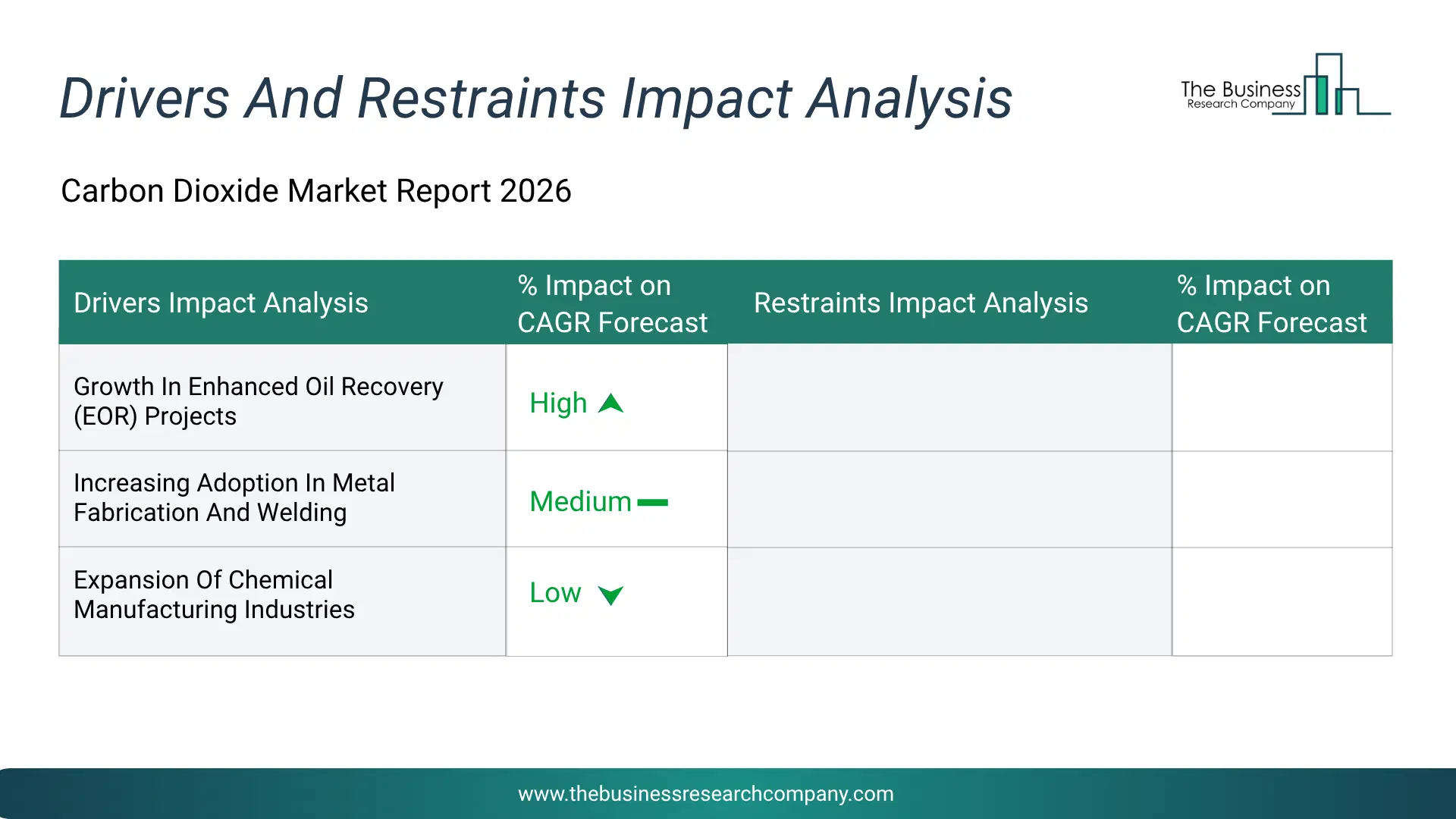
Infographic Chart Showing Key Market Drivers Analysis And Restraints For Carbon Dioxide Market
The chart presents an impact analysis of key drivers and restraints, quantifying their relative influence on the market's growth rate and helping assess the balance between growth enablers and limiting factors. This chart offers a high-level perspective; the full report contains more detailed insights.
How Will The Drivers Impact Growth In The Global Carbon Dioxide Market?
• Growth In Enhanced Oil Recovery (EOR) Projects (High) – The growth in enhanced oil recovery (EOR) projects will become a key driver of growth in the carbon dioxide market by 2030. Carbon dioxide is injected into mature oil fields to enhance oil recovery by reducing viscosity and improving flow rates, a process known as CO₂ flooding. As the demand for oil persists, especially from aging fields, the need for CO₂ to support enhanced oil recovery (EOR) efforts is rising, driving a consistent demand for a reliable CO₂ supply. EOR operations rely on long-term CO₂ supply contracts, often spanning decades and creating stable, ongoing demand in regions with active projects. This has led companies in the EOR sector to establish long-term agreements with CO₂ producers. As a result, the growth in enhanced oil recovery (EOR) projects is anticipated to contributing to a 2.5% annual growth in the market. • Increasing Adoption In Metal Fabrication And Welding (Medium) – The increasing adoption in metal fabrication and welding will emerge as a major factor driving the expansion of the carbon dioxide market by 2030. In gas metal arc welding (GMAW), particularly MIG (Metal Inert Gas) welding, CO₂ serves as a shielding gas to protect the weld pool from atmospheric contaminants that can compromise weld quality. It is commonly used alone or blended with argon for welding carbon steel and various metals. CO₂ offers a cost-effective alternative to noble gases like argon or helium, making it ideal for high-volume applications. Additionally, the adoption of automated and robotic welding systems has further increased the use of CO₂-based shielding gases, particularly argon-CO₂ blends, due to their efficiency, cost benefits and arc stability in industrial production environments. Consequently, the accelerating increasing adoption in metal fabrication and welding capabilities is projected to contributing to a 2.5% annual growth in the market. • Expansion Of Chemical Manufacturing Industries (Low) – The expansion of chemical manufacturing industries processes will serve as a key growth catalyst for the carbon dioxide market by 2030. Carbon dioxide serves as a critical feedstock in the production of industrial chemicals such as urea, methanol and salicylic acid. Chemical manufacturers are increasingly incorporating captured CO₂ into sustainable production processes, using it to develop polycarbonates, biodegradable plastics and specialty chemicals. This shift aligns with broader industry trends toward decarbonization and circular economy practices. Additionally, it plays a vital role in creating inert atmospheres within reactors and storage tanks to enhance safety and prevent hazardous reactions—an application that grows in importance as chemical infrastructure scales. Therefore, this expansion of chemical manufacturing industries operations is projected to supporting to a 2.0% annual growth in the market. • Growing Demand For Firefighting (High) – The growing demand for firefighting will become a significant driver contributing to the growth of the carbon dioxide market by 2030. Carbon dioxide is a highly efficient fire suppressant widely used in both portable extinguishers and fixed suppression systems. Its ability to displace oxygen and interrupt combustion without leaving residue makes it ideal for protecting sensitive environments such as data centres, laboratories and industrial equipment. Stricter global fire safety regulations are driving increased adoption of CO₂-based systems in commercial and industrial settings, including manufacturing plants, chemical storage sites, marine vessels and power facilities. These systems are particularly effective in enclosed or high-risk environments where traditional suppression methods may be unsuitable—such as engine rooms, transformer stations and server facilities. Consequently, the growing demand for firefighting strategies is projected to contributing to a 1.5% annual growth in the market.How Will The Restraints Impact Growth In The Global Carbon Dioxide Market?
• Lack Of CO₂ Infrastructure (High) – Lack Of CO₂ Infrastructure will restrict the growth of the Carbon Dioxide market during the forecast period. The transportation and storage of CO₂ require specialized infrastructure including pipelines, compression facilities, and injection wells. The lack of adequate CO₂ infrastructure in many regions limits the development of enhanced oil recovery and carbon capture projects. Infrastructure constraints affect market growth and the economic viability of CO₂ utilization applications. • Competition From Alternative Gases (Medium) – Competition From Alternative Gases will restrict the growth of the Carbon Dioxide market during the forecast period. Alternative industrial gases such as nitrogen, argon, and helium offer competitive advantages for certain applications. The availability of substitutes and their performance characteristics can limit CO₂ demand in specific industrial applications. Competition from alternative gases affects market share and growth potential in various end-use segments.Key Players In The Global Carbon Dioxide Market
Major companies operating in the carbon dioxide market are Linde PLC, Air Products and Chemicals, Inc., Air Liquide, The Messer Group GmbH, Nippon Sanso Holdings Corporation, Air Water Inc., Gulf Cryo, SOL SpA, Reliant Gases, India Glycols Limited, Praxair Inc., Taiyo Nippon Sanso, Oxair, Yingde Gas Group Co., Ltd., Core Industrial Gases, Supagas, AMCS Corporation, Gagan Gases Ltd, Refex Industries, BOC UK, Altex, Continental Carbonic Products, Inc., Matheson Tri-Gas, Messer Gases del Peru S.A., Buzwair, Sasol, Gas Africa Limited, Carbacid Investments Limited, Afrox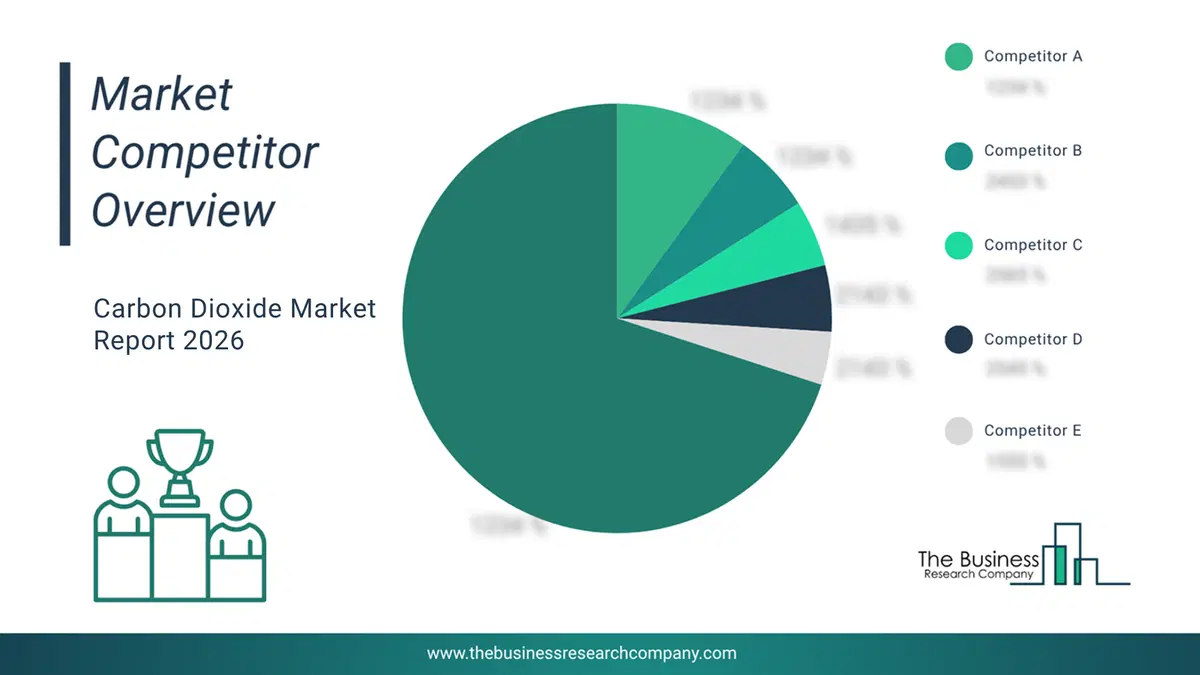
This chart is for illustrative purposes; the full report includes a detailed competitor analysis and comprehensive overview of the top 10 companies in the market.
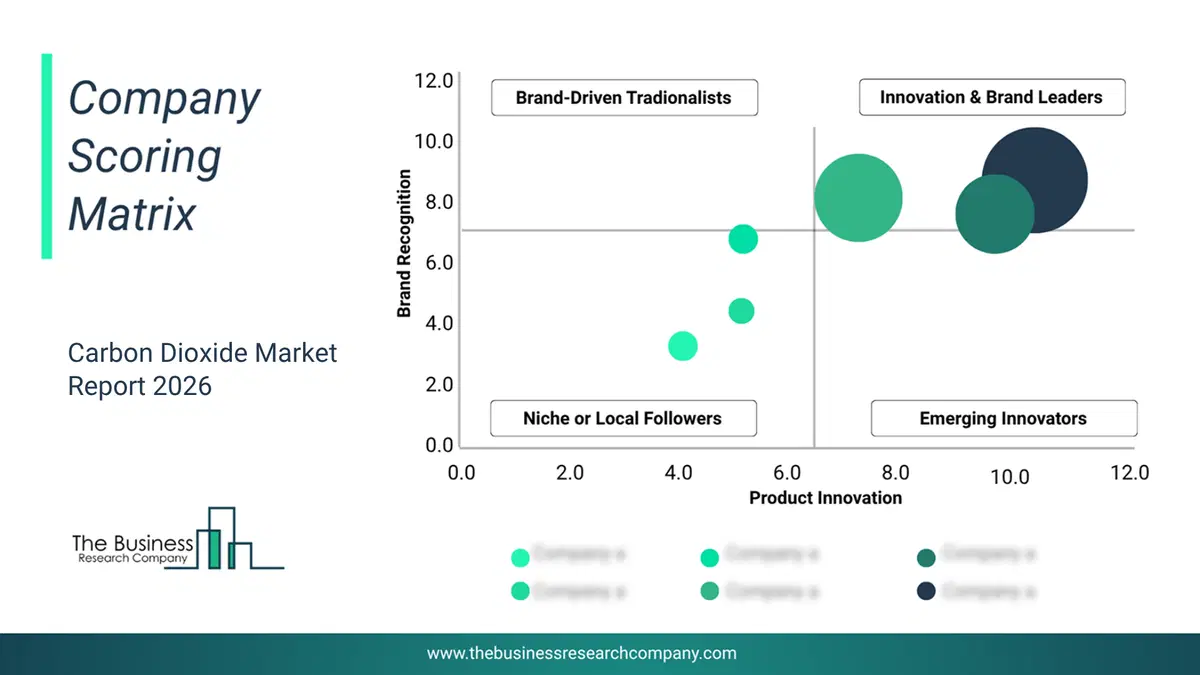
This chart maps companies by product innovation and brand strength, with bubble size indicating relative revenue, helping identify market leaders, challengers, and niche players. This is an illustrative chart; the full report provides a complete and accurate competitive analysis.
Global Carbon Dioxide Market Trends and Insights
Major companies operating in the industrial carbon dioxide market are focusing on developing technological advancements such as metal-organic frameworks to enhance CO₂ capture efficiency, storage capacity, and overall sustainability in industrial applications. Metal-organic frameworks (MOFs) are highly porous structures composed of metal nodes and organic linkers that enable efficient gas adsorption and storage. For instance, in March 2025, Saudi Aramco, a Saudi Arabia-based energy company, launched the country’s first Direct Air Capture (DAC) test unit for CO₂. The pilot unit aims to capture carbon dioxide directly from the atmosphere, test the scalability of DAC technology in the region, and explore integration with carbon utilization and storage solutions, supporting Saudi Arabia’s long-term climate and carbon management goals.What Are Latest Mergers And Acquisitions In The Carbon Dioxide Market?
In May 2024, Zero Carbon System Inc., a US-based company that specializes in global low carbon building design and low carbon urban planning solutions, acquired Global Thermostat for an undisclosed amount. With this acquisition, Zero Carbon System Inc. aims to significantly advance its carbon capture capabilities and establish itself as a leader in the direct air capture (DAC) industry. Global Thermostat is a US-based technology company that specializes in removing carbon dioxide from the air to help address climate change.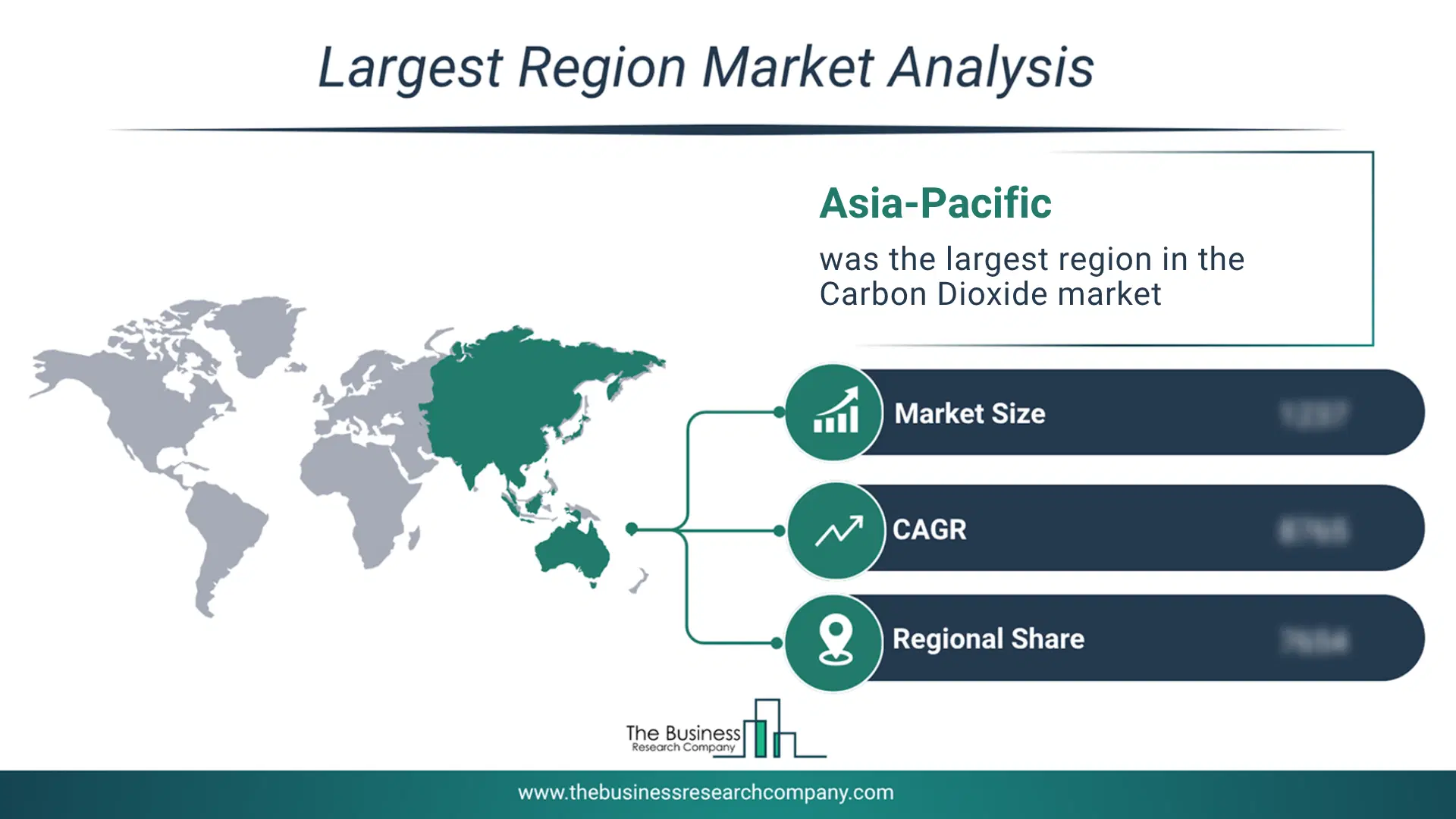
Regional Insights
Asia-Pacific was the largest region in the carbon dioxide market in 2025. North America was the second-largest region in the global carbon dioxide market. The regions covered in this market report are Asia-Pacific, South East Asia, Western Europe, Eastern Europe, North America, South America, Middle East, Africa The countries covered in this market report are Australia, Brazil, China, France, Germany, India, Indonesia, Japan, Taiwan, Russia, South Korea, UK, USA, Canada, Italy, SpainWhat Defines the Carbon Dioxide Market?
The carbon dioxide market consists of the sales of carbon dioxide gas and carbon dioxide liquid used to carbonate drinks and as a refrigerant. Values in this market are factory gate values, that is the value of goods sold by the manufacturers or creators of the goods, whether to other entities (including downstream manufacturers, wholesalers, distributors, and retailers) or directly to end customers. The value of goods in this market includes related services sold by the creators of the goods.How is Market Value Defined and Measured?
The market value is defined as the revenues that enterprises gain from the sale of goods and/or services within the specified market and geography through sales, grants, or donations in terms of the currency (in USD unless otherwise specified). The revenues for a specified geography are consumption values that are revenues generated by organizations in the specified geography within the market, irrespective of where they are produced. It does not include revenues from resales along the supply chain, either further along the supply chain or as part of other products.
This chart presents market attractiveness based on a quantitative evaluation of growth, competition, strategic alignment, and risk, offering a clear view of opportunity areas for decision-making. This chart is for illustrative purposes; the full report contains the complete analysis.

This chart highlights the Total Addressable Market (TAM) by estimating the maximum revenue opportunity using an assumption-driven approach, supporting strategic planning and opportunity sizing across markets. The chart is illustrative; the full report provides a more comprehensive analysis.
What Key Data and Analysis Are Included in the Carbon Dioxide Market Report 2026?
The carbon dioxide market research report is one of a series of new reports from The Business Research Company that provides market statistics, including industry global market size, regional shares, competitors with the market share, detailed market segments, market trends and opportunities, and any further data you may need to thrive in the carbon dioxide industry. The market research report delivers a complete perspective of everything you need, with an in-depth analysis of the current and future state of the industry.Carbon Dioxide Market Report Forecast Analysis
| Report Attribute | Details |
|---|---|
| Market Size Value In 2026 | $11.43 billion |
| Revenue Forecast In 2030 | $16.61 billion |
| Growth Rate | CAGR of 8.6% from 2026 to 2030 |
| Base Year For Estimation | 2025 |
| Actual Estimates/Historical Data | 2020-2025 |
| Forecast Period | 2026 - 2030 |
| Market Representation | Revenue in USD Billion and CAGR from 2026 to 2030 |
| Segments Covered | Product Type, Grade Type, Application |
| Regional Scope | Asia-Pacific, Western Europe, Eastern Europe, North America, South America, Middle East, Africa |
| Country Scope | The countries covered in the report are Australia, Brazil, China, France, Germany, India, Indonesia, Japan, Taiwan, Russia, South Korea, UK, USA, Canada, Italy, Spain. |
| Key Companies Profiled | Linde PLC, Air Products and Chemicals, Inc., Air Liquide, The Messer Group GmbH, Nippon Sanso Holdings Corporation, Air Water Inc., Gulf Cryo, SOL SpA, Reliant Gases, India Glycols Limited, Praxair Inc., Taiyo Nippon Sanso, Oxair, Yingde Gas Group Co., Ltd., Core Industrial Gases, Supagas, AMCS Corporation, Gagan Gases Ltd, Refex Industries, BOC UK, Altex, Continental Carbonic Products, Inc., Matheson Tri-Gas, Messer Gases del Peru S.A., Buzwair, Sasol, Gas Africa Limited, Carbacid Investments Limited, Afrox |
| Customization Scope | Request for Customization |
| Pricing And Purchase Options | Explore Purchase Options |