

Carbon Nanomaterials Market Report 2026
Global Outlook – By Type (Carbon Nanofibers, Carbon Nanotube, Fullerenes, Graphene, Carbon-Based Quantum Dots, Other Types), By Method (Arc Discharge, Laser Ablation, Chemical Vapor Deposition, Catalyzed Chemical Vapor Deposition, High-Pressure Carbon Monoxide Reaction), By End User (Building And Construction, Electrical And Electronics, Medical And Healthcare, Automotive, Aerospace, Sports And Leisure, Other End Users) – Market Size, Trends, Strategies, and Forecast to 2030
Carbon Nanomaterials Market Overview
• Carbon Nanomaterials market size has reached to $8.83 billion in 2025 • Expected to grow to $31.71 billion in 2030 at a compound annual growth rate (CAGR) of 29.2% • Growth Driver: Electric Vehicle Surge Is Fueling Growth In The Carbon Nanomaterials Market • Market Trend: Technological Advancements In Carbon Nanotube Series For Enhanced Battery Performance • Asia-Pacific was the largest region and fastest growing region.What Is Covered Under Carbon Nanomaterials Market?
Carbon nanomaterials refer to a large family of carbon allotropes that includes carbon fullerenes and quantum dots in the zero-dimensional space. The carbon nanotubes (CNTs) in the one-dimensional space, graphene in the two-dimensional space, and nanodiamonds and nanohorns in the three-dimensional space. These are used in a wide variety of applications due to its distinct physical and chemical properties. The main types of carbon nanomaterials are carbon nanofibers, carbon nanotubes, fullerenes, graphene, carbon-based quantum dots, and others. Carbon nanofibers are cylinder-shaped objects made mostly of carbon atoms organized in a fibrous pattern. The several types of methods are included, such as arc discharge, laser ablation, chemical vapor deposition, catalyzed chemical vapor deposition, high-pressure carbon monoxide reaction, and liquid-phase carbon nanotube purification. These are used by several end users, including building and construction, electrical and electronics, medical and healthcare, automotive, aerospace, sports and leisure, and others.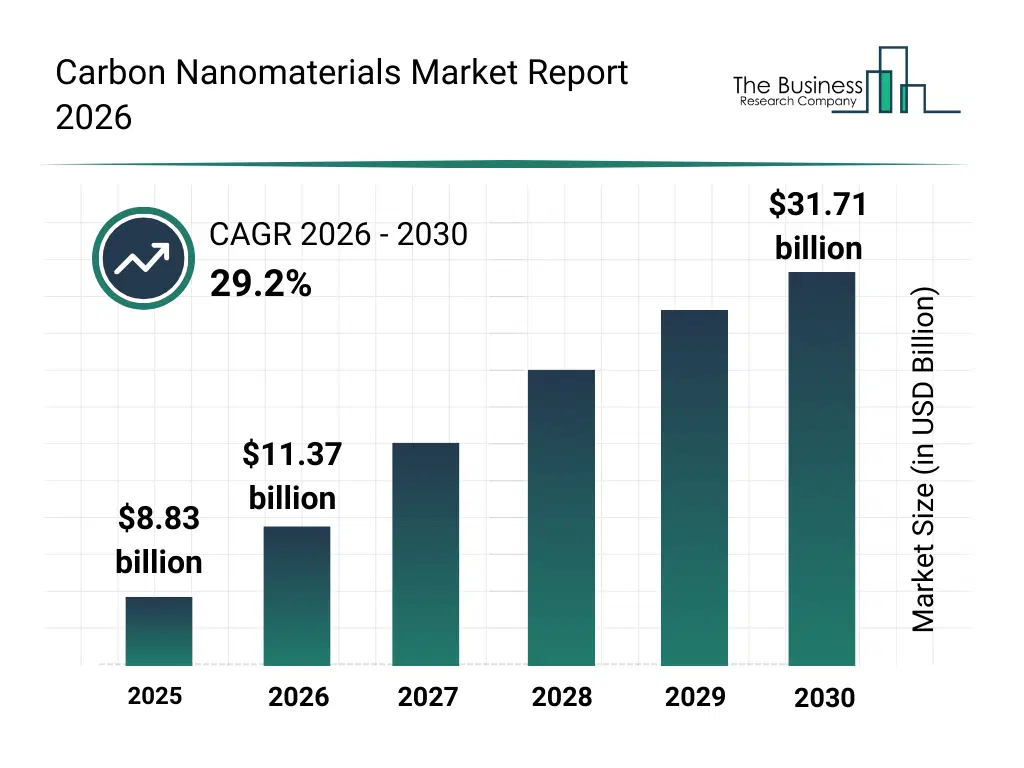
What Is The Carbon Nanomaterials Market Size and Share 2026?
The carbon nanomaterials market size has grown exponentially in recent years. It will grow from $8.83 billion in 2025 to $11.37 billion in 2026 at a compound annual growth rate (CAGR) of 28.9%. The growth in the historic period can be attributed to increased research funding in nanotechnology, rising demand for advanced materials, expansion of electronics manufacturing, availability of laboratory-scale production techniques, growing use in specialty applications.What Is The Carbon Nanomaterials Market Growth Forecast?
The carbon nanomaterials market size is expected to see exponential growth in the next few years. It will grow to $31.71 billion in 2030 at a compound annual growth rate (CAGR) of 29.2%. The growth in the forecast period can be attributed to increasing commercialization of nanomaterials, rising adoption in battery and semiconductor industries, expansion of aerospace-grade composites, growing focus on sustainable advanced materials, increasing investment in large-scale production facilities. Major trends in the forecast period include growing adoption of graphene and cnts, rising use in lightweight composite materials, expansion of electronics and energy storage applications, increased focus on high-performance nanomaterials, advancements in scalable production methods.
Global Carbon Nanomaterials Market Segmentation
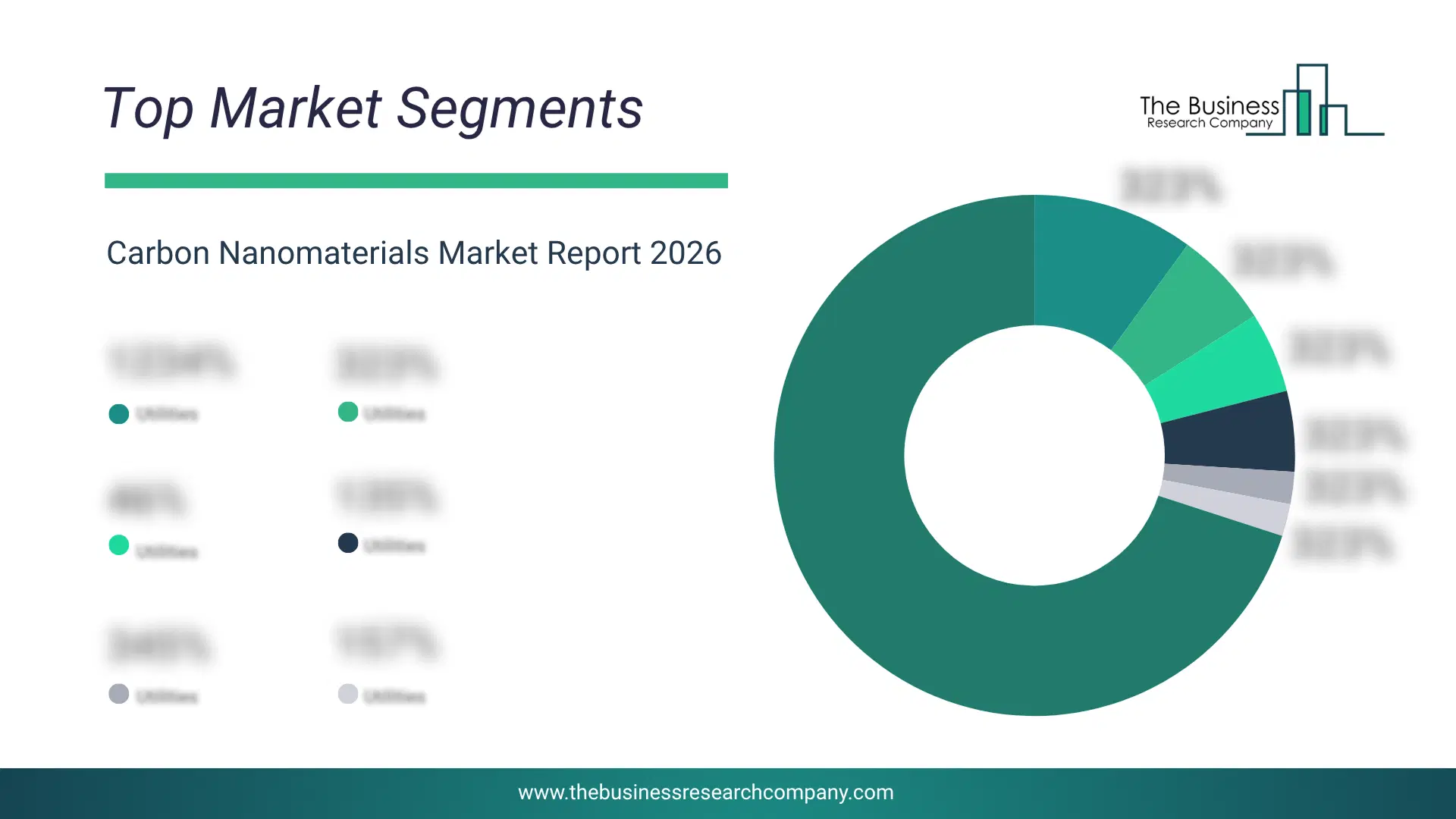
1) By Type: Carbon Nanofibers, Carbon Nanotube, Fullerenes, Graphene, Carbon-Based Quantum Dots, Other Types 2) By Method: Arc Discharge, Laser Ablation, Chemical Vapor Deposition, Catalyzed Chemical Vapor Deposition, High-Pressure Carbon Monoxide Reaction 3) By End User: Building And Construction, Electrical And Electronics, Medical And Healthcare, Automotive, Aerospace, Sports And Leisure, Other End Users Subsegments: 1) By Carbon Nanofibers: Continuous Carbon Nanofibers, Discontinuous Carbon Nanofibers 2) By Carbon Nanotubes: Single-Walled Carbon Nanotubes (SWCNT), Multi-Walled Carbon Nanotubes (MWCNT) 3) By Fullerenes: C60, C70, Other Fullerenes 4) By Graphene: Graphene Oxide, Reduced Graphene Oxide, Graphene Nanoplatelets 5) By Carbon-Based Quantum Dots: Graphene Quantum Dots, Carbon Dots 6) By Other Types: Carbon Nanocomposites, Carbon NanostructuresWhat Is The Driver Of The Carbon Nanomaterials Market?
The increasing demand for electric vehicles is expected to propel the growth of the carbon nanomaterials market going forward. An electric vehicle is a vehicle that runs on one or more electric motors that draw electricity from an external power source. The performance of lithium-ion batteries, the main energy storage devices in electric cars, is improved by using carbon nanomaterials such as graphene and carbon nanotubes. Carbon compounds are also employed in lithium batteries to increase the electrical conductivity of the positive and negative electrodes while avoiding interfering with the electrochemical redox reaction, which generates energy in the electrochemical cell. For instance, in 2024, according to the International Energy Agency is a France-based autonomous intergovernmental organization, electric vehicle sales in 2023 rose by 3.5 million units compared to 2022, marking a 35% year-on-year growth. Therefore, the increasing demand for electric vehicles is driving the growth of the carbon nanomaterials industry.Key Players In The Global Carbon Nanomaterials Market
Major companies operating in the carbon nanomaterials market are Arkema S.A., Cabot Corporation, Showa Denko K.K., OCSiAl Group, Nanocyl S.A., Haydale Graphene Industries plc, Graphenea S.A., XG Sciences, Inc., Nanosys, Inc., NanoXplore Inc., Toray Industries, Inc., Mitsubishi Chemical Group Corporation, LG Chem Ltd., Saudi Basic Industries Corporation (SABIC), BASF SE, Evonik Industries AG, Tokyo Chemical Industry Co., Ltd. (TCI Chemicals), Merck KGaA, ZEON Corporation, Thomas Swan & Co. Ltd.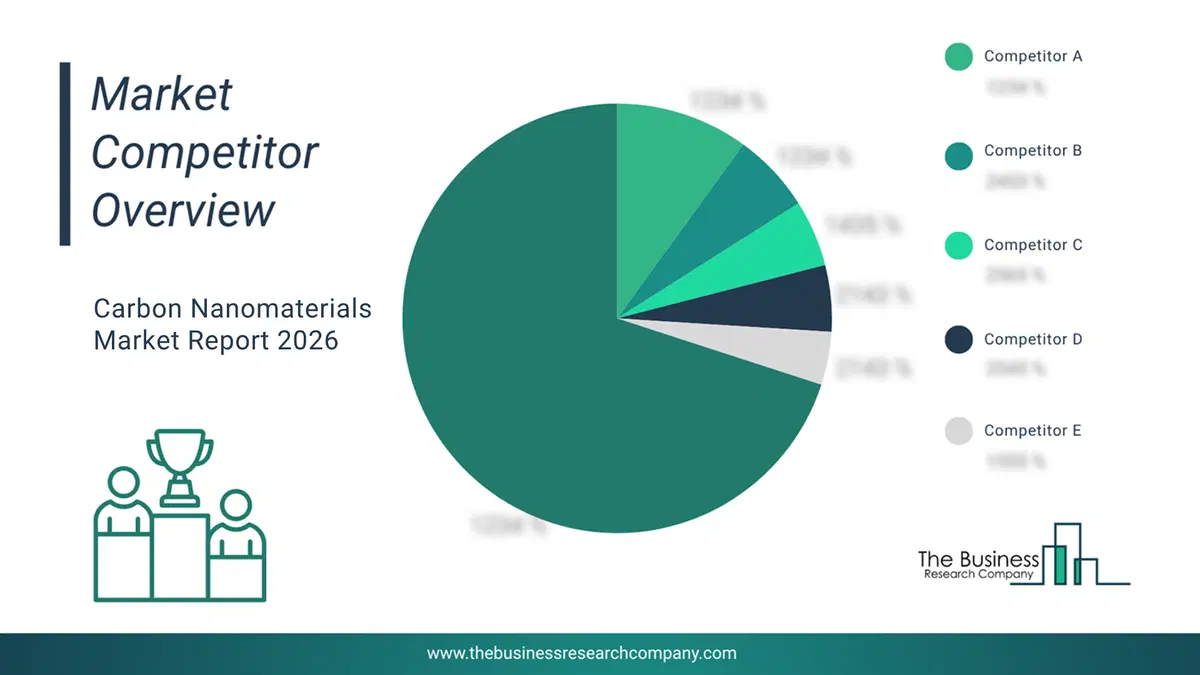
This chart is for illustrative purposes; the full report includes a detailed competitor analysis and comprehensive overview of the top 10 companies in the market.
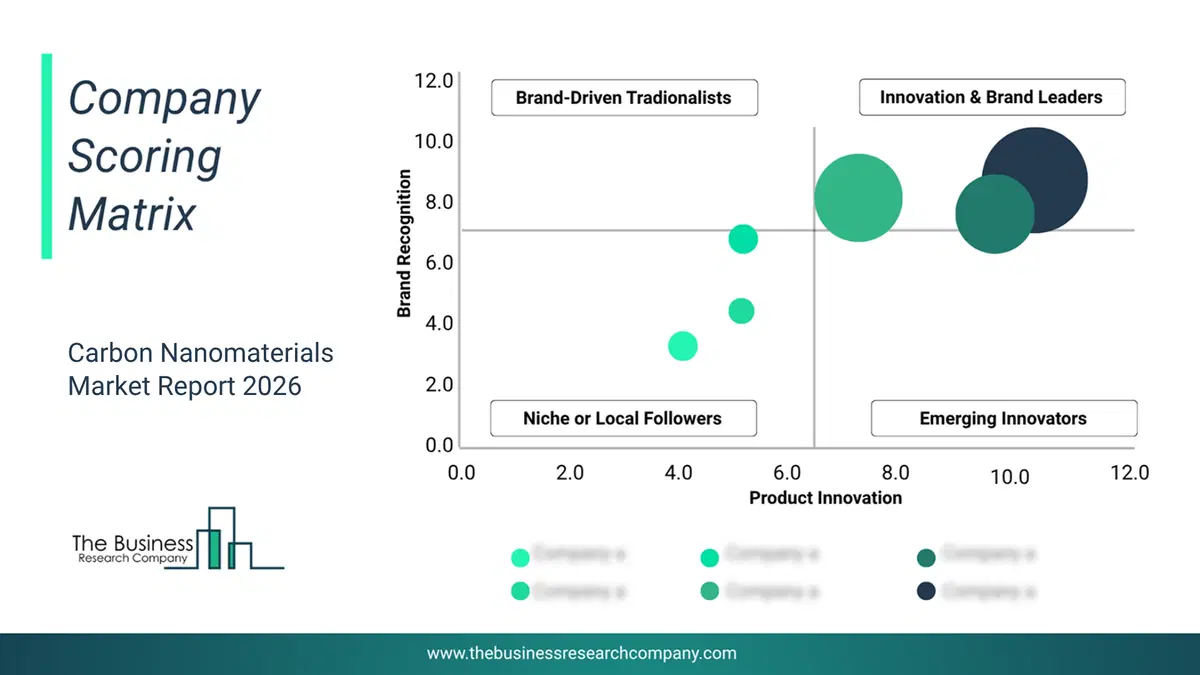
This chart maps companies by product innovation and brand strength, with bubble size indicating relative revenue, helping identify market leaders, challengers, and niche players. This is an illustrative chart; the full report provides a complete and accurate competitive analysis.
Global Carbon Nanomaterials Market Trends and Insights
Major companies operating in the carbon nanomaterials market are focusing on developing technological advancements such as single-walled carbon nanotube dispersions to enhance conductivity, energy density, and overall performance in high-performance batteries. Single-walled carbon nanotubes (SWCNTs) are cylindrical nanostructures composed of a single layer of carbon atoms arranged in a hexagonal lattice, providing exceptional electrical, thermal, and mechanical properties. For instance, in September 2024, OCSiAl, a Luxembourg-based nanotechnology company, launched a new carbon nanotube production facility in Serbia with an annual capacity of 3,000 metric tons of SWCNT dispersion. The facility strengthens its collaboration with ProLogium to support the latter's gigafactory project in Dunkirk, France, enabling the integration of OCSiAl’s nanotubes into advanced lithium ceramic batteries. This collaboration improves battery conductivity and energy density while meeting stringent safety standards, with mass production at ProLogium’s gigafactory expected to begin by early 2027, advancing innovation and sustainability in the electric vehicle market.What Are Latest Mergers And Acquisitions In The Carbon Nanomaterials Market?
In October 2023, Birla Carbon, an India-based manufacturer and supplier of carbon black, acquired Nanocyl S.A. for an undisclosed amount. With this acquisition, Birla Carbon hopes to increase its footprint in the battery materials needed for lithium-ion battery operation. Through the acquisition, Birla Carbon will have access to a variety of MWCNT solutions, which are used in EV batteries and support the evolution of battery materials for lithium-ion batteries by intending to become a major participant in the nascent nanotech industry. Nanocyl S.A. is a Belgium-based company that specializes in the production of carbon nanotubes.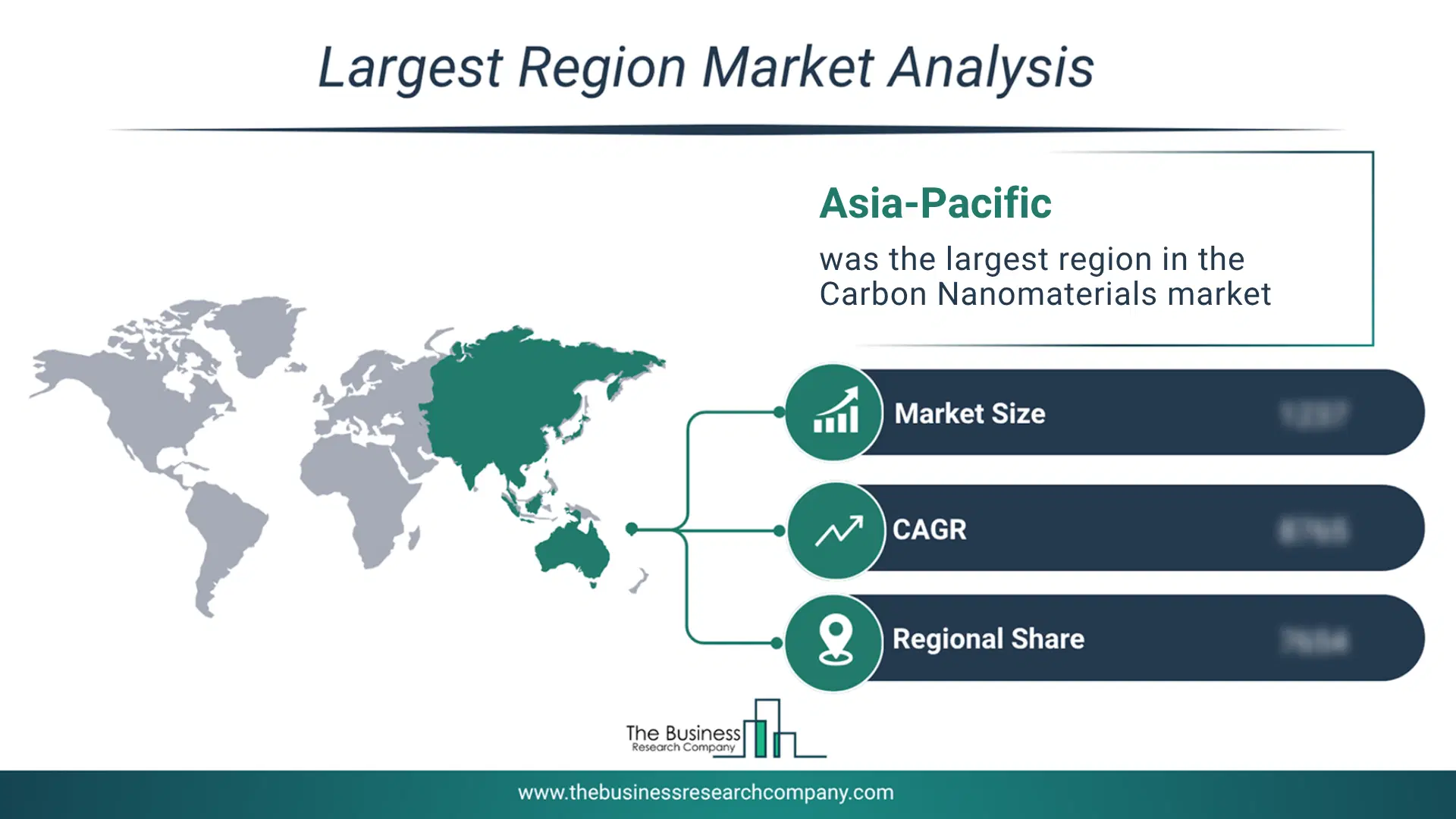
Regional Insights
Asia-Pacific was the largest region in the carbon nanomaterials market in 2025. The regions covered in this market report are Asia-Pacific, South East Asia, Western Europe, Eastern Europe, North America, South America, Middle East, Africa The countries covered in this market report are Australia, Brazil, China, France, Germany, India, Indonesia, Japan, Taiwan, Russia, South Korea, UK, USA, Canada, Italy, SpainWhat Defines the Carbon Nanomaterials Market?
The carbon nanomaterials market includes revenues earned by entities by providing services related to detection of hazardous compounds in food, pharmaceutical products, gene and drug delivery. The market value includes the value of related goods sold by the service provider or included within the service offering. Only goods and services traded between entities or sold to end consumers are included.How is Market Value Defined and Measured?
The market value is defined as the revenues that enterprises gain from the sale of goods and/or services within the specified market and geography through sales, grants, or donations in terms of the currency (in USD unless otherwise specified). The revenues for a specified geography are consumption values that are revenues generated by organizations in the specified geography within the market, irrespective of where they are produced. It does not include revenues from resales along the supply chain, either further along the supply chain or as part of other products.
This chart presents market attractiveness based on a quantitative evaluation of growth, competition, strategic alignment, and risk, offering a clear view of opportunity areas for decision-making. This chart is for illustrative purposes; the full report contains the complete analysis.

This chart highlights the Total Addressable Market (TAM) by estimating the maximum revenue opportunity using an assumption-driven approach, supporting strategic planning and opportunity sizing across markets. The chart is illustrative; the full report provides a more comprehensive analysis.
What Key Data and Analysis Are Included in the Carbon Nanomaterials Market Report 2026?
The carbon nanomaterials market research report is one of a series of new reports from The Business Research Company that provides market statistics, including industry global market size, regional shares, competitors with the market share, detailed market segments, market trends and opportunities, and any further data you may need to thrive in the carbon nanomaterials industry. The market research report delivers a complete perspective of everything you need, with an in-depth analysis of the current and future state of the industry.Carbon Nanomaterials Market Report Forecast Analysis
| Report Attribute | Details |
|---|---|
| Market Size Value In 2026 | $11.37 billion |
| Revenue Forecast In 2030 | $31.71 billion |
| Growth Rate | CAGR of 28.9% from 2026 to 2030 |
| Base Year For Estimation | 2025 |
| Actual Estimates/Historical Data | 2020-2025 |
| Forecast Period | 2026 - 2030 |
| Market Representation | Revenue in USD Billion and CAGR from 2026 to 2030 |
| Segments Covered | Type, Method, End User |
| Regional Scope | Asia-Pacific, Western Europe, Eastern Europe, North America, South America, Middle East, Africa |
| Country Scope | The countries covered in this market report are Australia, Brazil, China, France, Germany, India, Indonesia, Japan, Taiwan, Russia, South Korea, UK, USA, Canada, Italy, Spain |
| Key Companies Profiled | Arkema S.A., Cabot Corporation, Showa Denko K.K., OCSiAl Group, Nanocyl S.A., Haydale Graphene Industries plc, Graphenea S.A., XG Sciences, Inc., Nanosys, Inc., NanoXplore Inc., Toray Industries, Inc., Mitsubishi Chemical Group Corporation, LG Chem Ltd., Saudi Basic Industries Corporation (SABIC), BASF SE, Evonik Industries AG, Tokyo Chemical Industry Co., Ltd. (TCI Chemicals), Merck KGaA, ZEON Corporation, Thomas Swan & Co. Ltd. |
| Customization Scope | Request for Customization |
| Pricing And Purchase Options | Explore Purchase Options |