
Carbon-Smart Municipal Bond Market Report 2026
Global Outlook – By Bond Type (General Obligation Bonds, Revenue Bonds, Green Bonds, Social Bonds, Other Bond Types), By Investor Type (Institutional Investors, Retail Investors, Other Investor Types), By Issuer (State Governments, Local Governments, Municipal Agencies, Other Issuers), By Application (Infrastructure Development, Renewable Energy Projects, Sustainable Transportation, Water And Waste Management, Other Applications) – Market Size, Trends, Strategies, and Forecast to 2030
Carbon-Smart Municipal Bond Market Overview
• Carbon-Smart Municipal Bond market size has reached to $136.72 billion in 2025 • Expected to grow to $275.27 billion in 2030 at a compound annual growth rate (CAGR) of 15% • Growth Driver: Rising Demand For Renewable Energy Driving The Market Growth Due To Growing Focus On Decarbonization And Sustainable Infrastructure Development • Market Trend: Advancing Sustainable Urban Infrastructure Through Certified Green Bonds • North America was the largest region in 2025 and Asia-Pacific is the fastest growing region.Market Gains By 2030 – Top Opportunities By Segment
Market Gain identifies the most promising market opportunities by highlighting the segments or products expected to generate the highest incremental revenue growth over the next five years.
What Is Covered Under Carbon-Smart Municipal Bond Market?
A carbon-smart municipal bond refers to a type of sustainable fixed-income instrument issued by municipalities to finance projects that reduce carbon emissions, enhance climate resilience, or promote environmental sustainability. These bonds direct proceeds toward green initiatives such as renewable energy infrastructure, energy-efficient public buildings, low-carbon transportation, and carbon capture or offset programs. The main bond types of carbon-smart municipal bonds are general obligation bonds, revenue bonds, green bonds, social bonds, and others. General obligation bonds are debt instruments backed by the full faith and credit of the issuing government, secured through tax revenues. It caters to various investor types, such as institutional investors, retail investors, and others, and involves issuers, including state governments, local governments, municipal agencies, and others. These bonds are applied across areas such as infrastructure development, renewable energy projects, sustainable transportation, water and waste management, and others.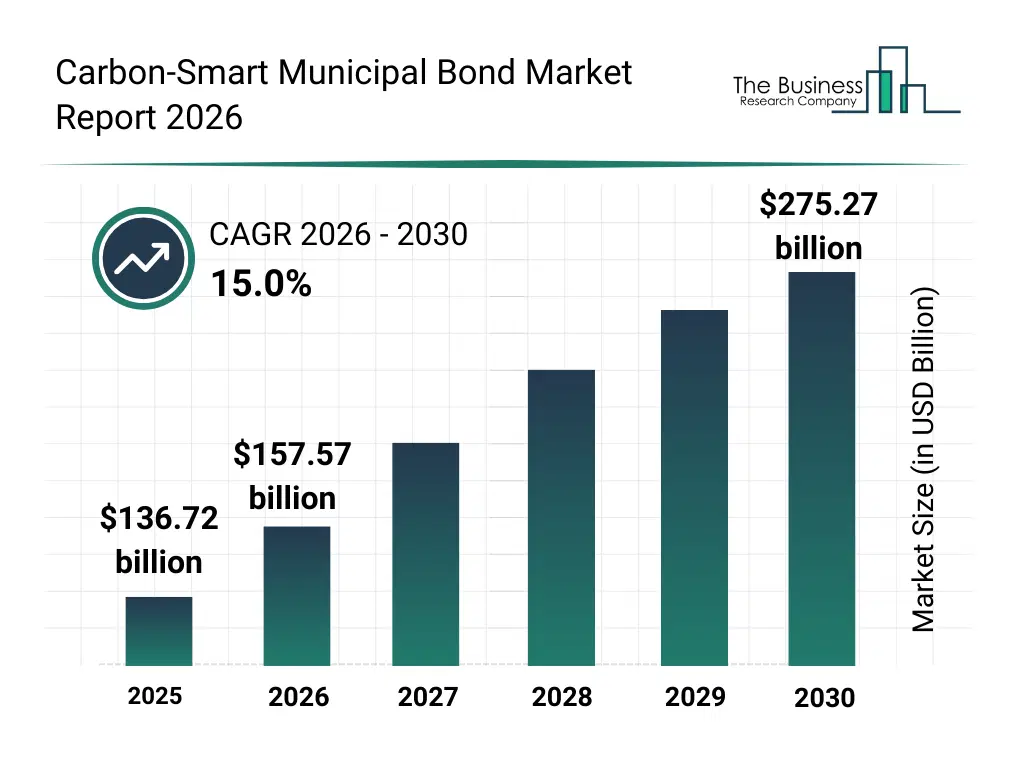
What Is The Carbon-Smart Municipal Bond Market Size and Share 2026?
The carbon-smart municipal bond market size has grown rapidly in recent years. It will grow from $136.72 billion in 2025 to $157.57 billion in 2026 at a compound annual growth rate (CAGR) of 15.2%. The growth in the historic period can be attributed to growing municipal funding needs for sustainable infrastructure, early adoption of green bond frameworks, increasing investor interest in esg instruments, expansion of renewable energy projects, development of sustainability reporting standards.What Is The Carbon-Smart Municipal Bond Market Growth Forecast?
The carbon-smart municipal bond market size is expected to see rapid growth in the next few years. It will grow to $275.27 billion in 2030 at a compound annual growth rate (CAGR) of 15.0%. The growth in the forecast period can be attributed to increasing climate adaptation investments by municipalities, rising regulatory support for green finance, growing participation of institutional investors, expansion of low-carbon public infrastructure projects, increasing use of impact-linked bond structures. Major trends in the forecast period include expansion of climate-focused municipal bond issuances, growing integration of esg metrics in bond structuring, rising demand for transparent impact reporting, increased use of digital bond issuance platforms, enhanced focus on climate-resilient infrastructure financing.
Global Carbon-Smart Municipal Bond Market Segmentation
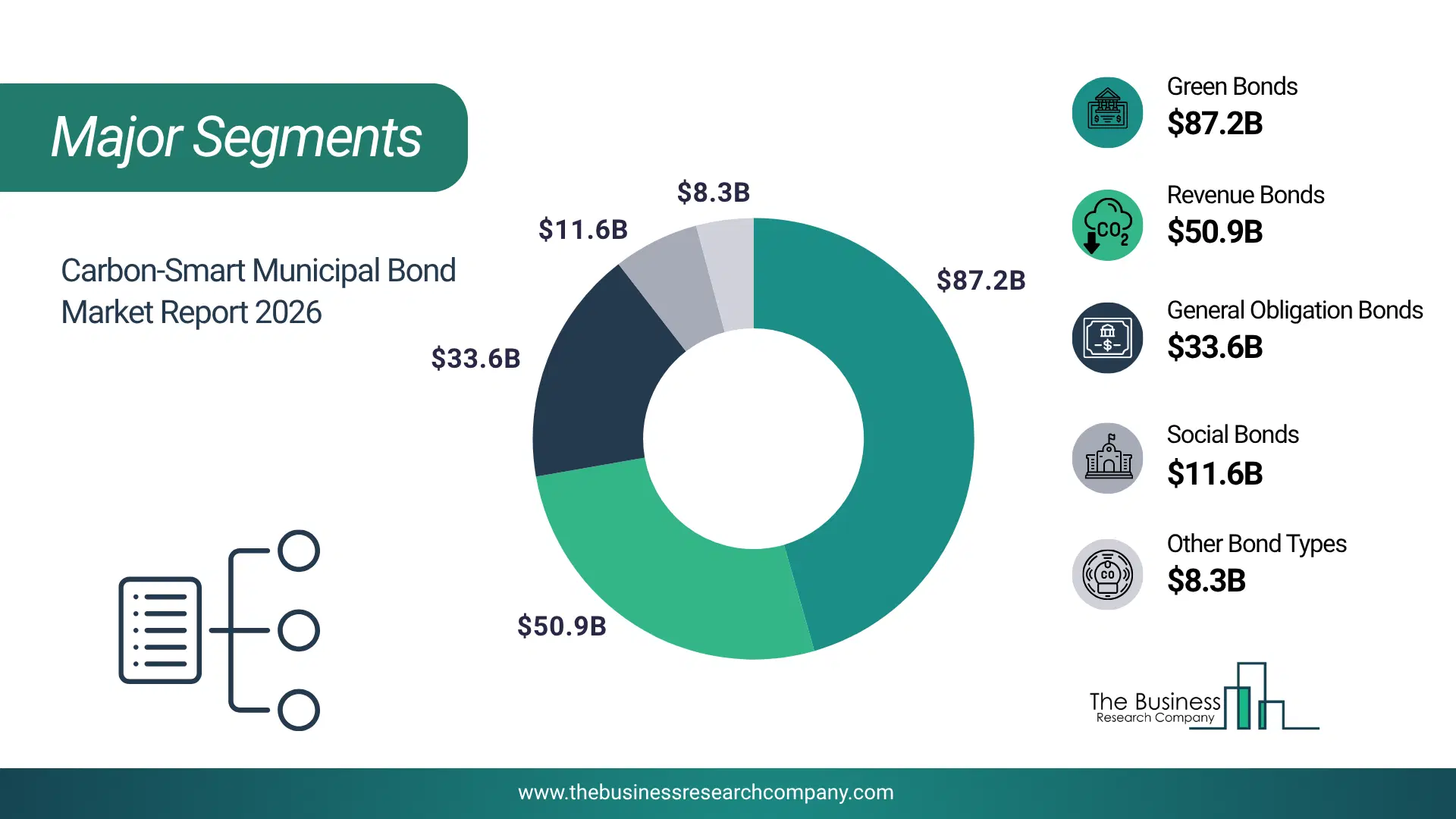
1) By Bond Type: General Obligation Bonds, Revenue Bonds, Green Bonds, Social Bonds, Other Bond Types 2) By Investor Type: Institutional Investors, Retail Investors, Other Investor Types 3) By Issuer: State Governments, Local Governments, Municipal Agencies, Other Issuers 4) By Application: Infrastructure Development, Renewable Energy Projects, Sustainable Transportation, Water And Waste Management, Other Applications Subsegments: 1) By General Obligation Bonds: Short-Term General Obligation Bonds, Long-Term General Obligation Bonds, Tax-Exempt General Obligation Bonds 2) By Revenue Bonds: Utility Revenue Bonds, Transportation Revenue Bonds, Healthcare Revenue Bonds 3) By Green Bonds: Climate Adaptation Bonds, Renewable Energy Bonds, Energy Efficiency Bonds 4) By Social Bonds: Affordable Housing Bonds, Community Development Bonds, Healthcare And Education Bonds 5) By Other Bond Types: Hybrid Bonds, Catastrophe Bonds, Public-Private Partnership Bonds The top segments in the carbon-smart municipal bond market will be: • Green Bonds will reach $87.15 billion by 2030. • Revenue Bonds will reach $50.87 billion by 2030. • General Obligation Bonds will reach $33.54 billion by 2030. • Social Bonds will reach $11.55 billion by 2030. • Other Bond Types will reach $8.2 billion by 2030.What Are The Drivers Of The Carbon-Smart Municipal Bond Market?
The increasing demand for renewable energy is expected to propel the growth of the carbon-smart municipal bond market going forward. Investment in renewable energy projects refers to the funding of energy initiatives that harness sustainable resources such as solar, wind, hydro, and biomass to promote clean power generation and long-term environmental and financial benefits. The demand for renewable energy is increasing as countries and corporations pursue decarbonization goals to reduce carbon emissions and transition toward sustainable, low-carbon energy sources. Carbon-smart municipal bonds support renewable energy by channeling investment directly into sustainable infrastructure projects such as solar, wind, and clean energy systems, enabling municipalities to finance low-carbon transitions, reduce greenhouse gas emissions, and promote long-term energy resilience while offering investors measurable environmental and financial returns. For instance, in December 2024, according to the Eurostat, a Luxembourg-based government agency, in 2023, renewable energy represented 24.5% of total energy consumption in the EU, up from 23.0% in 2022. Therefore, the increasing investment in renewable energy projects is driving the growth of the carbon-smart municipal bond industry. The increasing public awareness on climate change is expected to propel the growth of the carbon-smart municipal bond market going forward. Public awareness on climate change refers to the understanding and recognition among people about the causes, impacts, and solutions to global climate issues, influencing their attitudes and actions toward environmental sustainability. The increasing public awareness on climate change is due to a growing recognition of its visible effects on daily life and the urgent need for collective action to protect the environment and ensure a sustainable future. Carbon-smart municipal bonds support climate change mitigation and adaptation by financing projects that reduce greenhouse gas emissions, enhance energy efficiency, and build climate-resilient infrastructure, enabling communities to transition toward a low-carbon and sustainable future. For instance, in July 2024, according to the Gov. UK, a UK-based government organization, the UK government is aiming to reduce UK greenhouse gas emissions to ‘net zero’ by 2050. Additionally, awareness of Net Zero was greater among individuals aged 45 and above (ranging from 93% to 95%) than among those under 45 (ranging from 87% to 89%). Therefore, the increasing public awareness on climate change drives the carbon-smart municipal bond industry.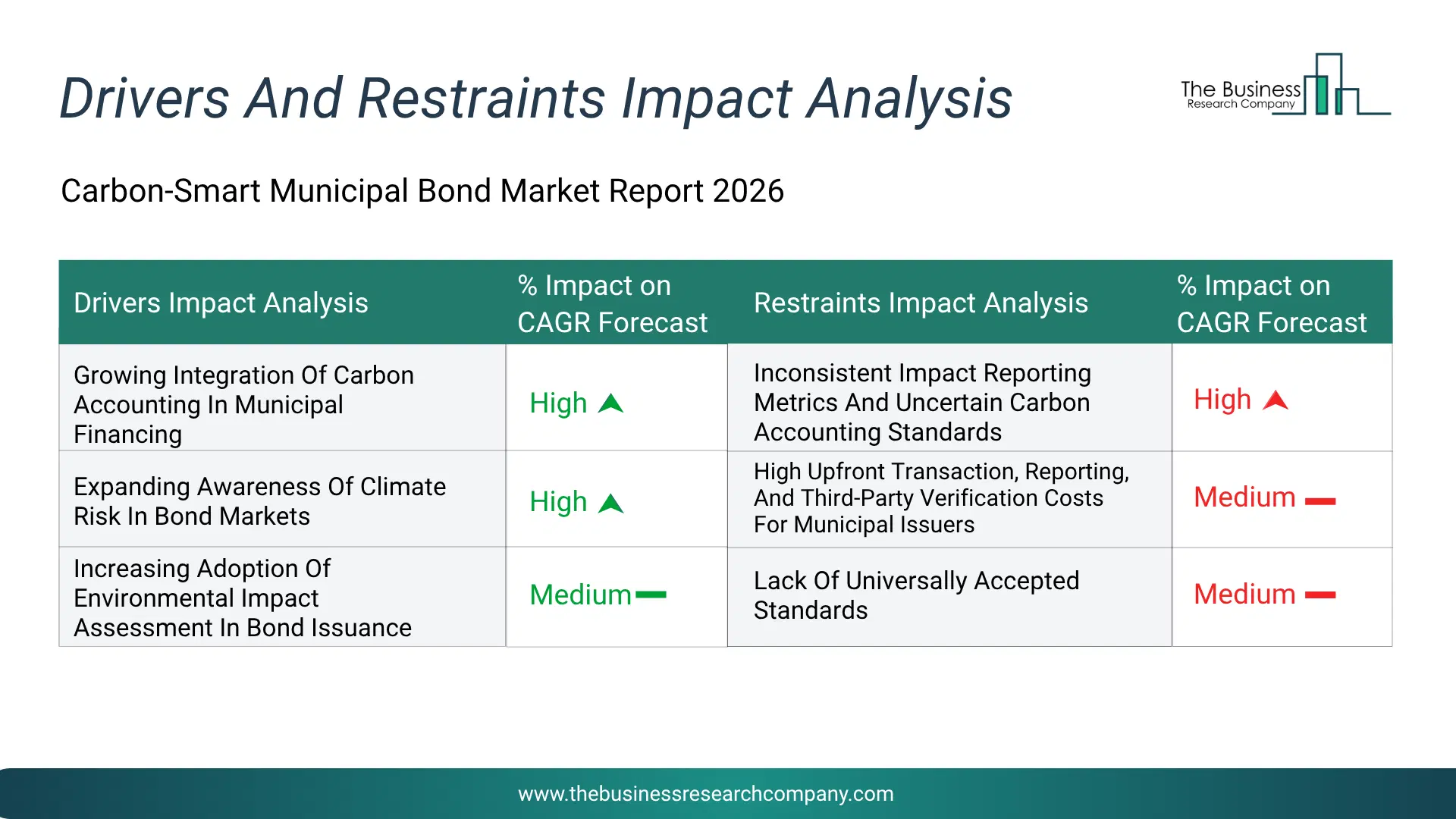
Infographic Chart Showing Key Market Drivers Analysis And Restraints For Carbon-Smart Municipal Bond Market
The chart presents an impact analysis of key drivers and restraints, quantifying their relative influence on the market's growth rate and helping assess the balance between growth enablers and limiting factors. This chart offers a high-level perspective; the full report contains more detailed insights.
How Will The Drivers Impact Growth In The Global Carbon-Smart Municipal Bond Market?
• Growing Integration Of Carbon Accounting In Municipal Financing (High) – During the forecast period, the growing integration of carbon accounting in municipal financing is expected to be a key driver of the carbon -smart municipal bond market by 2030. The adoption of standardized carbon measurement frameworks enables governments to track, report, and validate the emissions impact of infrastructure projects. This improves transparency and comparability, strengthening investor confidence in climate -aligned municipal investments. By quantifying carbon reduction outcomes, municipalities can better demonstrate the environmental value of funded projects, supporting increased bond issuance. Additionally, carbon accounting supports alignment with regulatory requirements and global climate targets while reducing concerns around greenwashing through credible impact reporting. • Expanding Awareness Of Climate Risk In Bond Markets (High) – During the forecast period, the expanding awareness of climate risk in bond markets is expected to significantly drive the carbon-smart municipal bond market by 2030. Investors are increasingly recognizing the financial implications of climate-related risks, such as extreme weather events and policy transitions, on municipal assets and credit profiles. This shift is encouraging greater demand for investment instruments that incorporate resilience and low-carbon strategies. In response, municipal issuers are integrating climate risk assessments and carbon-related disclosures into bond frameworks to enhance credibility and attract capital. At the same time, credit rating agencies and asset managers are embedding climate considerations into their evaluation processes, reinforcing market adoption. • Increasing Adoption Of Environmental Impact Assessment In Bond Issuance (Medium) – During the forecast period, the increasing adoption of environmental impact assessment (eia) in bond issuance is expected to act as a major growth catalyst for the carbon-smart municipal bond market by 2030. The use of eia frameworks enables municipalities to evaluate environmental outcomes, carbon reduction potential, and climate resilience prior to project financing. This strengthens the credibility and transparency of bond issuances, making them more attractive to sustainability-focused investors. Standardized assessment practices also improve disclosure quality and help address greenwashing concerns. As regulatory expectations and investor demand for measurable environmental outcomes continue to rise, eia-supported bonds are gaining broader acceptance.How Will The Restraints Impact Growth In The Global Carbon-Smart Municipal Bond Market?
• Inconsistent Impact Reporting Metrics And Uncertain Carbon Accounting Standards (High) – During the forecast period, the inconsistent impact reporting metrics and uncertain carbon accounting standards restrain the carbon-smart municipal bond market by making it difficult for investors to compare environmental outcomes across issuers and projects. The absence of uniform measurement frameworks weakens confidence in reported carbon-reduction claims and increases concerns around greenwashing. Municipalities often face higher costs and longer timelines due to repeated data collection, verification, and methodological adjustments. Unclear accounting standards also limit the ability of rating agencies and portfolio managers to integrate climate impact consistently into risk and valuation models. This reduces secondary market liquidity and discourages broader institutional participation. As a result, market scalability and issuance momentum remain constrained. • High Upfront Transaction, Reporting, And Third-Party Verification Costs For Municipal Issuers (Medium) – During the forecast period, the high upfront transaction, reporting, and third-party verification costs act as a major restraint for the carbon-smart municipal bond market by increasing the financial and administrative burden on municipal issuers. Municipalities must invest in specialized advisory services, sustainability assessments, carbon impact measurement, and external verification to meet investor and regulatory expectations. These additional costs can significantly raise issuance expenses compared to conventional municipal bonds, reducing the economic attractiveness of carbon-smart bonds. Smaller and fiscally constrained local governments are particularly affected, as limited budgets restrict their ability to absorb these upfront expenditures. As a result, fewer municipalities participate in the market, limiting issuance volumes and slowing market expansion. The cost barrier ultimately constrains the scalability and broader adoption of carbon-smart municipal bonds. • Lack Of Universally Accepted Standards (Medium) – During the forecast period, the the lack of universally accepted standards acts as a major restraint for the carbon-smart municipal bond market by creating uncertainty around what qualifies as a truly carbon-smart or green project. Without common definitions or taxonomies, issuers face difficulty structuring bonds that are clearly aligned with investor expectations, increasing reliance on costly external advisory and certification services. Investors, in turn, struggle to compare bonds across regions and issuers, reducing confidence and slowing capital allocation. Inconsistent standards also heighten the risk of greenwashing, which can damage market credibility. Regulatory fragmentation across jurisdictions further complicates compliance and disclosure requirements. Together, these factors limit market scalability, cross-border investment, and overall adoption of carbon-smart municipal bonds.Key Players In The Global Carbon-Smart Municipal Bond Market
Major companies operating in the carbon-smart municipal bond market are Bank of America Corporation, Fannie Mae, HSBC Holdings plc, Itaú Unibanco Holding S.A., Deutsche Bank Aktiengesellschaft, Air Liquide S.A., Southern Company, Constellation Energy Corporation, National Thermal Power Corporation (NTPC) Limited, Sempra Energy, Koninklijke KPN N.V., Indian Railways Finance Corporation, Adani Green Energy Limited, African Development Bank Group, Hannon Armstrong Sustainable Infrastructure Capital Inc., Pimpri Chinchwad Municipal Corporation, Etihad Rail, Surat Municipal Corporation, Avaada Energy Private Limited, Vadodara Municipal Corporation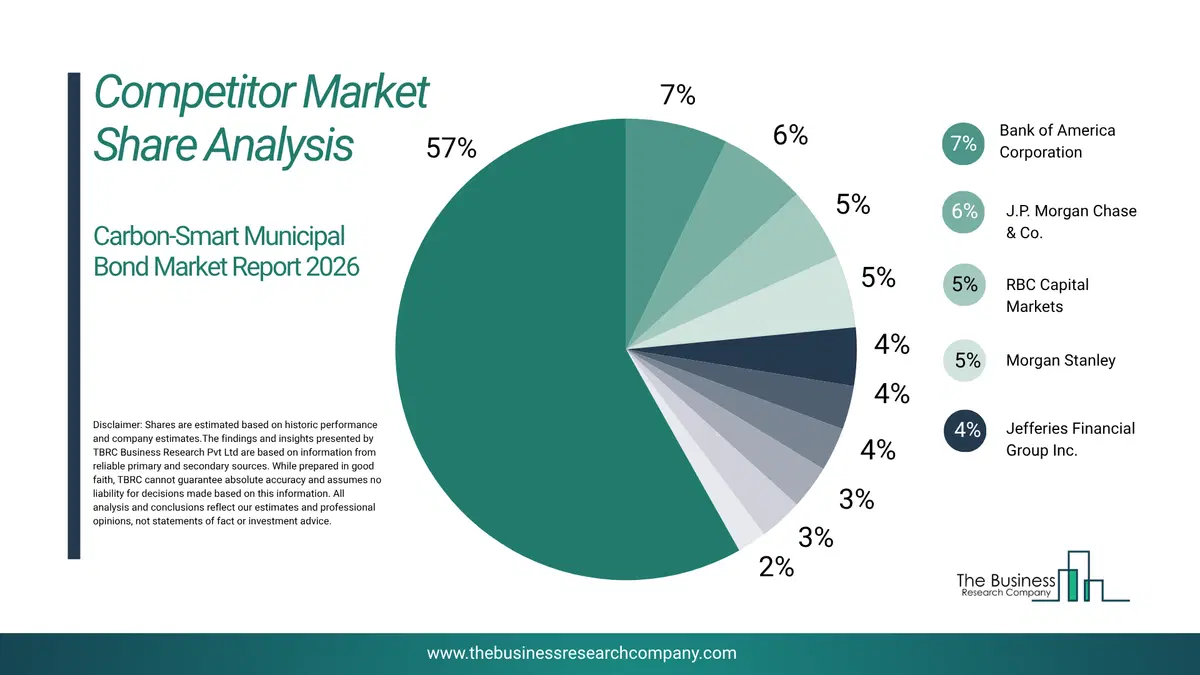
This chart is for illustrative purposes; the full report includes a detailed competitor analysis and comprehensive overview of the top 10 companies in the market.
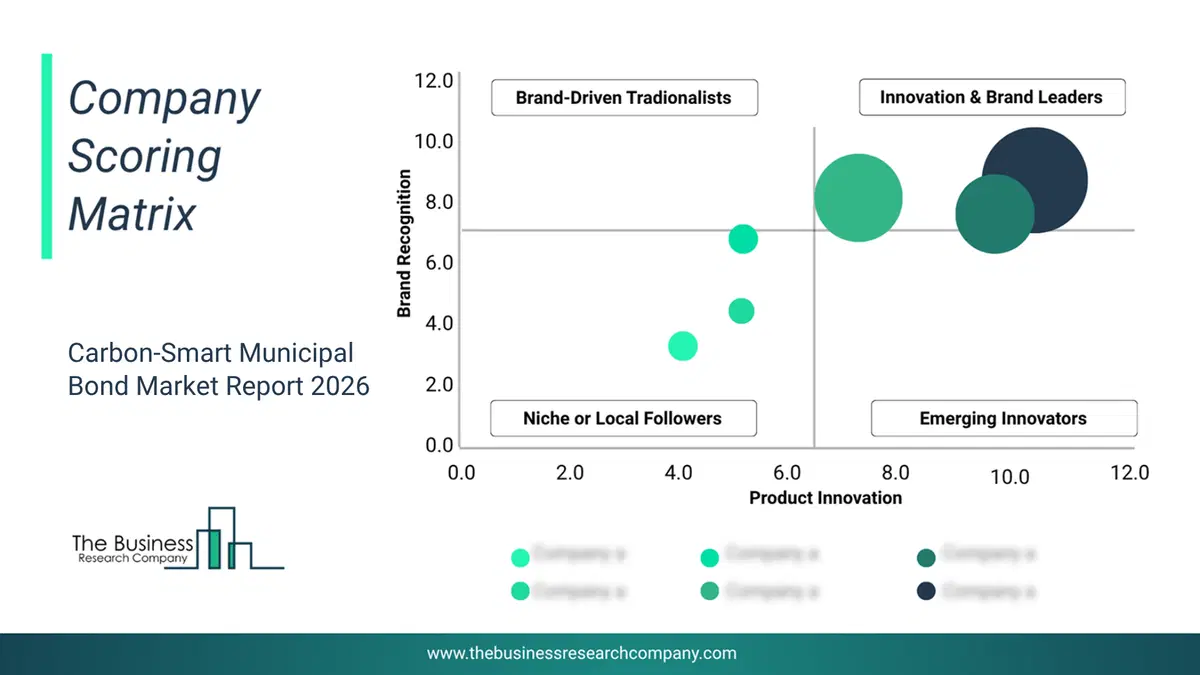
This chart maps companies by product innovation and brand strength, with bubble size indicating relative revenue, helping identify market leaders, challengers, and niche players. This is an illustrative chart; the full report provides a complete and accurate competitive analysis.
Global Carbon-Smart Municipal Bond Market Trends and Insights
Major companies operating in the carbon-smart municipal bond market are focusing on developing innovative solutions such as climate bonds standard certification to enhance transparency, attract environmentally conscious investors, and promote sustainable infrastructure financing. Climate bonds standard certification refers to a rigorous verification framework that ensures bonds are funding projects with clear, measurable, and credible environmental benefits, particularly in reducing carbon emissions and promoting climate-resilient infrastructure. For instance, in March 2024, the Vadodara Municipal Corporation, an India-based governing body, issued Asia's first certified green municipal bond to finance sustainable urban infrastructure projects. It enables financing of sustainable water infrastructure projects, promoting environmental benefits such as pollution reduction and water conservation. This bond attracts eco-conscious investors, ensuring cost-effective capital and greater transparency due to certification standards. Its purpose is to support climate-resilient urban infrastructure, aligning with global climate goals and improving public health and resource efficiency.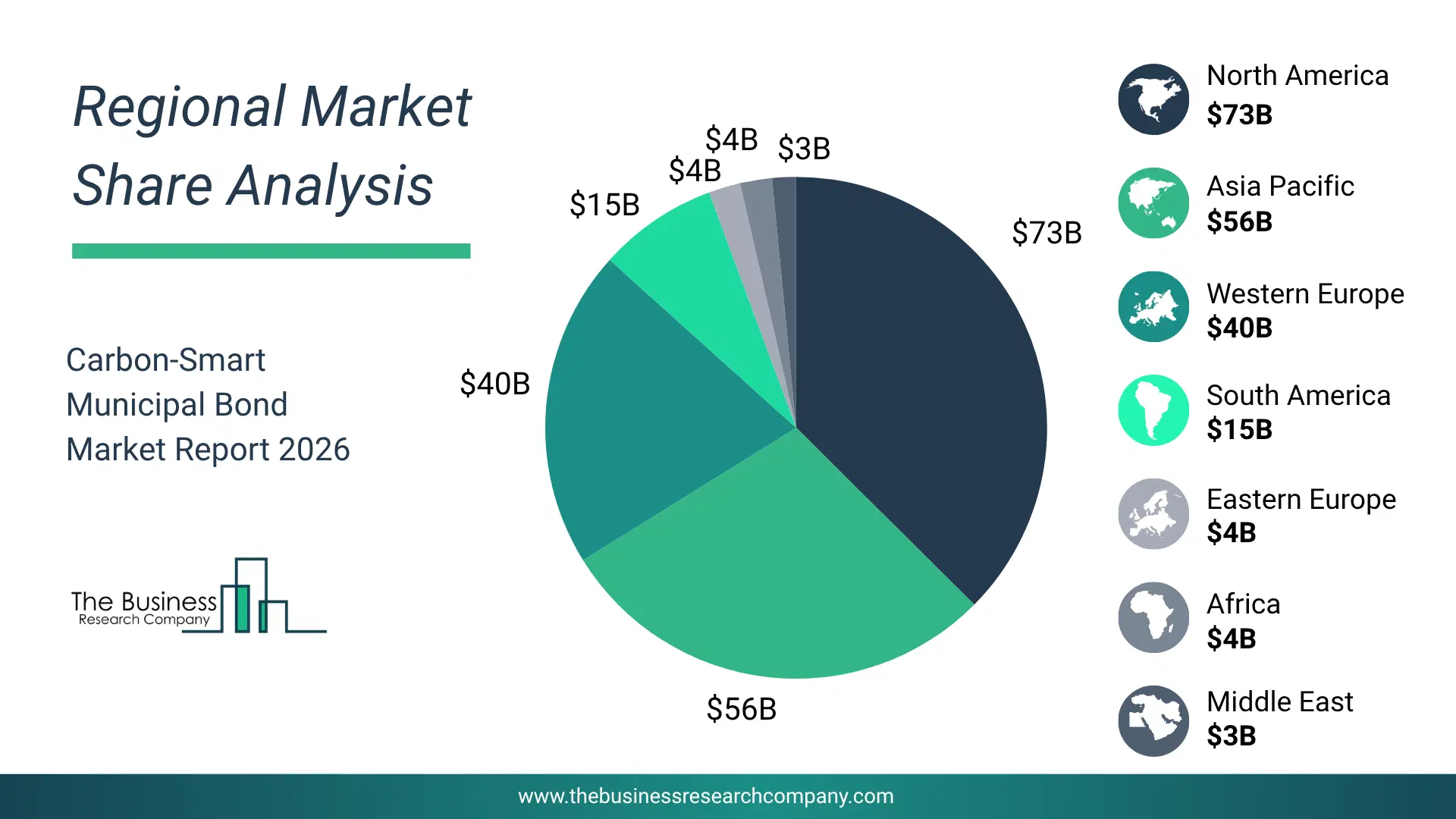
Regional Outlook
North America was the largest region in the carbon-smart municipal bond market in 2025. Asia-Pacific is expected to be the fastest-growing region in the forecast period. The regions covered in this market report are Asia-Pacific, South East Asia, Western Europe, Eastern Europe, North America, South America, Middle East, Africa. The countries covered in this market report are Australia, Brazil, China, France, Germany, India, Indonesia, Japan, Taiwan, Russia, South Korea, UK, USA, Canada, Italy, Spain.What Defines the Carbon-Smart Municipal Bond Market?
The carbon-smart municipal bond market includes revenues earned by entities through environmental impact assessment services, green certification and compliance services, and investor transparency and reporting services. The market value includes the value of related goods sold by the service provider or included within the service offering. Only goods and services traded between entities or sold to end consumers are included.How is Market Value Defined and Measured?
The market value is defined as the revenues that enterprises gain from the sale of goods and/or services within the specified market and geography through sales, grants, or donations in terms of the currency (in USD unless otherwise specified). The revenues for a specified geography are consumption values that are revenues generated by organizations in the specified geography within the market, irrespective of where they are produced. It does not include revenues from resales along the supply chain, either further along the supply chain or as part of other products.
This chart presents market attractiveness based on a quantitative evaluation of growth, competition, strategic alignment, and risk, offering a clear view of opportunity areas for decision-making. This chart is for illustrative purposes; the full report contains the complete analysis.

This chart highlights the Total Addressable Market (TAM) by estimating the maximum revenue opportunity using an assumption-driven approach, supporting strategic planning and opportunity sizing across markets. The chart is illustrative; the full report provides a more comprehensive analysis.
What Key Data and Analysis Are Included in the Carbon-Smart Municipal Bond Market Report 2026?
The carbon-smart municipal bond market research report is one of a series of new reports from The Business Research Company that provides market statistics, including Market Report 2026?global market size, regional shares, competitors with the market share, detailed market segments, market trends and opportunities, and any further data you may need to thrive in the carbon-smart municipal bond Market Report 2026? The market research report delivers a complete perspective of everything you need, with an in-depth analysis of the current and future state of the Market Report 2026?Carbon-Smart Municipal Bond Market Report Forecast Analysis
| Report Attribute | Details |
|---|---|
| Market Size Value In 2026 | $157.57 billion |
| Revenue Forecast In 2030 | $275.27 billion |
| Growth Rate | CAGR of 15% from 2026 to 2030 |
| Base Year For Estimation | 2025 |
| Actual Estimates/Historical Data | 2020-2025 |
| Forecast Period | 2026 - 2030 |
| Market Representation | Revenue in USD Billion and CAGR from 2026 to 2030 |
| Segments Covered | Bond Type, Investor Type, Issuer, Application |
| Regional Scope | Asia-Pacific, Western Europe, Eastern Europe, North America, South America, Middle East, Africa |
| Country Scope | The countries covered in the report are Australia, Brazil, China, France, Germany, India, ... |
| Key Companies Profiled | Bank of America Corporation, Fannie Mae, HSBC Holdings plc, Itaú Unibanco Holding S.A., Deutsche Bank Aktiengesellschaft, Air Liquide S.A., Southern Company, Constellation Energy Corporation, National Thermal Power Corporation (NTPC) Limited, Sempra Energy, Koninklijke KPN N.V., Indian Railways Finance Corporation, Adani Green Energy Limited, African Development Bank Group, Hannon Armstrong Sustainable Infrastructure Capital Inc., Pimpri Chinchwad Municipal Corporation, Etihad Rail, Surat Municipal Corporation, Avaada Energy Private Limited, Vadodara Municipal Corporation |
| Customization Scope | Request for Customization |
| Pricing And Purchase Options | Explore Purchase Options |