
Carbonated Beverage Market Report 2026
Global Outlook – By Product (Carbonated Soft Drinks, Carbonated Water, Carbonated Sports And Energy Drinks, Other Products), By Flavor (Cola, Fruit Based, Other Flavors), By Packaging Type (Cans, Bottles, Polyethylene Terephthalate (PET) Bottles), By Distribution Channel (Hypermarkets And Supermarkets, Convenience Stores, Food Service Outlets, Transport Terminals, Online Stores And Direct-To-Consumer (D2C)) – Market Size, Trends, Strategies, and Forecast to 2030
Carbonated Beverage Market Overview
• Carbonated Beverage market size has reached to $493.75 billion in 2025 • Expected to grow to $653.19 billion in 2030 at a compound annual growth rate (CAGR) of 5.7% • Growth Driver: Rising Demand For Processed Food Driving The Growth Of The Market Due To Increasing Preference For Convenient Consumption • Market Trend: Innovative Product Launches Driving Growth In The Market Through Unique Flavors And Health-Focused Formulations • North America was the largest region in 2025 and Asia-Pacific is the fastest growing region.What Is Covered Under Carbonated Beverage Market?
Carbonated beverage refers to a drink that contains dissolved carbon dioxide gas, which creates bubbles or fizz when released. The carbonation process gives the beverage a tingling sensation and enhances the sensory experience, making it more refreshing. This gas is typically infused under pressure during manufacturing and helps improve shelf life and taste appeal. The main product types of carbonated beverages include carbonated soft drinks, carbonated water, carbonated sports and energy drinks, and others. Carbonated soft drinks are non-alcoholic beverages that contain dissolved carbon dioxide gas, sweeteners, and flavorings, resulting in a fizzy and refreshing drink. The flavor includes cola, fruit based, and other flavors, and packaging types include cans, bottles, and polyethylene terephthalate (PET) bottles. These products are distributed through various distribution channels such as hypermarkets and supermarkets, convenience stores, food service outlets, transport terminals, and online stores or direct-to-consumer (D2C) platforms.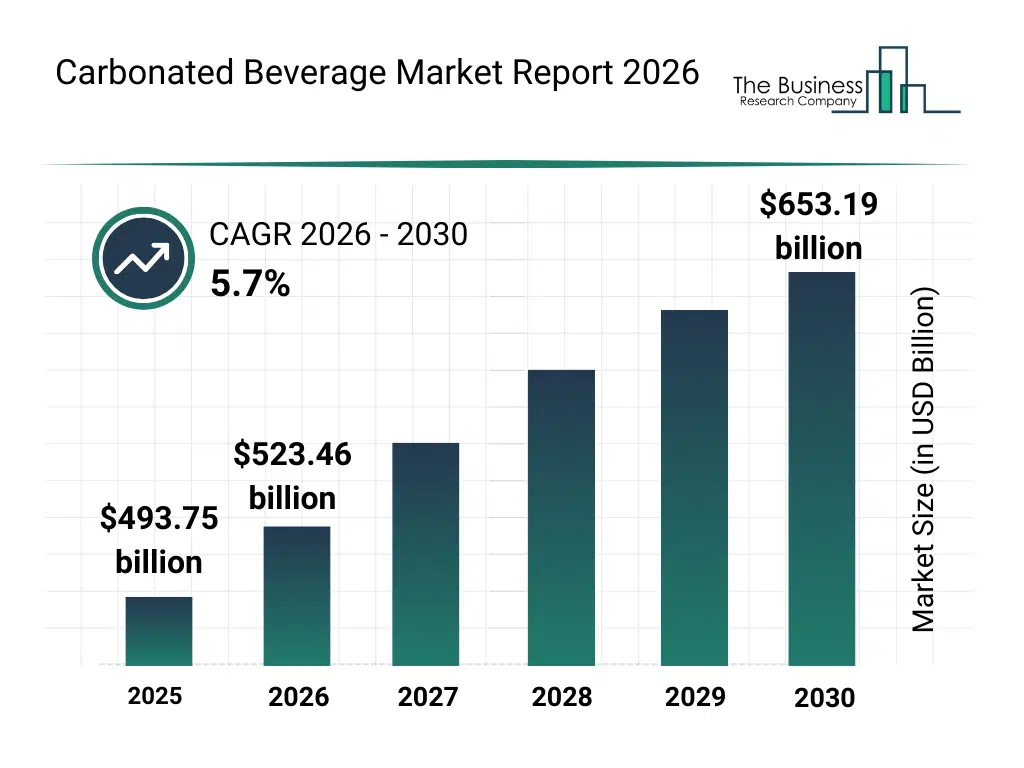
What Is The Carbonated Beverage Market Size and Share 2026?
The carbonated beverage market size has grown strongly in recent years. It will grow from $493.75 billion in 2025 to $523.46 billion in 2026 at a compound annual growth rate (CAGR) of 6.0%. The growth in the historic period can be attributed to expansion of mass-market soft drink consumption, strong brand-led beverage marketing, growth of retail beverage distribution networks, widespread adoption of PET bottling, increasing urban consumer demand.What Is The Carbonated Beverage Market Growth Forecast?
The carbonated beverage market size is expected to see strong growth in the next few years. It will grow to $653.19 billion in 2030 at a compound annual growth rate (CAGR) of 5.7%. The growth in the forecast period can be attributed to rising health-conscious beverage preferences, expansion of functional and fortified carbonated drinks, growing investments in sustainable packaging, increasing penetration of online beverage sales, demand for premium and artisanal carbonated beverages. Major trends in the forecast period include growing demand for low-sugar carbonated drinks, expansion of flavored and functional carbonated beverages, rising popularity of premium sparkling water, increasing focus on sustainable packaging formats, growth of direct-to-consumer beverage channels.
Global Carbonated Beverage Market Segmentation
1) By Product: Carbonated Soft Drinks, Carbonated Water, Carbonated Sports And Energy Drinks, Other Products 2) By Flavor: Cola, Fruit Based, Other Flavors 3) By Packaging Type: Cans, Bottles, Polyethylene Terephthalate (PET) Bottles 4) By Distribution Channel: Hypermarkets And Supermarkets, Convenience Stores, Food Service Outlets, Transport Terminals, Online Stores And Direct-To-Consumer (D2C) Subsegments: 1) By Carbonated Soft Drinks: Cola-Based Drinks, Citrus-Based Drinks, Fruit-Flavored Drinks, Root Beer, Ginger Ale 2) By Carbonated Water: Flavored Carbonated Water, Unflavored Carbonated Water, Tonic Water, Club Soda, Seltzer Water 3) By Carbonated Sports And Energy Drinks: Caffeinated Energy Drinks, Non-Caffeinated Energy Drinks, Isotonic Sports Drinks, Hypotonic Sports Drinks, Hypertonic Sports Drinks 4) By Other Products: Carbonated Tea-Based Beverages, Carbonated Coffee-Based Beverages, Alcoholic Carbonated Mixers, Fermented Carbonated BeveragesWhat Is The Driver Of The Carbonated Beverage Market?
The growing demand for processed food and beverage products is expected to propel the growth of the carbonated beverage market going forward. Processed food and beverages refer to products that have been modified from their original form through physical or chemical methods to improve shelf life, taste, or convenience. The demand for processed food and beverages is growing as busy urban lifestyles drive consumers to seek quick, convenient meal options that require minimal preparation. Carbonated beverages complement processed food and beverage offerings by providing convenient, ready-to-drink options that align with the on-the-go consumption habits of modern consumers. For instance, in July 2025, according to the Agriculture and Agri-Food Department Canada, a Canada-based government department, in 2024, the food and beverage processing sector remained Canada’s largest manufacturing industry by production value, generating $173.4 billion in goods. This represented 20.3% of all manufacturing sales and contributed 1.6% to the national GDP. Exports of processed food and beverage products reached a record $59.8 billion, an increase of 3.8% from 2023, and accounted for 34.5% of the industry’s total production value. Therefore, the rising demand for processed food and beverage products is driving the growth of the carbonated beverage industry.Key Players In The Global Carbonated Beverage Market
Major companies operating in the carbonated beverage market are Nestlé S.A, PepsiCo Inc., The Coca-Cola Company, Danone S.A., The Kraft Heinz Company, Suntory Holdings Limited, Asahi Group Holdings Ltd., Keurig Dr Pepper Inc., Red Bull GmbH, Refresco Group, Monster Energy Company, ANADOLU GRUBU A.Ş., Döhler GmbH, Britvic plc, National Beverage Corp., AriZona Beverages USA LLC, Parle Agro Private Limited, A.G. Barr plc, F&N Foods Pte Ltd, Reed’s Inc., Jones Soda Co., Cott Corporation, GreenFizz Beverages Pvt Ltd.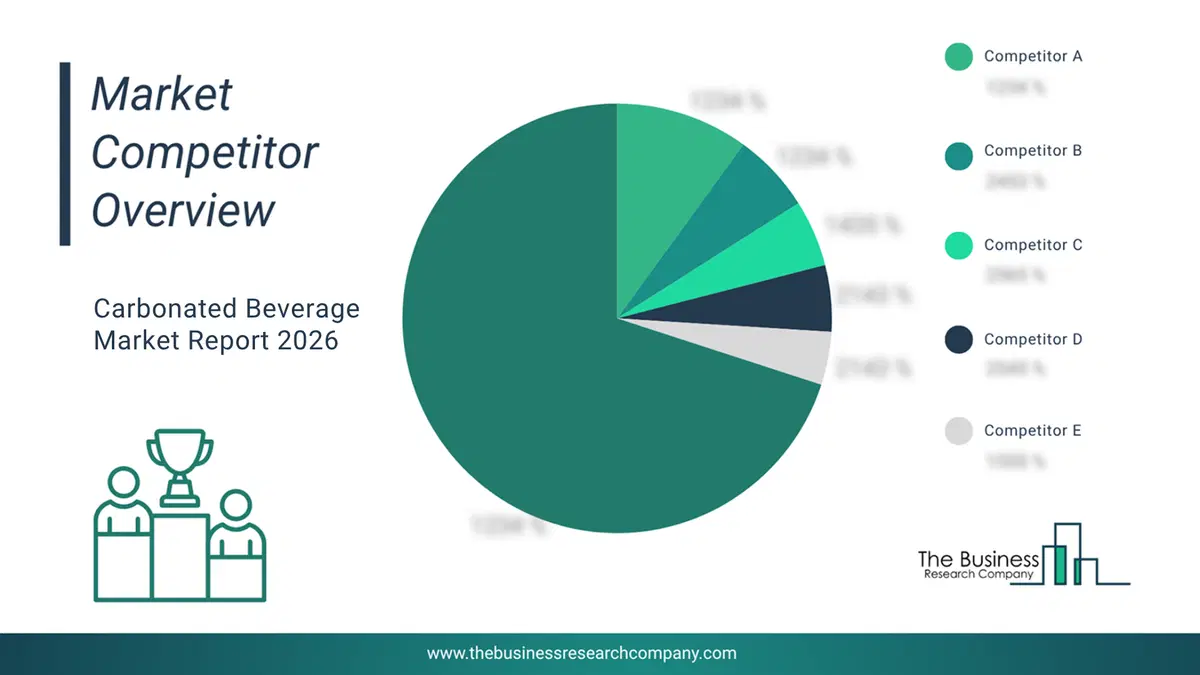
This chart is for illustrative purposes; the full report includes a detailed competitor analysis and comprehensive overview of the top 10 companies in the market.
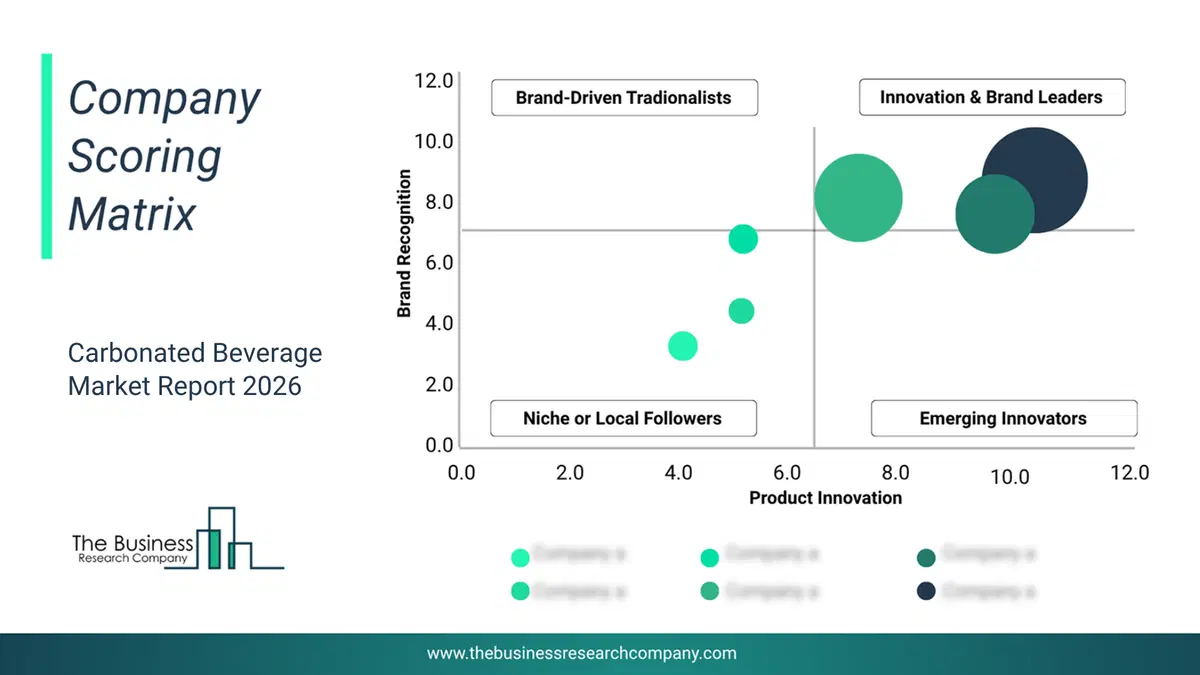
This chart maps companies by product innovation and brand strength, with bubble size indicating relative revenue, helping identify market leaders, challengers, and niche players. This is an illustrative chart; the full report provides a complete and accurate competitive analysis.
Global Carbonated Beverage Market Trends and Insights
Major companies operating in the carbonated beverage market are focusing on developing new and innovative carbonated drinks, such as lightly carbonated beverages, to enhance consumer appeal and diversify their product portfolios. Lightly carbonated beverages are drinks with a mild level of bubbles, offering a gentle fizz that is softer and less intense than regular carbonated sodas. For instance, in October 2024, Asahi Soft Drinks Co., Ltd., a Japan-based beverage company, launched BE, a new lightly carbonated beverage, specifically targeting Generation Z. The product offers three mood-based variants, BE SUNNY (grape juice with rosemary oil), BE FOCUSED (grapefruit juice with lemongrass), and BE RELAXED (apple juice with mint), designed to help consumers tune into different emotional states. Created with direct feedback from Gen Z through workshops and surveys, BE features attractive, portable packaging and embraces a tuning drink concept that allows users to shift moods and fully enjoy their moments. This launch highlights Asahi’s commitment to offering innovative, lifestyle-focused drinks for younger, health-conscious audiences.What Are Latest Mergers And Acquisitions In The Carbonated Beverage Market?
In May 2025, PepsiCo Inc., a US-based food and beverage company, acquired Poppi Inc. for $1.95 billion. Through this acquisition, PepsiCo aims to strengthen its portfolio of better-for-you beverages by tapping into the expanding market for functional drinks that promote gut health and contain less sugar, aligning with shifting consumer preferences toward healthier and more wellness-focused options. Poppi is a US-based beverage company known for its prebiotic sodas made with apple cider vinegar and natural ingredients.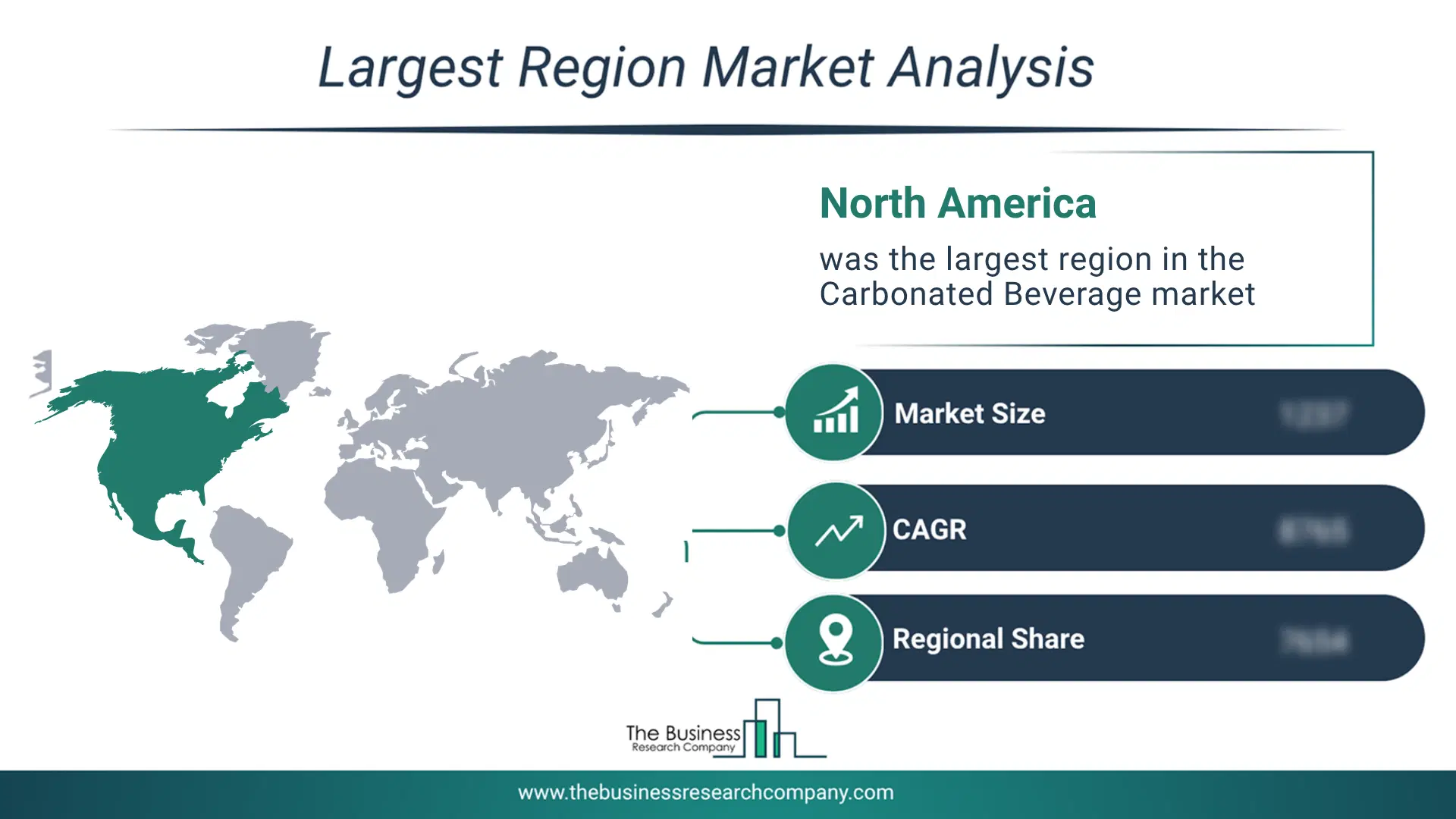
Regional Outlook
North America was the largest region in the carbonated beverage market in 2025. Asia-Pacific is expected to be the fastest-growing region in the forecast period. The regions covered in this market report are Asia-Pacific, South East Asia, Western Europe, Eastern Europe, North America, South America, Middle East and Africa. The countries covered in this market report are Australia, Brazil, China, France, Germany, India, Indonesia, Japan, Taiwan, Russia, South Korea, UK, USA, Italy, Spain, CanadaWhat Defines the Carbonated Beverage Market?
The carbonated beverage market consists of sales of products such as fruit-flavored sodas, sparkling mineral water, tonic water, seltzers, and carbonated energy drinks. Values in this market are ‘factory gate’ values, that is, the value of goods sold by the manufacturers or creators of the goods, whether to other entities (including downstream manufacturers, wholesalers, distributors, and retailers) or directly to end customers. The value of goods in this market includes related services sold by the creators of the goods.How is Market Value Defined and Measured?
The market value is defined as the revenues that enterprises gain from the sale of goods and/or services within the specified market and geography through sales, grants, or donations in terms of the currency (in USD unless otherwise specified). The revenues for a specified geography are consumption values that are revenues generated by organizations in the specified geography within the market, irrespective of where they are produced. It does not include revenues from resales along the supply chain, either further along the supply chain or as part of other products.
This chart presents market attractiveness based on a quantitative evaluation of growth, competition, strategic alignment, and risk, offering a clear view of opportunity areas for decision-making. This chart is for illustrative purposes; the full report contains the complete analysis.

This chart highlights the Total Addressable Market (TAM) by estimating the maximum revenue opportunity using an assumption-driven approach, supporting strategic planning and opportunity sizing across markets. The chart is illustrative; the full report provides a more comprehensive analysis.
What Key Data and Analysis Are Included in the Carbonated Beverage Market Report 2026?
The carbonated beverage market research report is one of a series of new reports from The Business Research Company that provides market statistics, including industry global market size, regional shares, competitors with the market share, detailed market segments, market trends and opportunities, and any further data you may need to thrive in the carbonated beverage industry. The market research report delivers a complete perspective of everything you need, with an in-depth analysis of the current and future state of the industry.Carbonated Beverage Market Report Forecast Analysis
| Report Attribute | Details |
|---|---|
| Market Size Value In 2026 | $523.46 billion |
| Revenue Forecast In 2030 | $653.19 billion |
| Growth Rate | CAGR of 6.0% from 2026 to 2030 |
| Base Year For Estimation | 2025 |
| Actual Estimates/Historical Data | 2020-2025 |
| Forecast Period | 2026 - 2030 |
| Market Representation | Revenue in USD Billion and CAGR from 2026 to 2030 |
| Segments Covered | Product, Flavor, Packaging Type, Distribution Channel |
| Regional Scope | Asia-Pacific, Western Europe, Eastern Europe, North America, South America, Middle East, Africa |
| Country Scope | The countries covered in the report are Australia, Brazil, China, France, Germany, India, Indonesia, Japan, Taiwan, Russia, South Korea, UK, USA, Canada, Italy, Spain. |
| Key Companies Profiled | Nestlé S.A, PepsiCo Inc., The Coca-Cola Company, Danone S.A., The Kraft Heinz Company, Suntory Holdings Limited, Asahi Group Holdings Ltd., Keurig Dr Pepper Inc., Red Bull GmbH, Refresco Group, Monster Energy Company, ANADOLU GRUBU A.Ş., Döhler GmbH, Britvic plc, National Beverage Corp., AriZona Beverages USA LLC, Parle Agro Private Limited, A.G. Barr plc, F&N Foods Pte Ltd, Reed’s Inc., Jones Soda Co., Cott Corporation, GreenFizz Beverages Pvt Ltd. |
| Customization Scope | Request for Customization |
| Pricing And Purchase Options | Explore Purchase Options |