
Cardiac Resynchronization Therapy Market Report 2026
Global Outlook – By Type (Cardiac Resynchronization Therapy (CRT)-Defibrillator, Cardiac Resynchronization Therapy (CRT)-Pacemaker), By Age (Below 44 Years, 45-64 Years, 65-84 Years, Above 85 Years), By End-Use (Hospitals, Cardiac Care Centers, Ambulatory Surgical Centers) - Market Size, Trends, Strategies, and Forecast to 2030
Cardiac Resynchronization Therapy Market Overview
• Cardiac Resynchronization Therapy market size has reached to $6.72 billion in 2025 • Expected to grow to $8.96 billion in 2030 at a compound annual growth rate (CAGR) of 5.7% • Growth Driver: Cardiovascular Disease Prevalence Driving The Cardiac Resynchronization Therapy Market Growth • Market Trend: Innovative Cardiac Resynchronization Therapy Advances For Heart Failure Treatment • North America was the largest region in 2025 and Asia-Pacific is the fastest growing region.What Is Covered Under Cardiac Resynchronization Therapy Market?
Cardiac resynchronization therapy (CRT) is a treatment for heart failure that helps to coordinate the contractions of the heart's ventricles. Cardiac resynchronization therapy uses a biventricular pacemaker to send electrical impulses to the heart muscle, allowing the ventricles to beat in a more synchronized manner. It can improve the symptoms of heart failure, such as shortness of breath and fatigue, and the heart's overall function. The main types of cardiac resynchronization therapy are cardiac resynchronization therapy (CRT)-defibrillator, and cardiac resynchronization therapy (CRT)-pacemaker. A cardiac resynchronization therapy (CRT) defibrillator is a type of medical device that helps regulate the heartbeat and delivers electrical shocks if the heart beats irregularly. They are used for patients below 44 years, 45-64 years, 65-84 years, and above 85 years aged patients by hospitals, cardiac care centers, and ambulatory surgical centers.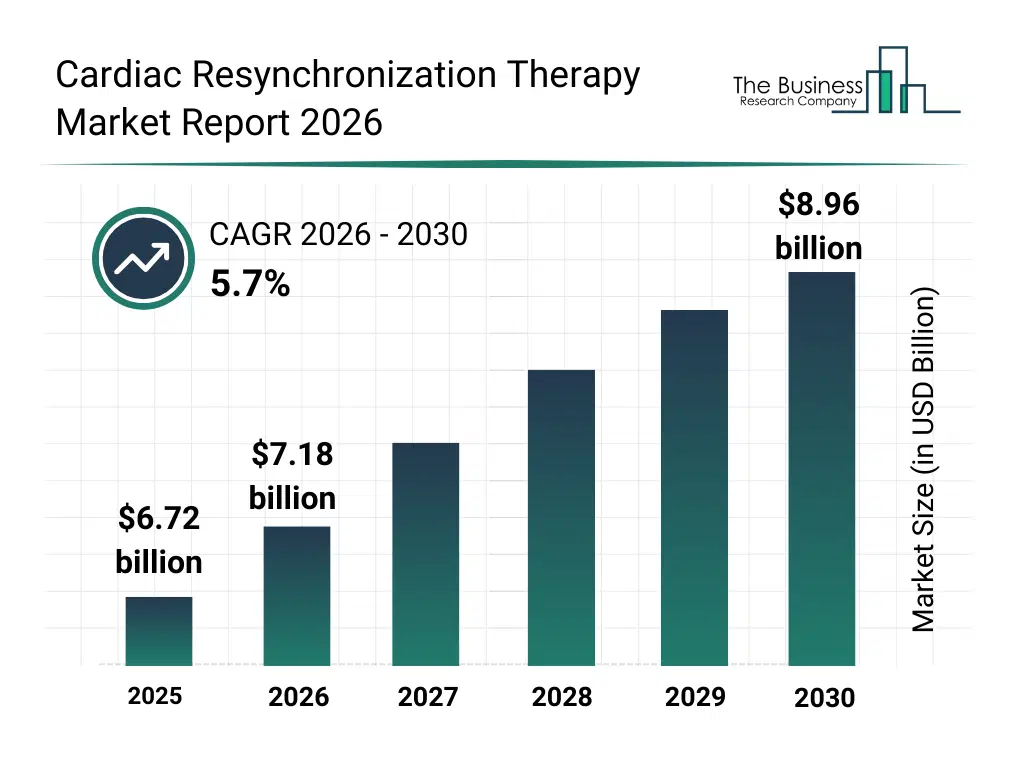
What Is The Cardiac Resynchronization Therapy Market Size and Share 2026?
The cardiac resynchronization therapy market size has grown strongly in recent years. It will grow from $6.72 billion in 2025 to $7.18 billion in 2026 at a compound annual growth rate (CAGR) of 6.8%. The growth in the historic period can be attributed to increasing prevalence of heart failure, improved awareness of ventricular dyssynchrony, expansion of cardiac device implantation centers, advancements in pacemaker technology, growing clinical evidence supporting crt benefits.What Is The Cardiac Resynchronization Therapy Market Growth Forecast?
The cardiac resynchronization therapy market size is expected to see strong growth in the next few years. It will grow to $8.96 billion in 2030 at a compound annual growth rate (CAGR) of 5.7%. The growth in the forecast period can be attributed to increasing demand for next-generation crt systems, rising adoption of remote cardiac device management, expansion of aging population with heart failure, growing focus on therapy optimization, increasing investments in cardiac rhythm management technologies. Major trends in the forecast period include increasing adoption of advanced crt devices, rising use of personalized device programming, growing integration of remote device monitoring, expansion of minimally invasive implantation techniques, enhanced focus on patient outcome optimization.
Global Cardiac Resynchronization Therapy Market Segmentation
1) By Type: Cardiac Resynchronization Therapy (CRT)-Defibrillator, Cardiac Resynchronization Therapy (CRT)-Pacemaker 2) By Age: Below 44 Years, 45-64 Years, 65-84 Years, Above 85 Years 3) By End-Use: Hospitals, Cardiac Care Centers, Ambulatory Surgical Centers Subsegments: 1) By Cardiac Resynchronization Therapy (CRT)-Defibrillator: Single-Chamber CRT-D, Dual-Chamber CRT-D, Triple-Chamber CRT-D, Bi-Ventricular CRT-D 2) By Cardiac Resynchronization Therapy (CRT)-Pacemaker: Single-Chamber CRT-P, Dual-Chamber CRT-P, Triple-Chamber CRT-P, Bi-Ventricular CRT-PWhat Are The Drivers Of The Cardiac Resynchronization Therapy Market?
The increase in the prevalence of cardiovascular diseases is expected to propel the growth of the cardiac resynchronization therapy market going forward. Cardiovascular diseases (CVD) refer to a category of illnesses that affect the heart and blood vessels. Cardiovascular disease is increasing owing to a variety of factors, including aging populations, unhealthy lifestyles, rising tobacco use, sedentary behavior, and inadequate diets. Cardiac resynchronization therapy (CRT) helps cardiovascular diseases, such as heart failure, by improving the coordination of the heart's contractions through the delivery of synchronized electrical impulses. For instance, in September 2024, according to the data published by the Minnesota Department of Health, a US-based state health agency, approximately 30% of adults in Minnesota reported having high blood pressure in 2023, totaling nearly 1.4 million people, and in 2022, hypertensive diseases were the underlying or contributing cause of death for 14,225 residents, representing almost 28% of all deaths in the state. Therefore, the increase in the prevalence of cardiovascular diseases is driving the growth of the cardiac resynchronization therapy industry. The increasing healthcare expenditure is expected to propel the growth of the cardiac resynchronization therapy market going forward. Healthcare expenditure refers to the total amount of money spent on healthcare goods and services within a specific period, typically on a national or institutional level. Investment in healthcare can support research and development efforts in the field of cardiac resynchronization therapy leading to an advancement in technology, improved access to therapy, and a more comprehensive approach to individuals health and healthcare systems. For instance, in December 2024, according to the Centers for Medicare & Medicaid Services, a US-based agency responsible for administering the Medicare and Medicaid programs, in 2023, U.S. health care expenditures increased by 7.5%, climbing to $4.9 trillion, or roughly $14,570 for each individual. Therefore, the increasing healthcare expenditure is driving the growth of the cardiac resynchronization therapy industry.Key Players In The Global Cardiac Resynchronization Therapy Market
Major companies operating in the cardiac resynchronization therapy market are Medtronic plc, Abbott Laboratories, Boston Scientific Corporation, Biotronik SE & Co KG, MicroPort Scientific Corporation, LivaNova PLC, Lepu Medical Technology Beijing Co Ltd, Osypka Medical GmbH, EBR Systems Inc, Japan Lifeline Co Ltd, CCC Medical Devices, Shree Pacetronix Ltd, BPL Medical Technologies, Medico Srl, Pacetronix, Lepu Healthcare, Blue Cross Bio Medical, Cardiac Science International, Beijing Jinshi Medical, Suzhou Medical Instrument Factory
This chart is for illustrative purposes; the full report includes a detailed competitor analysis and comprehensive overview of the top 10 companies in the market.
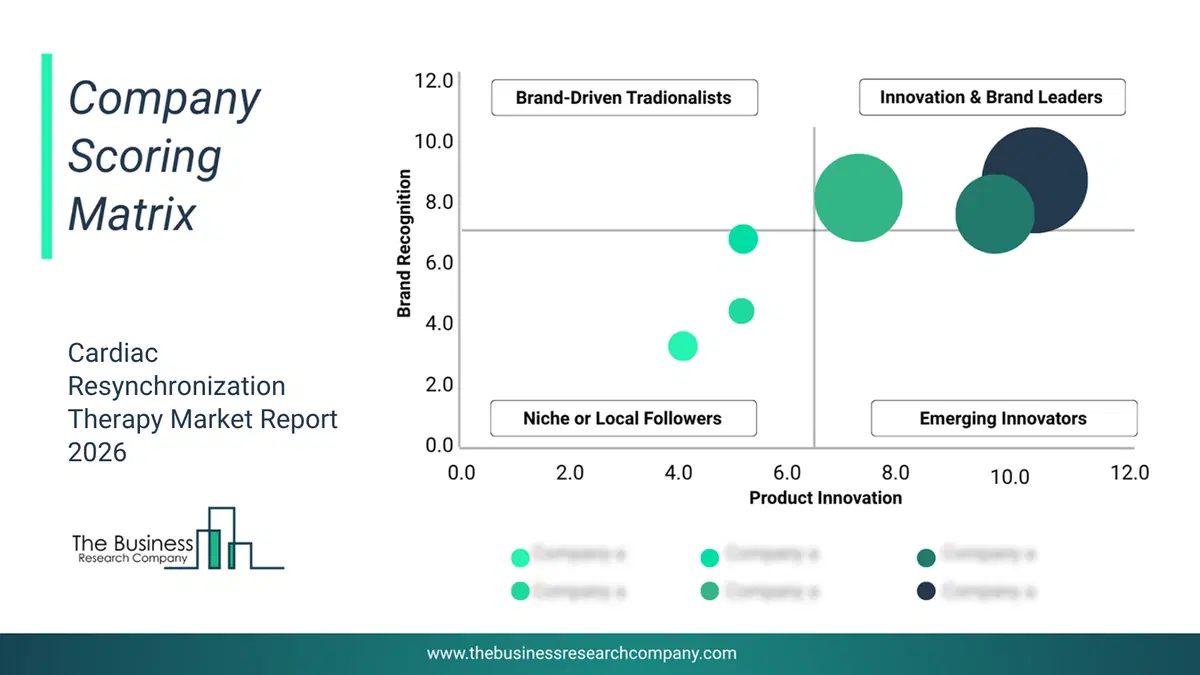
This chart maps companies by product innovation and brand strength, with bubble size indicating relative revenue, helping identify market leaders, challengers, and niche players. This is an illustrative chart; the full report provides a complete and accurate competitive analysis.
Global Cardiac Resynchronization Therapy Market Trends and Insights
Major companies operating in the cardiac resynchronization therapy market are focused on developing implantable devices such as cardiac Resynchronization Therapy Device Launch to enhance real-time hemodynamic optimization and improve patient-specific cardiac pacing outcomes. Cardiac Resynchronization Therapy (CRT) Device Launch refers to the formal introduction of an implantable medical device designed to improve the timing of heart chamber contractions in patients with heart failure. For instance, in February 2024, MicroPort Scientific Corporation, a China-based medical device company, launched the GALI SonR cardiac resynchronization therapy and defibrillation device (CRT-D), an implantable device and the Navigo 4LV left ventricular pacing leads in Japan. This is the first and only CRT hemodynamic sensor designed to automatically optimize patients once a week and, more crucially, while the patient is active, allowing real-life optimization. The clinically established SonR algorithm has shown a 35% risk reduction in heart failure hospitalization, and it will also help to ensure the well-being and safety of the CRT-D patient.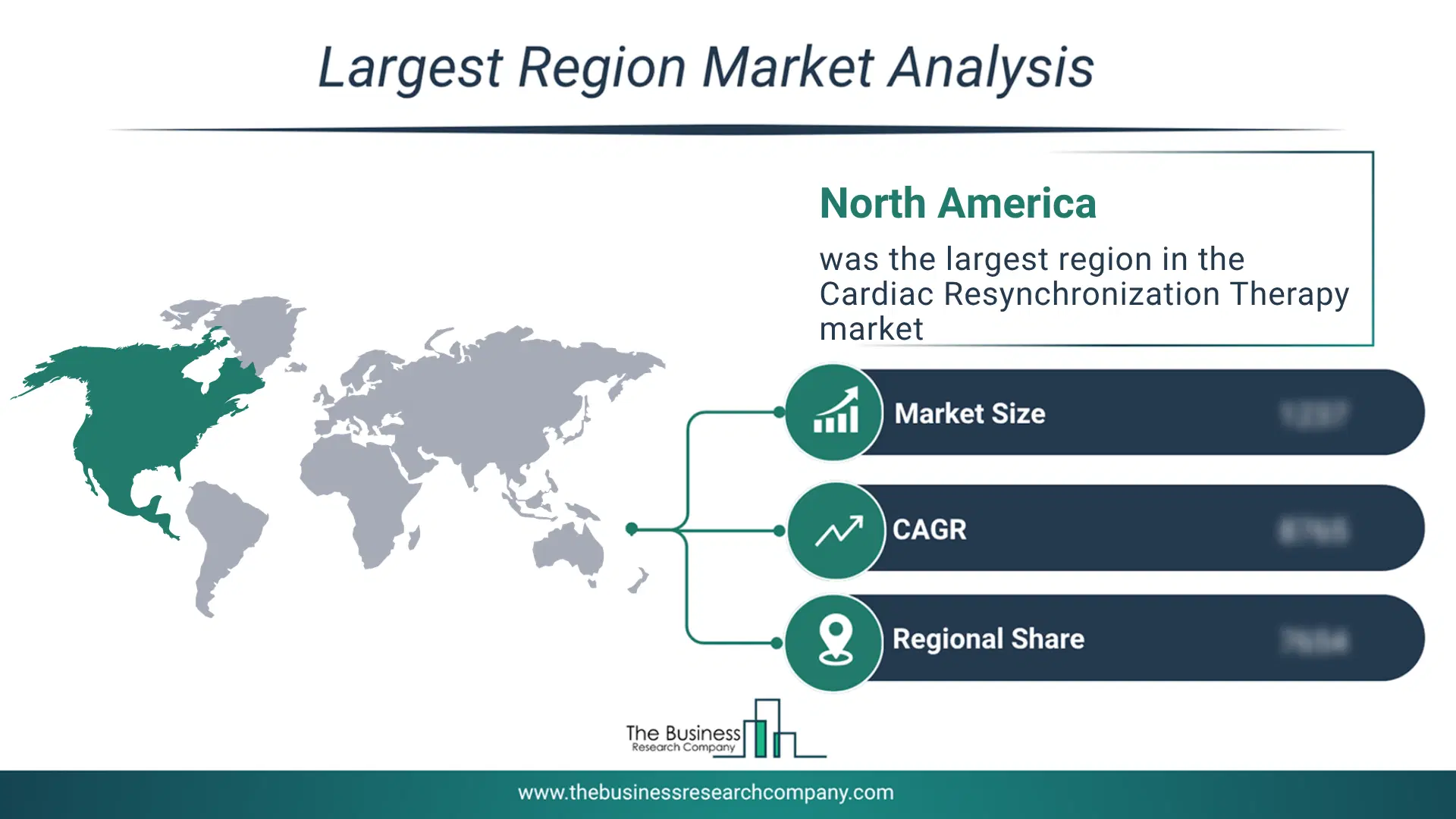
Regional Outlook
North America was the largest region in the cardiac resynchronization therapy market in 2025. Asia-Pacific is expected to be the fastest-growing region in the forecast period. The regions covered in this market report are Asia-Pacific, South East Asia, Western Europe, Eastern Europe, North America, South America, Middle East, Africa. The countries covered in this market report are Australia, Brazil, China, France, Germany, India, Indonesia, Japan, Taiwan, Russia, South Korea, UK, USA, Canada, Italy, Spain.What Defines the Cardiac Resynchronization Therapy Market?
The cardiac resynchronization therapy market consists of revenues earned by entities by providing services such as patient evaluation and diagnosis, device implantation procedures, device programming, follow-up care, management of complications, patient education, and collaborative care involving a multidisciplinary team. The market value includes the value of related goods sold by the service provider or included within the service offering. The cardiac resynchronization therapy market also includes sales of pacemakers or defibrillators, leads, programmers, accessories, diagnostic tools, patient monitoring devices, and educational materials. Values in this market are ‘factory gate’ values, that is the value of goods sold by the manufacturers or creators of the goods, whether to other entities (including downstream manufacturers, wholesalers, distributors and retailers) or directly to end customers. The value of goods in this market includes related services sold by the creators of the goods.How is Market Value Defined and Measured?
The market value is defined as the revenues that enterprises gain from the sale of goods and/or services within the specified market and geography through sales, grants, or donations in terms of the currency (in USD unless otherwise specified). The revenues for a specified geography are consumption values that are revenues generated by organizations in the specified geography within the market, irrespective of where they are produced. It does not include revenues from resales along the supply chain, either further along the supply chain or as part of other products.
This chart presents market attractiveness based on a quantitative evaluation of growth, competition, strategic alignment, and risk, offering a clear view of opportunity areas for decision-making. This chart is for illustrative purposes; the full report contains the complete analysis.

This chart highlights the Total Addressable Market (TAM) by estimating the maximum revenue opportunity using an assumption-driven approach, supporting strategic planning and opportunity sizing across markets. The chart is illustrative; the full report provides a more comprehensive analysis.
What Key Data and Analysis Are Included in the Cardiac Resynchronization Therapy Market Report 2026?
The cardiac resynchronization therapy market research report is one of a series of new reports from The Business Research Company that provides market statistics, including industry global market size, regional shares, competitors with the market share, detailed market segments, market trends and opportunities, and any further data you may need to thrive in the cardiac resynchronization therapy industry. The market research report delivers a complete perspective of everything you need, with an in-depth analysis of the current and future state of the industry.Cardiac Resynchronization Therapy Market Report Forecast Analysis
| Report Attribute | Details |
|---|---|
| Market Size Value In 2026 | $7.18 billion |
| Revenue Forecast In 2030 | $8.96 billion |
| Growth Rate | CAGR of 5.7% from 2026 to 2030 |
| Base Year For Estimation | 2025 |
| Actual Estimates/Historical Data | 2020-2025 |
| Forecast Period | 2026 - 2030 |
| Market Representation | Revenue in USD Billion and CAGR from 2026 to 2030 |
| Segments Covered | Type, Age, End-Use |
| Regional Scope | Asia-Pacific, Western Europe, Eastern Europe, North America, South America, Middle East, Africa |
| Country Scope | The countries covered in the report are Australia, Brazil, China, France, Germany, India, Indonesia, Japan, Taiwan, Russia, South Korea, UK, USA, Canada, Italy, Spain |
| Key Companies Profiled | Medtronic plc, Abbott Laboratories, Boston Scientific Corporation, Biotronik SE & Co KG, MicroPort Scientific Corporation, LivaNova PLC, Lepu Medical Technology Beijing Co Ltd, Osypka Medical GmbH, EBR Systems Inc, Japan Lifeline Co Ltd, CCC Medical Devices, Shree Pacetronix Ltd, BPL Medical Technologies, Medico Srl, Pacetronix, Lepu Healthcare, Blue Cross Bio Medical, Cardiac Science International, Beijing Jinshi Medical, Suzhou Medical Instrument Factory |
| Customization Scope | Request for Customization |
| Pricing And Purchase Options | Explore Purchase Options |