
Cargo Shipping Market Report 2026
Global Outlook – By Ship Type (Bulk Carriers, General Cargo Ship, Container Ship, Tanker, Reefer Ship, Other Ship Types), By Cargo Type (Liquid Cargo, Dry Cargo, General Cargo), By Industry Type (Food And Beverages, Manufacturing, Retail, Oil And gas, Automotive, Pharmaceutical, Electrical And Electronics, Other Industry Types) – Market Size, Trends, Strategies, and Forecast to 2030
Cargo Shipping Market Overview
• Cargo Shipping market size has reached to $13.11 billion in 2025 • Expected to grow to $16.6 billion in 2030 at a compound annual growth rate (CAGR) of 4.8% • Growth Driver: Automotive Manufacturing Surge Fuels Growth In Cargo Shipping Market • Market Trend: Electric Container Ships Gain Momentum In Cargo Shipping Market As Companies Prioritize Sustainability • Asia-Pacific was the largest region in 2025 and North America is the fastest growing region.Market Gains By 2030 – Top Opportunities By Segment
Market Gain identifies the most promising market opportunities by highlighting the segments or products expected to generate the highest incremental revenue growth over the next five years.
What Is Covered Under Cargo Shipping Market?
Cargo shipping refers to the transportation of goods and commodities by sea, air, or land, utilizing various types of vessels, aircraft, and vehicles. It involves processes such as loading, transporting, and unloading cargo, often coordinated by logistics companies. This industry plays a crucial role in global trade and supply chains. The main ship types of cargo shipping are bulk carriers, general cargo ships, container ships, tankers, reefer ships, and others. Bulk carriers are large ships specially designed to transport unpackaged bulk cargo such as grain, coal, ore, steel coils, and cement in their cargo holds. The cargo types are liquid cargo, dry cargo, and general cargo and it is used for various industries such as food and beverages, manufacturing, retail, oil and gas, automotive, pharmaceutical, electrical and electronics, and others.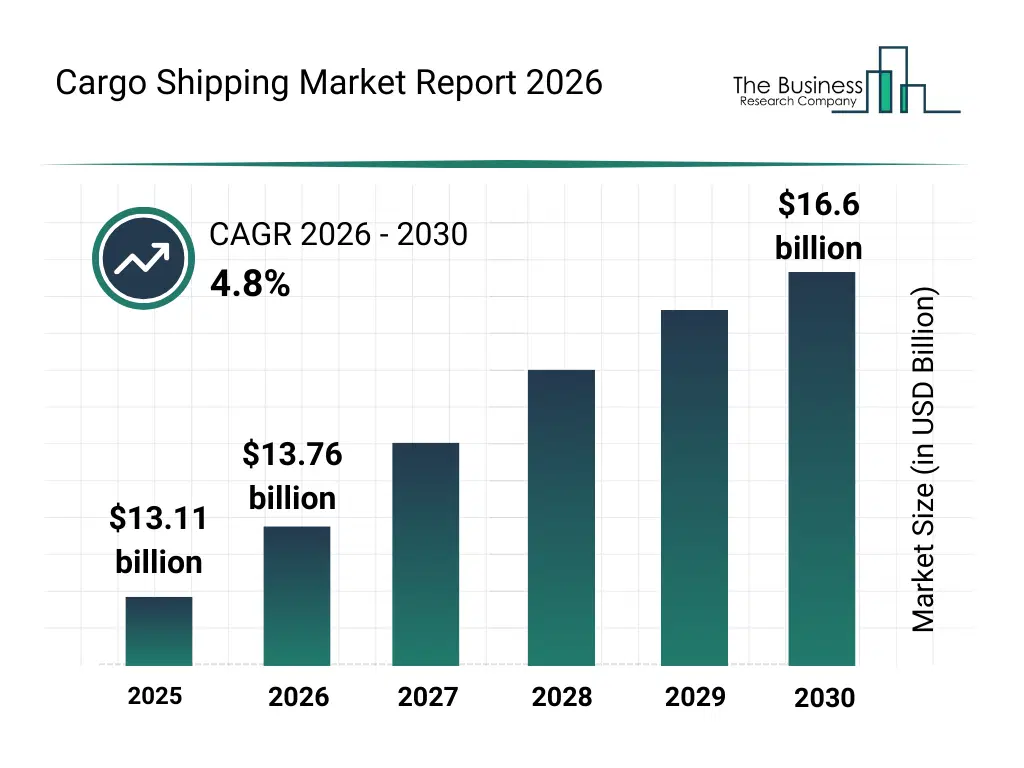
What Is The Cargo Shipping Market Size and Share 2026?
The cargo shipping market size has grown steadily in recent years. It will grow from $13.11 billion in 2025 to $13.76 billion in 2026 at a compound annual growth rate (CAGR) of 5.0%. The growth in the historic period can be attributed to globalization of trade, expansion of manufacturing hubs, port infrastructure development, growth of maritime transport, demand for bulk commodities.What Is The Cargo Shipping Market Growth Forecast?
The cargo shipping market size is expected to see steady growth in the next few years. It will grow to $16.6 billion in 2030 at a compound annual growth rate (CAGR) of 4.8%. The growth in the forecast period can be attributed to e-commerce driven logistics demand, reshoring and nearshoring trends, digitalization of shipping operations, sustainability regulations, growth in emerging markets. Major trends in the forecast period include growth of global trade volumes, expansion of containerized shipping, adoption of digital freight platforms, rising demand for cold chain logistics, increasing focus on supply chain resilience.
Global Cargo Shipping Market Segmentation
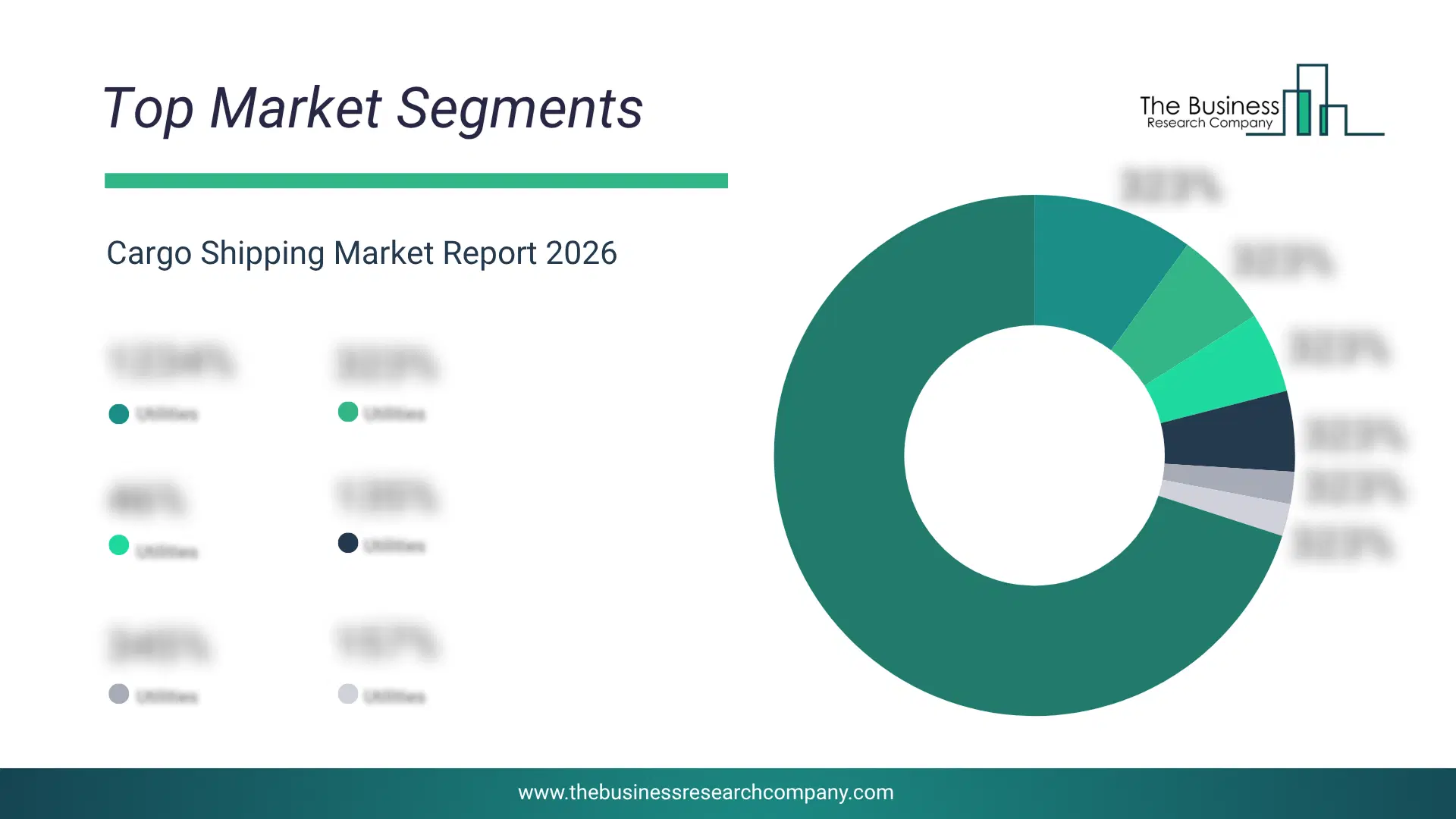
1) By Ship Type: Bulk Carriers, General Cargo Ship, Container Ship, Tanker, Reefer Ship, Other Ship Types 2) By Cargo Type: Liquid Cargo, Dry Cargo, General Cargo 3) By Industry Type: Food And Beverages, Manufacturing, Retail, Oil And gas, Automotive, Pharmaceutical, Electrical And Electronics, Other Industry Types Subsegments: 1) By Bulk Carriers: Handysize Bulk Carrier, Supramax Bulk Carrier, Panamax Bulk Carrier, Capesize Bulk Carrier, Very Large Ore Carriers (VLOC) 2) By General Cargo Ship: Conventional General Cargo Ship, Multi-Purpose Vessel (MPV), Ro-Ro (Roll-on/Roll-off) Ships, Heavy Lift Ships 3) By Container Ship: Feeder Container Ship, Panamax Container Ship, Post-Panamax Container Ship, Ultra Large Container Vessel (ULCV), New Panamax Container Ship 4) By Tanker: Crude Oil Tanker, Product Tanker, Chemical Tanker, Liquefied Natural Gas (LNG) Tanker, Liquefied Petroleum Gas (LPG) Tanker 5) By Reefer Ship: Conventional Reefer Ship, Containerized Reefer Ship, Refrigerated Cargo Vessel 6) By Other Ship Types: Roll-On/Roll-Off (RoRo) Vessel, Heavy Lift Vessel The top segments in the cargo shipping market will be: • Bulk Carriers will reach $6.08 Billion by 2030. • Container Ship will reach $4.68 Billion by 2030. • Tanker will reach $2.75 Billion by 2030. • General Cargo Ship will reach $1.34 Billion by 2030. • Reefer Ship will reach $0.96 Billion by 2030.What Is The Driver Of The Cargo Shipping Market?
The growth in automotive manufacturing is expected to propel the growth of the cargo shipping market going forward. The growth in automotive manufacturing has been driven by factors such as rising populations, increasing motorization rates, strong government support through policies and infrastructure development, foreign direct investment, and joint ventures. Cargo shipping for automotive involves transporting vehicles and automotive parts via sea, leveraging large container ships for global distribution. This method is cost-effective for long-distance bulk transport, ensuring timely and secure delivery. For instance, in January 2024, according to the Society of Motor Manufacturers and Traders (SMMT), a UK-based trade association, in 2023, total vehicle production in the UK (cars + commercial vehicles) reached about 1,025,474 units, up 17% from the year before. Therefore, the growth in automotive manufacturing is driving the cargo shipping industry.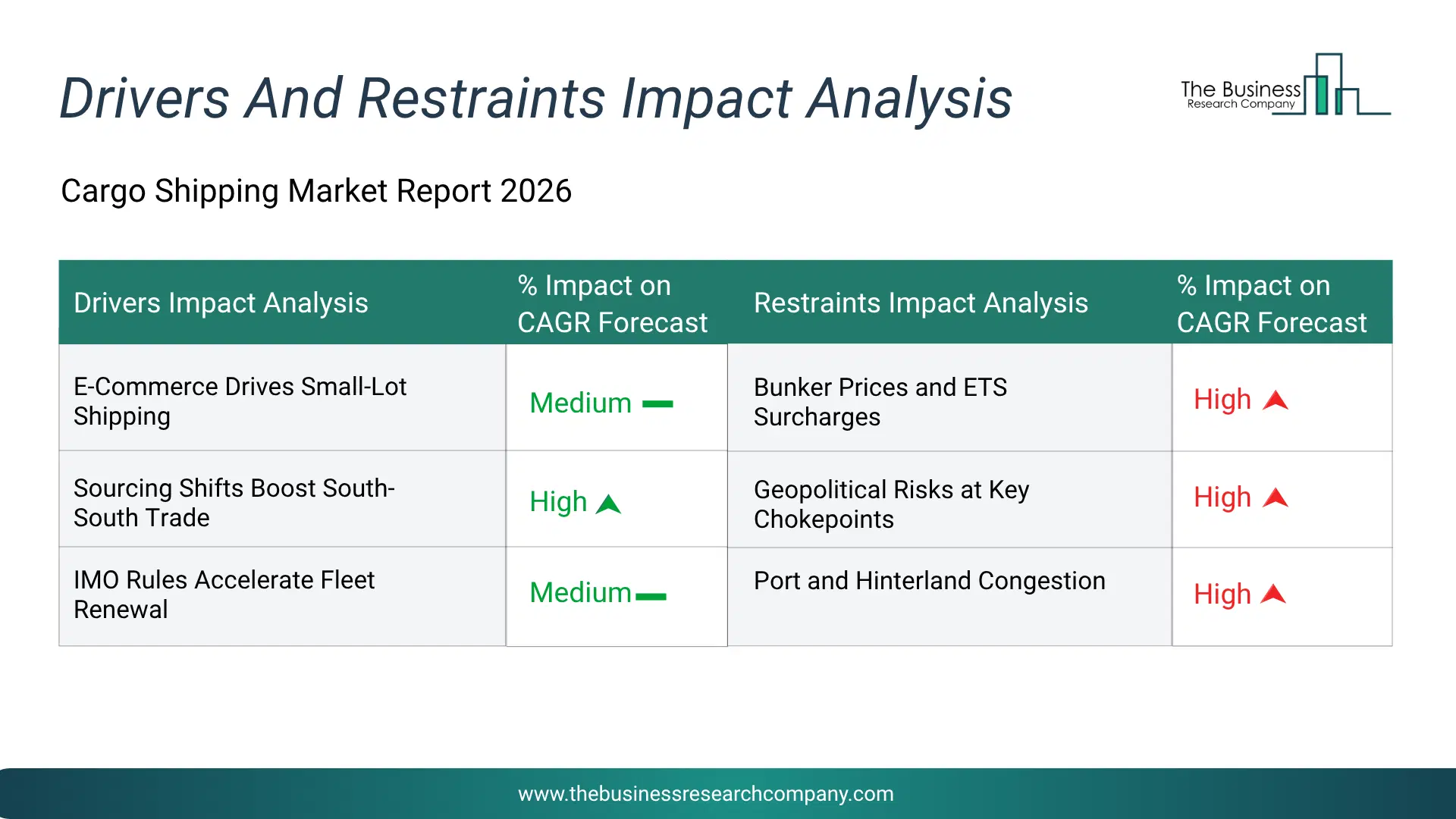
Infographic Chart Showing Key Market Drivers Analysis And Restraints For Cargo Shipping Market
The chart presents an impact analysis of key drivers and restraints, quantifying their relative influence on the market's growth rate and helping assess the balance between growth enablers and limiting factors. This chart offers a high-level perspective; the full report contains more detailed insights.
How Will The Drivers Impact Growth In The Global Cargo Shipping Market?
• E-Commerce Drives Small-Lot Shipping (Medium) – During the forecast period, the growth of e-commerce-driven trade is expected to become a key growth driver for the cargo shipping market by 2030. Expanding cross-border online retail activity is increasing the movement of smaller and more frequent shipments across international markets. Shipping companies are adapting their logistics networks to support faster replenishment cycles, diversified cargo flows, and improved delivery reliability. Growing consumer demand for imported products is encouraging greater utilization of maritime transportation for regional and global distribution. This shift toward more agile cargo movement is reinforcing steady market expansion. • Sourcing Shifts Boost South-South Trade (High) – During the forecast period, the ongoing shift in global sourcing patterns is expected to emerge as a major factor driving the expansion of the cargo shipping market by 2030. Manufacturers are increasingly diversifying supply chains and expanding trade relationships among emerging economies across Asia, Latin America, the Middle East, and Africa. These changing trade flows are creating new shipping corridors and increasing demand for maritime transportation services between developing regions. The expansion of industrial production and export capabilities in emerging markets is further strengthening cargo volumes. • IMO Rules Accelerate Fleet Renewal (Medium) – During the forecast period, the implementation of evolving International Maritime Organization (IMO) regulations is expected to act as a key growth catalyst for the cargo shipping market by 2030. Shipping operators are investing in newer vessels equipped with advanced propulsion technologies, improved fuel efficiency systems, and lower-emission capabilities to comply with environmental standards. Fleet modernization initiatives are encouraging vessel replacement activities and increasing demand for technologically advanced shipping capacity. Additionally, regulatory compliance is driving innovation in vessel design and operational performance across global fleets.How Will The Restraints Impact Growth In The Global Cargo Shipping Market?
• Bunker Prices and ETS Surcharges (Medium) – During the forecast period, the fluctuations in bunker fuel prices significantly impact the operational costs of shipping companies, making it difficult to maintain stable pricing strategies. The introduction of Emissions Trading Systems (ETS) further adds financial burden, as companies must pay for carbon emissions. These additional costs are often passed on to customers through surcharges, reducing competitiveness in price-sensitive markets. Smaller operators, in particular, face challenges in absorbing these expenses, leading to margin pressures. High fuel costs can also discourage long-distance shipping and reduce trade volumes. Over time, persistent cost volatility can hinder investment in fleet expansion. Therefore, rising bunker prices and ETS surcharges act as a major restraint on market growth. • Geopolitical Risks at Key Chokepoints (High) – During the forecast period, the strategic maritime chokepoints such as straits and canals are highly vulnerable to geopolitical tensions and conflicts. Disruptions in these areas can lead to rerouting of vessels, increased transit times, and higher fuel consumption. Political instability, sanctions, or military activities can severely impact global trade flows and shipping schedules. Such uncertainties create risk for shipping companies and may lead to increased insurance premiums. Additionally, sudden disruptions can cause supply chain delays and inventory shortages. Businesses may become cautious in trade planning due to these unpredictable risks. Hence, geopolitical challenges at key chokepoints act as a critical restraint for the shipping market. • Port and Hinterland Congestion (Medium) – During the forecast period, the congestion at ports and in inland transportation networks significantly disrupts the efficiency of shipping operations. Delays in loading, unloading, and cargo clearance increase vessel turnaround time and reduce fleet productivity. Limited infrastructure capacity and poor coordination among logistics stakeholders worsen the problem. Hinterland congestion further delays cargo movement from ports to final destinations, affecting supply chain reliability. These inefficiencies lead to increased operational costs and reduced customer satisfaction. Persistent congestion can discourage trade activities and create bottlenecks in global supply chains. As a result, port and hinterland congestion act as a substantial restraint on market performance.Key Players In The Global Cargo Shipping Market
Major companies operating in the cargo shipping market report include DHL International GmbH, China Ocean Shipping Company Limited, Maersk, CMA CGM Group, Hapag-Lloyd AG, Ocean Network Express Pte. Ltd., MSC Mediterranean Shipping Company S.A., Evergreen Marine Corp. Ltd., Orient Overseas Container Line Limited, Nippon Express Co. Ltd, Zhonggu Logistics Corporation, Zim Integrated Shipping Services, Yang Ming Marine Transport Corporation, Mitsui O.S.K. Lines Ltd., Antong Holdings Co Ltd, Hyundai Merchant Marine Co. Ltd., Panalpina World Transport (Holding) Ltd., Regional Container Lines, Swire Shipping, Pacific International Lines Pte Ltd, Emirates Shipping Line, Sinokor Merchant Marine Co. Ltd., Sea Lead Shipping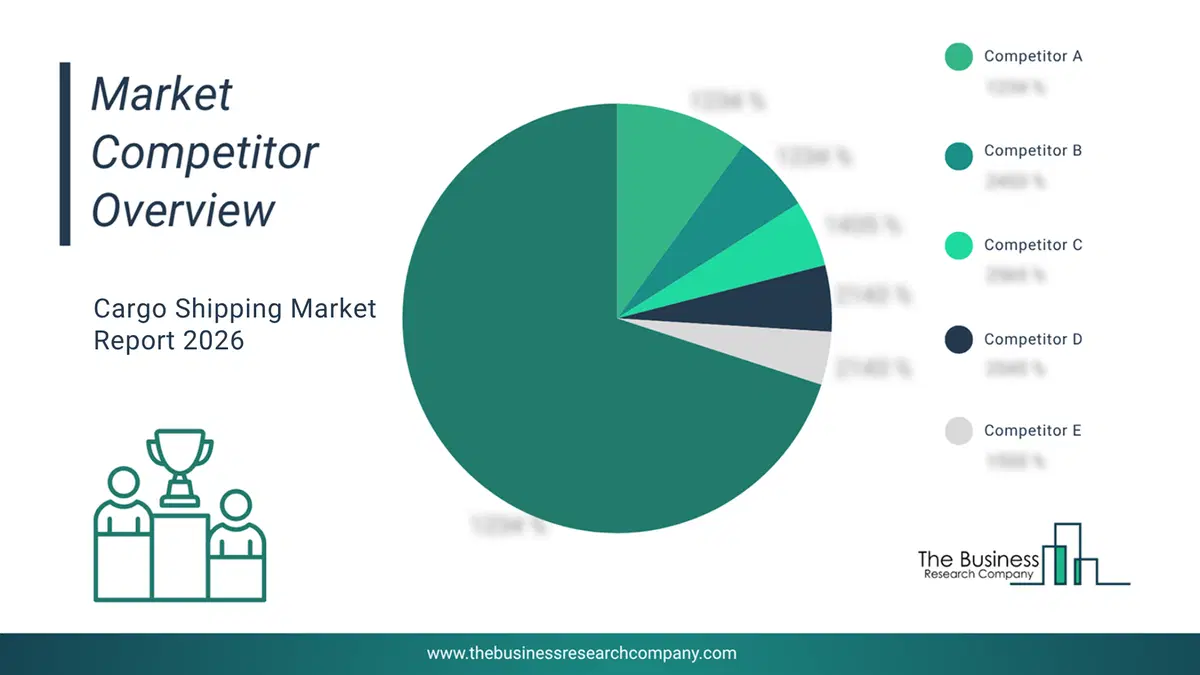
This chart is for illustrative purposes; the full report includes a detailed competitor analysis and comprehensive overview of the top 10 companies in the market.
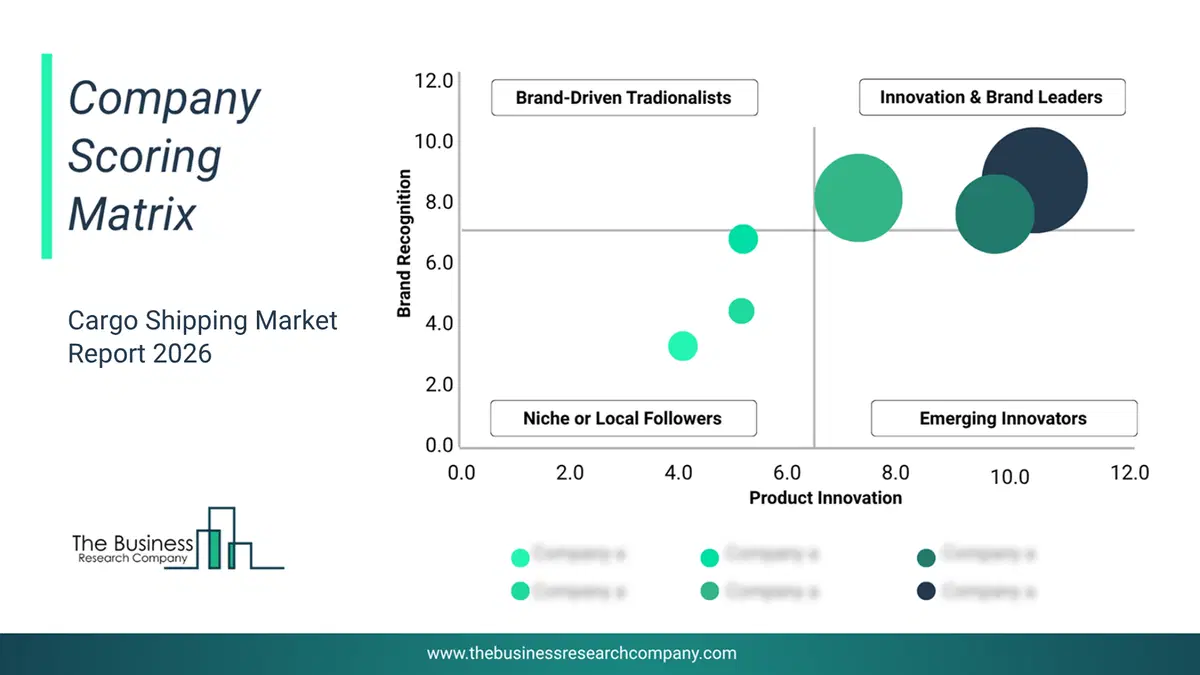
This chart maps companies by product innovation and brand strength, with bubble size indicating relative revenue, helping identify market leaders, challengers, and niche players. This is an illustrative chart; the full report provides a complete and accurate competitive analysis.
Global Cargo Shipping Market Trends and Insights
Major companies operating in the cargo shipping market are focusing on developing advanced transport ships, such as electric container ships, to better serve customers. Electric container ships are vessels powered by electric propulsion systems, typically using batteries or fuel cells, designed to transport cargo containers with reduced emissions and improved environmental sustainability compared to traditional diesel-powered ships. For instance, in May 2024, China Ocean Shipping Company Limited, a China-based logistics company, introduced the world's first 10,000-DWT pure electric container ships, the Green Water 01 and Green Water 02. These vessels, capable of carrying up to 700 standard 20-foot containers (TEU), are the largest pure electric container ships globally. They are designed to operate along the Yangtze River and extend to the sea, covering a route exceeding 600 miles. Powered by a large-capacity battery system of over 50,000 kWh, which can be expanded to 80,000 kWh with additional 20-foot battery containers, these ships can complete voyages with an energy consumption equivalent to 15 tons of fuel for a traditional container ship.What Are Latest Mergers And Acquisitions In The Cargo Shipping Market?
In June 2024, Inchcape Shipping Services, a UK-based marine management company, acquired Grieg Logistics for an undisclosed amount. This strategic move strengthens Inchcape's commitment to providing high-quality and reliable service offerings, further enhancing its operational capabilities in shipping, raw materials, energy, and governmental services. Grieg Logistics is a Norway-based provider of cargo shipping services.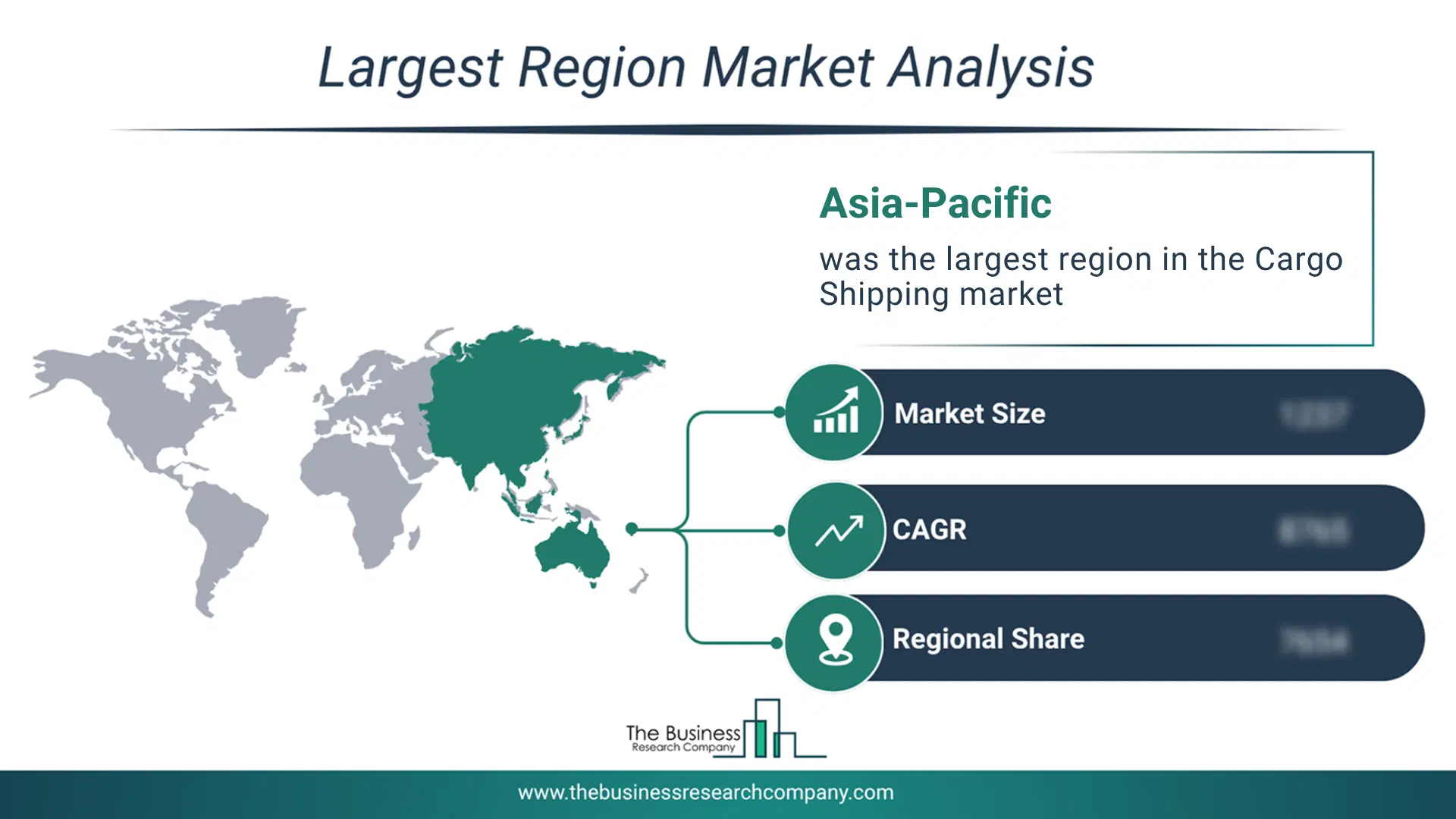
Regional Outlook
Asia-Pacific was the largest region in the cargo shipping market in 2025. North America is expected to be the fastest-growing region in the forecast period. The regions covered in this market report include Asia-Pacific, South East Asia, Western Europe, Eastern Europe, North America, South America, Middle East, Africa. The countries covered in this market report include Australia, Brazil, China, France, Germany, India, Indonesia, Japan, Taiwan, Russia, South Korea, UK, USA, Canada, Italy, SpainWhat Defines the Cargo Shipping Market?
The cargo shipping market consists of revenues earned by entities by providing services such as container shipping, tanker shipping, refrigerated cargo shipping, freight forwarding, and transporting a variety of goods. The market value includes the value of related goods sold by the service provider or included within the service offering. The cargo shipping market also includes sales of standard containers, refrigerated containers, tank containers, and flat rack containers. Values in this market are ‘factory gate’ values, that is the value of goods sold by the manufacturers or creators of the goods, whether to other entities (including downstream manufacturers, wholesalers, distributors and retailers) or directly to end customers. The value of goods in this market includes related services sold by the creators of the goods.How is Market Value Defined and Measured?
The market value is defined as the revenues that enterprises gain from the sale of goods and/or services within the specified market and geography through sales, grants, or donations in terms of the currency (in USD unless otherwise specified). The revenues for a specified geography are consumption values that are revenues generated by organizations in the specified geography within the market, irrespective of where they are produced. It does not include revenues from resales along the supply chain, either further along the supply chain or as part of other products.
This chart presents market attractiveness based on a quantitative evaluation of growth, competition, strategic alignment, and risk, offering a clear view of opportunity areas for decision-making. This chart is for illustrative purposes; the full report contains the complete analysis.

This chart highlights the Total Addressable Market (TAM) by estimating the maximum revenue opportunity using an assumption-driven approach, supporting strategic planning and opportunity sizing across markets. The chart is illustrative; the full report provides a more comprehensive analysis.
What Key Data and Analysis Are Included in the Cargo Shipping Market Report 2026?
The cargo shipping market research report is one of a series of new reports from The Business Research Company that provides market statistics, including industry global market size, regional shares, competitors with the market share, detailed market segments, market trends and opportunities, and any further data you may need to thrive in the cargo shipping industry. The market research report delivers a complete perspective of everything you need, with an in-depth analysis of the current and future state of the industry.Cargo Shipping Market Report Forecast Analysis
| Report Attribute | Details |
|---|---|
| Market Size Value In 2026 | $13.76 billion |
| Revenue Forecast In 2030 | $16.6 billion |
| Growth Rate | CAGR of 5.0% from 2026 to 2030 |
| Base Year For Estimation | 2025 |
| Actual Estimates/Historical Data | 2020-2025 |
| Forecast Period | 2026 - 2030 |
| Market Representation | Revenue in USD Billion and CAGR from 2026 to 2030 |
| Segments Covered | Ship Type, Cargo Type, Industry Type |
| Regional Scope | Asia-Pacific, Western Europe, Eastern Europe, North America, South America, Middle East, Africa |
| Country Scope | The countries covered in the report are Australia, Brazil, China, France, Germany, India, Indonesia, Japan, Taiwan, Russia, South Korea, UK, USA, Canada, Italy, Spain. |
| Key Companies Profiled | DHL International GmbH, China Ocean Shipping Company Limited, Maersk, CMA CGM Group, Hapag-Lloyd AG, Ocean Network Express Pte. Ltd., MSC Mediterranean Shipping Company S.A., Evergreen Marine Corp. Ltd., Orient Overseas Container Line Limited, Nippon Express Co. Ltd, Zhonggu Logistics Corporation, Zim Integrated Shipping Services, Yang Ming Marine Transport Corporation, Mitsui O.S.K. Lines Ltd., Antong Holdings Co Ltd, Hyundai Merchant Marine Co. Ltd., Panalpina World Transport (Holding) Ltd., Regional Container Lines, Swire Shipping, Pacific International Lines Pte Ltd, Emirates Shipping Line, Sinokor Merchant Marine Co. Ltd., Sea Lead Shipping |
| Customization Scope | Request for Customization |
| Pricing And Purchase Options | Explore Purchase Options |