
Catenary Infrastructure Inspection Market Report 2026
Global Outlook – By Solution (Hardware, Services), By Inspection Process (Visual Inspection, Mechanical Inspection, Electrical Inspection, Other Inspection Processes), By End-User (Railway Authorities, Contractors And Inspection Firms, Train Operators, Other End-Users) – Market Size, Trends, Strategies, and Forecast to 2030
Catenary Infrastructure Inspection Market Overview
• Catenary Infrastructure Inspection market size has reached to $2.95 billion in 2025 • Expected to grow to $4.22 billion in 2030 at a compound annual growth rate (CAGR) of 7.2% • Growth Driver: Electrification Of Transportation Systems Fuels Catenary Infrastructure Inspection Market Expansion • Asia-Pacific was the largest region and fastest growing region.What Is Covered Under Catenary Infrastructure Inspection Market?
Catenary infrastructure inspection refers to the process of examining and evaluating the overhead wires used in electrified railway systems. The purpose of catenary infrastructure inspection is to ensure the safety, reliability, and efficiency of overhead catenary systems. These inspections are conducted to assess the condition of the overhead wires, supports, and related components to detect any signs of wear, damage, or defects. The main types of solutions in catenary infrastructure inspection include hardware and services. Hardware refers to the physical equipment or devices utilized to implement a solution, and catenary infrastructure inspection involves the use of specialized equipment such as drones, cameras, sensors, and possibly robotic systems to physically inspect the overhead electrical lines and related infrastructure. The inspection process includes visual inspection, mechanical inspection, electrical inspection, and other inspection processes for end-users such as railway authorities, contractors and inspection firms, train operators, and others.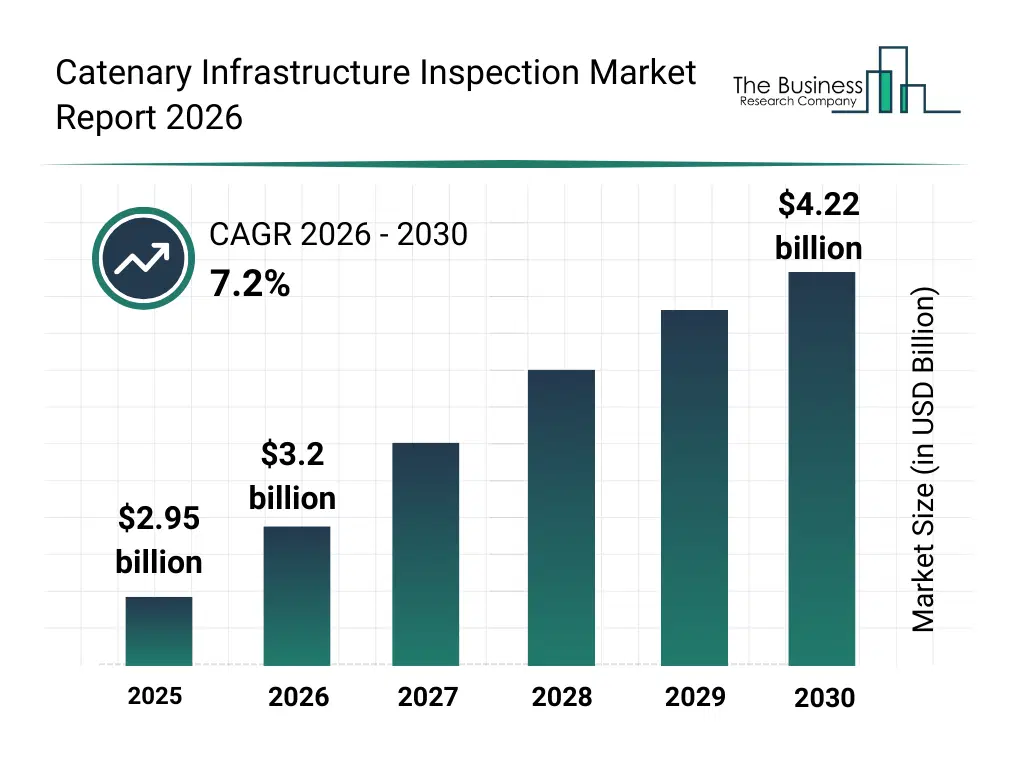
What Is The Catenary Infrastructure Inspection Market Size and Share 2026?
The catenary infrastructure inspection market size has grown strongly in recent years. It will grow from $2.95 billion in 2025 to $3.2 billion in 2026 at a compound annual growth rate (CAGR) of 8.4%. The growth in the historic period can be attributed to rail electrification projects, manual inspection practices, safety compliance requirements, aging rail infrastructure, maintenance outsourcing.What Is The Catenary Infrastructure Inspection Market Growth Forecast?
The catenary infrastructure inspection market size is expected to see strong growth in the next few years. It will grow to $4.22 billion in 2030 at a compound annual growth rate (CAGR) of 7.2%. The growth in the forecast period can be attributed to high-speed rail expansion, automation in rail inspection, smart railway investments, demand for reduced downtime, digital twin adoption. Major trends in the forecast period include adoption of drone-based inspection, integration of ai for fault detection, shift toward predictive maintenance, expansion of electrified rail networks, demand for real-time monitoring.
Global Catenary Infrastructure Inspection Market Segmentation
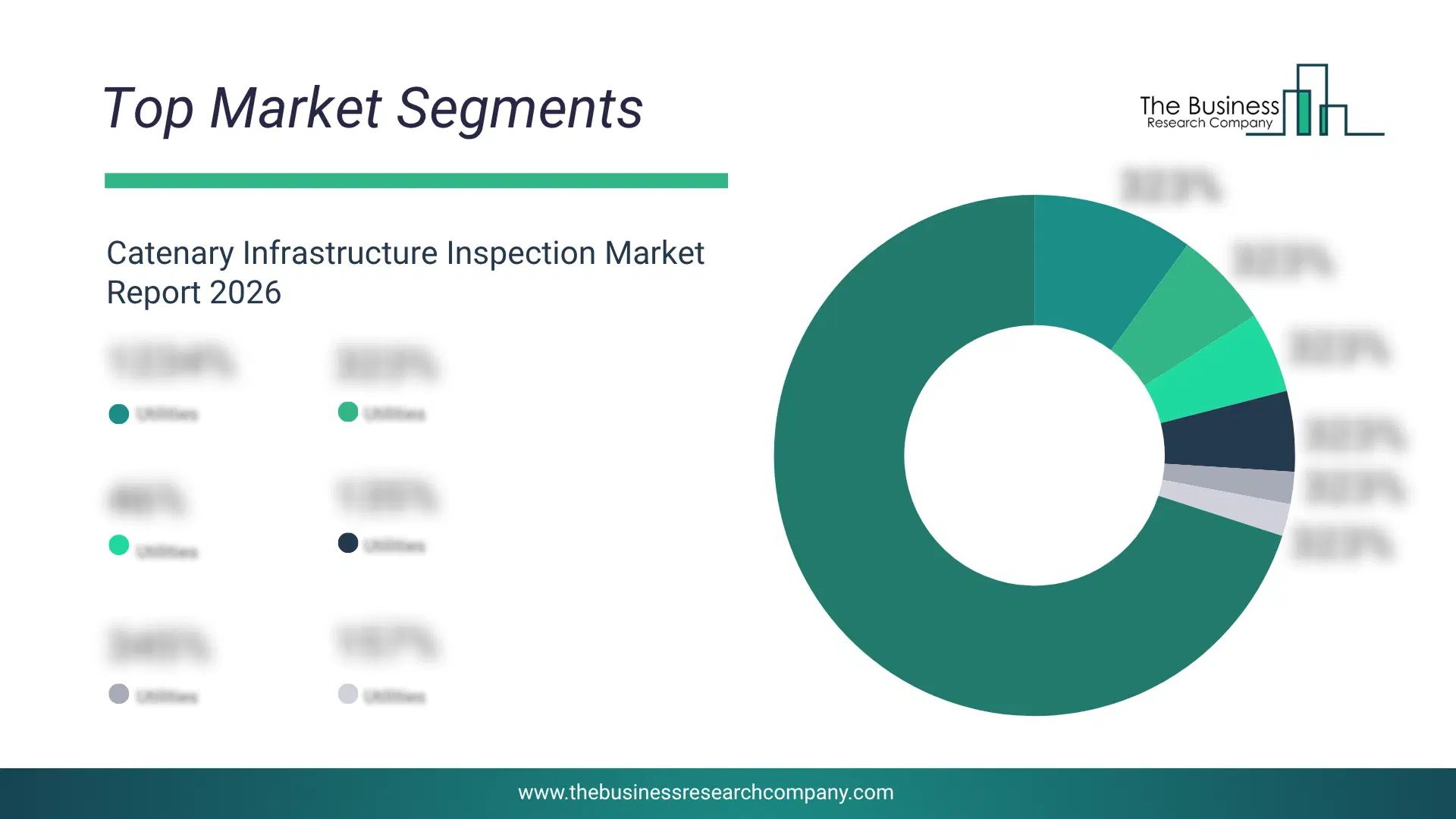
1) By Solution: Hardware, Services 2) By Inspection Process: Visual Inspection, Mechanical Inspection, Electrical Inspection, Other Inspection Processes 3) By End-User: Railway Authorities, Contractors And Inspection Firms, Train Operators, Other End-Users Subsegments: 1) By Hardware: Inspection Drones, Catenary Inspection Sensors, Imaging And Monitoring Equipment, Robotic Inspection Systems 2) By Services: Inspection And Assessment Services, Maintenance And Repair Services, Data Analytics And Reporting ServicesWhat Are The Drivers Of The Catenary Infrastructure Inspection Market?
The increasing electrification of railway transportation systems is expected to propel the growth of the catenary infrastructure inspection market going forward. The electrification of railway transportation systems refers to transitioning infrastructure to electricity as the primary power source. The need to reduce carbon emissions, improve air quality, and decrease dependence on finite fossil fuels increases the demand for electrified transportation systems. Railway transportation systems use catenary infrastructure inspection to ensure the safety, efficiency, and reliability of overhead wires and related components essential for powering electric vehicles, thus facilitating electrified transport networks' seamless operation and maintenance. For instance, in October 2023, according to the Rail Infrastructure and Assets report by the Office of Rail and Road, a UK-based government agency, as of 31 March 2023, a total of 15,220 railway vehicles were registered and in operation across all passenger train operators, with electric vehicles accounting for 70% of the fleet. Therefore, the increasing electrification of transportation systems is driving the growth of the catenary infrastructure inspection industry. The rising freight traffic is expected to propel the growth of the catenary infrastructure inspection market going forward. Freight traffic is the transport of goods or cargo via road, rail, air, or sea over a specific period or route. Freight traffic is increasing due to the growth of e-commerce, which drives higher demand for the fast and large-scale movement of goods to meet consumer delivery expectations. Catenary infrastructure inspection helps freight traffic by ensuring the reliability and safety of overhead electric lines, reducing delays or disruptions caused by line failures, and enabling smooth, uninterrupted movement of electric freight trains. For instance, in June 2025, according to Joe Morten & Son, Inc., a US-based commercial trucking insurance agency, in 2023, the US transportation system handled an average of around 55.5 million tons of freight per day, worth over $51.2 billion, totaling roughly 20.2 billion tons or $18.7 trillion of freight transported over the year. Therefore, the rising freight traffic is driving the growth of the catenary infrastructure inspection industry.Key Players In The Global Catenary Infrastructure Inspection Market
Major companies operating in the catenary infrastructure inspection market report include Hitachi Ltd, Siemens AG, General Electric Company, Schneider Electric SE, Mitsubishi Heavy Industries Ltd, ABB Ltd, Toshiba Corporation, Alstom SA, Wabtec Corporation, Knorr-Bremse AG, Bombardier Inc, Fuji Electric Co. Ltd, Stadler Rail AG, Construcciones Y Auxiliar de Ferrocarriles S.A, Progress Rail Services Corporation, Meidensha Corporation, Harsco Corporation, Strukton Rail GmbH & Co KG, Bentley Systems Inc, Vossloh AG, Hollysys Automation Technologies Ltd, CRRC Corporation Limited, Skoda Transportation A.S, MERMEC Inc, Ingeteam Power Technology S.A, Pandrol SAS, Plasser & Theurer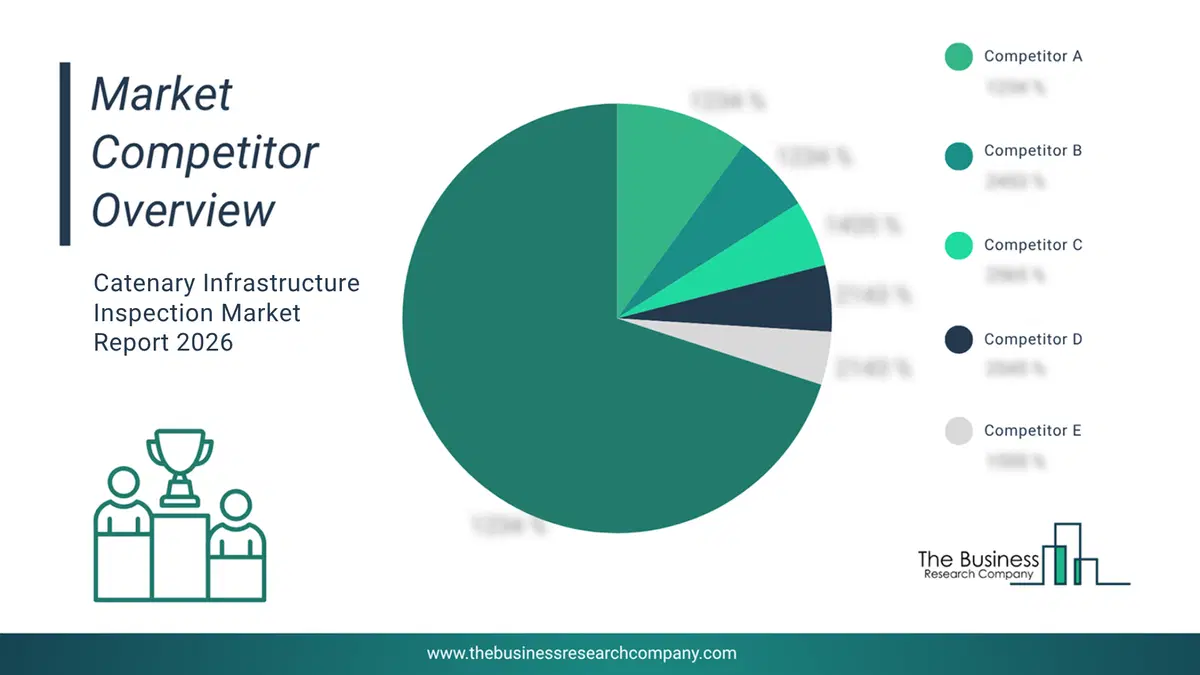
This chart is for illustrative purposes; the full report includes a detailed competitor analysis and comprehensive overview of the top 10 companies in the market.
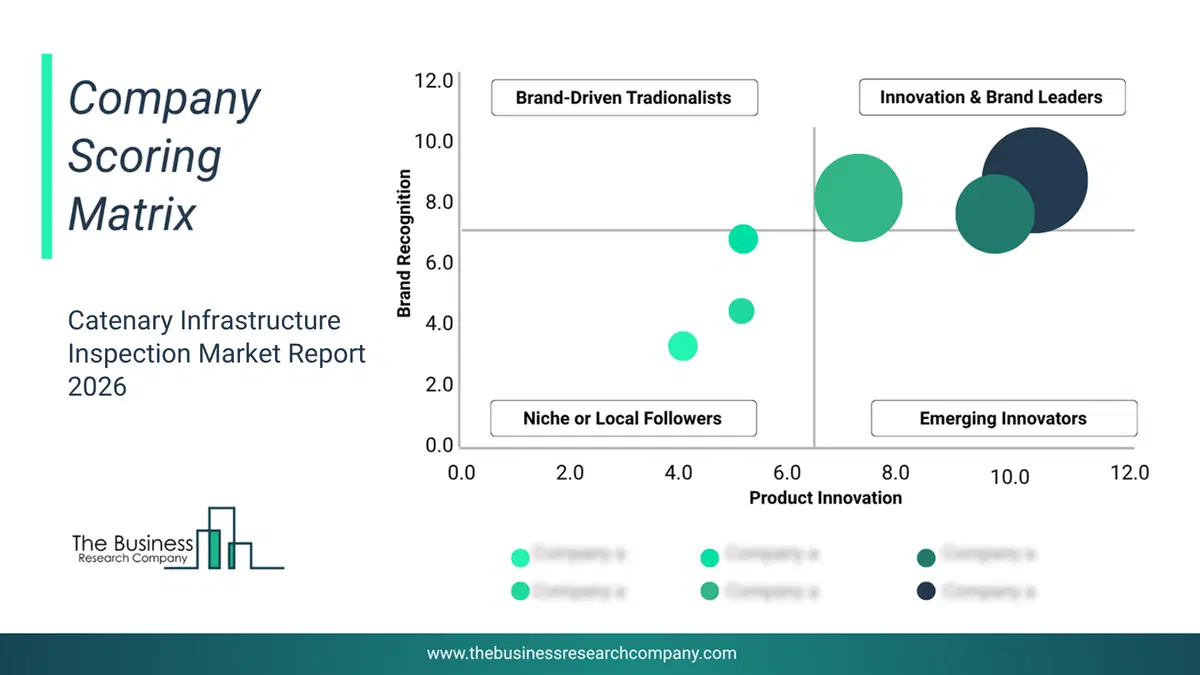
This chart maps companies by product innovation and brand strength, with bubble size indicating relative revenue, helping identify market leaders, challengers, and niche players. This is an illustrative chart; the full report provides a complete and accurate competitive analysis.
What Are Latest Mergers And Acquisitions In The Catenary Infrastructure Inspection Market?
In October 2024, Eiffage, a France-based construction and concessions company, acquired EQOS for an undisclosed amount. The acquisition is intended to enhance Eiffage’s capabilities in providing installation and maintenance services for railway catenaries in Belgium while ensuring compliance with competition regulations. EQOS is a Luxembourg-based company specializing in the construction, maintenance, and optimization of catenary infrastructure solutions.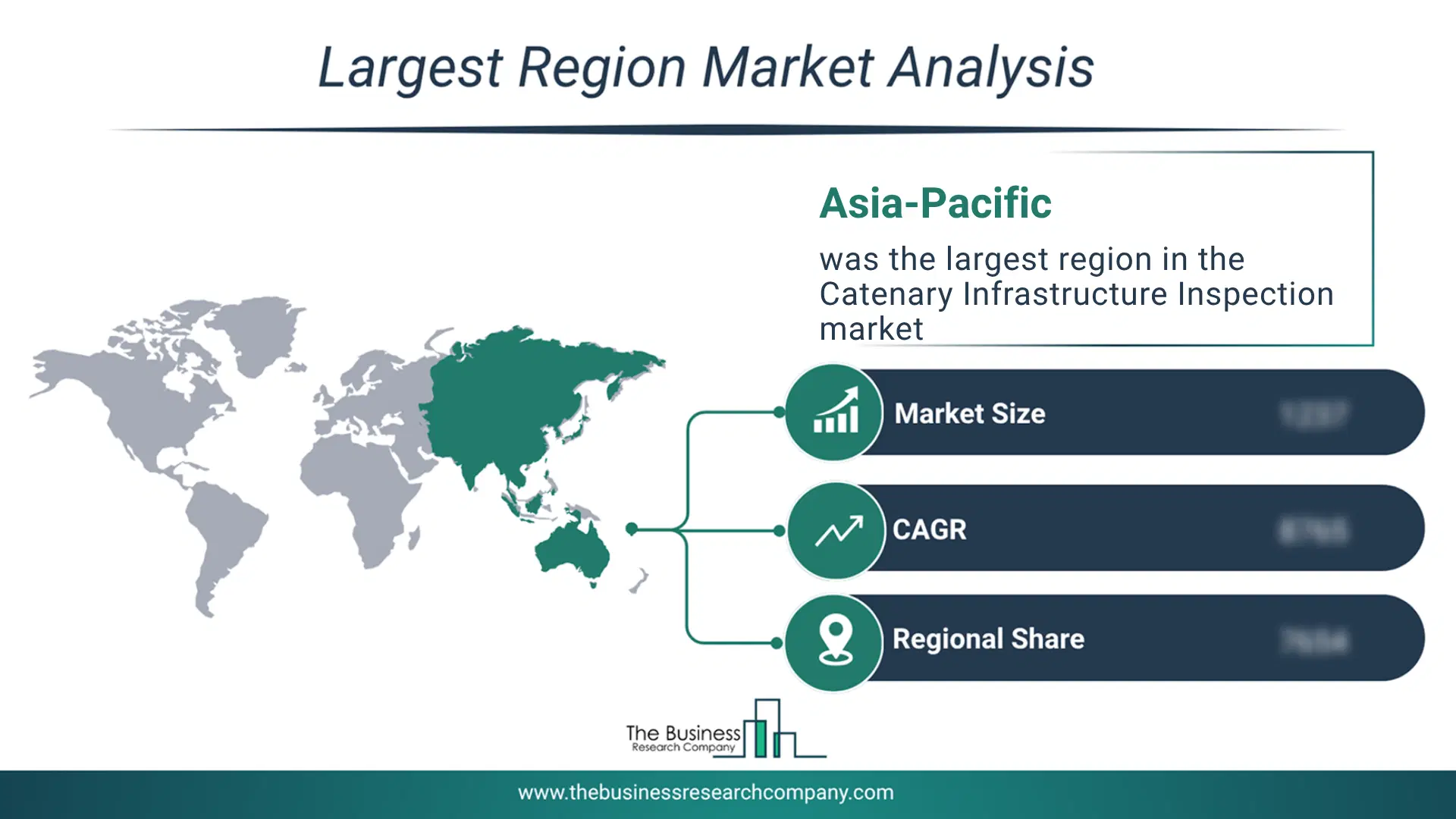
Regional Outlook
Asia-Pacific was the largest region in the catenary infrastructure inspection market in 2025 and is the fastest growing region in the market. The regions covered in this market report include Asia-Pacific, South East Asia, Western Europe, Eastern Europe, North America, South America, Middle East, Africa. The countries covered in this market report include Australia, Brazil, China, France, Germany, India, Indonesia, Japan, Taiwan, Russia, South Korea, UK, USA, Canada, Italy, SpainWhat Defines the Catenary Infrastructure Inspection Market?
The catenary infrastructure inspection market consists of revenues earned by entities through inspection services, technology solutions, consulting services, data analysis, and reporting services. The market value includes the value of related goods sold by the service provider or included within the service offering. Only goods and services traded between entities or sold to end consumers are included.How is Market Value Defined and Measured?
The market value is defined as the revenues that enterprises gain from the sale of goods and/or services within the specified market and geography through sales, grants, or donations in terms of the currency (in USD unless otherwise specified). The revenues for a specified geography are consumption values that are revenues generated by organizations in the specified geography within the market, irrespective of where they are produced. It does not include revenues from resales along the supply chain, either further along the supply chain or as part of other products.
This chart presents market attractiveness based on a quantitative evaluation of growth, competition, strategic alignment, and risk, offering a clear view of opportunity areas for decision-making. This chart is for illustrative purposes; the full report contains the complete analysis.

This chart highlights the Total Addressable Market (TAM) by estimating the maximum revenue opportunity using an assumption-driven approach, supporting strategic planning and opportunity sizing across markets. The chart is illustrative; the full report provides a more comprehensive analysis.
What Key Data and Analysis Are Included in the Catenary Infrastructure Inspection Market Report 2026?
The catenary infrastructure inspection market research report is one of a series of new reports from The Business Research Company that provides market statistics, including industry global market size, regional shares, competitors with the market share, detailed market segments, market trends and opportunities, and any further data you may need to thrive in the catenary infrastructure inspection industry. The market research report delivers a complete perspective of everything you need, with an in-depth analysis of the current and future state of the industry.Catenary Infrastructure Inspection Market Report Forecast Analysis
| Report Attribute | Details |
|---|---|
| Market Size Value In 2026 | $3.2 billion |
| Revenue Forecast In 2030 | $4.22 billion |
| Growth Rate | CAGR of 8.4% from 2026 to 2030 |
| Base Year For Estimation | 2025 |
| Actual Estimates/Historical Data | 2020-2025 |
| Forecast Period | 2026 - 2030 - 2030 |
| Market Representation | Revenue in USD Billion and CAGR from 2026 to 2030 |
| Segments Covered | Solution, Inspection Process, End-User |
| Regional Scope | Asia-Pacific, Western Europe, Eastern Europe, North America, South America, Middle East, Africa |
| Country Scope | The countries covered in the report are Australia, Brazil, China, France, Germany, India, Indonesia, Japan, Taiwan, Russia, South Korea, UK, USA, Canada, Italy, Spain. |
| Key Companies Profiled | Hitachi Ltd, Siemens AG, General Electric Company, Schneider Electric SE, Mitsubishi Heavy Industries Ltd, ABB Ltd, Toshiba Corporation, Alstom SA, Wabtec Corporation, Knorr-Bremse AG, Bombardier Inc, Fuji Electric Co. Ltd, Stadler Rail AG, Construcciones Y Auxiliar de Ferrocarriles S.A, Progress Rail Services Corporation, Meidensha Corporation, Harsco Corporation, Strukton Rail GmbH & Co KG, Bentley Systems Inc, Vossloh AG, Hollysys Automation Technologies Ltd, CRRC Corporation Limited, Skoda Transportation A.S, MERMEC Inc, Ingeteam Power Technology S.A, Pandrol SAS, Plasser & Theurer |
| Customization Scope | Request for Customization |
| Pricing And Purchase Options | Explore Purchase Options |