

Catheter-Related Bloodstream Infection Market Report 2026
Global Outlook – By Treatment (Antibiotic Lock Therapy, Anti-Microbial Agents), By Source Of Infection Or Causative Agents (Staphylococcus Aureus, Acinetobacter Baumannii, Escherichia Coli (E. Coli), Klebsiella Pneumoniae (K. Pneumonia), Candida Species (Candida Sp.), Pseudomonas Aeruginosa (P. Aeruginosa), Other Source Of Infection Or Causative Agents), By Distribution Channel (Hospital Pharmacies, Retail Pharmacies) - Market Size, Trends, Strategies, and Forecast to 2030
Catheter-Related Bloodstream Infection Market Overview
• Catheter-Related Bloodstream Infection market size has reached to $1.62 billion in 2025 • Expected to grow to $2.11 billion in 2030 at a compound annual growth rate (CAGR) of 5.3% • Growth Driver: Impact Of Hospital-Acquired Infections On The Catheter-Related Bloodstream Infection Market • Market Trend: Innovative Catheter Lock Solutions Enhanced Catheter-Related Bloodstream Infection Market • North America was the largest region in 2025.What Is Covered Under Catheter-Related Bloodstream Infection Market?
Catheter-related bloodstream infection (CRBSI) is a type of infection that occurs when bacteria or fungi enter the bloodstream through a catheter, a tube inserted into a vein to deliver medications or nutrients. It is a serious healthcare-associated infection that can lead to sepsis and other complications. Prompt diagnosis and treatment are essential to prevent severe outcomes. The main treatments for catheter-related bloodstream infection are antibiotic lock therapy and anti-microbial agents. Antibiotic lock therapy involves instilling a concentrated antibiotic solution into a catheter lumen, which is then left in place for a prolonged period to prevent or eradicate catheter-related infections without systemic administration. It is commonly used in patients with central venous catheters to manage and prevent catheter-related bloodstream infections. These sources of infection or causative agents such as staphylococcus aureus, acinetobacter baumannii, escherichia coli (e. coli), klebsiella pneumoniae (k. pneumonia), candida species (candida sp.), pseudomonas aeruginosa (p. aeruginosa), and others. These treatments are distributed through hospital pharmacies, retail pharmacies, and online pharmacies.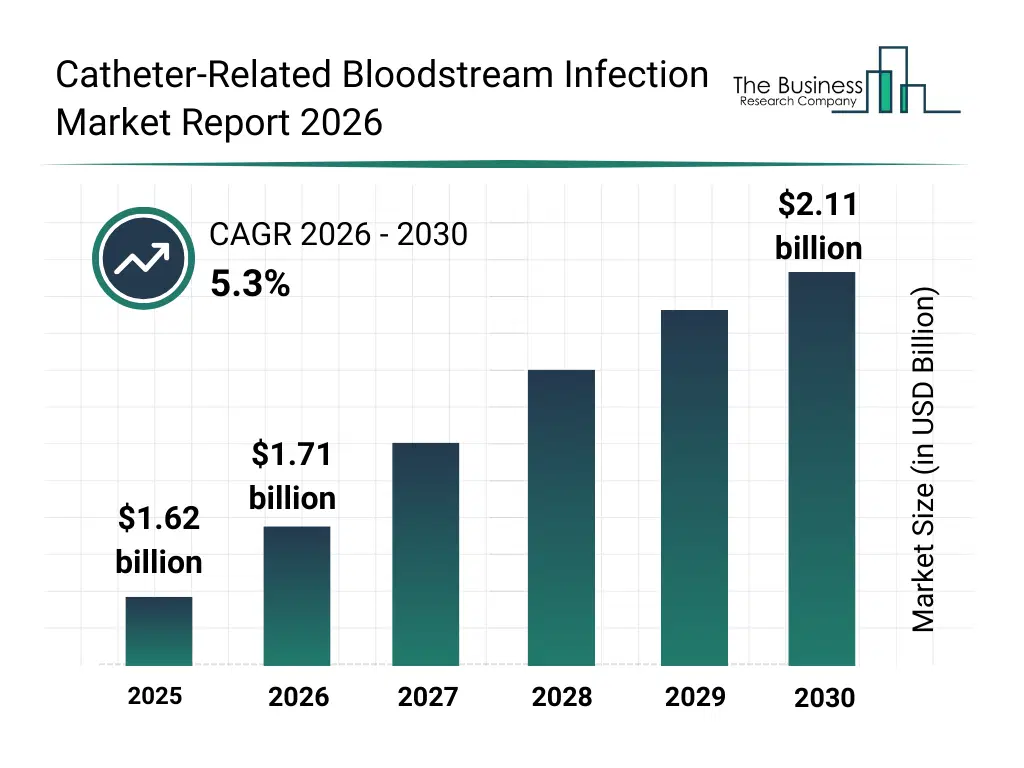
What Is The Catheter-Related Bloodstream Infection Market Size and Share 2026?
The catheter-related bloodstream infection market size has grown strongly in recent years. It will grow from $1.62 billion in 2025 to $1.71 billion in 2026 at a compound annual growth rate (CAGR) of 6.0%. The growth in the historic period can be attributed to increased use of central venous catheters, rising incidence of hospital-acquired infections, adoption of antibiotic lock therapy, expansion of intensive care units, improved clinical awareness of crbsi.What Is The Catheter-Related Bloodstream Infection Market Growth Forecast?
The catheter-related bloodstream infection market size is expected to see strong growth in the next few years. It will grow to $2.11 billion in 2030 at a compound annual growth rate (CAGR) of 5.3%. The growth in the forecast period can be attributed to increasing investments in infection prevention protocols, rising demand for antimicrobial resistance management, expansion of hospital infection control programs, growing adoption of combination therapies, advancements in diagnostic technologies. Major trends in the forecast period include increasing use of advanced antimicrobial lock solutions, growing adoption of infection surveillance programs, rising focus on hospital-acquired infection prevention, expansion of combination antimicrobial therapies, enhanced emphasis on early diagnosis and intervention.
Global Catheter-Related Bloodstream Infection Market Segmentation
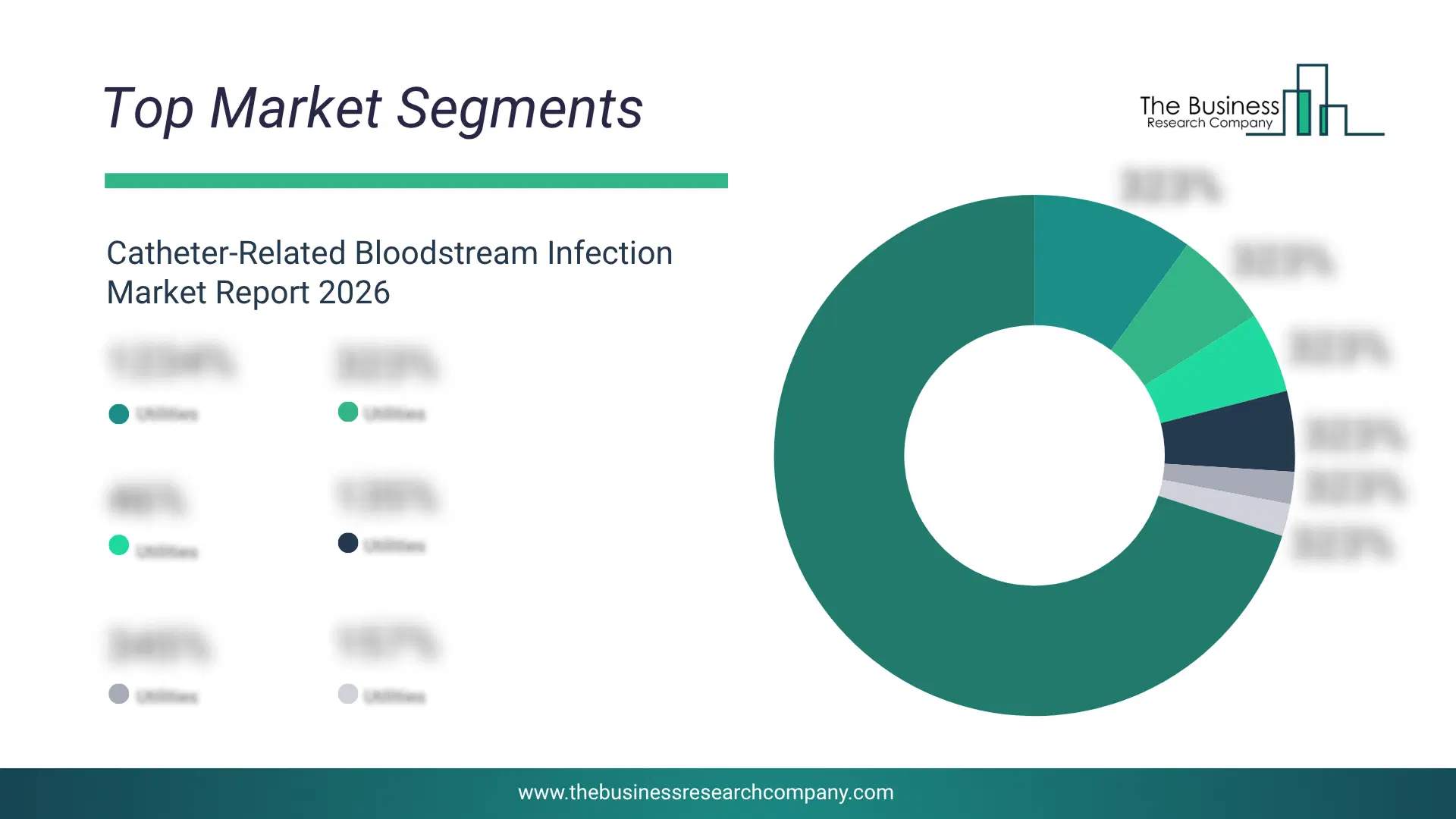
1) By Treatment: Antibiotic Lock Therapy, Anti-Microbial Agents 2) By Source Of Infection Or Causative Agents: Staphylococcus Aureus, Acinetobacter Baumannii, Escherichia Coli (E. Coli), Klebsiella Pneumoniae (K. Pneumonia), Candida Species (Candida Sp.), Pseudomonas Aeruginosa (P. Aeruginosa), Other Source Of Infection Or Causative Agents 3) By Distribution Channel: Hospital Pharmacies, Retail Pharmacies Subsegments: 1) By Antibiotic Lock Therapy: Catheter Lock Solutions (Antibiotic-based), Combination Antibiotic Lock Therapy 2) By Anti-Microbial Agents: Antibiotics, Antifungal Agents, Antiseptic AgentsWhat Are The Drivers Of The Catheter-Related Bloodstream Infection Market?
The rising prevalence of hospital-acquired infections is expected to propel the growth of the catheter-related bloodstream infection market going forward. Hospital-acquired infections (HAIs) are infections that patients acquire while receiving treatment for other conditions within a healthcare setting, typically manifesting 48 hours or more after admission. An increase in hospital-acquired infections can be attributed to various factors such as antimicrobial resistance, inadequate infection control measures, and patient susceptibility. Catheter-related bloodstream infections contribute significantly to hospital-acquired infections due to their invasive nature and potential for microbial colonization, posing risks to patients with indwelling catheters. For instance, in September 2025, according to the National Library of Medicine, a US-based medical library, in 2024, antimicrobial-resistant organisms (AROs) accounted for 6.6% of infections. About one-third of healthcare-associated infections (HAIs) were linked to medical devices, and the prevalence of central line-associated bloodstream infections (CLABSIs) doubled to 0.4%. Therefore, the rising prevalence of hospital-acquired infections will drive the growth of the catheter-related bloodstream infection industry. The rising healthcare expenditure is expected to propel the growth of the catheter-related bloodstream infection market going forward. Healthcare expenditure refers to the total financial resources spent by individuals, organizations, or governments on preventing, treating, and managing health conditions. Healthcare expenditure is increasing due to advancements in medical technology, as new diagnostic tools, treatments, and innovative therapies often come at higher costs, leading to greater overall spending in healthcare. Healthcare expenditure helps reduce catheter-related bloodstream infections by funding preventive measures, staff training, monitoring systems, and timely treatment, ultimately improving patient outcomes and lowering overall costs. For instance, in December 2024, according to the Centers for Medicare & Medicaid Services, a US-based agency responsible for administering the Medicare and Medicaid programs, in 2023, U.S. health care expenditures increased by 7.5%, climbing to $4.9 trillion, or roughly $14,570 for each individual. Therefore, the rising healthcare expenditure is driving the growth of the catheter-related bloodstream infection industry.Key Players In The Global Catheter-Related Bloodstream Infection Market
Major companies operating in the catheter-related bloodstream infection market are Pfizer Inc., Johnson & Johnson Services Inc., Novartis AG, 3M Company, Eli Lilly and Company, Fresenius Medical Care AG & Co. KGaA, Becton Dickinson and Company, Viatris Inc., B. Braun Medical Inc., Aurobindo Pharma Limited, Lupin Ltd., Xellia Pharmaceuticals Ltd., SteriMax Inc., Bactiguard AB, Hetero Healthcare Ltd., TauroPharm GmbH, Advacare Pharma, Citus Pharmaceuticals Inc., CorMedix Inc., JoinHub Pharma LLP, IntegraDose Compounding Services LLC
This chart is for illustrative purposes; the full report includes a detailed competitor analysis and comprehensive overview of the top 10 companies in the market.
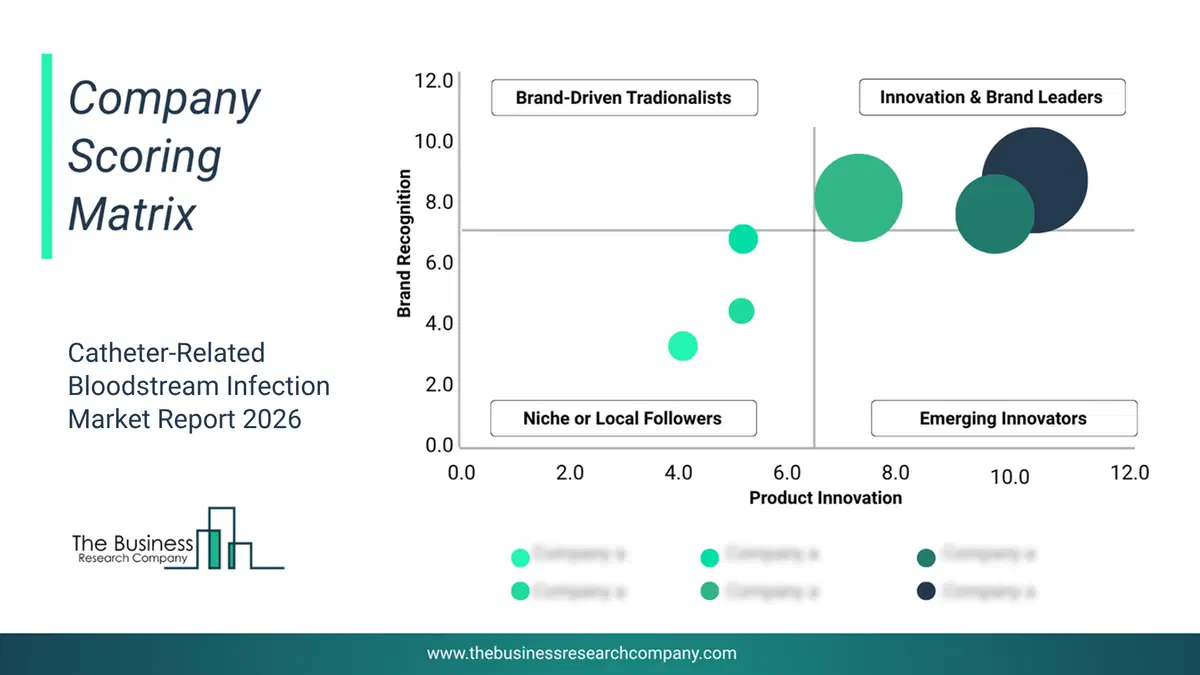
This chart maps companies by product innovation and brand strength, with bubble size indicating relative revenue, helping identify market leaders, challengers, and niche players. This is an illustrative chart; the full report provides a complete and accurate competitive analysis.
Global Catheter-Related Bloodstream Infection Market Trends and Insights
Major companies operating in the catheter-related bloodstream infection market are developing innovative catheter lock solutions to enhance infection prevention and improve patient outcomes. A catheter lock solution is a liquid instilled into a catheter to prevent infections and maintain catheter patency between uses. For instance, in November 2023, CorMedix Inc., a US-based biopharmaceutical company focused on developing and commercializing therapeutic products, received US Food and Drug Administration approval for DefenCath (taurolidine and heparin) catheter lock solution for adult patients with kidney failure undergoing chronic hemodialysis via central venous catheter (CVC). This antimicrobial and antifungal solution is tailored to reduce catheter-related bloodstream infections (CRBSIs), combining heparin for anticoagulation with taurolidine's broad-spectrum antimicrobial properties.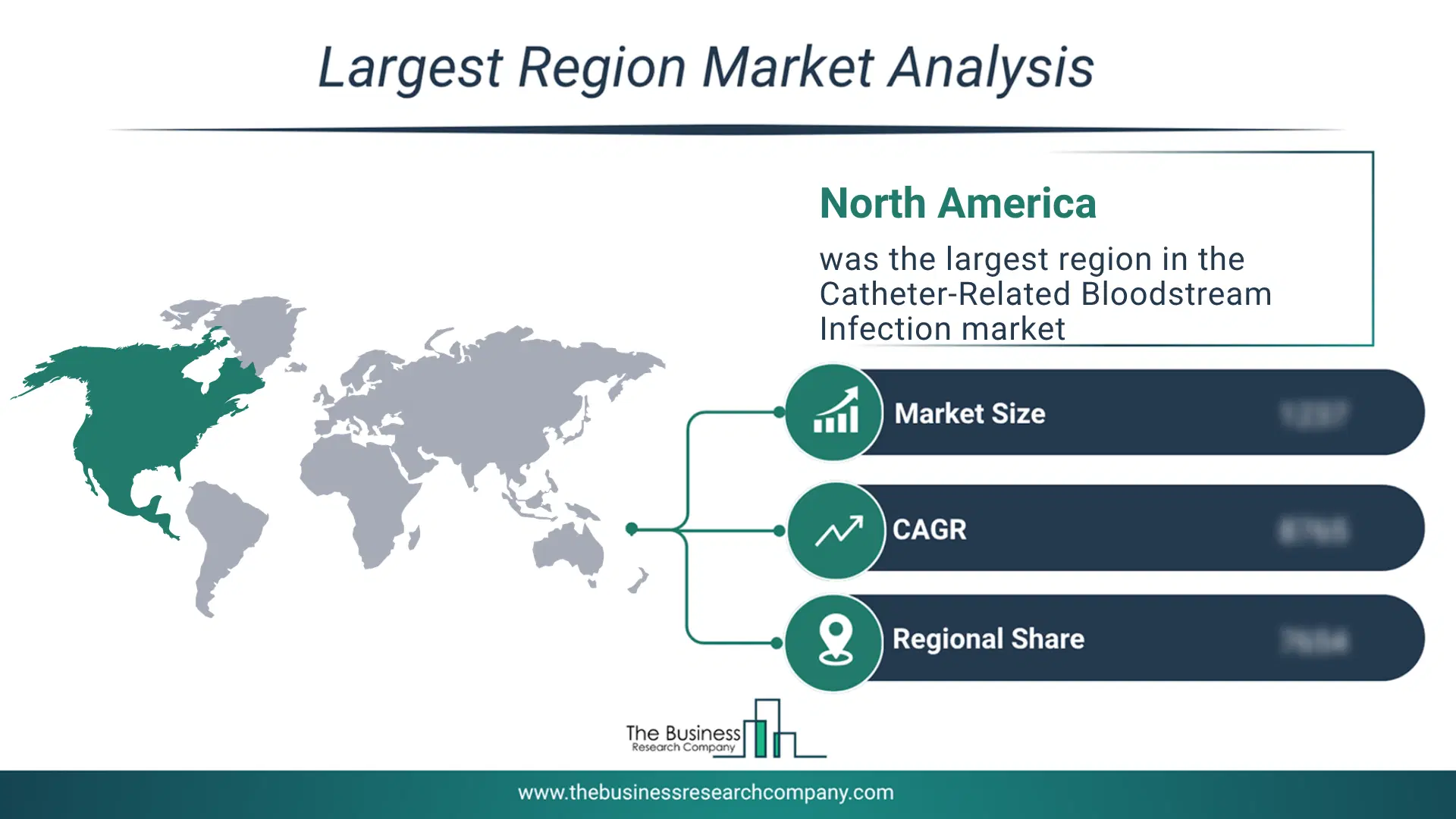
Regional Outlook
North America was the largest region in the catheter-related bloodstream infection market in 2025. The regions covered in this market report are Asia-Pacific, South East Asia, Western Europe, Eastern Europe, North America, South America, Middle East, Africa. The countries covered in this market report are Australia, Brazil, China, France, Germany, India, Indonesia, Japan, Taiwan, Russia, South Korea, UK, USA, Canada, Italy, Spain.What Defines the Catheter-Related Bloodstream Infection Market?
The catheter-related bloodstream infection market consists of revenues earned by entities by providing services such as blood culture testing, catheter flushing and maintenance, aseptic catheter insertion, hand hygiene training, and compliance monitoring. The market value includes the value of related goods sold by the service provider or included within the service offering. The catheter-related bloodstream infection market also includes sales of catheters, catheter insertion kits, catheter maintenance equipment, monitoring and diagnostic devices, and infection control equipment. Values in this market are ‘factory gate’ values, that is the value of goods sold by the manufacturers or creators of the goods, whether to other entities (including downstream manufacturers, wholesalers, distributors and retailers) or directly to end customers. The value of goods in this market includes related services sold by the creators of the goods.How is Market Value Defined and Measured?
The market value is defined as the revenues that enterprises gain from the sale of goods and/or services within the specified market and geography through sales, grants, or donations in terms of the currency (in USD unless otherwise specified). The revenues for a specified geography are consumption values that are revenues generated by organizations in the specified geography within the market, irrespective of where they are produced. It does not include revenues from resales along the supply chain, either further along the supply chain or as part of other products.
This chart presents market attractiveness based on a quantitative evaluation of growth, competition, strategic alignment, and risk, offering a clear view of opportunity areas for decision-making. This chart is for illustrative purposes; the full report contains the complete analysis.

This chart highlights the Total Addressable Market (TAM) by estimating the maximum revenue opportunity using an assumption-driven approach, supporting strategic planning and opportunity sizing across markets. The chart is illustrative; the full report provides a more comprehensive analysis.
What Key Data and Analysis Are Included in the Catheter-Related Bloodstream Infection Market Report 2026?
The catheter-related bloodstream infection market research report is one of a series of new reports from The Business Research Company that provides market statistics, including industry global market size, regional shares, competitors with the market share, detailed market segments, market trends and opportunities, and any further data you may need to thrive in the catheter-related bloodstream infection industry. The market research report delivers a complete perspective of everything you need, with an in-depth analysis of the current and future state of the industry.Catheter-Related Bloodstream Infection Market Report Forecast Analysis
| Report Attribute | Details |
|---|---|
| Market Size Value In 2026 | $1.71 billion |
| Revenue Forecast In 2030 | $2.11 billion |
| Growth Rate | CAGR of 5.3% from 2026 to 2030 |
| Base Year For Estimation | 2025 |
| Actual Estimates/Historical Data | 2020-2025 |
| Forecast Period | 2026 - 2030 |
| Market Representation | Revenue in USD Billion and CAGR from 2026 to 2030 |
| Segments Covered | Treatment, Source Of Infection Or Causative Agents, Distribution Channel |
| Regional Scope | Asia-Pacific, Western Europe, Eastern Europe, North America, South America, Middle East, Africa |
| Country Scope | The countries covered in the report are Australia, Brazil, China, France, Germany, India, Indonesia, Japan, Taiwan, Russia, South Korea, UK, USA, Canada, Italy, Spain |
| Key Companies Profiled | Pfizer Inc., Johnson & Johnson Services Inc., Novartis AG, 3M Company, Eli Lilly and Company, Fresenius Medical Care AG & Co. KGaA, Becton Dickinson and Company, Viatris Inc., B. Braun Medical Inc., Aurobindo Pharma Limited, Lupin Ltd., Xellia Pharmaceuticals Ltd., SteriMax Inc., Bactiguard AB, Hetero Healthcare Ltd., TauroPharm GmbH, Advacare Pharma, Citus Pharmaceuticals Inc., CorMedix Inc., JoinHub Pharma LLP, IntegraDose Compounding Services LLC |
| Customization Scope | Request for Customization |
| Pricing And Purchase Options | Explore Purchase Options |