

CD-19 Antibody Market Report 2026
Global Outlook – By Disease Type (B-Cell Non-Hodgkin Lymphoma, Chronic Lymphocytic Leukemia, Acute Lymphoblastic Leukemia, Other Disease Types), By Type (Polyclonal, Monoclonal), By Route Of Administration (Intravenous, Subcutaneous), By Application (Enzyme Linked Immunosorbent Assay, Flow Cytometry, Immunohistochemistry Frozen, Immunohistochemistry Paraffin, Other Applications) – Market Size, Trends, Strategies, and Forecast to 2030
CD-19 Antibody Market Overview
• CD-19 Antibody market size has reached to $1.89 billion in 2025 • Expected to grow to $2.86 billion in 2030 at a compound annual growth rate (CAGR) of 8.6% • Growth Driver: Rising B-Cell Malignancies To Drive Growth In The Market • Market Trend: Advancements In CD-19 Antibody Therapies Boost Treatment For B-Cell Malignancies • North America was the largest region in 2025.What Is Covered Under CD-19 Antibody Market?
CD19 antibody refers to a monoclonal antibody that specifically targets the CD19 protein, a cell surface marker found primarily on B cells. CD19 is critical in B cell development and is often overexpressed in B cell-related malignancies, such as certain leukemias and lymphomas. These antibodies are used in immunotherapy, including CAR-T cell therapy, to treat cancers by directing the immune system to attack CD19-expressing cells. The main disease types in the CD-19 antibody market include B-cell non-Hodgkin lymphoma, chronic lymphocytic leukaemia, acute lymphoblastic leukaemia, and others. B-cell non-Hodgkin lymphoma is a type of cancer that originates in B lymphocytes, a kind of white blood cell essential for immune defense. The CD-19 antibody types include polyclonal and monoclonal antibodies. The routes of administration are intravenous and subcutaneous. The applications of CD-19 antibodies include enzyme-linked immunosorbent assay, flow cytometry, immunohistochemistry frozen, immunohistochemistry paraffin, and others.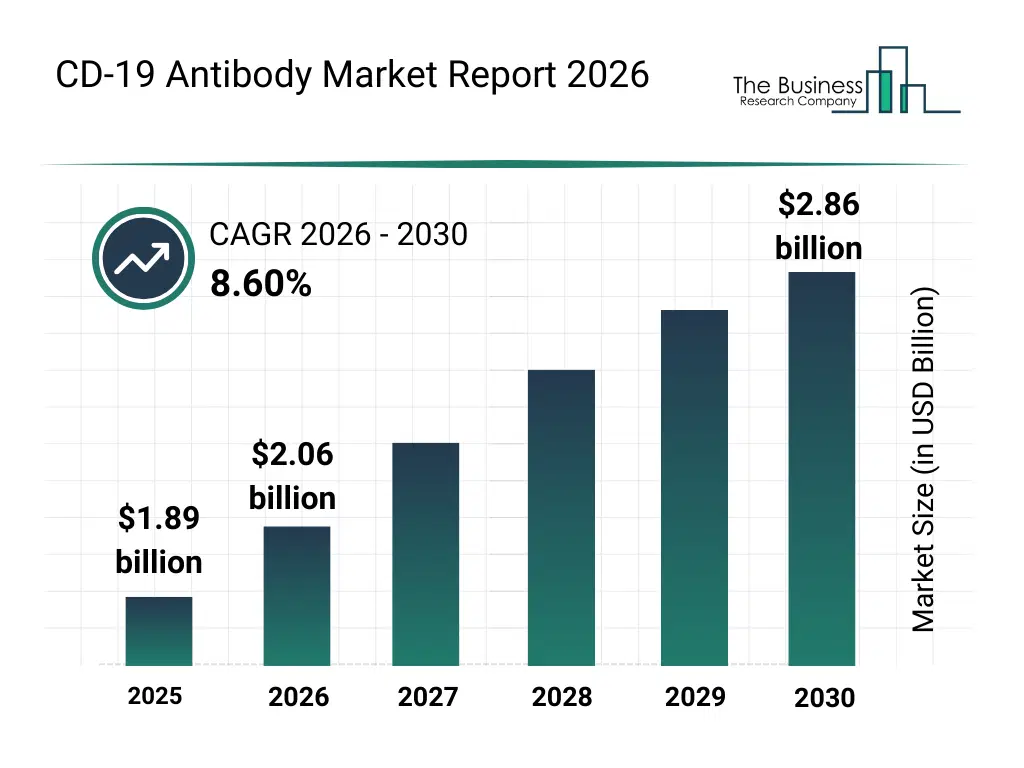
What Is The CD-19 Antibody Market Size and Share 2026?
The cd-19 antibody market size has grown strongly in recent years. It will grow from $1.89 billion in 2025 to $2.06 billion in 2026 at a compound annual growth rate (CAGR) of 8.7%. The growth in the historic period can be attributed to advances in monoclonal antibody technology, rising leukemia and lymphoma incidence, expansion of immunotherapy approvals, growth in oncology research, increased funding in hematology.What Is The CD-19 Antibody Market Growth Forecast?
The cd-19 antibody market size is expected to see strong growth in the next few years. It will grow to $2.86 billion in 2030 at a compound annual growth rate (CAGR) of 8.6%. The growth in the forecast period can be attributed to growth in cell and gene therapies, increasing precision oncology adoption, expansion of combination immunotherapies, rising cancer prevalence, growth in specialty oncology centers. Major trends in the forecast period include rising use of cd19-targeted immunotherapies, increasing adoption in b-cell malignancy treatment, growing integration with car-t cell therapies, expansion of monoclonal antibody development, increased focus on precision hematologic oncology.
Global CD-19 Antibody Market Segmentation
1) By Disease Type: B-Cell Non-Hodgkin Lymphoma, Chronic Lymphocytic Leukemia, Acute Lymphoblastic Leukemia, Other Disease Types 2) By Type: Polyclonal, Monoclonal 3) By Route Of Administration: Intravenous, Subcutaneous 4) By Application: Enzyme Linked Immunosorbent Assay, Flow Cytometry, Immunohistochemistry Frozen, Immunohistochemistry Paraffin, Other Applications Subsegments: 1) By B-Cell Non-Hodgkin Lymphoma: Diffuse Large B-Cell Lymphoma (DLBCL), Follicular Lymphoma, Mantle Cell Lymphoma 2) By Chronic Lymphocytic Leukemia: Relapsed Or Refractory CLL, Treatment-Naïve CLL 3) By Acute Lymphoblastic Leukemia: B-Cell Precursor ALL, Philadelphia Chromosome-Positive ALL 4) By Other Disease Types: Hairy Cell Leukemia, Waldenström’s Macroglobulinemia, Marginal Zone LymphomaWhat Is The Driver Of The CD-19 Antibody Market?
The rising prevalence of B-cell malignancies is expected to propel the growth of the CD-19 antibody market going forward. B-cell malignancies refer to a group of cancers that originate from abnormal B lymphocytes, including conditions such as B-cell lymphomas and leukemias, which affect the immune system and can lead to uncontrolled cell growth. The rising prevalence of B-cell malignancies is attributed to several factors such as the aging population, genetic factors, environmental exposures, lifestyle, improved detection, and immune system changes. CD19 antibody helps treat B-cell malignancies by specifically targeting the CD19 protein on the surface of malignant B cells, leading to their destruction while sparing healthy cells and enhancing the body's immune response. For instance, in January 2024, according to the American Cancer Society, a US-based non-profit organization, in the USA, around 80,620 people were estimated to be diagnosed with non-Hodgkin lymphoma, and 20,240 people, comprising 44,590 males and 36,030 females, are estimated to die due to non-Hodgkin lymphoma. Therefore, the rising prevalence of B-cell malignancies is driving the growth of the CD-19 antibody industry.Key Players In The Global CD-19 Antibody Market
Major companies operating in the cd-19 antibody market are Pfizer Inc., F. Hoffmann-La Roche Ltd., AstraZeneca plc, Novartis AG, Thermo Fisher Scientific Inc., Amgen Inc., Bio-Rad Laboratories Inc., Miltenyi Biotec GmbH, Abcam Plc, Kite Pharma Inc., BioLegend Inc., Xencor Inc., Juno Therapeutics Inc., BD Biosciences, Zenas BioPharma Inc., Cell Signaling Technology Inc., Santa Cruz Biotechnology Inc., Novus Biologicals LLC, Tonbo Biosciences Inc., Bio X Cell Inc.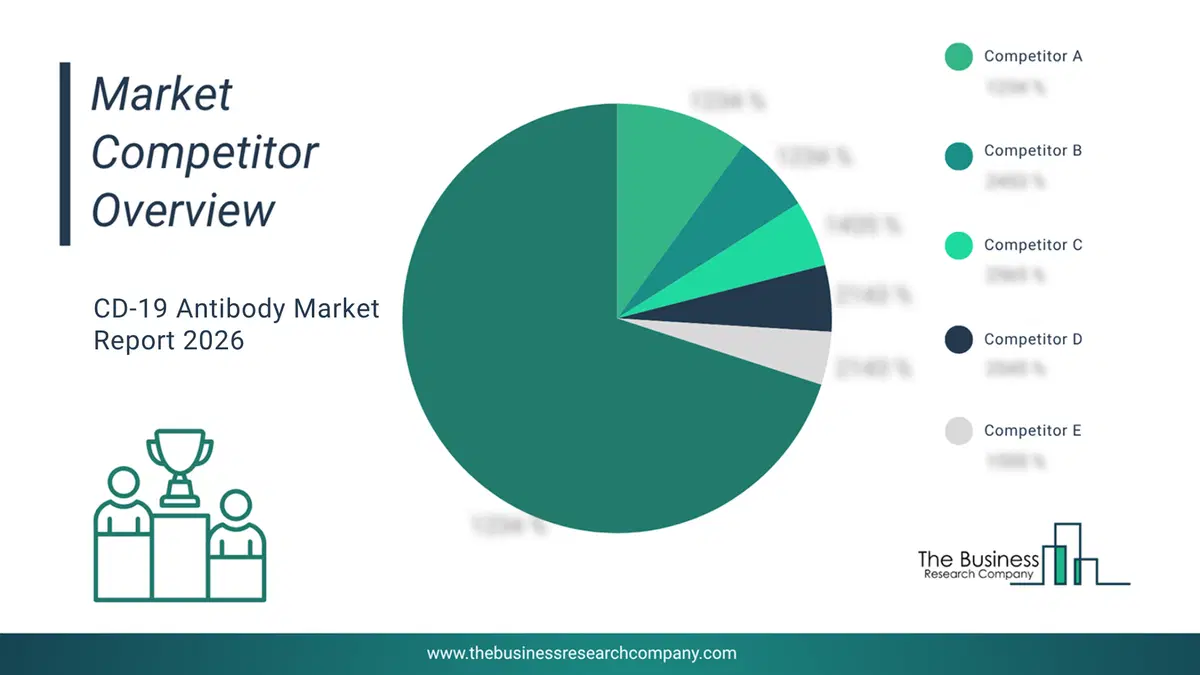
This chart is for illustrative purposes; the full report includes a detailed competitor analysis and comprehensive overview of the top 10 companies in the market.
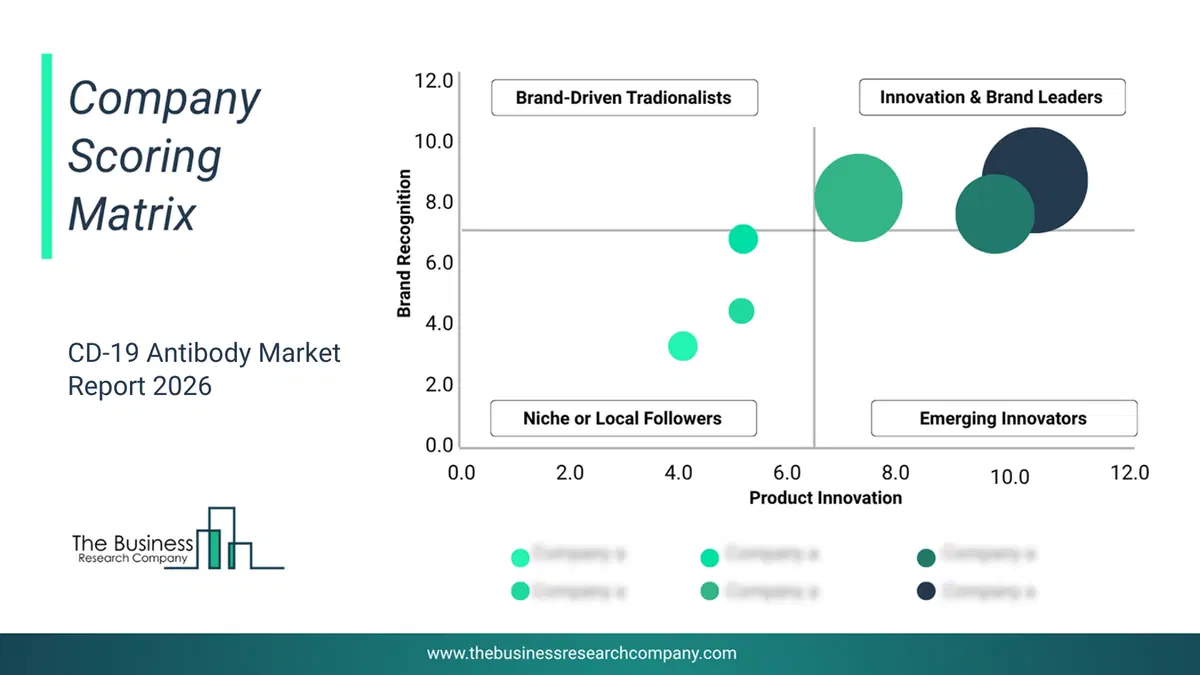
This chart maps companies by product innovation and brand strength, with bubble size indicating relative revenue, helping identify market leaders, challengers, and niche players. This is an illustrative chart; the full report provides a complete and accurate competitive analysis.
Global CD-19 Antibody Market Trends and Insights
Major companies operating in the CD-19 antibody market are focusing on developing technological innovations, such as genetically modified autologous T-cell immunotherapy, to enhance the efficacy of cancer treatments, particularly for hematologic malignancies. Genetically modified autologous T cell immunotherapy is a treatment where a patient's own T cells are genetically engineered to recognize and attack cancer cells, then reintroduced into the patient's body to enhance the immune response against the disease. For instance, in November 2024, Autolus Therapeutics plc, a US-based biopharmaceutical company, announced the U.S. FDA approval for AUCATZYL (obecabtagene autoleucel) indicated for the treatment of adult patients with relapsed or refractory B-cell precursor acute lymphoblastic leukemia (ALL). This design aims to reduce excessive T-cell activation, thereby minimizing toxicity and enhancing the persistence of the therapeutic cells. It is administered as a split-dose infusion on days 1 and 10, with dosing individualized based on a bone marrow assessment prior to treatment.What Are Latest Mergers And Acquisitions In The CD-19 Antibody Market?
In December 2023, AstraZeneca plc, a UK-based biopharmaceutical company, acquired Gracell Biotechnologies Inc. for an undisclosed amount. With this acquisition, AstraZeneca aims to enhance its cell therapy pipeline by leveraging Gracell Biotechnologies’ innovative FasTCAR platform and expertise in developing CD-19 and BCMA-targeted CAR-T therapies. Gracell Biotechnologies Inc. is a China-based clinical-stage biopharmaceutical company dedicated to discovering and developing innovative cell therapies.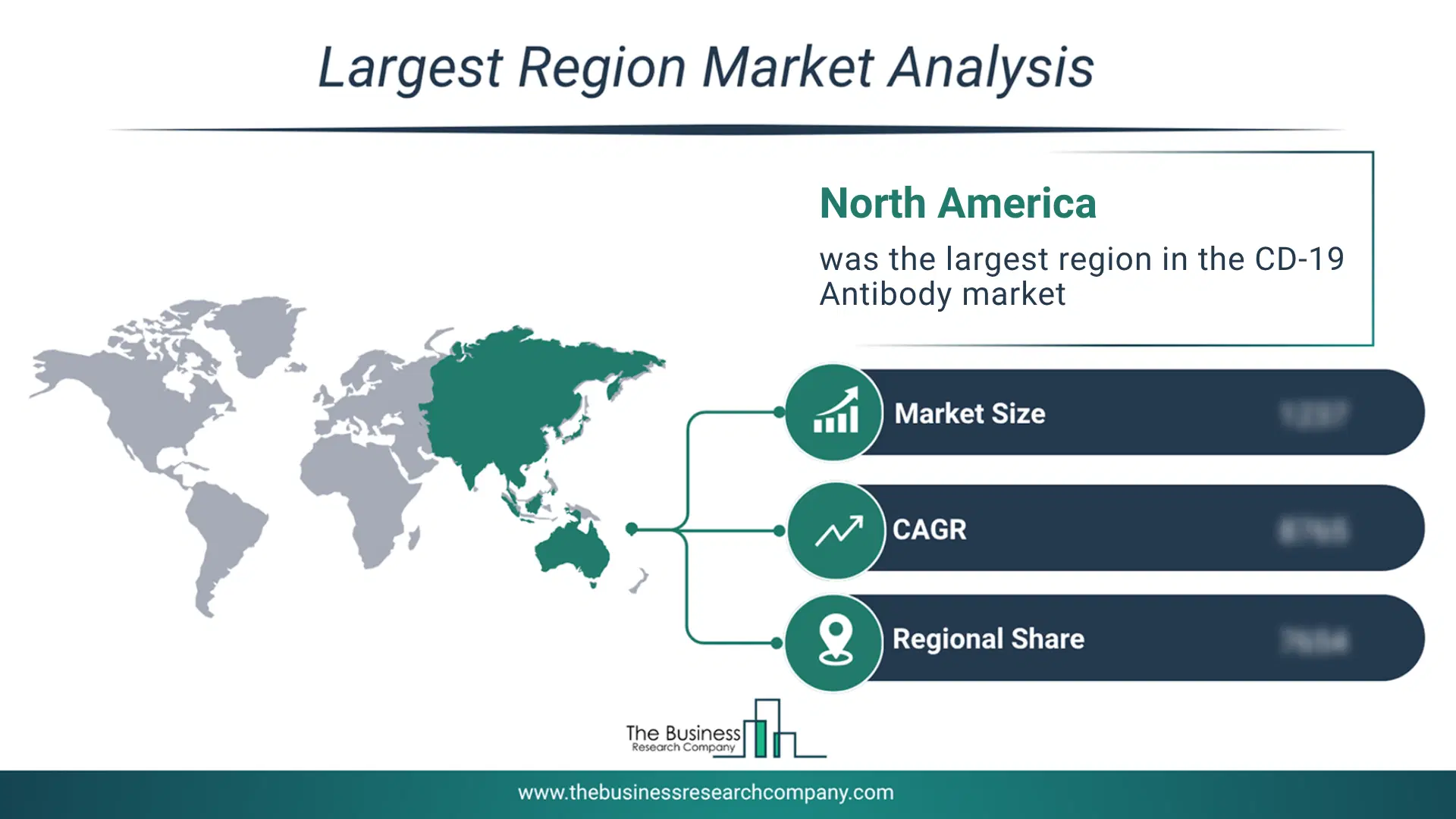
Regional Insights
North America was the largest region in the CD-19 antibody market in 2025. The regions covered in this market report are Asia-Pacific, South East Asia, Western Europe, Eastern Europe, North America, South America, Middle East, Africa. The countries covered in this market report are Australia, Brazil, China, France, Germany, India, Indonesia, Japan, Taiwan, Russia, South Korea, UK, USA, Canada, Italy, Spain.What Defines the CD-19 Antibody Market?
The CD-19 antibody market consists of revenues earned by entities by providing monoclonal antibody therapies, CAR-T cell therapies, diagnostic services, biopharmaceutical research and development, and manufacturing services related to the production of CD-19 targeted treatments. The market value includes the value of related goods sold by the service provider or included within the service offering. The CD-19 antibody market includes the sale of recombinant antibodies, and antibody-based therapies targeting CD19 for research and clinical applications. Values in this market are ‘factory gate’ values, that is, the value of goods sold by the manufacturers or creators of the goods, whether to other entities (including downstream manufacturers, wholesalers, distributors, and retailers) or directly to end customers. The value of goods in this market includes related services sold by the creators of the goods.How is Market Value Defined and Measured?
The market value is defined as the revenues that enterprises gain from the sale of goods and/or services within the specified market and geography through sales, grants, or donations in terms of the currency (in USD unless otherwise specified). The revenues for a specified geography are consumption values that are revenues generated by organizations in the specified geography within the market, irrespective of where they are produced. It does not include revenues from resales along the supply chain, either further along the supply chain or as part of other products.
This chart presents market attractiveness based on a quantitative evaluation of growth, competition, strategic alignment, and risk, offering a clear view of opportunity areas for decision-making. This chart is for illustrative purposes; the full report contains the complete analysis.

This chart highlights the Total Addressable Market (TAM) by estimating the maximum revenue opportunity using an assumption-driven approach, supporting strategic planning and opportunity sizing across markets. The chart is illustrative; the full report provides a more comprehensive analysis.
What Key Data and Analysis Are Included in the CD-19 Antibody Market Report 2026?
The cd-19 antibody market research report is one of a series of new reports from The Business Research Company that provides market statistics, including industry global market size, regional shares, competitors with the market share, detailed market segments, market trends and opportunities, and any further data you may need to thrive in the cd-19 antibody industry. The market research report delivers a complete perspective of everything you need, with an in-depth analysis of the current and future state of the industry.CD-19 Antibody Market Report Forecast Analysis
| Report Attribute | Details |
|---|---|
| Market Size Value In 2026 | $2.06 billion |
| Revenue Forecast In 2030 | $2.86 billion |
| Growth Rate | CAGR of 8.7% from 2026 to 2030 |
| Base Year For Estimation | 2025 |
| Actual Estimates/Historical Data | 2020-2025 |
| Forecast Period | 2026 - 2030 |
| Market Representation | Revenue in USD Billion and CAGR from 2026 to 2030 |
| Segments Covered | Disease Type, Type, Route Of Administration, Application |
| Regional Scope | Asia-Pacific, Western Europe, Eastern Europe, North America, South America, Middle East, Africa |
| Country Scope | The countries covered in the report are Australia, Brazil, China, France, Germany, India, Indonesia, Japan, Taiwan, Russia, South Korea, UK, USA, Canada, Italy, Spain. |
| Key Companies Profiled | Pfizer Inc., F. Hoffmann-La Roche Ltd., AstraZeneca plc, Novartis AG, Thermo Fisher Scientific Inc., Amgen Inc., Bio-Rad Laboratories Inc., Miltenyi Biotec GmbH, Abcam Plc, Kite Pharma Inc., BioLegend Inc., Xencor Inc., Juno Therapeutics Inc., BD Biosciences, Zenas BioPharma Inc., Cell Signaling Technology Inc., Santa Cruz Biotechnology Inc., Novus Biologicals LLC, Tonbo Biosciences Inc., Bio X Cell Inc. |
| Customization Scope | Request for Customization |
| Pricing And Purchase Options | Explore Purchase Options |