
CD20 Antibody Market Report 2026
Global Outlook – By Antibody Type (Monoclonal Antibodies, Biosimilar CD20 Antibodies), By Drug Class Or Generation (Chimeric CD20 Antibodies, Humanized CD20 Antibodies, Fully Human CD20 Antibodies), By Indication (Oncology, Non-Hodgkin Lymphoma, Chronic Lymphocytic Leukemia, Other B-cell Malignancies, Autoimmune Disorders, Rheumatoid Arthritis, Multiple Sclerosis, Other Indications), By Route Of Administration (Intravenous (IV), Subcutaneous (SC)), By End User (Hospitals, Specialty Oncology And Immunology Clinics, Infusion Centers), By Distribution Channel (Hospital Pharmacies, Specialty Pharmacies) - Market Size, Trends, Strategies, and Forecast to 2030
CD20 Antibody Market Overview
• CD20 Antibody market size has reached to $10.96 billion in 2025 • Expected to grow to $17.63 billion in 2030 at a compound annual growth rate (CAGR) of 9.9% • Growth Driver: Rising B-Cell Malignancies To Drive Growth In CD20 Antibody Market • Market Trend: Technological Innovations Shaping The Future Of CD20 Antibody Therapies • North America was the largest region in 2025.What Is Covered Under CD20 Antibody Market?
CD20 antibodies are monoclonal antibodies that specifically target CD20, a protein found on the surface of B cells (a type of white blood cell involved in the immune response). These antibodies are used primarily to treat diseases related to abnormal B-cell function, such as cancers and autoimmune disorders. The main function of CD20 antibodies is to bind to the CD20 protein on B cells and trigger their destruction. The main types of CD-20 antibody are monoclonal antibody and polyclonal antibody. Monoclonal antibody is a laboratory-made protein that can bind to specific targets, such as the CD19 antigen found on B cells. The applications are flow cytometry, enzyme-linked immunosorbent assay (ELISA), western blot, immunoprecipitation, and immunofluorescence and the various end users are hospitals, specialty clinics, ambulatory surgical centers, and others.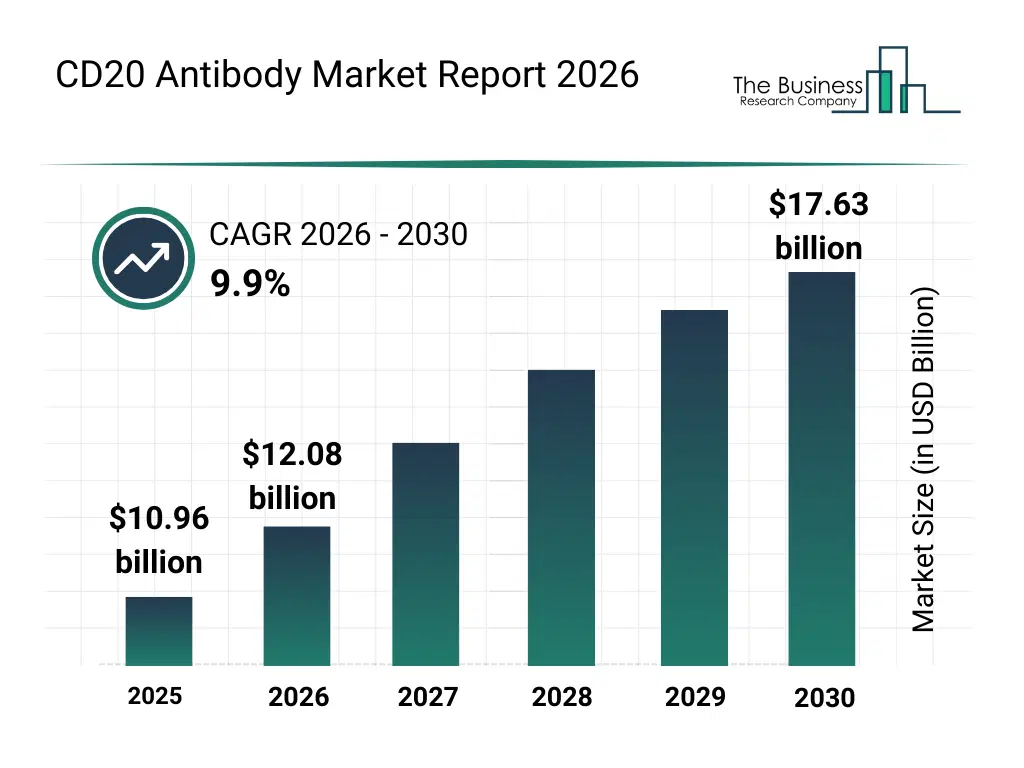
What Is The CD20 Antibody Market Size and Share 2026?
The cd20 antibody market size has grown rapidly in recent years. It will grow from $10.96 billion in 2025 to $12.08 billion in 2026 at a compound annual growth rate (CAGR) of 10.2%. The growth in the historic period can be attributed to increasing prevalence of b-cell related cancers, wider adoption of monoclonal antibody therapies, growing clinical validation of cd20 targeting, expansion of oncology treatment protocols, availability of advanced biologics manufacturing.What Is The CD20 Antibody Market Growth Forecast?
The cd20 antibody market size is expected to see strong growth in the next few years. It will grow to $17.63 billion in 2030 at a compound annual growth rate (CAGR) of 9.9%. The growth in the forecast period can be attributed to increasing research into next-generation cd20 antibodies, rising demand for targeted immunotherapies, expansion of autoimmune disease treatment options, increasing approvals of biosimilar antibodies, growing investments in biologic drug development. Major trends in the forecast period include expanding use of next-generation cd20 monoclonal antibodies, growing development of biosimilar cd20 therapies, rising focus on improved antibody engineering, increasing clinical use in autoimmune disorders, enhanced optimization of antibody binding efficacy.
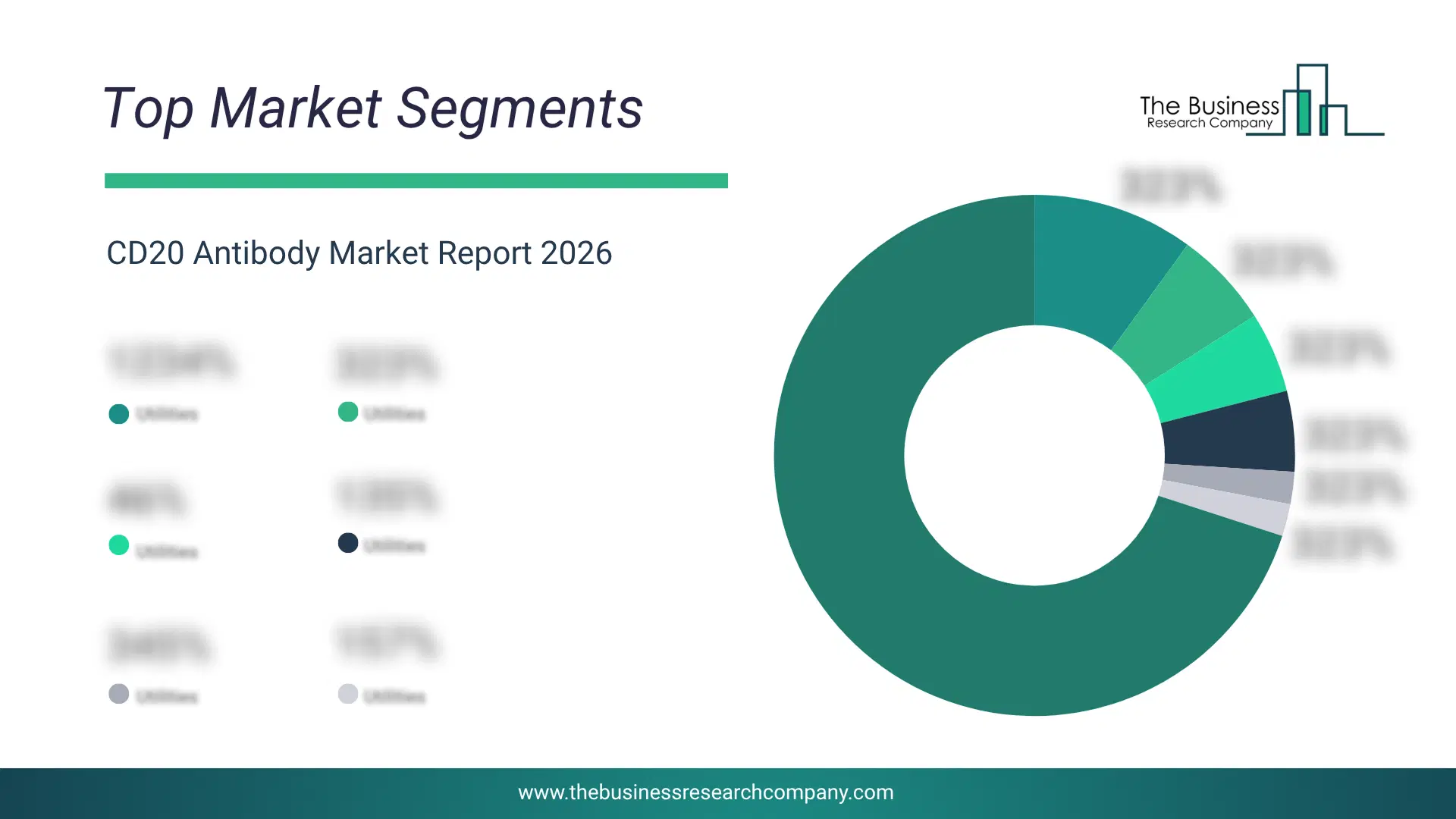
Global CD20 Antibody Market Segmentation
1) By Antibody Type: Monoclonal Antibodies, Biosimilar CD20 Antibodies 2) By Drug Class Or Generation: Chimeric CD20 Antibodies, Humanized CD20 Antibodies, Fully Human CD20 Antibodies 3) By Indication: Oncology, Non-Hodgkin Lymphoma, Chronic Lymphocytic Leukemia, Other B-cell Malignancies, Autoimmune Disorders, Rheumatoid Arthritis, Multiple Sclerosis, Other Indications 4) By Route Of Administration: Intravenous (IV), Subcutaneous (SC) 5) By End User: Hospitals, Specialty Oncology And Immunology Clinics, Infusion Centers 6) By Distribution Channel: Hospital Pharmacies, Specialty Pharmacies Subsegments: 1) By Monoclonal Antibodies: Rituximab, Obinutuzumab, Ofatumumab, Ocrelizumab, Ublituximab 2) By Biosimilar CD20 Antibodies: Rituximab Biosimilars, Truxima, Rixathon Or Riximyo, Ruxience, BlitzimaWhat Is The Driver Of The CD20 Antibody Market?
The increasing incidences of B-cell malignancies are expected to propel the growth of the CD20 antibody market going forward. B-cell malignancies refers to the increasing number of cases of cancers that affect B cells, a type of white blood cell involved in the immune response. This can be attributed to several factors such as the aging population, genetic factors, environmental exposures, lifestyle, improved detection, and immune system changes. CD20 antibodies, such as rituximab, are used to target and deplete malignant B-cells in B-cell malignancies such as non-Hodgkin lymphoma and chronic lymphocytic leukemia, enhancing treatment outcomes. For instance, in 2024, according to the report published by the American College of Cardiology, an US-based nonprofit medical association estimates that in 2025, approximately 80,350 people (45,140 males and 35,210 females), including both adults and children, will be diagnosed with non-Hodgkin lymphoma (NHL). Additionally, around 19,390 individuals (11,060 males and 8,330 females) are expected to die from this cancer. Therefore, the rising prevalence of B-cell malignancies is driving the growth of the CD-19 antibody market.Key Players In The Global CD20 Antibody Market
Major companies operating in the cd20 antibody market are F Hoffmann-La Roche AG, Novartis AG, Biogen Inc, Amgen Inc, Teva Pharmaceutical Industries Ltd, Genmab A/S, TG Therapeutics Inc, IGM Biosciences Inc, Celltrion Inc, Sandoz Group AG, Viatris Inc, Pfizer Inc, Biocon Ltd, Dr Reddy's Laboratories Ltd, Zydus Lifesciences Ltd, Intas Pharmaceuticals Ltd, Lupin Ltd, Torrent Pharmaceuticals Ltd, Merck KGaA, Fresenius SE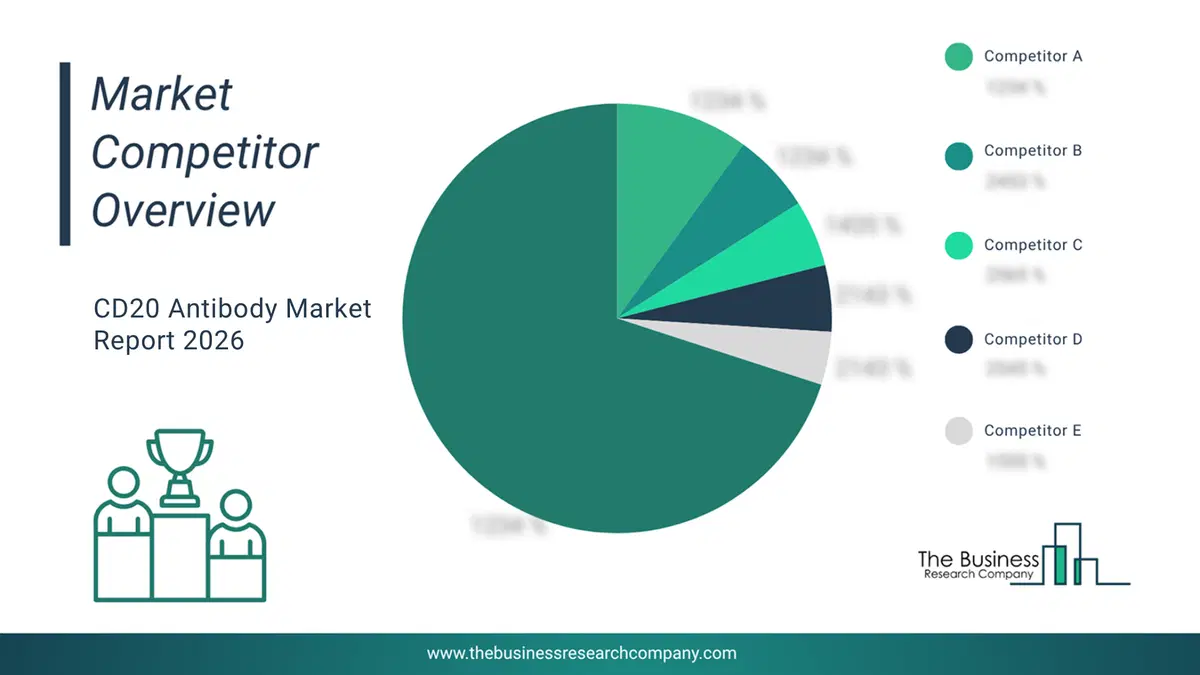
This chart is for illustrative purposes; the full report includes a detailed competitor analysis and comprehensive overview of the top 10 companies in the market.
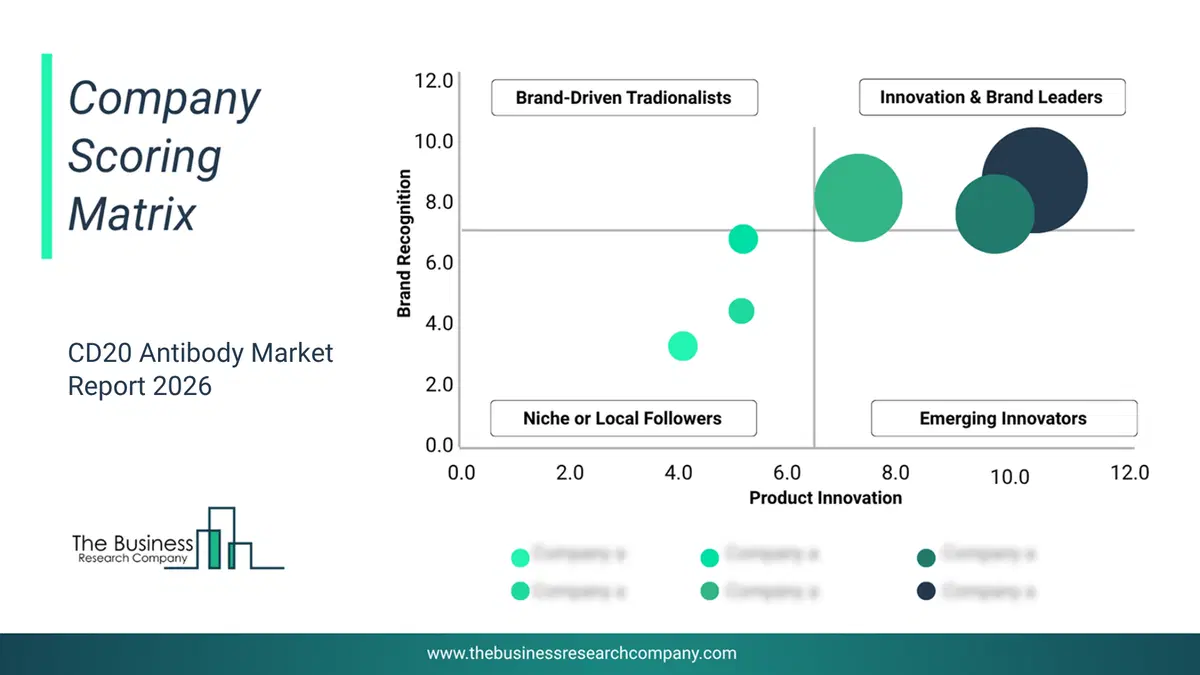
This chart maps companies by product innovation and brand strength, with bubble size indicating relative revenue, helping identify market leaders, challengers, and niche players. This is an illustrative chart; the full report provides a complete and accurate competitive analysis.
Global CD20 Antibody Market Trends and Insights
Major companies operating in the CD20 antibody market are focusing on developing technological innovations such as biosimilars to enhance treatment accessibility, reduce healthcare costs, and address the growing demand for affordable and effective therapies for B-cell malignancies and autoimmune diseases. Biosimilars are biological medical products highly similar to an already approved reference product with no clinically meaningful differences in safety, purity, or efficacy. For instance, in July 2024, Dr. Reddy's Laboratories, an India-based pharmaceutical company, announced that it had received a complete response letter (CRL) from the US Food and Drug Administration (USFDA) for its rituximab biosimilar candidate and would also work closely with the USFDA to address and resolve all concerns within the stipulated timelines aiming to make the biosimilar rituximab available to patients in the United States. Rituximab biosimilar works by targeting the CD20 protein on the surface of B-cells initiating a response that leads to the destruction of these abnormal or overactive B-cells.What Are Latest Mergers And Acquisitions In The CD20 Antibody Market?
In October 2024, GSK plc, a UK-based biopharmaceutical and biotechnology company, acquired CMG1A46, a dual CD19 and CD20-targeted T cell-engager (TCE) currently in clinical stages from Chimagen Biosciences for an undisclosed amount. With this acquisition, GSK plans to develop and commercialize CMG1A46 with a focus on B cell-driven autoimmune diseases, such as systemic lupus erythematosus (SLE) and lupus nephritis (LN), with the potential to expand into related autoimmune diseases. Chimagen Biosciences is a China-based clinical-stage biotechnology company focused on the discovery and development of novel multi-specific T cell-engagers and NK cell-engagers.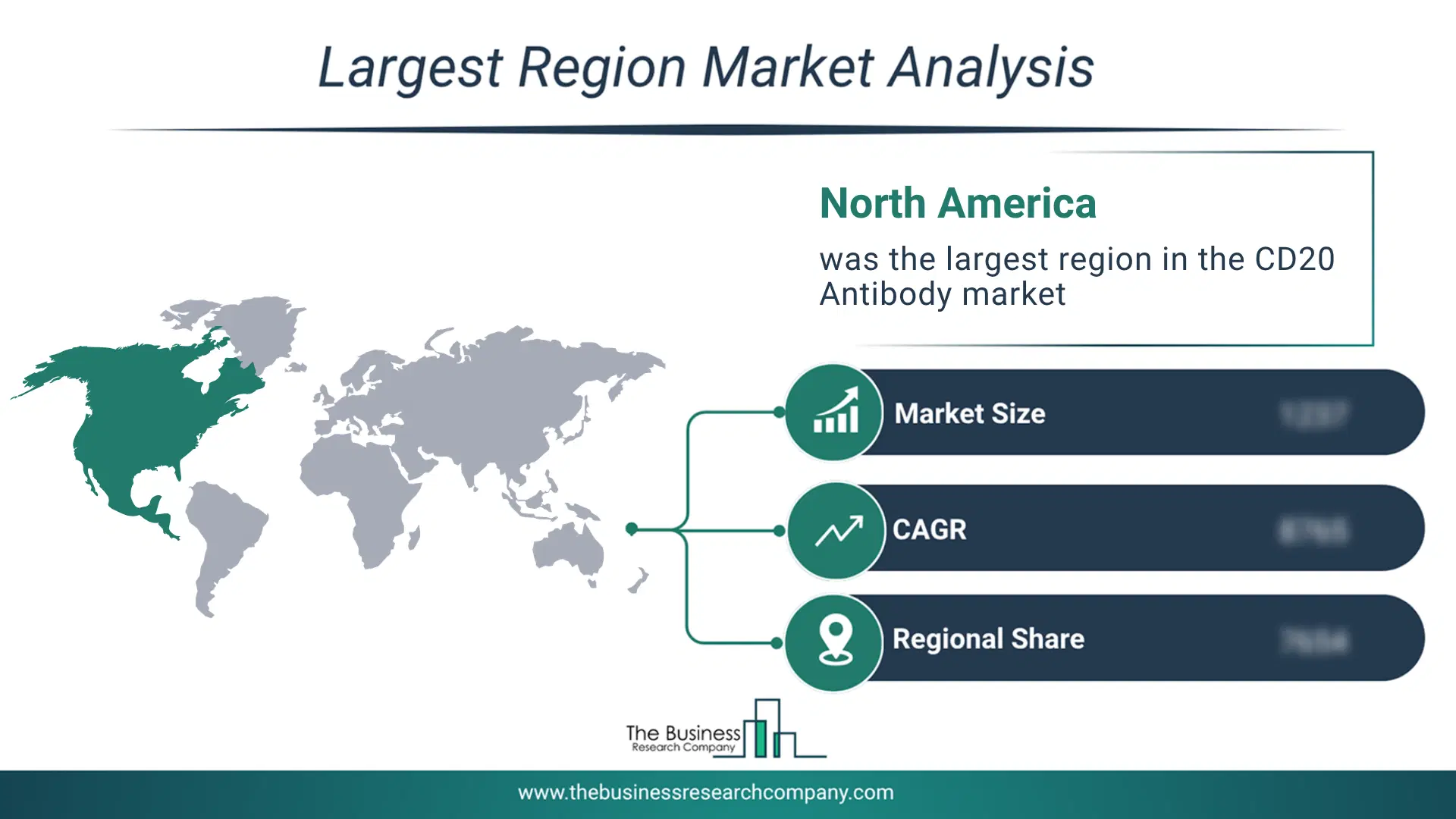
Regional Outlook
North America was the largest region in the CD20 antibody market in 2025. The regions covered in this market report are Asia-Pacific, South East Asia, Western Europe, Eastern Europe, North America, South America, Middle East, Africa. The countries covered in this market report are Australia, Brazil, China, France, Germany, India, Indonesia, Japan, Taiwan, Russia, South Korea, UK, USA, Canada, Italy, Spain.What Defines the CD20 Antibody Market?
The CD20 antibody market consists of sales of rituximab, obinutuzumab, and ofatumumab. Values in this market are ‘factory gate’ values, that is the value of goods sold by the manufacturers or creators of the goods, whether to other entities (including downstream manufacturers, wholesalers, distributors and retailers) or directly to end customers. The value of goods in this market includes related services sold by the creators of the goods.How is Market Value Defined and Measured?
The market value is defined as the revenues that enterprises gain from the sale of goods and/or services within the specified market and geography through sales, grants, or donations in terms of the currency (in USD unless otherwise specified). The revenues for a specified geography are consumption values that are revenues generated by organizations in the specified geography within the market, irrespective of where they are produced. It does not include revenues from resales along the supply chain, either further along the supply chain or as part of other products.
This chart presents market attractiveness based on a quantitative evaluation of growth, competition, strategic alignment, and risk, offering a clear view of opportunity areas for decision-making. This chart is for illustrative purposes; the full report contains the complete analysis.

This chart highlights the Total Addressable Market (TAM) by estimating the maximum revenue opportunity using an assumption-driven approach, supporting strategic planning and opportunity sizing across markets. The chart is illustrative; the full report provides a more comprehensive analysis.
What Key Data and Analysis Are Included in the CD20 Antibody Market Report 2026?
The cd20 antibody market research report is one of a series of new reports from The Business Research Company that provides market statistics, including industry global market size, regional shares, competitors with the market share, detailed market segments, market trends and opportunities, and any further data you may need to thrive in the cd20 antibody industry. The market research report delivers a complete perspective of everything you need, with an in-depth analysis of the current and future state of the industry.CD20 Antibody Market Report Forecast Analysis
| Report Attribute | Details |
|---|---|
| Market Size Value In 2026 | $12.08 billion |
| Revenue Forecast In 2030 | $17.63 billion |
| Growth Rate | CAGR of 9.9% from 2026 to 2030 |
| Base Year For Estimation | 2025 |
| Actual Estimates/Historical Data | 2020-2025 |
| Forecast Period | 2026 - 2030 |
| Market Representation | Revenue in USD Billion and CAGR from 2026 to 2030 |
| Segments Covered | Antibody Type, Drug Class Or Generation, Indication, Route Of Administration, End User, Distribution Channel |
| Regional Scope | Asia-Pacific, Western Europe, Eastern Europe, North America, South America, Middle East, Africa |
| Country Scope | The countries covered in the report are Australia, Brazil, China, France, Germany, India, Indonesia, Japan, Taiwan, Russia, South Korea, UK, USA, Canada, Italy, Spain |
| Key Companies Profiled | F Hoffmann-La Roche AG, Novartis AG, Biogen Inc, Amgen Inc, Teva Pharmaceutical Industries Ltd, Genmab A/S, TG Therapeutics Inc, IGM Biosciences Inc, Celltrion Inc, Sandoz Group AG, Viatris Inc, Pfizer Inc, Biocon Ltd, Dr Reddy's Laboratories Ltd, Zydus Lifesciences Ltd, Intas Pharmaceuticals Ltd, Lupin Ltd, Torrent Pharmaceuticals Ltd, Merck KGaA, Fresenius SE |
| Customization Scope | Request for Customization |
| Pricing And Purchase Options | Explore Purchase Options |