
Celiac Disease Treatment Market Report 2026
Global Outlook – By Treatment Type (Vitamins And Minerals, Gluten Degrading Enzymes, Symptomatic Treatment, Other Treatments), By Diagnosis (Serological Tests, Genetic Testing, Biopsy), By Distribution Channel (Hospitals, Research Centres, Clinics, Other Distribution Channels) – Market Size, Trends, Strategies, and Forecast to 2030
Celiac Disease Treatment Market Overview
• Celiac Disease Treatment market size has reached to $0.66 billion in 2025 • Expected to grow to $1.03 billion in 2030 at a compound annual growth rate (CAGR) of 9.2% • Growth Driver: Rise In Prevalence Of Diabetes Fueling The Growth Of The Market Due To Shared Autoimmune Links And Dietary Management Needs • Market Trend: Innovative Oral Therapies Targeting Immune Response And Gut Health • North America was the largest region in 2025 and Asia-Pacific is the fastest growing region.What Is Covered Under Celiac Disease Treatment Market?
Celiac disease treatment involves managing the Celiac disease, an autoimmune reaction to gluten that damages the small intestine and impairs nutrient absorption by following a strict gluten-free diet. It avoids foods and products containing wheat, barley, rye, and other gluten-containing grains. Celiac disease treatment reduces symptoms, heals the lining of the small intestine, and prevents long-term health issues. The main types of treatment for celiac disease are vitamins and minerals, gluten-degrading enzymes, symptomatic treatments, and others. Vitamins and minerals are essential micronutrients required in small amounts to support key bodily functions such as immune response, energy production, and bone health. Enzyme therapies target symptoms such as distension, diarrhea, anorexia, bloating, gas, and fatigue. Diagnostic methods used for celiac disease include serological tests, genetic testing, and intestinal biopsy. Treatment and diagnostic services are delivered through various distribution channels, including hospitals, research centers, clinics, and others.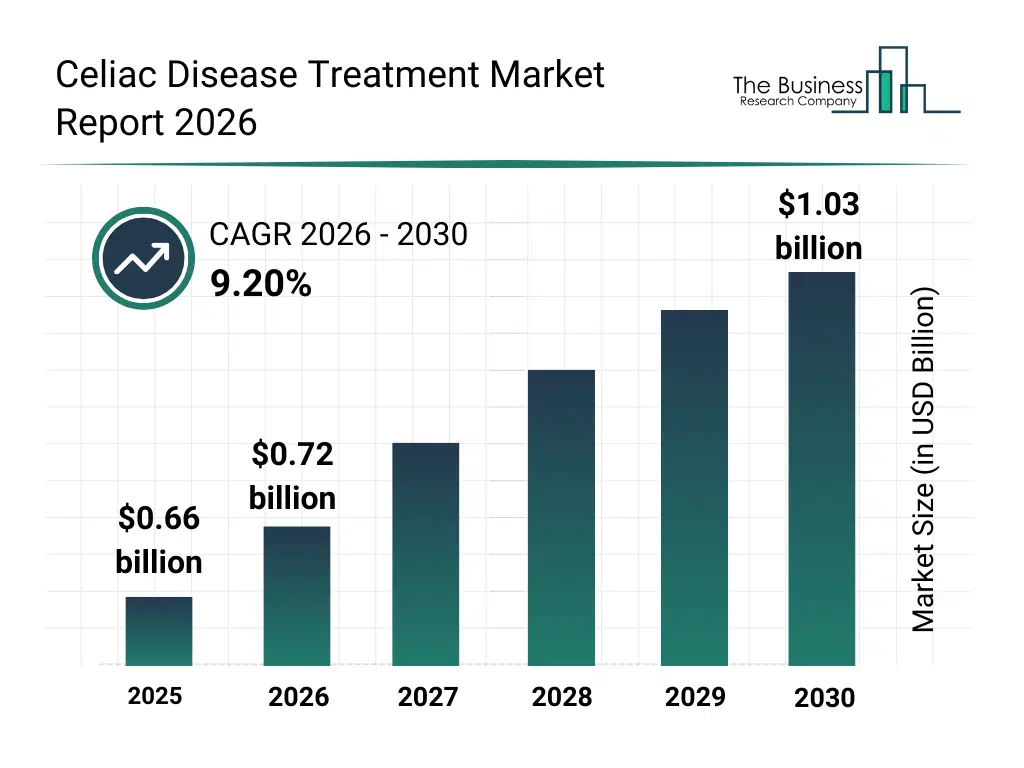
What Is The Celiac Disease Treatment Market Size and Share 2026?
The celiac disease treatment market size has grown strongly in recent years. It will grow from $0.66 billion in 2025 to $0.72 billion in 2026 at a compound annual growth rate (CAGR) of 9.3%. The growth in the historic period can be attributed to limited pharmacological treatment options, reliance on gluten-free diet management, increasing diagnosis rates, rising awareness of autoimmune disorders, growth in diagnostic testing availability.What Is The Celiac Disease Treatment Market Growth Forecast?
The celiac disease treatment market size is expected to see strong growth in the next few years. It will grow to $1.03 billion in 2030 at a compound annual growth rate (CAGR) of 9.2%. The growth in the forecast period can be attributed to development of non-dietary therapeutic options, expansion of enzyme and immunotherapy pipelines, rising global prevalence of celiac disease, improved diagnostic accuracy, increased healthcare spending on chronic autoimmune diseases. Major trends in the forecast period include increasing adoption of gluten-free dietary management, growing development of enzyme-based therapies, rising focus on early diagnosis and screening, expansion of nutritional supplement-based treatments, increasing patient awareness and disease education.
Global Celiac Disease Treatment Market Segmentation
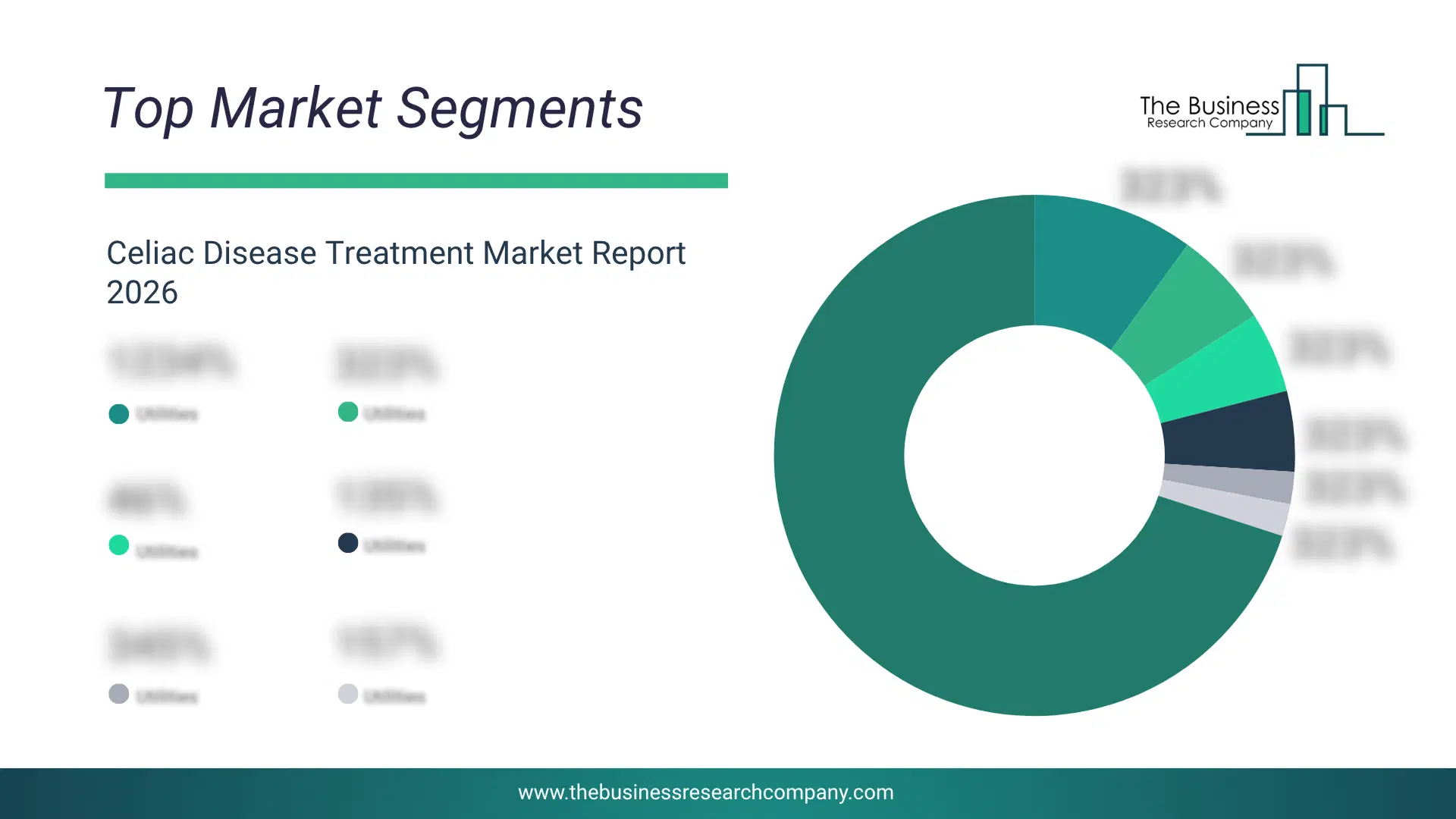
1) By Treatment Type: Vitamins And Minerals, Gluten Degrading Enzymes, Symptomatic Treatment, Other Treatments 2) By Diagnosis: Serological Tests, Genetic Testing, Biopsy 3) By Distribution Channel: Hospitals, Research Centres, Clinics, Other Distribution Channels Subsegments: 1) By Vitamins and Minerals: Iron Supplements, Calcium Supplements, Vitamin D, Vitamin B12, Multivitamins 2) By Gluten Degrading Enzymes: Endopeptidases, Exopeptidases, Combination Enzyme Formulations 3) By Symptomatic Treatment: Antidiarrheal Medications, Antidepressants, Anti-inflammatory Drugs, Immunosuppressive Agents 4) By Other Treatments: Probiotics, Immunotherapy, Experimental TherapiesWhat Is The Driver Of The Celiac Disease Treatment Market?
The rise in the prevalence of diabetes is expected to propel the growth of the celiac disease treatment market going forward. Diabetes is a chronic medical condition where the body is unable to regulate blood sugar or glucose levels properly. The increasing prevalence of diabetes is due to shared dietary management needs, as both diabetes and celiac disease require careful control of food intake to manage blood sugar levels and prevent complications. Celiac disease treatment aids diabetes by promoting a gluten-free diet, which can help improve overall digestive health and nutrient absorption. It supports better blood sugar control and reduces complications in individuals managing both conditions. For instance, in June 2024, according to the National Health Service, a UK-based government department, around 3,615,330 individuals registered with a general practitioner (GP) were diagnosed with non-diabetic hyperglycemia or pre-diabetes in 2023, marking an 18% increase from 3,065,825 cases in 2022. Therefore, the rise in the prevalence of diabetes is driving the growth of the celiac disease treatment industry.Key Players In The Global Celiac Disease Treatment Market
Major companies operating in the celiac disease treatment market are Pfizer Inc., Johnson And Johnson, F. Hoffmann-La Roche Ltd., Merck And Co. Inc., Sanofi S.A., Novartis AG, Takeda Pharmaceuticals Company Ltd., Amgen Inc., General Mills Inc., Viatris Inc., Teva Pharmaceutical Inc., Nestlé Health Science, Hikma Pharmaceuticals PLC, Amneal Pharmaceuticals LLC, Zydus Pharmaceuticals Inc., Glenmark Pharmaceuticals Company Ltd., West-Ward Pharmaceuticals Company Ltd, Innovate Biopharmaceutical, Acto Biosciences, ImmunogenX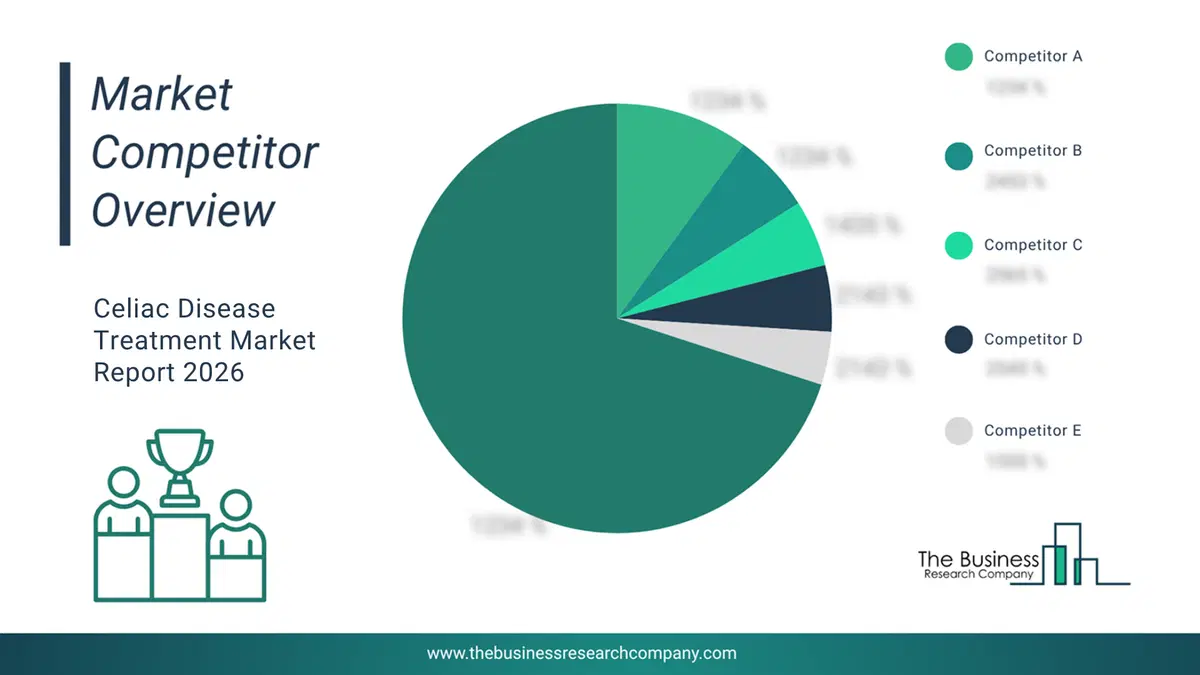
This chart is for illustrative purposes; the full report includes a detailed competitor analysis and comprehensive overview of the top 10 companies in the market.
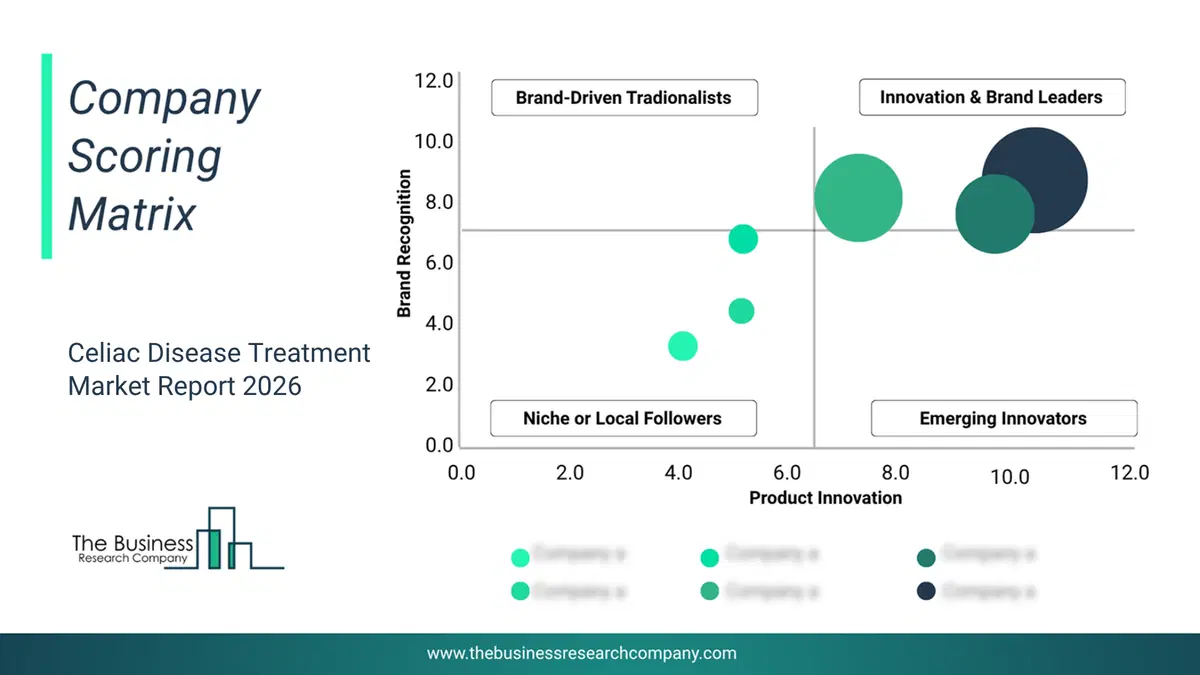
This chart maps companies by product innovation and brand strength, with bubble size indicating relative revenue, helping identify market leaders, challengers, and niche players. This is an illustrative chart; the full report provides a complete and accurate competitive analysis.
Global Celiac Disease Treatment Market Trends and Insights
Major companies operating in the celiac disease treatment market are focusing on developing oral therapies, such as small molecule therapies, to provide targeted relief by blocking immune responses to gluten, improving patient adherence, and offering alternatives to strict gluten-free diets. Small molecule therapies are tiny drugs that enter cells easily to target and treat disease-causing proteins or enzymes. For instance, in February 2025, Immunic Inc., a US-based biotechnology company, launched IMU-856. IMU-856 is a small molecule that increases endogenous glucagon-like peptide-1 (GLP-1) levels, which helps improve intestinal barrier function in celiac disease patients. It also enhance nutrient absorption and alleviate symptoms without suppressing immune activity.What Are Latest Mergers And Acquisitions In The Celiac Disease Treatment Market?
In March 2024, First Wave BioPharma Inc., a US-based clinical-stage biopharmaceutical company, acquired ImmunogenX Inc. for an undisclosed amount. With this acquisition, First Wave BioPharma strengthens its gastrointestinal disease portfolio by adding latiglutenase, a Phase 3–ready oral therapeutic for celiac disease, enabling the company to expand into the underserved market of gluten-related disorders, accelerate late-stage clinical development, and advance its strategic focus on novel, non-dietary treatments for celiac disease. ImmunogenX Inc. is a US-based company that offers celiac disease treatment.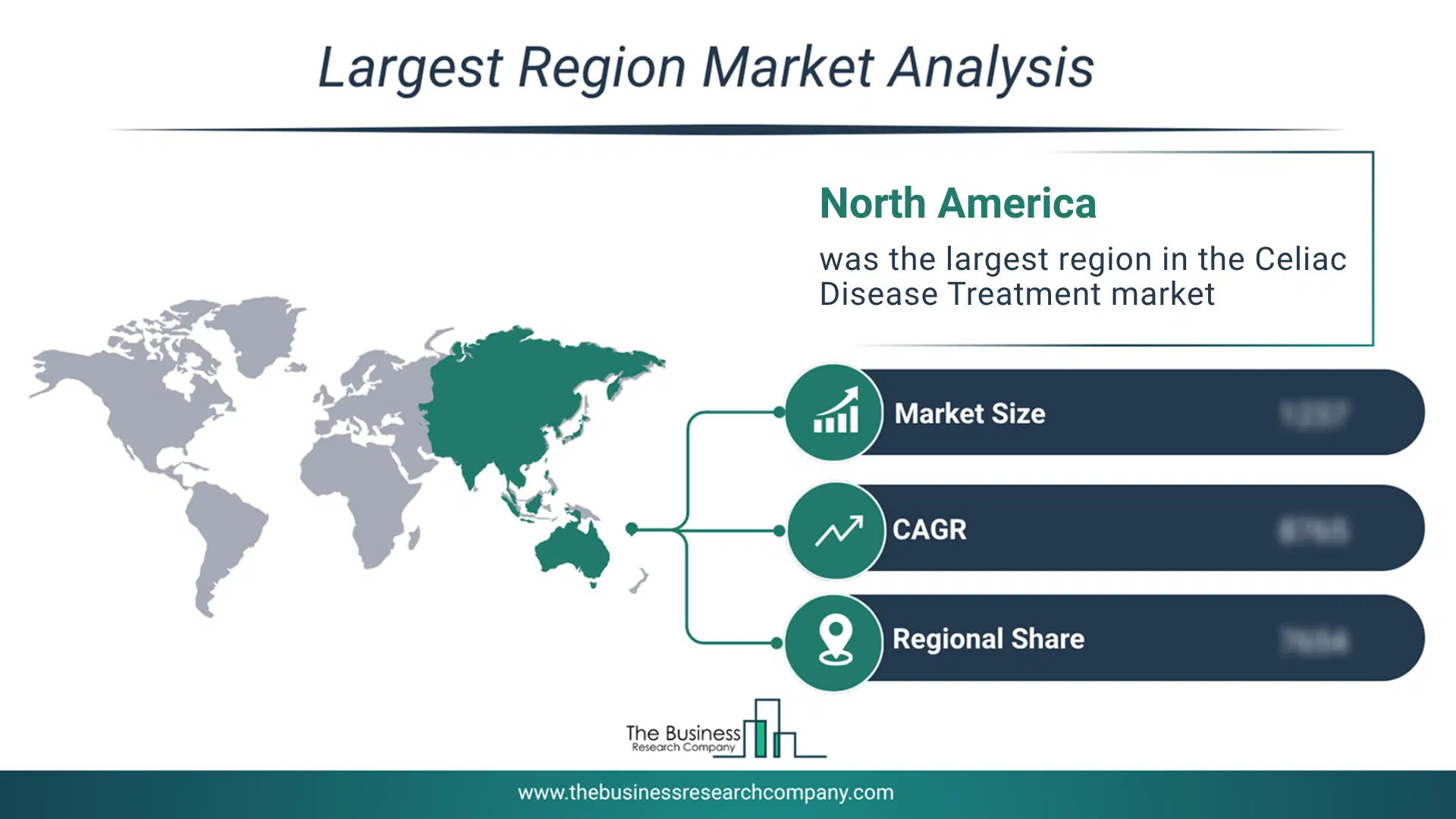
Regional Insights
North America was the largest region in the celiac disease treatment market in 2025. Asia-Pacific is expected to be the fastest-growing region in the forecast period. The regions covered in this market report are Asia-Pacific, South East Asia, Western Europe, Eastern Europe, North America, South America, Middle East, Africa. The countries covered in this market report are Australia, Brazil, China, France, Germany, India, Indonesia, Japan, Taiwan, Russia, South Korea, UK, USA, Canada, Italy, Spain.What Defines the Celiac Disease Treatment Market?
The celiac disease treatment market consists of sales of gluten-free food products, vitamin D, Vitamin B12, and folic acid supplements. Values in this market are ‘factory gate’ values, that is, the value of goods sold by the manufacturers or creators of the goods, whether to other entities (including downstream manufacturers, wholesalers, distributors, and retailers) or directly to end customers. The value of goods in this market includes related services sold by the creators of the goods.How is Market Value Defined and Measured?
The market value is defined as the revenues that enterprises gain from the sale of goods and/or services within the specified market and geography through sales, grants, or donations in terms of the currency (in USD unless otherwise specified). The revenues for a specified geography are consumption values that are revenues generated by organizations in the specified geography within the market, irrespective of where they are produced. It does not include revenues from resales along the supply chain, either further along the supply chain or as part of other products.
This chart presents market attractiveness based on a quantitative evaluation of growth, competition, strategic alignment, and risk, offering a clear view of opportunity areas for decision-making. This chart is for illustrative purposes; the full report contains the complete analysis.

This chart highlights the Total Addressable Market (TAM) by estimating the maximum revenue opportunity using an assumption-driven approach, supporting strategic planning and opportunity sizing across markets. The chart is illustrative; the full report provides a more comprehensive analysis.
What Key Data and Analysis Are Included in the Celiac Disease Treatment Market Report 2026?
The celiac disease treatment market research report is one of a series of new reports from The Business Research Company that provides market statistics, including industry global market size, regional shares, competitors with the market share, detailed market segments, market trends and opportunities, and any further data you may need to thrive in the celiac disease treatment industry. The market research report delivers a complete perspective of everything you need, with an in-depth analysis of the current and future state of the industry.Celiac Disease Treatment Market Report Forecast Analysis
| Report Attribute | Details |
|---|---|
| Market Size Value In 2026 | $0.72 billion |
| Revenue Forecast In 2030 | $1.03 billion |
| Growth Rate | CAGR of 9.3% from 2026 to 2030 |
| Base Year For Estimation | 2025 |
| Actual Estimates/Historical Data | 2020-2025 |
| Forecast Period | 2026 - 2030 |
| Market Representation | Revenue in USD Billion and CAGR from 2026 to 2030 |
| Segments Covered | Treatment Type, Diagnosis, Distribution Channel |
| Regional Scope | Asia-Pacific, Western Europe, Eastern Europe, North America, South America, Middle East, Africa |
| Country Scope | The countries covered in the report are Australia, Brazil, China, France, Germany, India, Indonesia, Japan, Taiwan, Russia, South Korea, UK, USA, Canada, Italy, Spain. |
| Key Companies Profiled | Pfizer Inc., Johnson And Johnson, F. Hoffmann-La Roche Ltd., Merck And Co. Inc., Sanofi S.A., Novartis AG, Takeda Pharmaceuticals Company Ltd., Amgen Inc., General Mills Inc., Viatris Inc., Teva Pharmaceutical Inc., Nestlé Health Science, Hikma Pharmaceuticals PLC, Amneal Pharmaceuticals LLC, Zydus Pharmaceuticals Inc., Glenmark Pharmaceuticals Company Ltd., West-Ward Pharmaceuticals Company Ltd, Innovate Biopharmaceutical, Acto Biosciences, ImmunogenX |
| Customization Scope | Request for Customization |
| Pricing And Purchase Options | Explore Purchase Options |