
Cell Culture Consumables And Equipment Market Report 2026
Global Outlook – By Product (Consumables, Instruments), By Application (Vaccination, Toxicity Testing, Cancer Research, Drug Screening And Development, Recombinant Products, Stem Cell Technology, Regenerative Medicine, Other Applications), By End User (Industrial, Biotechnology, Agriculture, Other End Users) – Market Size, Trends, Strategies, and Forecast to 2030
Cell Culture Consumables And Equipment Market Overview
• Cell Culture Consumables And Equipment market size has reached to $14.69 billion in 2025 • Expected to grow to $25.49 billion in 2030 at a compound annual growth rate (CAGR) of 12.3% • Growth Driver: Funding For Cancer Research Fuels Growth In Cell Culture Consumables And Equipment Market • Market Trend: Caron Scientific Launches H₂O₂-Sterilized Incubator Shaker for Advanced Cell Culture • North America was the largest region in 2025 and Western Europe is the fastest growing region.What Is Covered Under Cell Culture Consumables And Equipment Market?
Cell culture consumables and equipment are designed to aid scientists in growing new cells in the culture media for drug development, tissue culture, engineering, gene therapy, vaccine production, and toxicity testing. The main products in cell culture consumables and equipment are consumables and instruments. The cell culture instruments involve the various instruments that are required for cell culture in the cell culture laboratory. The various instruments used in cell culture are cell culture vessels, bioreactors, biosafety cabinets, carbon dioxide incubators, and centrifuge and consumables are media, sera, and reagents. The applications involved are vaccination, toxicity testing, cancer research, drug screening and development, recombinant products, stem cell technology, regenerative medicine, and others that are used by end-users such as industrial, biotechnology, agriculture, and others.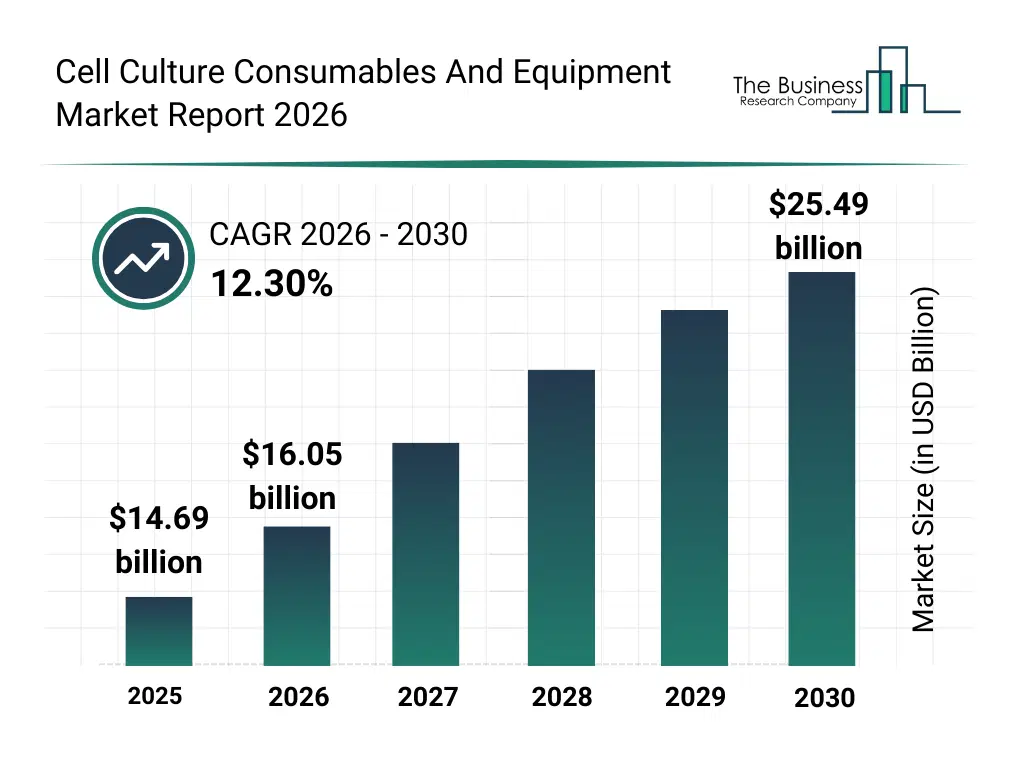
What Is The Cell Culture Consumables And Equipment Market Size and Share 2026?
The cell culture consumables and equipment market size has grown strongly in recent years. It will grow from $14.69 billion in 2025 to $16.05 billion in 2026 at a compound annual growth rate (CAGR) of 9.3%. The growth in the historic period can be attributed to limited availability of specialized cell culture instruments, reliance on conventional culture media, growing academic and industrial research activities, rising vaccine and biologics development, increasing awareness of regenerative medicine potential.What Is The Cell Culture Consumables And Equipment Market Growth Forecast?
The cell culture consumables and equipment market size is expected to see rapid growth in the next few years. It will grow to $25.49 billion in 2030 at a compound annual growth rate (CAGR) of 12.3%. The growth in the forecast period can be attributed to advancement in bioreactors and automated incubators, increasing investment in stem cell and gene therapy research, growth of biotechnology and pharmaceutical industries, adoption of high-throughput screening technologies, integration of smart and automated laboratory equipment. Major trends in the forecast period include rising demand for advanced cell culture consumables, expansion of stem cell and regenerative medicine research, increasing adoption of automated cell culture instruments, growth in drug screening and development applications, focus on high-quality culture media and reagents.
Global Cell Culture Consumables And Equipment Market Segmentation
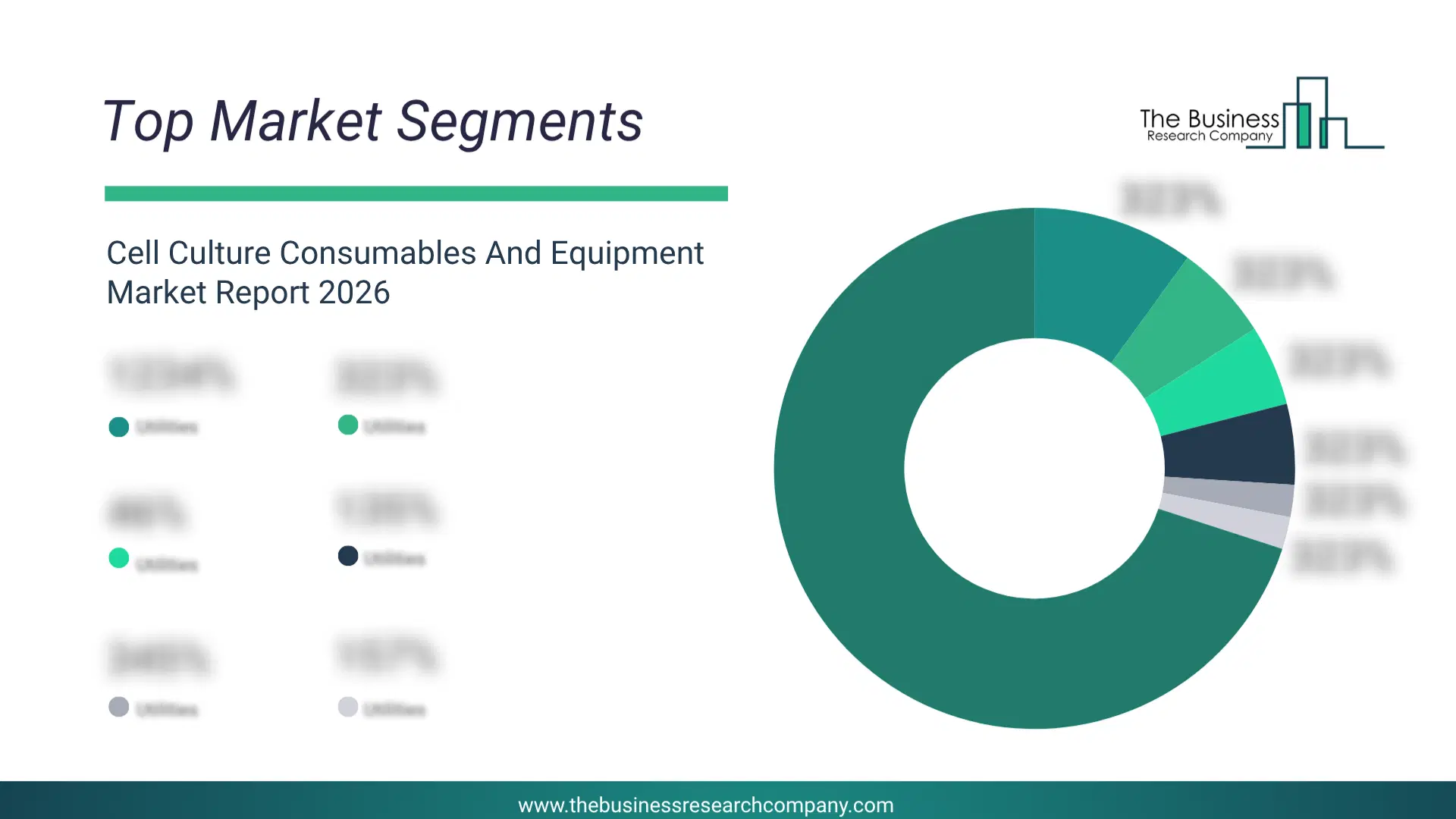
1) By Product: Consumables, Instruments 2) By Application: Vaccination, Toxicity Testing, Cancer Research, Drug Screening And Development, Recombinant Products, Stem Cell Technology, Regenerative Medicine, Other Applications 3) By End User: Industrial, Biotechnology, Agriculture, Other End Users Subsegments: 1) By Consumables: Culture Media, Cell Culture Reagents, Serum And Supplements, Cell Culture Vials And Flasks, Culture Plates And Dishes, Pipettes And Pipette Tips 2) By Instruments: Cell Culture Incubators, Bioreactors, Centrifuges, Microscopes, Cell Counters, Shakers And Stirring SystemsWhat Is The Driver Of The Cell Culture Consumables And Equipment Market?
Increased funding for cancer research is expected to propel the growth of the cell culture consumables and equipment market going forward. Funding refers to the allocation of financial resources, typically in the form of money or capital, to support a specific project, initiative, organization, or activity. Funding plays an important role in the development, advancement, and accessibility of cell culture consumables and equipment. For instance, in September 2023, the National Cancer Institute, a US-based government agency, received a budget from the United States Congress of $7.3 billion in fiscal year 2023, which is a $408 million increase over 2022. Therefore, increased funding for cancer research is driving the growth of the cell culture consumables and equipment industry.Key Players In The Global Cell Culture Consumables And Equipment Market
Major companies operating in the cell culture consumables and equipment market are Becton Dickinson and Company, Corning Inc., Danaher Corporation, Eppendorf AG, HiMedia Laboratories Private Limited, Lonza Group AG, Merck KGAA, Promocell GmbH, Sartorius AG, Thermo Fisher Scientific Inc., Irvine Scientific Sales Company Inc., CellGenix GmbH, InVitria Inc., Cytiva, Bio-Techne Corporation, GenScript Biotech Corporation, Gedeon Richter Plc., Hetero Drugs Limited, Intas Pharmaceuticals Ltd., LG Chem Ltd., Lupin Limited, Bio-Rad Laboratories Inc., Illumina Inc., Qiagen NV, F. Hoffmann-La Roche Ltd, Norgen Biotek Corporation, Tecan Group Ltd.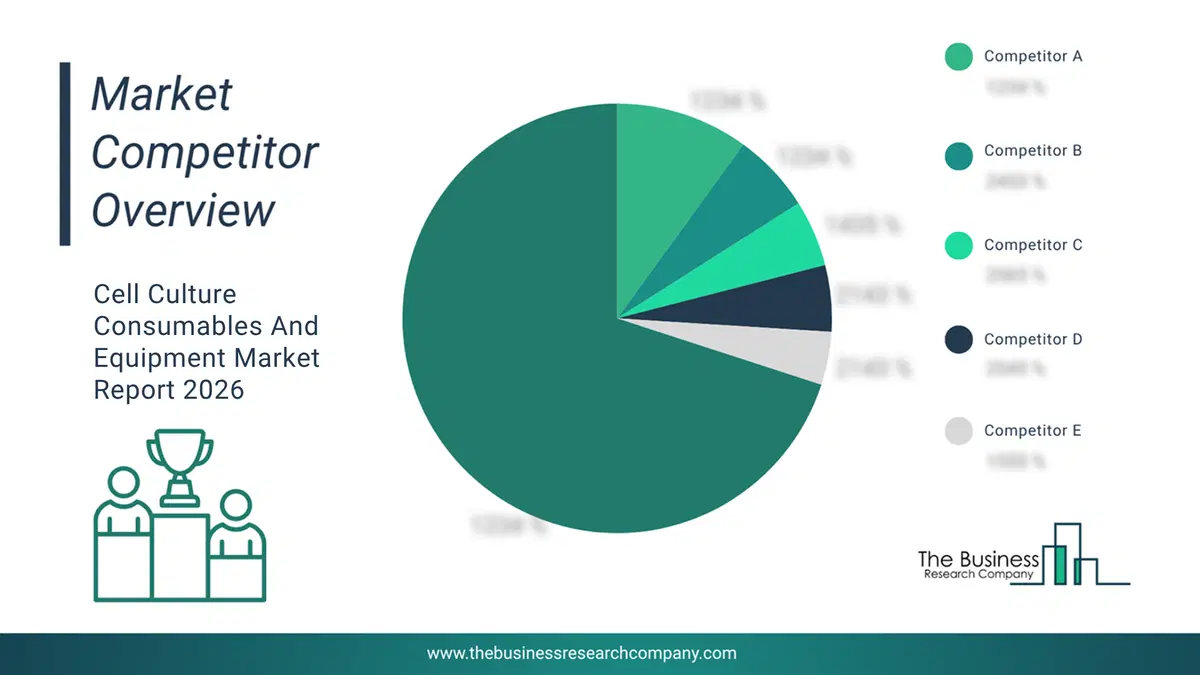
This chart is for illustrative purposes; the full report includes a detailed competitor analysis and comprehensive overview of the top 10 companies in the market.
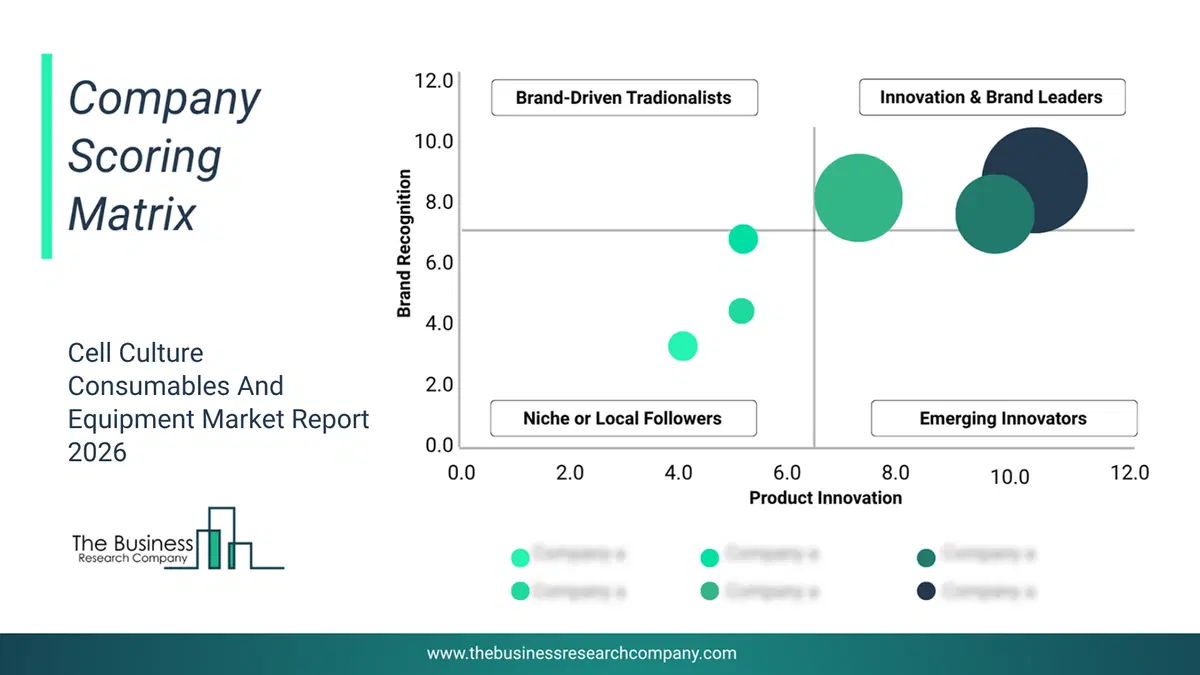
This chart maps companies by product innovation and brand strength, with bubble size indicating relative revenue, helping identify market leaders, challengers, and niche players. This is an illustrative chart; the full report provides a complete and accurate competitive analysis.
Global Cell Culture Consumables And Equipment Market Trends and Insights
Major companies operating in the Cell Culture Consumables And Equipment market are focusing on developing innovative products, such as in-unit dry hydrogen‑peroxide fogging sterilization, to dramatically reduce contamination risk and downtime in GMP cell culture production. Dry H₂O₂ fogging sterilization is a decontamination method that uses vapor-phase hydrogen peroxide without condensation, enabling effective sterilization without water pooling. In March 2025, Caron Scientific, a US-based provider of environmental testing, controlled‑environment incubators, and bioprocess equipment, launched its 7406 Series Incubator Shaker. This system offers the highest single‑chamber capacity in its class while retaining a compact, vertical footprint, and delivers tightly controlled temperature (20 °C–60 °C), CO₂ (0–20%), humidity (ambient to 90%) and shaking parameters (adjustable RPM and orbit). Its integrated dry H₂O₂ decontamination cycle, monitored by a humidity sensor and electronic control, prevents condensation and enables immediate reuse post-sterilization a first in incubator‑shaker design. These features make it ideal for high-throughput, GMP-compliant biologics production with improved operational efficiency and contamination control.What Are Latest Mergers And Acquisitions In The Cell Culture Consumables And Equipment Market?
In June 2025, STEMCELL Technologies, a Canada‑based provider of cell culture media, cell separation technologies, instruments, and contract assay services, acquired Cellular Highways Ltd for an undisclosed amount. With this acquisition, STEMCELL aims to bolster its cell therapy and research‑instrument portfolio by integrating a gentler, high-speed, GMP-ready cell-sorting technology. Cellular Highways Ltd a UK-based biotechnology company that develops advanced cell-sorting solutions for fragile cells in applications in cell & gene therapy, drug discovery, and fundamental cell research.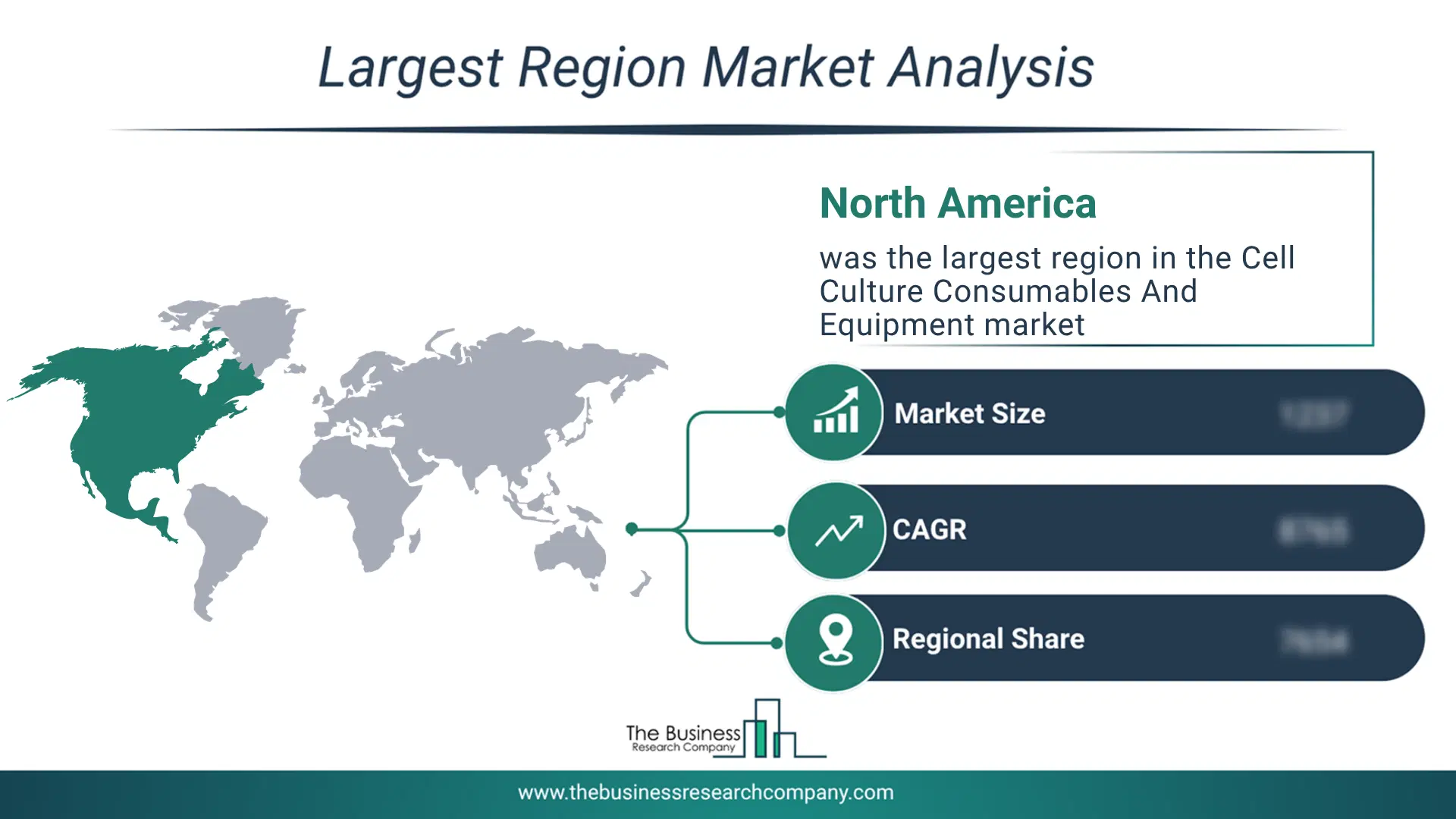
Regional Outlook
North America was the largest region in the cell culture consumables and equipment market in 2025. Western Europe was the second-largest region in the global cell culture consumables and equipment market share. The regions covered in this market report are Asia-Pacific, South East Asia, Western Europe, Eastern Europe, North America, South America, Middle East, Africa. The countries covered in this market report are China, India, Japan, Australia, Indonesia, South Korea, Bangladesh, Thailand, Vietnam, Malaysia, Singapore, Philippines, Hong Kong, Taiwan, New Zealand, UK, Germany, France, Italy, Spain, Austria, Belgium, Denmark, Finland, Ireland, Netherlands, Norway, Portugal, Sweden, Switzerland, Russia, Czech Republic, Poland, Romania, Ukraine, USA, Canada, Mexico, Brazil, Chile, Argentina, Colombia, Peru, Saudi Arabia, Israel, Iran, Turkey, UAE, Egypt, Nigeria, South Africa.What Defines the Cell Culture Consumables And Equipment Market?
The cell culture consumables and equipment market consist of sales of flasks, tubes, dishes or cryovials, serological pipettes or centrifugation tubes, bottles, cell scrapers, strainers, coverslips, and inserts. Values in this market are factory gate values, that is the value of goods sold by the manufacturers or creators of the goods, whether to other entities (including downstream manufacturers, wholesalers, distributors, and retailers) or directly to end customers. The value of goods in this market includes related services sold by the creators of the goods.How is Market Value Defined and Measured?
The market value is defined as the revenues that enterprises gain from the sale of goods and/or services within the specified market and geography through sales, grants, or donations in terms of the currency (in USD unless otherwise specified). The revenues for a specified geography are consumption values that are revenues generated by organizations in the specified geography within the market, irrespective of where they are produced. It does not include revenues from resales along the supply chain, either further along the supply chain or as part of other products.
This chart presents market attractiveness based on a quantitative evaluation of growth, competition, strategic alignment, and risk, offering a clear view of opportunity areas for decision-making. This chart is for illustrative purposes; the full report contains the complete analysis.

This chart highlights the Total Addressable Market (TAM) by estimating the maximum revenue opportunity using an assumption-driven approach, supporting strategic planning and opportunity sizing across markets. The chart is illustrative; the full report provides a more comprehensive analysis.
What Key Data and Analysis Are Included in the Cell Culture Consumables And Equipment Market Report 2026?
The cell culture consumables and equipment market research report is one of a series of new reports from The Business Research Company that provides market statistics, including industry global market size, regional shares, competitors with the market share, detailed market segments, market trends and opportunities, and any further data you may need to thrive in the cell culture consumables and equipment industry. The market research report delivers a complete perspective of everything you need, with an in-depth analysis of the current and future state of the industry.Cell Culture Consumables And Equipment Market Report Forecast Analysis
| Report Attribute | Details |
|---|---|
| Market Size Value In 2026 | $16.05 billion |
| Revenue Forecast In 2030 | $25.49 billion |
| Growth Rate | CAGR of 12.3% from 2026 to 2030 |
| Base Year For Estimation | 2025 |
| Actual Estimates/Historical Data | 2020-2025 |
| Forecast Period | 2026 - 2030 |
| Market Representation | Revenue in USD Billion and CAGR from 2026 to 2030 |
| Segments Covered | Product, Application, End User |
| Regional Scope | Asia-Pacific, Western Europe, Eastern Europe, North America, South America, Middle East, Africa |
| Country Scope | The countries covered in the report are Australia, Brazil, China, France, Germany, India, Indonesia, Japan, Taiwan, Russia, South Korea, UK, USA, Canada, Italy, Spain. |
| Key Companies Profiled | Becton Dickinson and Company, Corning Inc., Danaher Corporation, Eppendorf AG, HiMedia Laboratories Private Limited, Lonza Group AG, Merck KGAA, Promocell GmbH, Sartorius AG, Thermo Fisher Scientific Inc., Irvine Scientific Sales Company Inc., CellGenix GmbH, InVitria Inc., Cytiva, Bio-Techne Corporation, GenScript Biotech Corporation, Gedeon Richter Plc., Hetero Drugs Limited, Intas Pharmaceuticals Ltd., LG Chem Ltd., Lupin Limited, Bio-Rad Laboratories Inc., Illumina Inc., Qiagen NV, F. Hoffmann-La Roche Ltd, Norgen Biotek Corporation, Tecan Group Ltd. |
| Customization Scope | Request for Customization |
| Pricing And Purchase Options | Explore Purchase Options |