

Cell Culture Protein Surface Coating Market Report 2026
Global Outlook – By Coating Type (Pre-Coating, Multiwall Or Microwell Plates, Flasks, Petri Dishes, Slides, Cover Slips, Self-Coating), By Protein Source (Animal-Derived Protein, Human-Derived Protein, Synthetic Protein, Plant-Derived Protein), By Application (Scientific Research, Industrial Production) - Market Size, Trends, Strategies, and Forecast to 2030
Cell Culture Protein Surface Coating Market Overview
• Cell Culture Protein Surface Coating market size has reached to $1.18 billion in 2025 • Expected to grow to $2.28 billion in 2030 at a compound annual growth rate (CAGR) of 13.7% • Growth Driver: Rising Demand For Biopharmaceutical Products In Cell Culture Protein Surface Coating Market • North America was the largest region in 2025 and Asia-Pacific is the fastest growing region.What Is Covered Under Cell Culture Protein Surface Coating Market?
Cell culture protein surface coating refers to the process of applying specific proteins or biomolecules onto the surface of culture vessels such as Petri dishes, flasks, or plates. This process aims to enhance cells' attachment, growth, and behavior in an in vitro environment, mimicking the natural extracellular matrix (ECM) encountered by cells in vivo. The coating facilitates cell adhesion, development, and differentiation, which is crucial for various biomedical and research applications. The main coating types of cell culture protein surface coating are pre-coating, multiwall or microwell plates, flasks, petri dishes, slides, cover slips, and self-coating. Pre-coating refers to the process of coating surfaces before their use. The various protein sources are animal-derived protein, human-derived protein, synthetic protein, and plant-derived protein are used in applications such as scientific research and industrial production.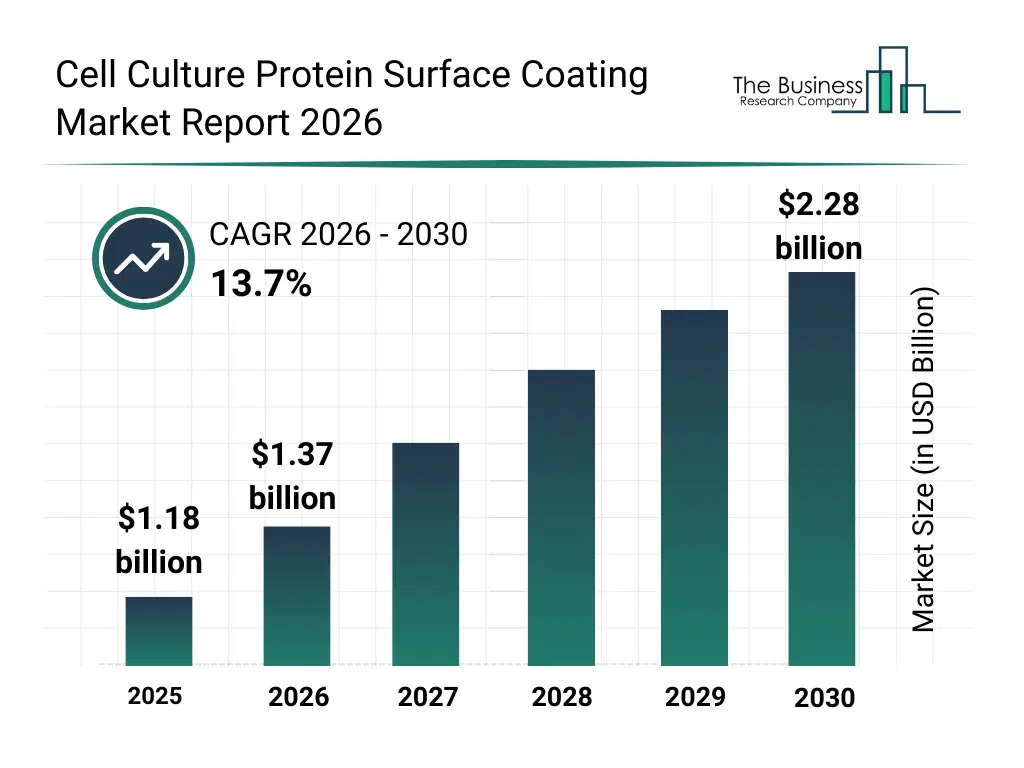
What Is The Cell Culture Protein Surface Coating Market Size and Share 2026?
The cell culture protein surface coating market size has grown rapidly in recent years. It will grow from $1.18 billion in 2025 to $1.37 billion in 2026 at a compound annual growth rate (CAGR) of 15.4%. The growth in the historic period can be attributed to increasing in vitro research activities, expansion of cell-based experimentation, adoption of coated cultureware in laboratories, growth of academic research output, availability of standardized coating materials.What Is The Cell Culture Protein Surface Coating Market Growth Forecast?
The cell culture protein surface coating market size is expected to see rapid growth in the next few years. It will grow to $2.28 billion in 2030 at a compound annual growth rate (CAGR) of 13.7%. The growth in the forecast period can be attributed to increasing demand for advanced cell culture systems, rising investments in regenerative medicine research, expansion of stem cell and tissue engineering applications, growing preference for animal-free coatings, increasing use of scalable culture platforms. Major trends in the forecast period include increasing use of ecm-mimicking protein coatings, rising demand for ready-to-use pre-coated surfaces, growing adoption of synthetic and recombinant proteins, expansion of high-density cell culture formats, enhanced focus on reproducibility in cell attachment.
Global Cell Culture Protein Surface Coating Market Segmentation
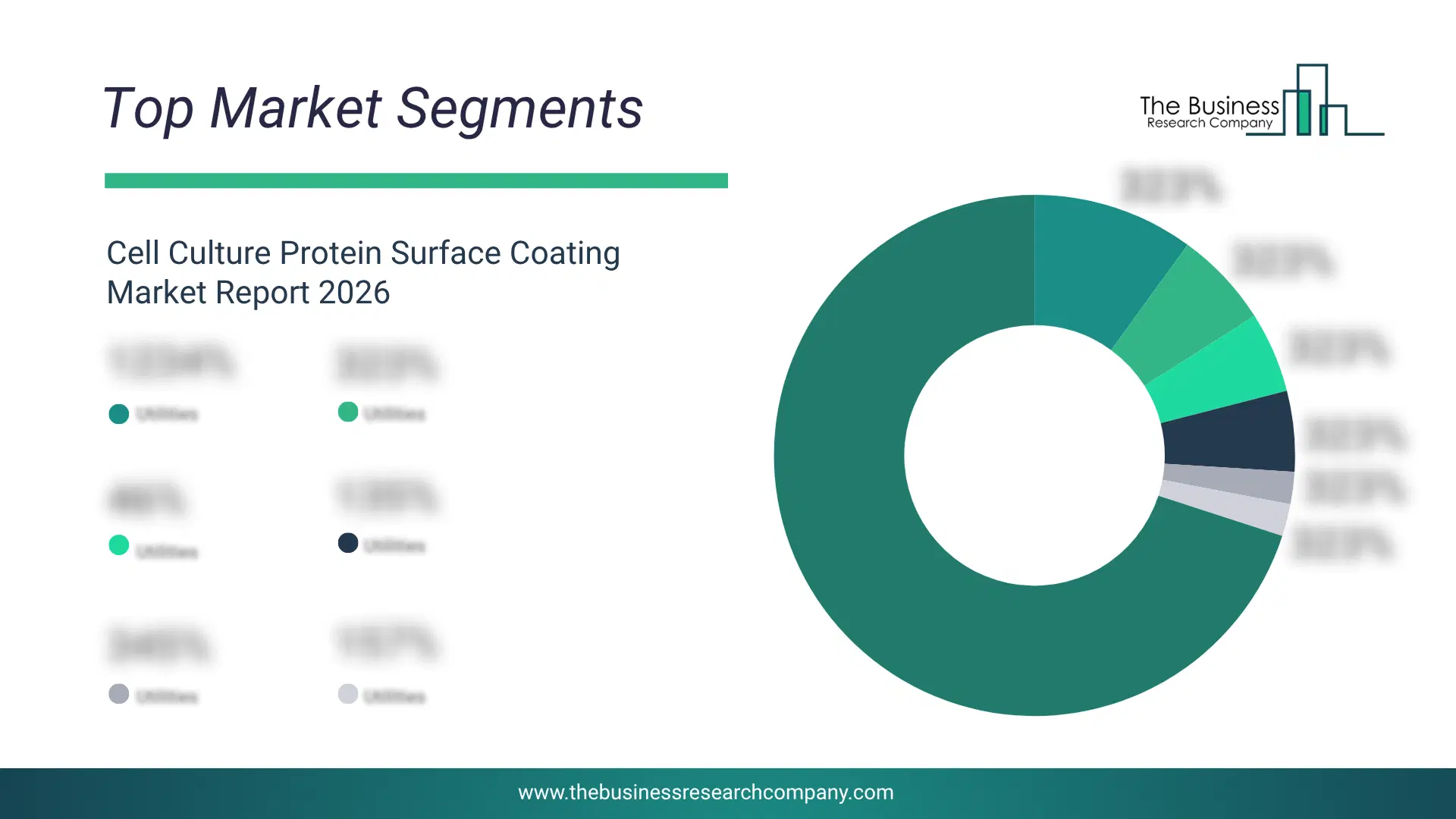
1) By Coating Type: Pre-Coating, Multiwall Or Microwell Plates, Flasks, Petri Dishes, Slides, Cover Slips, Self-Coating 2) By Protein Source: Animal-Derived Protein, Human-Derived Protein, Synthetic Protein, Plant-Derived Protein 3) By Application: Scientific Research, Industrial Production Subsegments: 1) By Pre-Coating: Ready-To-Use Pre-Coated Plates, Pre-Coated Flasks, Pre-Coated Petri Dishes 2) By Multiwall Or Microwell Plates: 96-Well Plates, 384-Well Plates, 1536-Well Plates 3) By Flasks: Tissue Culture Flasks, Serum-Free Flasks, Spinner Flasks 4) By Petri Dishes: Standard Petri Dishes, Disposable Petri Dishes, Specialized Coated Petri Dishes 5) By Slides: Microscope Slides, Glass Slides With Coating, Poly-L-Lysine Coated Slides 6) By Cover Slips: Standard Glass Cover Slips, Hydrophilic Cover Slips, Specially Coated Cover Slips 7) By Self-Coating: Self-Coating Plates, Self-Coating Flasks, Self-Coating DishesWhat Are The Drivers Of The Cell Culture Protein Surface Coating Market?
The rising demand for biopharmaceutical products is expected to propel the growth of the cell culture protein surface coating market going forward. Biopharmaceutical products are medicinal products derived from living organisms or produced using biotechnological processes, including recombinant DNA technology, cell cultures, and monoclonal antibodies. The demand for biopharmaceutical products is increasing due to cell culture technologies, an increase in chronic diseases, the incidence of age-related diseases, innovations in bioprocessing, and advancements in genomics. The cell culture protein surface coating optimizes cell growth, functionality, and production efficiency in biopharmaceutical manufacturing, contributing to developing safe, effective, and high-quality biopharmaceutical products. For instance, in August 2023, according to a report by the Alliance for Regenerative Medicine, a US-based non-profit organization, there were 2,760 cell, gene, and tissue-engineering therapeutic developers worldwide in the first quarter of 2023, up 101% since 1,369 in the first quarter 2022. Therefore, rising demand for biopharmaceutical products is driving the growth of the cell culture protein surface coating industry. The increasing prevalence of chronic diseases is expected to drive the growth of the cell culture protein surface coating market. Chronic disease is a long-lasting condition that typically requires ongoing medical attention and can limit daily activities or quality of life. The prevalence of chronic disease is due to altered habits, inheritance, and exposure to chemicals, toxins, and pollutants in the air. Cell culture protein surface coatings are indispensable in chronic disease research, providing a robust platform for investigating disease mechanisms, screening drugs, and developing innovative therapeutic strategies. For instance, in April 2025, according to the Centers for Disease Control and Prevention (CDC), a US-based federal agency, in 2023, approximately 194 million U.S. adults, or 76.4%, reported having at least one chronic condition. The prevalence was 59.5% among young adults, 78.4% among midlife adults, and 93.0% among older adults. Therefore, the increased prevalence of chronic diseases drives the growth of the cell culture protein surface coating industry.Key Players In The Global Cell Culture Protein Surface Coating Market
Major companies operating in the cell culture protein surface coating market are Thermo Fisher Scientific Inc., Merck KGaA, Corning Incorporated, Avantor Inc., Agilent Technologies Inc., Lonza Group AG, Sartorius AG, Greiner AG, Eppendorf SE, Bio Techne Corporation, Promega Corporation, ReproCELL Inc., MoBiTec GmbH, Advanced Biomatrix Inc., AMS Biotechnology Europe Limited, Cell Guidance Systems, NeuVitro Corporation, ZenBio Inc., SPL Life Sciences Co. Ltd., Becton Dickinson and Company, MatTek Corporation, ScienCell Research Laboratories Inc., STEMCELL Technologies Inc., Takara Bio Inc.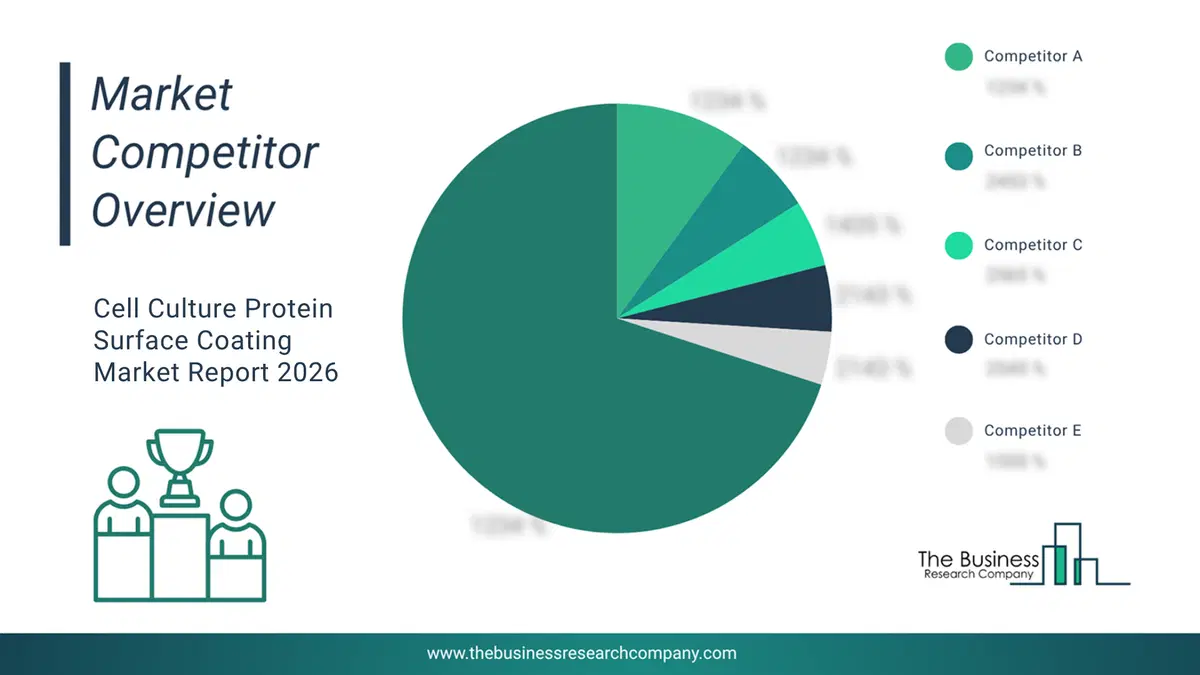
This chart is for illustrative purposes; the full report includes a detailed competitor analysis and comprehensive overview of the top 10 companies in the market.
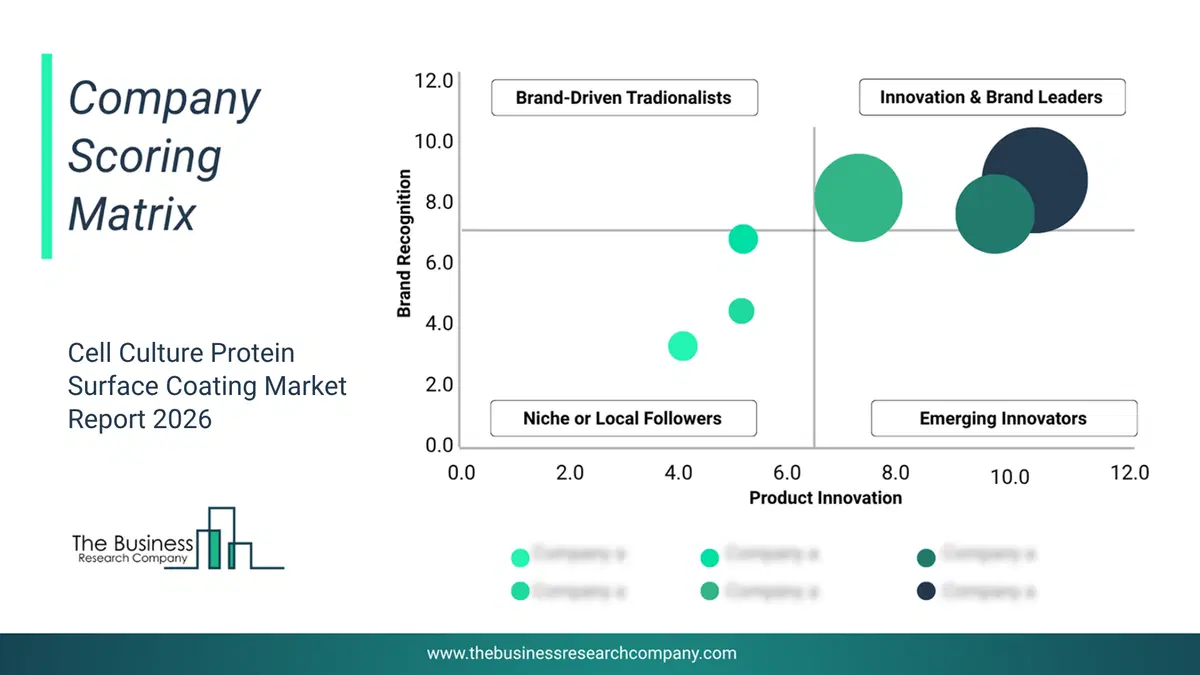
This chart maps companies by product innovation and brand strength, with bubble size indicating relative revenue, helping identify market leaders, challengers, and niche players. This is an illustrative chart; the full report provides a complete and accurate competitive analysis.
What Are Latest Mergers And Acquisitions In The Cell Culture Protein Surface Coating Market?
In November 2024, Europa Biosite, a Sweden-based provider of bioscience products and services, acquired AMSBIO for an undisclosed amount. With this acquisition, Europa Biosite aims to accelerate its high-growth trajectory, expand its life sciences product portfolio, enhance global distribution capabilities, and strengthen its position in the research and diagnostics market. AMSBIO is a UK-based supplier of reagents, kits, and biochemicals for cell biology and molecular biology research.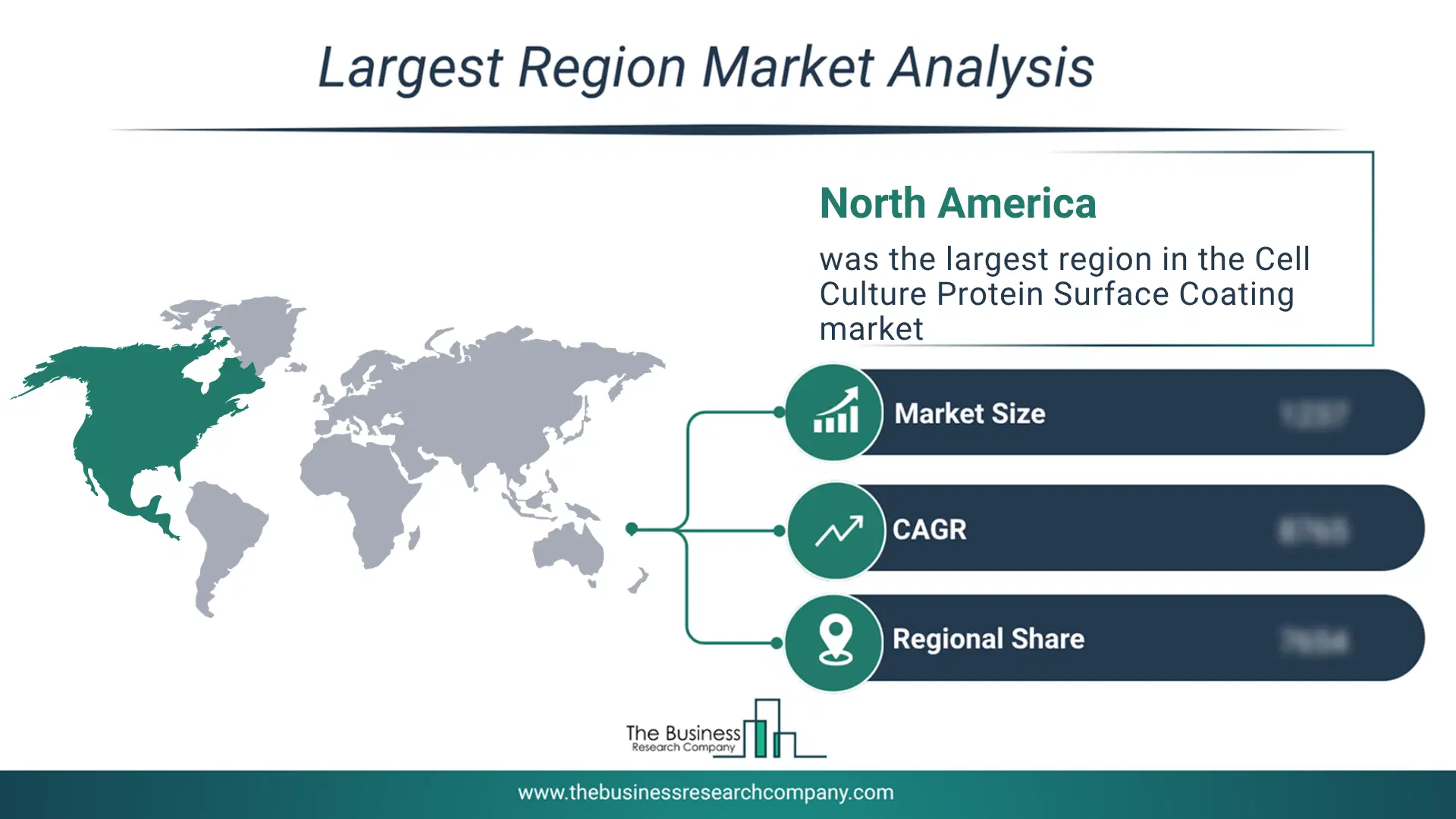
Regional Outlook
North America was the largest region in the cell culture protein surface coating market in 2025. Asia-Pacific is expected to be the fastest-growing region in the forecast period. The regions covered in this market report are Asia-Pacific, South East Asia, Western Europe, Eastern Europe, North America, South America, Middle East, Africa. The countries covered in this market report are Australia, Brazil, China, France, Germany, India, Indonesia, Japan, Taiwan, Russia, South Korea, UK, USA, Canada, Italy, Spain.What Defines the Cell Culture Protein Surface Coating Market?
The cell culture protein surface coating market consists of revenues earned by entities by providing services such as promoting cell attachment, aiding cell growth, guiding cell differentiation, and maintaining cell functionality. These services are used in various applications including drug discovery, genomics, clinical diagnostics, and other research and development activities. The market value includes the value of related goods sold by the service provider or included within the service offering. The cell culture protein surface coating market also includes fibronectin, collagen, laminin, gelatin, poly-L/D-lysine, BSA, and Matrigel. Values in this market are ‘factory gate’ values, that is the value of goods sold by the manufacturers or creators of the goods, whether to other entities (including downstream manufacturers, wholesalers, distributors and retailers) or directly to end customers.How is Market Value Defined and Measured?
The market value is defined as the revenues that enterprises gain from the sale of goods and/or services within the specified market and geography through sales, grants, or donations in terms of the currency (in USD unless otherwise specified). The revenues for a specified geography are consumption values that are revenues generated by organizations in the specified geography within the market, irrespective of where they are produced. It does not include revenues from resales along the supply chain, either further along the supply chain or as part of other products.
This chart presents market attractiveness based on a quantitative evaluation of growth, competition, strategic alignment, and risk, offering a clear view of opportunity areas for decision-making. This chart is for illustrative purposes; the full report contains the complete analysis.

This chart highlights the Total Addressable Market (TAM) by estimating the maximum revenue opportunity using an assumption-driven approach, supporting strategic planning and opportunity sizing across markets. The chart is illustrative; the full report provides a more comprehensive analysis.
What Key Data and Analysis Are Included in the Cell Culture Protein Surface Coating Market Report 2026?
The cell culture protein surface coating market research report is one of a series of new reports from The Business Research Company that provides market statistics, including industry global market size, regional shares, competitors with the market share, detailed market segments, market trends and opportunities, and any further data you may need to thrive in the cell culture protein surface coating industry. The market research report delivers a complete perspective of everything you need, with an in-depth analysis of the current and future state of the industry.Cell Culture Protein Surface Coating Market Report Forecast Analysis
| Report Attribute | Details |
|---|---|
| Market Size Value In 2026 | $1.37 billion |
| Revenue Forecast In 2030 | $2.28 billion |
| Growth Rate | CAGR of 13.7% from 2026 to 2030 |
| Base Year For Estimation | 2025 |
| Actual Estimates/Historical Data | 2020-2025 |
| Forecast Period | 2026 - 2030 |
| Market Representation | Revenue in USD Billion and CAGR from 2026 to 2030 |
| Segments Covered | Coating Type, Protein Source, Application |
| Regional Scope | Asia-Pacific, Western Europe, Eastern Europe, North America, South America, Middle East, Africa |
| Country Scope | The countries covered in the report are Australia, Brazil, China, France, Germany, India, Indonesia, Japan, Taiwan, Russia, South Korea, UK, USA, Canada, Italy, Spain |
| Key Companies Profiled | Thermo Fisher Scientific Inc., Merck KGaA, Corning Incorporated, Avantor Inc., Agilent Technologies Inc., Lonza Group AG, Sartorius AG, Greiner AG, Eppendorf SE, Bio Techne Corporation, Promega Corporation, ReproCELL Inc., MoBiTec GmbH, Advanced Biomatrix Inc., AMS Biotechnology Europe Limited, Cell Guidance Systems, NeuVitro Corporation, ZenBio Inc., SPL Life Sciences Co. Ltd., Becton Dickinson and Company, MatTek Corporation, ScienCell Research Laboratories Inc., STEMCELL Technologies Inc., Takara Bio Inc. |
| Customization Scope | Request for Customization |
| Pricing And Purchase Options | Explore Purchase Options |